


A clip styled like 60 Minutes introduces a woman who supposedly regained her breath after doctors ran out of options. It promises to explain her morning routine.
Hemo Flow Lung Restore is the spray in the two-product offer that follows. To judge the pitch, start with the story her cancer center actually published.
Overview
The patient story was changed to fit the sale
The video calls Star Dolbier a patient with advanced COPD who benefited from a natural routine. Her cancer center’s published account describes a different diagnosis and treatment.
The center describes stage 4 lung cancer and a targeted prescription medicine. It does not describe a comeback from COPD brought about by Hemo Flow.
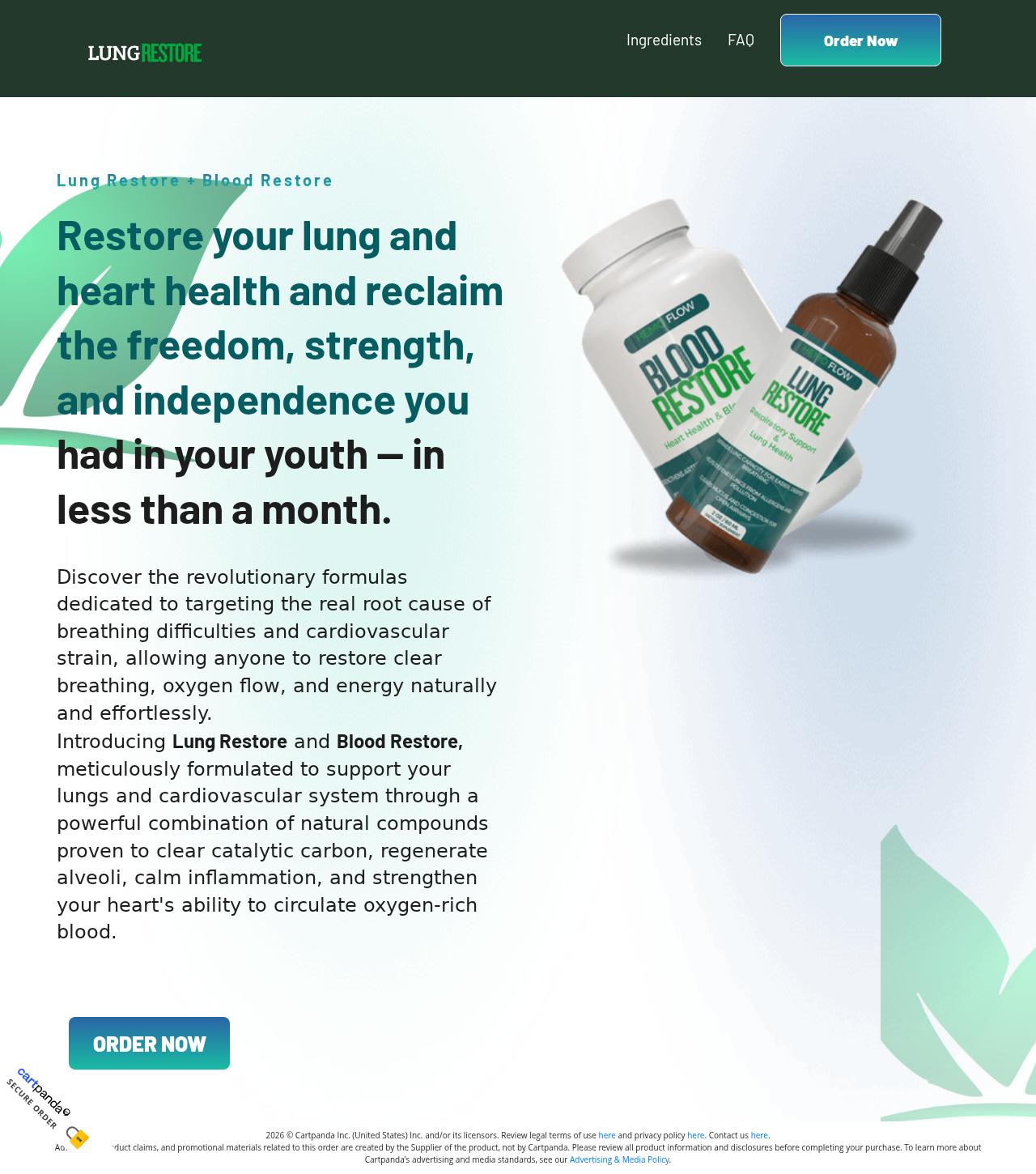
The landing page sells a pair of products
The site shows an amber Lung Restore spray bottle and a white Blood Restore bottle. It promises to restore lung and heart health in less than a month.
That is a claim about two marketed products, not a demonstration of repaired lungs. The page’s package buttons led to an unavailable Cartpanda shop when checked.
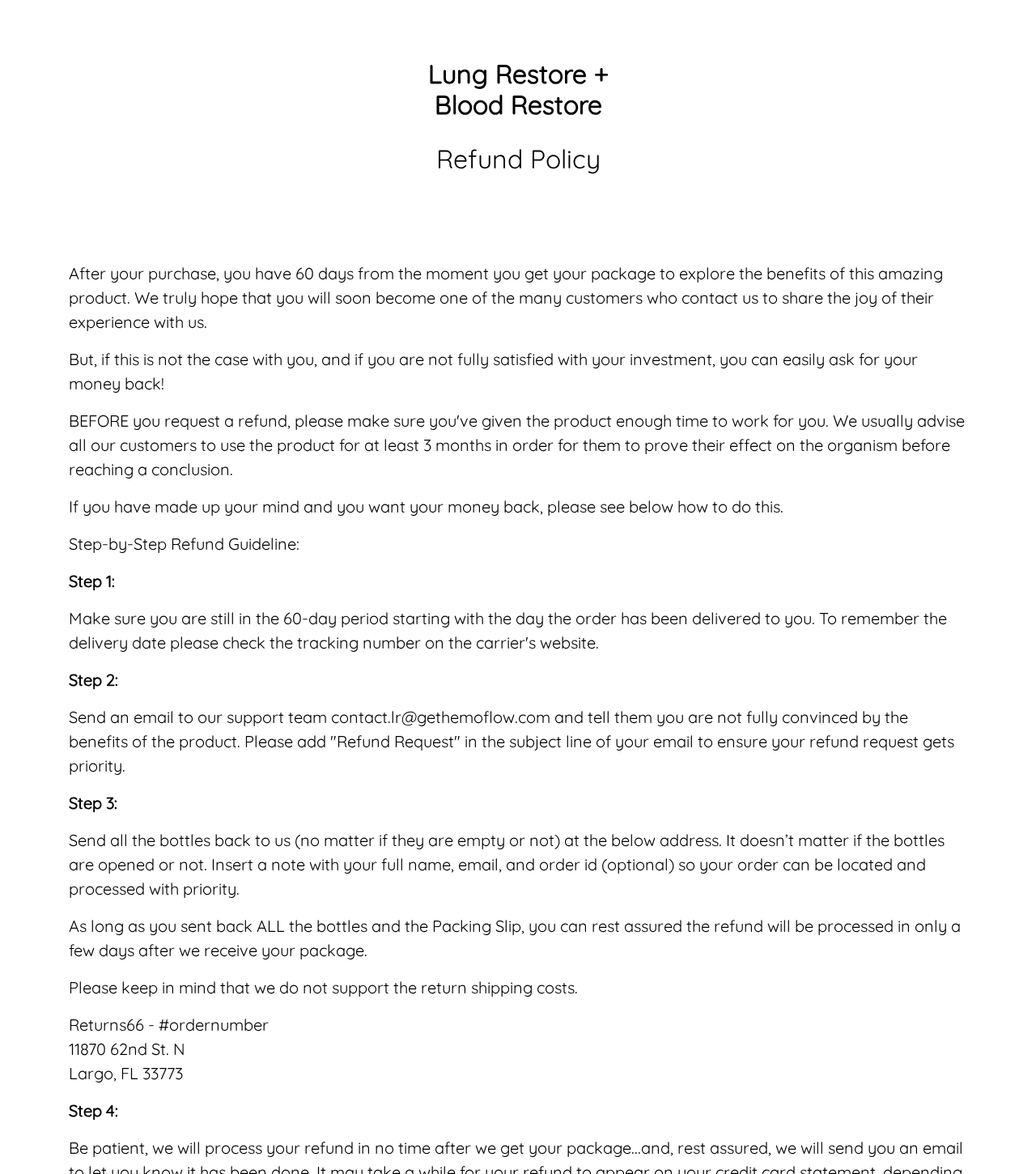
The refund instructions contradict the suggested trial
The policy encourages at least three months of use before judging the product, but sets a 60-day window from delivery. Waiting three months can put you past the deadline.
- Medical claim: Don’t change an inhaler, oxygen plan, or other prescribed care because of a supplement video.
- Price claim: $49 was a per-bottle figure for the biggest package, not a $49 order.
- Already paid: Use your receipt to identify the payment processor and ask for return instructions before waiting out the advertised trial.
Bundle and refill warning
The landing page showed two bottles for $178 plus shipping, four for $276, or six for $294. These are advertised package prices, not settled charges.
All three package links went to an unavailable shop. There was no inspectable final total, renewal selector, or refill consent on those routes.
Skip substitute links sent by an advertiser. If you have a receipt, check the quantity and charge, then ask the payment provider about any repeat debit.
How the Hemo Flow Lung Restore Pitch Works
Step 1: The video borrows the authority of 60 Minutes
In the reported promotion, a presenter introduced as Lesley Stahl discusses chronic obstructive pulmonary disease, or COPD, and promises to show a morning routine.
Real limitations such as struggling for breath during ordinary activities help the ad sound familiar. A description of real symptoms does not make the story’s next claim true.
A genuine broadcast can be checked through the broadcaster, without passing through the seller’s order button. We found no matching Hemo Flow segment in CBS material reviewed.
Step 2: A real patient is given a different recovery story
The name Star Dolbier is not fiction. The University of Maryland cancer center’s account describes her diagnosis as stage 4 non-small cell lung cancer.
Her oncologist used testing to identify a mutation that could be treated with a targeted drug. The center names the prescribed medicine as osimertinib.
The promotion recasts her as an emphysema and COPD patient whose breathing recovered under a morning routine. Those accounts point to different conditions and different treatments.
This isn’t a question of whether a picture looks computer-generated. The medical account identifies the actual care for the case that the ad borrows.
The video also names a supposed doctor in its version of events. Do not contact someone with a similar name or assume that person helped make the ad.
Step 3: The routine becomes a two-product offer
The route ends at a page for Lung Restore and Blood Restore. Instead of instructions from an independent care team, you get product descriptions and package buttons.
The front-page claims go beyond pleasant taste or ordinary wellness. They include regenerating alveoli, the tiny air sacs involved in breathing, and restoring lung capacity.
The footer, meanwhile, says the products are not intended to treat or cure disease. A disclaimer does not substantiate the restoration promises printed above it.
Step 4: Bigger packages make the advertised unit price fall
The two-bottle offer calls itself a 30-day supply and lists $178 plus shipping. The four-bottle and six-bottle offers show $276 and $294, respectively.
On those cards, the four-bottle and six-bottle options advertise free shipping. The page separately says international shipping fees apply, so don’t read free shipping as universal.
The six-bottle option is displayed as a 90-day supply. Compare that span with the return policy’s 60 days. The package can outlast your opportunity to claim a refund.
None of the buttons produced an active public checkout during our check. We cannot tell you what a purchaser was actually billed, or whether a separate plan was ever offered.
What the Ingredient List Does Not Prove
Lung Restore’s page names Manuka honey, N-acetylcysteine, quercetin, olive leaf extract, vitamin D3, and L-theanine. Blood Restore is promoted with different ingredients, including CoQ10 and hawthorn.
An ingredient can have its own research without proving that this spray, at the dose a buyer receives, restores damaged air sacs or changes the course of COPD.
The marketing mentions scientific references. What a buyer would need is a study of the exact finished product, with a defined dose, suitable comparison, and meaningful breathing outcomes.
The package image is not that evidence. Neither is a reference to a botanical ingredient that researchers studied in another formulation, disease, or experimental setting.
The National Heart, Lung, and Blood Institute’s treatment guide describes care tailored to the person. Options include prescribed medicines and pulmonary rehabilitation, among other approaches.
If therapy isn’t controlling symptoms or you’re having trouble with an inhaler, speak to the care team. A social video cannot explain which change is appropriate for you.
Who Handles the Order and Return?
Hemo Flow is the name on the offer
The offer page uses Hemo Flow on the bottle artwork. It does not turn that name into a verified manufacturer, and the package images do not identify a manufacturing facility.
A mark on a landing page does not tell you what was actually delivered. If you already received a bottle, keep the label and lot information with your purchase records.
Our separate BreatheEaseX investigation documented a Hemo Flow support address in that brand’s return instructions. Both offers also paired a lung spray with a second supplement.
That shared contact is worth noting, but the checkout and return addresses recorded in the two cases differ. Use the instructions tied to your order.
Cartpanda is the checkout route, not medical validation
All three selectors directed to the same Cartpanda shop through different product links. An unavailable shop is a finding about those links, not a statement that every prior order failed.
If your statement names Cartpanda, use Cartpanda’s buyer support guidance. If your receipt names someone else, start with the party that actually took your payment.
The refund clock starts on delivery
The published policy gives 60 days from the day the order arrives. It also suggests using the products for at least three months before deciding whether they work.
A three-month trial can run past that deadline. If you want to return the kit, ask for written instructions early.
The customer pays to ship all bottles back
The policy asks for all bottles, including opened or empty ones, and the packing slip. It says shoppers bear the return postage and identifies a Returns66 destination in Largo, Florida.
That is a listed returns address, not proof of where the products were made or shipped from. Confirm it against your actual receipt and written instructions before mailing anything.
Ask whether the refund covers the merchandise total, any original delivery fees, or only certain items. Keep the answer and the carrier’s proof of return.
Where the Offer and the Evidence Part Ways
Check the claim made for the finished kit
The sales page presents the two products as a kit for both lung and heart health. A study of a single ingredient cannot test how a two-product regimen performs.
For example, research about mucus and research about repairing damaged air sacs ask different questions. Improvement in one outcome cannot be substituted for proof of the other.
What would make the claim more meaningful? A published trial would identify the exact spray and companion product, measure an outcome in people with COPD, and give a comparison.
It would also report dropouts and adverse effects, not only customers who felt better. The landing page’s promise that anyone can restore breathing leaves those questions unanswered.
You do not need to prove every ingredient is worthless to reject this offer. The evidence has to match the extraordinary result being used to sell the kit.
Use the original patient story as a check
If the ad really represented Dolbier’s treatment, its account would agree with the record on what she was diagnosed with, who treated her, and what she received.
The differences affect the entire sales argument. Cancer treatment chosen after genetic testing cannot show what a supplement does for people with emphysema.
The most useful check is to read the hospital’s account before looking at the sale. You can see the mismatch without guessing how the ad’s voice or imagery was produced.
What the Price Cards Don’t Tell You
At the advertised prices, the jump from four bottles to six is only $18. The page makes the upgrade feel small after you have already accepted the larger purchase.
But compare six with the entry package, not only with four. The advertised merchandise total is $116 higher, before accounting for the shipping differences shown on the cards.
The page’s headline says every order comes with free shipping, yet the two-bottle card adds shipping. Without an active checkout, that inconsistency can’t be settled from the headline.
If charged, compare the merchandise and shipping lines on your receipt to the offer you saw. The cheapest advertised price per bottle is not your order total.
The return requirement has a practical consequence, too. Keep the empty containers and packing slip instead of discarding them during the period when you may ask to return the kit.
A missing bottle can complicate a return when the policy requires them all. Document anything missing from the parcel and ask for written instructions before mailing the rest.
What to Do If You Ordered Hemo Flow
- Keep medical care separate. Don’t stop treatment because of a sales video. If you took the supplement or changed medication, tell your clinician or pharmacist and show them the label.
- Find the actual transaction. Match the receipt and card statement. Record which products you were charged for, any separately billed add-ons, and your delivery date.
- Request a return in writing now. Ask for the address, deadline, what must go back, and the amount due. Don’t wait three months to decide whether to contact them.
- Check future charges separately. If you see a repeat payment, ask the merchant or processor what authorized it and request cancellation if you don’t want it.
- Ask your issuer about unresolved or unauthorized charges. Describe exactly what happened and provide your evidence. A merchant’s return deadline and an issuer’s dispute deadline may differ.
If you reached the closed-shop page without entering any details, leave it there. Do not take an offer to “complete” the same order through a social-media message.
If someone asks you to pay another fee to release a refund, contact the payment processor through its independently verified support channel. Don’t send another payment to the advertiser.
For worsening respiratory symptoms, contact your care team. The NIH’s guidance for living with COPD explains when people should seek medical help.
You can report deceptive advertising to the platform that showed it. U.S. readers can also submit details to the FTC’s official fraud reporting site.
MalwareTips previously covered the Hemo Flow blood-sugar pitch. That is a different claim from the lung-restoration campaign discussed here.
Frequently Asked Questions
Did 60 Minutes recommend Hemo Flow Lung Restore?
The sales video uses the look of the show and invokes its correspondent. We found no matching CBS report or endorsement for these products.
Did Star Dolbier get better because of Lung Restore?
Her cancer center describes treatment for stage 4 lung cancer with a targeted prescription medicine. Its account does not credit Hemo Flow or support the advertised COPD story.
Is $49 the full advertised price?
No. That figure was per bottle in the six-bottle deal, where the advertised package total was $294. The linked checkout did not load an order form.
Can I try the package for 90 days and still return it?
Do not count on that. The written policy says 60 days from delivery. The seller’s recommendation to use it for three months does not extend that deadline.
Is there a verified Hemo Flow refill plan?
Not on the three paths checked, which reached a closed shop. If you see another debit, use your own order history and ask who authorized it.
Does the spray rebuild damaged lungs?
The sales page claims lung restoration, but it doesn’t supply evidence that the finished spray rebuilds lung tissue. Don’t use it to replace COPD treatment.
The Bottom Line
Do not buy Hemo Flow Lung Restore through this pitch. It substitutes a supplement story for a cancer center’s real account and backs the sale with contradictory return timing.
If you already paid, keep the order and delivery evidence and request written return instructions before the deadline. Discuss any treatment changes with your clinician, not the seller.

Join the discussion
0 commentsShare your experience or ask a question about this article.
Discussion
Start the conversation
Have a question or something useful to share? Add the first comment.