

A few quiet minutes on a neck support can sound appealing when your shoulders feel tight and your jaw never quite relaxes.
Lune RestNode builds its offer around that familiar feeling. Before ordering, take a closer look at what comes with the promise.
Overview
What the device actually is
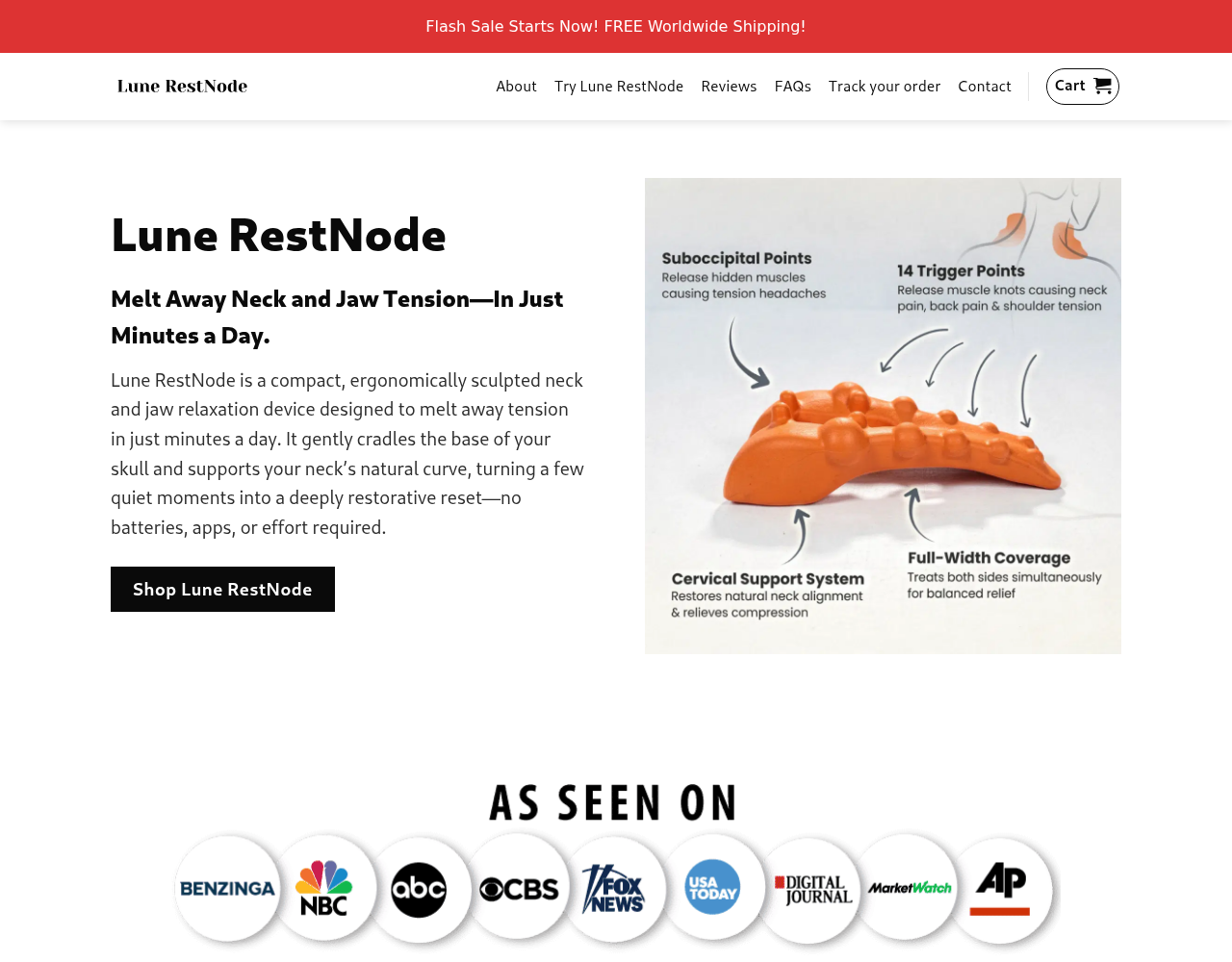
Lune RestNode is a shaped neck support with raised pressure points. The seller describes a passive relaxation tool, not an electrical treatment machine.
You lie back with your head and upper neck against the contours. The website suggests brief sessions intended to ease tension around the neck and jaw.
The distinction matters. A molded support can change how an area feels without establishing that it treats the underlying reason for pain, grinding, or headaches.
The real concern is the guarantee
The homepage presents a 60-day money-back guarantee beside an invitation to try the product at home and see whether you feel more relaxed.
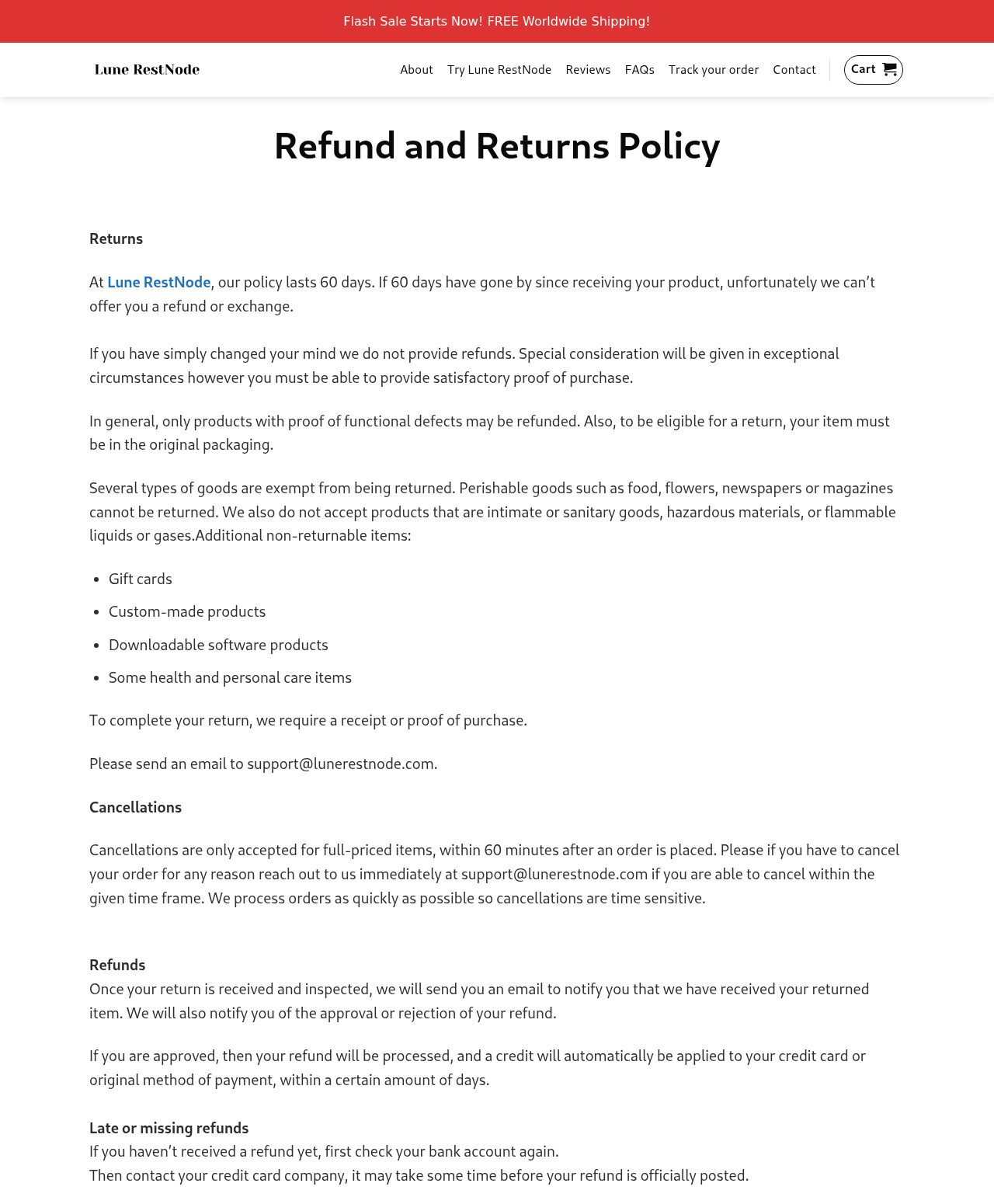
The detailed refund policy tells a different story. It excludes ordinary changes of mind and generally limits refunds to products with demonstrated functional defects.
That leaves an important question unanswered: what happens when the support arrives intact, but the promised relief never arrives?
- The advertised trial sounds satisfaction-based.
- The refund conditions focus on defects and original packaging.
- Return postage is assigned to the customer.
- Cancellation is restricted to full-priced orders within 60 minutes.
Our recommendation before you spend
Do not buy Lune RestNode on the assumption that trying it is financially risk-free. The published conditions do not support that reading.
An intact support can fail to help without having an obvious defect. That is exactly the situation the seller needs to address before calling this a trial.
The useful test is straightforward: will the merchant refund an undamaged support that fails to provide the advertised comfort? Get that answer in writing first.
The Relief Promise and the Evidence Behind It
Lune RestNode promotes relief from jaw tension, neck stiffness, head pressure, and everyday stress. Those descriptions bring several different problems under one appealing promise.
Someone uncomfortable after desk work may be looking for a different kind of help than someone experiencing persistent jaw pain, locking, or frequent headaches.
A sales page cannot determine which situation applies to you. Nor does a comfortable shape establish how well a product performs across those conditions.
The homepage explains its proposed mechanism through contouring, gravity, and pressure points. That is a description of how the product is intended to work.
It is not the same as a clinical comparison showing reliable benefits for people with a diagnosed condition.
The National Institute of Dental and Craniofacial Research explains jaw disorders as conditions requiring appropriate assessment, with different possible causes and treatments.
That guidance is not an evaluation of Lune RestNode. It helps explain why a relaxation accessory should not become a substitute for investigating continuing symptoms.
The site’s customer stories describe experiences such as feeling looser, winding down, and noticing less tension. Those accounts may sound relatable.
They still leave out the information needed to predict your outcome, including how customers were selected, what else they tried, and whether symptoms changed independently.
Do not turn a testimonial into a diagnosis or a guarantee. A person’s account of comfort is different from evidence that a device corrects a medical problem.
News Logos Do Not Establish Medical Results
The storefront also places an As Seen On banner beneath the product introduction, with familiar news-brand logos including NBC, ABC, CBS, and Fox News.
That visual can make a small accessory feel established before you have seen evidence about its performance.
A logo row does not explain what coverage occurred, whether it was advertising, or whether anyone independently tested this particular support.
Ask for the actual coverage if it matters to your decision. A news mention and a medical recommendation would still be different things.
The useful product questions remain unchanged: what benefit is demonstrated, who is it suitable for, and will the merchant accept a return if it does not help?
How the Lune RestNode Offer Works
Step 1: Everyday discomfort becomes the starting point
The offer begins with sensations many readers recognize: a clenched jaw, a stiff neck, or tension after hours in front of a screen.
That makes the product feel immediately relevant. You do not need to understand a complicated device or book an appointment to imagine using it.
The sales message then connects a simple physical object with a broader feeling of relief. Keep those two things separate when assessing the purchase.
A support can be easy to use while still being unsuitable for your body, your symptoms, or your expectations.
Step 2: Simplicity lowers the perceived commitment
The website emphasizes that no batteries, apps, or special effort are required. A short daily routine sounds easier to maintain than a complicated program.
But fewer moving parts do not automatically mean fewer purchasing risks. A passive accessory may have no broken mechanism to demonstrate if it simply feels unhelpful.
That becomes especially important when the refund policy asks for proof of a functional defect rather than dissatisfaction with the result.
Before purchasing, ask how the seller distinguishes an ineffective experience from a defective product. The answer should match the guarantee used to sell it.
Step 3: The 60-day promise makes trying it sound safe
The homepage encourages customers to build the support into their routine. Its guarantee language refers to feeling more relaxed and relieved within 60 days.
A reasonable shopper could understand that as permission to use the product and return it if the promised benefit does not materialize.
The detailed policy narrows that expectation. It says changes of mind are not refundable and generally requires functional defects for refunds.
Both statements belong to the same buying journey. The prominent reassurance should not be treated as an answer to the narrower policy’s eligibility rules.
Step 4: A quick cancellation window limits your exit
The refund page says cancellations are accepted only for full-priced items and only within 60 minutes after ordering.
Meanwhile, the storefront promotes a flash sale. That combination makes cancellation eligibility worth checking before payment, not after an impulsive purchase.
A discounted order may not fit the policy’s stated cancellation category at all. Ask the merchant to confirm the rule for the exact price you see.
If you already ordered and want to cancel, write immediately. Waiting for a support reply before submitting the request can waste the limited time available.
Step 5: Returns introduce postage and approval conditions
An eligible return still needs original packaging and proof of purchase. The seller then inspects the item before approving or rejecting the refund.
The policy assigns return shipping costs to the buyer. It also warns that postage is nonrefundable and discusses deductions from an approved refund.
Those conditions mean the advertised guarantee is not equivalent to a prepaid, unconditional trial. You need both eligibility and a workable return destination.
Calculate the potential cost before deciding whether to send anything back. Obtain written instructions rather than assuming the website’s contact address accepts returns.
Seller Identity, Contact, and Shipping Checks
The trading name is not a manufacturer identification
The terms identify the website operator using the Lune RestNode name. That tells readers which brand is making the offer.
It does not, by itself, identify a separate manufacturer or demonstrate where every unit is made. Avoid filling those gaps with guesses.
For a disputed order, the useful details are the merchant shown on your receipt, the billing descriptor, and the contact route tied to that transaction.
Keep all three. A brand name in an advertisement may not be enough for a payment provider to locate the charge.
The Scottsdale address needs a specific purpose
The footer lists 15169 N. Scottsdale Rd., Scottsdale, AZ 85254, USA. A contact address should not automatically be treated as a return warehouse.
There is no reason to mail a used support there without authorization. Ask which address handles your order and whether it accepts tracked customer returns.
Also ask whether the recipient name must match a company or a returns department. An incomplete destination can create another avoidable dispute.
Email support is the practical starting point
The published support address is support@lunerestnode.com. Use a clear subject containing the order number and the remedy you want.
For example, distinguish a cancellation request from a request to return a product that did not provide the advertised relief.
Do not assume that a support email exists only to provide reassurance. Its useful function is to produce a dated record of the seller’s actual answer.
The shipping policy shifts several responsibilities
Standard shipping is advertised as free. The policy also says customers may owe import duties or taxes when an order reaches its destination.
It further disclaims responsibility for certain carrier-related loss or damage after the package leaves the warehouse. That is a significant condition to notice.
A seller’s policy wording does not settle every consumer right. For a delivery problem, document the facts and ask your payment provider about the applicable process.
What to Do if You Already Ordered Lune RestNode
- Decide whether you need cancellation or a return.
Write immediately if the order has just been placed. Include the purchase time and ask the merchant to stop fulfillment rather than merely acknowledge your message.
If the support has arrived, identify the specific issue. An intact item that does not help is different from damage, missing parts, or an incorrect shipment.
- Save the guarantee beside the narrower refund language.
Keep screenshots of the homepage promise, the refund page, and your order confirmation. Include the full page address and the date in your records.
The comparison is stronger than a general complaint that the product was disappointing. It shows what encouraged the purchase and what later restricted the remedy.
- Ask for an answer about your exact circumstances.
Explain whether you used the support as directed and why it failed to meet the advertised expectation. Request written confirmation of eligibility and the return address.
If the seller rejects the claim as a change of mind, ask how that interpretation fits the satisfaction language displayed before purchase.
- Do not make discomfort worse to prove a point.
Stop using a device that increases pain or produces concerning symptoms. You do not need to keep testing it while waiting for a refund decision.
Continuing or worsening neck or jaw problems deserve appropriate medical or dental advice. A retailer’s suggested routine is not personalized care.
- Price the authorized return before sending it.
Keep the packaging and photograph the product’s condition. Obtain a tracked shipping quote using the destination supplied for your order.
Confirm the expected refund amount and any deductions. If the postage makes the proposed remedy impractical, explain that in the same written thread.
- Escalate an unresolved purchase problem accurately.
Contact your card issuer or payment service promptly with the advertisement, receipt, correspondence, and tracking. Describe the real issue rather than automatically reporting card theft.
The CFPB explains credit-card purchase disputes. Ask your provider which process and deadline apply to your particular complaint.
Questions Worth Settling Before Buying Any Neck Support
Start with the return trigger, not the length of the guarantee. Sixty days means little if the reason you would return the product is excluded.
Ask whether an opened, used support is eligible when it provides no benefit. A trial invitation should lead to a clear answer.
Then check sizing, materials, cleaning instructions, and suitability warnings. These details affect whether a shaped support can be a sensible purchase for you.
Compare the delivered price with products offering clearer specifications and returns. A large crossed-out price is not a measure of medical usefulness.
Finally, separate comfort shopping from symptom assessment. Buying a relaxation accessory should not delay attention to a persistent problem.
Frequently Asked Questions
Is Lune RestNode a scam?
The documented concern is a mismatch between satisfaction-style advertising and defect-focused refund terms. That supports a firm warning about the offer, not an unsupported criminal finding.
Do not order expecting an unconditional home trial. Require written confirmation that your likely reason for returning it is covered.
Does Lune RestNode treat jaw disorders?
The seller markets relaxation and tension relief. That does not establish treatment for a diagnosed jaw disorder or explain the cause of your symptoms.
Persistent pain, restricted movement, or recurring headaches should not be managed solely through an online accessory purchase.
Can I get a refund if it simply does not help?
The homepage creates that expectation, but the refund policy excludes changes of mind and generally requires proof of functional defects.
Ask support to reconcile the two statements for an undamaged product that provides no relief. Keep its answer with your purchase records.
How quickly must I cancel an order?
The published policy limits cancellation to full-priced items within 60 minutes. Send a written request immediately rather than assuming a longer cooling-off period.
Other rights may depend on your location and transaction. Ask your payment provider if the merchant refuses a reasonable resolution.
Is the listed Arizona address where returns go?
Do not assume so. The footer’s contact address is not sufficient authorization to send a package.
Obtain the correct recipient, destination, and return approval directly in your order’s support thread before paying postage.
Do the As Seen On logos mean doctors recommend it?
No. A row of news-brand logos does not establish medical endorsement, clinical testing, or suitability for your symptoms.
Look for the actual coverage and assess what it says. Do not treat a familiar broadcaster’s logo as a substitute for product evidence.
The Bottom Line
Do not buy Lune RestNode as a risk-free answer to neck or jaw discomfort. Its satisfaction message is broader than its written refund conditions.
If you already ordered, preserve both pages and request a specific remedy promptly. Seek appropriate care for continuing symptoms rather than chasing relief through the guarantee.

Join the discussion
0 commentsShare your experience or ask a question about this article.
Discussion
Start the conversation
Have a question or something useful to share? Add the first comment.