

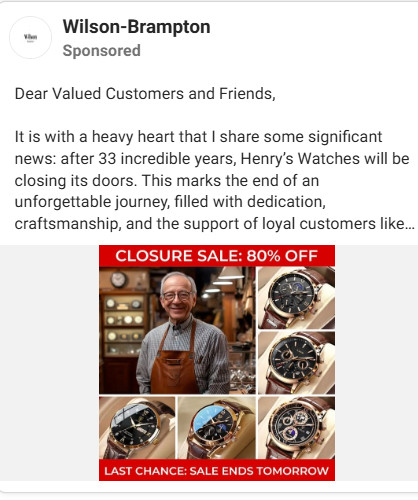
If you’ve recently come across ads on Facebook, Instagram, or TikTok claiming “Henry’s Watches is closing its doors after 33 years” and offering up to 80% off on luxury watches, you’re not alone. These aggressive “closure sale” campaigns have flooded social media feeds around the world. At first glance, the brand’s website appears legitimate, showing an elderly watchmaker named “Henry,” surrounded by antique clocks, telling a heartwarming story about craftsmanship, tradition, and passion.
But behind this carefully constructed facade lies a sophisticated dropshipping scam operation that uses AI-generated images, fabricated founder stories, and deceptive urgency tactics to lure in unsuspecting customers.
This guide investigates the Henry’s Watches scam in detail — how it works, why it’s dangerous, and what to do if you’ve fallen victim to it.

Scam Overview
The Illusion of a Family-Owned Watch Shop
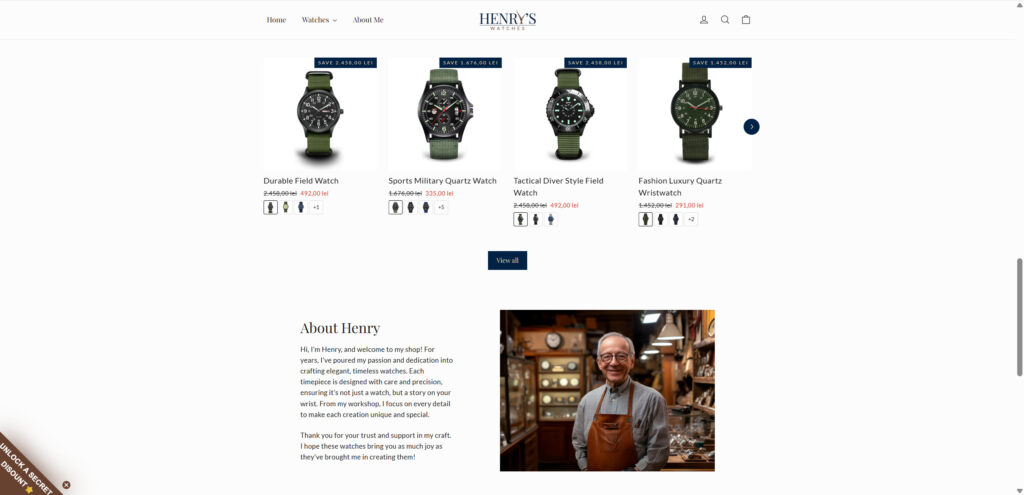
When you land on henrys-watches.com, you’re greeted by a professional-looking website. It looks polished, featuring:
- A vintage workshop background
- A warm welcome from “Henry,” an elderly craftsman
- “Timeless Elegance” branding
- Dramatic discounts and a “Closure Sale” banner at the top
The story presented claims Henry has spent over 30 years crafting high-end timepieces, and due to “retirement,” the shop is supposedly closing down — hence the deep discounts.
However, none of this is real.
- The photos of Henry are AI-generated. They’re not real portraits of a watchmaker. Multiple scam sites reuse identical images, sometimes changing only the name.
- There is no verifiable business entity, address, or registration.
- Customer reviews and contact details are vague or absent.
- The same design, wording, and discounts appear across dozens of cloned websites.
The Too-Good-to-Be-True Pricing
On the site, watches are listed at inflated “original” prices and then slashed by 70–85%, making it look like a once-in-a-lifetime deal.
This is a classic scam tactic:
- The real value of these watches is often less than $10, sourced from low-cost Chinese suppliers on sites like AliExpress or 1688.
- Fake “savings” numbers create a sense of urgency and make victims believe they’re buying high-end products at clearance prices.
Fake Emotional Storytelling
Every scam of this type uses a crafted persona. In this case, “Henry”:
- Is shown in warm lighting with a workshop background
- Supposedly spent “33 years perfecting the art of watchmaking”
- Claims to personally design each watch
- Invites customers to support his “final sale”
But no evidence of this man or company exists in official watch registries, trademark databases, or social media accounts prior to the ad campaign.
This is an AI persona used to build trust and bypass people’s natural skepticism.
Red Flags on the Website
A closer inspection of the Henry’s Watches website reveals several red flags typical of scam operations:
- No verifiable business address or company registration.
Legitimate watchmakers typically list physical workshops or showrooms. - No VAT or company registration number in the footer or checkout page.
- Generic contact form only. No direct email, no phone number.
- Stock images and AI-generated photos. The founder image is not real.
- Fake urgency pop-ups. “Only 4 left in stock!” or “25 people are viewing this product.”
- Identical layout to other fake “craftsmanship” sites selling different products — e.g., fake painting studios, furniture workshops, or leather goods “closing sales.”
Connection to a Larger Scam Network
Henry’s Watches is not an isolated website. It is part of a wider network of scam sites that:
- Rebrand the same AI-generated founder persona
- Run massive ad campaigns on Facebook, Instagram, and TikTok
- Claim to be “family businesses closing down”
- Offer fake “up to 80% off” sales
- Ship cheap, low-quality items from China with no returns or refunds
Other similar scam sites use names like:
- Wilson & Brampton Watches
- The Artisan Workshop
- Master Horology
- Smith’s Timepieces
The domain henrys-watches.com is newly registered and does not match the claim of “33 years in business.”
Reports from Victims
Numerous online complaints describe the same pattern:
- Customers receive cheap, flimsy watches that look nothing like the advertised models.
- Some never receive anything at all.
- Refund requests go unanswered.
- Chargebacks are the only way to recover money.
This isn’t just a disappointing shopping experience — it’s a deliberate scam built on deception.
How The Scam Works
Step 1: Launching Targeted Social Media Ads
The scam starts with highly targeted ads on Facebook, Instagram, and TikTok.
These ads often say:
- “Henry’s Watches Closing Sale – 80% OFF”
- “33 Years of Craftsmanship – Final Clearance”
- “Last Chance – Sale Ends Tomorrow!”
They show emotional imagery of “Henry,” with beautiful luxury watches displayed in warm, elegant lighting.
The ads are run through sponsored business manager accounts that are later abandoned or deleted after the campaign ends.
Step 2: Emotional Hook and Storytelling
When users click the ad, they’re brought to a carefully constructed landing page:
- A hero banner with Henry at his workbench
- A personal message: “I’ve spent my life making these watches. This is my final sale before retirement.”
- Urgency banners: “Closure Sale! Up to 80% OFF”
- Pop-ups: “Only a few left in stock!”
This story bypasses rational buying behavior by appealing to:
- Trust in a small, family-owned brand
- Fear of missing out on a good deal
- Emotional empathy for “Henry’s last days of business”
Step 3: Fake Discounts and Inflated Prices
Each product listing shows:
- A fake “original price” of 1,452–3,016 lei
- A massive discount bringing it down to 291–603 lei
- “You save 2,000+ lei” banners
The “original prices” are entirely fictional, but they create a psychological anchor making the deal seem irresistible.
Step 4: Checkout with Limited Information
The checkout page typically:
- Has no company name
- Lists no address
- Accepts only credit card or PayPal
- Often has no SSL company verification
In some cases, the “Terms & Conditions” link leads to a generic template used on many other scam websites.
Step 5: Dropshipping Cheap Products from China
Once an order is placed:
- It is forwarded to a cheap supplier on AliExpress or a similar platform
- The scammer pockets the difference
- A low-quality, unbranded watch arrives weeks later — or not at all
- No returns are accepted
Some victims receive a completely different product than advertised.
Step 6: Vanishing Customer Support
When customers try to contact support:
- Emails go unanswered
- Contact forms receive no replies
- The website may disappear after a few weeks
The scam relies on short-term blitz campaigns to make as much money as possible before shutting down and reappearing under a new name.
Step 7: Rebranding and Repeating
Once enough complaints pile up or ad accounts get flagged, the scammers:
- Abandon the domain
- Register a new one with a different name
- Use the same AI-generated “founder”
- Launch the same closure sale ads again
This makes it extremely hard for victims to trace them.
What to Do If You Have Fallen Victim to the Henry’s Watches Scam
If you’ve already placed an order or suspect you’ve been scammed, follow these steps:
1. Contact Your Bank or Card Issuer Immediately
- Request a chargeback for fraud or goods not received as described.
- Mention that the site is part of a scam operation.
- If you paid by PayPal, open a dispute as soon as possible.
2. Document Everything
- Take screenshots of:
- The website
- Product pages
- Order confirmation emails
- Ads you saw on social media
- Save your payment transaction details.
- This evidence helps strengthen your refund or dispute claim.
3. Report the Website
- File a complaint to your local consumer protection agency.
- Report the website to:
- Facebook Ads or Instagram (if you saw the ad there)
- Google Safe Browsing or Scamwatch in your country.
- This can help others avoid falling for the same scam.
4. Block and Unsubscribe
- Block emails from the scam site to avoid further phishing attempts.
- Scammers sometimes reuse emails to send fake refund links or phishing campaigns.
5. Monitor Your Bank Account
- Keep an eye on any unauthorized charges.
- Some scam networks store credit card information for additional fraudulent transactions.
6. Warn Others
- Post your experience on consumer forums, Reddit, or social media.
- Use platforms like Trustpilot or ScamAdviser to alert others.
Why This Scam Is So Effective
This scam combines multiple psychological triggers:
- Authority: “Henry” looks like a trustworthy, elderly craftsman.
- Scarcity: “Closing sale ends tomorrow!” creates urgency.
- Trust signals: Professional-looking website design.
- Emotion: Story of a retirement, not a faceless corporation.
- Price anchoring: Inflated original price makes the “deal” look unbeatable.
Many victims don’t realize it’s fake until:
- The product arrives and it’s worthless
- The site vanishes
- Refund attempts fail
How to Spot These “Closure Sale” Scams in the Future
Here are some clear red flags to help you identify similar scams:
- New domain with “old” business story.
A 33-year-old company shouldn’t have a domain registered weeks ago. - AI-generated founder images.
Reverse image searches often reveal stock or generated faces. - Too-good-to-be-true discounts.
Luxury watches rarely get 80% off in real clearance sales. - No verifiable contact information.
No address, no phone number, vague email = bad sign. - Fake urgency and pop-ups.
“25 people viewing,” “limited stock,” or countdown timers are manufactured. - Lack of press or historical presence.
Real businesses of 33 years have articles, listings, reviews, or mentions online. - Identical layout across multiple scam sites.
These scams reuse the same Shopify templates with different logos.
Real vs. Fake Watch Shops: Key Differences
| Feature | Real Watch Shop | Henry’s Watches Scam |
|---|---|---|
| Domain Age | Years old | Registered weeks ago |
| Contact Info | Full address, phone, VAT | None or vague email form |
| Founder | Real person, verifiable | AI-generated image |
| Discounts | Modest or seasonal | 70–85% off “everything” |
| Product Source | Known brands, service guarantees | Cheap dropship from China |
| Returns | Clear and enforced | Ignored or fake |
| Online Reviews | Trustpilot, forums, media mentions | None or all fake |
Where the Products Actually Come From
Most of the “luxury watches” from Henry’s Watches are:
- Generic Chinese quartz watches
- Purchased for $3–$8 per unit
- Labeled with fake brand names or left blank
- Mass-produced and shipped with long delays
Victims often report:
- Watches arriving without branding
- Inaccurate colors or designs
- Watch hands falling off or not working
This is not a legitimate clearance sale — it’s cheap dropshipping disguised as heritage watchmaking.
Links to Other Known Scams
This network has been linked to other fake “closure sales” in various niches:
- Artisan Furniture
- Leather Bags
- Painting Studios
- Fake Jewelry Brands
Common names:
- Wilson-Brampton
- James & Owen
- The Watch Workshop
- Artisan Timepieces
These sites use the same exact photos of “Henry” or a similar AI character with minor edits.
The Bottom Line
The Henry’s Watches Closure Sale is not a genuine retirement sale — it’s a well-coordinated dropshipping scam.
The founders, story, and products are fabricated using AI tools and stock templates. Victims are lured with fake emotional storytelling, extreme discounts, and disappearing support.
Never buy from websites you can’t verify. Always:
- Check domain age and company info
- Reverse image search the founder’s face
- Use protected payment methods
- Trust your instincts when something seems “too good to be true.”
Scammers are becoming more sophisticated — but with the right knowledge, you can spot their tricks and protect your money.
Frequently Asked Questions (FAQ)
Is Henry’s Watches a real company?
No. There’s no evidence of a real watchmaking company behind henrys-watches.com. The founder image and story are AI-generated, and the site is part of a dropshipping scam network.
Are the watches real luxury timepieces?
No. Victims report receiving low-quality quartz watches from China that don’t match the product photos.
How can I get my money back?
File a chargeback with your bank or a PayPal dispute as soon as possible. Document your purchase and include screenshots as evidence.
Why are the discounts so big?
Because the “original” prices are fake. The scammers inflate them to make cheap products look like luxury bargains.
What if I haven’t received my order yet?
You should act quickly to request a refund through your payment provider. These sites often disappear within weeks.
Are there other scams like this?
Yes. Many similar scams use fake closure sales for furniture, art, bags, or watches, often reusing the same AI-generated founders.
How can I avoid these scams in the future?
Always verify the business. Check domain age, look for real contact info, and search for external reviews. Be cautious of unrealistic discounts.
Final Thoughts
Henry’s Watches is another example of a modern e-commerce scam that uses professional storytelling, AI-generated imagery, and fast ad campaigns to trick buyers.
By learning how these scams operate, you can:
- Protect yourself
- Help others stay safe
- Reduce the reach of scam networks
Always do your due diligence before buying online — especially from unknown brands offering suspiciously steep discounts.
Disclaimer: The information in this article is based on independent investigation and user reports. The views expressed do not represent any official legal authority. All claims should be independently verified. If you suspect fraud, contact your bank and local consumer protection agency immediately.








