


If you’ve just been told your kidney numbers have changed, an ad promising better results in two weeks is hard to ignore.
HydroHealth says a water bottle can do that. To understand the offer, start with the difference between what happens inside the bottle and what happens in your body.
Overview
The bottle and the kidney claim need separate answers
The HydroHealth bottle is sold as a rechargeable device that adds dissolved hydrogen to drinking water. A consumer test found that its sample did produce a measurable reading.
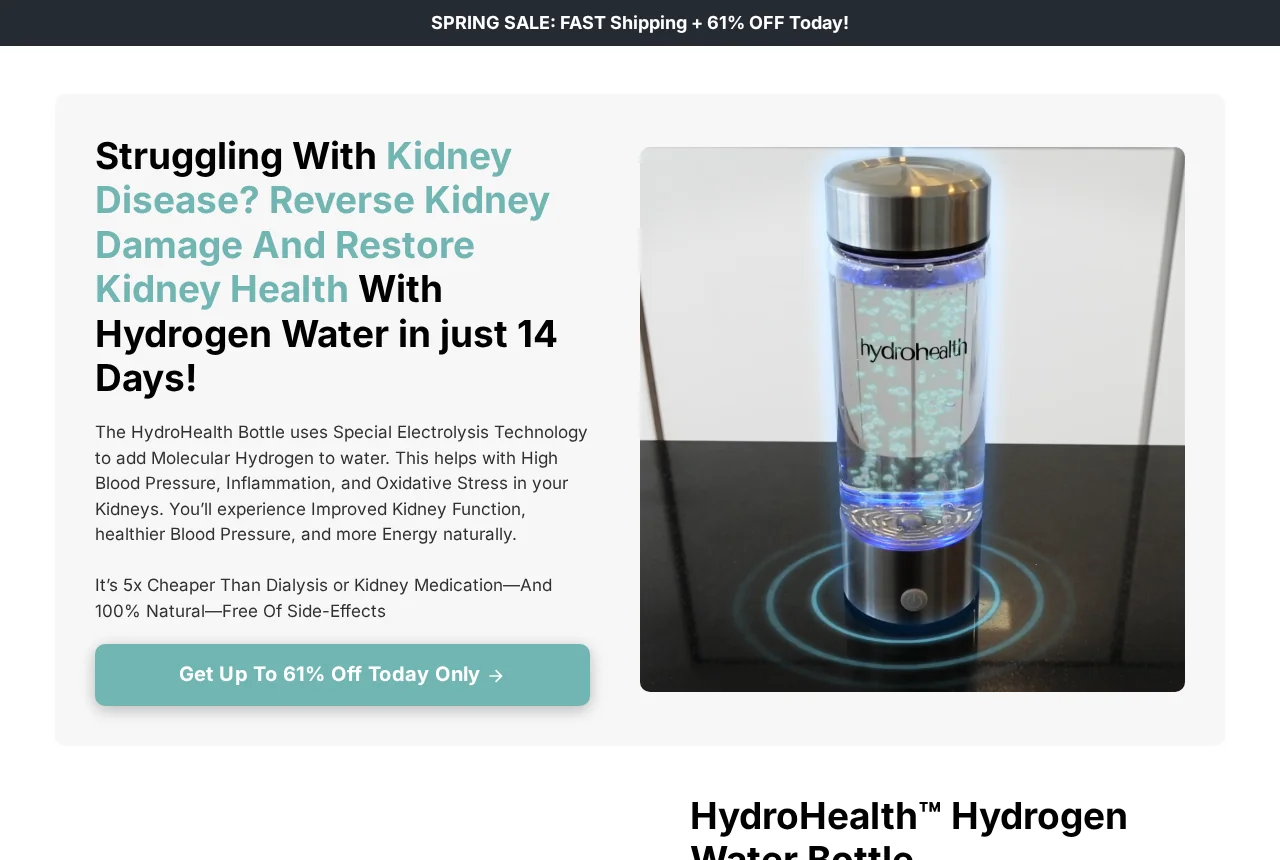
The HydroHealth kidney offer makes a much bigger claim: it says the bottle can reverse kidney damage in 14 days. It compares the product with dialysis and kidney medication.
That comparison matters more than whether the bottle bubbles. Generating hydrogen is a hardware claim. Reversing kidney damage is a claim about a medical outcome in people.
Do not switch from prescribed care to this bottle. A sales page and a water reading do not tell your healthcare team how well your kidneys are working.
The positive part of the test had a narrow meaning
In ScamAdviser’s HydroHealth test, the reviewer measured a plain-water baseline and then measured water after running a cycle in the purchased bottle.
The meter registered hydrogen in the prepared sample. That observation distinguishes it from a bottle whose effects are only shown in graphics or mentioned in a description.
It was a consumer demonstration, not a series of calibrated tests across lots. It didn’t verify the exact maximum claimed on a different sales page or measure any medical outcome.
A person can therefore accept that a bottle produces hydrogen without accepting that the dose, exposure, or treatment timeline in its advertising is proven.
What to separate when you see the promotion
- A bottle feature: A reading after a cycle can support what happened in that sample. It doesn’t identify a dependable dose in every bottle.
- A research finding: An animal study can justify more research. It isn’t a trial showing people with chronic kidney disease recovered after using this retail product.
- A guarantee: A refund policy is about recovering money. It can’t reverse the time lost if someone delays medical care while waiting for the advertised result.
- An actual order: The price, return clock and any recurring product must be checked on the route you used. Product names alone don’t identify the purchase terms.
How the HydroHealth Kidney Health Offer Works
Step 1: The ad gives a reassuring timeline to someone worried about bad news
Kidney care often involves monitoring over months or years. A message that promises reversal in 14 days offers a clear ending to an uncertain situation.
The funnel goes further than general marketing about hydration. Its lead compares the price of the bottle with dialysis or medication, putting named medical treatments into the price comparison.
Those figures aren’t competing prices for equivalent services. Dialysis performs part of the work that failing kidneys can no longer do. A bottle isn’t designed to do that job.
It makes sense that a less expensive and simpler option sounds attractive. Ask the kidney care team what the current plan does before letting that contrast drive your decision.
Step 2: The sales page ties a real process to a different kind of result
Electrolysis can generate gas. The consumer demonstration checked water outside and inside the bottle system and reported a measurable difference after the cycle.
A concentration in water is not a measurement of how much gets into a person’s tissues.
Several additional questions would need answers before you could link it to a medical effect.
The kidney page includes a comparison table claiming 5 parts per million for HydroHealth. The reviewer did not establish that maximum across models under comparable testing conditions.
Bottle versions, meters and timing matter. A number on different packaging is not interchangeable with a reading from a one-off consumer comparison.
Step 3: Studies and testimonials make the jump sound less obvious
One published mouse study used hydrogen-rich water in an experimental model of oxalate-related kidney injury. The apparatus prepared water at a reported concentration of at least 2.5 parts per million.
The study did not test HydroHealth in people with chronic kidney disease. The animals’ circumstances and the outcome measures aren’t the same as a patient trying to avoid dialysis.
The authors’ findings don’t become meaningless because they studied animals. They just answer a narrower question. They don’t give the retailer a human treatment outcome to put on a countdown.
The sales page also features customer stories about kidney numbers or symptoms.
They do not establish what caused the change, what else the person was doing, or whether the experience generalizes.
Step 4: A refund promise makes it sound safe to wait for the health result
The kidney offer presents the guarantee as a way to try the product without financial risk. At one point it says an unhappy buyer doesn’t have to send it back.
Elsewhere on that page, the FAQ says to return it within 60 days, while a later badge says 90 days. Those are different instructions for the same route.
The page’s medical disclaimer says not to delay care. That’s important advice. It doesn’t turn the headline about fast reversal into credible clinical evidence.
If you shop anyway, get one written answer for your order. Check when the clock starts, whether used items are eligible and whether return postage is deducted.
Seller, Delivery, and Refund Terms
The kidney offer and the main store share a brand, but aren’t one checkout
The kidney page uses a HydroHealth subdomain. The main HydroHealth product listing also sells a hydrogen bottle and shows the same branded support email.
This connects the marketing to the brand. It doesn’t tell you which receipt, selection, upsell or terms were presented to another buyer.
Use your order confirmation to identify the seller and exact offer. If the receipts come from different routes, don’t merge their advertised guarantees.
A US warehouse statement describes shipping, not manufacture
The kidney funnel advertises shipment from a US warehouse. That does not tell you who manufactured the bottle, which model a reviewer received, or where returns are authorized.
If you are returning a bottle, don’t assume the sender on its shipping label accepts returns. Ask the merchant for an order-specific address and keep any authorization number.
Also check whether your purchase included accessories or other goods. A refund keyed to a bundle can require records of every item ordered and delivered.
The return instructions disagree on the same page
The strongest example isn’t a complaint about a late reply.
It’s the wording the offer itself uses: one section says no return is necessary, and another describes sending the bottle back.
Save both parts if they were present when you purchased. If the seller applies the more restrictive wording, you want to be able to show what you relied on.
The shared support email is a route to request a remedy. It isn’t proof of a particular response time, successful cancellation, or an automatically issued refund.
A separate subscription program doesn’t prove your bottle order renews
HydroHealth’s subscription page describes recurring deliveries and says the subscription guarantee requires returning unopened bottles, with shipping and handling excluded.
Those terms are different from the bottle funnel’s no-return copy. They should not be applied to a one-time order merely because both pages use the same brand.
Read the actual charge and items on your confirmation. If you see a recurring delivery, record what it covers, when it renews and any cancellation the seller confirms.
How to Read the Price and Bonus Claims
The kidney page presents one advertised bundle at $99.95 and gives separate values to the sleeve and electronic guide. Those numbers don’t establish the value of the medical claim.
Check what the advertised price covers before shipping or taxes. The main store lists sleeves and cleaning products separately, so compare the bundle item by item.
A brand can sell one bottle as a retail product and put it in a different promotional package elsewhere. Keep the terms and itemization for the offer you actually select.
The kidney page mentions a charitable contribution. A donation claim, even if true, is not a clinical endorsement of the bottle by the organization receiving it.
If an add-on or free trial appears later in the checkout, note the price shown beside it and whether it renews. Don’t interpret a bonus on one page as universal.
Think of the health promise independently of the payment details. A cheaper price or an unambiguous return policy would not establish that the bottle treats chronic kidney disease.
What to Ask Your Kidney Care Team
If the offer persuaded you because of a particular result, bring the result to your clinician rather than asking whether the bottle is good in general.
A kidney specialist can explain what your tests mean in context. One advertisement can’t determine the cause of an abnormal result or which intervention is appropriate for you.
The NIDDK guide to managing chronic kidney disease explains why a care plan can involve managing blood pressure, reviewing medications and getting tailored nutrition advice.
Ask whether you have a fluid target. Don’t increase how much you drink just because seller testimonials describe doing so. Follow the guidance you received for your own circumstances.
If you already changed a treatment or skipped a scheduled session because of the promotion, contact your treating team promptly. Don’t substitute another online remedy for their advice.
A study worth taking to that conversation should describe the people enrolled, the product actually tested and the outcomes measured. A photo of bubbles answers none of those questions.
What to Do If You Ordered HydroHealth
-
Keep following your care plan. If you bought the bottle hoping to replace or postpone treatment, contact your kidney care team. Tell them what the offer persuaded you to change.
Ask how to handle any missed medicine, fluid plan or appointment. Don’t try to work out an adjustment from the retailer’s product instructions.
-
Save the exact offer and confirmation. Keep the kidney claim, bundle price, refund terms and order details. If you saw more than one refund period, save each occurrence.
The channel through which you actually paid is more useful than a general search for HydroHealth. Include the order date and the original transaction when you contact support.
-
Request a cancellation or refund in writing. If it hasn’t shipped, ask whether the order can be canceled. If delivered, ask which guarantee applies and whether you must return it.
Ask about return postage, condition requirements and the date by which you need to act. Don’t send accessories or bottles to a destination that hasn’t been confirmed for your order.
-
Check if there is a second, recurring line item. Look for a next shipment date, amount or item such as a separate consumable.
If you don’t want it, cancel through the seller.
Keep the written confirmation and watch the next statement. Canceling future orders doesn’t automatically refund a charge the store has already processed.
-
Use the payment provider if the merchant doesn’t resolve it. Describe the actual dispute, whether it’s a refused return, incorrect shipment or renewal you didn’t agree to. Check applicable deadlines.
Give the provider your order record and correspondence. Keep medical records private unless a qualified adviser specifically tells you what is needed. The issue is what the merchant promised.
Frequently Asked Questions
Does the HydroHealth bottle make hydrogen water?
The reviewer reported a measurable hydrogen reading in the purchased sample after running its cycle. That finding doesn’t verify every unit’s output or establish any benefit for kidney disease.
Can the bottle reverse kidney damage in 14 days?
The ad makes that promise, but the evidence discussed here doesn’t demonstrate it in people using this product. Do not use the bottle to replace prescribed kidney treatment.
Does the mouse study prove the bottle works for people?
No. It studied a particular form of induced injury in mice under defined conditions. It did not test this retail bottle as a treatment for people with chronic kidney disease.
Do I have 60 or 90 days to request a refund?
The kidney page displays both figures and gives conflicting instructions about sending the bottle back. Preserve your offer and request a written answer for your specific order right away.
Will I automatically be enrolled in a refill plan?
A separate HydroHealth subscription program exists. That isn’t proof that ordering this bottle automatically enrolls you. Check the terms and charges for the actual purchase.
Is hydrogen water a substitute for dialysis?
No. Dialysis performs functions your kidneys can no longer perform adequately. Talk to your kidney specialist about treatment options rather than relying on the bottle ad.
The Bottom Line
Don’t buy HydroHealth to reverse kidney damage or replace medication or dialysis. A bottle can generate hydrogen without delivering the medical result the ad promises.
If you bought it for that reason, talk to your care team before changing anything. Save the terms shown at purchase and ask the seller for a refund in writing.

Join the discussion
0 commentsShare your experience or ask a question about this article.
Community experiences
Did this happen to you?
Your experience could help someone recognize the same scam. Submit a private report for our team to review.
I experienced this tooReports are reviewed before publication. Sharing publicly is always your choice.
Discussion
Start the conversation
Have a question or something useful to share? Add the first comment.