


The TrueDetect ad makes the alarm you already own sound like the thing putting your family at risk.
Its offer looks simple: plug in a new detector, pair a phone, and get more time to leave. But how much can that promise actually tell you?
Overview
TrueDetect sells an earlier warning, not just a digital display
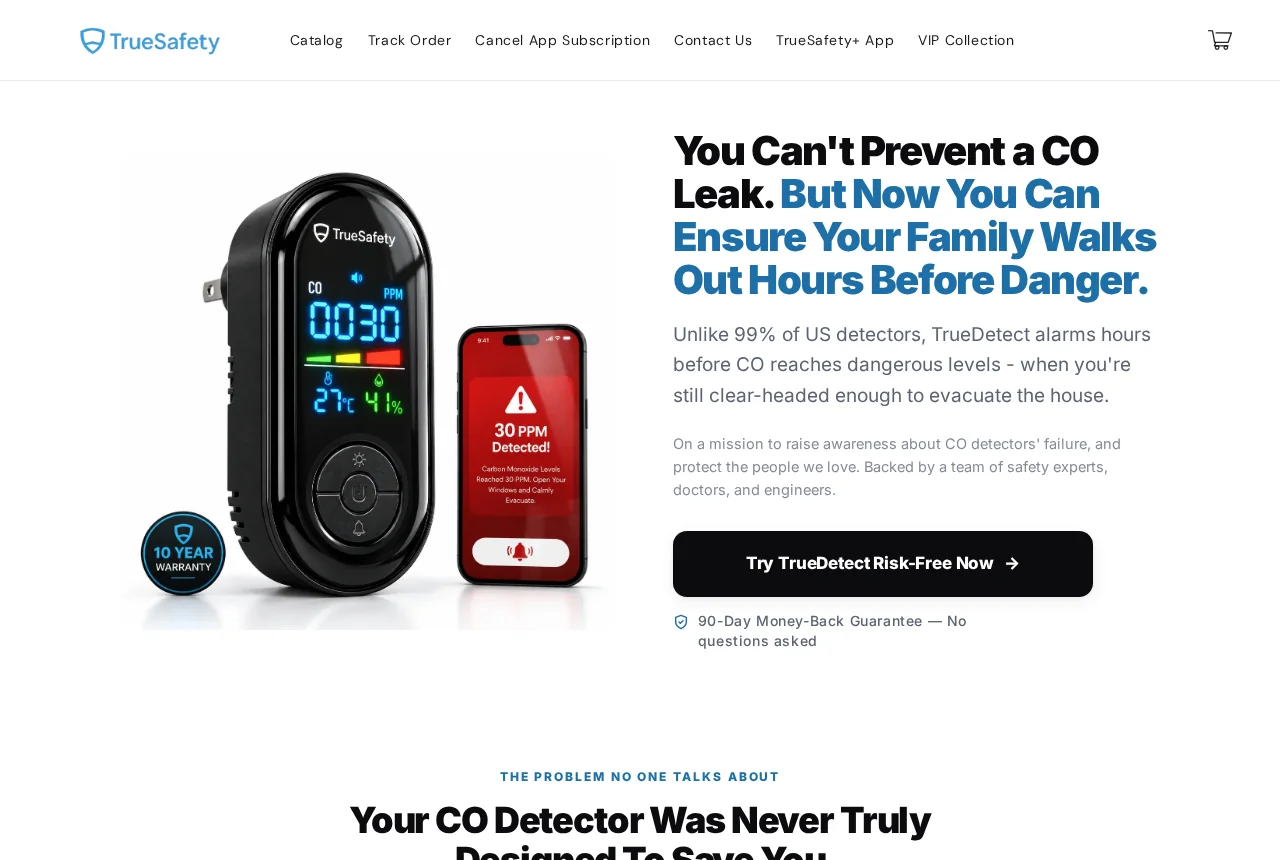
The TrueSafety product page advertises the TrueDetect CO Detector 2.0 with a 30 ppm alarm threshold, a live display and phone notifications.
It says people will get out hours before the air becomes dangerous. That is the claim to examine, not simply whether the detector shows a number when plugged in.
The time available to leave would depend on what is happening in the building. An advertised threshold cannot guarantee that a real incident will unfold slowly.
If a carbon monoxide alarm is sounding now, or you suspect exposure, leave for fresh air and call emergency services from outside. Don’t wait for another reading.
The video looked at a unit, not the whole certification question
In ScamAdviser’s TrueDetect video, the unit shown had a plug-in case and a display for temperature, humidity and carbon monoxide. The reviewer did not see a UL mark.
The demonstration was informal, without a calibrated test concentration. It can’t tell us whether the unit met any alarm standard, or prove that it would fail at a specified concentration.
The current sales page refers to a 2.0 version and phone functions. Don’t assume those details describe the exact hardware in the video.
That distinction matters both ways. An old informal test doesn’t prove a newer unit is defective.
A new sales page doesn’t independently verify its certification or make the old test reliable.
Three things to verify before replacing an alarm
- The exact model: Ask for the brand, model number and a photo of the permanent label. Search the certifier’s directory for that model, not just the marketing name.
- The safety standard: In the US, the CPSC recommends an alarm meeting the current UL 2034 standard. A graphic about a warranty or a mobile feature isn’t the same evidence.
- The power source: Check what happens in a power outage. The CPSC recommends a battery-operated alarm or one with battery backup, including when an alarm plugs into an outlet.
- The recurring price: TrueSafety offers a paid app subscription. Find out whether you’re agreeing to it before paying and what remains available if you cancel.
How the TrueDetect Early-Warning Offer Works
Step 1: The promotion asks you to distrust the alarm on your wall
TrueSafety’s product page contrasts its detector with what it depicts as conventional alarms that wait too long. It compares headline thresholds as if they answer the entire safety question.
The CPSC’s carbon monoxide fact sheet describes compliant alarms as intended to sound before exposure becomes potentially life-threatening. It does not tell families to replace them with a commercial app.
There is a genuine policy discussion about low-level exposure and alarm requirements. That discussion isn’t evidence that a particular product has passed tests or performs as advertised.
Think about the scenario the promise leaves out. If the source raises the concentration quickly, a difference in thresholds does not translate into a fixed number of hours.
Step 2: An on-screen reading is made to look like a verified safety margin
The retailer’s hero image shows 30 ppm on a detector and a warning on a phone. It’s a marketing example of the intended alerts, not an independent laboratory report.
A display, an audible alarm and a phone alert each have different jobs.
A sensor can report a value without establishing when the hardware will sound or the phone will receive anything.
The model label and certification record matter more than what a screenshot can show. The listing didn’t supply an independently verifiable listing number alongside the core claim.
Don’t interpret that as a finding that no certification exists.
It means you cannot confirm the exact unit from the evidence in the pitch. Ask for the record before relying on it.
Step 3: The app turns part of the offer into an ongoing purchase
The TrueSafety+ membership page describes a recurring price of $14.95 a month. It treats membership as a separate item that can be added and purchased.
The store’s refund policy describes a 14-day trial when a buyer affirmatively opts in, followed by automatic monthly charges. It says cancellation prevents future charges.
Those statements tell you what the subscription is. They don’t show that every detector buyer is enrolled, or exactly what was selected in someone else’s order.
Ask which functions need the app, which persist after cancellation, and whether the local alarm is independent of a phone connection.
Get those answers for the exact device, not a similar model.
Step 4: At home, nobody should have to test the sales claim with a fuel source
An informal exposure demonstration may look convincing because something is happening on camera. Without controlled conditions it doesn’t tell you whether a detector is safe.
Never generate carbon monoxide to check an alarm at home. Follow the manufacturer’s test procedure for a verified unit. The CPSC notes that a test button doesn’t measure sensor accuracy.
If you want to confirm the device has been evaluated, ask for certification details rather than trying to reproduce a seller’s or reviewer’s demonstration.
A reading that stays at zero isn’t a reason to dismiss an alarm elsewhere. Treat a suspected exposure as an emergency and let responders assess the building.
Seller, Hardware, and Return Checks
TrueSafety is the storefront name; Kinipop LLC is named in its footer
The TrueSafety refund page lists Kinipop LLC and a Torrance, California business address. That’s how the shop identifies itself for this route.
A similarly named detector is listed by Arbasa. That is a separate offer.
A retailer that uses the name TrueDetect doesn’t necessarily sell the same revision or provide the same app access.
Your receipt should identify who handles the purchase. If you bought elsewhere, don’t assume a policy on TrueSafety’s website applies to your order.
The address doesn’t identify the alarm’s manufacturer
A mailing address for a seller isn’t a factory address or a certification file. Check the permanent label on the shipped unit and the documentation that came with it.
If the seller gives you an approval document, compare the model, design and power type. A file that describes a different model won’t tell you how this one was tested.
Power backup is a concrete point to verify. The fact that the alarm is illustrated beside a wall outlet doesn’t tell you what happens if that outlet loses power.
The hardware guarantee and the app refund policy aren’t interchangeable
The product page advertises a 90-day hardware guarantee. The refund policy tells buyers to notify the store within 90 days of delivery for eligible direct purchases.
It also assigns return postage depending on the reason. Ask whether the seller classifies your concern as damage, an incorrect item, a mismatch or a change of mind.
The same policy treats charged subscription fees differently from physical goods.
It says they’re generally nonrefundable once charged, except where required by law. A hardware return doesn’t automatically cancel app billing.
It is possible to ask for proof without giving up alarm coverage
Ask for the marked model number, certifier and listing number before removing anything that already protects your home. Leave existing, working compliant alarms in service.
Request the written app cancellation terms separately from documentation about the local siren. The hardware may have functions distinct from the phone service; don’t guess which functions continue.
If the seller doesn’t provide enough information to verify it, choose a model you can independently verify. You don’t need another sales comparison to make that decision.
What the Alert Numbers Don’t Tell You
A threshold is not a countdown
Imagine a source that turns on and off with the heating system. The concentration at different points in the house may not rise at the same rate.
An outlet near the source and one outside an upstairs bedroom can tell different stories at the same time. Placement is part of a home’s warning system.
The store’s threshold comparison leaves little room for that. Two different settings cannot guarantee a fixed gap between alerts unless you know how the concentration changes at each detector.
Don’t interpret a quiet display as an all-clear from the building. If emergency responders need to check a possible source, let them do it before you return.
A document about standards isn’t a certificate for this product
The seller cites public discussions about whether alarm standards should change. Those documents can tell you what was proposed and why. They don’t test the detector in your basket.
A product listing should let you connect its specific model to an independent evaluation. If two products look alike, that connection becomes more important, not less.
Look for the actual name listed by the certifier. A regulator discussing carbon monoxide safety or a test standard doesn’t endorse every manufacturer that references the page.
Likewise, a recall or public warning about one plug-in detector doesn’t automatically apply to a similar two-tone case. Compare the named model and the permanent markings before drawing a connection.
Decide what must work when the phone isn’t nearby
Phones are useful for extra alerts when you’re away. They aren’t always charged, connected or in the room. The device itself must give the warning its documentation promises.
Ask what happens if the wireless connection drops or the account isn’t signed in. If the hardware has backup power, ask which functions that backup powers.
For a shared home, make sure everyone knows which sound means leave immediately. A low-battery notice and an active alarm aren’t the same thing. Read your model’s manual.
Arrange the household’s safe meeting point before an alarm. Sorting out the purchase or app account can wait until everyone is already outside and responders have been called.
What to Do If You Ordered TrueDetect
-
Deal with any possible exposure first. If a CO alarm sounds or you suspect poisoning, get everyone outside to fresh air. Call emergency services from outside.
Don’t go back inside until responders say it’s safe. Don’t stay to check a second device, open an app or work out which appliance caused the problem.
-
Keep verified protection in place. Don’t remove a working compliant alarm to make room for a unit you can’t verify. Check coverage and setup against the instructions and local requirements.
If no reliable alarm is installed, get one that meets the applicable standard. In the US, follow CPSC guidance on coverage outside sleeping areas and on each level.
-
Check the label, not just the box. Save photos of the device’s label, model and instructions, along with the sales page. Ask the seller for independently checkable model-level certification.
Note what the seller actually confirms about backup power, the audible alarm and emergency instructions. If it refers you only to the app, don’t treat that as certification.
-
Separate the physical return from the app cancellation. Ask the original seller for authorization, return location and postage terms. Keep the receipt and a copy of the guarantee.
If you enrolled in TrueSafety+, cancel before the stated trial deadline if you don’t want it. Keep confirmation of the effective cancellation date and check later statements.
-
Escalate unresolved charges or safety concerns through the right channel. Ask your payment provider about a charge you didn’t authorize or a purchase dispute. Keep the two issues separate.
If you are in the US, you can report a product safety incident through SaferProducts.gov. A safety report does not replace calling the fire department during an emergency.
Frequently Asked Questions
Does TrueDetect guarantee hours of advance warning?
No sales page can guarantee a fixed warning time for every home or incident.
The rate of buildup can vary. Verify the exact alarm and follow emergency instructions if it sounds.
Did the review prove TrueDetect fails to detect carbon monoxide?
No. It was an informal demonstration, not a controlled laboratory test. It didn’t establish measured failure or success at the concentrations an alarm standard specifies.
Is TrueDetect 2.0 the same model as the one in the video?
The offers are related by name and visible product family. The presentation does not establish that the current version and the video unit use identical sensors, circuitry or app features.
Is a phone notification enough to protect a bedroom?
Don’t make it your only warning. Follow CPSC guidance for the appropriate certified alarm coverage, including outside sleeping spaces and with suitable power backup.
Is the TrueSafety+ subscription included automatically?
The store describes it as an opt-in with a trial and a recurring monthly fee. Check your order confirmation rather than assuming enrollment happened or the subscription is free forever.
Can I check an alarm by producing a little smoke?
No. Don’t introduce a combustion source to test an alarm. Follow the verified unit’s instructions, and use model-level certification rather than a home experiment to assess it.
The Bottom Line
Don’t replace a compliant carbon monoxide alarm with TrueDetect on the strength of an early-warning promise. Verify the exact model’s certification and power backup first.
If you’ve already ordered it, keep verified protection in place, check whether you enrolled in the app, and ask the original seller about a return if it can’t provide documentation.

Join the discussion
0 commentsShare your experience or ask a question about this article.
Community experiences
Did this happen to you?
Your experience could help someone recognize the same scam. Submit a private report for our team to review.
I experienced this tooReports are reviewed before publication. Sharing publicly is always your choice.
Discussion
Start the conversation
Have a question or something useful to share? Add the first comment.