

If you’ve come across Facebook, Instagram, or Google ads from Jolie Blake Boutique promoting a “Closure Sale – Up to 70% Off”, you’re not alone. Thousands of shoppers have been lured in by its elegant design, emotional farewell story, and irresistible discounts. But behind the polished storefront lies a scam operation that uses sophisticated tactics to steal money and personal data from unsuspecting buyers.
This in-depth guide will break down the Jolie Blake Boutique Closure Sale Scam step by step, show how it works, how to spot it, and what you can do if you’ve already placed an order.
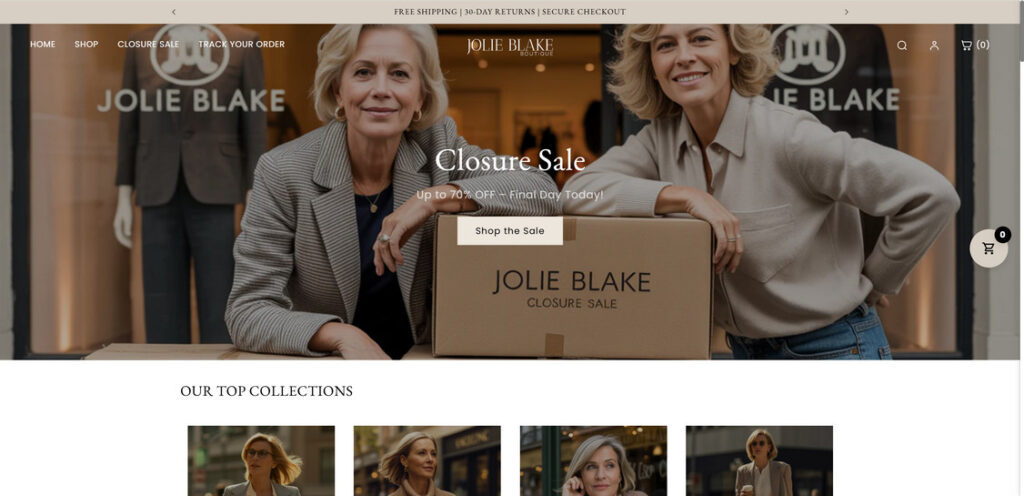
Scam Overview
The Jolie Blake Boutique scam is part of a broader wave of fake “store closing” and “anniversary sale” scams that have surged in 2024 and 2025. These scams exploit emotional marketing to make people believe they’re supporting a beloved, long-standing boutique during its final days.
On the surface, the Jolie Blake website looks professional and trustworthy. It uses elegant fonts, well-chosen photos, structured product categories, and all the familiar trust signals — “Free Shipping,” “30-Day Returns,” and “Secure Checkout.” This design closely mimics legitimate fashion retailers.
The Emotional Hook: “A Beautiful Journey Comes to an End”
Jolie Blake claims to be a women’s fashion boutique that has served more than 50,000 loyal customers over the years. Its homepage features a carefully written farewell message, explaining how the founders are retiring after “a wonderful journey in fashion” and are offering massive clearance discounts to say goodbye on a high note.
This narrative is entirely fabricated. The domain jolieblake.com is new, the brand has no legitimate history, and there’s no evidence of a physical store. It is a classic scam structure built to gain trust quickly and vanish just as fast.
Why It Looks Legitimate
Scammers behind Jolie Blake know how to exploit buyer psychology. The site includes:
- A clean and responsive Shopify-based layout.
- A “Closure Sale” banner with an urgent countdown.
- Discount tags on every product (usually 60–70% off).
- Fake customer service guarantees like “free shipping” and “secure payment.”
- High-quality images copied from legitimate fashion brands and stock libraries.
These elements lower shoppers’ defenses and create the illusion of credibility, especially for users who have previously encountered legitimate boutique sales.
Familiar Pattern of a Global Scam Network
The Jolie Blake scam is not a one-off incident. It follows the same pattern used in other fake boutique scams such as:
- Clara Hart Minnesota Anniversary Sale
- Arvella London Clearance Sale
- Whitmore Oxford Final Days Event
- Kirra Valae Coral Bay Anniversary Sale
These sites often share identical templates, copywriting, and product images, indicating a coordinated network behind them. Once one site gets flagged or blacklisted, a new one is launched under a different name.
Targeting Shoppers Through Paid Ads
Victims typically discover Jolie Blake Boutique through targeted ads on Facebook and Instagram. These ads feature models wearing elegant clothing or accessories, along with urgency triggers like “Final Day Today,” “70% Off,” and “Free Shipping.”
Scammers know that platforms like Meta allow quick and cheap ad placements. By targeting fashion-conscious audiences, especially women aged 35–65, they can maximize conversion rates before disappearing.
The Domain History Tells the Truth
While Jolie Blake claims to have been around for years, the domain jolieblake.com is newly registered, often just days or weeks before the ads go live. This is one of the clearest red flags for scam stores. Real fashion brands typically have years of digital history, customer reviews, and a strong social media presence. Jolie Blake has none of these.
Fake Product Catalog
The website’s product listings — from sweaters and jackets to tote bags and dresses — are not original products. The same images can be found on AliExpress, Amazon, and other fast-fashion platforms. This shows that the scammers didn’t build a real store; they copied stock photos to give the impression of a fully operational business.
How The Scam Works
The Jolie Blake Boutique scam is engineered for maximum trust and minimal traceability. Below is a detailed breakdown of how it typically unfolds:
1. Domain Registration and Website Launch
Scammers register a new domain like jolieblake.com using privacy protection to hide their identity. They then set up a Shopify template or similar storefront platform. Within hours, they populate it with stolen product images, fake stories, and automated “policy” pages.
2. Creating a Fake Brand Story
The scammers craft a heartfelt farewell message claiming the founders are retiring after a successful run. Words like “trusted by 50,000 women” or “a beautiful journey” are designed to disarm skepticism. This emotional story plays a key role in lowering buyer defenses.
3. Launching Paid Social Media Campaigns
Next, they run aggressive ad campaigns on Facebook and Instagram, promoting the closure sale. Ads often contain phrases like:
- “Final Day – Up to 70% Off Everything!”
- “We’re closing our doors forever. Thank you for your loyalty.”
- “Shop the farewell sale before everything is gone.”
These ads mimic legitimate clearance campaigns used by real fashion brands, which makes them difficult to distinguish at a glance.
4. Urgency and Scarcity Triggers
The site uses psychological tricks to push users into fast decisions:
- Countdown timers (“Ends in 5 hours”).
- “Only 3 left in stock” badges.
- “Last chance” banners.
- Pop-ups claiming “Jane from California just bought this.”
All these elements are designed to eliminate rational decision-making and increase impulse purchases.
5. Payment Collection
Customers complete their purchases using credit cards or PayPal, believing they’re buying from a real boutique. The scammers immediately collect the funds. The checkout page often uses “secure payment” logos to fake credibility.
6. Fake Order Confirmations
Victims receive a standard confirmation email that looks professional and legitimate. This gives the illusion of order processing.
7. Delays, Fake Tracking, or No Delivery at All
After payment, one of several outcomes occurs:
- No tracking number is ever provided.
- A fake tracking number is sent that leads nowhere.
- A random, low-quality, or counterfeit product arrives weeks later from overseas.
- Customer service becomes unresponsive or replies with vague, automated messages.
8. Refund Attempts Are Ignored
Victims who request refunds or exchanges are either ignored, blocked, or sent canned responses that go nowhere. Since the company isn’t real, there’s no actual returns department or support system.
9. Domain Shutdown and Rebranding
Once enough victims start posting negative reviews or reporting the site, scammers shut down the domain and reopen under a new name, repeating the cycle.
What to Do If You Have Fallen Victim
If you placed an order through jolieblake.com or a similar scam site, immediate action is crucial. Here are the steps you should take:
1. Contact Your Bank or Credit Card Company
Report the charge as fraudulent as soon as possible. Most credit card providers offer chargeback protection for scam purchases. The faster you act, the higher the chance of recovering your money.
2. File a PayPal Dispute (If Applicable)
If you paid through PayPal, open a dispute in the Resolution Center and clearly state that the store is fraudulent. Attach screenshots of the site, order confirmation, and any fake tracking numbers.
3. Document Everything
Keep every piece of communication — emails, receipts, transaction details, and screenshots. This will help when filing chargebacks or reporting to authorities.
4. Report the Website to Authorities and Platforms
- Report the scam to your local consumer protection agency (e.g., FTC in the US, Scamwatch in Australia, Action Fraud in the UK).
- Report the ads to Facebook and Instagram to help reduce their reach.
- Submit the site to scam reporting platforms like ScamAdviser and BBB (if US-based).
5. Change Your Passwords and Monitor Accounts
If you entered personal information, change your passwords immediately and monitor your bank accounts for unauthorized transactions.
6. Warn Others
Scam networks thrive on people staying silent. Share your experience on consumer forums, Reddit, Trustpilot, and social media to help others avoid falling for the same trap.
Frequently Asked Questions (FAQ) About the Jolie Blake Boutique Closure Sale Scam
What is the Jolie Blake Boutique Closure Sale Scam?
The Jolie Blake Boutique Closure Sale Scam is a fraudulent online shopping scheme that impersonates a legitimate fashion boutique supposedly “closing down” and offering discounts of up to 70% off. The website jolieblake.com claims to have served over 50,000 customers and to be shutting its doors with a farewell sale. In reality, this is a scam operation designed to trick shoppers into making purchases that are never delivered or replaced with cheap counterfeit products. The scammers use emotional marketing, urgency tactics, and professional web design to make the store appear trustworthy and authentic, but the business itself does not exist.
How does the Jolie Blake Boutique scam work?
Scammers behind jolieblake.com follow a carefully structured plan. First, they launch a polished website with fake branding, professional product images, and a heartfelt farewell message about retirement or closure. Then, they run targeted ads on Facebook, Instagram, and Google, using phrases like “Final Day” and “Up to 70% Off” to create urgency. When shoppers make purchases, they receive automated confirmation emails and sometimes fake tracking numbers. In most cases, no product arrives, or customers receive low-quality counterfeit goods. Refund requests go unanswered, and the website eventually shuts down or rebrands to avoid detection.
Why is the “closure sale” tactic so common in scams?
Fake closure sales have become one of the most effective online scam tactics because they exploit trust and emotion. People are more likely to believe they are supporting a genuine local or family-run business that is retiring. The sense of urgency makes shoppers act quickly without doing research. By claiming to offer deep discounts during their “final days,” scammers increase their chances of converting ad clicks into fraudulent sales before their websites are reported or flagged.
How can I tell if jolieblake.com is a scam website?
Several red flags reveal that Jolie Blake Boutique is not legitimate. The domain was recently registered, even though the website claims a long business history. There is no valid business registration, physical address, or verifiable contact information. The product images are not original but copied from other stores or stock libraries. All items are heavily discounted with suspiciously uniform pricing. There are no genuine customer reviews, only staged or stock testimonials. The farewell message is emotionally manipulative and nearly identical to those found on dozens of other scam boutique websites.
What happens after you place an order with Jolie Blake Boutique?
After making a payment, customers usually receive a confirmation email, which creates the illusion of legitimacy. Some may also get fake tracking information that never updates. In many cases, the product never ships at all. If something does arrive, it is typically of extremely low quality and not as advertised. Attempts to contact customer service are ignored or met with vague, automated replies. Refund requests are denied or stalled. Over time, the scammers either shut down the website or abandon it once enough complaints pile up.
Why does the website look so professional if it’s a scam?
Modern scammers rely on pre-built Shopify and WooCommerce templates, which allow them to create professional-looking online stores in hours. They use free stock images, fake policies, trust badges, and carefully written emotional text to mimic legitimate boutiques. Most victims fall for these scams not because they are careless, but because the presentation looks real. A polished website is not proof of legitimacy.
What should I do if I’ve been scammed by jolieblake.com?
If you’ve made a purchase, act fast to protect your money. Contact your bank or credit card company immediately to file a chargeback. If you used PayPal, open a dispute through the Resolution Center and provide documentation. Save all transaction records, emails, and screenshots as evidence. Report the website to consumer protection agencies, such as the FTC in the US, Scamwatch in Australia, or Action Fraud in the UK. Also, report the ads on Facebook or Instagram to help stop other people from being targeted. Finally, change your passwords and monitor your accounts for suspicious activity.
Is Jolie Blake Boutique a real company?
No, Jolie Blake Boutique is not a real company. There is no business registration, physical store, or verifiable history behind the name. The story of a family-run fashion brand retiring after years of success is a fabricated narrative designed to build trust. This same format has been used by other scams like Clara Hart Minnesota, Arvella London, and Whitmore Oxford. Jolie Blake is simply another fake brand name in a large network of online scam stores.
Are there other scams like Jolie Blake Boutique?
Yes, this is part of a broader international scam network that launches multiple fake stores every month. These scams use similar tactics: emotional farewell stories, big “closing down” discounts, fake luxury branding, and professional website templates. When one site gets flagged, scammers quickly launch a new one under a different name, often using city or country names in the branding to sound more local and trustworthy. Examples include Clara Hart Minnesota, Kirra Valae Coral Bay, and Whitmore Oxford.
How can I protect myself from scams like this in the future?
Always verify a store before buying. Check the domain age using WHOIS tools. If the site claims to have existed for years but the domain was registered recently, that’s a major warning sign. Look for a real business registration and check reviews on independent platforms—not just on the site itself. Be skeptical of massive discounts on all products and emotionally charged farewell messages. Use payment methods that offer buyer protection and avoid direct bank transfers. If something feels off, it probably is.
It’s also wise to add extra protection on your devices to help block scam websites and malicious ads before you even see them. One good option is installing Malwarebytes ScamGuard, which warns you about known scam stores, phishing attempts, and fraudulent websites. Another useful tool is AdGuard, which blocks deceptive ads, scam pop-ups, and trackers that scammers often use to push fake sales. These tools can help prevent you from accidentally visiting dangerous websites or falling for online shopping scams in the first place.
Can I get my money back after being scammed by Jolie Blake Boutique?
Yes, many victims are able to recover their money through chargebacks or PayPal disputes if they act quickly. Contact your bank or PayPal support immediately and explain that you were defrauded by a scam website. Provide all documentation, including order confirmations and screenshots of the website. Acting fast increases your chances of success. If you paid through a method without buyer protection, recovery may be more difficult, but reporting the scam still helps others avoid falling victim.
The Bottom Line
The Jolie Blake Boutique Closure Sale Scam is a textbook example of how modern scammers use professional branding, emotional narratives, and urgency tactics to steal from unsuspecting shoppers. By presenting themselves as a legitimate boutique “closing down,” they bypass traditional skepticism and make fraudulent sales seem genuine.
This scam is part of a larger international network that constantly creates new fake stores, runs short ad campaigns, collects money, and then disappears.
Key takeaways:
- Always verify a store’s domain age and business history before purchasing.
- Be skeptical of “too good to be true” discounts, especially 60–80% storewide.
- Use payment methods with strong buyer protection.
- Report scams to help others and stop their reach.
Staying informed is the most powerful defense. If you encounter a suspicious “closure sale,” trust your instincts — and don’t hand over your payment information without verifying the store’s legitimacy.

Join the discussion
0 commentsShare your experience or ask a question about this article.
Discussion
Start the conversation
Have a question or something useful to share? Add the first comment.