


Someone claiming to protect your computer may seem helpful until the conversation starts involving the savings held in your bank account.
The Kartik Saini case explains why the requested action deserves attention, even when the person offering help uses a company name you recognize.
Overview
The impostors claimed technology and banking authority
Kartik Saini and others falsely presented themselves as technology support or security employees of companies including Google, Apple and Citibank, according to federal prosecutors.
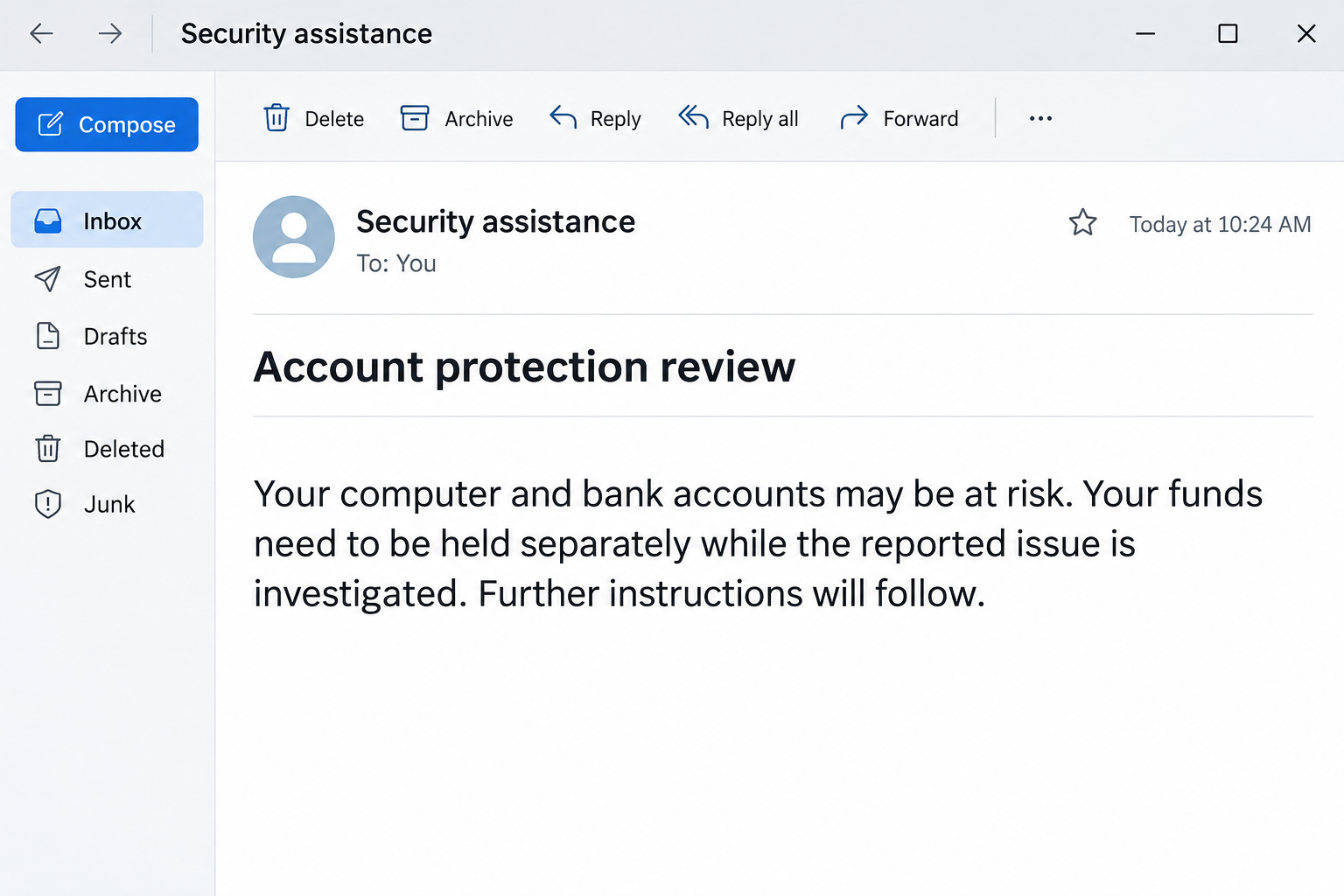
They claimed that victims’ computers had been hacked and their bank accounts compromised, connecting a frightening technical explanation with a perceived threat to savings.
The companies named in that explanation were being impersonated, rather than operating or authorizing the fraudulent arrangement that took money from the victims.
Safekeeping meant sending money to criminal accounts
Victims were persuaded to transfer funds into accounts the conspirators controlled, under the false claim that companies would protect the money during an investigation.
The Justice Department’s sentencing announcement says some victims also transferred cryptocurrency or gift cards to Saini or others participating in the same scheme.
A supposed investigation explained why victims should surrender funds, although the receiving accounts offered no protection to the people making those payments.
The case ended with a prison sentence
Saini pleaded guilty to wire fraud in March 2026 and received a 73-month prison sentence on June 25, with full restitution ordered.
The case involved at least four victims and intended losses exceeding $1.2 million, including a Chicago victim who lost more than $746,000.
- A claim that your computer was hacked does not establish that a stranger has authority to tell you where your savings should go.
- Moving money to an account supplied through a supposed investigation can remove your control, regardless of how reassuring the word safekeeping sounds.
- A real company name or professional explanation cannot replace an independently started conversation with your bank about the exact action being requested.
The message image reconstructs the false protection claim; it is not a recovered communication or evidence that a particular victim’s computer was infected.
Why the Safekeeping Story Reverses the Real Risk
The impostor describes the existing account as dangerous and the proposed destination as safe, encouraging someone to treat a transfer as a protective action.
That explanation can make the person overlook the most practical question: who will actually control the money after it reaches the new destination?
In Saini’s case, the accounts belonged to the scheme, so the action presented as protection was the route used to steal the victims’ funds.
The distinction is easier to see when the story is separated into its parts: an unverified warning, a claimed authority and a requested transfer.
You do not need to settle every technical claim before refusing a payment, because a stranger’s explanation does not authorize moving your money anywhere.
Begin any account investigation independently with your real bank, using the number on your card, statement or established app before following the stranger’s instructions.
Tell its staff what you were instructed to do, rather than only asking whether technology-related scams exist or whether your balance appears correct.
The request to send savings elsewhere gives the bank more useful information than the department name, employee title or urgency claimed by the impostor.
How the Kartik Saini Scam Works
Step 1: A familiar company supplies a false role
Saini or another participant claimed a technology support or security role at a major company, using that supposed authority to influence the victim.
An institution’s name can make advice sound trustworthy, particularly when the conversation uses terms associated with computer problems, fraud prevention or protecting an account.
The name still needs independent verification, and the verification route should not come from the same person who is directing the disputed transaction.
Do not treat a transfer to another supposed representative as a separate check if the original contact controls how you reach that next person.
Use a contact you trust and explain the proposed action before providing banking information, security codes or access to accounts connected with your money.
Step 2: The supposed computer problem spreads to the bank account
Participants falsely claimed that victims’ computers were hacked and bank accounts compromised, according to the sentencing announcement describing the story used in the scheme.
That connection turns an unfamiliar technical warning into a threat to money the person may depend on, including savings accumulated for their retirement.
Someone afraid of losing savings may act more readily when the transfer is presented as preventing a loss instead of making an unusual payment.
Pause before acting on that framing and ask the actual bank about the specific instruction, without accepting the impostor’s explanation as a confirmed diagnosis.
Step 3: The protection plan requires a transfer
The scheme persuaded victims to send significant funds to accounts that Saini and others controlled, while claiming the companies would safely hold the money.
A purported law-enforcement investigation supplied the protective explanation for transferring money, even though the receiving accounts served the criminals rather than safeguarding their victims.
An account described as temporary, protected or connected to an investigation still needs independent verification before you consider sending any money to that destination.
Ask your bank about the actual request, rather than letting the person who supplies the receiving account also decide whether it should be trusted.
For some victims, the payment route involved cryptocurrency or gift cards instead, which means the immediate recovery contact depends on what was actually transferred.
Keep bank transfers, cryptocurrency transactions and gift card details separate so each provider receives the records relevant to its part of the incident.
Step 4: The victim loses control of money described as protected
The accounts were used to steal victims’ money, rather than safeguard it, and one Chicago resident lost a substantial portion of her retirement savings.
Intended loss describes what the scheme sought, while the Chicago figure concerns one victim’s actual loss, so adding them would produce an unsupported total.
If you recognize the pattern, focus on stopping the next transfer and identifying which provider may still have an opportunity to intervene before completion.
Waiting for the supposed investigator to explain repayment leaves that unverified contact controlling the next decision, even after the first transfer removes your money.
What to Verify Without Following the Impostor’s Instructions
Start with the bank, which can discuss your account through established channels independently of the person who introduced the supposed security problem.
Use your existing banking app, statement or physical card to find the contact route, and avoid searching through advertisements for a replacement support number.
Explain the claimed computer compromise, the institution names used and the instruction to send money elsewhere, including any account information the impostor supplied.
Ask whether a transfer is pending and what can be stopped, recording the answer and reference before discussing further payments with anyone else.
If the bank cannot verify the story, do not seek a replacement explanation or another supposedly safe account from the same unverified contact.
Ask a trusted person to stay while the situation is checked, particularly when pressure or repeated messages make it difficult to pause and think.
That assistance should preserve your control and privacy, rather than giving another unverified person access to your device, security codes or bank account.
The following comparison separates the protection claim from the action that puts money at risk, helping you explain the request during an independent call.
| The protection story | The action requested | The check that matters |
|---|---|---|
| Your computer was hacked | Accept instructions from supposed support | Reach a trusted support provider independently |
| Your bank funds are compromised | Move savings out of the existing account | Ask your actual bank about the request |
| A company will hold the money safely | Send funds to a supplied destination | Establish who controls the receiving account |
| Investigation requires another payment method | Send cryptocurrency or gift cards | Refuse the demand and contact the relevant provider |
Match the Recovery Request to the Payment You Made
The FTC’s recovery guidance recommends promptly contacting the bank, card issuer or other service used for the payment and asking about available reversal options.
For a bank transfer, provide the destination, amount and transaction reference, explaining that you were tricked into moving funds for a false protective arrangement.
For cryptocurrency, retain the transaction identifier, destination wallet and service used, then report the fraud to that service without expecting an ordinary bank-transfer reversal.
For gift cards, keep the card and receipt, contact the issuer and explain that you supplied the card details because of the deception.
These routes are different, and reporting one payment does not automatically alert every other provider involved or stop a separate transfer that remains scheduled.
Give each institution an accurate account of what you did, distinguishing a payment authorized under false pretenses from activity someone performed without your permission.
If you also gave credentials or device access, tell the provider and trusted technical support, because payment recovery does not resolve that separate exposure.
The sentencing announcement identifies no particular malware infection, so neither the warning nor the financial loss should be treated as a device diagnosis.
What to Do if You Have Fallen Victim to This Scam
-
Stop transfers and end contact with the supposed security representative while identifying which payments are pending and which have already left your account.
Do not move savings to another destination supplied by that contact, even when the new instruction is described as reversing the first transfer.
Ask someone you trust to help organize the records if the conversation has left you worried or unable to assess another demand for payment.
-
Call the bank through its established number and explain that a false security warning led you to send funds elsewhere for supposed safekeeping.
Request help stopping pending payments and recovering completed transfers, providing recipient details and asking whether the receiving institution can be contacted about the fraud.
Keep the bank’s reference number and response, recognizing that reporting promptly creates an opportunity for assistance but does not guarantee reimbursement of the payment.
-
For gift cards, reach the issuer through the information on the actual card and explain how the details were obtained from you through deception.
For cryptocurrency, use the exchange or ATM operator’s verified support route and supply the transaction details you can document from the payment records.
Ask what assistance remains available and keep the receipt or case reference, without paying a separate recovery contact who promises to reverse the transaction.
-
Preserve the messages, call history, payment instructions and transaction records, including any company names or supposed investigative roles used to justify sending the money.
Write down the sequence while it is fresh, keeping attempted transfers separate from completed payments and noting any additional information or access you provided.
Do not reconnect or pay again to obtain evidence, because the records you already hold can support an initial report of what happened.
-
Report the incident at IC3, choose File A Complaint and read the terms before describing the identities claimed and payment routes used.
Provide accurate amounts, dates and recipient details, then retain the confirmation or copy provided so you can connect later follow-up with the original report.
For an immediate threat to physical safety, contact local emergency services, because an online fraud report cannot replace urgent assistance at your location.
-
Tell your bank and a trusted support provider if you disclosed credentials or permitted access, and describe exactly which accounts or devices were involved.
Use independently verified support rather than the original contact’s referral, and do not assume that ending a payment conversation removes access you previously granted.
Reject requests for a release charge, special recovery deposit or guaranteed refund service, especially when they depend on moving more money to a stranger.
Frequently Asked Questions
Was the Kartik Saini scam confirmed in court?
Yes, Saini pleaded guilty to wire fraud in March 2026 and received a 73-month prison sentence in June, with restitution ordered for his victims.
The confirmed conduct involved false authority and deliberate theft, rather than an ordinary support complaint or a disagreement about a genuine bank’s service quality.
Were Google, Apple or Citibank running the scheme?
No, participants impersonated those companies, while the accounts receiving victims’ money were controlled by the people operating the deception rather than the institutions named.
Keep the warning attached to that impersonation and verify any purported security instruction through your own independent contact with the actual institution being named.
Does a safekeeping transfer preserve my control over the funds?
The label does not establish ownership or control, and Saini’s case involved accounts used to steal money while the transfer was described as protection.
Refuse an unexpected instruction to move funds to a supplied destination, and ask your bank about that request before taking any financial action.
Was the entire $1.2 million an actual completed loss?
The announcement identifies intended losses exceeding $1.2 million, rather than describing that figure as the exact amount successfully taken from all victims combined.
It separately describes the Chicago victim’s actual loss of over $746,000, which should not be added to the intended total for the scheme.
Does the reported computer warning prove my device has malware?
No, a false security claim is part of the deception and does not itself establish that a particular device was infected or remotely controlled.
If you installed software, shared credentials or allowed access, explain those actions to trusted support and your provider so that exposure can be assessed.
Should I pay someone who promises to retrieve the transferred money?
Do not pay an unsolicited recovery contact or release charge, because knowledge of the original loss does not establish authority to recover your funds.
Work through your actual payment provider and verified reporting channels, keeping each case reference and declining any request to send another protective deposit afterward.
The Bottom Line
Do not move savings into a supposed safe account because an unexpected security contact claims your computer and bank accounts are at risk.
Saini’s confirmed scheme used familiar company names to make theft look protective, while the receiving accounts were controlled by the people directing the deception.
If you transferred money, contact the relevant provider immediately, preserve the destination details and stop following any further payment instructions from the impostor.

Join the discussion
0 commentsShare your experience or ask a question about this article.
Community experiences
Did this happen to you?
Your experience could help someone recognize the same scam. Submit a private report for our team to review.
I experienced this tooReports are reviewed before publication. Sharing publicly is always your choice.
Discussion
Start the conversation
Have a question or something useful to share? Add the first comment.