

The KOALY Ultra Realistic Koala Plush Toy has been going viral across social media platforms, promising to be the ultimate AI-powered cuddle companion. Advertised as lifelike, interactive, and capable of responding to touch, it has attracted thousands of curious buyers worldwide. But with numerous complaints surfacing online, many are asking: is KOALY truly revolutionary, or is it just another cleverly marketed online dropshiping operation? This article digs deep into the truth behind the hype, analyzing claims, real buyer experiences, and the red flags you should know before purchasing.
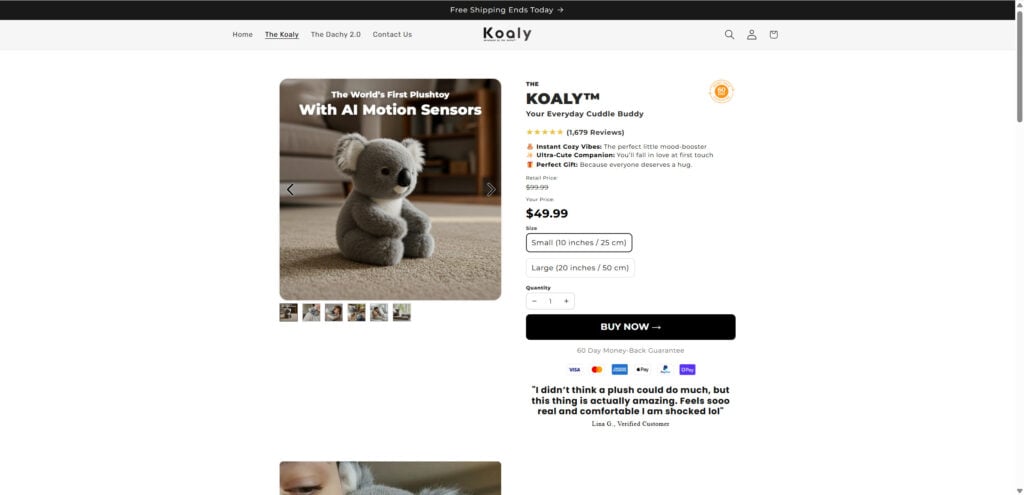
Overview of the KOALY Plush Toy
The KOALY plush toy is marketed as an AI-powered, ultra-realistic koala designed to mimic the behavior of a real pet. Ads claim it comes with advanced features such as:
- AI motion sensors that respond to touch
- Realistic, lifelike movements (blinking, snuggling, and head tilting)
- Stress-relief benefits, particularly for children and those with anxiety
- High-quality plush materials for a comforting experience
Viral advertisements showcase a koala plush that seems almost alive, with smooth, natural-looking movements that make it appear as a robotic companion rather than a simple toy. The emotional marketing pitch positions KOALY as not just a toy, but a comforting friend designed to help people sleep better, reduce stress, and provide a sense of companionship.
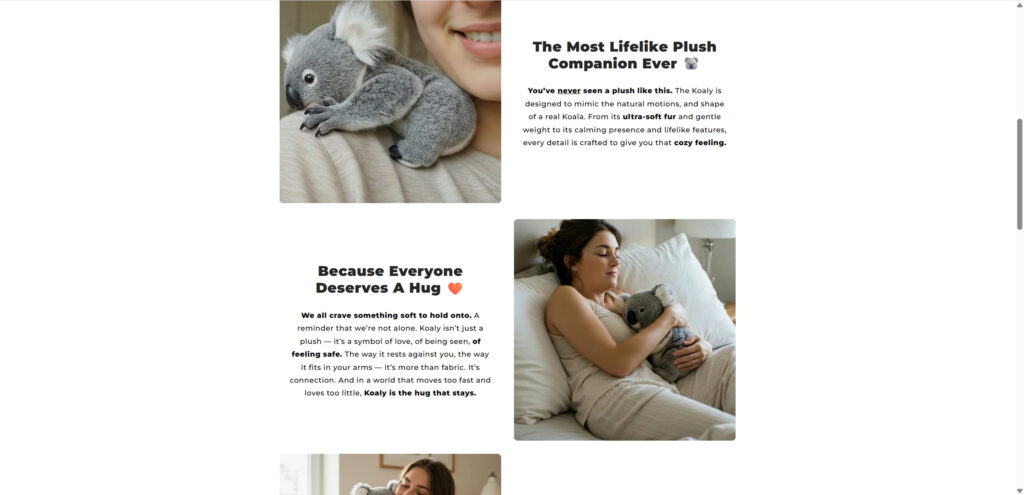
However, multiple consumer reports suggest that the delivered product rarely matches the advertised promises. Many buyers claim they receive a basic, cheaply made plush toy with no electronics or AI features whatsoever. Complaints include poor stitching, cheap materials, and a product that looks drastically different from the one shown in ads. These experiences have led to growing suspicion that KOALY might not be what it claims to be.
How the Scheme Works
1. Aggressive Social Media Marketing
KOALY ads are everywhere on Facebook, Instagram, and TikTok, featuring AI-generated videos that make the plush appear to move realistically. These ads are designed to grab attention instantly with emotional hooks, targeting parents, children, and individuals seeking comfort or emotional support.
2. False Advertising Promises
The ads repeatedly claim that KOALY is AI-powered, responsive, and lifelike. In reality, buyers report receiving a basic stuffed toy with no motion sensors or AI capabilities, making the advertisements misleading at best.
3. High Markup Pricing
KOALY is sold for $49.99 to $80 AUD, despite appearing to be worth only a few dollars in quality. The price is justified in the ads by highlighting supposed advanced technology that doesn’t exist in the actual product.
4. Manipulative Emotional Triggers
Ads specifically mention benefits for children, individuals with autism, and people suffering from anxiety. This emotionally charged tactic pressures buyers to make impulse purchases for themselves or loved ones.
5. Zero Customer Support
Once customers receive the underwhelming plush, attempts to contact the seller for refunds or returns are often ignored. Many report receiving no responses to emails, no return instructions, and no refunds issued.
6. Repetitive Rebranding
Once negative reviews spread, sellers frequently rebrand under new website names, continuing to target unsuspecting buyers with the same misleading ads.
What to Do If You Have Fallen Victim to the KOALY Plush Scam
- Stop Communication Immediately
- Do not send additional payments or personal information to the seller.
- Document Everything
- Save order confirmations, transaction receipts, emails, screenshots of ads, and photos of the delivered item.
- Contact Your Bank or Payment Provider
- Request a chargeback or dispute the transaction. Many banks and credit card companies offer consumer protection for fraudulent or misrepresented purchases.
- Report the Scam
- File a complaint with:
- Leave Reviews and Warn Others
- Post your experience on review sites, social media, and scam awareness platforms to help others avoid falling victim to similar scams.
- Monitor Your Financial Accounts
- Watch for unauthorized charges and secure your account details if you shared sensitive information.
Frequently Asked Questions About the KOALY AI Koala Plush Scam
1. Is the KOALY AI-powered plush toy real?
No, the KOALY “AI-powered” plush toy is not what it claims to be. Despite advertisements showing a lifelike koala that moves, reacts to touch, and mimics emotion, customers consistently report receiving a basic stuffed animal with no electronic components or artificial intelligence. There is no real AI functionality in the product delivered.
2. Why is the KOALY plush considered a scam?
The KOALY plush is considered a scam because the product received does not match the product advertised. The videos use CGI or AI-generated animations to fake lifelike movement. Customers are misled into believing they are purchasing a high-tech plush with sensors and AI when, in fact, they receive a cheap, motionless toy—often of very low quality.
3. What website sells the KOALY plush?
The product is heavily marketed through thekoaly.com, though similar versions have been sold on other Shopify-powered websites or under different domain names. These sites often run aggressive ads on Facebook, Instagram, and TikTok using viral short-form video clips to promote the item.
4. How much does the KOALY plush cost?
Most users report being charged between $49.99 and $79.99 USD for the KOALY plush. However, the product delivered has been described by buyers as something worth no more than $5 to $10, with no advanced features as claimed in the ads.
5. Does the KOALY koala really have AI or motion sensors?
No. Despite being advertised as “The World’s First Plush Toy With AI Motion Sensors,” the toy has no electronics, motion, sound, or touch response. There are no moving parts or internal technology. It is purely a stuffed plushie with no smart functionality.
6. Are the video ads for the KOALY plush real?
No. The video ads are highly misleading. They use edited CGI or AI-rendered animation to make it appear as if the plush is moving its head, blinking, or reacting. The movements are not from the physical product but are created digitally for marketing purposes. These clips are spliced to create the illusion of lifelike behavior.
7. What do real customers say about the KOALY plush?
Real customers report:
- Receiving a cheap, static toy
- No instructions, packaging, or support
- Poor craftsmanship, including loose stitching or visible defects
- No response from customer service or refund requests
- Being emotionally manipulated by ads targeting children, people with autism, or anxiety
8. Can I return the KOALY plush for a refund?
In most cases, returns are extremely difficult or ignored altogether. Many buyers report no response after emailing or using contact forms. There is no phone number or verified return address. Even when returns are accepted, they may require international shipping at your expense, often to unknown addresses in Asia.
9. What should I do if I ordered the KOALY plush and feel scammed?
Here’s what to do if you feel scammed:
- Save all transaction records, screenshots, and communication.
- Contact your payment provider (e.g., PayPal, credit card company) and request a dispute or chargeback for “item not as described.”
- Report the website to:
- Leave reviews on platforms like Trustpilot, Reddit, and scam alert forums to help others avoid the trap.
10. Is the KOALY plush safe for children?
While the plush itself is soft, some parents report poor quality control, loose threads, or stuffing exposed. More importantly, the emotional disappointment from expecting an “interactive” toy—especially for children with autism or anxiety—can be upsetting. Misleading marketing makes this an ethically problematic product.
11. Why does the KOALY plush go viral on social media?
The product goes viral due to:
- Emotionally charged advertising that promises stress relief, companionship, and therapeutic value
- Highly visual, AI-edited videos that attract attention and shares
- Comments and engagement from fake or incentivized profiles
- Use of trending keywords like “AI-powered,” “for autism,” “sensory support”, and “lifelike plush”
12. How can I avoid scams like the KOALY plush?
To avoid similar scams:
- Research the website and product name + “scam” on Google
- Look for trust badges, real-time reviews, or verified social media presence
- Never trust too-good-to-be-true ads or AI-generated visuals
- Prefer shopping through known retailers or Amazon with return protection
- Always check domain age, reviews, and refund policy before buying
The Bottom Line
The KOALY Ultra Realistic Koala Plush Toy is heavily advertised as an AI-powered, lifelike companion, but multiple buyer experiences suggest it is a low-quality plush toy that fails to deliver on its promises. With misleading marketing tactics, lack of genuine customer support, and a price tag far above its real value, KOALY raises serious red flags as an online scam.
Consumers are advised to avoid impulse purchases from unfamiliar online stores, especially products promising groundbreaking technology without credible reviews or independent demonstrations. If you want a comforting plush toy, purchase from reputable brands or well-reviewed retailers to avoid disappointment and financial loss.

Join the discussion
0 commentsShare your experience or ask a question about this article.
Discussion
Start the conversation
Have a question or something useful to share? Add the first comment.