

A KuCoin trading fee reimbursement can sound like money you already earned. That is a more believable hook than a random crypto jackpot.
That familiar detail is worth slowing down for. Before trying to claim anything, look at how the offer reached you and where it wants you to go.
Overview
The reimbursement claim is the lure
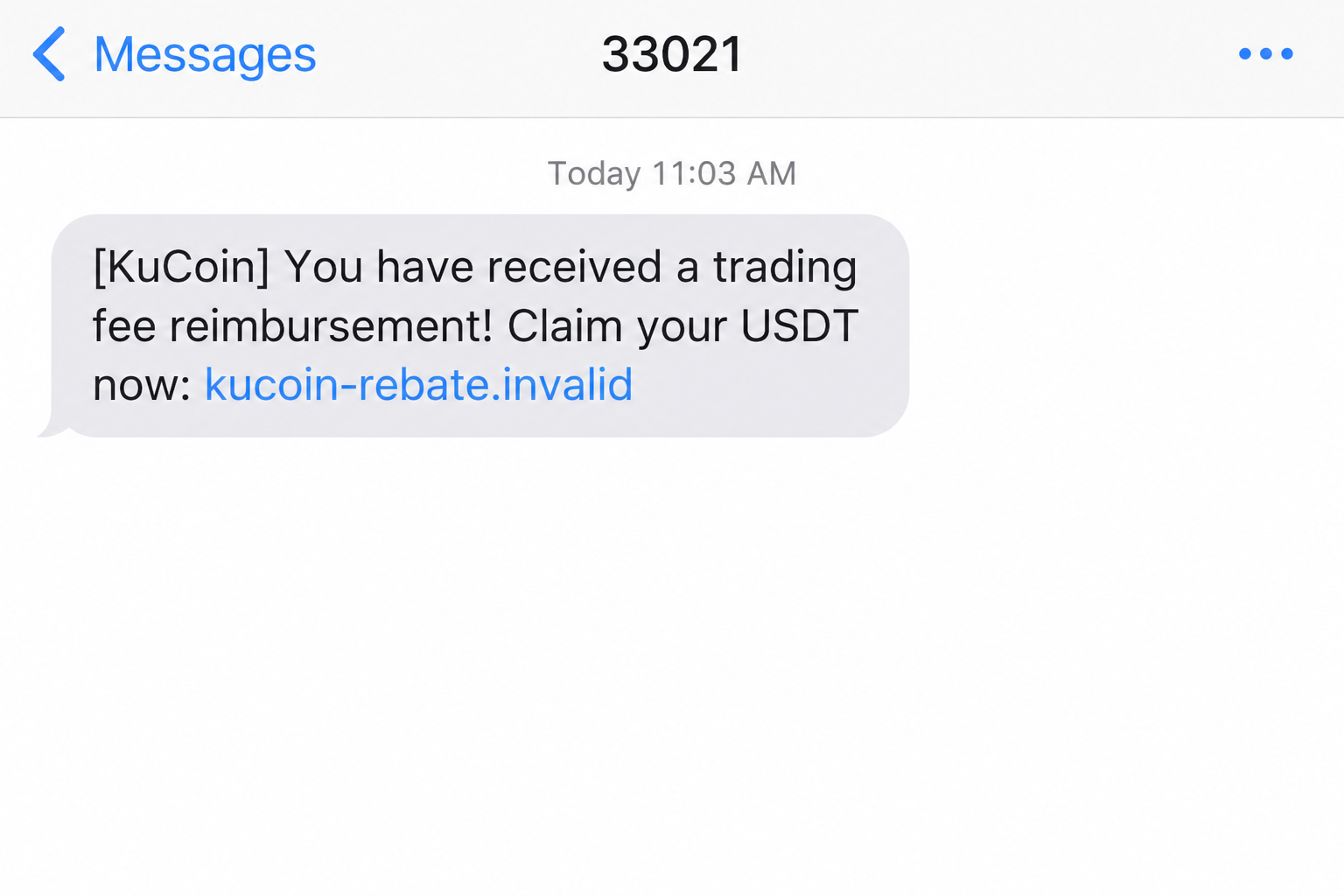
The KuCoin trading fee reimbursement scam text impersonates the exchange and promises USDT. Its purpose is to pull recipients into a fraudulent claim process.
An October 2023 example directed people to kucoinclaims[.]com. That historical destination is included for recognition, not as a recommendation to visit it.
The reported message displayed a five-digit sender and described a fee reimbursement. Neither detail established that KuCoin had issued the offer.
KuCoin is the impersonated brand. This warning concerns the deceptive message, not a claim that every genuine exchange reward or fee promotion is fraudulent.
Old websites can disappear or change hands. We have not verified this domain’s current ownership, and you do not need to visit it to check your account.
What the message tries to make you overlook
A reimbursement has a sensible connection to trading. It can sound like a routine adjustment rather than an extraordinary giveaway.
That framing makes a separate claim website seem less surprising. The recipient may focus on whether the reward is worthwhile instead of whether the route is genuine.
- The offer appears unexpectedly through a text message.
- A KuCoin label is attached to an unrelated claim destination.
- The recipient is encouraged to act before checking the official account.
- The proposed process may reach passwords, codes, or other sensitive access information.
- Verification depends on the sender’s instructions rather than an independently opened exchange channel.
The exact old destination’s forms are not established here. We should not invent a captured wallet-draining screen, deposit requirement, or recovery-phrase request.
Those can be relevant crypto-phishing risks in other circumstances, but they are not interchangeable with evidence about this specific historical text.
What current official guidance tells users
KuCoin’s SMS phishing warning describes impersonated notifications using rewards, security checks, and account concerns to lure users into unsafe interactions.
The practical answer is to use the official app or independently opened website. Do not let the reimbursement message supply the account-operation route.
The historical sample and the newer warning describe a recognizable impersonation problem. They do not prove that one operator controlled every reported message.
For anyone who already responded, the next step depends on the exposure. Exchange credentials, self-custody secrets, and an authorized payment require different responses.
How the KuCoin Trading Fee Reimbursement Scam Works
Step 1: An ordinary trading expense becomes a believable reward story
The message starts with something a trader recognizes: fees. A reimbursement implies a correction or benefit tied to activity you might already have performed.
You may wonder whether the exchange changed a promotion, reviewed your volume, or credited an adjustment. The sender does not need to explain the reason convincingly.
The promise only needs to create enough curiosity for the next tap. A modest-sounding benefit can be effective precisely because it avoids an implausible jackpot.
Notice what is missing: independently confirmed eligibility, an authenticated account notice, and a trustworthy explanation of why a separate website is involved.
A text reaching a real KuCoin user does not establish a connection to the exchange. Criminals can send broad campaigns and rely on recipients matching the story.
If you do not use KuCoin, the mismatch is easier to see. If you do, take the same pause rather than treating coincidence as authentication.
Step 2: The brand label lends authority to a separate claim link
A recognizable name at the beginning of the message can make the rest feel official. The unfamiliar destination then inherits trust it has not earned.
The reported kucoinclaims[.]com address combined the brand with a plausible action word. That construction is not proof of exchange ownership.
Do not judge a hostname by whether it contains the institution’s name somewhere. Added words, different endings, or misleading subdomains can change who controls it.
A short sender number is also insufficient. The number shown in one historical sample should not become a rule that every message from it is fraudulent.
Focus on the route and requested operation. An unexpected text asking you to claim assets through its link needs a separate check.
There is no need to visit the destination to perform that check. Use the app you already have or type the official address yourself.
Step 3: The claim process can resemble an exchange login
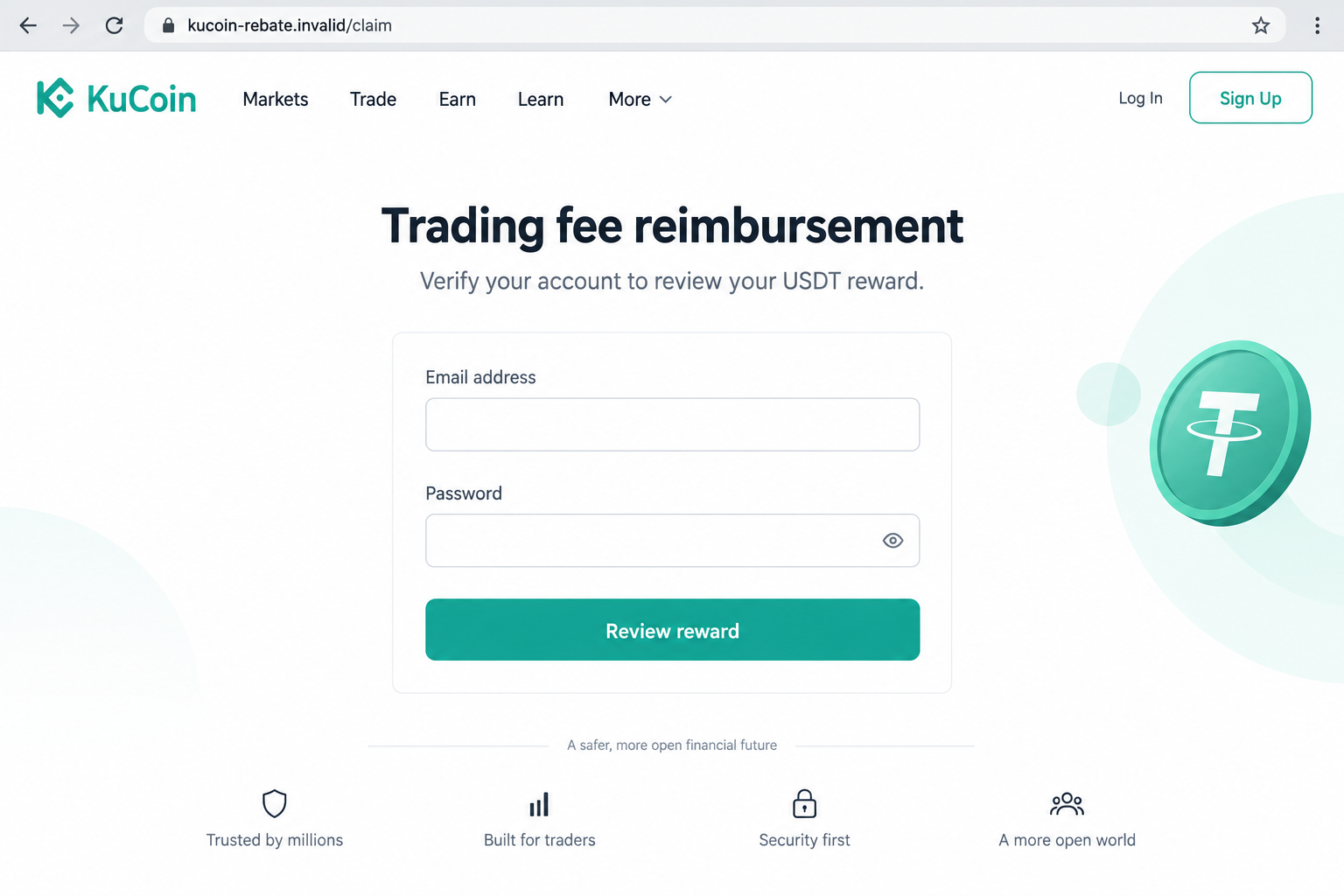
A phishing destination may borrow familiar colors and layouts to make an account check feel routine. Appearance is easier to reproduce than ownership.
A page that asks you to sign in can be especially persuasive after a reward message. Claiming something associated with your account seems to explain the login.
However, the explanation comes from the same unverified party that supplied the offer. It cannot independently establish who will receive your details.
HTTPS does not solve that problem. It can encrypt a connection to a fraudulent website just as it encrypts a connection to a legitimate one.
If you have already opened a claim page, leave it before supplying information. Do not explore additional screens simply to determine whether the reward is real.
The accompanying illustration shows a possible copied-login lure. It is not a claim that this exact form was captured from the historical destination.
Step 4: A supposed claim can reach information you should keep private
Exchange login credentials can expose an account to attempted access. An authentication code may enable a particular operation if passed to an attacker.
Read any real verification message carefully. A code associated with logging in or changing security settings is not a harmless reward reference.
Likewise, an unsolicited helper asking for a trading password is requesting sensitive information. The word “reimbursement” does not make that request necessary or trustworthy.
A separate self-custody wallet has different access secrets. Never enter its recovery phrase into a reward website or disclose it to an alleged support representative.
That is conditional safety advice, not proof the old claim page requested a phrase. Keeping these distinctions clear helps readers respond to their actual exposure.
If a new version requests a deposit or transaction approval, stop and verify independently. A changing request does not become legitimate because you already started.
Step 5: The promised reward can distract from possible account misuse
After submitting details, a recipient may keep waiting for USDT. A claim status or loading screen can shift attention away from the information already disclosed.
Do not use the arrival of a reward as the test for compromise. Nor should a page error reassure you that submitted credentials were never collected.
Check the official account and contact verified support after exposing access information. Ask about login activity, security changes, and unexpected withdrawal arrangements.
A later support message may be another impersonation attempt. You should not send additional information merely because the caller knows about the reimbursement text.
If money left the account, preserve transaction details and report promptly. A blockchain transfer cannot simply be canceled by changing a password.
The right response depends on custody and the action taken. Avoid one-size-fits-all instructions that confuse an exchange account with a wallet controlled by private keys.
How to Verify a KuCoin Reward Independently
Use an authenticated account and official announcements
Start inside the official app or a trusted bookmark. Look for relevant announcements, eligibility information, and account records without using the text’s claim link.
A genuine promotion should have information you can examine independently. An unexplained message should not be the only evidence that you are eligible.
If the app does not resolve your question, reach support through the official Help Center. Avoid social-media helpers who contact you first.
Ask whether the specific reimbursement request is authorized. Keep the message available, but do not include secret credentials in a support ticket.
Check the identity without relying on design
KuCoin provides an Official Verification Center for checking supported contact identities and website details. Open it independently rather than through a stranger’s verification link.
A successful identity check does not mean every instruction in an unrelated conversation is safe. Confirm that you are dealing with the same actual contact.
Keep your device’s app source trustworthy as well. Do not replace an established app with an installer supplied by a reward page.
There is no reason to rush a reimbursement claim at the expense of account security. A reward you cannot authenticate should not receive your access information.
What to Do If You Have Fallen Victim to This Scam
Do not send another payment to complete or reverse the claim. First identify whether you exposed an exchange login, a wallet secret, or funds.
- Leave the claim site and stop contact with unsolicited helpers.
Close the page and decline additional verification requests. If you only read the text, there is no evidence from that alone that your assets were stolen.
Write down what you did before taking further action. Distinguishing a click from a password submission or signed transaction makes the response more useful.
- Protect a potentially compromised KuCoin account.
Contact official support through the independently opened app or Help Center. Explain the sensitive information you disclosed and any unfamiliar account activity.
KuCoin documents account-freezing options through account-security settings and support. Use the official route if account access may be compromised.
A security restriction can interrupt your own access too. Follow verified instructions and keep records instead of trusting a stranger offering instant unfreezing.
- Review exchange credentials and security settings.
Replace exposed credentials through the genuine service from a trusted device. Secure your connected email and change any reused password on other services.
Review authentication methods, recent access, and any API permissions you did not create. Ask verified support to help investigate anything unfamiliar.
Do not turn off useful authentication because a fake representative calls it an obstacle. Account security and the claimed reward are separate matters.
- Handle self-custody exposure separately, if it occurred.
If you revealed a recovery phrase or private key, a password change on KuCoin will not secure that separate wallet. Treat its secrets as exposed.
Seek guidance from the wallet’s official documentation using a clean device. A new wallet requires newly generated secrets, not reuse of the compromised phrase.
If you approved a suspicious permission instead, inspect that permission through trustworthy wallet tools. Disconnecting a website alone may not revoke an on-chain approval.
- Document asset movements and report them promptly.
Keep transaction hashes, network names, addresses, timestamps, and messages. Never post a recovery phrase while asking the public to trace a transfer.
Tell the exchange or wallet provider what happened through verified support. In the U.S., internet-enabled fraud can also be reported to the FBI’s IC3.
Recovery depends on the circumstances and is not guaranteed. An unrelated person promising a guaranteed blockchain reversal should not receive an upfront fee.
- Check software exposure if you downloaded anything.
A phishing login does not prove a malware installation. If the claim involved a file, app, extension, or unexpected permission, review that additional exposure.
Malwarebytes can help identify supported malicious software on affected devices. Use a trusted source and avoid banking or crypto access until the situation is assessed.
AdGuard’s relevant protection features can help filter some unsafe destinations or advertisements. Neither tool revokes wallet approvals, restores keys, or reverses cryptocurrency transfers.
- Expect follow-up recovery and support impersonation.
Someone may approach you with transaction details and claim to know how to retrieve the funds. Knowledge of an incident does not establish authority.
Keep all support interactions inside a verified channel. Never let a stranger operate your wallet or tell you to transfer funds to their protected address.
Ask a trusted person to review urgent requests with you. A short pause can prevent a stressful incident from turning into a second loss.
Why the Reimbursement Wording Matters
This lure does not need a celebrity, an enormous prize, or an investment promise. It uses a mundane cost associated with the recipient’s existing habits.
That makes it a useful reminder: believable amounts and routine explanations can still lead to an unverified destination. Plausibility is not authentication.
Build a habit of checking account benefits where you normally manage the account. A separate claim website should not be accepted merely because its name sounds appropriate.
Save the exchange’s support route before you need it. Under pressure, a familiar bookmark is more dependable than a search result or unexpected direct message.
Frequently Asked Questions
Is the KuCoin trading fee reimbursement text legitimate?
The reported October 2023 message linking to kucoinclaims[.]com was identified as phishing. Verify any new reimbursement offer independently through KuCoin, not through its SMS link.
Does USDT in the message prove the sender knows my account?
No. USDT is a recognizable crypto asset that can make a broad campaign seem relevant. The message does not establish access to your trading history.
Is the historical claim domain still operating?
Its current ownership and activity are not established here. The old address is a campaign identifier, not a statement about present-day operation.
Did this exact scam use a wallet drainer?
The available evidence does not establish that. Credential phishing, wallet-secret exposure, and transaction approvals are different risks and should not be merged without proof.
What if I gave away only an exchange password?
Contact official KuCoin support, secure the account and email, and review access changes. Do not assume a separate wallet phrase was exposed unless you disclosed it.
Can someone guarantee recovery of stolen cryptocurrency?
No responsible helper can promise that from a message alone. Preserve evidence, report through verified channels, and distrust upfront payments for guaranteed recovery.
The Bottom Line
The KuCoin trading fee reimbursement scam turns a familiar trading expense into a reason to follow an unfamiliar claim link. The reward story does not authenticate it.
Check offers through the official account. After any sensitive disclosure, respond to the specific exposure and avoid anyone promising instant recovery for another payment.








