

Leanela Slim Coffee advertising offers a tempting change to an ordinary habit: keep your daily drink, but imagine it doing the hard work of weight loss.
For anyone worn down by competing diet advice, that can sound refreshingly simple. The important details begin when the promise turns into a package order.
Overview
A much bigger promise than a convenient coffee sachet
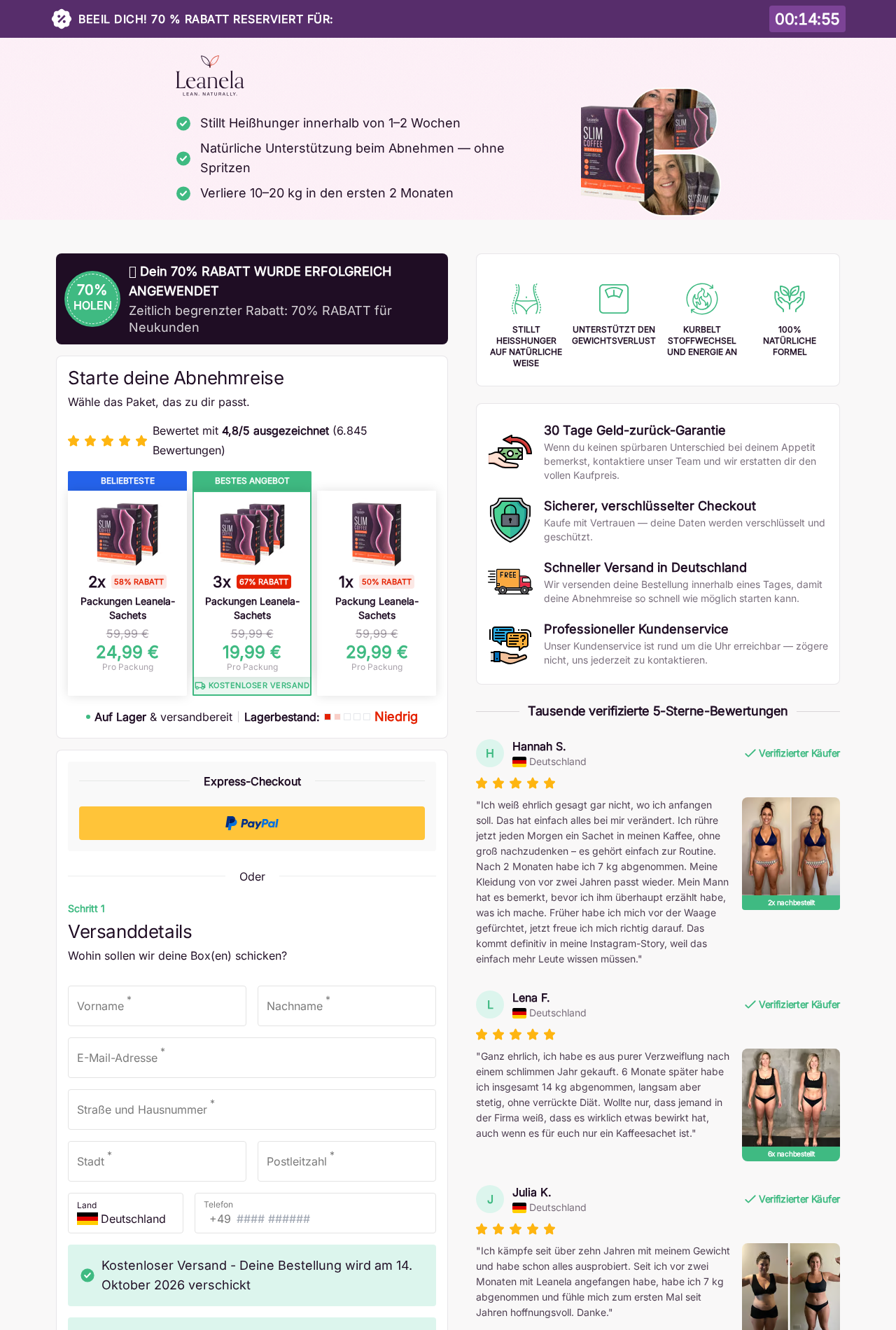
The supplied Leanela Facebook links lead through bestfitmart.com to a German-language Slim Coffee offer. Its headline promotes losing 10-20kg during the first two months.
That is a substantial outcome to suggest for a coffee supplement. The page needs evidence for the exact product and result, not just ingredient descriptions.
A pleasant drink or familiar botanical does not substantiate that level of weight loss. The numerical promise deserves scrutiny before any discount does.
The order begins with three boxes selected
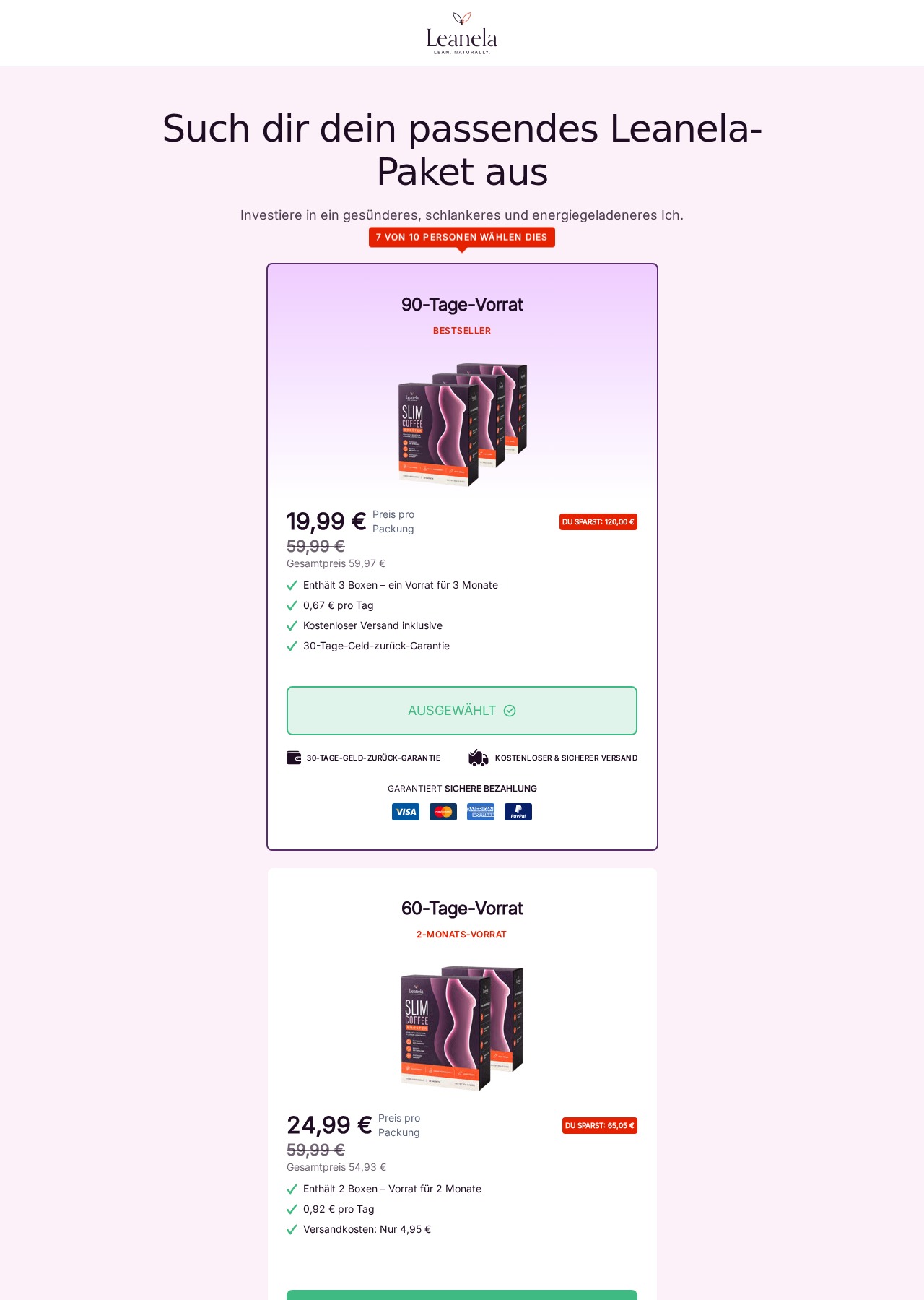
The inspected German checkout preselects a three-box package totaling €59.97. The displayed €19.99 figure is the price per box in that package.
One box totals €34.94 with shipping, while two total €54.93. Choosing the cheaper unit price increases the amount bought upfront.
The central concerns are:
- A rapid-loss claim without established product-specific clinical support.
- A three-box default that shoppers must notice.
- Different commercial roles behind the Leanela brand.
- Subscription provisions that require an order-specific billing check.
- A refund promise whose special terms need confirmation.
The buying decision should be clear
Do not order through this promotion on the expectation of losing 10-20kg. The claim is not established by the inspected sales material.
The package default is documented, but an unauthorized change after ordering is not. Likewise, a contract discussing subscriptions does not prove that all Leanela orders renew.
Those distinctions keep the warning accurate without making it timid. Unsupported health outcomes and an easily misunderstood package price already give buyers reasons to walk away.
A Weight-Loss Number Should Come With a Real Explanation
A promise measured in kilograms feels concrete. It can appear more credible than a vague statement about supporting metabolism, even when the evidence is no clearer.
Ask whose results are being described, over what period, and with what other changes. A product cannot take credit for every change in a testimonial’s lifestyle.
A relevant trial would identify the finished coffee formula, dose, comparison group, participants, and measured outcome. Before-and-after photographs do not supply those details.
Ingredient research also has limits. Evidence about L-carnitine or a botanical preparation is not automatically evidence that this sachet produces the headline’s numerical result.
The exact dose and preparation matter. So do the people studied, adherence, diet, activity, and whether the result was typical or an isolated example.
Be especially skeptical when the headline combines dramatic results with a familiar daily ritual. Making a promise easy to picture does not make it medically established.
The offer’s reduced-friction routine is part of its appeal. It should not distract from the high level of substantiation needed for the rapid-loss claim.
The page also suggests appetite changes within one or two weeks. Even if someone reports that experience, it does not verify the headline’s two-month weight-loss number.
Feeling less hungry and demonstrating a sustained, clinically meaningful weight change are separate outcomes. A testimonial about one should not be used to establish the other.
Without that support, the sensible choice is not to buy a large supply and discover later whether the promise was realistic.
How the Leanela Coffee Offer Works
Step 1: Social promotion turns coffee into a weight-loss shortcut
The supplied pages use Leanela Slim Coffee branding with country names. Their ordering route reaches a regional destination, rather than proving a local manufacturing operation.
The offer associates a familiar drink with appetite and weight changes. That connection lets a shopper imagine improvement without a difficult new routine.
Read the specific headline instead of accepting the general wellness impression. A 10-20kg claim is materially different from saying a product tastes good or is convenient.
There is no need to classify every promotional image as AI-generated to challenge that unsupported outcome. The words themselves create the expectation.
Step 2: A countdown and discount encourage urgency
The German offer displays a large discount, a timer, and positive customer-rating claims. Together, they make waiting feel like missing a bargain.
These signals come from the sales presentation. They are not independent verification of customer outcomes or evidence that you must order within the displayed time.
Ignore the countdown while assessing the formula and full price. A supplement decision should not be rushed by an interface designed to shorten deliberation.
If the discount matters more than the missing clinical evidence, the page has succeeded in shifting your attention away from its most important weakness.
Step 3: The lowest unit price belongs to the largest displayed package
Three boxes are shown at €19.99 each, two at €24.99 each, and one at €29.99 before the relevant shipping charge.
The three-box choice is marked selected in the inspected checkout, with free shipping and a €59.97 total. That default is a real part of the ordering interface.
A shopper intending to try one box needs to change the selection and read the new total. Do not mistake the lowest unit price for a single-box transaction.
Preselection is not, by itself, evidence that the seller secretly alters an order. The concern is whether the customer notices and knowingly accepts the chosen quantity.
Step 4: Payment terms introduce future-purchase questions
The current contract covers subscription purchases and recurring charges where selected. It also discusses payment handling and the cancellation of those arrangements.
Before authorizing payment, find the order’s actual billing frequency and future amount. A contract’s possible subscription model is not proof of a subscription on every receipt.
If you want a single purchase, require a clear one-time order confirmation. Saving card details should not be confused with consent to an unexplained refill.
An unexpected later charge would need to be assessed using the consent record, receipt, and merchant explanation. Do not dismiss it simply because goods arrived.
Step 5: The refund headline meets the current policy
The offer promotes a 30-day guarantee tied to dissatisfaction with the product. The contract sets a general voluntary return process with condition and authorization requirements.
Its unused-and-unopened rule expressly allows a specific offer to provide different conditions. That exception matters when a marketing promise invites a trial.
Ask whether the advertised guarantee accepts used sachets or an opened box, and which written instructions apply. Do not assume either universal approval or automatic refusal.
Keep the policy version attached to your transaction. Older screenshots can describe different rules and should not substitute for the current agreement.
Leanela Seller, Platform, and Product Accountability
Haur and Haruki perform different stated roles
The current terms name Haur B.V. as platform operator and Haruki Limited as seller. Leanela is the brand presented to the customer.
The same two roles appear in Virdexis’s current contract. That establishes a disclosed commercial connection, not a conclusion that the supplements have identical ingredients or factories.
Your invoice should tell you which merchant accepted the payment. A platform can provide checkout infrastructure without manufacturing the product or providing medical advice.
Ask the seller to explain any discrepancy between the contract, receipt, and package. Responsibility for a refund should not become a guessing game between brand names.
The corporate addresses are not parcel-return destinations
The contract lists an Amsterdam address for Haur and a Larnaca-area Cyprus address for Haruki. It expressly warns against mailing returns to those locations.
They identify commercial parties, not necessarily factories, warehouses, or the receiving team for your particular order. Obtain a separately authorized return destination.
No Chinese manufacturing origin was established from these addresses. Geographic suspicion is not a substitute for identifying the actual plant and supply chain.
If a package arrives, retain its shipping label and product information. Those records may help resolve delivery questions without automatically establishing ingredient origin.
The support center should confirm cancellation in writing
Leanela directs customers to support.leanela.com. For an unwanted order or renewal, provide the transaction number and the exact action you want.
The current terms distinguish effective cancellation from a renewal already processed. Ask whether another payment is pending and when cancellation takes effect.
No request was submitted to test responsiveness. The existence of a support portal does not establish that every customer receives a timely or satisfactory answer.
Keep the confirmation, not just the ticket number. An acknowledgement that support received your message is not the same as a canceled subscription.
The coffee needs its own readable formula
A supplement mixed into a drink still needs clear ingredients, serving instructions, allergens, warnings, and responsible distributor information. Familiar coffee packaging does not reduce that obligation.
Ask about stimulant content if you are sensitive to caffeine or combine several caffeinated products. Do not assume every branded coffee offer has the same formulation.
This article does not borrow a caffeine dose from an older review or another product. An actual current label is necessary for a dose-specific claim.
Clinical evidence should match that exact formula. A collection of ingredient benefits cannot substantiate the advertised 10-20kg outcome by itself.
Renewal Terms and Consumer Rights Need Separate Attention
The terms updated October 5, 2026 preserve mandatory consumer rights and allow offer-specific exceptions to ordinary return conditions. Do not replace them with older summaries.
They also describe a short opportunity to request order cancellation before processing. That provision should not be treated as the only remedy available in every circumstance.
A voluntary satisfaction guarantee, withdrawal right, and remedy for defective or misdescribed goods are different routes. The facts of your purchase determine which may apply.
EU shoppers can use Your Europe’s consumer-rights guidance to understand the framework and seek appropriate advice about exceptions.
For a subscription, cancellation concerns future orders. Returning one shipment does not necessarily cancel the account, and canceling renewals does not automatically refund a completed shipment.
State both requests explicitly when necessary. Otherwise, support might answer the return question while leaving the recurring arrangement untouched.
Medical safety is separate again. Do not keep drinking a product that causes symptoms just to satisfy a trial condition or protect a guarantee.
What to Do If You Ordered Leanela Slim Coffee
-
Check the box count and complete charge. Compare your receipt with the selected package, including shipping and currency.
The inspected checkout defaults to three boxes for €59.97. If that is not what you intended, request correction or cancellation promptly and save the order summary.
-
Preserve the rapid-loss promise. Save the headline, package offer, guarantee, and purchase URL that influenced the order.
A complaint about the advertised result needs the specific numerical claim. General dissatisfaction is less informative than showing what the seller actually promised.
-
Identify any recurring arrangement. Look for billing frequency, future amount, and next shipment in the order confirmation.
If it is unwanted, submit a written subscription-cancellation request through the support center. Ask for the effective date and status of any already processed renewal.
-
Request your specific guarantee conditions. Ask whether opened boxes and used sachets qualify under the offer’s 30-day promise.
Point out the contract’s specific-offer exception if necessary. Obtain the authorized address, required reference, deadline, and proposed deductions before sending goods.
-
Keep package and delivery evidence. Photograph the boxes, ingredients, lot details, and parcel label before arranging a return.
Use a tracked service following the seller’s instructions. Keep proof of receipt and check your account for the actual refund rather than relying on a verbal assurance.
-
Challenge unresolved discrepancies accurately. Explain whether the problem is a misleading health promise, unexpected quantity, disputed renewal, or failed refund.
Contact the payment provider or a consumer adviser with your records. Ask about the relevant process and deadlines instead of assuming one remedy covers every issue.
-
Consider health suitability separately from payment. Show the complete label to a pharmacist or clinician, particularly if you take medication or experience adverse effects.
For weight-management help, ask about evidence-based options appropriate to your circumstances. A countdown and large discount are not reasons to override professional advice.
Frequently Asked Questions
What weight-loss claim does the Leanela offer make?
The inspected German promotion advertises 10-20kg during the first two months. The sales material did not establish product-specific clinical support for that numerical outcome.
Does the checkout preselect several boxes?
Yes. The inspected German checkout marks three boxes selected, totaling €59.97. A customer intending a smaller package needs to change that option before payment.
Is €19.99 the total price for one box?
No. That figure is the per-box price within the three-box package. The displayed one-box total is €34.94 after shipping.
Are Leanela and Virdexis commercially connected?
Their inspected contracts name the same platform operator, Haur B.V., and seller, Haruki Limited. This does not establish identical manufacturing or formulation.
Does every Leanela order include refills?
No universal automatic-refill finding was established. The contract discusses subscriptions, so verify whether your particular selection and confirmation authorize recurring purchases.
Can opened boxes qualify for the advertised guarantee?
The general policy allows specific-offer exceptions to unopened conditions. Ask support to confirm the trial guarantee’s eligibility and procedure for your actual order.
The Bottom Line
Do not order Leanela through this rapid-weight-loss promotion. The unsupported numerical promise and preselected multipack are reasons to reject the offer, not rush into it.
If you bought it, confirm your quantity and billing arrangement, cancel unwanted future orders, and obtain written return instructions before the relevant deadline.








