

Lesley Stahl appears to introduce a surprising health discovery. The promise involves honey, clearer arteries, and an explanation that seems to deserve your attention.
Before giving that presentation your time or payment details, follow where the story actually leads. The most important clue is not the ingredient in the headline.
Overview
The supposed Lesley Stahl investigation is a sales fabrication
The Lesley Stahl arterial flush scam invents a connection between the journalist, a supposed television health breakthrough, and a supplement offer.
Its documented presentation imitates 60 Minutes rather than providing an authentic report establishing that Stahl investigated or recommended a honey-based arterial treatment.
The deception concerns that manufactured endorsement. A real journalist and a real program are being used to give an unrelated commercial pitch authority.
The apparent news story ends at a bottle offer
One recorded route began with a sensational health article and continued into a counterfeit television-style presentation. BloodPril capsules appeared at the commercial end of the story.
That product name helps identify this version, but it is not the central warning. The invented reporting can survive a different bottle or sales destination.
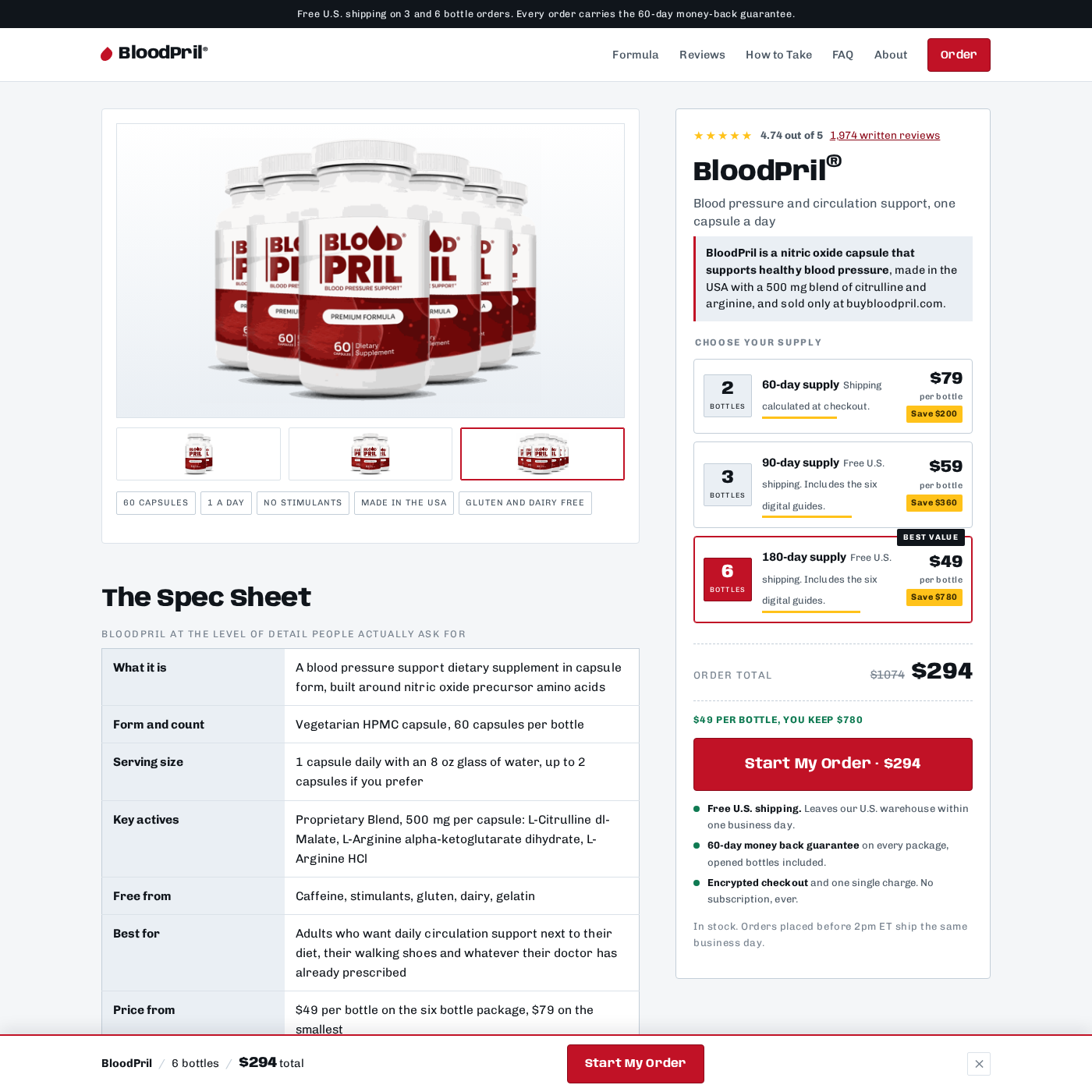
The retail screenshot above shows an accessible BloodPril-branded offer. It documents the product presentation, not an authentic broadcast or Stahl’s participation.
- A familiar interviewer does not authenticate a clip attached to a sales page.
- A dramatic family-health story can be invented to create urgency.
- A claimed recipe is not necessarily what the checkout sells.
- A real capsule label cannot repair a fabricated television endorsement.
- Actual order terms matter more than assumptions about every version of the campaign.
Reject the recommendation, then deal with your actual exposure
Do not buy because the presentation appears to feature Stahl. That purported reporting is the bait, not reliable evidence for choosing cardiovascular treatment.
If you paid, identify the merchant and authorized terms. If you changed medication or delayed care, address that medical decision separately with your clinician.
Why the Interview Format Makes This Pitch Persuasive
A television investigation carries expectations that an ordinary advertisement does not. Viewers expect questions, editorial responsibility, and a reason the program chose to cover the subject.
The campaign borrows those expectations without supplying the underlying journalism. Its apparent interviewer seems to have already done the difficult checking on the viewer’s behalf.
That can lower resistance to extraordinary claims. Instead of asking whether a seller can support an arterial-flush promise, the audience starts wondering how the discovery works.
It is a consequential shift. The sales pitch has smuggled its conclusion into the setting before the reader examines evidence for the promised result.
Recognizing Stahl’s face or voice would not settle authenticity. A fabricated or manipulated presentation can use a genuine person’s recognizable identity in an invented commercial context.
Nor would real footage somewhere in the presentation validate everything around it. Genuine material can be repackaged beside statements or products the original speaker never endorsed.
Keep the attribution precise. Who actually published this report, where does the complete original appear, and what does that original say about the exact product?
A merchant’s claim that television covered a discovery is not an answer. It is the very claim that needs verification outside the merchant’s own presentation.
Notice whether the surrounding page identifies a genuine episode or simply keeps you watching. A countdown and purchase prompt answer a seller’s needs, not your verification question.
Do not forward the supposed report to relatives as health news while checking it. Sharing can give an unverified sales story another layer of personal trust.
How the Lesley Stahl Arterial Flush Scam Works
Step 1: A health headline creates the reason to click
The documented route used an online recommendation advertisement leading to a page that presented itself as a health story. The surrounding news-like context made it seem informational.
The promise addressed a serious concern with an approachable ingredient. Honey sounded familiar, while the arterial-flush language suggested something unusually powerful was waiting inside the explanation.
This combination can attract people who would ignore an obvious capsule advertisement. They believe they are investigating a discovery, not entering a shopping funnel.
The distinction matters because the next page should be evaluated as promotion. Its article-like arrangement does not create editorial independence from the sale it leads toward.
Step 2: An invented family crisis adds emotional urgency
One recorded fake article claimed that Dr. Sanjay Gupta’s wife had suffered a stroke and near-paralysis. That was part of the deceptive promotional narrative.
It should not be repeated as a factual account of her private health. The story used a supposed personal emergency to make the subsequent discovery feel consequential.
A family crisis supplies an emotional reason to keep reading. It also suggests that a medically knowledgeable household needed this particular solution, making the pitch harder to dismiss.
But an unverified anecdote remains unverified, however moving its presentation. Neither a famous family’s name nor a frightening diagnosis establishes what an advertised supplement can do.
Step 3: The counterfeit interview appears to validate the discovery
The presentation then borrows the authority of 60 Minutes and depicts Stahl in a fabricated reporting role. Other recognizable figures are used to reinforce the impression.
The viewer is encouraged to treat the encounter as independent scrutiny. A familiar interviewer appears to stand between the audience and the person making the health claim.
That apparent safeguard is manufactured. The documented campaign does not establish a genuine Stahl interview endorsing the honey routine or the capsule sold afterward.
Do not try to settle the question from one convincing frame. Look for the complete report through the broadcaster’s own publishing channels, outside the advertisement.
Step 4: A simple honey ritual is made to carry a medical promise
The story describes an arterial flush and uses imagery of clearing a blockage. Such language makes a complex cardiovascular problem sound like a household cleaning task.
Arteries are not kitchen plumbing. A persuasive analogy does not demonstrate that a spoonful, mixture, or supplement changes a person’s cardiovascular condition.
The claim also exceeds the comfort of an everyday food. Familiarity with honey does not provide clinical evidence for treating disease or replacing prescribed care.
Ask what measurable result was studied in people using the exact preparation. A television-style explanation and a succession of enthusiastic speakers do not supply that evidence.
Step 5: The promised explanation becomes a capsule purchase
At the commercial turn, the audience is offered BloodPril rather than simply receiving an independently validated kitchen recipe. The story has created demand for a purchasable product.
A separate accessible BloodPril retail page describes an amino-acid capsule blend and general circulation support. That is not proof of the dramatic arterial-flush narrative.
The selected six-bottle package totals $294. Alternatives are a $158 two-bottle package and a $177 three-bottle package, each with a different per-bottle price.
Read the full amount beside the final authorization, not just the unit price in a package card. A lower bottle rate can require a larger initial payment.
Those are package totals, not evidence that any particular buyer’s order was secretly altered. Check the selected quantity and full authorized payment before making that allegation.
Step 6: The order becomes the reader’s practical problem
After payment, the relevant records are the confirmation, merchant identity, item count, billing terms, and promised return process. The television personality is not the seller to contact.
The accessible retail page expressly describes a single charge and no subscription. That wording prevents a responsible warning from claiming every current BloodPril order automatically renews.
Other campaign versions may have different terms. Compare the actual offer you accepted with subsequent charges, rather than assuming one page explains every transaction.
The false endorsement remains a reason to reject the pitch either way. A one-time sale can still be promoted deceptively through fabricated reporting.
What the Current Offer Does and Does Not Establish
A normal-looking label does not authenticate the interview
The retail page identifies a proprietary amino-acid blend and gives capsule information. These details describe an advertised supplement; they do not substantiate television participation.
The page also distances the supplement from treating high blood pressure or disease. That narrower positioning should not be confused with the breakthrough implied by the fake report.
Any research about an ingredient must be evaluated for the relevant dose, formulation, population, and outcome. An ingredient name alone does not establish the finished product’s effectiveness.
The guarantee needs a usable procedure
The accessible page advertises a 60-day guarantee measured from delivery, including opened bottles. It asks customers to email for return details.
That is a stated policy, not proof that every request succeeds. We have not placed an order, attempted a return, or verified another customer’s experience.
Save the terms that applied when you purchased. A written deadline, required authorization, and destination are more useful than a general promise that satisfaction is guaranteed.
The evidence does not identify every operator or shipment
A shared product name does not independently establish that every advertisement and retail page has the same owner. Nor does a polished label settle manufacturing provenance.
This investigation does not establish that these capsules were made in China, contaminated, or shipped in unauthorized quantities. Those separate allegations require order-specific or product-specific evidence.
There is already a clear reason not to trust the promotion: fabricated journalistic authority is being used to steer a serious health decision toward a sale.
What to Do if You Responded to the Fake Report
-
Separate the health concern from the sales pitch.
Do not stop prescribed treatment or substitute the advertised honey routine. If the presentation influenced your care, explain that change to the professional managing it.
Seek urgent medical help for possible emergency symptoms rather than waiting for a supplement or an online explanation. An advertisement cannot assess an individual emergency.
-
Preserve the story that persuaded you.
Keep the advertisement link, page address, screenshots, and any claim that Stahl or 60 Minutes endorsed the product. Save the order confirmation separately.
These records connect the misleading representation with the purchase. A screenshot of the bottle alone may not show why you believed the sale was trustworthy.
-
Match the package and payment to your authorization.
Compare the item count, full charge, shipping fee, and stated billing frequency with the confirmation. Use the merchant description on the payment record to identify the transaction.
If the order is correct but unwanted, request a return. If the amount or quantity differs, describe that discrepancy precisely instead of making a broader unsupported accusation.
-
Request the available remedy in writing.
Contact the merchant through the order record. Ask for cancellation if shipment has not occurred, or the return instructions and refund conditions if it has.
Where a guarantee applies, note its starting date and deadline. Obtain the return destination and any authorization before sending a package; retain delivery evidence.
-
Address future billing according to what actually happened.
Review the original terms and later statements. If a recurring arrangement exists, cancel it expressly and keep confirmation rather than relying on a product-return request alone.
If an unexplained charge appears or the merchant refuses a supported remedy, contact your payment provider. Explain the documented issue and ask about applicable dispute procedures.
-
Report the impersonation without extending the story.
Use the advertising platform’s reporting option and provide the fake broadcast claim. Report deceptive selling to the appropriate consumer-protection body in your location.
Do not pay someone claiming to represent the journalist or guarantee recovery. A request for an advance recovery fee creates another risk, not a refund solution.
-
Clean up any additional digital exposure.
Viewing the page alone does not prove infection. If you downloaded software or files, Malwarebytes can help check the device for unwanted or malicious items.
AdGuard can reduce some intrusive advertising. Neither tool verifies health claims or reverses a purchase; use them alongside the specific account and transaction steps your situation requires.
Frequently Asked Questions
Did Lesley Stahl recommend an arterial flush honey treatment?
The documented campaign fabricates that commercial connection. Its television-style presentation should not be treated as an authentic recommendation from Stahl.
Is the story about Dr. Gupta’s wife established fact?
No. The alleged crisis appears in the deceptive promotional narrative. It is not evidence of her private medical history or of the supplement’s effectiveness.
Is this an actual 60 Minutes investigation?
The promotion counterfeits the program’s authority. A broadcaster’s recognizable identity does not authenticate a sales video; seek the complete original through its genuine publishing channels.
Does every BloodPril purchase include automatic refills?
That is not established. The accessible retail offer explicitly says no subscription. Investigate the terms and charges for your particular purchase instead of assuming universal renewal.
Does a 60-day guarantee make the advertisement trustworthy?
No. A return promise addresses a possible transaction remedy. It cannot make the invented interview genuine or supply missing evidence for an arterial-flush claim.
What if a different supplement appears after the same story?
Evaluate that product and merchant separately, but reject the fabricated reporting. Changing the bottle does not create a genuine Stahl endorsement or a verified medical discovery.
The Bottom Line
The Lesley Stahl arterial flush scam turns counterfeit journalism into supplement demand. Its central deception is the invented report, not the particular bottle shown afterward.
Skip the offer based on that endorsement. If you already acted, protect your care, preserve the misleading claims, and pursue the remedy supported by your transaction records.

Join the discussion
0 commentsShare your experience or ask a question about this article.
Discussion
Start the conversation
Have a question or something useful to share? Add the first comment.