

Mick Jagger appears in a health video promising a remarkably simple way to look after your arteries. Somewhere in the story, honey takes center stage.
It sounds like the sort of discovery you might send to someone you care about. Before doing that, examine where the story leads.
Overview
The apparent celebrity recommendation is fabricated
The Mick Jagger arterial flush scam uses an unauthorized celebrity portrayal to promote a supposed honey-based cardiovascular discovery.
Jagger is among the public figures identified in documented versions of a counterfeit television-style campaign. This is not an authenticated recommendation from the musician.
No conclusion about his personal health, treatment, or supplement use should be drawn from the advertisement.
A television-style story leads toward a supplement
The campaign imitates trusted health reporting, including a supposed 60 Minutes presentation. Medical personalities and familiar entertainers are assembled around the same sales narrative.
The promised arterial ritual eventually leads toward BloodPril capsules. A recipe-like opening does not mean the final offer is a free kitchen instruction.
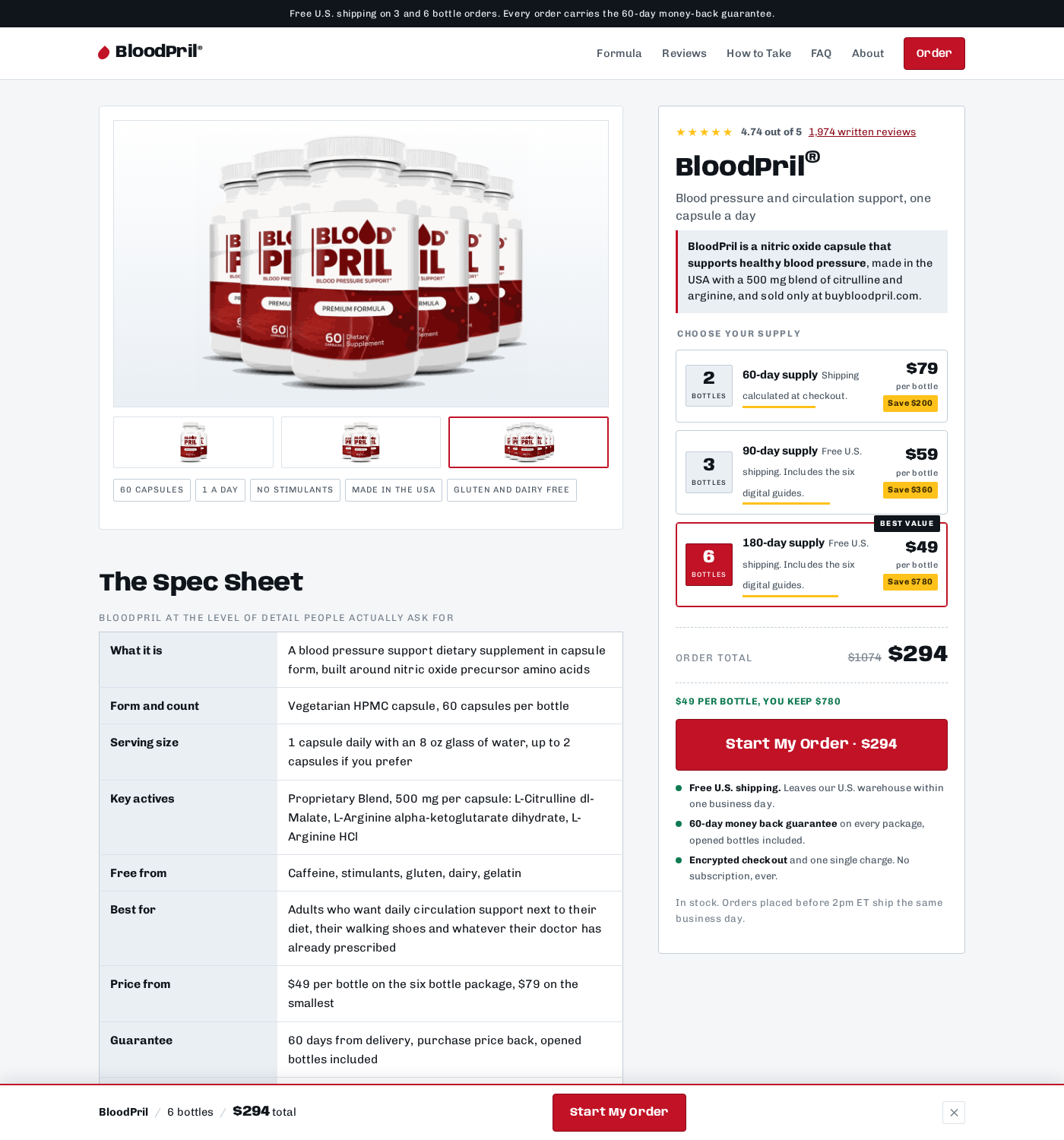
The image above shows a current BloodPril-branded retail page for context. It is not a capture of the original fake Jagger video.
The false endorsement and current billing terms are separate findings
The accessible retail listing describes a single charge and explicitly rejects subscriptions. That limits claims about automatic refills at this particular offer.
Its existence does not authenticate Jagger’s involvement, establish who commissioned every ad, or prove that a honey routine clears arteries.
- Reject the fake celebrity endorsement, regardless of the bottle name beside it.
- Do not change prescribed cardiovascular treatment because of an advertising video.
- Distinguish a per-bottle price from the full package charge.
- Check the actual merchant’s renewal terms instead of assuming every offer is identical.
- Preserve the advertisement and receipt if the presentation led you to order.
A Familiar Performer Is Not Evidence of a Treatment
A recognizable musician can make a health pitch feel less distant. The viewer may associate him with energy, longevity, or a career spanning decades.
The advertiser encourages that association to answer a question it cannot answer: whether the product works for the person watching.
Even a real celebrity’s energetic performance would not identify a medical treatment or explain the condition of the viewer’s arteries.
Here, the recommendation itself is fabricated. There is no need to speculate about Jagger’s private life to explain why the pitch fails.
People do not owe the public their medical records because a marketer borrowed their likeness. The commercial claim belongs to the advertiser.
The audience deserves better evidence too. A treatment decision requires more than a face that makes the story easier to remember.
Ask what outcome is promised, which exact product was studied, and whether the information is relevant to your diagnosis and existing medicines.
If the answer is another testimonial or a longer video, the original question remains unanswered.
How the Mick Jagger Arterial Flush Scam Works
Step 1: A simple ritual is offered instead of a complicated health decision
The phrase arterial flush suggests something tangible: a blockage that can be washed away by a small daily action.
Honey makes the idea feel familiar and accessible. It can lower resistance before the viewer has seen a label, seller, or clinical explanation.
That familiarity is doing persuasive work. An ingredient found in a kitchen does not establish that the advertised routine changes cardiovascular disease.
Pause at the promised result, not the comforting ingredient. A simple-sounding claim still needs meaningful evidence.
Step 2: A counterfeit news setting supplies borrowed credibility
The documented funnel uses television-style presentation and a purported 60 Minutes segment. The sales message is made to resemble independent reporting.
A familiar program format changes how the viewer interprets the material. What might sound extravagant in an advertisement can feel investigated when presented as journalism.
But a copied logo or interview layout does not make the page a broadcaster’s publication. Check the actual publisher and original episode details.
The genuine 60 Minutes publishing pages are separate from a commercial video claiming the program covered a miracle supplement.
Step 3: Mick Jagger’s apparent participation reinforces the story
The campaign places Jagger among other recognizable figures. That creates the impression that the discovery has already circulated among people with access to expert advice.
It is an appealing shortcut: if well-known people supposedly tried it, perhaps the viewer can avoid doing the difficult verification.
That shortcut is exactly what fails. A manipulated portrayal is not testimony, and several fabricated appearances do not become independent evidence when combined.
Do not repeat the purported personal story as a fact about Jagger. Describe it as advertising that misuses his identity.
Step 4: A medical-sounding metaphor makes the purchase seem necessary
Arterial flush and related cleansing language frame a complex health issue as a maintenance task. The implied fix can sound both urgent and straightforward.
Real health decisions require knowing what problem is being treated. Elevated blood pressure and disease within the arteries are not interchangeable labels.
A video cannot determine which condition you have or whether changing a treatment would be safe.
The NCCIH information on high blood pressure is a more useful starting point than a promised celebrity shortcut.
Step 5: The kitchen hook gives way to packaged capsules
The recorded campaign leads to BloodPril. That is the commercial destination, rather than evidence that a homemade honey instruction was independently validated.
The distinction is visible in the current retail description: it presents an amino-acid supplement, not a demonstrated method for mechanically flushing arterial deposits.
A seller can change the bottle while retaining the same borrowed celebrity story. Remember the false recommendation, not only the product name.
If the brand at checkout differs from the one in the video, preserve that transition. It matters when explaining what induced you to purchase.
Step 6: Package pricing asks the viewer to commit before verifying the claim
The accessible BloodPril-branded store displays packages at $158 for two bottles, $177 for three, and $294 for six.
The six-bottle option is selected in the displayed offer. Its unit price is not the amount charged for the whole package.
That selection is not proof of an unauthorized quantity change. Compare the final order you approved with the actual invoice before describing a billing problem.
The fake endorsement remains a separate deception even where the transaction total and one-time terms are displayed clearly.
For instance, seeing $49 and later noticing a $294 receipt calls for checking the package selection. It does not, alone, show when the amount changed.
If the final authorization showed a different total, preserve that screen too. The difference between those records is the detail a payment reviewer can investigate.
What the Current BloodPril Page Does and Does Not Establish
The formula is different from the emotional recipe story
The retail page describes a 500 mg proprietary blend involving citrulline and arginine forms. It presents the product as blood-pressure and circulation support.
That description does not provide proof of a finished-product cure or validate the impersonated television endorsement.
A proprietary total also does not disclose every individual ingredient amount. Ingredient names alone cannot establish equivalence to a particular clinical study.
Take the actual label to the professional managing your cardiovascular care. Do not turn a sales explanation about circulation into a self-prescribed treatment plan.
This offer says the payment is not recurring
The current page explicitly states “No subscription, ever.” It also describes a single charge. A blanket claim of automatic monthly refills would contradict that displayed offer.
Other destinations using the product name may differ. Match your own transaction rather than borrowing terms from whichever page is easiest to find later.
If a later charge appears, obtain the underlying agreement and identify the merchant. An unexplained statement entry deserves investigation, not a guessed explanation.
The guarantee is a policy, not a proven outcome
The listing describes a 60-day period from delivery and eligibility for opened bottles. Refund handling was not tested through an actual purchase.
A stated policy can guide your request without guaranteeing that every customer will obtain the same result.
Keep your delivery confirmation, and ask for order-specific return instructions before mailing anything. A return destination belongs to the transaction, not to the celebrity.
Warning Signs That Matter More Than Video Quality
A flawless-looking clip can still contain a false endorsement. Poor lip synchronization is a clue, but its absence is not a certificate of authenticity.
Look instead for a verifiable source, a coherent medical claim, and a clear commercial destination. The relationships between those three matter.
A supposed news report should have a genuine publication trail. A treatment claim should have appropriate evidence. A purchase should identify what you are buying.
Another warning sign is the move from a broadly described discovery to a product-specific conclusion without showing how the evidence connects them.
The following questions help interrupt that move:
- Where did the complete, authentic Jagger statement originally appear?
- Which actual broadcast contained the claimed supplement recommendation?
- Was the finished formula tested for the advertised health outcome?
- What exact quantity and total am I being asked to authorize?
- Which party handles a complaint about the resulting purchase?
The documented campaign descriptions identify the false celebrity use. This investigation did not conduct technical video forensics or establish the advertiser’s ultimate ownership.
The fake recommendation is enough reason to walk away. You don’t need to invent a hidden subscription or speculate about a factory to reject it.
What to Do if You Have Fallen Victim to This Scam
-
Protect the medical decisions first. If the video persuaded you to stop or change cardiovascular treatment, contact the clinician responsible for that care.
Describe the change plainly and provide the supplement label. Do not wait for the advertiser to decide whether a symptom is important.
-
Save the Jagger claim in context. Preserve the apparent endorsement, the publishing account, and the page that connects it with an order.
A complete screenshot is more useful than a celebrity portrait alone. Keep the destination address visible where possible.
-
Reconstruct the payment accurately. Put the receipt, selected package, total, shipping, and any optional additions together.
Distinguish a purchase you regret from an amount or quantity you never approved. Both may need attention, but they are not the same complaint.
-
Send a concrete request to the merchant. Identify your order and explain that a false celebrity recommendation influenced the purchase.
Ask for cancellation or the relevant refund process. Preserve the response, delivery date, and any stated return deadline.
-
Check for later charges without assuming their cause. If the agreement was one-time, ask the merchant to explain a subsequent payment.
For an unwanted continuing agreement on another destination, cancel it separately and obtain written confirmation of when billing will stop.
-
Escalate an unresolved issue through your payment provider. Supply the advertisement, invoice, and contact history, and ask which dispute process applies.
Do not send money to a recovery agent who contacts you unexpectedly. Another promise involving a famous name does not make reimbursement more likely.
-
Check digital exposure if the funnel went further. An unfamiliar download or installation justifies a Malwarebytes device scan.
AdGuard can reduce some advertising exposure. Neither service reverses a payment or makes an unsupported medical claim safe to follow.
Frequently Asked Questions
Did Mick Jagger endorse an arterial flush honey remedy?
The documented campaign uses an unauthorized portrayal of him. Treat the apparent recommendation as fabricated, not as a statement about his real health routine.
His name and likeness should not be used to justify buying a cardiovascular supplement.
Was the promotion a genuine 60 Minutes segment?
The campaign imitates television reporting rather than providing an authenticated broadcast recommendation. Familiar program styling does not make a commercial independent journalism.
Check the original publisher instead of trusting the logo inside the sales page.
Can honey flush material out of my arteries?
The advertised cure is not established by this campaign. A kitchen ingredient and a cleansing metaphor do not demonstrate an effective treatment for cardiovascular disease.
Discuss actual health concerns with a clinician rather than using the video to replace prescribed care.
Why does BloodPril appear in an article about Jagger?
BloodPril is the supplement named in the documented sales journey. The durable warning concerns the false Jagger story, which can outlast any particular brand.
The current retail screenshot provides product context, not proof that the pictured store commissioned every fake advertisement.
Does BloodPril always enroll buyers in refills?
No such universal finding is supported. The accessible store examined says its payment is a single charge without a subscription.
Read the agreement belonging to your own order. If later billing conflicts with it, preserve the discrepancy and contact the financial provider.
What should I do before sharing the video with family?
Do not forward it as a health recommendation. Explain that the celebrity endorsement is false and that the presentation leads toward a supplement purchase.
If someone already ordered, help them preserve the receipt and protect existing treatment rather than making them feel foolish.
The Bottom Line
Do not buy a supplement because of the Mick Jagger arterial flush video. The celebrity recommendation and television authority are fabricated.
Keep cardiovascular treatment grounded in proper care. If the advertisement led to a purchase, save the evidence and address the actual merchant, package, and payment terms.

Join the discussion
0 commentsShare your experience or ask a question about this article.
Discussion
Start the conversation
Have a question or something useful to share? Add the first comment.