

Online shopping has made it easier than ever to access exclusive deals on branded products, but it has also opened the door to increasingly sophisticated scams. One of the most widespread in recent months is the fake LIDL SEIKO Prospex watch sale, which has duped countless buyers into spending their money on non-existent or poor-quality products. This article uncovers everything you need to know about this scam, offering a detailed analysis of how it works, what signs to look out for, and what actions you can take if you have already fallen victim.
Scam Overview
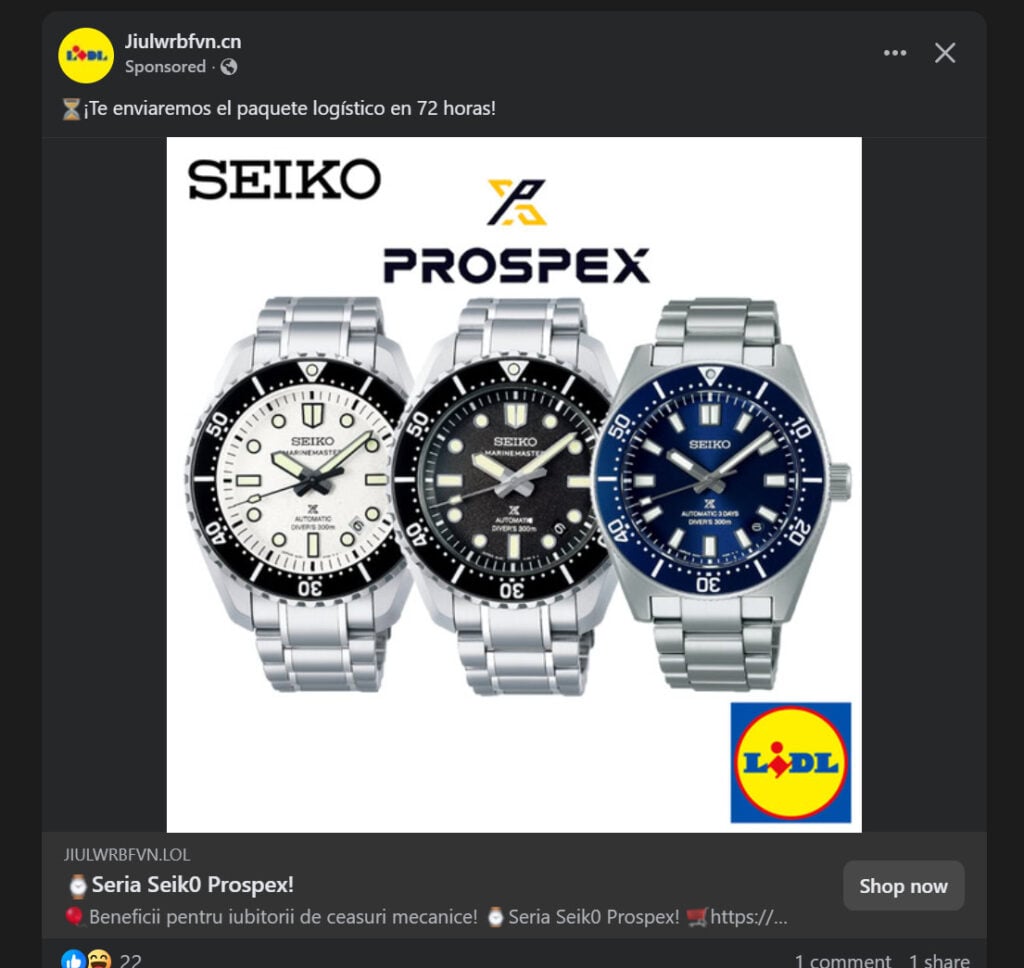
The LIDL SEIKO Prospex sale scam is a highly deceptive online scheme that primarily uses targeted social media advertising to lure victims. These ads feature high-quality images of Seiko Prospex watches, often falsely branded with the LIDL logo to appear legitimate. The prices displayed are unbelievably low, ranging from as little as $9.90 up to $39.90. This pricing is far below the usual retail cost of genuine Seiko Prospex watches, which often sell for hundreds or even thousands of dollars.
The fraudulent websites hosting these scams are typically linked to domains ending in .lol, .shop, .store, or .xyz. These domains are usually recently registered, making them difficult to track or shut down before scammers move on to new ones. Once a victim clicks on an ad, they are directed to a professionally designed but fake online store. The site is filled with compelling messages such as “Clearance Sale,” “Store Closing Sale,” “Limited Time Offer,” and “Free Shipping,” all designed to pressure customers into making a quick purchase before supposedly missing out on an incredible deal.
The website itself is a near-perfect replica of legitimate e-commerce sites, often using stolen images, copied product descriptions, and misleading logos. What it lacks, however, are key trust indicators such as verified customer reviews, secure payment icons, physical addresses, or reliable contact information. The only way to reach the so-called store is typically via a generic email address that rarely, if ever, responds to customer inquiries.
Buyers who fall for this scam typically experience one of two outcomes. Some never receive any product at all, resulting in a complete financial loss. Others receive a cheap counterfeit watch that bears little to no resemblance to the high-quality Seiko Prospex watch they believed they were purchasing. In both cases, there is no realistic way to secure a refund or replacement. The scammers shut down their fake store within weeks and simply relaunch under a different domain name, ready to trap the next unsuspecting shopper.
This scam thrives because it exploits well-known brands like Seiko and LIDL, combining their reputations to make the offer seem more credible. The fake association with LIDL suggests legitimacy since the retailer is widely known for discount prices, making the unrealistic deal appear more plausible to potential victims.
How The Scam Works: Step-by-Step
- Creation of Fake Websites: Scammers build fraudulent e-commerce websites using cheap templates and stolen content. These sites mimic the look and feel of legitimate online stores but lack key verification details, leaving no trail to trace the perpetrators.
- Social Media Advertisement Campaigns: Paid ads are launched on platforms like Facebook, Instagram, and TikTok, featuring enticing images of authentic-looking Seiko Prospex watches paired with the LIDL logo. These ads promise massive discounts and emphasize urgency to push users into impulsive purchases.
- Too-Good-To-Be-True Pricing: With prices as low as $9.90 to $39.90, buyers believe they’ve stumbled upon a once-in-a-lifetime clearance deal. The psychology of scarcity and exclusivity tricks users into acting quickly without verifying the store’s authenticity.
- Click and Redirect: Once the ad is clicked, users are redirected to the scam website where high-pressure sales tactics, such as countdown timers and “limited stock” notices, further encourage rushed decisions.
- Payment Processing: Victims enter their personal and financial details to complete the purchase. Often, scammers only accept credit or debit card payments without secure payment gateways like PayPal, removing any option for easy dispute resolution.
- Scammers Collect Money and Data: Beyond taking the payment, scammers may save personal information and credit card details for future fraudulent transactions or to sell to other criminals.
- No Delivery or Fake Product: After purchase, victims receive an automated confirmation email. In many cases, no product is shipped. If something does arrive, it is a cheap, low-quality counterfeit that does not match the advertised Seiko Prospex watch.
- Website Disappears: Within weeks, as complaints grow or payment processors block the account, scammers shut down the domain. They reappear soon after under a new name, repeating the same cycle with different victims.
What to Do if You Have Fallen Victim to This Scam
If you have already fallen for this fraudulent LIDL SEIKO Prospex sale, here are crucial steps you should take immediately:
- Contact Your Bank or Card Provider: Report the transaction as fraudulent and request a chargeback. Most banks have dedicated fraud departments that can help recover funds if reported promptly.
- Report the Website: File a report with consumer protection agencies, internet safety organizations, and the social media platform where you saw the ad. This can help authorities track the scam and prevent others from becoming victims.
- Monitor Your Accounts: Keep a close watch on your bank and credit card statements for unauthorized charges. Scammers may attempt further withdrawals or sell your data to other fraud rings.
- File an Online Fraud Complaint: Use platforms such as Scamwatch, Better Business Bureau, or your national cybercrime reporting service to create an official record of the scam.
- Change All Related Passwords: If you created an account on the scam site or used a common password linked to your email or banking accounts, change it immediately to prevent further security breaches.
- Alert Friends and Family: Warn others about the scam, especially if they might have seen the same ads. Spreading awareness can help protect others from similar fraudulent schemes.
Frequently Asked Questions About the LIDL Seiko Prospex Sale Scam
1. What is the LIDL Seiko Prospex Sale Scam?
The LIDL Seiko Prospex Sale Scam is a fraudulent online scheme where scammers use fake websites and misleading social media ads to trick shoppers into buying discounted Seiko Prospex watches supposedly sold through a LIDL promotion. These sites advertise unrealistic prices, typically between $9.90 and $39.90, for luxury watches that usually cost hundreds. Victims often receive nothing or a cheap counterfeit product with no way to get a refund.
2. How do these scam websites operate?
Scammers create temporary websites with domain endings like .lol, .shop, .store, or .xyz. These sites use stolen product images, plagiarized descriptions, and slogans like “Clearance Sale” or “Store Closing Offer” to lure buyers. They have no verified contact details other than a generic email address. Payments are taken immediately, but the products are never delivered or are vastly inferior to what was advertised.
3. Why do scammers use LIDL and Seiko branding?
By combining a well-known retailer like LIDL with a reputable watch brand like Seiko, scammers create a false sense of legitimacy. This tactic tricks buyers into believing they are getting authentic products from a trusted source.
4. What are the warning signs of a LIDL Seiko Prospex scam site?
- Suspiciously low prices for luxury watches
- Newly created website domain with no history or reviews
- Lack of physical address or customer service phone number
- Overuse of urgency phrases like “Limited Time Offer”
- Copied images and text from official Seiko retailers
- No legitimate social media presence aside from paid ads
5. What happens after placing an order on a scam site?
Victims usually experience one of the following outcomes:
- No product arrives and no refund is offered.
- A counterfeit or extremely low-quality item is delivered.
- The scam site vanishes shortly after, leaving victims with no way to contact the seller.
6. Can I get my money back if I was scammed?
If you paid by credit card, contact your bank immediately to dispute the charge and request a chargeback. Debit card payments are harder to reverse. Wire transfers and cryptocurrency payments offer little to no recovery options.
7. How do scammers use social media ads to reach victims?
Scammers invest in sponsored ads on Facebook, Instagram, TikTok, and other platforms, often targeting watch enthusiasts and bargain hunters. These ads lead directly to fraudulent websites designed to look like legitimate online stores.
8. Does LIDL sell Seiko Prospex watches online?
No. LIDL does not sell Seiko Prospex watches or any luxury timepieces online. Any website claiming to be an official LIDL watch sale is a scam.
9. Why do scam sites often disappear quickly?
Scammers frequently shut down their fake stores once they start receiving complaints or get reported. They then launch new sites under different domain names to continue their scheme without detection.
10. Are all cheap Seiko watch deals scams?
Not necessarily, but genuine luxury watches rarely sell for extremely low prices. Always verify that the retailer is authorized by Seiko and has a strong reputation before making a purchase.
11. How can I protect myself from scams like this in the future?
- Always research a website before buying.
- Look for genuine customer reviews and independent feedback.
- Verify that the retailer is an official or authorized Seiko dealer.
- Avoid deals that seem too good to be true.
- Use secure payment methods with fraud protection.
- Be cautious of random ads on social media promising luxury products at massive discounts.
12. Where can I buy authentic Seiko Prospex watches safely?
Only purchase from official Seiko retailers listed on Seiko’s website, reputable jewelry stores, or verified sellers on trusted marketplaces like Amazon or authorized watch dealer websites.
13. Can scam sites be reported?
Yes. You can report fake sites to your bank, local consumer protection agencies, online fraud reporting services, and domain registrars. Reporting scam ads on social media also helps prevent others from falling victim.
The Bottom Line
The LIDL SEIKO Prospex sale scam preys on unsuspecting shoppers by offering deals that are simply too good to be true. These scams leverage fake domains, stolen content, and deceptive marketing tactics to trick victims into handing over money and personal information. Always verify online stores before purchasing, be wary of unrealistically low prices, and remember that genuine luxury watches are rarely sold at massive discounts through unverified sites. Staying vigilant is your best defense against falling into these traps.

Join the discussion
0 commentsShare your experience or ask a question about this article.
Discussion
Start the conversation
Have a question or something useful to share? Add the first comment.