

If you lived in Canada and bought packaged bread at any point between 2001 and 2021, you may be eligible to receive compensation from the historic $500 million Loblaw/Weston bread price-fixing settlement. This nationwide settlement aims to compensate millions of Canadians who overpaid for bread due to price-fixing schemes that lasted nearly two decades.
What the Loblaws Bread Settlement Is About
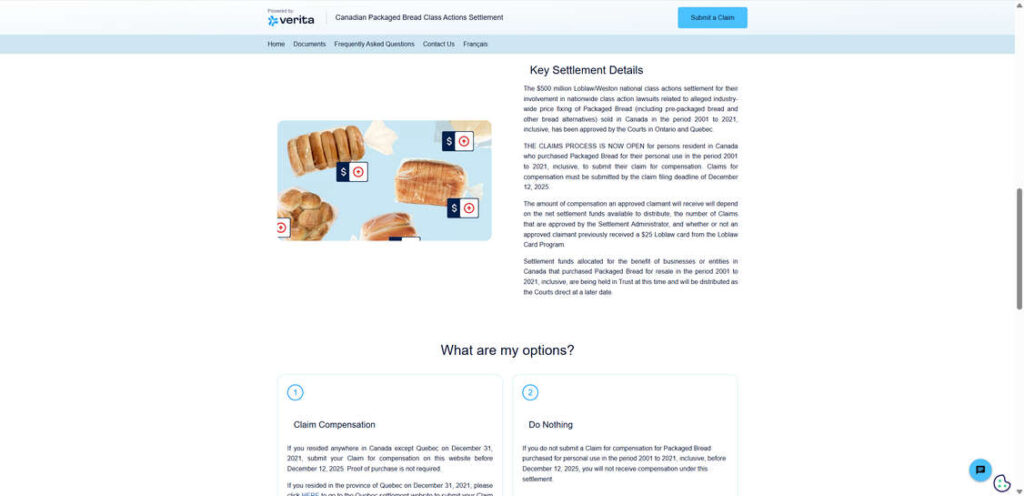
Loblaw Companies Limited and George Weston admitted involvement in a price-fixing scheme affecting packaged bread prices across Canada. This scheme inflated the cost of everyday bread products between 2001 and 2021. Following class action lawsuits, a $500 million national settlement was reached, which has now been approved by courts in Ontario and Quebec.
The settlement allows individuals who purchased packaged bread for personal use to claim compensation. This includes pre-packaged loaves, buns, bagels, English muffins, and similar products sold at various grocery retailers across the country.
Who Is Eligible to Claim
You may qualify if:
- You lived in Canada between 2001 and 2021.
- You purchased packaged bread for personal use during that period.
- You were 18 or older by December 31, 2021.
- You did not opt out of the class action.
Quebec residents must file through a separate website. Residents of other provinces can file through the main Canadian Bread Settlement site.
No Receipts Required
One of the key aspects of this settlement is that proof of purchase is not required. Claimants only need to provide basic information such as:
- Full name and address
- Number of adults in the household
- The type of bread and where they typically purchased it
This simple process allows millions of Canadians to participate, even if they no longer have grocery receipts from years ago.
How Much You Can Receive
The exact payout amount depends on:
- The number of approved claims submitted
- The total net settlement funds available after administrative costs
- Whether the claimant previously received the $25 Loblaw gift card from the earlier compensation program
Payments will be made by Interac e-Transfer sometime in 2026. If you request a paper cheque, $2 will be deducted for shipping costs.
Important Dates to Remember
- Claims open: September 11, 2025
- Deadline to file claims: December 12, 2025
- Estimated payouts: 2026 (6–12 months after the deadline)
Late claims will not be accepted under any circumstances.
How to File a Claim
Filing a claim is straightforward:
- Visit www.canadianbreadsettlement.ca
- Click “Submit a Claim”
- Fill in your personal information and eligibility details
- Select your preferred payment method (Interac e-Transfer or cheque)
- Submit the claim before the December 12, 2025 deadline
Quebec residents should visit www.quebecbreadsettlement.ca to submit their claim.
Additional Notes for Loblaw Card Holders
If you previously received the $25 Loblaw Card, you can still file a claim. However, your final payout will be reduced by the card amount if the additional settlement is worth more than $5.
When to Expect Payment
The settlement administrator will process claims after the filing period closes. Payments are expected in 2026, and the timeline will depend on how many claims are received and verified. Claimants will be notified by email when their payment is ready.
Why This Settlement Matters
This settlement is one of Canada’s largest antitrust resolutions in the food sector. It reflects the serious impact price-fixing had on everyday consumers over 20 years. It also highlights the growing role of class actions in protecting consumer rights and holding corporations accountable for market manipulation.
Final Thoughts
If you bought bread in Canada between 2001 and 2021, it’s worth taking a few minutes to file a claim. You don’t need proof of purchase, the process is simple, and you could be entitled to a cash payout. Make sure to submit your claim before December 12, 2025 to secure your share of the $500 million settlement.
For full details and to file your claim, visit www.canadianbreadsettlement.ca.
FAQ
Who can file a claim for the Loblaws bread settlement?
Any adult resident of Canada who purchased packaged bread for personal use between 2001 and 2021 may be eligible, except excluded parties such as company executives and those who opted out of the class action.
Do I need a receipt to file a claim?
No. You just need to provide basic personal information and a general description of your bread purchases.
How much money will I get?
The payout amount depends on the total number of claims and whether you previously received a Loblaw gift card. Payments will be distributed in 2026.
How will I receive my payment?
Most claimants will receive their settlement via Interac e-Transfer. You can also request a cheque, but a $2 fee will be deducted.
When is the deadline to file?
The last day to submit your claim is December 12, 2025.
Where do I file my claim?
Non-Quebec residents can file at canadianbreadsettlement.ca. Quebec residents must file at quebecbreadsettlement.ca.
What if I already received the $25 Loblaw gift card?
You can still claim, but the amount may be adjusted based on how much you previously received.
Is there a cost to file a claim?
No. Filing a claim is free, and you do not need a lawyer to participate.
What types of bread are covered?
Packaged bread products, including loaves, buns, bagels, and English muffins, are included in the settlement.
What happens if I miss the deadline?
If you do not submit a claim by December 12, 2025, you will not be eligible to receive any compensation.
This article is for informational purposes only. To submit your claim or read the official terms, visit www.canadianbreadsettlement.ca.








