


The caller says a prize is waiting. All you have to do is send one package, and the money coming back will dwarf what you put inside.
For some people who believed that promise, the package took a turn they could not see on the tracking page.
Overview
The prize was fake before the package reached the mail
People posing as lottery representatives called victims and told them they had won. According to federal prosecutors, they demanded cash for supposed taxes or fees before releasing the prize.
The people who paid were not sending money to a legitimate lottery. In many instances, the case involved older people who had been deceived into mailing cash.
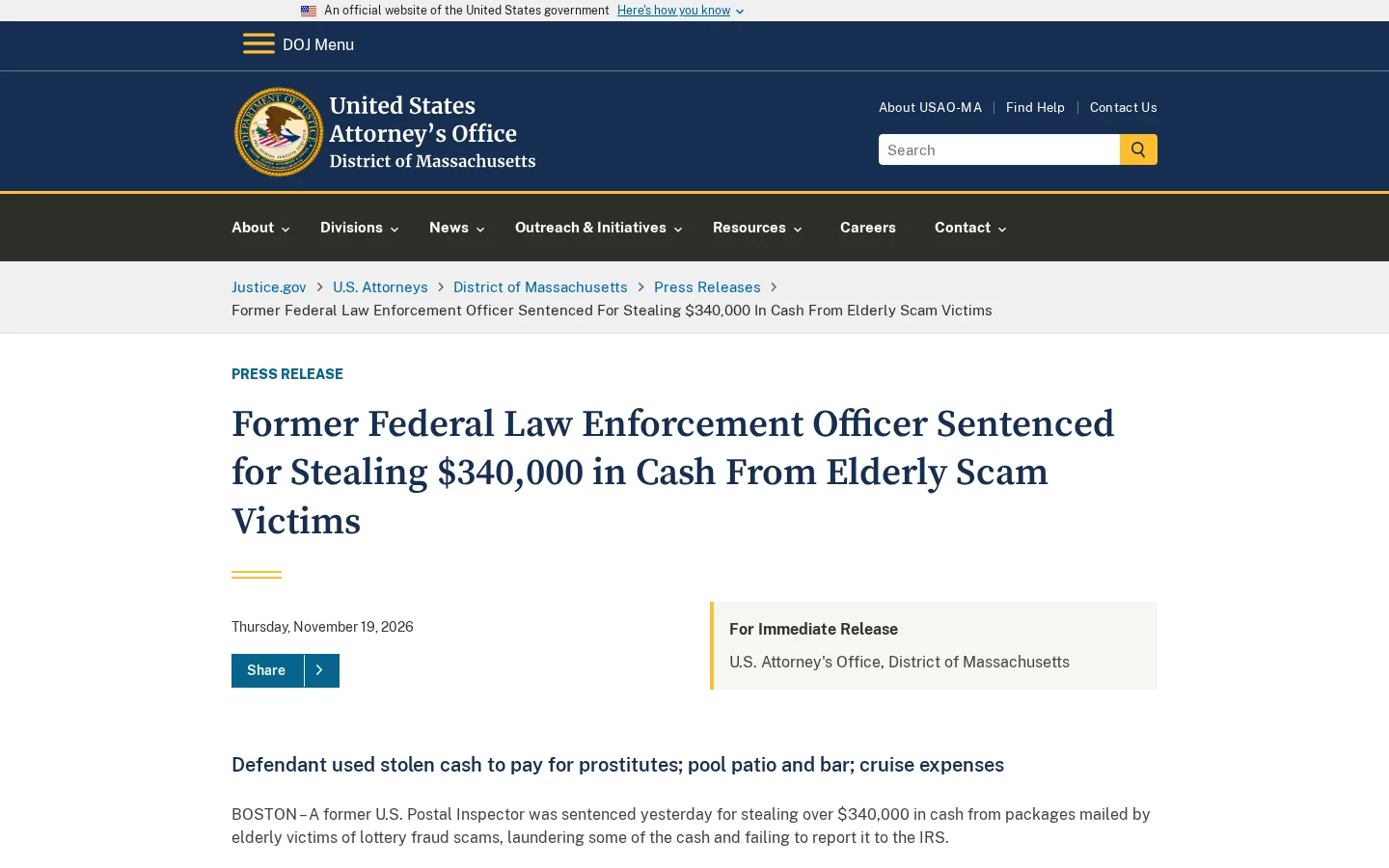
The Massachusetts federal sentencing announcement describes another crime against those victims. A real Postal Inspector stole cash from parcels that were intercepted through an effort to stop lottery fraud.
A genuine fraud-prevention effort did not deliver the expected protection
The U.S. Postal Inspection Service worked with Jamaican authorities to disrupt fake lotteries and sweepstakes. The operation was real, unlike the prize the caller promised.
Scott Kelley supervised a mail fraud team. Prosecutors say he redirected intercepted packages to himself under the pretext of his work, then stole cash from packages he received.
That is a different wrong from pretending to run a lottery. It does not mean the caller was a postal officer or the inspector ran the original lottery scheme.
What the court ordered and what you can still verify
Kelley pleaded guilty in July 2026 to crimes including mail theft, wire fraud and money laundering. He was sentenced in November to 40 months in prison.
Prosecutors describe more than $340,000 taken, while saying the whole amount is unknown. The court ordered $106,986 in restitution, not a payout of the entire estimated loss.
- Do not mail cash to claim a sweepstakes or lottery prize.
- After mailing, contact the carrier promptly through its official site or number.
- Keep the mailing receipt, any tracking history and the original request together.
- Verify a return or reimbursement independently instead of paying a second fee.
How the Lottery Cash-by-Mail Scam Worked
Step 1: The caller made a windfall sound like a routine claim
The person making contact said some sort of lottery or sweepstakes had paid out. A supposedly routine administrative step then stood between the target and the advertised winnings.
That transition matters because people think of a fee differently from a purchase. They may consider it a small expense instead of asking whether there is an actual prize.
The FTC’s prize scam guide explains why a request to pay to claim a prize is a red flag. A caller’s fee is not verified by the caller’s explanation.
You do not need to prove whether a real sponsor uses similar words before refusing. Hang up and check the promotion with the sponsor you find yourself.
Step 2: The payment was moved out of the bank and into the mail
Federal prosecutors said the callers convinced people to mail money for supposed fees or taxes. Sending physical cash means you cannot later dispute that parcel as a card charge.
The receipt may establish that you handed over a package. It generally does not establish what was inside, who sent you the instructions or whether the prize ever existed.
Save those other facts separately if a relative has already sent something. A bank withdrawal record and the original message can help explain why the money moved.
If someone is still preparing to mail cash, ask them to set the envelope aside. Call the official lottery or sweepstakes organization only if you can identify it independently.
Step 3: Some parcels were intercepted as a fraud-prevention measure
In the Kelley case, postal staff identified packages under a program set up to fight lottery scams. The investigator had a genuine role within that program.
Investigators intercepted parcels in this case, not in every lottery scam. Do not assume postal staff can stop your parcel just because they stopped others.
The DOJ says Kelley used the authority associated with his position to have parcels sent to him. That left money that should have been protected exposed to a second theft.
Do not use an old agency email or a new caller’s promise to establish what happened to a shipment. Start with the actual tracking number and a verified carrier contact.
Step 4: Recovery became a question about the particular parcel and case
Until you have an official reply, do not assume a delivery scan means the original fraudster got the money. It may only record how the carrier handled a package.
The announcement does not name every affected sender. It lists a DOJ contact for people who think their payment was caught up in this case.
When you write down your history, distinguish what the caller demanded, what you actually mailed and what you later learned. Those are three different pieces of information.
Keep the carrier’s location and scan records even if you later get an update. They can help an investigator work out where the parcel was or was supposed to go.
What a Mailing Receipt Can and Cannot Tell You
Identify the item, the shipper and the original instruction
Match the date, destination and tracking number to the actual label. If there were multiple packages, avoid using the most recent scan to describe all of them.
Look for an email receipt if the paper copy is missing. Ask the shipping counter how to find the record without sending anything to the supposed lottery.
Ask whoever packed the parcel to write down what they remember now. Record the approximate amount and where it came from without requiring them to reconstruct every detail from memory.
If an adult relative wants help, sit with them while they retrieve the receipt. Do not log into their bank or shipping account without permission merely to speed things up.
For multiple shipments, make one entry per parcel with its destination and amount. A total by itself leaves the carrier unable to identify the item that may still be moving.
If you handed a package to a private carrier instead, use that carrier’s official tracking and fraud contact. USPS Package Intercept does not apply to another company’s parcels.
Check whether the package is still moving
For USPS, open the official site and paste your number into USPS Tracking. If it shows delivery or a handoff you do not recognize, save the details before contacting support.
The USPS Package Intercept page has an eligibility checker. Enter your tracking number and sign in to your USPS account if the item is eligible.
Interception is not guaranteed, and USPS may charge a fee for the service. Pay only through the official carrier if you choose to submit an eligible request.
Contact official support quickly if the website shows the package is too far along or cannot be intercepted. Ask what can be documented and keep the response with the receipt.
USPS says a sender or authorized representative can request this service for eligible tracked items that have not gone out for delivery or already been delivered.
For a retail mailing, review the return or hold option the carrier offers before submitting. Save the request confirmation, then keep checking the tracking result for an actual change.
If several people helped send the parcel, identify who is listed as sender. It may be faster for that person to deal directly with the carrier’s verification process.
Handle the money and the mail as separate problems
Let the bank know if you withdrew the cash because of a scam, rather than describing the withdrawal as unauthorized if you made it yourself.
If anyone borrowed money to meet the demand, note the lender and due dates. A fraud investigation does not automatically deal with the borrowed money.
Investigators may ask what you put in the package. Do not post the cash amount or shipping address online to try to recruit other people with similar experiences.
Anyone who claims they can guarantee a refund simply because they know your tracking number is asking you to trust a detail that could have been shared or copied.
Check a recovery conversation against your own history
When someone claims to be an investigator, ask for the office name and case number. End the call and find that office through a government website you opened yourself.
Tell the real office whether you actually mailed cash, only planned to send it or already had it returned. An unexpected call may concern a detail you never provided.
If a parcel comes back, note its condition, tracking update and cash returned. Contact the carrier or investigator if the return does not match what you sent.
Use a trusted person as a second set of ears if the caller comes back. Compare the demand with what the carrier or investigators already told you.
A claim that a second package will repair or match the first should end the conversation. Keep the message in case it connects the two demands.
What to Do If You Sent Cash for a Prize
-
Stop the shipment if it has not left. Do not take prepared cash to the counter just because the caller says the claim deadline is about to pass.
If you sent it, find the tracking number and go straight to the carrier’s site. Use the eligible intercept path or contact carrier support now.
Tell the carrier the reason you suspect fraud and ask what it can still do. A request number confirms a request was made, not that the package was returned.
-
Record what the person promised and what you sent. Save the prize name, caller number, messages, shipping label, tracking history, receipt and any later demands for money.
If you do not remember the exact time of the call, keep what your call history shows and label anything else as an estimate.
Ask the bank for any withdrawals or transfers used to fund the package. Keep that record away from the person promising the prize.
-
Report the mail fraud separately from the lottery pitch. Start at the Postal Inspection Service reporting page and choose the option for suspected mail fraud.
Give the destination and tracking number along with the promise of a prize. Keep the confirmation if the reporting service provides one, and make a note of the submission date.
If a family member is helping, have them preserve their own correspondence. They should identify which details they saw and which were described to them by the sender.
-
Use an official victim contact for the Kelley case. The Massachusetts announcement identifies the U.S. Attorney’s Office victim assistance route for those who may have been affected.
Open the DOJ release yourself and use the listed route. Give the office enough to identify the parcel or timeline and ask how to submit supporting records privately.
Do not assume that a report or a potential case match means you will be repaid. Ask the office how it notifies people if the case concerns them.
-
Expect a new approach from someone offering to recover the cash. Do not pay someone who says they can find your package, unlock a refund or release restitution.
If you receive a case number or a caller gives an official name, write it down. Call the actual office using its published contact details and confirm the request there.
Help an older relative set up a simple rule for future demands. Before making a payment for any prize, call a trusted person using a number already in their contacts.
Frequently Asked Questions
Was the caller in the Kelley case a Postal Inspector?
The court case describes two acts. Lottery impersonators made the prize pitches, and a real Postal Inspector later diverted some intercepted packages and stole the cash.
Does the Postal Service guarantee it can get my cash back?
No carrier can guarantee a parcel will be stopped or returned. Ask what is possible for the exact tracking number and report the fraud even if delivery has occurred.
Is mailing cash the same as making a card payment?
It does not create a card purchase you can challenge. Keep any separate bank withdrawal record, and ask the carrier and postal investigators what steps are still available.
Does the amount ordered in restitution tell me what I will receive?
The court’s restitution order is not a personal payout notice. An official case contact can explain whether your loss was connected and what information it needs.
What if the caller says the money is for taxes?
Do not send cash to someone who says you must pay the caller to win. Any real tax questions belong with a qualified adviser or the tax authority.
What if a relative no longer has the package receipt?
Look for a label, email receipt, payment record or tracking message. Report what you do have and tell officials which information you have not been able to find.
The Bottom Line
Do not send cash to release a lottery prize. The fee is the demand to refuse, regardless of the promised jackpot or the caller’s explanation.
If you mailed money, check the shipment now, preserve the records, and report it through the Postal Inspection Service. Verify any contact offering recovery before you respond.

Join the discussion
0 commentsShare your experience or ask a question about this article.
Community experiences
Did this happen to you?
Your experience could help someone recognize the same scam. Submit a private report for our team to review.
I experienced this tooReports are reviewed before publication. Sharing publicly is always your choice.
Discussion
Start the conversation
Have a question or something useful to share? Add the first comment.