

Lotto Oracle AI promises lottery success powered by artificial intelligence. It claims to help players win more often using personalized number suggestions, advanced data analysis, and secret algorithms. But behind the sleek website, convincing testimonials, and polished videos lies a dangerous and deceptive scam.
In this article, we unpack the truth behind the Lotto Oracle AI AI system. From how it manipulates victims to what you should do if you’ve already been scammed, this guide exposes it all.
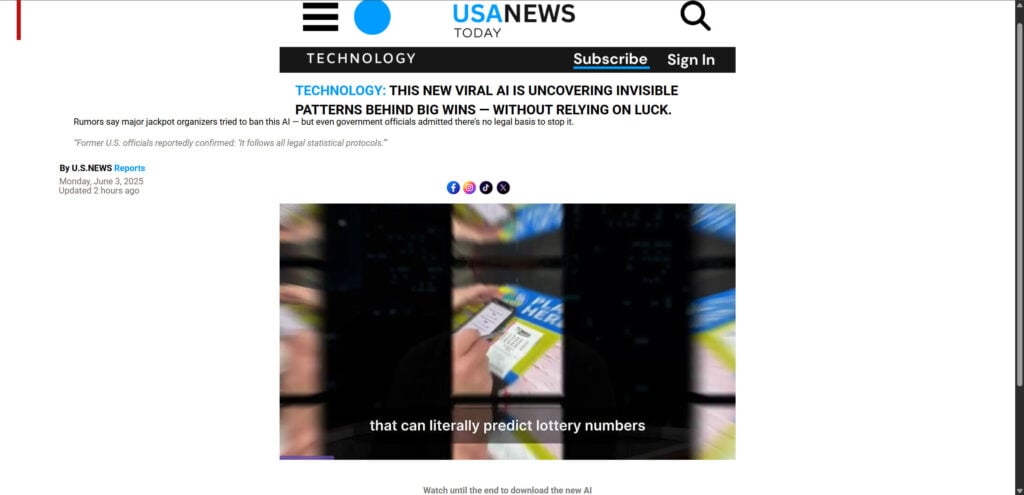
Scam Overview: What Is Lotto Oracle AI Really Selling?
Lotto Oracle AI markets itself as an AI-powered lottery prediction tool. It advertises “data-driven insights,” “personalized play,” and “enhanced winning potential.” The offer sounds tempting: pay a one-time fee of $197 and get lifetime access to a supposedly intelligent tool that increases your odds of winning the lottery.
They promise features like:
- Personalized number predictions based on pattern recognition
- Real-time updates
- Access to an exclusive members’ area
- Free bonus eBooks valued at $290
- A 60-day money-back guarantee
But none of it holds up under scrutiny.
The Illusion of Technology
Lotto Oracle AI’s marketing hinges on buzzwords like “AI-powered analysis” and “cutting-edge algorithm,” yet provides no technical documentation, evidence, or proof that a real algorithm is in use. What you’re really buying is a glorified number generator with no proven statistical edge.
Their claims of analyzing decades of data and identifying patterns are empty. Lottery numbers are random by design. No amount of data analysis or AI modeling can consistently predict them.
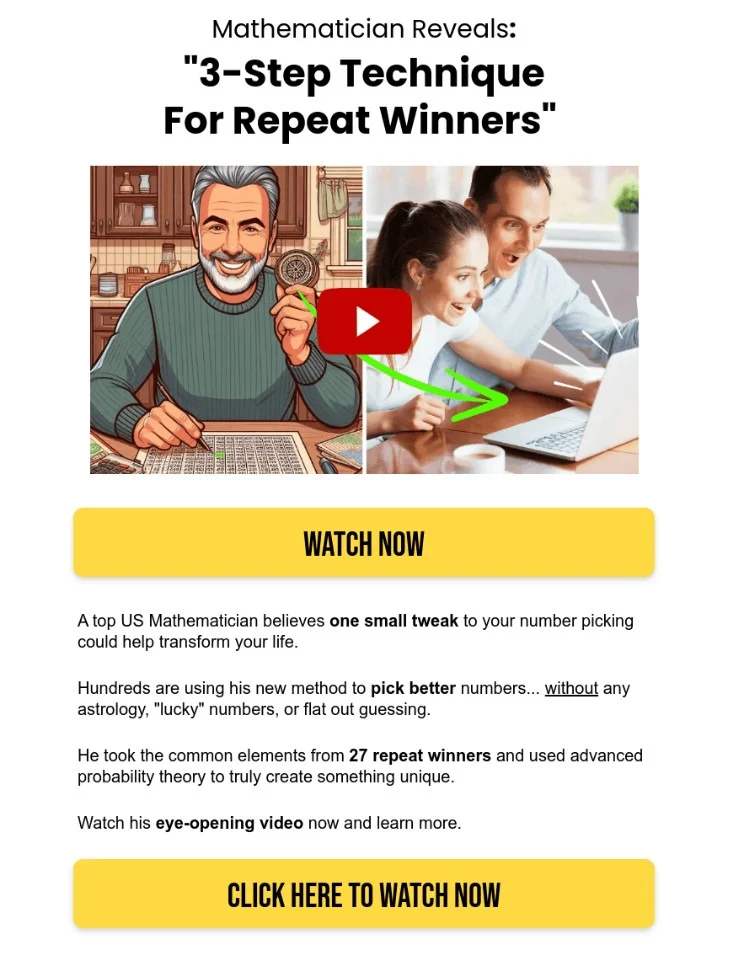
Misleading Simplicity
The site boasts that “even a 5th grader could do it” and presents a 3-step process:
- Enter Details – Choose your game and time to play.
- AI Analysis – The software generates suggestions.
- Get Numbers – Personalized lottery numbers are delivered.
It’s made to feel effortless and scientific. But the illusion of simplicity hides a bait-and-switch con.
The Bonuses Are Distractions
Bonuses like “Wealthy & Lazy” and “Ultimate Wealth Guard” claim to help you grow your money or hide it from the government. These are repurposed PDF files or outdated eBooks used to increase perceived value and justify the $197 price tag.
Fake Sense of Security
The site promotes a “100% Risk-Free 60-Day Money Back Guarantee.” However, users who attempt to claim refunds often find themselves ignored, blocked, or redirected to unreachable support channels.
Same Scam, Different Name
This isn’t the first time this scam has surfaced. It has previously operated under names like:
- Lotto Cash AI
- Lottery Defeated
- Lottery Defeater
Each uses the same sales tactics: fake authority figures, false success stories, and buzzwords like “AI,” “NASA-level algorithms,” and “smart wealth strategies.”
This scam has been also investigated by Jordan Liles on his YouTube channel, where he offers a detailed video on the subject. We recommend watching his content for a comprehensive understanding of the scam.
Next, let’s break down exactly how scammers carry out this scam from start to finish.
How the Scam Works
To protect yourself and others, it’s essential to understand exactly how this scam is executed from start to finish.
Step 1: Social Media Ads
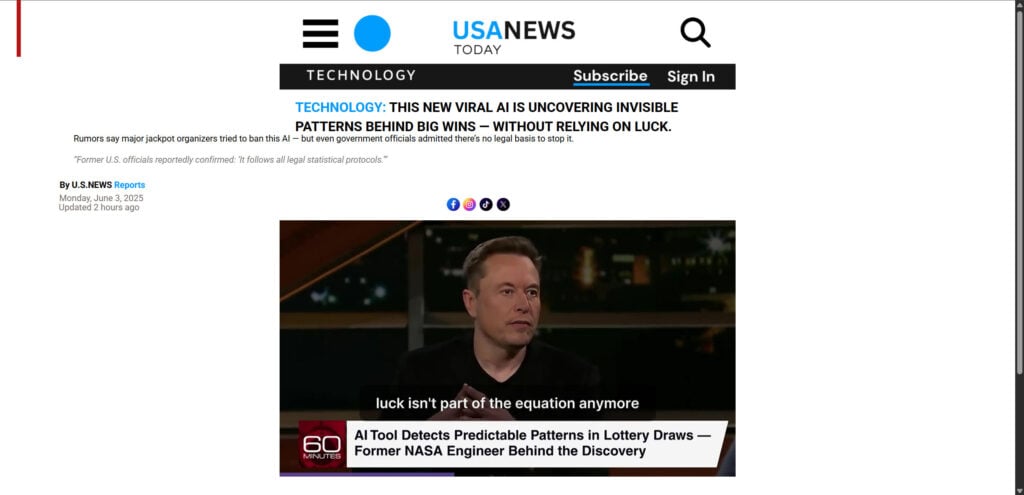
It starts with ads on Facebook, Instagram, and TikTok. These ads feature fake endorsements and exaggerated claims like:
- “Former NASA engineer cracks the lottery code”
- “AI reveals hidden patterns for jackpot wins”
- “Celebrities are using this to win big”
Some even include deepfake videos using the likeness and voice of figures like Elon Musk, The Rock, or news anchors to build trust instantly.
Step 2: The Landing Page
Clicking the ad leads to a slick landing page with a “limited-time offer.” The page uses psychological triggers like:
- Countdown timers
- “Only X licenses remaining”
- Fake testimonials with stock images
It aims to build urgency and credibility before introducing the $197 price tag.
Step 3: The Sale
You’re presented with an “exclusive” offer to buy Lotto Oracle AI for $197 (down from a fake price of $970). To sweeten the deal, you’re promised:
- 2 bonus guides valued at $145 each
- Free lifetime updates
- A user-friendly members’ area
You enter your payment info and hit purchase, expecting cutting-edge software. But what you get is far from what was promised.
Step 4: Delivery of a Worthless Product
After purchase, you typically receive:
- A basic web app that spits out random lottery numbers
- Outdated PDFs containing general financial advice
- No AI, no real-time updates, and no support
There is no actual AI engine. No statistical edge. Just a marketing shell.
Step 5: Optional Upsells and Follow-Ups
After the initial purchase, you might be targeted with upsells such as:
- Premium coaching packages
- VIP number generation tools
- Exclusive jackpot prediction modules
These are equally worthless and designed to extract even more money.
Step 6: Refusal to Refund
Despite advertising a 60-day refund policy, most users who request refunds are met with silence or dead-end support loops. Some victims are even charged more later through hidden fees.
What to Do If You’ve Been Scammed by Lotto Oracle AI
If you paid for Lotto Oracle AI or shared personal details on their site, follow these steps immediately:
1. Contact Your Bank or Payment Provider
- Request a chargeback if you used a credit or debit card
- Report the transaction as fraud
2. Report the Scam to Authorities
- Federal Trade Commission (FTC): https://reportfraud.ftc.gov
- Internet Crime Complaint Center (IC3): https://www.ic3.gov
- Better Business Bureau (BBB): File a complaint online
3. Secure Your Information
- Change passwords if you created an account on their platform
- Monitor your credit and banking activity for suspicious transactions
4. Leave Reviews and Warnings
- Post your experience on ScamAdviser, Trustpilot, and Reddit
- Share warnings on Facebook groups, subreddits, and forums
5. Don’t Fall for Recovery Scams
After falling victim, you may be targeted again with emails or calls claiming to help recover your money—for a fee. These are secondary scams. Avoid them completely.
6. Consider Credit Monitoring
If you provided personal information, consider a credit freeze or monitoring service through:
- Experian
- Equifax
- TransUnion
Frequently Asked Questions (FAQ) About the Lotto Oracle AI Scam
What is Lotto Oracle AI?
Lotto Oracle AI is a fraudulent lottery prediction system marketed as an AI-powered tool that supposedly increases your chances of winning the lottery. It charges users $197 for access to random number suggestions and fake bonus materials.
Is Lotto Oracle AI a legitimate product?
No. Lotto Oracle AI is not a legitimate or scientifically backed product. It uses misleading marketing, fake testimonials, and false claims about artificial intelligence to deceive users.
Does Lotto Oracle AI actually use AI?
There is no credible evidence that Lotto Oracle AI uses real AI or any advanced algorithms. The number suggestions it generates are essentially random, and no known system can predict lottery numbers.
What do you actually get when you buy Lotto Oracle AI?
Buyers typically receive:n- A basic web tool that generates number combinationsn- Outdated PDF guides unrelated to lottery successn- No access to real AI tools, support, or live updatesnnIt is a digital shell designed to appear valuable while delivering nothing of substance.
Why do they offer a 60-day money-back guarantee?
The guarantee is a marketing tactic. Many victims report that their refund requests are ignored, support emails go unanswered, or the process is deliberately made difficult to discourage follow-through.
Are the celebrity endorsements real?
No. The site uses deepfake videos, impersonations, and fake screenshots to suggest that celebrities like Elon Musk, The Rock, or major media outlets support the product. These endorsements are fabricated.
Has Lotto Oracle AI operated under other names?
Yes. This scam has been previously promoted under names like:n- Lotto Cash AIn- Lottery Defeatern- Lottery DefeatednnAll share the same structure, claims, and deceptive marketing tactics.
Can AI predict lottery numbers?
No. Lottery numbers are drawn randomly. Each draw is statistically independent, meaning no AI, formula, or pattern can predict the outcome. Any product claiming to do so is misleading or fraudulent.
What should I do if I bought Lotto Oracle AI?
Immediately contact your bank or payment processor to request a chargeback. Then report the scam to the FTC and IC3. You should also monitor your accounts for any unauthorized charges and avoid any follow-up offers.
Can I report Lotto Oracle AI to the authorities?
Yes. You should report Lotto Oracle AI to:n- The Federal Trade Commission (https://reportfraud.ftc.gov)n- The Internet Crime Complaint Center (https://www.ic3.gov)n- Your local consumer protection agency
The Bottom Line
Lotto Oracle AI is not a legitimate lottery tool. It is a cleverly disguised scam designed to exploit hope, trust, and financial desperation. Using buzzwords like “AI” and “data-driven insights,” it tricks users into believing they have an edge in a game of pure chance.
The real goal isn’t to help you win the lottery—it’s to take your money.
Stay informed. Avoid any service that claims to predict random events with guaranteed results. No AI can beat the odds of a lottery, and anyone claiming otherwise is selling a lie.
If you’ve been targeted, report it and help stop the spread. And if you haven’t been hit yet, now you know what to watch out for.
There are no shortcuts to lottery success. But there are plenty of people trying to sell you one. Don’t fall for it.

Join the discussion
0 commentsShare your experience or ask a question about this article.
Discussion
Start the conversation
Have a question or something useful to share? Add the first comment.