

Lately, social media feeds have been overflowing with ads for the Lux Blaze Lighter, a supposedly “military-grade plasma torch” offering a 2,300-degree flame, extreme weather resistance, and survival-grade durability. With a constant 50% discount timer and slick promotional videos, it’s easy to wonder whether this new gadget is actually worth the money.
But behind the flashy marketing, the countdown timers, and the dramatic claims, is Lux Blaze really a premium tool—or just another dropshipping product pushed through aggressive advertising?
This investigation takes a closer look at the product, the website, the claims, the real manufacturer, and what buyers need to know before purchasing.
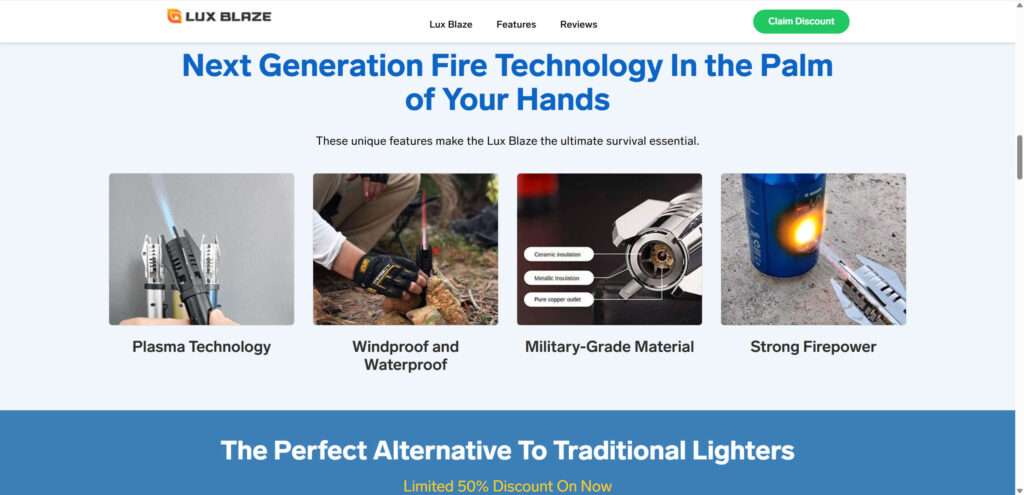
Lux Blaze Overview
According to the Lux Blaze website:
- It generates a “2,300-degree plasma flame”
- It is windproof, waterproof, and rainproof
- It is made from “military-grade materials”
- It has adjustable flame output
- It is built for camping, survival, and outdoor emergencies
- It is trusted by “3,200+ verified customers”
The landing page compares Lux Blaze to traditional gas lighters and hints that this torch is a high-tech upgrade designed for durability, safety, and harsh outdoor conditions.
However, a closer look reveals multiple red flags in both the product claims and the marketing strategy.
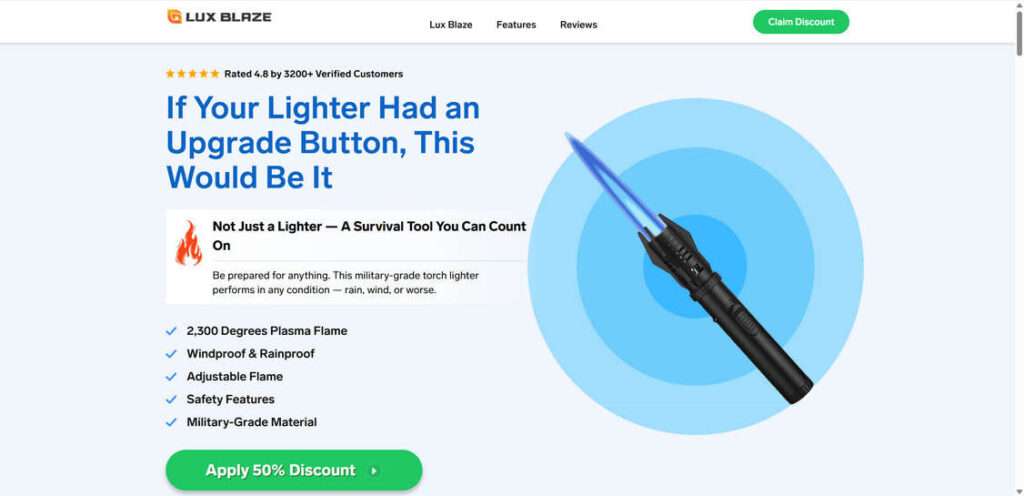
Overview: A Look at Lux Blaze and Its Red Flags
This section explains the issues behind the Lux Blaze brand in detail, including how the product is sourced, why the reviews are suspicious, and what the marketing hides.
1. The Website Is Extremely New
A WHOIS lookup shows:
- Domain registered on: June 25, 2025
- Website age: Only a few months old
- Business info: Missing or unclear
- Manufacturer: Not listed
Yet they claim:
“3,200+ verified customers”
“Thousands of long-term satisfied users”
A brand-new website cannot realistically accumulate thousands of verified long-term users in a few weeks.
This is a classic sign of a viral dropshipping operation—launch fast, run ads aggressively, and try to convert as much traffic as possible before the brand disappears.
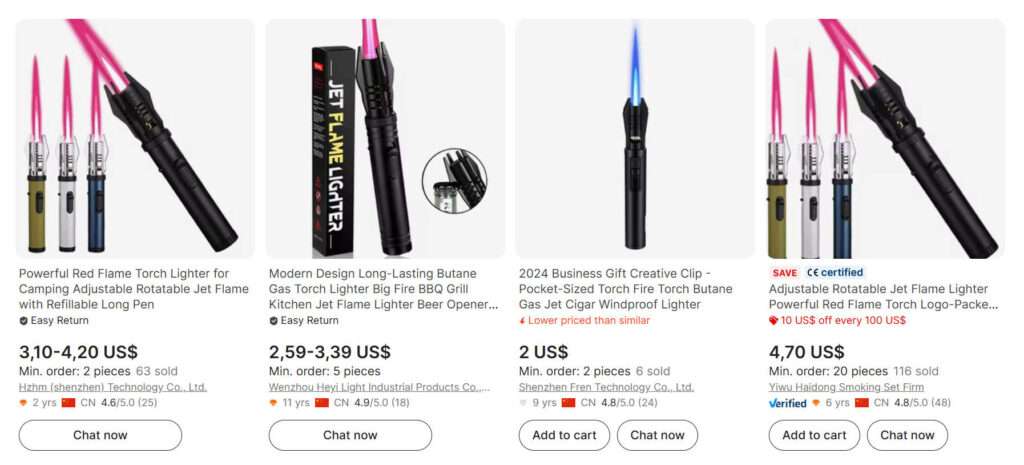
2. The Exact Same Lighter Is Sold on Alibaba for $2–$4
Using image matching, we found the identical lighter on Alibaba and AliExpress.
The listings show:
- Price: $2–$4 per unit
- Minimum order: 2–5 units
- Manufacturers: Shenzhen and Wenzhou factories
- Product name: Jet Flame Torch Lighter / BBQ Torch / Pocket Torch
These items are not “military-grade.”
They are generic butane jet lighters produced in mass quantities for wholesalers.
Lux Blaze sells them for $39.99 after the “discount,” meaning:
Buy for $2 → Sell for $40
A 1,900% markup.
That’s textbook dropshipping.
3. The “Plasma Flame” Claim Is Misleading
Real plasma lighters use electric arcs—not butane flames.
Lux Blaze is clearly a butane torch:
- It has a refill port
- It uses adjustable flame knobs
- The flame is the same as cheap torch lighters
- No electrical components visible
- No charging port
Calling it “plasma technology” is a marketing exaggeration, not a scientific description.
4. Fake Scarcity and Fake Discounts
The site constantly displays:
- “50% OFF Today Only”
- “Last chance to claim your discount”
- “Risk paying full price tomorrow”
- Countdown timers that reset on refresh
These tactics are common on viral gadget funnels and dropshipping storefronts.
Real brands do not run permanent 50% discounts.
Lux Blaze is using urgency to push impulse purchases.
5. Overly Polished Advertorial Website
The entire structure resembles a typical affiliate-optimized landing page:
- Emotional survival-themed headlines
- Hero images showing outdoor adventure scenes
- Repetitive product benefits
- Multiple “Apply Discount” buttons
- Long scrolling “storytelling” format
- No genuine technical specifications
- No safety certifications
- No manufacturer name
There’s even an affiliate disclaimer at the bottom, which indirectly confirms that Lux Blaze is not the maker—just a reseller.
6. Testimonials Appear Staged or AI-Generated
The images and names used in reviews:
- Look like stock models
- Have no traceable social presence
- Use identical formatting across multiple dropshipping brands
- Include generic “outdoor enthusiast” personas
Example:
“George B.” looks like a gym stock photo, not an actual customer posting a verified review.
There is no evidence that these people exist.
7. Safety Claims Are Unsupported
Lux Blaze claims:
- “Weatherproof”
- “Extreme heat resistance”
- “Military-grade casing”
- “Safe to use in any conditions”
But generic butane jet torches are not waterproof, not military-grade, and can be dangerous if knocked, dropped, or used improperly.
No certifications are shown:
- No CE
- No UL
- No ISO
- No fire safety standards
A high-heat torch without certification poses obvious risks.
8. The Product Photos Are Recycled From Multiple Vendors
Several images on the Lux Blaze site:
- Appear on Alibaba listings
- Appear on AliExpress
- Appear on other dropshipping torch lighter brands
- Show different colors not even sold by Lux Blaze
This means the product shots are not original—they are taken from manufacturers’ catalogs.
9. The Website Uses Pressure Tactics Everywhere
Throughout the page, you see:
- “90-Day Guarantee”
- “Last chance” banners
- “Apply discount” buttons
- “Fast USA shipping” (but no proof)
- “Limited offer” sections repeated
These are behavioral triggers often used in impulse-buy funnels.
No major outdoor gear brands rely on these tactics.
How the Operation Works
This section explains exactly how viral gadget dropshipping operations like Lux Blaze function.
Step 1: Source a $2–$4 butane torch from Alibaba
Manufacturers offer these in:
- Silver
- Black
- Green
- White
Lux Blaze selects black or silver models.
Step 2: Create a branded landing page
This includes:
- Stock photos
- AI-style testimonials
- Fake “military-grade” language
- Inflated prices
- Fake urgency
Step 3: Run aggressive ads on TikTok, Facebook, and Instagram
You’ve likely seen:
- Survival influencers
- Camping channels
- Viral gadget ads
These push emotional triggers like:
- Safety
- Preparedness
- Toughness
- Weather survival
Step 4: Charge 10–20× the original price
Lux Blaze sells the $3 lighter for:
- $39.99 after “discount”
- Up to $79.99 for bundles
Step 5: Ship from overseas warehouses
Despite “USA shipping” claims, fulfillment time for these lighter types is normally:
- 8–18 days
- Sometimes 30+ days
Step 6: Move on when brand reputation collapses
Viral gadget stores frequently:
- Shut down
- Change names
- Relaunch with new branding
This is typical for dropshipping operations.
Should You Buy Lux Blaze?
Short answer: Be cautious.
Lux Blaze is not necessarily a “scam,” but it is a classic dropshipping gadget with:
- Extremely inflated pricing
- Generic, low-cost manufacturing
- Misleading product claims
- New website with no history
- Pressure-driven marketing
- Overly perfect testimonials
- Unverified safety certifications
There is no proof that:
- It is stronger than a $4 Alibaba torch
- It is military-grade
- It is plasma technology
- It is safer than normal butane lighters
In reality, it is simply a generic butane jet torch rebranded with survival-themed marketing.
You can buy the same lighter elsewhere for 85–95% less.
What to Do If You Already Ordered Lux Blaze
1. Keep all screenshots
Especially the “50% off today” and “military-grade tech” claims.
2. Try requesting a refund
Use their “90-day guarantee” if available.
3. If they do not respond
File a dispute via:
- Your credit card issuer
- PayPal (if used)
- Your bank’s chargeback service
Reason: Product not as described.
4. Check local laws
Some countries restrict importing butane lighters.
5. Leave an honest review
This helps other consumers avoid misleading ads.
Bottom Line
Lux Blaze looks impressive in ads, but behind the marketing:
- The product is a $2–$4 Alibaba torch
- The brand is extremely new
- Testimonials are questionable
- Claims are exaggerated
- Pricing is inflated
- Urgency tactics are aggressive
If you want a reliable torch lighter:
- Buy from established brands (Zippo, SOTO, UCO, Titan, etc.)
- Look for certified products
- Avoid viral landing-page funnels
Lux Blaze is not the “military-grade survival tool” it advertises. It is a dropshipping product wrapped in premium storytelling.

Join the discussion
2 commentsShare your experience or ask a question about this article.
Discussion
The new LuxBlaze add i saw was saying that the Federal regulators were forcing the ‘company behind lux’ to weaken their ‘military grade electric lighter’ next month. Which aligns with “pressure tactics” mentioned above.
I have ascertained from this article the LuxBlaze add I saw seems to be deceptive marketing.
I shall not purchase the LuxBlaze item
In reply to yep
Thanks for sharing that. Claims about regulators forcing a company to weaken a product are a classic pressure tactic used to push people into buying quickly without thinking it through. I’m glad the article helped you spot the deception before making a purchase.