

MagVision Glasses have recently surged in popularity, thanks to aggressive marketing campaigns on platforms like Facebook and TikTok. Promoted as revolutionary eyewear that can adjust to any prescription without the need for eye exams, these glasses seem too good to be true. But do they live up to the hype, or are they just another overhyped online product?
In this comprehensive article, we’ll delve into the claims made by MagVision Glasses, examine the evidence, and provide you with the information needed to make an informed decision.
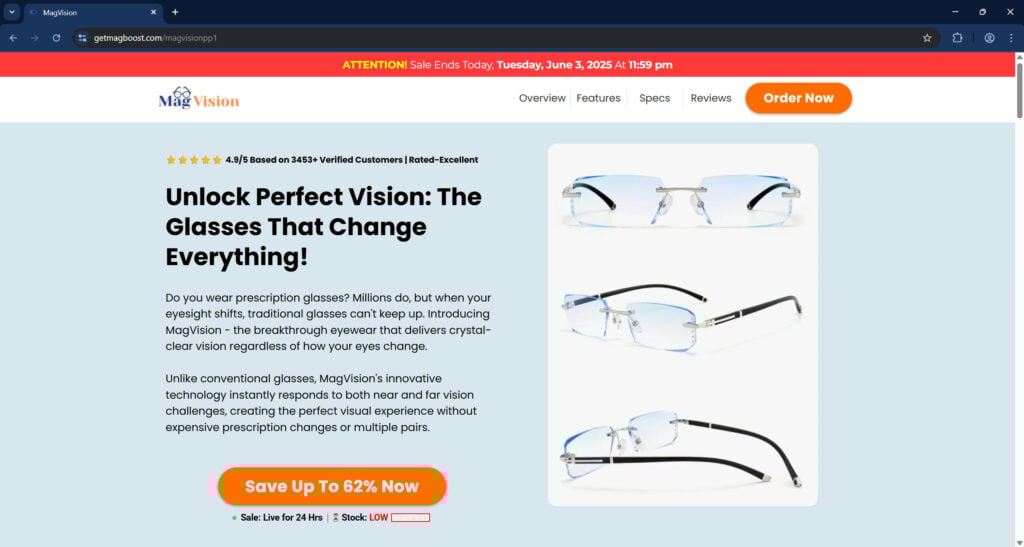
Scam Overview
The Claims
MagVision Glasses are marketed as a one-size-fits-all solution for vision correction. The primary claims include:
- Auto-adjusting lenses: The glasses purportedly adjust from -100 to +700 diopters, eliminating the need for multiple pairs of glasses.
- No prescriptions needed: Users are told they can achieve perfect vision without visiting an optometrist.
- Elimination of eye exams: The product suggests that traditional eye exams are obsolete.
- Universal fit: Suitable for nearsightedness, farsightedness, and everything in between.
The Reality
Scientifically Implausible Claims
The claim that MagVision Glasses can adjust from -100 to +700 diopters is scientifically unfounded. Most human vision prescriptions range between -10 and +10 diopters. A range extending to 700 diopters is not only unnecessary but also physically impossible with current lens technology. Adjustable lenses do exist, but they typically offer a limited range and require manual adjustment.
Misleading Marketing
The marketing strategies employed by MagVision are designed to create a sense of urgency and exclusivity. Common tactics include:
- Limited-time offers: Claims like “Only 3 left in stock!” or “Sale ends tonight!” are used to pressure consumers into quick purchases.
- Testimonials and reviews: The use of fake or unverified testimonials to build credibility.
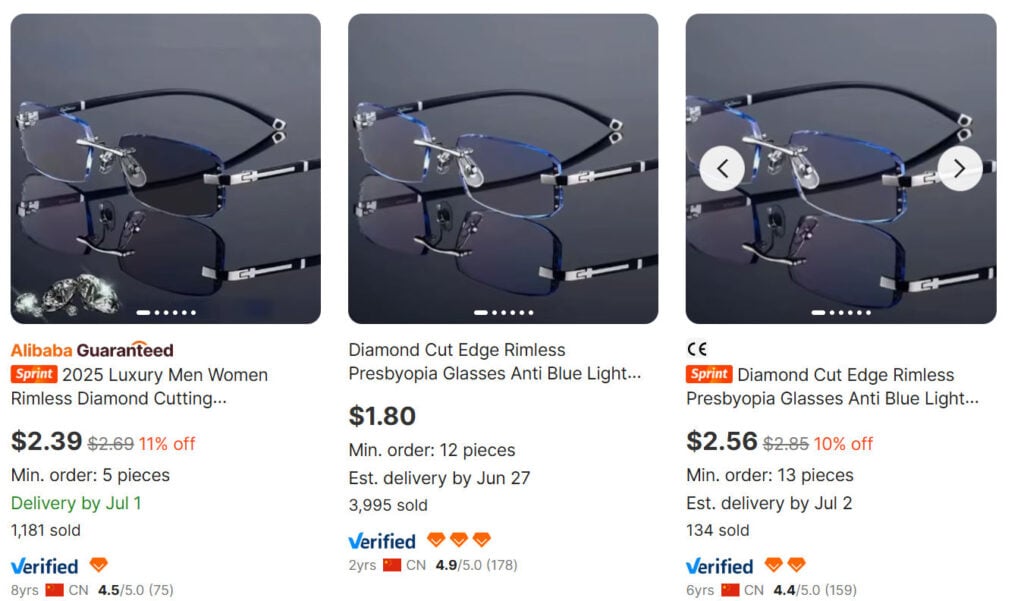
- Copied images: Product images are often taken from wholesale sites like Alibaba, indicating that the product is a generic item rebranded for resale.
Lack of Transparency
Attempts to find credible information about the company behind MagVision Glasses often lead to dead ends. The official website lacks detailed contact information, and customer service is virtually non-existent. This lack of transparency is a significant red flag.
Customer Complaints
Numerous customers have reported issues such as:
- Delayed shipping: Orders taking weeks or even months to arrive.
- Poor quality: The glasses often feel flimsy and do not provide the promised vision correction.
- Refund difficulties: Customers struggle to get refunds, with many reporting unresponsive customer service.
How the Scam Works
Step 1: Eye-Catching Advertisements
MagVision Glasses are promoted through visually appealing ads on social media platforms. These ads often feature dramatic before-and-after scenarios and bold claims about the product’s capabilities.
Step 2: Redirect to Sales Page
Clicking on the ad leads to a professionally designed sales page that reiterates the product’s benefits and includes fake testimonials and reviews to build trust.
Step 3: Urgency and Pressure
The sales page employs scarcity tactics, such as countdown timers and limited stock alerts, to create a sense of urgency. This psychological pressure encourages impulsive buying decisions.
Step 4: Purchase and Payment
Customers are prompted to make a purchase, often with enticing discounts for buying multiple pairs. Payment is typically processed through less secure methods, making it difficult to dispute charges later.
Step 5: Delayed or Non-Delivery
After payment, customers often experience significant delays in shipping. Some never receive the product at all.
Step 6: Subpar Product
Those who do receive the glasses find that they are of low quality and do not perform as advertised. The promised auto-adjusting feature is either non-existent or ineffective.
Step 7: Refund Challenges
Attempts to contact customer service for refunds are met with silence or unhelpful responses. The lack of a clear return policy further complicates matters.
What to Do If You’ve Fallen Victim to This Scam
- Contact Your Bank or Credit Card Company: Immediately report the fraudulent transaction. They may be able to reverse the charge or provide other remedies.
- Report the Scam: File a complaint with your local consumer protection agency and report the website to relevant authorities.
- Leave Reviews: Share your experience on consumer review platforms to warn others.
- Monitor Your Accounts: Keep an eye on your bank and credit card statements for any unauthorized charges.
- Educate Others: Inform friends and family about the scam to prevent them from falling victim.
Frequently Asked Questions (FAQ) About the MagVision Glasses Scam
1. Are MagVision Glasses a legitimate product?
No. MagVision Glasses are heavily marketed with exaggerated and scientifically impossible claims. The glasses shown are often generic, low-quality products sourced from wholesale sites like Alibaba and rebranded under different names for dropshipping.
2. Do MagVision Glasses really adjust from 100 to 700 diopters?
No. This claim is completely false. Human vision correction needs typically range from -10 to +10 diopters. A lens that adjusts from 100 to 700 diopters does not exist in current optical science.
3. Can these glasses replace my prescription eyewear?
Absolutely not. Prescription glasses are customized to your unique vision after a professional eye exam. MagVision Glasses lack the precision and technology to replace medically prescribed lenses.
4. Are there any electronics in MagVision Glasses to enable “auto-adjustment”?
No. Despite claims, these glasses do not contain any electronic components that allow for automatic lens adjustment. Any “adjustment” is either nonexistent or extremely limited and purely mechanical, if at all.
5. Why are these glasses all over my Facebook and TikTok feed?
MagVision is promoted through aggressive ad campaigns on social media platforms. These ads often use fake reviews, staged demonstrations, and false claims to create buzz and drive impulsive purchases.
6. Are the product photos on the MagVision website original?
No. Many of the images used are directly copied from wholesale sites like Alibaba, where the same glasses are sold for a fraction of the price.
7. I ordered MagVision Glasses and want a refund. What should I do?
Most customers report difficulty getting refunds. Start by contacting your bank or credit card company to dispute the charge. Document all correspondence and keep records of your order details.
8. Is it dangerous to follow MagVision’s advice to stop getting eye exams?
Yes. Eye exams are essential for diagnosing not just vision issues but also serious health conditions like glaucoma, cataracts, and diabetes. Skipping exams based on marketing claims is highly irresponsible and potentially dangerous.
9. Why do some reviews say the glasses work great?
Many of the positive reviews are likely fabricated or come from people with very mild vision needs who are not using them as a true replacement for prescription eyewear. Some are also incentivized or paid promotions.
10. Is MagVision the only brand running this kind of scam?
No. This is a common model used in dropshipping scams where generic products are renamed, hyped up with false claims, and sold at inflated prices through misleading ads. Always research thoroughly before buying any product promoted this way.
The Bottom Line
MagVision Glasses are marketed with grandiose claims that do not hold up under scrutiny. The product’s promises are scientifically implausible, and the company’s lack of transparency and poor customer service are significant red flags. Consumers should exercise caution and skepticism when encountering such offers online.
Always consult with a qualified optometrist for vision correction needs and be wary of products that promise miraculous results without credible evidence.
Note: This article is based on available information and aims to provide an objective analysis of the MagVision Glasses. Consumers are encouraged to conduct further research and consult professionals when making health-related decisions.

Join the discussion
0 commentsShare your experience or ask a question about this article.
Discussion
Start the conversation
Have a question or something useful to share? Add the first comment.