

A Mel Robbins matcha ritual clip looks like the sort of useful conversation you might save for later. A familiar host asks the question you were wondering about.
The answer sounds unusually simple, and the promise is hard to ignore. Before you follow it to a purchase, check which conversation you’re actually watching.
Overview
A real podcast format is repurposed into a sales story
The Mel Robbins matcha ritual scam presents an apparent interview about an easy weight-loss discovery. Dr. Rhonda Patrick is positioned as the expert explaining it.
The deceptive part is the commercial conversation attributed to recognizable people. A believable studio format does not establish that either person authorized the claims or product recommendation.
This matters because Robbins and Patrick have genuinely appeared together. A real relationship between host and guest can make a fabricated commercial exchange harder to spot.
The recorded pitch links the conversation to Leaftide
The campaign invokes a Japanese morning routine, GLP-1 language and striking weight-loss claims before steering viewers toward a supplement offer associated with Leaftide.
The promise is framed as information worth staying for. The eventual decision, however, involves paying for a product rather than simply learning how to make a drink.
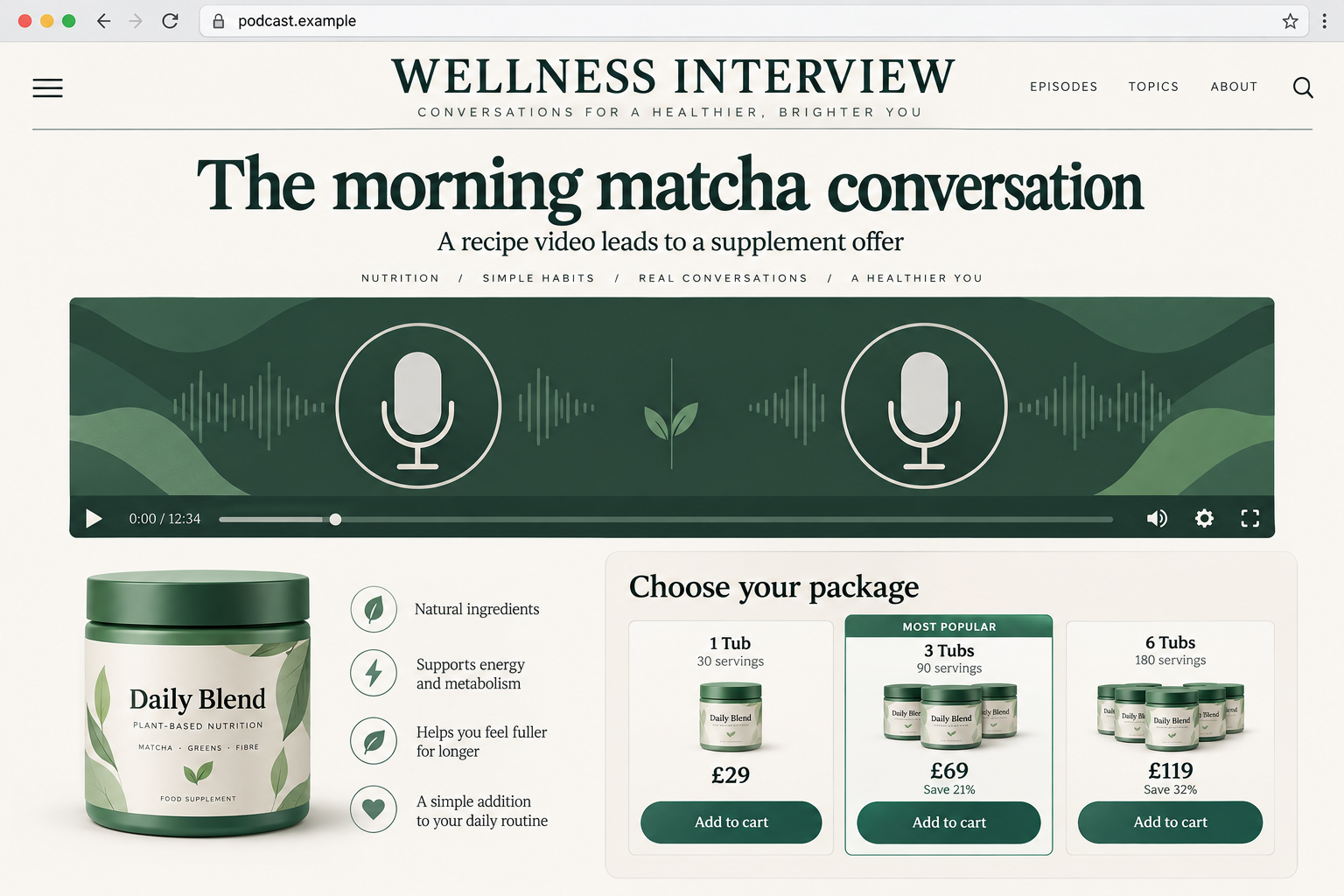
The lead image is an illustrative fictional interface. Its bottle, prices and package quantities are examples, not a captured Robbins interview or an authenticated Leaftide order page.
Keep the legitimate show separate from the promotion
Do not buy because a commercial clip seems to show Robbins endorsing the ritual. Verify the original material through the show’s own channels instead.
- A genuine podcast episode can exist without validating the supplement advertisement built around its participants.
- A host asking a question is not evidence of a clinical finding.
- The supplement’s formula and payment conditions require their own examination.
- Subscriptions cannot be assumed across every version; a current getleaftide.com page expressly describes one-time purchases.
The Real Episode Is Not a Blank Check for Advertisers
Robbins’ official website includes an episode with Patrick about diet, exercise and longevity. That confirms a genuine host-and-guest context.
It does not authenticate every clip that uses their names. A promotion still needs to support the specific words and commercial conclusions it attributes to them.
Think of the difference between recognizing a book’s cover and verifying a quotation from inside it. The familiar setting gets you only partway.
An advertiser can make a purported exchange feel plausible because the two people really have spoken. That plausibility is precisely what should be checked.
Look for the complete episode, not just another short clip reposted by a sales account. Check the context around any claimed recipe, treatment comparison or product mention.
Don’t treat a supplemental product sold elsewhere under a similar name as confirmation. The endorsement needs to connect the actual speaker to the actual recommendation.
How the Mel Robbins Matcha Ritual Scam Works
Step 1: The ad offers the feeling of discovering a useful episode
The host-and-guest setting makes the clip feel familiar before it begins selling. It resembles something a friend might recommend because the explanation was especially helpful.
A viewer may lower their guard compared with a conventional supplement commercial. The persuasive advantage comes from appearing to be a conversation, not an advertisement.
Ask who uploaded the clip and where its link leads. A promotional account borrowing a show’s visual language isn’t the same as the show’s original publication.
The fact that an advertisement was approved to run on a platform doesn’t mean its medical claims or endorsements have been authenticated.
Step 2: The apparent interview gives the claims a natural rhythm
In the recorded promotion, the supposed host asks questions about the discovery while the apparent expert supplies an explanation. Each role makes the other sound credible.
The exchange introduces a short morning routine associated with a Japanese tradition. Technical language about appetite and metabolism makes the simple promise feel more substantial.
This question-and-answer format is persuasive because it anticipates objections. The viewer feels someone trustworthy is asking on their behalf, even though the commercial exchange isn’t authenticated.
Don’t mistake fluent dialogue for independent scrutiny. A staged or altered interview can include reassuring questions while leaving the actual evidence untouched.
Step 3: Prescription treatments are used as the comparison
The promotional conversation brings up drugs associated with weight management. It presents the ritual as addressing something supposedly more fundamental than those treatments.
That comparison borrows the importance of real medicine while making the proposed alternative sound easier. It can also make viewers anxious about care they already receive.
A supplement advertisement is not an appropriate basis for stopping prescribed medication. Concerns about benefits or side effects belong in a discussion with the prescribing clinician.
Nor does mentioning GLP-1 demonstrate that a powder produces the same effect as a medicine. Matching vocabulary does not establish equivalent treatment or outcomes.
Step 4: Other familiar identities make the story seem widespread
The wider recorded campaign includes celebrity transformation claims and a Today-style presentation. Those additions make the apparent podcast discussion feel part of a larger discovery.
The effect is cumulative. A recognizable host, scientist, television format and celebrity story can seem like several confirmations when they originate within the same promotional sequence.
Check each supposed source separately. One sales page repeating another sales claim isn’t independent reporting, regardless of how many recognizable names appear.
A copied television style also doesn’t authenticate the podcast footage. Different borrowed formats can reinforce one another without adding a single reliable piece of evidence.
Step 5: The useful answer keeps turning into another reason to watch
The ritual is presented as something you can understand quickly. Yet the commercial presentation spends time establishing urgency and importance before delivering a practical answer.
That creates an expectation: stay a little longer and the missing detail will make everything clear. Leaving starts to feel like missing a valuable opportunity.
Notice whether the video actually supplies reproducible information or instead introduces a branded solution. A recipe promise and a product advertisement have different purposes.
You can stop without resolving every scientific claim. Being curious about a topic does not commit you to the transaction placed at the end.
Step 6: The podcast’s borrowed trust is transferred to the order
Once a supplement package appears, the seller hopes the earlier confidence will carry over. The viewer has spent time trusting the conversation and may scrutinize the transaction less.
Start fresh at that point. Identify the product, seller, package quantity, total charge and conditions for cancellation or return.
Do not assume Robbins handles customer support or has reviewed the product. An apparent presence in the clip does not establish any commercial relationship.
If the product name changes later, that doesn’t repair the endorsement claim. A new label still needs genuine support rather than inherited trust from the same interview-style story.
Three Different Questions the Video Blurs Together
Did the people really say this?
That is an authenticity question. It requires the original material and context, not an appealing edit circulated by an account trying to generate sales.
A genuine episode featuring the same participants is relevant, but it isn’t enough on its own. The particular commercial statement must be established.
Does the finished product support the claimed result?
That is an evidence question. It calls for a defined formula and credible support for the benefit being advertised, not merely recognition of an ingredient.
Testimonials and a scientist’s name cannot stand in for those details. Nor can the scientific respectability of a guest validate every product linked beside their image.
What will the purchase actually cost?
That is a transaction question. The total package, currency, shipping, additions and renewal terms belong on the selected offer and confirmation.
None of these questions is answered by the others. A real host doesn’t authenticate a formula, and a delivered tub doesn’t prove the endorsement was genuine.
Why the Billing Warning Must Stay Specific
Supplement funnels can introduce larger bundles, additional products or recurring orders. Those possibilities are reasons to examine the transaction carefully, not universal findings about every buyer.
The current getleaftide.com page says its purchases are one-time and presents a 90-day period. That wording should be preserved rather than ignored to make a stronger accusation.
An older advertisement may have led somewhere different, and a later buyer may face revised conditions. Your receipt connects the specific offer to your actual payment.
Read what the guarantee measures and when it starts. A generous headline can still leave practical questions about return authorization, eligible condition and postage.
If you were charged unexpectedly, describe the mismatch precisely. An extra item, unauthorized renewal and delay in an agreed refund are different disputes.
What to Do if You Have Fallen Victim to This Scam
-
Save the clip, uploader name and destination address. Record the particular statement you believed was being made by Robbins or the guest.
Don’t rely on a screenshot of the product alone. The misleading connection between the conversation and the sale is an important part of the evidence.
-
Find the confirmation email and identify the actual merchant. Write down what was ordered, the quantity, the total and any separate transactions.
Compare the order with the promotion and your intended purchase. Keep a copy of any one-time wording, guarantee or renewal consent shown.
-
Ask the merchant to cancel an unwanted order or provide an appropriate refund route. Explain the misleading endorsement and request a written response.
Ask which policy covers your purchase and where an authorized return must go. Current wording on a changed page may not settle an older order.
-
Cancel any unwanted recurring arrangement explicitly if one exists. Request confirmation of the effective date and whether another order is already processing.
If your original agreement was one-time, keep that evidence. Don’t let general industry refill concerns become an excuse for accepting an unexplained second charge.
-
If the seller doesn’t address a material problem, ask your payment provider about the relevant dispute process. Supply the offer, receipt and correspondence.
Confirm the deadline promptly. A support promise to look into it later doesn’t necessarily preserve every option available through the issuer.
-
Keep supplements unused while resolving questions about the label or return. Ask a pharmacist or clinician about personal risks before taking an uncertain formula.
Don’t change prescribed care because of the interview’s claims. Bring the actual product details to a qualified professional instead of quoting the sales video.
-
Report the deceptive commercial clip through the platform. Identify the apparent endorsement and product link, rather than reporting the genuine podcast as the seller.
Keep private information out of public comments. You can warn others without disclosing your payment details or personal medical history.
A Quick Check Before the Next Interview Clip
First, look at the publisher. Is the clip on the host’s own channel, or on a promotional account that appeared through a sponsored placement?
Second, check the destination. A link to a long sales presentation should be understood as part of an advertisement, even if it resembles editorial coverage.
Third, locate the original conversation independently. Don’t use a verification link supplied only by the same advertiser whose claim you are checking.
Finally, separate interest from intent. You may want to learn about matcha or nutrition without wanting to buy a package offered by an unfamiliar business.
The FTC’s weight-loss advertising guidance is useful background: persuasive testimonials and familiar media presentation do not replace support for promised results.
If the advertisement depends on an endorsement you cannot authenticate, decline the purchase. You do not need a technical explanation of every frame to make that decision.
Be particularly careful with clips forwarded by someone you trust. Your friend may be sharing in good faith while having no way to authenticate the commercial edit.
Send them the original episode link if you find it, and explain the distinction calmly. Helping someone separate the show from the advertisement is more useful than ridicule.
Frequently Asked Questions
Has Mel Robbins really interviewed Dr. Rhonda Patrick?
Yes. Her official site publishes an episode with Patrick. That fact does not authenticate the commercial matcha conversation or supplement recommendation attributed to them.
Does this mean the entire Mel Robbins podcast is fake?
No. The warning is about a deceptive supplement promotion borrowing the show’s participants and interview style, not the legitimate podcast itself.
Is Leaftide the only possible product behind this story?
It appears in the recorded campaign, but product names can change. A replacement bottle doesn’t authenticate the same borrowed endorsement or weight-loss promises.
Does the word GLP-1 prove the ritual works like medicine?
No. A biological term in an advertisement doesn’t establish comparable treatment, appropriate dosing or clinical outcomes for a finished supplement.
Are automatic refills confirmed for every order?
No. A current getleaftide.com page describes one-time purchases. Check the offer and confirmation connected to your own payment.
Should I contact the podcast to obtain my refund?
Your payment complaint belongs with the actual merchant and payment provider. The host’s appearance in an advertisement doesn’t establish responsibility for the order.
The Bottom Line
Do not order through the Mel Robbins matcha ritual scam. A genuine podcast and recognizable guest don’t validate a commercial exchange built around a supplement sale.
Already bought something? Preserve the promotion, identify the merchant and pursue the remedy tied to your actual order. Keep legitimate health advice separate from the advertisement.

Join the discussion
0 commentsShare your experience or ask a question about this article.
Discussion
Start the conversation
Have a question or something useful to share? Add the first comment.