Joe Rogan GLP-1 Matcha Ritual Scam Exposed: Is the Video Actually Real?
Written by: Lapain Epuran
Published on:
A casual podcast clip seems to reveal why celebrities are losing weight with an ordinary matcha drink.
The conversation sounds spontaneous. Yet the shopping path behind it tells a far more calculated story.
Overview
The celebrity conversation that never happened
The campaign circulates altered footage resembling Joe Rogan discussing a GLP-1 matcha ritual with celebrity guests and health experts.
Versions have invoked Melissa McCarthy and nutrition researcher Dr. Rhonda Patrick to make the discussion feel personal, scientific, and culturally relevant.
The dialogue promises remarkable weight loss without medication, demanding exercise, or meaningful changes to daily eating.
No reliable original episode supports the sales claims presented in the advertisement we examined.
The recipe that keeps turning into a product
Matcha is the curiosity hook. Viewers expect a simple preparation involving familiar ingredients and continue watching for exact instructions.
The video repeatedly delays the useful part, then converts the supposed ritual into a reason to purchase a supplement.
LeafTide was the name promoted in one version, but its website already displays KeySlim Drops as the “New Version.”
Every tested order button on LeafTide’s page led to a separate KeySlim Drops website.
What this investigation establishes
The evidence supports calling the marketing funnel deceptive, particularly because of the fabricated endorsements and moving product identity.
It does not establish that matcha itself is fraudulent or that every bottle ordered through every related page is never delivered.
The current destination offers one-time packages through Digistore24. We did not find clear evidence proving an automatic-refill subscription on that checkout.
The documented concerns are:
AI-altered celebrity and expert appearances.
GLP-1 language that implies drug-like effects.
Extraordinary weight-loss stories without product-specific clinical proof.
A recipe tease that becomes a supplement pitch.
LeafTide branding that changes to KeySlim Drops.
A broken LeafTide terms link.
No clearly identified LeafTide legal operator.
A return policy that accepts unopened items and excludes shipping costs.
Why “GLP-1 Matcha” Is Such an Effective Hook
GLP-1 medications have become widely discussed because they can affect appetite, blood sugar, and weight under appropriate medical supervision.
Advertisers borrow that recognition while avoiding the responsibilities attached to an approved prescription treatment.
Words such as “natural GLP-1,” “GLP-1 activating,” and “Ozempic alternative” can make an ordinary supplement sound pharmacologically equivalent.
That equivalence should never be assumed. A marketing phrase is not a clinical comparison.
Matcha adds familiarity and an appealing wellness identity. It sounds gentler than a drug and more believable than a completely unknown chemical.
The campaign then suggests celebrities secretly used the same ritual, transforming a generic beverage into privileged insider knowledge.
Viewers are encouraged to connect visible celebrity weight changes with the advertised formula, even when no verified endorsement exists.
This is correlation invented by storytelling. The seller supplies the cause after the public has already seen the outcome.
Real weight-loss evidence requires defined participants, doses, duration, controls, adverse-event reporting, and results for the complete finished product.
A collection of ingredient summaries and dramatic testimonials cannot answer those questions.
How the Joe Rogan GLP-1 Matcha Ritual Scam Works
Step 1: An edited podcast moment feels more honest than an advertisement
The first clip looks informal, with studio framing, conversational pacing, interruptions, and reactions that resemble a genuine long-form interview.
That setting lowers skepticism because viewers do not immediately see bottles, prices, or a sales representative.
AI-generated speech is inserted over real-looking footage, allowing the campaign to make a public figure say almost anything.
Subtitles keep attention on the claim and make imperfect audio or lip synchronization easier to overlook.
Step 2: Celebrity weight loss is given a secret explanation
The narrator links a famous person’s changing appearance with one supposedly hidden matcha routine.
The audience receives no medical records, verified statement, complete timeline, or reliable evidence that the individual used the advertised method.
Still, the story feels plausible because the viewer already recognizes the visible transformation.
The supplement simply inserts itself into a real public conversation without proving any connection.
Step 3: A health expert supplies technical vocabulary
An apparent expert explains appetite hormones, metabolism, inflammation, gut health, or insulin using accessible scientific language.
The explanation moves smoothly from legitimate biological concepts to product claims that have not been established.
Recognizable terminology makes the final leap feel smaller than it actually is.
The FTC cautions consumers that scammers create fake celebrity testimonials using doctored video and audio.
Step 4: The promised recipe is kept just out of reach
Viewers are told the important ingredient or preparation will be revealed after one more explanation.
Each delay increases commitment. Leaving now feels like wasting the time already spent watching.
The presentation may describe common kitchen items, morning timing, or a precise number of drops without giving a reproducible formula.
Eventually, convenience becomes the excuse for introducing a ready-made bottle.
Step 5: The product changes while the weight-loss story remains
LeafTide’s page visually labels KeySlim Drops as a new version and calls its own green container the old version.
Its purchase buttons then send visitors to getkeyslimdrops.cc, where the name, label, formula presentation, and pricing change.
The destination advertises one bottle for $79, three for $177, and six for $294.
This confirms that the story is portable. The marketing can continue even after the preferred bottle changes.
Step 6: The page makes the largest bundle feel inevitable
LeafTide claims that 93% of customers order six bottles, a statistic consumers cannot easily verify.
The large package receives the best per-bottle price, free shipping, extra bonuses, and the strongest visual emphasis.
A hesitant visitor is nudged from testing one bottle toward spending $294 before knowing whether the formula suits them.
Per-bottle pricing keeps attention away from the total card charge.
Step 7: The guarantee sounds broad before the conditions appear
Both pages emphasize a 60-day promise, encouraging consumers to interpret the purchase as low risk.
KeySlim’s detailed policy states that returned items must be unopened, shipping fees are not refunded, and customers pay return postage.
It also says all purchased items must be sent back to the warehouse.
That is substantially narrower than the emotional impression created by “try it risk-free” language.
LeafTide and KeySlim Drops Are Not Presented Transparently
The LeafTide page does not merely link to a retailer carrying the same bottle.
It shows KeySlim Drops beside LeafTide and labels the former as a new version with “99.9% Accurate” beneath it.
No meaningful explanation defines what “accurate” measures, who tested it, or how that percentage was calculated.
The page also calls LeafTide an innovative formula while simultaneously directing every purchase toward KeySlim.
A shopper cannot tell whether the older product was discontinued, reformulated, rebranded, acquired, or simply used as an affiliate bridge.
Those possibilities have different implications for ingredients, safety, reviews, refunds, and customer support.
The KeySlim destination claims 24 ingredients, while LeafTide’s marketing highlights a shorter, differently presented botanical formula.
Consumers with allergies, medical conditions, or medication interactions need the exact formula before ordering, not after delivery.
A transparent transition would identify both responsible companies, explain the relationship, compare formulas, and state which policy controls old orders.
That information was not presented clearly in the reviewed path.
Claims About Natural GLP-1 Effects Need Real Evidence
KeySlim’s page uses phrases such as eating less, burning more, and controlling fat-burning hormones.
LeafTide invokes weight-loss support, energy, metabolism, and substantial customer success through a mixture of familiar botanical ingredients.
None of that proves the products reproduce the mechanism or results of an approved GLP-1 medicine.
The finished mixture matters more than the general reputation of one ingredient.
A study involving green tea does not automatically validate an unidentified amount inside a 24-ingredient liquid.
Likewise, guarana can contribute caffeine, creating considerations for anxiety, sleep, heart rhythm, blood pressure, and stimulant sensitivity.
A complete Supplement Facts panel should list serving size and exact amounts, or identify any proprietary blend clearly.
Consumers should also receive warnings, inactive ingredients, manufacturer or distributor information, lot coding, and storage instructions.
The FDA states that it does not preapprove supplements for safety and effectiveness before they reach consumers.
Therefore, an “FDA registered facility” badge does not mean the agency approved LeafTide, KeySlim, its claims, or its results.
The 60-Day Refund Policy Is Not a Free Trial
KeySlim’s refund page begins with reassuring language about exploring the product and drawing your own conclusions.
The practical conditions tell a different story because unopened merchandise receives the clearest eligibility.
If consumers open the bottles needed for a meaningful multi-week test, those items may no longer qualify under the displayed wording.
Shipping charges are excluded, return shipping remains the buyer’s responsibility, and every purchased item must be returned.
The listed destination is 19655 E 35th Drive, Suite 100, Aurora, Colorado 80011.
That address appears as a returns warehouse. It should not be assumed to be the manufacturer or corporate headquarters.
The policy names support@keyslimdrops.com, while LeafTide’s terms link returned a 404 page during our check.
Buyers following the older brand therefore encounter a policy gap before being moved to the newer destination.
Company, Address, and Fulfillment Checks
LeafTide does not clearly name its legal operator
The reviewed page emphasizes the brand, formula, discounts, and guarantee but does not prominently identify a responsible registered company.
Its terms-and-conditions link produced a missing-page error, removing a normal place to verify ownership and dispute rules.
Do not confuse the supplement page with unrelated businesses using similar LeafTide names.
KeySlim’s terms use a brand instead of a corporate name
The destination terms refer to “KeySlim Drops” and “the Company” without giving a clearly registered legal entity.
They select Michigan law and binding arbitration while offering no comparably clear headquarters identity on the reviewed page.
A brand can sell products, but consumers need the legal party responsible for the contract.
The Aurora address appears to be a return facility
A warehouse can receive parcels for numerous merchants without designing the product or controlling its advertisements.
It may have no authority to approve refunds, answer ingredient questions, or stop marketing emails.
Always obtain a return authorization before sending anything and keep tracked proof of delivery.
Manufacturing badges do not identify the supply chain
Claims such as made in America, GMP certified, natural, and non-GMO require supporting records tied to the actual finished product.
They do not reveal where each ingredient originated or whether every batch received independent contaminant testing.
Request a lot-specific certificate and the responsible manufacturer’s legal name before trusting decorative seals.
The Testimonials Do Not Resolve the Product Switch
LeafTide’s page presents enthusiastic customer stories alongside precise-looking weight changes and star ratings.
Those accounts cannot show whether the same people received LeafTide, KeySlim Drops, an earlier formula, or something entirely different.
A review attached to one bottle should not be transferred automatically to a newly branded product.
Useful verification would confirm the reviewer’s purchase, date, specific SKU, disclosure relationship, and complete experience.
Before-and-after photographs also need consistent lighting, clothing, posture, timing, and an independently documented measurement process.
Even an authentic customer’s result cannot establish what most buyers should expect.
Weight can change through medication, illness, diet, activity, water balance, sleep, or several factors operating together.
That missing context is exactly what a polished testimonial cannot supply.
How to Check a Matcha Weight-Loss Advertisement
Locate the complete original podcast episode through the creator’s verified channel rather than trusting a cropped social-media clip.
Search the celebrity’s exact quoted phrase. Fabricated scripts often exist only on affiliate pages and copied posts.
Watch the mouth at normal speed and then slowly. Sudden facial smoothing or misplaced syllables can reveal synthetic editing.
Identify the precise claim. “Supports metabolism” is not the same as producing prescription-level appetite control.
Ask for the finished product’s human trial, not separate papers about matcha, green tea, mango, or another ingredient.
Compare the advertised bottle with the checkout heading and final order summary.
Read refund restrictions before opening a package, particularly when the promotion encourages a multi-month supply.
Do not combine stimulant-containing products with medicines or health conditions without discussing the risk with a qualified professional.
What to Do if You Have Fallen Victim to This Scam
Document the product switch. Save the ad, LeafTide page, KeySlim destination, package selection, order summary, receipt, and policy that appeared during purchase.
Identify the payment processor. Check the confirmation for Digistore24 or another retailer and use its official order-support route.
Request cancellation in writing. State the order number, charge, product expected, product displayed at checkout, and reason the advertising was misleading.
Confirm recurring status. Ask whether any subscription, continuity plan, or additional shipment exists, even though the reviewed checkout appeared one-time.
Keep bottles sealed. KeySlim’s posted policy emphasizes unopened returns, so opening the bundle can weaken refund eligibility.
Use tracked return shipping. Obtain authorization, photograph the parcel, record each bottle, and preserve delivery confirmation.
Contact the card issuer. Explain any unauthorized total, product mismatch, non-delivery, rejected cancellation, or unhonored refund promise.
Stop after adverse effects. Speak with a clinician and report serious supplement reactions to the FDA through its official reporting system.
Check browser security. Run Malwarebytes after suspicious downloads, extensions, pop-ups, or notification requests encountered in the funnel.
Limit deceptive advertising. AdGuard can block many ads and redirect chains, but it cannot verify weight-loss evidence or recover charges.
Is Your Device Infected? Run a Free Malware Scan
Slow performance, constant pop-ups, or strange behavior? These are classic signs of a malware infection. The fastest way to find out is to scan your device with Malwarebytes Anti-Malware Free — one of the most trusted malware removal tools available.
The free version detects and removes the most common threats, including:
Adware — the cause of those annoying pop-ups
Browser hijackers — unwanted redirects and changed homepages
Trojans and spyware — hidden programs stealing your data
Potentially unwanted programs (PUPs) — software you never asked for
👉 Select your device below — Windows, Mac, or Android — then follow the simple steps to download Malwarebytes, scan your system, and remove any threats it finds. The whole process takes about 5 minutes.
Malwarebytes for WindowsMalwarebytes for MacMalwarebytes for Android
Run a Malware Scan with Malwarebytes for Windows
Malwarebytes is one of the most popular and trusted anti-malware tools for Windows — and it’s completely free for removing infections. It catches threats that many antivirus programs miss, including adware, browser hijackers, and trojans. Follow the steps below to scan and clean your PC in just a few minutes.
Download Malwarebytes
Click the button below to download the latest version of Malwarebytes for Windows from the official source. The free version is all you need — it will scan your computer and remove adware, browser hijackers, and other malicious software at no cost.
(The link opens in a new page where your download will start)
Install Malwarebytes
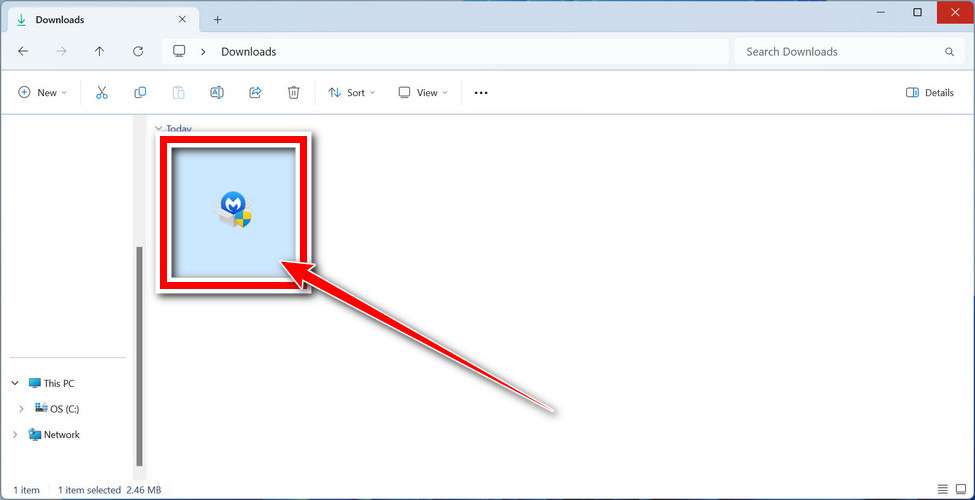
When the download finishes, open your Downloads folder and double-click the MBSetup file. If Windows shows a User Account Control pop-up, click “Yes” to allow the installation.
Follow the On-Screen Prompts to Install Malwarebytes
The setup wizard will walk you through a few quick screens:
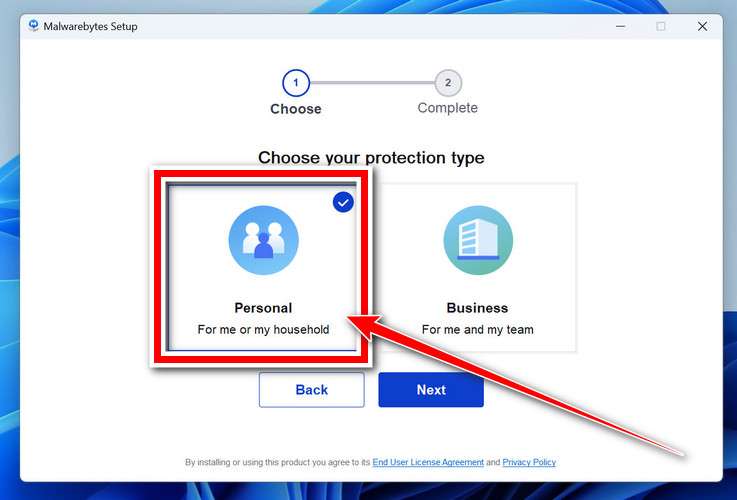
Choose where you’re installing the program — “Personal Computer” or “Work Computer” — then click Next.
Malwarebytes will now install on your device. This usually takes under a minute.
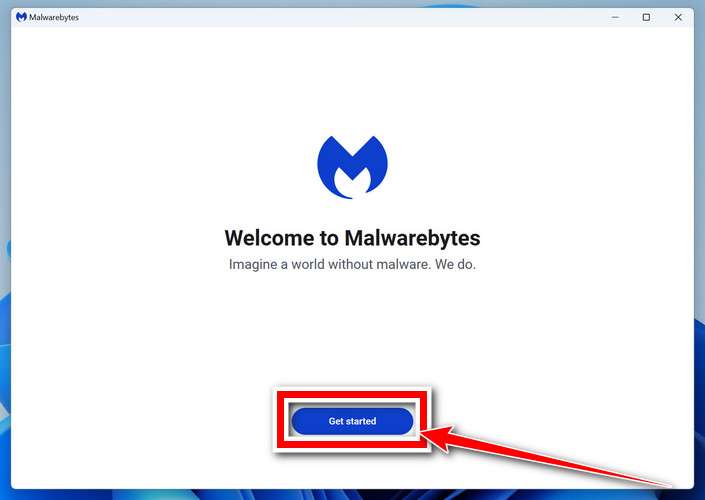
When installation is complete, the “Welcome to Malwarebytes” screen will open automatically.
On the final screen, click Open Malwarebytes to launch the program.
Enable “Scan for Rootkits”
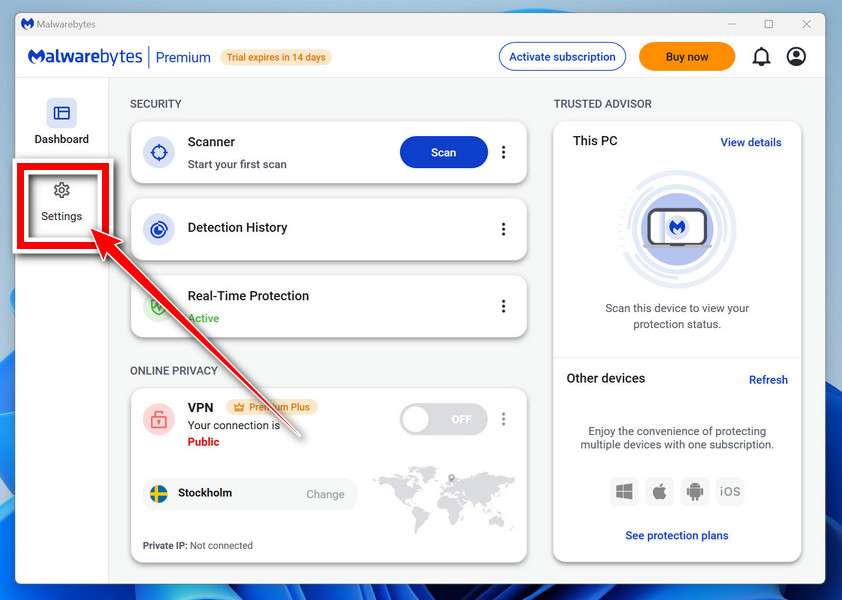
Before scanning, turn on rootkit detection so Malwarebytes can find even the most hidden threats. Click the Settings gear icon on the left side of the screen.
In the settings menu, find “Scan for rootkits” and click the toggle so it turns blue.
Done? Click “Dashboard” in the left pane to return to the main screen.
Start the Scan
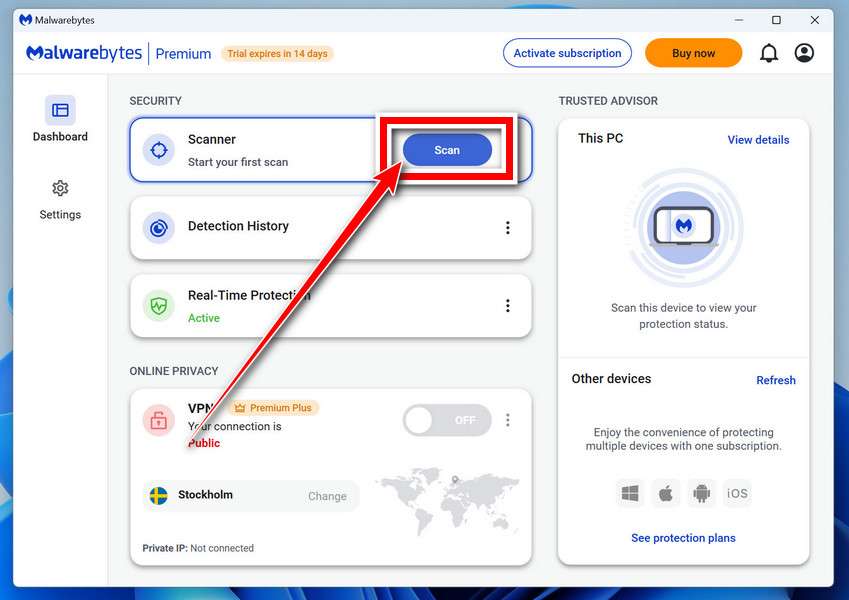
Click the blue Scan button. Malwarebytes will automatically update its virus database and start checking your computer for malware.
Wait for the Scan to Finish
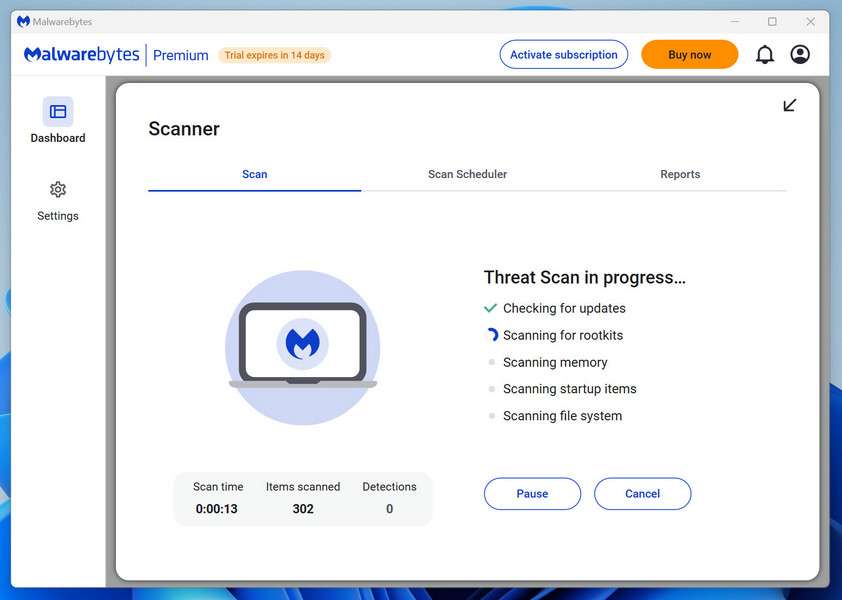
The scan checks your entire system for browser hijackers and other malicious programs, so it can take several minutes. Feel free to do something else — just check back occasionally to see the progress.
Quarantine the Detected Threats
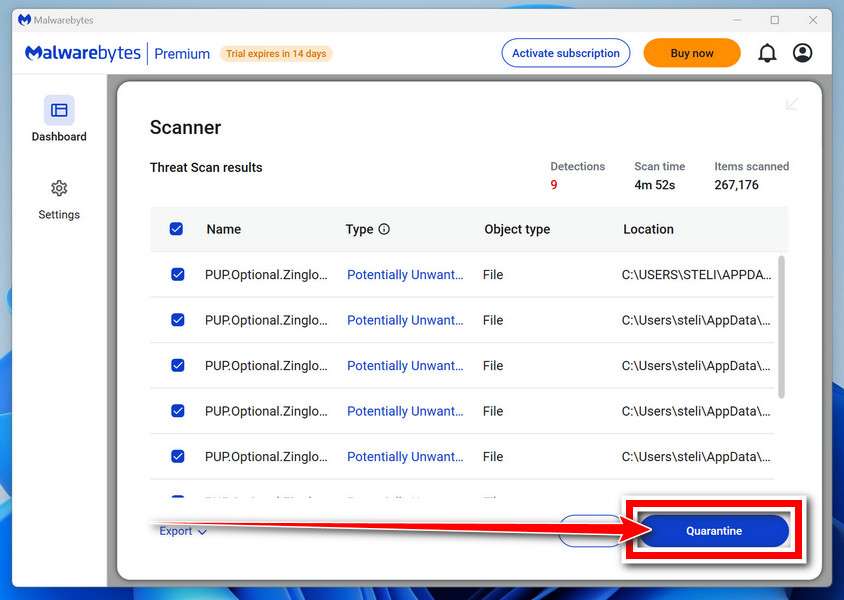
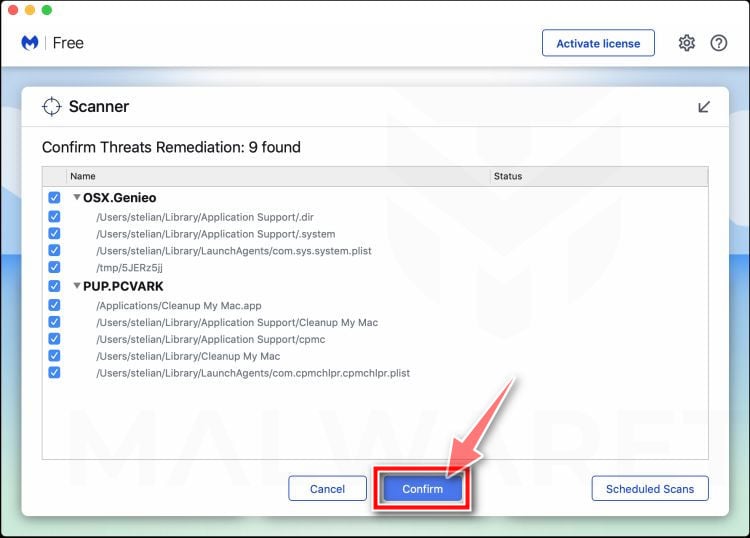
When the scan is done, you’ll see a list of everything Malwarebytes found — malware, adware, and potentially unwanted programs. Click the “Quarantine” button to remove all of them at once.
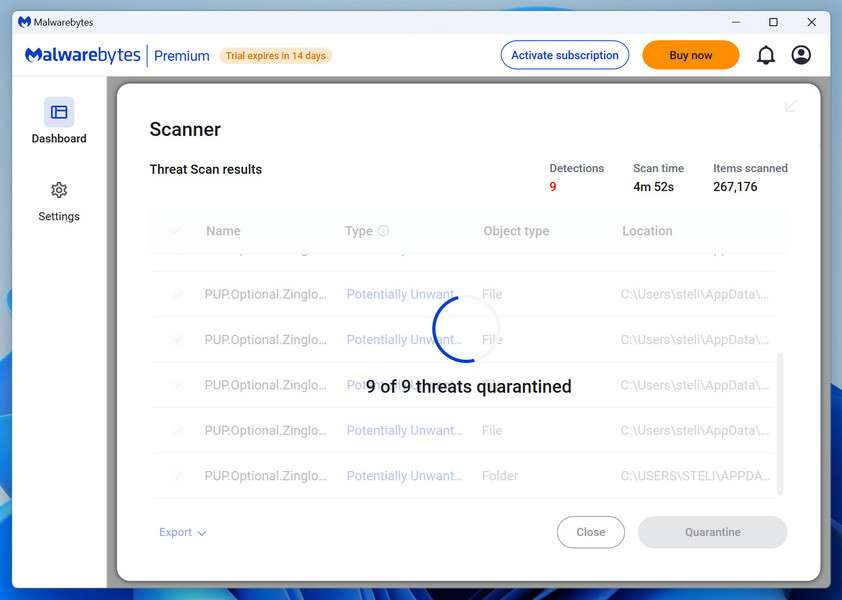
Malwarebytes will now remove the malicious files and registry entries and move them safely into quarantine.
Restart Your Computer
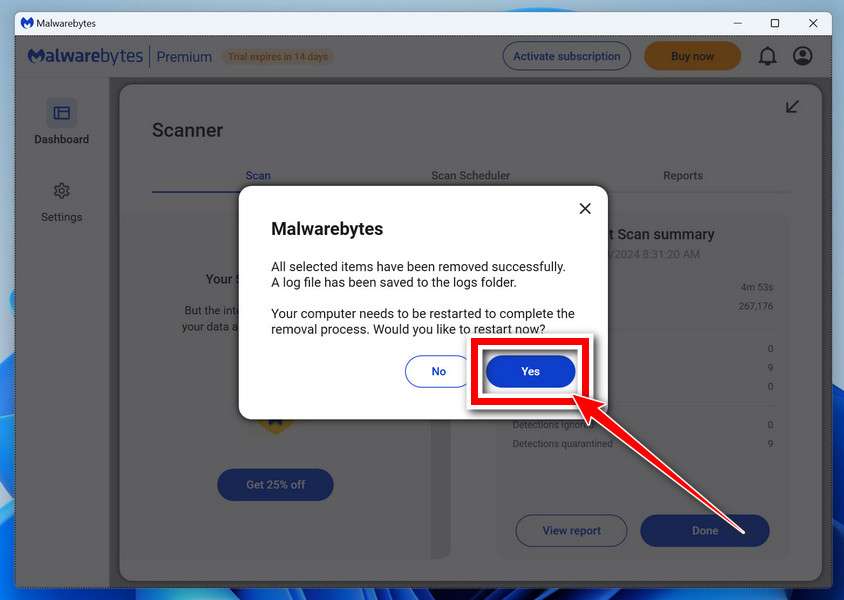
Some threats can only be fully removed after a reboot. If Malwarebytes asks you to restart, click Yes. Once you’re logged back in, your PC is clean and you can continue with the next steps in this guide.
When the scan finishes, click Quarantine to remove everything Malwarebytes found. That’s it — your Windows PC is now clean of trojans, adware, and other malware, and should be back to running smoothly.
If your current antivirus allowed this malicious program on your computer, you may want to consider purchasing Malwarebytes Premium to protect against these types of threats in the future. If you are still having problems with your computer after completing these instructions, then please follow one of the steps:
Malwarebytes for Mac is a free on-demand scanner that removes the malware other security software tends to miss — adware, browser hijackers, and unwanted programs included. Cleaning an infected Mac with Malwarebytes has always been completely free, and it’s our go-to recommendation. Follow the steps below to scan and clean your Mac in just a few minutes.
Download Malwarebytes for Mac
Click the button below to download the latest version of Malwarebytes for Mac.
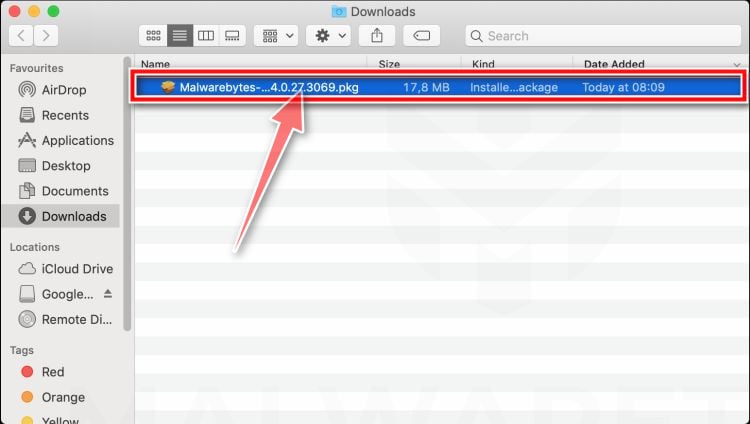
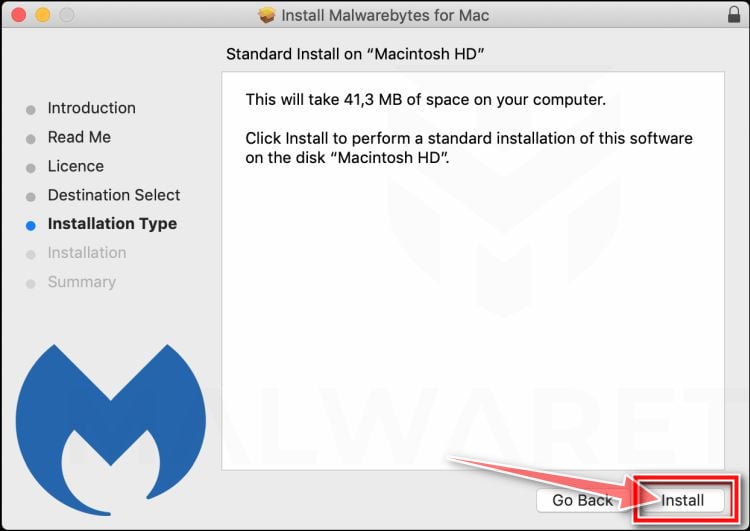
When the download finishes, open your Downloads folder and double-click the setup file to begin the installation.
Follow the On-Screen Prompts to Install Malwarebytes
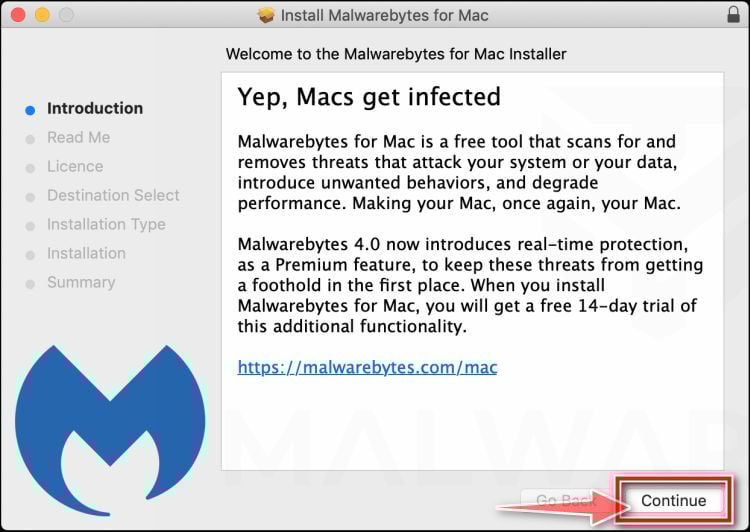
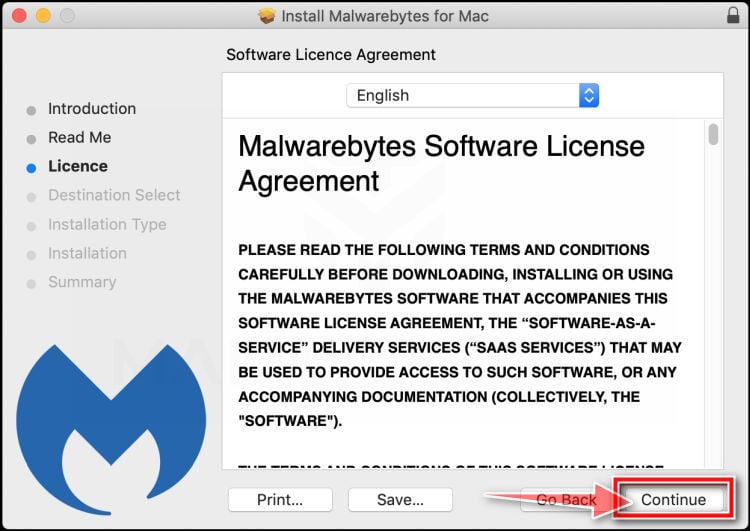
The Malwarebytes for Mac Installer will guide you through a few quick screens. Click “Continue” and keep following the prompts until the installation completes.
When the installation is complete, Malwarebytes opens to the Welcome to Malwarebytes screen. Click “Get started“.
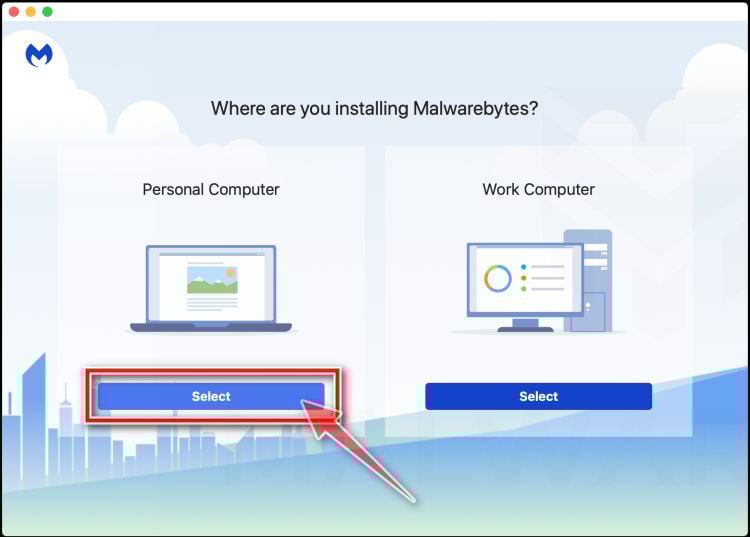
Select “Personal Computer” or “Work Computer”
Malwarebytes will ask what type of computer you’re installing it on. Click either Personal Computer or Work Computer, whichever applies.
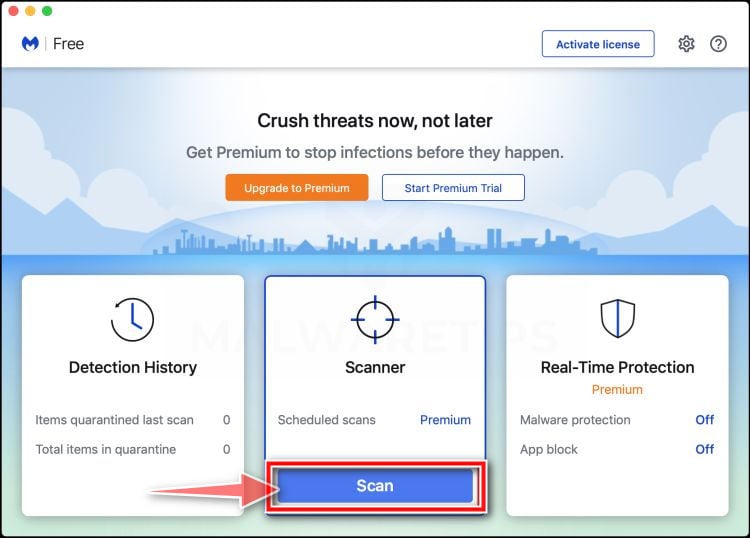
Start the Scan
Click the “Scan” button. Malwarebytes will automatically update its detection database and begin checking your Mac for malware.
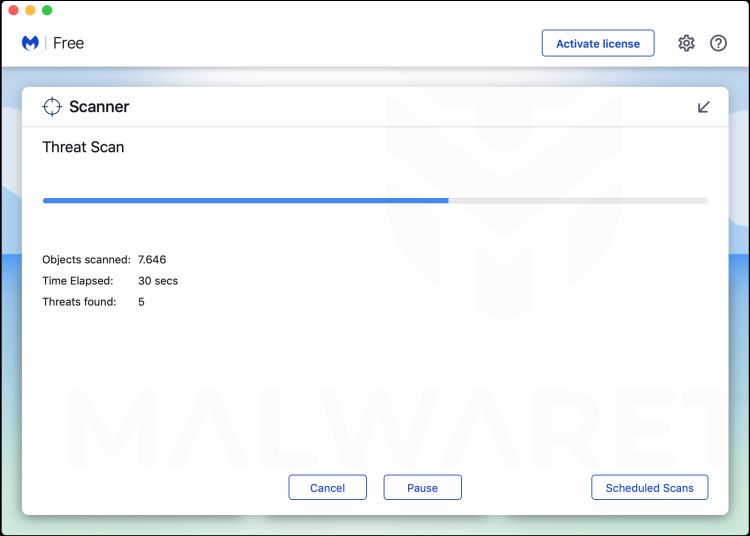
Wait for the Scan to Finish
Malwarebytes will scan your Mac for adware, browser hijackers, and other malicious programs. This can take a few minutes, so feel free to do something else — just check back occasionally to see the progress.
Quarantine the Detected Threats
When the scan is done, you’ll see a list of everything Malwarebytes found. Click the “Quarantine” button to remove all the threats at once.
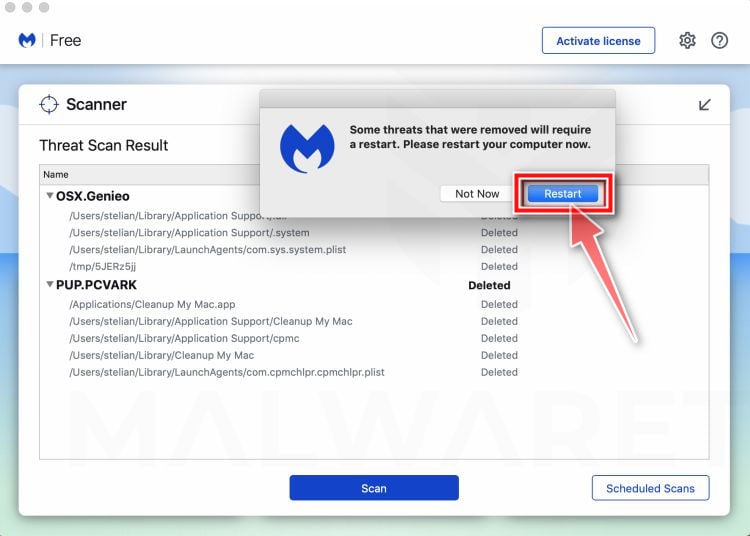
Restart Your Mac
Malwarebytes will now remove all the malicious files it found. Some threats can only be fully removed after a reboot — if Malwarebytes asks you to restart, allow it. Once you’re logged back in, your Mac is clean.
Once the scan is done, remove every threat it detected. Your Mac is now free of adware, rogue browser extensions, and other potentially harmful software.
If your current antivirus allowed a malicious program on your computer, you might want to consider purchasing the full-featured version of Malwarebytes Anti-Malware to protect against these types of threats in the future. If you are still experiencing problems while trying to remove a malicious program from your computer, please ask for help in our Mac Malware Removal Help & Support forum.
Run a Malware Scan with Malwarebytes for Android
Malwarebytes for Android automatically detects and removes dangerous threats like malware and ransomware so you don’t have to worry about your most-used device being compromised. Aggressive detection of adware and potentially unwanted programs keeps your Android phone or tablet running smooth.
Download Malwarebytes for Android.
You can download Malwarebytes for Android by clicking the link below.
In the Google Play Store, tap “Install” to install Malwarebytes for Android on your device.
When the installation process has finished, tap “Open” to begin using Malwarebytes for Android. You can also open Malwarebytes by tapping on its icon in your phone menu or home screen.
Follow the on-screen prompts to complete the setup process
When Malwarebytes will open, you will see the Malwarebytes Setup Wizard which will guide you through a series of permissions and other setup options. This is the first of two screens that explain the difference between the Premium and Free versions. Swipe this screen to continue. Tap on “Got it” to proceed to the next step. Malwarebytes for Android will now ask for a set of permissions that are required to scan your device and protect it from malware. Tap on “Give permission” to continue. Tap on “Allow” to permit Malwarebytes to access the files on your phone.
Update database and run a scan with Malwarebytes for Android
You will now be prompted to update the Malwarebytes database and run a full system scan.
Click on “Update database” to update the Malwarebytes for Android definitions to the latest version, then click on “Run full scan” to perform a system scan.
Wait for the Malwarebytes scan to complete.
Malwarebytes will now start scanning your phone for adware and other malicious apps. This process can take a few minutes, so we suggest you do something else and periodically check on the status of the scan to see when it is finished.
Click on “Remove Selected”.
When the scan has been completed, you will be presented with a screen showing the malware infections that Malwarebytes for Android has detected. To remove the malicious apps that Malwarebytes has found, tap on the “Remove Selected” button.
Restart your phone.
Malwarebytes for Android will now remove all the malicious apps that it has found. To complete the malware removal process, Malwarebytes may ask you to restart your device.
After the scan, tap Remove Selected to delete all detected threats. Your Android phone is now clean — no more malicious apps, adware, or browser redirects.
If your current antivirus allowed a malicious app on your phone, you may want to consider purchasing the full-featured version of Malwarebytes to protect against these types of threats in the future. If you are still having problems with your phone after completing these instructions, then please follow one of the steps:
Restore your phone to factory settings by going to Settings > General management > Reset > Factory data reset.
Now that your device is clean, keep it that way. Most infections start with a malicious ad or a fake download button — so blocking them at the source is your best defense.
We recommend AdGuard, which blocks malicious ads, phishing pages, and dangerous redirects before they can reach you.
We found no reliable original episode supporting the advertised claims. The circulating clip appears manipulated to create a commercial endorsement.
Did Melissa McCarthy use LeafTide or KeySlim Drops?
No trustworthy evidence reviewed by MalwareTips established that connection. A celebrity’s weight change does not prove use of the promoted product.
Is LeafTide the same product as KeySlim Drops?
The page calls KeySlim a new version, but it does not clearly document the legal, manufacturing, or formula relationship consumers would need.
Does matcha work like a GLP-1 prescription?
No. Matcha is a beverage ingredient, and sellers should not imply a supplement reproduces prescription effects without appropriate product-specific clinical evidence.
Is KeySlim Drops a subscription?
The checkout reviewed appeared to offer one-time bundles. Verify your individual receipt and account because affiliates and order paths can change.
Can I return opened bottles?
The posted refund policy emphasizes unopened items, excludes shipping, and requires all purchased items returned. Obtain written confirmation for your exact order.
The Bottom Line
The Joe Rogan GLP-1 matcha ritual is a fabricated celebrity story built to transform public interest in weight-loss medicine into supplement sales.
LeafTide’s own page now pushes KeySlim Drops, showing how quickly the bottle can change while the persuasive script continues.
Ignore the borrowed faces and recipe tease. Verify the product, seller, evidence, total, and return conditions before spending anything.
10 Rules to Avoid Online Scams
Here are 10 practical safety rules to help you avoid malware, online shopping scams, crypto scams, and other online fraud. Each tip includes a quick “if you already got hit” action.
Stop and verify before you click, log in, download, or pay.
Most scams win by creating urgency. Verify using a trusted method: type the website address yourself, use the official app, or call a known number (not the one in the message).
If you already clicked: close the page, do not enter passwords, and run a malware scan.
Keep your operating system, browser, and apps updated.
Updates patch security holes used by malware and malicious ads. Turn on automatic updates where possible.
If you saw a scary “update now” pop-up: close it and update only through your device settings or the official app store.
Use layered protection: antivirus plus an ad blocker.
Antivirus helps block malware. An ad blocker reduces scam redirects, phishing pages, and malvertising.
If your browser is acting weird: remove unknown extensions, reset the browser, then run a full scan.
Install apps, software, and extensions only from official sources.
Avoid cracked software, “keygens,” and random downloads. During installs, choose Custom/Advanced and decline bundled offers you do not recognize.
If you already installed something suspicious: uninstall it, restart, and scan again.
Treat links and attachments as untrusted by default.
Phishing often impersonates delivery services, banks, and popular brands. If it is unexpected, do not open attachments or log in through the message.
If you entered credentials: change the password immediately and enable 2FA.
Shop safely: research the store, then pay with protection.
Be cautious with brand-new stores, “closing sale” stories, and prices that make no sense. Prefer credit cards or PayPal for dispute options. Avoid wire transfers, gift cards, and crypto payments.
If you already paid: contact your card issuer or PayPal quickly to dispute the transaction.
Crypto rule: never pay a “fee” to withdraw or recover money.
Common patterns include fake profits, then “tax,” “gas,” or “verification” fees. Another is a “recovery agent” who demands upfront crypto.
If you already sent crypto: stop paying, save evidence (wallet addresses, TXIDs, chats), and report the scam to the platform used.
Secure your accounts with unique passwords and 2FA (start with email).
Use a password manager and unique passwords for every account. Enable 2FA using an authenticator app when possible.
If you suspect an account takeover: change passwords, sign out of all devices, and review recent logins and recovery settings.
Back up important files and keep one backup offline.
Backups protect you from ransomware and device failure. Keep at least one backup on an external drive that is not always connected.
If you suspect infection: do not connect backup drives until the system is clean.
If you think you are a victim: stop losses, document evidence, and escalate fast.
Move quickly. Speed matters for disputes, account recovery, and limiting damage.
Stop payments and contact: do not send more money or respond to the scammer.
Call your bank or card issuer: block transactions, replace the card if needed, and start a dispute or chargeback.
Secure your email first: change the email password, enable 2FA, and remove unfamiliar recovery options.
Secure other accounts: change passwords, enable 2FA, and log out of all sessions.
Scan your device: remove suspicious apps or extensions, then run a full malware scan.
Save evidence: screenshots, emails, order pages, tracking pages, wallet addresses, TXIDs, and chat logs.
Report it: to the payment provider, marketplace, social platform, exchange, or wallet service involved.
These rules are intentionally simple. Most online losses happen when decisions are rushed. Slow down, verify independently, and use payment methods and account controls that give you recourse.
Hello! I'm Lapain Epuran, your go-to source for detailed and honest product reviews. From tech gadgets to miracle cures, I provide insights to help you make informed choices. Join me as we discover what's truly worth your time and money.