

You know those online boutiques that seem to appear out of nowhere, offering beautiful sweaters, heartfelt stories, and unbelievable sale prices? Mia and Sophia Charleston is one of those names that has suddenly started showing up everywhere. The website looks charming, the discounts look irresistible, and the story behind the brand feels almost too personal to ignore.
But the more you look, the more something feels off, as if the pieces do not quite fit together.
Before you place an order, here is what you need to know.
Scam Overview
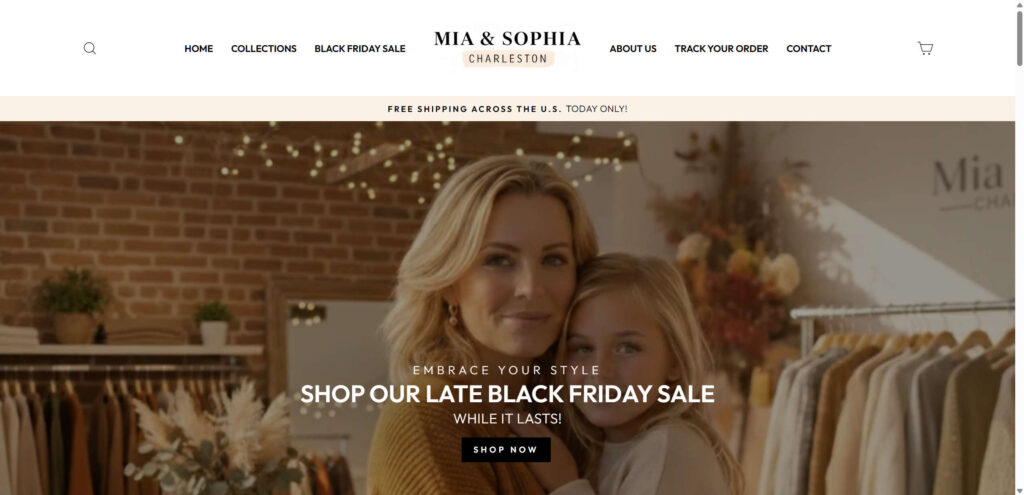
The Mia and Sophia Charleston sale scam is a modern example of how fraudulent online stores disguise themselves as warm, personal, handmade boutiques. These sites rely heavily on emotional storytelling, curated imagery, and staged authenticity to create the illusion of a small family business. The strategy is designed to lower your guard and push hurried purchases through limited time offers.
The Illusion of a Family-Owned Brand
Everything about the store’s presentation aims to appear relatable. The homepage often features a heartfelt message signed by Mia and Sophia, written in a tone that feels genuine and gentle. The narrative claims the business started in 2015, inspired by coastal life and built with love and dedication. Photos show mother and daughter in soft lighting, inside an inviting store setting. None of these images are real.
When researched, the photos are found on stock image platforms or identified as AI generated. The story itself has no online presence outside the website, which is a red flag. Legitimate businesses leave footprints. They are mentioned in reviews, social media posts, directory listings, or press releases. Mia and Sophia Charleston has none of that.
Suspicious Domain Details
A quick WHOIS lookup reveals that the domain was created only days before the sale began. The page claims a long history and a loyal customer base, yet the website is brand new. This contradiction is one of the strongest indicators of a fabricated business. If a brand was truly established in 2015, its domain would not appear in records for the first time in late 2025.
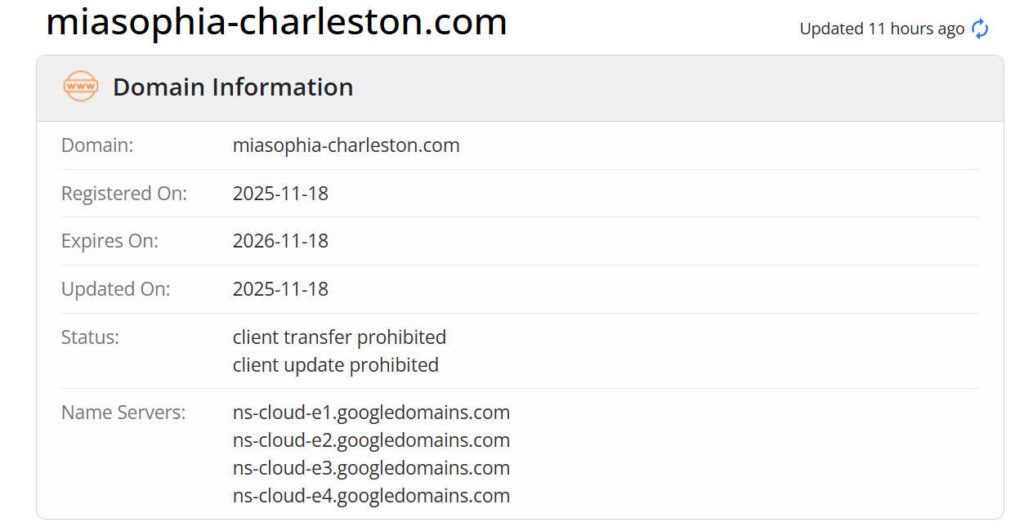
The domain is also protected behind privacy shields. While privacy is not automatically suspicious, legitimate businesses usually display verifiable company details, including a business address, tax number, and customer service contacts. This store offers none.
Unrealistic Discounts That Mimic High End Retail
Almost every product is marked down from a high original price to a dramatically reduced sale price. For example:
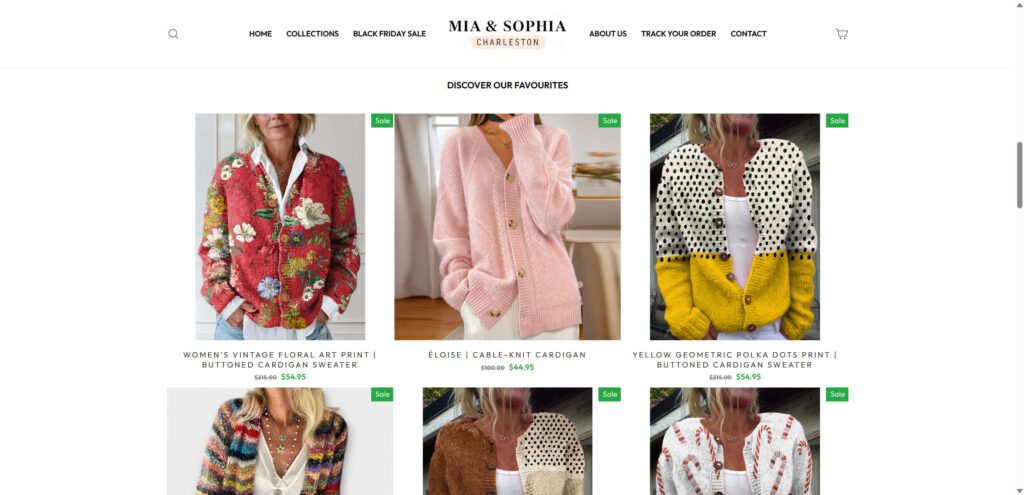
- Sweaters originally shown as $215 marked down to $54.95
- Cardigans with supposed handcrafted details discounted by over 70%
- Storewide promotions such as buy 2 save 10%, buy 3 save 15%, buy 5 save 25%
These numbers may look like seasonal deals, but they follow a common tactic in fraudulent stores. Inflated original prices are used to create the illusion of valuable, premium quality items. When the shopper sees a steep discount, it triggers a sense of urgency and perceived value. In reality, the items do not match the photos and are not worth the stated original amount.
Reused Product Photos From Other Scam Boutiques
The exact same sweater images appear across dozens of similar sites. Sometimes the identical hand positions, backgrounds, and models appear across brands claiming completely different origins and stories. This shows the photos were taken from suppliers, catalogs, or previous scam stores.
When scammers reuse the same content across multiple domains, it reveals a network rather than an independent brand. These networks usually operate internationally, creating hundreds of temporary stores at once, then closing them before negative reviews accumulate.
The Coastal Charleston Theme
Mia and Sophia Charleston uses the name of a real city to add credibility. Scammers frequently attach well known city names to evoke charm or heritage. Charleston is associated with warm culture, classic architecture, and southern hospitality. These associations help create a believable emotional atmosphere.
Similar scams use names like:
- London
- New York
- Melbourne
- Sydney
- Boston
- Oxford
City branding creates a sense of authenticity that scammers exploit. Visitors assume a local business exists behind the name. In reality, no shop, warehouse, or physical address is ever listed.
No Legitimate Customer Reviews
Despite claiming years of operation, the store has no real user reviews. The few testimonials present are generic and show images that appear reused or edited. None of the names can be verified, and the review dates often make no sense in relation to the domain registration.
Independent platforms like Trustpilot or Reddit show no legitimate positive reviews. Instead, scattered warnings appear from shoppers who recognize the patterns of fake boutiques.
The Products Are Never as Advertised
When shoppers do receive an item at all, it is usually far from what was advertised. Reports from similar scams show common issues:
- Colors drastically different from images
- Thin, rough synthetic fabric instead of knit material
- Poor stitching and unfinished hems
- Wrong sizes, often several sizes smaller
- No tags, no branding, no packaging
- Chemical smell from low quality dye
- Entirely wrong item sent
In many cases, nothing arrives.
Customer Service Disappears After Purchase
The contact page usually lists a single email address that goes unanswered. The phone number is either missing or inactive. When buyers request refunds, they face resistance or receive automated responses asking for more photos, more explanations, or more time.
Eventually, the emails stop entirely. Meanwhile, the site remains active and continues processing orders from new victims.
Orders Cannot Be Tracked
The store claims to offer order tracking, but the tracking links are either fake or lead to placeholder pages. Customers are given random tracking codes that show no movement or belong to unrelated shipments.
A Pattern Seen Across Many Scam Stores
This scam mirrors the same tactics used by numerous fraudulent fashion boutiques, especially those posing as handcrafted makers or local artisans. Every detail is designed to look charming and authentic, while the infrastructure behind it is empty.
The goal is simple. Collect as many payments as possible during the first weeks, then shut down the site and reopen under a different name. Shoppers have little chance of recovering funds unless they act quickly.
How the Scam Works
This type of sale scam follows a predictable cycle. It is designed to create trust, trigger impulse buying, and prevent refunds through confusion and delay. Below is a detailed look at each stage.
Step 1: Creating a Believable Origin Story
Scammers begin by crafting an emotional narrative. In the case of Mia and Sophia Charleston, the story claims the brand started in 2015 as a mother and daughter boutique rooted in love for coastal living. The tone is personal. It describes passion, dedication, and meaningful craftsmanship.
None of this is real. Storytelling is used purely as marketing bait. By making buyers feel connected to a small family business, scammers bypass skepticism and encourage sympathetic purchases.
Step 2: Designing a Polished Storefront With Stock Imagery
The website looks clean, modern, and intentionally styled to resemble premium fashion brands. This visual polish helps build trust. But a closer look reveals signs of a template site.
Images of Charleston streets, cozy homes, and smiling women are pulled from stock photo libraries. Product images are reused across multiple online stores with unrelated names. The designers rely on the fact that most shoppers will not reverse search images.
Step 3: Setting Up Unrealistic Discounts to Trigger Urgency
Every item is displayed with a striking discount. The original price is inflated to make the sale appear dramatic. Scammers understand consumer behavior. When shoppers see a cardigan listed at $215 but now only $54.95, they feel they are getting a luxury item for a fraction of the price.
Layered discounts are also used:
- Buy 2, save 10%
- Buy 3, save 15%
- Buy 5, save 25%
This encourages larger purchases and increases the scammer’s payout.
Step 4: Running Aggressive Social Media Ads
Facebook and Instagram ads are central to the scam. The campaigns are designed with emotional headlines, seasonal themes, and warm lifestyle photos. Ads often emphasize:
- Limited stock
- Final sale
- Closing store
- Handmade items
- Small batch products
Because ad platforms approve at scale, scammers can run thousands of ads simultaneously. They target older audiences, especially women who enjoy home decor, crafts, handmade products, or coastal style.
Step 5: Processing Payments Immediately
The moment a buyer checks out, the payment is processed instantly. There is no order review, no fraud checks, and no delay. The money is transferred to the scammers before the shopper has time to reconsider.
The checkout often supports credit cards but not safe alternatives like PayPal. PayPal offers buyer protection, so scammers avoid it.
Step 6: Sending Fake Shipping Updates or No Updates at All
To buy time, scammers send automated emails stating the order has shipped. The tracking numbers either do not work or show generic placeholder statuses. Some buyers never receive any tracking information, which prevents early disputes.
The more time scammers can stall, the harder it becomes for victims to request refunds from banks.
Step 7: Ignoring Refund Requests and Closing Communication
When customers reach out, they encounter obstacles:
- Delayed replies
- Generic responses requesting more information
- Claims that the order is already in transit
- Statements that refunds are not possible
- Requests for repeated photos of defective items
The goal is to exhaust the customer’s patience. Once enough time passes, the scammer stops replying altogether.
Step 8: Shutting Down the Store and Reopening Under a New Name
After a few weeks or months, when complaints rise and chargebacks increase, the scammer abandons the domain. The website disappears without notice.
Shortly after, a nearly identical site appears under a new name and theme. The cycle starts again.
What To Do If You Fell Victim
If you purchased from Mia and Sophia Charleston, there are concrete steps you can take to protect yourself and increase your chances of recovering funds.
1. Contact Your Bank Immediately
Tell your bank the transaction is fraudulent and request a chargeback. The faster you act, the higher your chances of success. Provide:
- Screenshots of the website
- Order confirmation
- Tracking failures
- Emails showing lack of response
Banks often approve disputes for fake online stores.
2. Report the Website to Your Credit Card Company
Credit card fraud departments track patterns. If multiple reports come in about the same domain, they can flag the merchant and prevent future transactions.
3. Monitor Your Account for Unusual Charges
Scam stores sometimes reuse payment information. If you see:
- Small test charges
- Unknown subscriptions
- Repeated payments
Notify your bank immediately and request a new card.
4. Do Not Send the Scammer More Information
Avoid sending additional photos, videos, or explanations. Scammers use these requests to delay refunds and run down the clock on chargeback windows.
5. Install Malwarebytes for Device Protection
Scam sites may run unsafe scripts. Installing Malwarebytes helps detect malicious code, trackers, or injected malware that may have been loaded during browsing.
6. Install AdGuard for Safer Browsing and Ad Blocking
AdGuard blocks misleading ads, pop ups, and scam sponsored posts. This significantly reduces exposure to fraudulent boutique stores and fake discounts.
7. Warn Others by Sharing Your Experience
Leave reviews on:
- Trustpilot
- Scam reporting websites
- Consumer Facebook groups
Public awareness helps reduce the number of victims.
8. Report the Scam to the IC3 or Your Local Cybercrime Unit
Submit information to:
- The Internet Crime Complaint Center
- Local consumer protection agencies
- Your country’s cybercrime division
More reports increase the likelihood of the network being shut down.
The Bottom Line
The Mia and Sophia Charleston sale presents itself as a warm boutique built on love, craftsmanship, and family heritage. Yet behind the charming imagery and heartfelt messages lies a familiar pattern used by many online scam stores. The domain is new, the story is fabricated, the products are copied from other sites, and customers are left without the items they paid for.
Understanding how these scams operate gives you the power to recognize them early and protect yourself. If you already made a purchase, there are real steps you can take to reclaim control, recover your money, and secure your online presence.
While fraudulent stores continue to evolve, awareness remains the strongest defense. When something feels too perfect, too emotional, or too heavily discounted, it is worth taking a moment to investigate before checking out.








