Microsoft Teams Missed Voicemail Scam EXPOSED – Full Investigation
Written by: Thomas Orsolya
Published on:
The Microsoft Teams Missed Voicemail email scam is a phishing tactic designed to look like a routine business notification.
These messages often mimic real Teams voicemail alerts, complete with caller details, timestamps, and a prominent “PLAY NOW” button. The goal is simple: get you to click before you verify.
Once clicked, the link may lead to a fake login page that steals your Microsoft 365 credentials or a malicious download that compromises your device. If you receive an unexpected voicemail email, do not use the link in the message. Open Microsoft Teams directly and check your voicemail there.
Scam Overview
The Microsoft Teams missed voicemail email scam is a phishing campaign disguised as a collaboration notification.
It is not trying to trick you with obvious nonsense. It is trying to look like something you already receive. That is why it often copies the style of Microsoft notifications, uses corporate language, and includes realistic details like call time, message length, and a reference number.
The real goal is usually one of two things:
Steal your Microsoft 365 login credentials
Get you to download malware or a malicious file
In many cases, it does both. The first click can take you to a fake login page. If you enter your email and password, attackers try to take over your account. In other versions, the click starts a download or opens a page that prompts you to install something, often disguised as an audio codec, secure voicemail player, or document. That can infect your device or create another path into your accounts. This is a classic phishing pattern, and agencies like the FBI and NIST describe the same core mechanics: convincing messages, spoofed trust, harmful links, and credential theft.
Why the voicemail lure works so well
Phishing emails succeed when they feel plausible.
A fake package alert can be ignored. A fake tax notice can look suspicious. But a missed voicemail notification lands in a category that feels routine. It is common, low drama, and easy to click without much thought.
Attackers also know that voicemail triggers a strong reaction in business settings:
People worry it might be a customer lead
Staff assume it could be a manager or colleague
Teams users expect automated notifications
The message seems time sensitive, even if it does not explicitly threaten you
That last point matters. Good phishing does not always scream at you. It often uses quiet urgency. A message that says “Press play to listen to your voicemail” can be just as effective as a fake “Your account is locked” alert because it pushes you to act before you verify.
The FTC explains that phishing messages often tell a believable story to make you click a link or open an attachment, and they often impersonate organizations people already know. The Microsoft Teams missed voicemail email scam follows that formula almost perfectly.
What the fake email usually looks like
These scam emails are designed to look polished.
A common template includes:
A header that says Microsoft Teams
A subject line like “Missed Voicemail in Teams” or “You received a voicemail”
A table with details such as receiver, date, duration, and caller ID
A large action button like PLAY NOW
Branding colors and layout that resemble real Microsoft messages
Some versions also include privacy policy text, a Microsoft footer, or a fake prompt to “Install Microsoft Teams now” to make the page look more official.
The message may even use unrelated but familiar sender identities to confuse the recipient. For example, the display can suggest Microsoft Teams, while the actual sender address belongs to a completely different domain or service. That mismatch is a major warning sign. Microsoft specifically warns that domain mismatches are a strong indicator of phishing in emails that claim to come from Microsoft support. The same principle applies broadly to phishing detection: the visible brand and the actual sender do not line up.
Why it is especially dangerous for Microsoft 365 users
Many people reuse the same Microsoft 365 account across Outlook, Teams, OneDrive, SharePoint, and other business tools.
That means one stolen password can create a much bigger problem than just email access.
If attackers get your Microsoft credentials, they may try to:
Read your email for invoices, passwords, or internal contacts
Search Teams chats for sensitive conversations
Access OneDrive or SharePoint files
Send new phishing emails from your real mailbox
Target coworkers using your identity
Set inbox rules to hide security alerts
Attempt business email compromise or payment fraud
This is why voicemail phishing can become a business-wide incident, not just a single bad click.
NIST also emphasizes that phishing is often used to trick users into submitting credentials, and the FBI notes that spoofed messages can lead victims to disclose sensitive information or download malicious software. Those are exactly the two outcomes this scam is built to produce.
What real Teams voicemail actually looks like
One reason this scam is effective is that real Microsoft Teams voicemail can indeed be delivered through email.
Microsoft’s Teams documentation explains that Cloud Voicemail deposits voicemail messages in the user’s Exchange mailbox, and that a voicemail in Exchange is an email message with an audio file attachment. Microsoft also notes that users can find received voicemails in the Exchange mailbox and in the Microsoft Teams client under the Calls tab. (Microsoft Learn)
That is important because it gives scammers a believable foundation.
They do not need to invent a fake feature. They mimic a real workflow.
Microsoft also documents that voicemail messages can include transcription when enabled, and voicemail policy settings can control transcription, translation, profanity masking, and other behavior. Microsoft further notes default voicemail policy settings such as transcription and transcription translation being enabled in the default policy. This helps explain why scam emails often include realistic voicemail metadata or transcript-like text to appear authentic.
The key point is this:
A real voicemail notification can exist, but the email itself is never the thing you need to trust blindly. You can always verify by opening Teams directly or checking your Outlook mailbox without clicking any embedded link.
Common red flags in Microsoft Teams voicemail phishing emails
Even well-designed phishing emails usually leave clues.
Here are the red flags that show up most often in Microsoft Teams missed voicemail scam emails:
1) Unexpected voicemail when you were not expecting a call
If you do not use Teams Phone features often, or you were not expecting a call from that context, stop and verify first.
Attackers rely on habit, not relevance.
2) Sender address does not match the message branding
The display name might say “Microsoft Teams,” but the sender domain is unrelated, misspelled, or suspicious.
Sometimes the email is routed through a random marketing domain or a compromised third-party account. That mismatch is a strong warning sign. NIST specifically lists suspicious source email addresses as a phishing indicator, and Microsoft warns that mismatched domains are likely phishing in messages claiming to be Microsoft support.
3) The button hides a non-Microsoft link
The email may say “PLAY NOW” but the underlying URL can point to a fake domain.
Attackers often use redirects, tracking URLs, or shortened links so the final destination is not obvious.
4) The email pushes a file download to “listen”
A real voicemail workflow should not require installing a player or codec from an email link.
If the page asks you to download software to hear a voicemail, treat it as malicious.
5) The login page looks real but the address bar is wrong
Many fake Microsoft login pages are visually excellent.
The page may copy Microsoft branding almost perfectly, but the domain in the address bar is the real test.
6) It creates urgency without context
Even a simple “Listen now” prompt can be urgency.
NIST warns that phishing messages often pressure you to act quickly, which is exactly how this scam gets clicks before people think twice.
Why this scam keeps spreading
The Microsoft Teams missed voicemail email scam keeps returning because it is cheap to run and easy to reuse.
Attackers can copy the same HTML template, change the sender, switch the landing page, and launch a new wave. They do not need a new idea each time. They only need enough people to click.
It also scales well inside organizations. Once one account is compromised, attackers may use that mailbox to send more phishing emails internally. Those internal phishing emails are especially dangerous because they come from a real coworker account, which increases trust and lowers suspicion.
The FBI’s phishing guidance highlights spoofing and fake websites as central tactics, and IC3 exists specifically because these scams are persistent and large-scale. IC3 describes itself as the central hub for reporting cyber-enabled crime and encourages filing a report even if you are unsure the complaint qualifies.
Who gets targeted
This scam does not only target large companies.
It frequently hits:
Small businesses
Freelancers and contractors
Accounting teams
Sales teams
Remote workers
Help desks
Anyone using Microsoft 365 for work
Small organizations are often more exposed because they have fewer security controls, less email filtering, and less security training. NIST’s small business guidance explicitly focuses on phishing for this reason, including the need for employee awareness, antivirus, and MFA.
How The Scam Works
Step 1: The phishing email is delivered
The first stage is delivery.
Attackers send a fake Microsoft Teams voicemail notification to one user or a large mailing list. Sometimes they use lookalike domains. Sometimes they use compromised mailboxes. In other cases, they abuse legitimate email services or third-party platforms so the message gets through basic spam filters.
The email usually contains:
Microsoft Teams branding or a copy of it
A subject designed to look routine
A “voicemail details” block with fake metadata
A button or link to play the message
Because real Teams voicemail can be delivered through email and stored in Exchange, the premise feels legitimate. Microsoft documents this behavior, which is exactly why the scam is convincing to users who have seen similar alerts before.
A typical “Microsoft Teams Missed Voicemail” scam email reads as follows:
Microsoft Teams [XXXXX] quickbooks@notification.intuit.com
Microsoft Teams
Missed Voicemail In Teams
Voicemail Details: Receiver: contact@[XXXXXXXX]Date: 2/19/2026 5:13:56 a.m. Duration: 01m 11s Caller ID: [Ref ID: 7142641012… Press play to listen to your voicemail. PLAY NOW…
Step 2: The attacker borrows trust from a familiar workflow
This stage is all about social engineering.
The attacker is not trying to prove a complicated story. They are trying to fit into your normal workday. A missed voicemail sounds like a normal work event, so your brain does not immediately switch into defense mode.
This is the same tactic NIST and the FTC describe in phishing guidance:
Use a recognizable brand
Create a believable reason to click
Push the user into action
Hide the malicious intent behind a normal task
In other words, the scam does not need fear to work. It only needs familiarity. (NIST)
Step 3: You click “PLAY NOW” and leave the safe environment
This is the critical moment.
The email button is designed to move you out of your trusted tools, Outlook and Teams, into an attacker-controlled environment.
From here, the scam can split into several common paths.
Path A: Fake Microsoft login page
This is the most common path.
You click the voicemail button and land on a page that looks like Microsoft’s sign in screen. The page may ask you to log in to hear the voicemail, “verify your identity,” or “unlock secure message playback.”
If you type your Microsoft 365 email and password, the attacker captures them.
In more advanced versions, the page may immediately redirect you to the real Microsoft sign in page after collecting your credentials, which makes the experience feel normal and delays suspicion.
Path B: Malware download disguised as an audio file or player
Some campaigns push a file instead of a login page.
The page may say:
“Download voicemail attachment”
“Install secure voice codec”
“Open encrypted voicemail”
“Play message in desktop app”
The file might be a malicious script, archive, document, or executable. If the user opens it, malware can run on the device.
FBI and NIST both warn that phishing often aims to get victims to download malicious software, not only submit passwords. This is why the Microsoft Teams voicemail scam can be both a credential theft scam and a malware delivery scam.
Path C: Redirect chain to hide the real destination
Attackers often use redirects to make the link look less suspicious.
For example, the button may go through a tracking link, then a cloud-hosted page, then a final phishing site. This helps the attacker:
Hide the real domain in the email
Rotate destination links quickly
Evade simple blocklists
Reuse the same email template with different landing pages
To a user, it still looks like one click.
To a security team, it is a moving target.
Step 4: Credential theft happens in real time
If the scam uses a fake login page, the attacker collects the credentials as soon as you submit them.
In many cases, the page is configured to capture:
Email address
Password
One-time code or MFA prompt approval (in some attacks)
Recovery info
Session cookies or tokens (in more advanced phishing kits)
Even basic phishing that only steals the password can be damaging. If MFA is not enabled, account takeover can happen immediately.
NIST strongly recommends MFA and specifically points to phishing-resistant authentication as a stronger option because standard username and password defenses are not enough against modern phishing. NIST also emphasizes changing affected passwords immediately if you think you were phished.
Step 5: The account is used before the victim realizes it
Attackers typically act fast.
Once they have access, they may log in right away and start searching for value. Common first moves include:
Reading recent emails
Searching for “invoice,” “payment,” “wire,” or “urgent”
Exporting contacts
Sending new phishing emails from the compromised mailbox
Creating inbox rules to hide replies or alerts
Looking for passwords in old emails
Pivoting into other services that use the same login
This is where a fake voicemail click turns into a real business incident.
A single stolen Microsoft account can become the launch point for internal fraud, vendor impersonation, or broader compromise. FBI and IC3 resources regularly stress that phishing and spoofing are often the starting point for larger cyber-enabled crimes. (Federal Bureau of Investigation)
If the scam used a malicious download instead of a fake login, the damage can expand even faster.
Depending on the payload, the attacker may install malware that can:
Steal browser passwords
Capture keystrokes
Exfiltrate files
Maintain persistence on the device
Spread inside a local network
Drop ransomware later
This is why NIST specifically recommends updated security software and scans after clicking a suspicious link or opening an attachment. The FTC also advises updating security software and running a scan if you opened a malicious file from a phishing email.
Step 7: The scam may use legitimate details to look even more real
Some Microsoft Teams voicemail scam emails include convincing details such as:
A real-looking timestamp
A realistic voicemail duration like “01m 11s”
A fake reference ID
A message addressed to the recipient’s actual email
Partial personalization
These details do not prove legitimacy.
Attackers can generate all of this automatically. They know that small touches, like a duration field or a corporate footer, reduce suspicion.
The FTC notes that phishing emails often look real at first glance and may even use logos or branding from known companies. That is exactly what these voicemail lures do. (
Step 8: Internal phishing can follow from a real mailbox
One of the worst outcomes is when the attacker uses the stolen mailbox to send more messages inside the same company.
That second wave is harder to spot because:
The sender is a real coworker
The email comes from a legitimate company domain
Existing email trust rules may allow it
Recipients are less suspicious of internal messages
At this point, the attack no longer looks like an external spam campaign. It looks like normal internal communication.
This is why organizations must treat one compromised account as a potential wider incident and respond quickly.
Step 9: Victims often realize only after a secondary sign
Many victims do not notice the problem at the moment of the click.
They realize later, when one of these things happens:
They receive a sign in alert
Coworkers ask about strange emails
The mailbox starts behaving oddly
Password reset notifications appear
Unknown inbox rules are found
A financial request is sent from their account
Security tools flag suspicious sign ins
Microsoft documents that unusual sign in attempts can trigger alerts in some account scenarios, but you should not rely on that as your only safety net. Preventive habits matter more, especially not clicking unexpected voicemail links and verifying directly in Teams. (Microsoft Support)
Variations of the Microsoft Teams voicemail scam you may see
Attackers keep the same core idea but change the packaging.
Here are common variants:
“Voicemail transcript” variant
Instead of a play button, the email says a transcript is attached or asks you to log in to read the transcript.
This works because transcription is a real Teams voicemail feature in many environments, which Microsoft documents in voicemail policy settings. (Microsoft Learn)
“Secure voicemail” variant
The page claims the voicemail is encrypted and requires a sign in to listen.
This sounds plausible because people are used to secure document portals and encrypted messages.
“Attachment blocked” variant
The email says the voicemail could not be attached and tells you to click a portal link.
This is designed to explain why the message does not behave like a normal voicemail email.
“Shared mailbox or call queue” variant
The email targets team inboxes or support addresses and uses wording that implies a shared voicemail was left for a department.
Microsoft has real shared voicemail functionality for certain Teams scenarios, which gives attackers another believable story to imitate.
Why spam filters and users still miss it
People often ask, “Why did this get through?”
There are a few reasons:
The email template is clean and looks corporate
The content is short, which can avoid some keyword-based filtering
The links may be new and not yet blocked
The sender may be a compromised legitimate account
The message does not ask for money immediately, so it feels lower risk
Users are busy and click before checking details
NIST highlights that phishing is increasingly convincing and urges users to take a second look at any message that asks them to click, log in, or download a file. That advice is especially relevant here because the voicemail lure is designed to feel routine and harmless. (NIST)
The one habit that breaks the chain
Every phishing attack has a weak point.
In the Microsoft Teams missed voicemail email scam, the weak point is that the attacker needs you to trust the email link.
If you skip the link and verify directly in Microsoft Teams or Outlook, the attack usually fails.
That is the key operational habit for users and teams:
Do not use the email button
Open Teams directly
Check Calls and Voicemail there
If nothing is there, the email is fake
Report it
Microsoft’s guidance on reporting phishing in Outlook and Teams supports this workflow, and it gives users a built-in way to flag suspicious messages rather than forwarding them around. (Microsoft Support)
What To Do If You Have Fallen Victim to This Scam
If you clicked or interacted with a fake Microsoft Teams voicemail email, do not panic.
Act quickly and methodically. Most of the damage comes from delay, not from the initial mistake.
Below is a practical response plan you can follow.
1) Stop interacting with the email and the website immediately
Close the phishing page.
Do not click again, do not download anything else, and do not reply to the message.
If you are still in the email, leave it alone for a moment so you can preserve evidence, but do not interact with any buttons or attachments.
2) Figure out what happened, clicked only, credentials entered, or file downloaded
Your next steps depend on what you did.
Use this quick check:
Clicked link only: You opened the page but did not type anything
Entered credentials: You typed your Microsoft email and password
Approved MFA or entered a code: Higher risk, act immediately
Downloaded or opened a file: Treat the device as potentially infected
All of the above: Follow every step below, starting with account security and device scan
This matters because the response for credential theft is different from the response for malware.
3) Change your Microsoft account password immediately
If you entered your password, change it right away.
Do this by going directly to your Microsoft account or Microsoft 365 sign in page through a known, trusted route, not through the phishing email. If your organization manages your account, follow your company’s password reset process and notify IT/security at the same time.
NIST specifically advises changing affected passwords immediately, and to change any other accounts that reuse the same password. If you reused that password anywhere else, change those too. Use unique passwords for each account.
4) Turn on MFA, or strengthen it if it is already enabled
If MFA is not enabled on your account, enable it now.
If MFA is already on, review your settings and remove any unknown devices, phone numbers, or authentication methods. If your organization supports stronger options, ask IT about phishing-resistant MFA methods. NIST explicitly recommends MFA and highlights phishing-resistant authentication as a stronger defense against credential theft.
5) Check for suspicious sign-in activity and account changes
After changing your password, review your account for signs of misuse.
Look for:
Unrecognized sign ins
New inbox rules
Forwarding rules you did not create
Emails sent from your account that you did not send
Changed recovery email or phone number
New app permissions or connected apps
If you are in a company environment, report this to IT immediately so they can review admin logs and sign-in logs.
6) Scan your device if you downloaded or opened anything
If the scam involved a file download, run a full security scan.
The FTC advises updating your security software and running a scan if you clicked a phishing link or opened an attachment that may have downloaded harmful software. NIST also recommends up-to-date security software because phishing often tries to install malware.
If the file was opened on a work computer, notify IT before you keep using the device. They may want to isolate the machine, collect logs, or run enterprise tools.
7) Report the phishing email in Outlook or Teams
Reporting helps protect other people.
Microsoft provides built-in reporting options in supported Outlook versions, and Microsoft also documents a reporting flow for suspicious messages in Teams. Reporting can help remove the message from your inbox and improve filtering.
If you are in Outlook, use the Report > Report phishing option if available.
If you are in Teams and the malicious message came through chat or another Teams surface, Microsoft documents a report flow through the message options.
8) Notify your IT team, manager, or security contact right away
Do not try to handle a work account incident quietly.
Even if you think nothing happened, IT needs to know because attackers often use compromised accounts to target coworkers. Early notice can prevent a wider incident.
Tell them:
The exact time you clicked
Whether you entered credentials
Whether you downloaded a file
The email subject line
The sender address
Any screenshots you captured
That information helps them contain the incident faster.
9) Preserve evidence before deleting the message
Save what you can, especially if you work in a business environment.
Useful evidence includes:
A screenshot of the email
The full sender address
The subject line
The phishing page URL (copy it safely, do not revisit)
Any downloaded file name
The time of the event
This helps IT, email security teams, and investigators block similar attacks and trace what happened.
10) Watch for follow-up scams and secondary phishing attempts
Once attackers know an address is active, they may try again.
Be alert for:
“Security alert” emails right after the phishing attempt
Fake password reset notices
Calls pretending to be Microsoft support
Messages asking you to confirm your account recovery
Phishing campaigns often chain multiple lures together. The second message may look even more convincing than the first.
11) If financial or personal data was exposed, act on identity protection steps
If you entered financial information, personal identifiers, or any sensitive data beyond your work login, use official recovery resources immediately.
The FTC advises victims to go to IdentityTheft.gov if a scammer may have personal or financial information, and FTC resources also direct users to ReportFraud.ftc.gov to report scams. The FTC’s phishing guidance also points users to IdentityTheft.gov if sensitive information was exposed.
If a payment card was involved:
Contact your card issuer or bank fraud department immediately
Ask them to monitor or block unauthorized charges
Request a replacement card if needed
If business finance systems were exposed, escalate internally right away so your finance team can monitor for fraud attempts.
12) Report the scam to the right external channels
If you are in the U.S., reporting helps investigators and helps others avoid the same scam.
Useful reporting channels include:
FTC through ReportFraud.ftc.gov
FBI IC3 through ic3.gov, especially for phishing, account takeover, or business-related cyber incidents
The FBI explicitly directs victims to report spoofing and phishing to IC3, and IC3 describes itself as the central hub for reporting cyber-enabled crime.
If you are outside the U.S., report to your local cybercrime or fraud authority and your email provider or workplace security team.
13) Train yourself on the simple verification habit that prevents repeat incidents
Do not rely on spotting every fake.
The better habit is process-based:
If an email says you missed a Teams voicemail, open Teams directly
Check the Calls/Voicemail area in the app
If nothing is there, treat the email as phishing
Report it
Microsoft’s Teams voicemail documentation confirms that users can access voicemail through Teams and the Exchange mailbox. That gives you a built-in verification path that does not require trusting the email button.
14) For organizations, tighten controls after an incident
If you run a business or manage IT, do not stop at the user reset.
Use the incident to improve defenses:
Review email filtering and anti-phishing policies
Enable or confirm MFA across all users
Prioritize phishing-resistant MFA where possible
Train staff to verify voicemail and login alerts directly
Enable user reporting in Outlook and monitor submissions
Watch for suspicious inbox forwarding rules
Review compromised account lateral movement risk
Microsoft’s Defender and reporting documentation supports user reporting workflows in Outlook, and NIST stresses MFA, training, and email security controls as part of phishing defense.
15) Do not feel embarrassed, this scam is designed to look normal
This part matters more than people realize.
The Microsoft Teams missed voicemail email scam is effective because it imitates a real business workflow. Smart people click these messages every day, especially when they are busy.
The right response is not shame. It is speed.
If you act quickly, change credentials, scan your device, and report the incident, you can often contain the damage before it grows.
Is Your Device Infected? Run a Free Malware Scan
Slow performance, constant pop-ups, or strange behavior? These are classic signs of a malware infection. The fastest way to find out is to scan your device with Malwarebytes Anti-Malware Free — one of the most trusted malware removal tools available.
The free version detects and removes the most common threats, including:
Adware — the cause of those annoying pop-ups
Browser hijackers — unwanted redirects and changed homepages
Trojans and spyware — hidden programs stealing your data
Potentially unwanted programs (PUPs) — software you never asked for
👉 Select your device below — Windows, Mac, or Android — then follow the simple steps to download Malwarebytes, scan your system, and remove any threats it finds. The whole process takes about 5 minutes.
Malwarebytes for WindowsMalwarebytes for MacMalwarebytes for Android
Run a Malware Scan with Malwarebytes for Windows
Malwarebytes is one of the most popular and trusted anti-malware tools for Windows — and it’s completely free for removing infections. It catches threats that many antivirus programs miss, including adware, browser hijackers, and trojans. Follow the steps below to scan and clean your PC in just a few minutes.
Download Malwarebytes
Click the button below to download the latest version of Malwarebytes for Windows from the official source. The free version is all you need — it will scan your computer and remove adware, browser hijackers, and other malicious software at no cost.
(The link opens in a new page where your download will start)
Install Malwarebytes
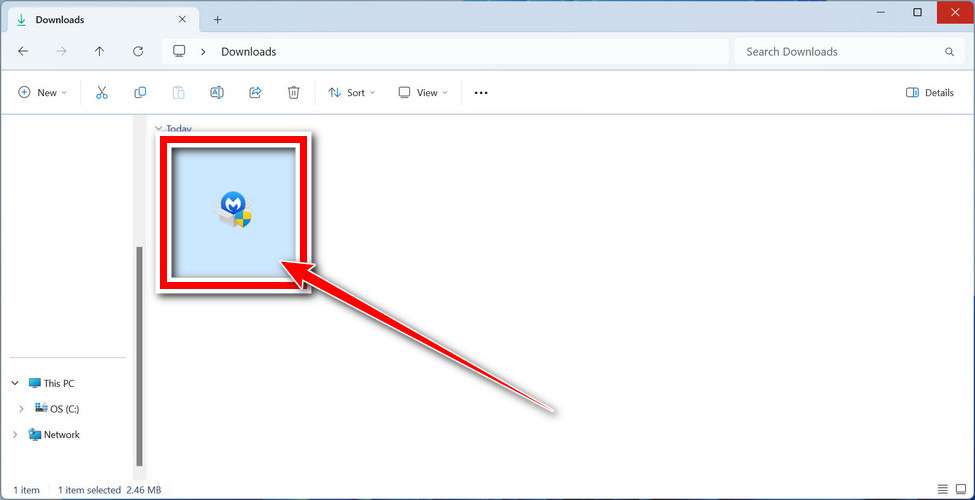
When the download finishes, open your Downloads folder and double-click the MBSetup file. If Windows shows a User Account Control pop-up, click “Yes” to allow the installation.
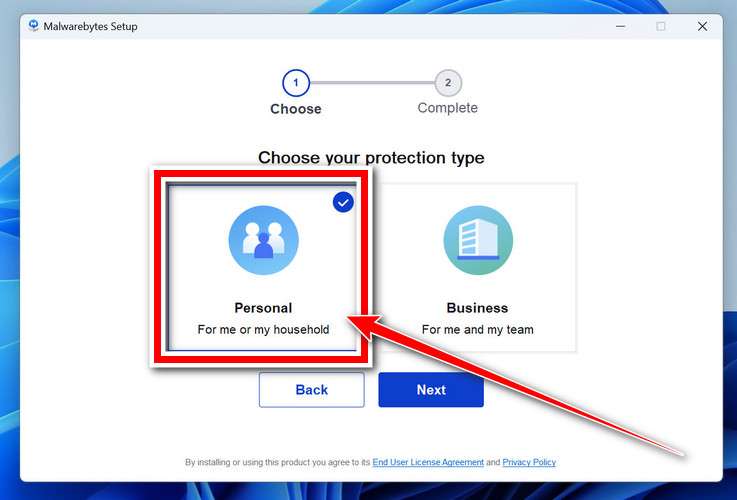
Follow the On-Screen Prompts to Install Malwarebytes
The setup wizard will walk you through a few quick screens:
Choose where you’re installing the program — “Personal Computer” or “Work Computer” — then click Next.
Malwarebytes will now install on your device. This usually takes under a minute.
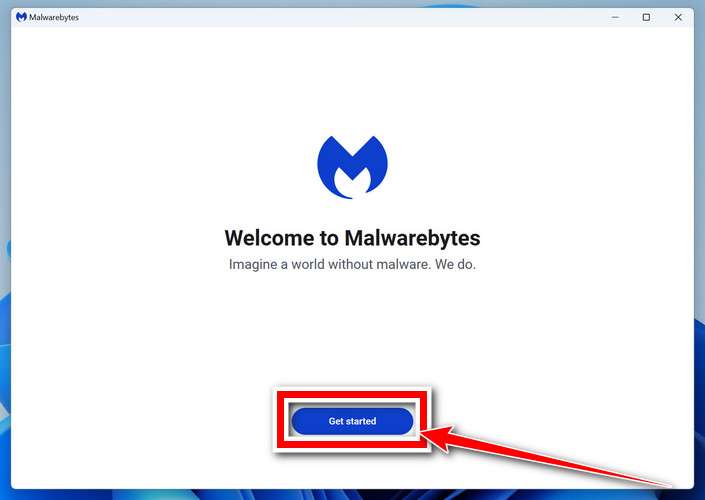
When installation is complete, the “Welcome to Malwarebytes” screen will open automatically.
On the final screen, click Open Malwarebytes to launch the program.
Enable “Scan for Rootkits”
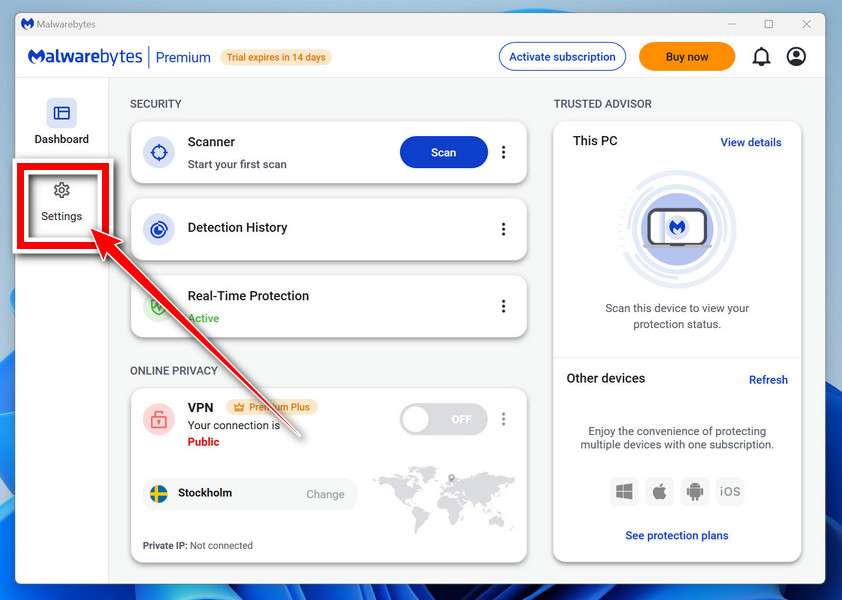
Before scanning, turn on rootkit detection so Malwarebytes can find even the most hidden threats. Click the Settings gear icon on the left side of the screen.
In the settings menu, find “Scan for rootkits” and click the toggle so it turns blue.
Done? Click “Dashboard” in the left pane to return to the main screen.
Start the Scan
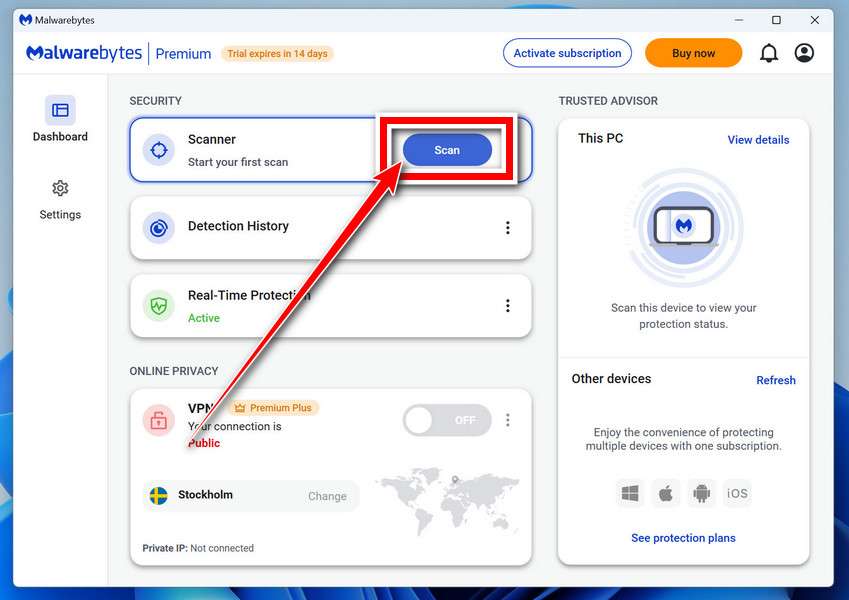
Click the blue Scan button. Malwarebytes will automatically update its virus database and start checking your computer for malware.
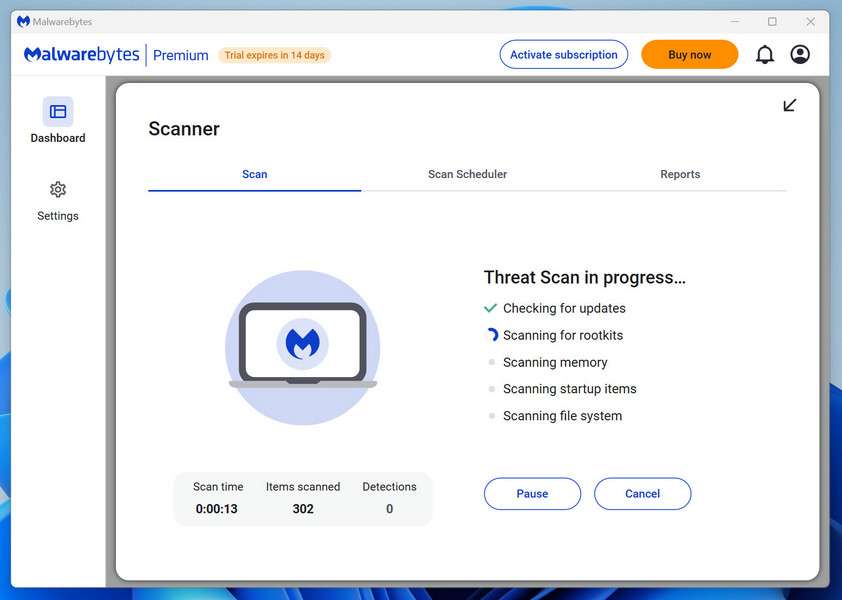
Wait for the Scan to Finish
The scan checks your entire system for browser hijackers and other malicious programs, so it can take several minutes. Feel free to do something else — just check back occasionally to see the progress.
Quarantine the Detected Threats
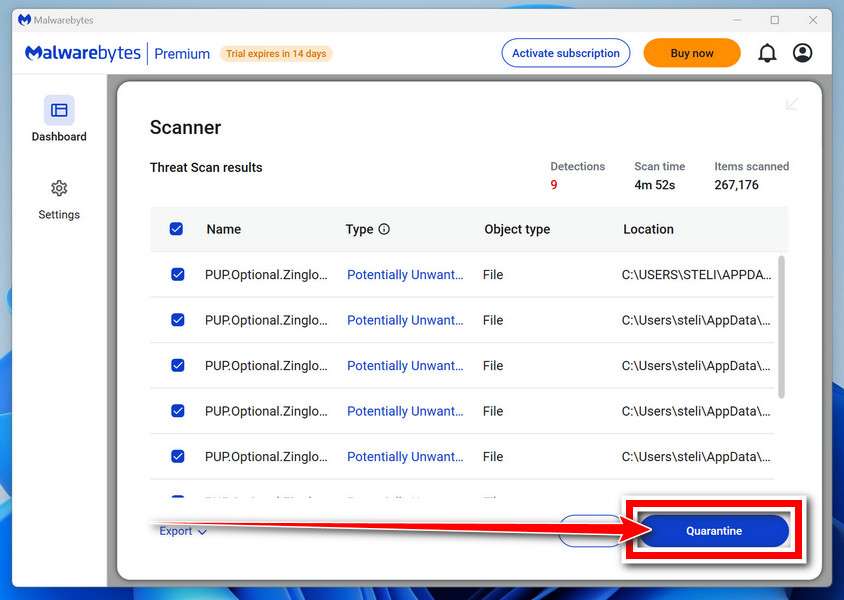
When the scan is done, you’ll see a list of everything Malwarebytes found — malware, adware, and potentially unwanted programs. Click the “Quarantine” button to remove all of them at once.
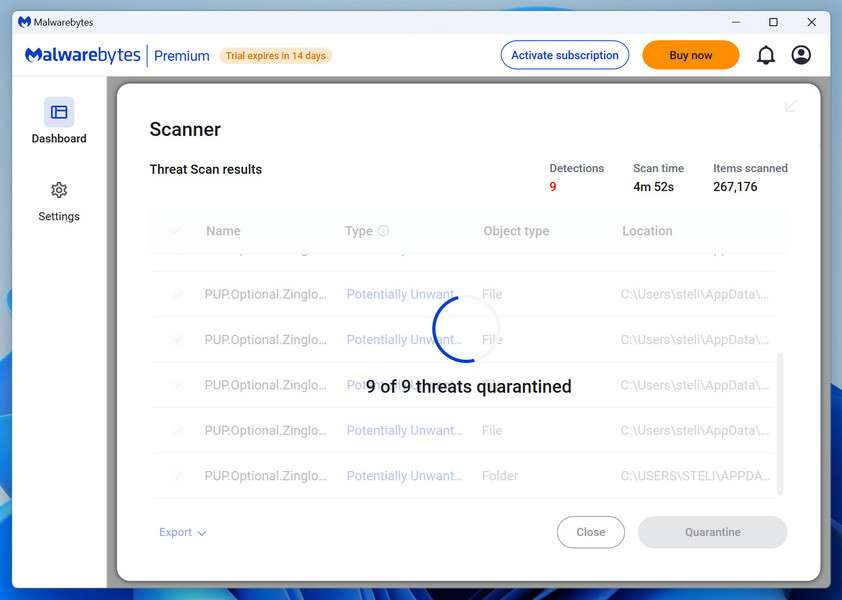
Malwarebytes will now remove the malicious files and registry entries and move them safely into quarantine.
Restart Your Computer
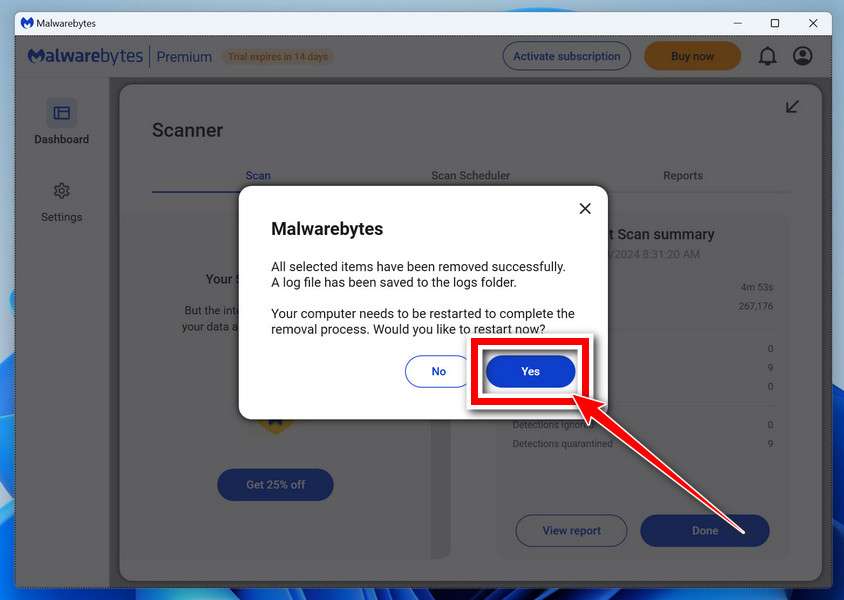
Some threats can only be fully removed after a reboot. If Malwarebytes asks you to restart, click Yes. Once you’re logged back in, your PC is clean and you can continue with the next steps in this guide.
When the scan finishes, click Quarantine to remove everything Malwarebytes found. That’s it — your Windows PC is now clean of trojans, adware, and other malware, and should be back to running smoothly.
If your current antivirus allowed this malicious program on your computer, you may want to consider purchasing Malwarebytes Premium to protect against these types of threats in the future. If you are still having problems with your computer after completing these instructions, then please follow one of the steps:
Malwarebytes for Mac is a free on-demand scanner that removes the malware other security software tends to miss — adware, browser hijackers, and unwanted programs included. Cleaning an infected Mac with Malwarebytes has always been completely free, and it’s our go-to recommendation. Follow the steps below to scan and clean your Mac in just a few minutes.
Download Malwarebytes for Mac
Click the button below to download the latest version of Malwarebytes for Mac.
When the download finishes, open your Downloads folder and double-click the setup file to begin the installation.
Follow the On-Screen Prompts to Install Malwarebytes
The Malwarebytes for Mac Installer will guide you through a few quick screens. Click “Continue” and keep following the prompts until the installation completes.
When the installation is complete, Malwarebytes opens to the Welcome to Malwarebytes screen. Click “Get started“.
Select “Personal Computer” or “Work Computer”
Malwarebytes will ask what type of computer you’re installing it on. Click either Personal Computer or Work Computer, whichever applies.
Start the Scan
Click the “Scan” button. Malwarebytes will automatically update its detection database and begin checking your Mac for malware.
Wait for the Scan to Finish
Malwarebytes will scan your Mac for adware, browser hijackers, and other malicious programs. This can take a few minutes, so feel free to do something else — just check back occasionally to see the progress.
Quarantine the Detected Threats
When the scan is done, you’ll see a list of everything Malwarebytes found. Click the “Quarantine” button to remove all the threats at once.
Restart Your Mac
Malwarebytes will now remove all the malicious files it found. Some threats can only be fully removed after a reboot — if Malwarebytes asks you to restart, allow it. Once you’re logged back in, your Mac is clean.
Once the scan is done, remove every threat it detected. Your Mac is now free of adware, rogue browser extensions, and other potentially harmful software.
If your current antivirus allowed a malicious program on your computer, you might want to consider purchasing the full-featured version of Malwarebytes Anti-Malware to protect against these types of threats in the future. If you are still experiencing problems while trying to remove a malicious program from your computer, please ask for help in our Mac Malware Removal Help & Support forum.
Run a Malware Scan with Malwarebytes for Android
Malwarebytes for Android automatically detects and removes dangerous threats like malware and ransomware so you don’t have to worry about your most-used device being compromised. Aggressive detection of adware and potentially unwanted programs keeps your Android phone or tablet running smooth.
Download Malwarebytes for Android.
You can download Malwarebytes for Android by clicking the link below.
In the Google Play Store, tap “Install” to install Malwarebytes for Android on your device.
When the installation process has finished, tap “Open” to begin using Malwarebytes for Android. You can also open Malwarebytes by tapping on its icon in your phone menu or home screen.
Follow the on-screen prompts to complete the setup process
When Malwarebytes will open, you will see the Malwarebytes Setup Wizard which will guide you through a series of permissions and other setup options. This is the first of two screens that explain the difference between the Premium and Free versions. Swipe this screen to continue. Tap on “Got it” to proceed to the next step. Malwarebytes for Android will now ask for a set of permissions that are required to scan your device and protect it from malware. Tap on “Give permission” to continue. Tap on “Allow” to permit Malwarebytes to access the files on your phone.
Update database and run a scan with Malwarebytes for Android
You will now be prompted to update the Malwarebytes database and run a full system scan.
Click on “Update database” to update the Malwarebytes for Android definitions to the latest version, then click on “Run full scan” to perform a system scan.
Wait for the Malwarebytes scan to complete.
Malwarebytes will now start scanning your phone for adware and other malicious apps. This process can take a few minutes, so we suggest you do something else and periodically check on the status of the scan to see when it is finished.
Click on “Remove Selected”.
When the scan has been completed, you will be presented with a screen showing the malware infections that Malwarebytes for Android has detected. To remove the malicious apps that Malwarebytes has found, tap on the “Remove Selected” button.
Restart your phone.
Malwarebytes for Android will now remove all the malicious apps that it has found. To complete the malware removal process, Malwarebytes may ask you to restart your device.
After the scan, tap Remove Selected to delete all detected threats. Your Android phone is now clean — no more malicious apps, adware, or browser redirects.
If your current antivirus allowed a malicious app on your phone, you may want to consider purchasing the full-featured version of Malwarebytes to protect against these types of threats in the future. If you are still having problems with your phone after completing these instructions, then please follow one of the steps:
Restore your phone to factory settings by going to Settings > General management > Reset > Factory data reset.
Now that your device is clean, keep it that way. Most infections start with a malicious ad or a fake download button — so blocking them at the source is your best defense.
We recommend AdGuard, which blocks malicious ads, phishing pages, and dangerous redirects before they can reach you.
The Microsoft Teams missed voicemail email scam is a phishing trap wrapped in a familiar work notification.
It works because real Teams voicemail can be delivered through email and accessed in Microsoft tools, which gives attackers a believable template to copy. But the scam always depends on one thing: getting you to trust the email link instead of verifying the message directly in Teams or Outlook.
If you remember one rule, make it this:
Never use the “PLAY NOW” button in an unexpected voicemail email. Open Microsoft Teams directly and check there.
10 Rules to Avoid Online Scams
Here are 10 practical safety rules to help you avoid malware, online shopping scams, crypto scams, and other online fraud. Each tip includes a quick “if you already got hit” action.
Stop and verify before you click, log in, download, or pay.
Most scams win by creating urgency. Verify using a trusted method: type the website address yourself, use the official app, or call a known number (not the one in the message).
If you already clicked: close the page, do not enter passwords, and run a malware scan.
Keep your operating system, browser, and apps updated.
Updates patch security holes used by malware and malicious ads. Turn on automatic updates where possible.
If you saw a scary “update now” pop-up: close it and update only through your device settings or the official app store.
Use layered protection: antivirus plus an ad blocker.
Antivirus helps block malware. An ad blocker reduces scam redirects, phishing pages, and malvertising.
If your browser is acting weird: remove unknown extensions, reset the browser, then run a full scan.
Install apps, software, and extensions only from official sources.
Avoid cracked software, “keygens,” and random downloads. During installs, choose Custom/Advanced and decline bundled offers you do not recognize.
If you already installed something suspicious: uninstall it, restart, and scan again.
Treat links and attachments as untrusted by default.
Phishing often impersonates delivery services, banks, and popular brands. If it is unexpected, do not open attachments or log in through the message.
If you entered credentials: change the password immediately and enable 2FA.
Shop safely: research the store, then pay with protection.
Be cautious with brand-new stores, “closing sale” stories, and prices that make no sense. Prefer credit cards or PayPal for dispute options. Avoid wire transfers, gift cards, and crypto payments.
If you already paid: contact your card issuer or PayPal quickly to dispute the transaction.
Crypto rule: never pay a “fee” to withdraw or recover money.
Common patterns include fake profits, then “tax,” “gas,” or “verification” fees. Another is a “recovery agent” who demands upfront crypto.
If you already sent crypto: stop paying, save evidence (wallet addresses, TXIDs, chats), and report the scam to the platform used.
Secure your accounts with unique passwords and 2FA (start with email).
Use a password manager and unique passwords for every account. Enable 2FA using an authenticator app when possible.
If you suspect an account takeover: change passwords, sign out of all devices, and review recent logins and recovery settings.
Back up important files and keep one backup offline.
Backups protect you from ransomware and device failure. Keep at least one backup on an external drive that is not always connected.
If you suspect infection: do not connect backup drives until the system is clean.
If you think you are a victim: stop losses, document evidence, and escalate fast.
Move quickly. Speed matters for disputes, account recovery, and limiting damage.
Stop payments and contact: do not send more money or respond to the scammer.
Call your bank or card issuer: block transactions, replace the card if needed, and start a dispute or chargeback.
Secure your email first: change the email password, enable 2FA, and remove unfamiliar recovery options.
Secure other accounts: change passwords, enable 2FA, and log out of all sessions.
Scan your device: remove suspicious apps or extensions, then run a full malware scan.
Save evidence: screenshots, emails, order pages, tracking pages, wallet addresses, TXIDs, and chat logs.
Report it: to the payment provider, marketplace, social platform, exchange, or wallet service involved.
These rules are intentionally simple. Most online losses happen when decisions are rushed. Slow down, verify independently, and use payment methods and account controls that give you recourse.
Thomas is an expert at uncovering scams and providing in-depth reporting on cyber threats and online fraud. As an editor, he is dedicated to keeping readers informed on the latest developments in cybersecurity and tech.