

A pocket-size box supposedly gives ordinary buyers repeated chances at a life-changing Bitcoin reward. The pitch turns industrial cryptocurrency mining into something resembling a home lottery.
MineOne Pro looks simple, affordable, and almost effortless. Its real value depends on numbers that receive far less attention than the enormous prize.
Overview
MineOne Pro is presented as a tiny Bitcoin miner
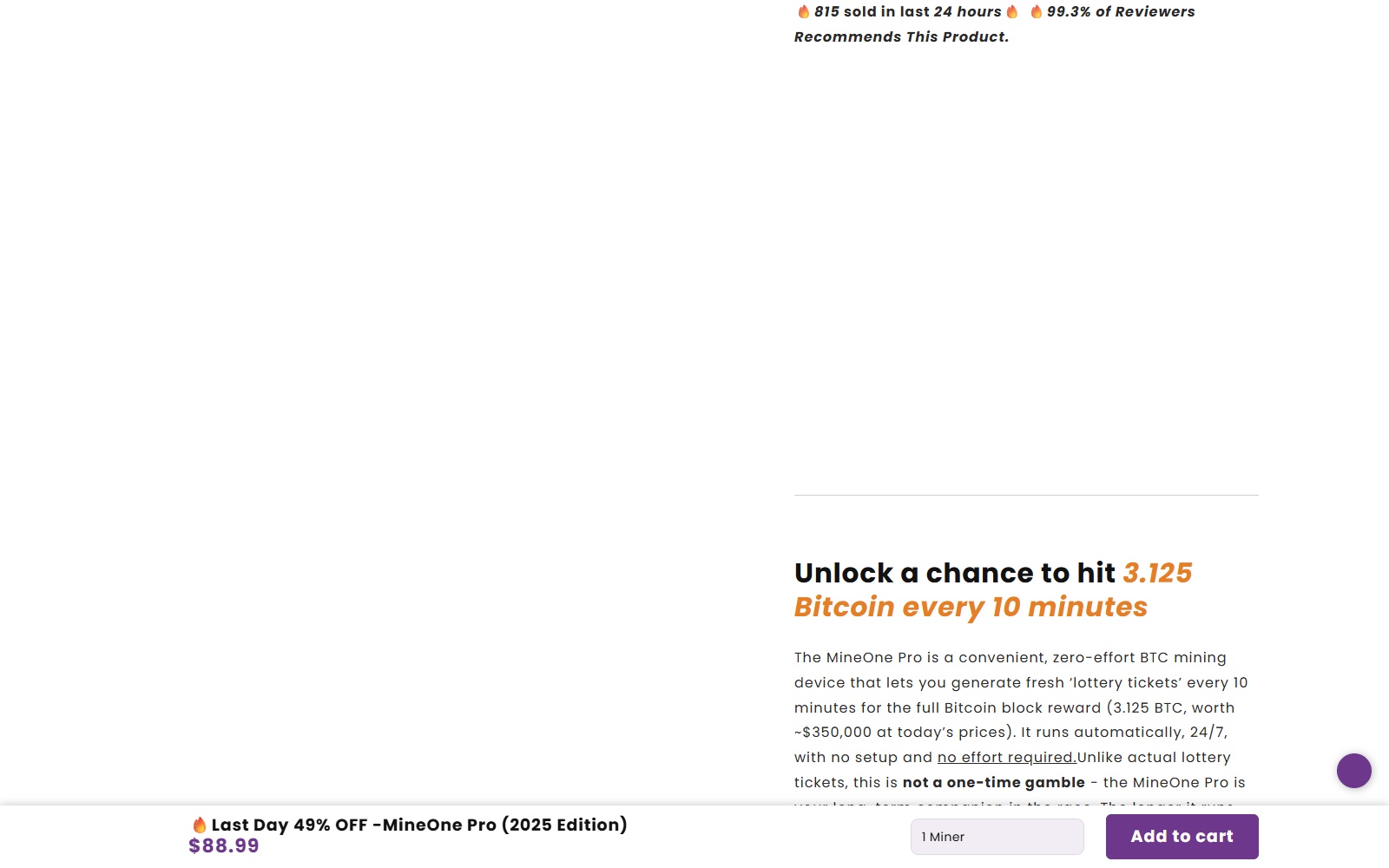
Advertisements describe the device as a zero-effort miner that runs continuously, uses less power than a nightlight, and produces a new chance every ten minutes.
The headline prize is 3.125 BTC, the block subsidy applicable before the next halving. That figure dominates the page while the probability remains abstract.
The device is closer to a lottery ticket generator
A very low-powered miner can technically submit guesses to a Bitcoin pool. That does not make it a practical income machine.
Its chance of finding a block depends on hashrate compared with the entire network. MineOne Pro’s advertised performance is microscopic beside global mining power.
The original storefront is unavailable
The MineOne Pro domain displayed a store-unavailable message during our review. An active third-party storefront still promoted the product for $88.99.
Key findings include:
- The original domain was registered on October 27, 2025
- Public ownership information was unavailable in the reviewed domain record
- The original Shopify storefront was not operating during our check
- A reseller used a last-day sale and claimed 815 recent sales
- The reseller described the reward as a chance, not guaranteed earnings
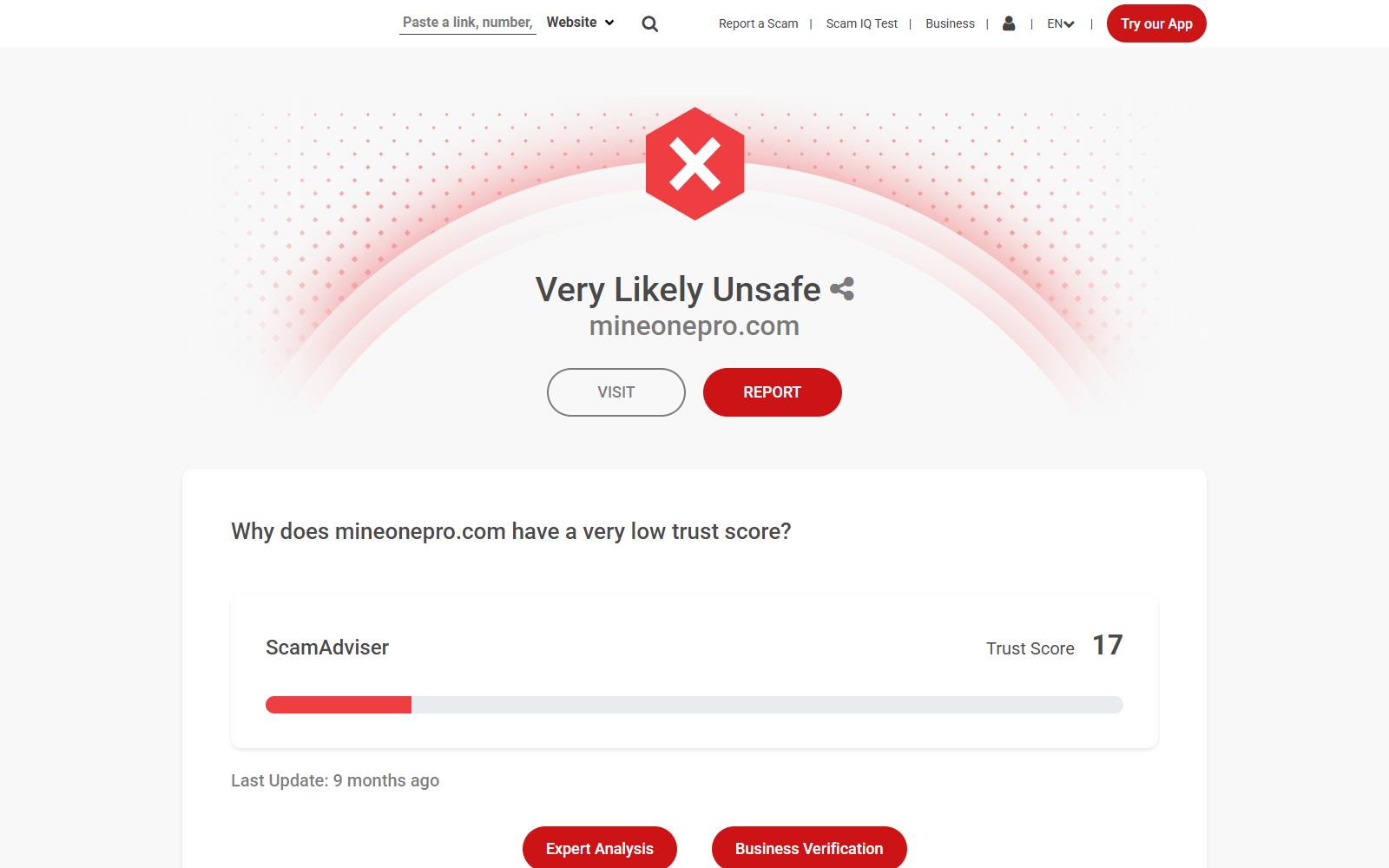
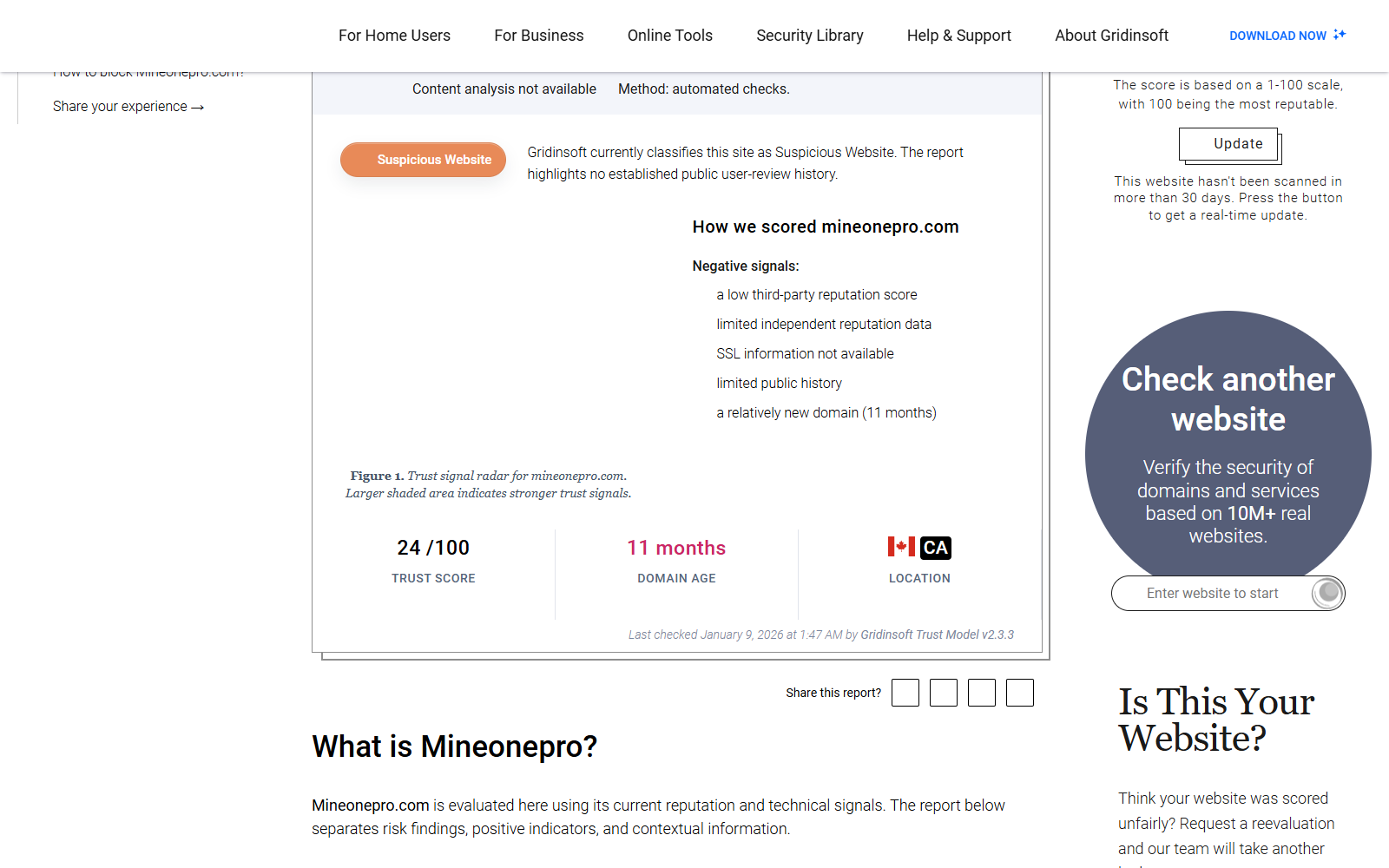
- Independent automated checks assigned low trust scores to the original domain
The device may perform real hashing. The troubling part is how its remote odds are wrapped around a giant reward and marketed as an opportunity.
What Bitcoin Mining Actually Requires
Bitcoin miners repeatedly calculate hashes while trying to produce a result below the network target. The first valid result helps create the next block.
Mining difficulty adjusts as computing power changes. The network is protected by vast collections of specialized ASIC machines operating around the world.
A miner’s chance is proportional to its share of total hashrate. Owning one machine does not provide a fixed drawing with favorable odds.
Imagine one grain of sand compared with an enormous beach. More guesses help, but the scale difference remains overwhelming.
The advertised MineOne Pro hashrate is measured in kilohashes per second. Modern Bitcoin ASIC equipment operates at trillions of hashes per second.
That gap is not a minor performance difference. A trillion is one billion times larger than a thousand.
Network hashrate is commonly measured in exahashes per second. One exahash represents one quintillion calculations each second.
Against that environment, a kilohash device contributes an almost immeasurable fraction. It can keep trying without making the expected return commercially meaningful.
Solo mining can produce a full block reward if an extraordinarily unlikely result occurs. This is technically possible, like winning an extreme lottery.
Technical possibility is not a sensible expectation. Responsible advertising should put the probability and expected value beside the headline prize.
Pool mining works differently. Many miners combine hashrate and divide rewards according to contribution, reducing variance but also making tiny contributions visibly tiny.
A legitimate pool should disclose fees, payout threshold, supported protocol, wallet requirements, and how submitted shares are recorded.
MineOne Pro advertising focuses on the block jackpot. Buyers should not confuse a dashboard counter or accepted share with earned Bitcoin.
The 3.125 BTC Claim in Context
The block subsidy became 3.125 BTC after the April 2024 halving. Miners may also receive transaction fees included in the block.
The reward is real, but it goes to the miner or pool that finds the valid block. It is not divided automatically among every device online.
A page can therefore mention a genuine prize while giving an unrealistic impression of attainability. The omitted denominator is the decisive information.
Suppose a device produces about one million hashes each second. Even that exceeds some figures associated with tiny lottery miners.
Compared with hundreds of exahashes across the network, the device’s share would still be extraordinarily small.
Network conditions change constantly, so any calculation must state its assumptions. The expected waiting time can extend far beyond ordinary human or hardware lifespans.
Electricity may be inexpensive for a tiny device, but a low energy bill does not turn negligible output into profitable mining.
The purchase price, shipping, router use, maintenance, pool fees, and hardware failure all matter when evaluating expected return.
A fair seller would provide a live calculator using disclosed hashrate, current difficulty, pool terms, power consumption, and expected earnings before costs.
It would also display a prominent warning that finding a solo block is not a realistic financial plan.
How the MineOne Pro Bitcoin Miner Scam Works
Step 1: The advertisement leads with the jackpot
Viewers first see 3.125 BTC and a repeated ten-minute interval. Those numbers sound like a recurring opportunity rather than an extreme-probability event.
The phrase “fresh lottery tickets” partially acknowledges chance, yet the prize remains visual while meaningful odds are missing.
Step 2: Technical language makes the offer feel sophisticated
Terms such as hashing, solo mining, block reward, and mining pool are real. Their presence can make the page appear educational and technically complete.
The missing comparison between device hashrate and network hashrate prevents a buyer from understanding practical value.
Step 3: Effort and energy concerns are neutralized
The product is described as automatic, quiet, and less demanding than a nightlight. Buyers are told they need no expertise or ongoing work.
This shifts attention away from profitability. Easy operation does not improve the probability of discovering a block.
Step 4: Social proof and urgency reduce hesitation
The active reseller displayed a last-day discount, a high recommendation rate, and hundreds of recent sales. We could not independently verify those counters.
Dynamic popularity messages can create fear of missing out. They should never replace verifiable company history, customer reviews, or technical benchmarks.
Step 5: Buyers are routed through changing stores
The original storefront was unavailable during our review, while another retailer carried the same offer. This complicates accountability and post-purchase support.
A buyer may research the product name but pay an entirely different merchant. Return rights depend on the actual seller named at checkout.
Step 6: A narrow guarantee limits practical recovery
The reseller’s displayed guarantee covered items arriving damaged or becoming defective within 15 days of normal use.
That wording does not promise a refund because mining returns were disappointing. A working device can still be economically useless.
Why a Working Device Can Still Be a Bad Deal
A scam investigation should not depend on proving the box is empty. A device may blink, connect, and calculate hashes exactly as designed.
The consumer harm can arise from presentation. A remote chance is magnified, expected value is obscured, and a speculative gadget resembles passive income.
Dashboards can reinforce the illusion. Numbers updating on a screen feel productive even when they represent attempts rather than withdrawable earnings.
Some systems award tiny pool balances that never reach the minimum withdrawal threshold. Ask for the threshold before buying.
Wallet setup introduces another risk. Never give a seller a seed phrase, private key, exchange password, or remote access to a computer.
A miner only needs a public receiving address. Anyone requesting secret recovery words can take the entire wallet.
Beware of activation fees, tax fees, withdrawal fees, or account upgrades demanded after a supposed reward appears.
Real Bitcoin transactions and mining payouts do not require sending cryptocurrency to “unlock” money already belonging to you.
Firmware also deserves scrutiny. Unknown hardware on a home network can create privacy and security exposure, especially when updates come from an unavailable website.
Place untrusted internet-connected devices on a separate guest network. Do not expose router administration or reuse important passwords.
Before purchasing any miner, compare its disclosed hashrate with an established profitability calculator and current network data.
If the expected output appears as many zeros, understand that first. Do not let a block-reward headline substitute for arithmetic.
A Simple Expected-Value Check Before Buying
Ignore the prize for a moment and write down the device’s verified hashrate. Marketing names such as Pro or Turbo are not measurements.
Next, obtain the current Bitcoin network hashrate and difficulty from an established blockchain data provider. Record the date because both values change.
Use a reputable mining calculator that supports the correct algorithm. Enter hashrate, power draw, electricity cost, pool fee, and purchase price.
If the calculator rounds expected daily earnings to zero, request greater numerical precision. A tiny nonzero output can still be economically meaningless.
For solo mining, calculate expected waiting time rather than staring at the block reward. A result measured in geological timescales is not income.
Then compare the hardware price with simply buying Bitcoin through a regulated service available in your jurisdiction.
Buying Bitcoin carries price risk, but it avoids pretending that negligible hashrate creates a reasonable chance at a block.
Check pool payout thresholds. A device might accrue theoretical fractions without ever reaching an amount the pool will send.
Confirm whether the device mines Bitcoin’s SHA-256 algorithm directly. Some misleading products mine another asset while advertising a Bitcoin-denominated outcome.
Ask whether the pool can change fees, withhold inactive balances, or close accounts. Read its terms separately from the hardware store.
Include failure probability. A cheap unbranded device with no firmware support may stop working long before any meaningful payout.
Finally, treat entertainment value honestly. A novelty miner can be educational, but education should not be priced or promoted as wealth generation.
Company, Address, and Fulfillment Checks
The original seller is difficult to verify
The original domain had hidden ownership information and a short operating history. Its store was unavailable when checked.
That does not identify who accepted earlier payments, maintains firmware, honors warranties, or handles complaints after the storefront disappears.
The reseller is a separate merchant
The active listing provided a Radivita Store support email. Buyers should not assume the reseller and MineOne Pro brand are the same legal entity.
Record the merchant name, billing descriptor, return country, and warranty provider before payment. Each may be different.
The return promise is unusually narrow
The captured guarantee mentioned damage or defects within 15 days. It did not clearly cover dissatisfaction with hashrate or reward probability.
Request confirmation that opened devices can be returned, along with authorization, postage responsibility, restocking fees, and inspection timing.
Fulfillment says nothing about profitability
A warehouse can deliver a functioning novelty miner without validating the wealth message. Shipping records prove delivery, not expected income.
Ask who manufactured the hardware, who signs the firmware, what pool it contacts, and how long security updates will continue.
What to Do if You Have Fallen Victim to This Scam
- Stop sending additional money. Do not pay activation, withdrawal, tax, upgrade, wallet-verification, or recovery charges connected with a promised Bitcoin reward.
- Secure your wallet. If you revealed a seed phrase or private key, create a fresh wallet on a trusted device and move remaining assets immediately.
- Isolate the hardware. Disconnect the miner from your primary network. Change router credentials if you exposed administrative access during setup.
- Preserve technical evidence. Photograph the device, packaging, serial number, labels, advertised hashrate, dashboard, pool address, order page, and every message.
- Request a return in writing. Contact the merchant within the shortest stated deadline. Ask for authorization, destination, tracking rules, and a precise refund date.
- Challenge a misrepresented charge. Tell the card issuer what the advertisement promised, what arrived, and why the omitted probability or specifications mattered.
- Review the payment destination. Identify the card descriptor, PayPal merchant, cryptocurrency address, or intermediary that actually received funds.
- Scan affected computers. If setup required unknown software, remote access, or downloads, run Malwarebytes and remove suspicious applications or browser extensions.
- Reduce follow-up ads. AdGuard can block many malicious advertisements and trackers. Remove browser notification permissions granted during the purchase.
- Report the promotion. Send evidence to the advertising platform, FTC, payment service, hosting provider, and marketplace carrying the listing.
Frequently Asked Questions
Can MineOne Pro technically mine Bitcoin?
A small device can calculate hashes and connect to compatible mining infrastructure. That does not make its expected earnings meaningful or profitable.
Will it earn 3.125 BTC every ten minutes?
No. The network creates approximately one block around that interval. Only the successful miner or pool receives the block reward.
Why does the page call it a lottery?
Solo mining involves chance. The comparison is appropriate only when buyers also receive an honest explanation of the extraordinarily unfavorable odds.
Is low electricity use an advantage?
It lowers operating cost, but it commonly reflects very low computing power. Efficiency alone cannot compensate for negligible hashrate.
Why is the unavailable original store important?
It raises questions about warranty, firmware, refunds, and accountability. A reseller listing does not restore the original operator’s transparency.
What information should a legitimate miner seller provide?
Expect exact hashrate, power draw, pool compatibility, fees, payout threshold, network assumptions, warranty, manufacturer, firmware policy, and an identifiable legal seller.
The Bottom Line
MineOne Pro takes a genuine Bitcoin reward and places it beside a tiny device without giving equal prominence to the overwhelming odds against success.
The original store’s disappearance, young domain, rotating seller, urgency messages, and narrow guarantee add commercial risk to an already poor value proposition.
Treat it as a speculative novelty, not passive income. Never buy until the seller provides verifiable hashrate, realistic expected returns, company identity, and enforceable return terms.








