

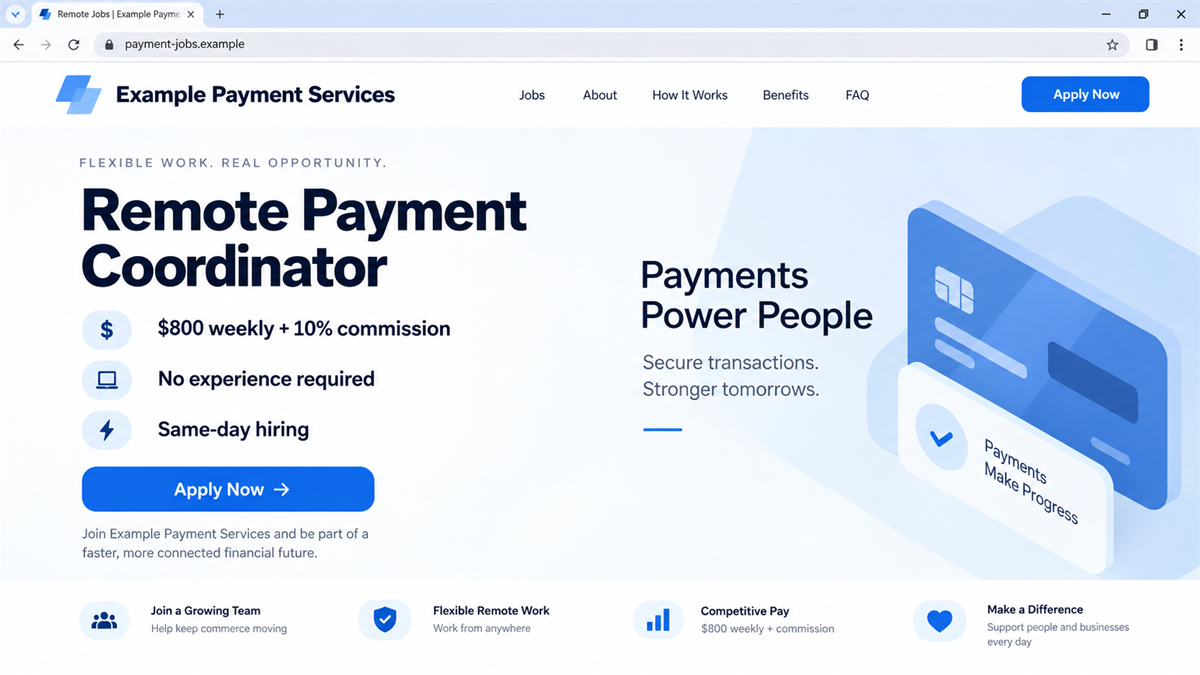
The job description sounds almost frictionless. Work from home, keep a commission, and spend a few minutes each day receiving payments, buying gift cards, forwarding packages, or moving funds for an international company.
The recruiter may call it payment processing, quality control, regional finance, or logistics support. The first transfer can even make the job feel real because actual money appears in the applicant’s account.
What the listing does not explain is where that money came from, why the company cannot move it itself, and whose name will appear when investigators follow the trail.
Overview
What a money mule does
A money mule receives and transfers money or valuables connected to fraud. Some participants know they are assisting criminals. Others believe they accepted a legitimate job, favor, romance request, prize arrangement, or business opportunity.
The mule creates distance between the original victim and the people running the scheme. Bank records may point first to the mule’s account, address, device, or identity rather than the organizer.
How job seekers are recruited
The United States Postal Inspection Service warns that criminals recruit through work-from-home offers involving reshipping packages, buying gift cards or Postal Money Orders, or transferring money.
Other routes include social media offers promising a commission, romance contacts asking for help, and prize schemes that require the recipient to accept or forward funds.
The risk is larger than losing a paycheck
The applicant may lose money, expose identity documents, and become responsible for a negative balance. They may also face account closure, frozen funds, tax problems, damaged credit, or a criminal investigation.
- A legitimate employer does not need a new hire’s personal bank account to move customer funds.
- A check that appears available can still be reversed later.
- Keeping a commission does not make stolen money lawful.
- Reshipping packages can move goods purchased with stolen payment details.
- Buying gift cards or cryptocurrency destroys many normal payment protections.
- Stopping early and reporting quickly can limit further harm.
The Money Is Real, but the Job Is Not
Money mule recruitment is persuasive because one part of the arrangement may work exactly as promised. A payment arrives. A package is delivered. The recruiter sends instructions and responds to questions.
That activity is not proof of employment. It may be proof that the applicant has become useful to a fraud network.
The source of the funds can be a phishing victim, romance scam victim, fake invoice payment, account takeover, stolen card, or another mule. The recruiter wants the new participant to convert or forward the value before the original fraud is detected.
The official Postal Inspection Service money mule warning, updated September 8, 2026, says that some mules do not realize their activity benefits criminals. It specifically warns against jobs that require receiving or sending money or packages.
A professional title cannot change the function. “Payment agent,” “financial coordinator,” and “regional representative” can all describe the same request: use your identity and account to move someone else’s money.
How the Money Mule Job Scam Works
Step 1: A remote job promises easy commission
The listing may appear on social media, a job board, a messaging app, or an unsolicited email. It emphasizes flexible hours, no experience, immediate hiring, and pay that seems generous for routine work.
The company name may be invented or copied from a real business. A real name found in a registry does not prove that the recruiter represents it.
Step 2: A fast interview creates the appearance of hiring
The interview may happen entirely through chat. Questions are simple, approval arrives quickly, and the recruiter sends an offer letter, employee form, or portal link.
The applicant may provide a driver’s license, Social Security number, bank details, address, and selfie. That information can support identity theft even if no money is ever moved.
Step 3: The role changes into handling funds or packages
The recruiter explains that the company needs a local representative because of banking delays, overseas clients, account limits, or a temporary system problem. The employee must use a personal account until a business account is supposedly arranged.
In a reshipping version, packages arrive at the applicant’s home and must be inspected, relabeled, and sent elsewhere. In a payment version, funds arrive and must be forwarded after the applicant keeps a percentage.
Step 4: Urgency moves the value before fraud is detected
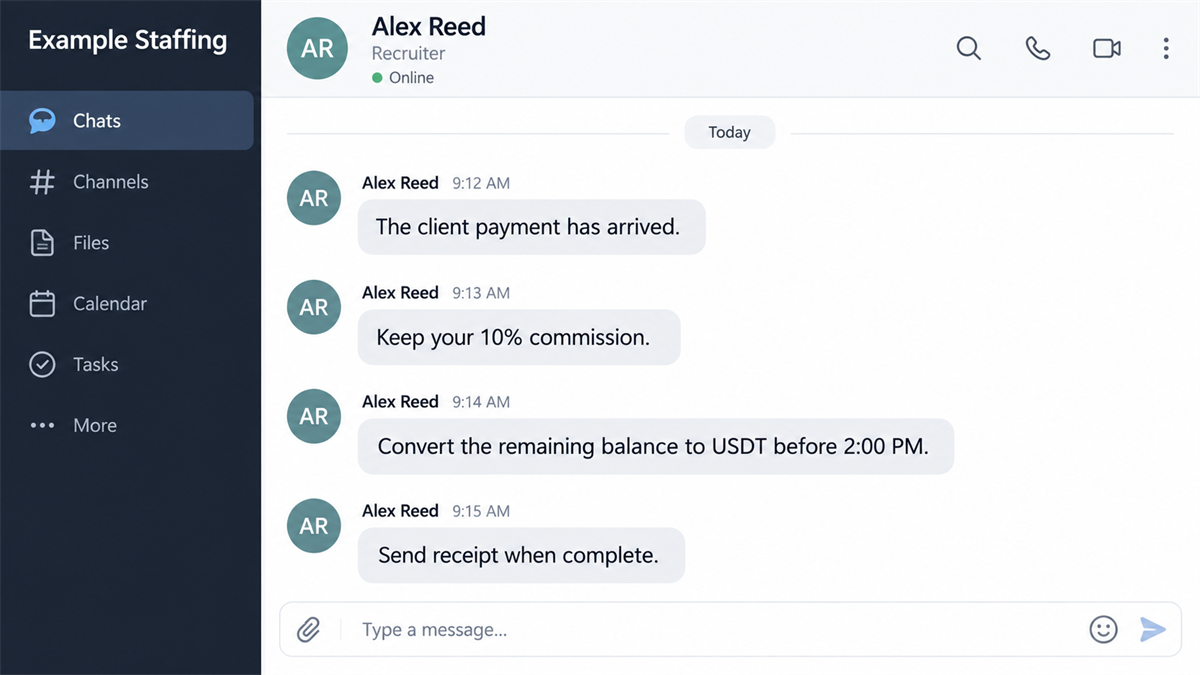
The recruiter insists that the transfer must happen the same day. The mule may be told to buy cryptocurrency, gift cards, money orders, or send a wire to a vendor.
Speed matters because the original victim or bank may soon identify the transaction. Once the money has been converted and forwarded, it becomes harder to recover.
Step 5: The first payment is reversed
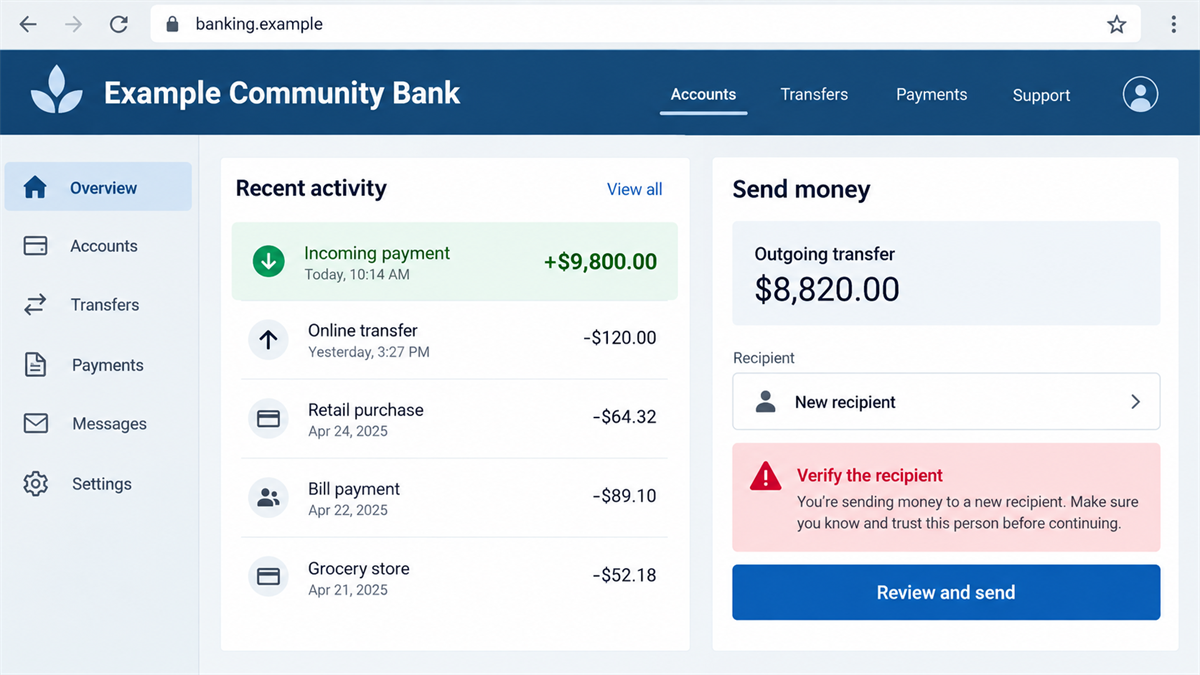
A bank may make funds temporarily available before discovering that a check is counterfeit or a transfer was unauthorized. When the payment is reversed, the outgoing transfer made by the mule remains real.
The account can become overdrawn. The bank may freeze or close it while investigating. The recruiter then disappears or claims another payment will repair the problem.
Step 6: The mule is left facing the consequences
Investigators and financial institutions see the mule’s verified identity, account, IP address, shipping records, and transactions. The organizer may have used disposable accounts and stolen names.
Even an unwitting participant may need to explain their conduct, repay losses, respond to account restrictions, and repair identity damage. Continuing after recognizing the warning signs can make the situation worse.
Common Versions of Money Mule Recruitment
The job version is only one route. The same request can be wrapped in a relationship, prize, charity, investment, or favor.
- A remote employer asks the worker to process customer payments.
- A “package inspector” receives goods and reships them overseas.
- A romance contact cannot access their own money and needs temporary help.
- A social media contact offers a percentage for using an existing bank account.
- A fake charity asks a volunteer to collect and forward donations.
- A lottery operator sends money and asks the winner to pay agents or fees.
- A supposed investor wants cash converted into cryptocurrency.
MalwareTips has examined a closely related package inspector job scam. The boxes are different from bank transfers, but the worker’s role is similar: provide a real identity and address that hides the people directing the operation.
The deposit or package can be genuine even when the job is fake. That is what makes money mule recruitment more convincing than an offer that only asks for an upfront fee.
The funds may come from a compromised bank account, a romance-scam victim, a business email compromise, or another person who was tricked into paying an invoice. The recruiter does not need to send its own money.
A check can also appear in the account before the bank has finished verifying it. Available funds are not the same as a final, irreversible payment. When the check is returned, the transfer made by the applicant may already be gone.
Packages follow the same logic. The boxes may contain real phones, electronics, or gift cards bought with stolen cards. Reshipping them removes the criminal’s address from the delivery chain and places the applicant’s name on the parcel.
The promised commission is meant to make the task sound like ordinary processing work. In reality, a legitimate employer does not need a new worker’s personal account or home address to hide the flow of company money and goods.
Do not test the job with one transaction. A small transfer can still connect your account to stolen funds, trigger an account restriction, or expose you to another demand after the recruiter learns you will cooperate.
If money has already arrived, leave it untouched and call the bank’s fraud team. Sending it back to instructions supplied by the recruiter can move it to a different criminal-controlled account and make the record harder to unwind.
Red Flags in a Payment Processing Job
Stop when the work begins to involve your personal financial accounts. An employer’s inability to receive its own customer payments is not a normal problem for a new hire to solve.
- The recruiter contacts you from a free email or messaging account.
- Hiring occurs without a meaningful video or in-person interview.
- The salary is unusually high for a few hours of simple work.
- The company needs your personal bank, payment-app, or crypto account.
- You must keep a percentage and forward the rest.
- The recruiter sends a check for equipment and names the vendor.
- Packages arrive under different names or from unrelated retailers.
- You must remove invoices, change labels, or ship outside the country.
- The recruiter insists on gift cards, cryptocurrency, or money orders.
- You are told not to explain the arrangement to the bank.
Company and Checkout Checks
Contact the employer outside the application
Find the company’s official website and call a published number. Ask whether the role, recruiter, and email address are genuine. Do not use contact details contained in the job offer.
Verify the legal company and role
Search the relevant business registry, but remember that scammers copy real registrations. Compare the domain, address, staff, vacancy, and hiring process with information controlled by the company.
Reject personal-account payment duties
A legitimate employer should provide controlled business systems for company funds. Do not deposit checks, receive transfers, buy cryptocurrency, or forward money through a personal account.
Inspect every package and payment explanation
Ask why the company cannot ship directly, why recipient names change, and why goods must be relabeled. If the explanation depends on secrecy, speed, or avoiding the bank’s questions, stop.
What to Do if You Have Fallen Victim to This Scam
- Stop moving money and packages. Do not complete the next transfer, purchase, or shipment, even if the recruiter threatens penalties.
- Contact your bank immediately. Explain that your account may have been used in a money mule scheme. Ask the bank to review incoming and outgoing transactions and secure the account.
- Do not send money back yourself. Let the bank handle reversals and recalls. A direct “refund” requested by the recruiter may send more money to the criminal.
- Preserve all evidence. Save the job listing, offer letter, recruiter profiles, chats, email headers, checks, account details, shipping labels, tracking numbers, and receipts.
- Hold unopened packages safely. Ask law enforcement or the carrier for instructions. Do not forward, sell, or dispose of goods connected to the scheme.
- Report the recruitment. Contact local law enforcement and the appropriate national fraud authority. The Postal Inspection Service accepts reports when the mail is involved.
- Protect your identity. If onboarding documents were shared, place appropriate fraud alerts or freezes, monitor credit, and contact issuing agencies.
- Secure and scan your devices. Change passwords from a clean device. If you installed hiring or payment software, Malwarebytes can help check for credential stealers and remote-access tools.
AdGuard can reduce exposure to malicious job ads, tracking links, and known phishing pages. It cannot identify whether a money transfer job is lawful, so the personal-account rule remains the clearest protection.
How to Explain the Situation to Your Bank
Be direct. Say that you accepted what appeared to be a job and were instructed to receive or forward money. Identify every transaction connected to the recruiter.
Do not minimize the commission or hide a transfer because you are embarrassed. The bank needs the complete path to protect the account and trace the funds.
Provide the recruiter’s names, phone numbers, email addresses, account details, wallet addresses, and instructions. Tell the bank whether you shared credentials or allowed remote access.
If the account is restricted, cooperate with the review and keep written records of every conversation. Account access may not be restored immediately, but continuing to move money will not solve the problem.
Frequently Asked Questions
Can someone be a money mule without knowing it?
Yes. Authorities recognize that some people are recruited through fake jobs, romance scams, and other deceptive stories. Stop and report the activity as soon as you realize what may be happening.
Is it safe if I only keep a small commission?
No. The size of the commission does not change the source of the money or the role your account plays in moving it.
What if the check already cleared?
Available funds are not final proof that a check is genuine. Contact the bank and do not spend or forward the money.
Can a real company ask me to use my own account?
A legitimate employer should not route customer funds through a new employee’s personal account. Verify the request with the company independently and refuse it.
What should I do with packages at my home?
Stop shipping them. Preserve labels and messages, then ask the carrier or law enforcement how the items should be handled.
Will reporting protect me from every consequence?
No outcome can be guaranteed, but stopping quickly, preserving evidence, and reporting honestly are far safer than continuing or trying to hide the activity.
The Bottom Line
A money mule job turns a real applicant, bank account, or address into cover for a fraud network. The commission is bait, not legitimate pay.
Never accept work that requires moving company money or packages through your personal accounts and home. If it has already started, stop immediately, contact the bank, preserve the record, and report what happened.

Join the discussion
0 commentsShare your experience or ask a question about this article.
Discussion
Start the conversation
Have a question or something useful to share? Add the first comment.