

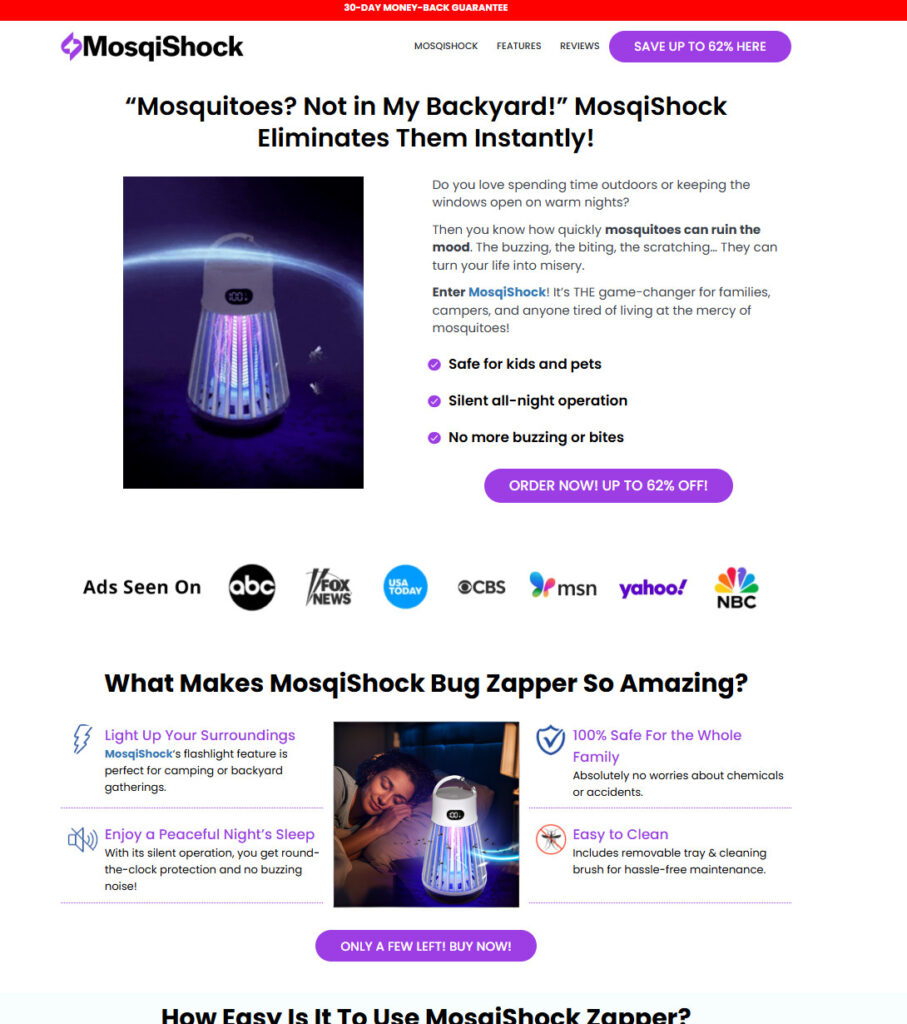
You may have seen MosqiShock advertised on social media, in pop-up ads, or even on websites claiming celebrity endorsements. It promises an almost magical solution: a portable mosquito zapper that eliminates pests instantly using UV light. The product claims to be silent, safe for children and pets, and able to protect large outdoor areas with zero chemicals. Sounds like the ultimate summer must-have, right?
But before you click “Order Now,” it’s crucial to dig deeper. Is MosqiShock really the miracle it claims to be, or just another cleverly marketed gadget in the booming world of dropshipping scams? This article takes a thorough, unbiased look at MosqiShock—from how it works to whether it’s a scam, and what to do if you’ve already been duped.
The Truth Behind the Buzz
MosqiShock is marketed as a groundbreaking solution to summer’s most annoying problem: mosquitoes. But a closer examination reveals red flags that shouldn’t be ignored. Here’s a detailed breakdown of why the product—and the way it’s being sold—raises serious concerns.
1. Unrealistic Product Claims
The MosqiShock website makes several bold promises:
- Kills mosquitoes instantly with UV light
- Covers an area of up to 165 feet
- Safe for kids and pets
- Works silently all night
- 62% off limited-time deals with urgency-driven sales tactics
While these sound impressive, most entomologists and pest control experts agree that UV light is not highly effective at attracting mosquitoes. Unlike moths and other bugs, mosquitoes are primarily attracted to carbon dioxide and body heat—traits no lamp, no matter how bright, can replicate.
2. Questionable Science
According to studies from the American Mosquito Control Association and Colorado State University Extension, bug zappers are largely ineffective against mosquitoes. These devices often kill beneficial insects like bees and butterflies while having minimal impact on the actual mosquito population. The claim that MosqiShock can protect a 165 ft area is particularly dubious, given that most high-end mosquito traps cover only 20-50 ft effectively.
3. Suspicious Product Origins
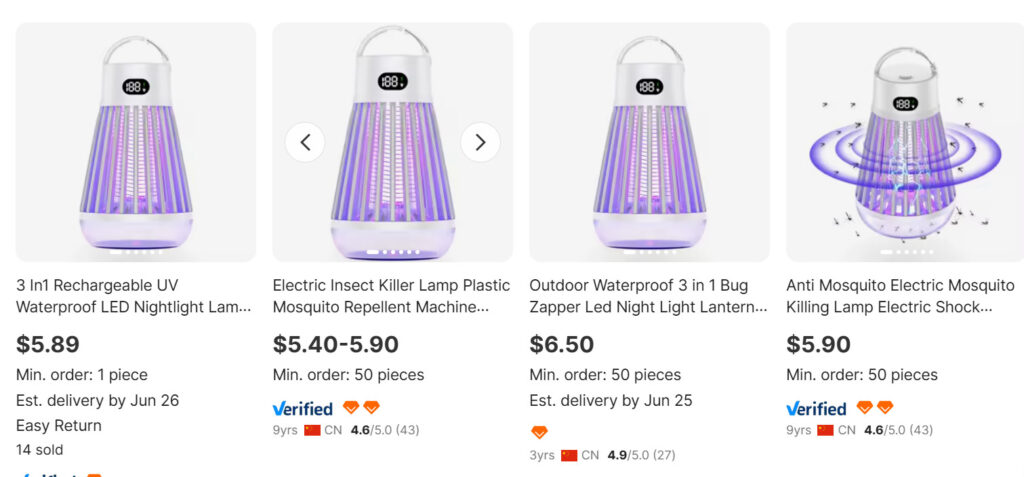
Identical-looking devices are widely available on Alibaba and other Chinese wholesale sites for around $5-$6. These devices are generic and often sold under a variety of brand names. MosqiShock is simply one of many brands slapping a new label and inflated price on a cheap import.
For example, you can buy the same model under names like:
- 3-in-1 Rechargeable UV Lamp
- Outdoor Waterproof Bug Zapper
- Electric Insect Killer Lamp
4. Fake Scarcity and Pressure Tactics
The MosqiShock site often displays warnings like:
- “Only a few left!”
- “Order now! Up to 62% off!”
- “Offer expires in 10 minutes!”
These are classic marketing gimmicks used in dropshipping operations to pressure consumers into making impulsive decisions. The product is not in limited supply; it’s mass-produced and readily available on wholesale platforms.
5. Misleading Endorsements
MosqiShock claims to be “As Seen On” major media outlets such as ABC, Fox News, CBS, and USA Today. But there’s no verifiable evidence that any of these organizations have reviewed or endorsed the product. This is a common scam tactic used to build fake credibility.
6. Stolen Product Images and Reviews
Many of the customer photos and testimonials on the MosqiShock website are stock images or reused content from other websites. A reverse image search shows that these pictures have appeared in unrelated contexts, which severely undermines their authenticity.
7. Untraceable Company Information
The website often lacks transparent contact information. There’s no business address, no real customer service number, and no details about the parent company. This is a telltale sign of a fly-by-night operation designed to vanish when refund claims or chargebacks start pouring in.
8. Inflated Pricing for a Generic Product
MosqiShock is often sold for $39.99 or more, even with supposed “discounts.” Yet, the exact same product—with identical specs and features—is available on Alibaba and AliExpress for a fraction of the cost. The markup is astronomical and unjustified.
How the Scheme Works
To understand how the MosqiShock scheme operates, you need to see the process from start to finish. Here’s a detailed look at how consumers are lured into overpaying for a product that underdelivers.
Step 1: Attention-Grabbing Ad Campaigns
The scam begins with slick online ads. These are often seen on social media platforms like Facebook, Instagram, and YouTube. The ads show the device zapping bugs in dramatic slow-motion, paired with glowing testimonials. They promise a “chemical-free” miracle that every household needs.
Step 2: Redirect to a Standalone E-commerce Site
Clicking the ad leads you to a professional-looking website filled with:
- Fake reviews
- Countdown timers
- Big discounts
- Bold claims like “Instant mosquito control”
The site is designed to create a sense of urgency and push you toward a quick purchase.
Step 3: Misleading Product Information
The product descriptions are loaded with exaggerated claims and pseudo-scientific jargon. Terms like “UV-powered precision” or “165-ft range” sound technical but lack any scientific backing. They prey on consumers who may not question the feasibility of such features.
Step 4: Inflated Pricing and Fake Discounts
The site usually shows a “regular price” of $79.99 slashed down to $39.99 or less, claiming you’re getting a 50%+ discount. In reality, the product costs about $5 to $6 on wholesale platforms. This pricing tactic is designed to manipulate the buyer into thinking they are scoring a huge deal.
Step 5: Order Placement and Dropshipping Fulfillment
Once an order is placed, the site forwards the request to a Chinese supplier. This is known as dropshipping: the seller never actually handles the product. It is shipped directly from the supplier to your address, often taking weeks to arrive.
Step 6: Poor Quality or Misleading Delivery
When the product finally arrives, it’s usually:
- Smaller than expected
- Made of flimsy plastic
- Less effective than advertised
- Missing promised features like “silent operation”
In some cases, customers report receiving damaged or non-functioning units.
Step 7: Customer Service Nightmare
Trying to get a refund or support is a challenge. The site may:
- Offer only partial refunds
- Require you to ship the item back to China at your own cost
- Ignore emails and messages
By this point, the seller has already made a profit and is likely preparing to shut down and rebrand under a new name.
What To Do If You’ve Fallen Victim to the MosqiShock Scam
If you suspect you’ve been scammed by MosqiShock or a similar operation, don’t panic. Here’s a step-by-step guide to take control of the situation.
1. Contact Your Bank or Credit Card Company
Immediately report the transaction and request a chargeback. Most credit card providers offer fraud protection, especially if you act within 30-60 days.
2. Report the Scam
Notify the following organizations:
- Federal Trade Commission (FTC): www.reportfraud.ftc.gov
- Better Business Bureau (BBB): www.bbb.org
- Internet Crime Complaint Center (IC3): www.ic3.gov
3. Leave Reviews
Share your experience on platforms like:
- Trustpilot
- Sitejabber
- Reddit scam forums
This can help warn other consumers.
4. Dispute Through PayPal (If Applicable)
If you paid via PayPal, open a dispute within the resolution center and escalate the case. Many consumers report better refund outcomes with PayPal than with the vendors themselves.
5. Monitor Your Accounts
If you shared any personal data, be on the lookout for suspicious activity on your accounts. Consider updating your passwords and enabling two-factor authentication.
6. File a Mail Fraud Complaint
If you received the product via USPS, you can file a complaint through the U.S. Postal Inspection Service at www.uspis.gov.
7. Educate Others
Share this article and your story on social media or with friends and family. Raising awareness is one of the most powerful tools against scams.
The Bottom Line
MosqiShock is a textbook example of a dropshipping scam built around a cheap, mass-produced product. While it may zap a few bugs in a small indoor space, it falls far short of its bold promises. The exaggerated marketing, fake urgency, and inflated pricing all point to a business model designed to deceive.
If you’re truly looking for effective mosquito control, consider science-backed solutions like EPA-registered repellents, mosquito nets, or professional pest control services. And always research before buying into too-good-to-be-true claims.
Stay sharp, question the hype, and shop smart.








