

A familiar television name appears beside a startling promise about burning feet. The page suggests a simple answer has been hiding in plain sight.
That is exactly the moment to slow down. Before a health story becomes an order, look closely at who is speaking and what they actually prove.
Overview
The story this promotion tells
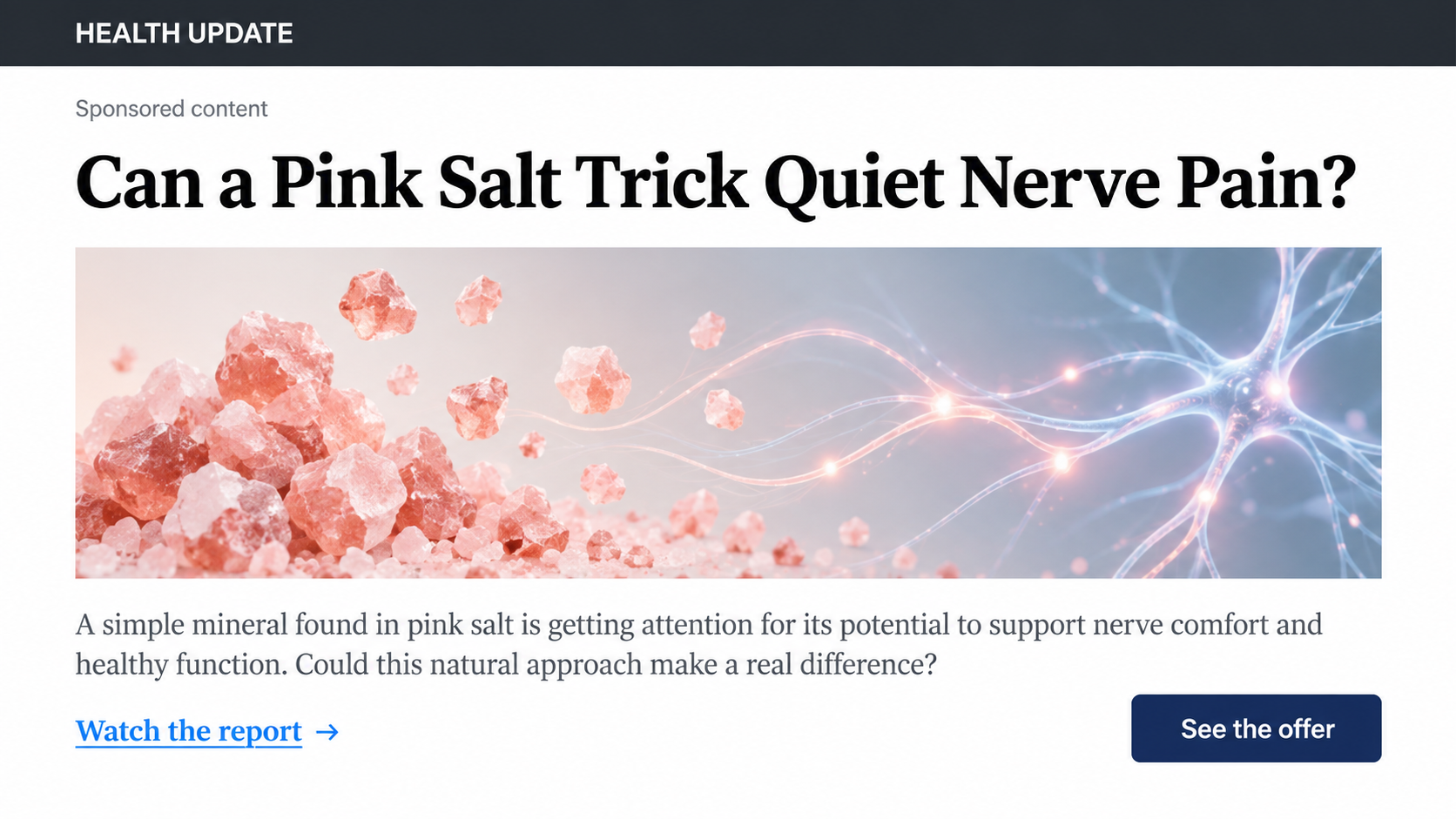
A NervoFlow page presents a pink salt nerve pain story under a generic health-news design. It names Dr. Oz and says an FDA-approved salt recipe can quiet nerve pain.
The page then moves straight into a bottle offer. A reader expecting a household recipe is encouraged to buy capsules, with the largest package promoted as the best value.
We examined the live NervoFlow advertorial and its visible offers. The claim about FDA approval is the most serious problem we could verify.
What the evidence does and does not show
The FDA says dietary supplements are not approved to treat or prevent disease. It does not approve a salt recipe to cure neuropathy.
We did not find independent proof that Dr. Oz developed NervoFlow, that a television program investigated it, or that its testimonials describe independently verified outcomes.
That does not establish what every purchaser receives. It establishes that the sales page uses medical authority language that should not be accepted as proof.
Three details to notice immediately
The offer becomes easier to understand when its medical promise, bottle count, and refund language are read separately.
- The headline claims FDA approval for a nerve pain remedy, a claim incompatible with the FDA’s description of supplement oversight.
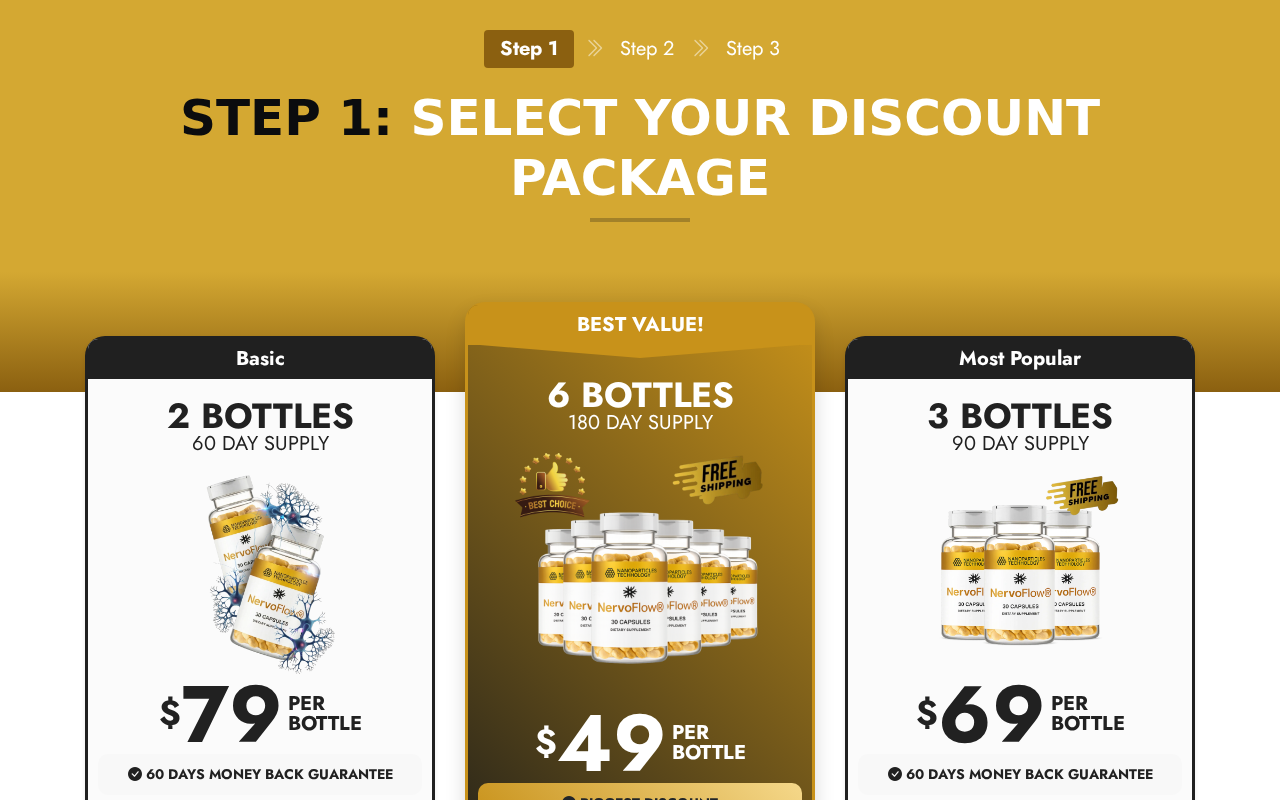
- The advertised order choices are two bottles for $158 plus shipping, three for $207, and six for $294.
- One part of the page says 60-day guarantee, while a later FAQ describes 180 days, making written checkout terms important.
None of those observations proves automatic billing. We could verify multi-bottle offers, not an active refill subscription tied to this particular checkout.
Why the Medical Claim Matters
Neuropathy is not one single illness with one simple fix. Tingling, burning, weakness, and numbness can come from several underlying conditions.
The National Institute of Neurological Disorders and Stroke explains that evaluation may involve symptoms, medical history, an examination, and tests for possible causes.
Diabetes is a common cause. Vitamin deficiencies, injuries, infections, medicines, and autoimmune problems are among other possibilities. Treatment depends on the diagnosis.
A headline about an approved salt recipe compresses all of that into one purchase decision. It skips the question a clinician would ask first: what is causing the symptoms?
That shortcut matters because untreated nerve damage may progress while a person experiments with a product that has not been shown to address their condition.
The FDA also says manufacturers, not the agency, are responsible for ensuring supplements comply with applicable standards before most products reach consumers.
Registration of a facility, a GMP reference, or an attractive quality badge is not the same as FDA approval of a supplement’s effectiveness.
We could not independently test NervoFlow’s contents or manufacturing history. Our concern is the advertising claim, not a laboratory finding about the capsules.
The distinction protects readers from two opposite mistakes: treating the promotion as proven medicine, or claiming an untested bottle contains something dangerous.
A responsible seller should provide a readable Supplement Facts panel, full ingredient amounts, the entity responsible for the product, and realistic language about what evidence exists.
If those details are missing or obscured until payment, pause. A customer should not need to buy six bottles to learn what they are taking.
How the NervoFlow Pink Salt Sales Funnel Works
Step 1: A symptom-specific promise gets attention
The page addresses burning, tingling, and numbness in the feet and hands. Those symptoms are distressing enough that a person may search for relief late at night.
Its language does not open with a normal supplement description. It introduces a discovery story, letting the reader imagine that conventional treatment missed an easy answer.
That is why the pink salt hook matters. It sounds inexpensive and familiar, even though the next action is a paid capsule order.
Step 2: Borrowed authority makes the story feel settled
The advertorial displays Dr. Oz’s name and an FDA approval headline. Visual references to television news create another layer of credibility before evidence appears.
A name, image, or news-style layout on a seller-controlled page does not establish an endorsement. Verification requires a statement from the named person or outlet itself.
We found no official FDA approval for the supposed recipe, and the FDA’s general guidance contradicts that kind of supplement claim.
Step 3: A recipe becomes a product requirement
Readers may arrive for the promised salt explanation. Instead, the visible page repeatedly asks them to choose a NervoFlow package.
This shift changes the transaction. A free kitchen trick does not require a $294 six-bottle purchase, yet the page recommends that longest package for lasting results.
The FDA does not say such a capsule course repairs nerves. The site’s own assertion cannot substitute for clinical evidence in people with diagnosed neuropathy.
Step 4: Price framing pushes the larger bundle
The offers label six bottles the best value, three the most popular choice, and two the basic option. Savings are calculated against much higher crossed-out totals.
For example, the six-bottle card shows $294 against $1,074. That comparison is only meaningful if the higher reference price represents a genuine selling price.
We did not independently verify the reference prices or the displayed stock count. A shrinking inventory number should not decide a medical purchase.
Readers should total the amount due today, shipping, taxes, and any selected extras rather than dividing a promotional total by bottle count.
Step 5: The guarantee lowers resistance
The sales copy promises a 60-day refund and asks customers to email support. Another FAQ answer describes a 180-day guarantee and says bottles can be kept.
Those statements are not identical. A buyer should save the exact page and checkout terms they saw, including conditions for used versus unused bottles.
A promise on an advertorial may be difficult to enforce if the actual receipt identifies a different merchant or sets narrower rules.
Step 6: The checkout decides the real obligation
The order buttons route toward BuyGoods. A payment processor or platform is not, by itself, the supplement manufacturer or the entity responsible for every advertising statement.
At checkout, inspect the product quantity, final total, shipping terms, optional add-ons, and any recurring-billing box before entering card details.
We did not complete a purchase. We therefore cannot confirm whether this path offers recurring refills, a one-time order only, or post-purchase upsells.
If the final screen differs from the advertorial, the final screen deserves more weight. Save it before payment so a later dispute has a clear record.
What the Reviews and Guarantees Cannot Tell You
The page displays glowing personal stories from people who say they regained the ability to walk, sleep, shop, or spend time with family.
Those moments are emotionally effective because neuropathy can make ordinary errands exhausting. They also cannot establish that the capsule caused the improvement.
A testimonial leaves out many facts: the person’s diagnosis, other treatments, how symptoms were measured, and whether the account was independently checked.
One quoted customer says a doctor recommended the product. That is not a medical guideline, and the page does not identify the doctor for verification.
The large comments count and familiar social-style reactions create another impression of consensus. We could not verify who posted those comments or when.
Ask whether a controlled study tested this exact formula against a comparison group. If a marketer cites research, look for its title, authors, journal, and participants.
A paper about one ingredient is not automatically a trial of the finished product. Dose, purity, combinations, and the condition studied all matter.
The page uses phrases about lasting relief after a full course. A six-month recommendation conveniently matches the largest package, but that commercial alignment is not clinical proof.
Some buyers may feel better while taking an unrelated product. Symptoms fluctuate, other care continues, and expectations can influence how improvement is remembered.
None of that means a person’s relief is imaginary. It means a collection of sales stories is not enough to predict another person’s outcome.
The refund promise also deserves careful reading. A guarantee can make the purchase feel reversible while the actual process requires timely contact and shipping.
A customer may have to preserve bottles, retain tracking, and wait for inspection. Ask which of those conditions applies before ordering.
It is especially important to understand the difference between a trial of one bottle and a six-bottle commitment. The financial exposure changes immediately.
When the claims are dramatic, a modest first step is not to click a smaller bundle. It is to discuss the symptoms with someone qualified to diagnose them.
If you still consider the product, give yourself time. A legitimate offer should survive an afternoon spent checking the label and refund policy.
The most persuasive line on a sales page should be the evidence you can inspect, not a timer, an oversized discount, or a stranger’s recovery story.
Company, Checkout, and Fulfillment Checks
Who actually sells the bottle?
NervoFlow is the product name on the page. The reader still needs the legal seller, manufacturer, and merchant shown on the checkout and receipt.
Those may be different organizations. A processor can take payment without making, testing, or shipping the supplement.
Ask the seller for the legal business name and a physical contact address. Compare that information across the terms, privacy policy, receipt, and card descriptor.
Where would a return really go?
The page offers an email route for refund requests, but a practical return needs instructions, a deadline, and a destination once a package is shipped.
A warehouse address, if one appears, may be a fulfillment point rather than company headquarters. That distinction matters when seeking accountability.
Before ordering, ask whether opened bottles qualify, whether shipping is refundable, and who pays return postage. Get answers in writing.
Can support explain the contradictory guarantee?
Ask which promise controls: 60 days in the main offer or 180 days in the FAQ. Also ask whether six bottles receive different treatment.
Do not rely on a call alone. An emailed answer creates a record and reveals whether support can identify the specific product and offer page.
If support responds with generic reassurance rather than the relevant clause, that is useful information before spending money.
What is in the capsules?
Read the Supplement Facts panel for each ingredient and amount. Names such as natural, doctor formulated, or GMP do not answer dosage or interaction questions.
Take that list to a pharmacist or clinician, especially if you use medicines, have kidney problems, or are being evaluated for nerve symptoms.
Without a readable label and a responsible manufacturer, consumers cannot make a well-informed health decision, regardless of how polished the sales page looks.
What to Do If You Ordered NervoFlow
- Save the offer as it appeared. Keep screenshots of the FDA headline, chosen package, final checkout, receipt, guarantee, and any confirmation email. Record the date and page address.
- Check the bank transaction. Compare the charged amount and merchant descriptor with your receipt. Look for separate add-ons or later charges, but do not assume refills without evidence.
- Request cancellation or a refund in writing. Use the seller contact on the receipt. State your order number, the guarantee you relied on, and the remedy you want.
- Do not delay medical evaluation. New, worsening, or unexplained numbness deserves professional attention. Tell your clinician what you took and bring the ingredient list.
- Escalate an unresolved billing problem. If the seller does not honor written terms or an unauthorized charge appears, contact your card issuer promptly and provide your saved evidence.
- Report a misleading medical claim. Send the advertorial URL and screenshots to the FDA or FTC. Explain the exact approval wording rather than guessing about manufacturing or hidden ingredients.
A dispute is strongest when it identifies a concrete mismatch: an unexpected amount, a denied published guarantee, or a medical-approval statement that influenced the purchase.
If you entered a password on an unrelated page, change it through the real account site. A supplement checkout should never need your bank login.
Frequently Asked Questions
Is a pink salt recipe FDA approved for nerve pain?
No. The FDA says dietary supplements are not approved to treat or prevent disease. The advertorial’s approval language should not be read as a regulatory finding.
Did Dr. Oz develop NervoFlow?
The sales page makes that connection, but we could not verify it from an independent official statement. A seller’s own page is not proof of endorsement.
Does NervoFlow automatically enroll buyers in refills?
We could verify bottle bundles, not automatic refills for this specific checkout. Read the final payment terms and monitor statements before making that claim.
Is the six-bottle package actually cheaper?
Its listed per-bottle price is lower, but the upfront cost is $294. Value depends on genuine need, ingredients, evidence, and whether the higher reference price is real.
Can salt or supplements replace a neuropathy diagnosis?
No. Neuropathy has many causes, and the right approach depends on identifying them. Ask a clinician about persistent burning, numbness, weakness, or balance problems.
Which refund promise applies?
The page contains 60-day and 180-day language. Save the version presented at checkout and request written clarification before relying on either statement.
The Bottom Line
The NervoFlow advertorial turns a pink salt nerve pain story into a multi-bottle capsule sale. Its FDA-approval headline conflicts with the agency’s own supplement guidance.
That is reason enough to stop before paying. Verify the seller, the complete terms, and the medical evidence, and seek proper evaluation for nerve symptoms.

Join the discussion
0 commentsShare your experience or ask a question about this article.
Discussion
Start the conversation
Have a question or something useful to share? Add the first comment.