

Getting paid to watch television from the sofa sounds almost designed for a late-night scroll, especially when the application claims only a few openings remain.
The role itself has a believable name. What happens after the click reveals whether you found an employer or entered a data-collection funnel.

Overview
Showtaggers was not a Netflix recruitment portal
Showtaggers.com promoted a supposed Netflix Tagger opportunity, but the domain was not operated by Netflix and did not use the company’s official careers system.
The page framed entertainment viewing as a simple, well-paid side hustle. Applicants were encouraged to move quickly because remote positions were allegedly limited.
Independent investigations found that the application route led toward surveys, advertising offers, and untrusted pages rather than a verifiable Netflix hiring process.
A real job title was stretched into an easy-money fantasy
Streaming services employ people who classify content, manage metadata, study audiences, and support editorial discovery. Those jobs require more than casually watching favorite shows.
Fake advertisements remove the expertise, hiring interviews, employer identity, and ordinary competition. They keep only the irresistible phrase get paid to watch Netflix.
That simplification is the hook. The target believes the task is effortless, so an unusually fast application and generous hourly rate seem less suspicious.
The fake application monetizes the applicant, not their work
The route can collect a name, email address, telephone number, location, employment details, and answers that advertisers use to qualify a marketing lead.
Some branches send visitors through repeated surveys or reward pages. Others can introduce subscriptions, paid training, identity requests, or fake onboarding payments.
Warning signs include:
- The job appears on a domain unrelated to jobs.netflix.com.
- The advertisement guarantees easy income for watching shows.
- Almost everyone is told they qualify immediately.
- The application emphasizes limited spots and a countdown.
- No named recruiter uses a verifiable corporate email address.
- The page requests personal details before describing responsibilities.
- Applicants are redirected through surveys and unrelated offers.
- A fee, gift card, crypto payment, or equipment check appears later.
What a Genuine Content-Tagging Role Actually Involves
The phrase Netflix Tagger is based on real work. Content classification helps viewers find titles by genre, tone, subject, audience, themes, and other descriptive signals.
That work is closer to editorial analysis and metadata management than a reward program. It can require research, consistent taxonomy decisions, cultural knowledge, and written judgment.
Real openings are scarce because the task affects discovery across a large catalog. Employers screen for relevant experience rather than accepting everyone who enjoys movies.
Job descriptions identify the team, location, responsibilities, qualifications, salary range where required, and reporting relationship. They also explain whether work is remote, hybrid, or onsite.
Netflix maintains an official careers website. An opportunity mentioned elsewhere should be traceable to that site before an applicant shares private information.
A third-party recruiter can occasionally represent a legitimate employer. In that case, the recruiter should identify the agency, provide a corporate address, and explain the relationship.
The email domain should match the stated organization. A free mailbox, recently created website, or lookalike spelling deserves independent verification.
Legitimate recruiters do not conduct the entire process through Telegram, WhatsApp, text messages, or a chat account that cannot be connected to the company.
An interview should involve meaningful questions about experience and the role. An instant offer after answering a few generic prompts is not normal hiring.
Most importantly, an employee is paid by the employer. A candidate should not pay to unlock assignments, receive wages, buy gift cards, or release equipment.
How the Showtaggers Netflix Tagger Job Scam Works
Step 1: A social post sells the perfect side hustle
The advertisement appears on TikTok, Facebook, Instagram, a content widget, or a search result. It promises flexible hours and payment for watching entertainment.
The headline targets people who want remote work without a commute, formal training, or demanding sales calls. The familiar Netflix name supplies instant legitimacy.
Some posts appear to be personal success stories. A creator claims the job changed their finances and provides a link before explaining any realistic duties.
Step 2: A copied recruitment page creates urgency
The destination uses dark streaming imagery, show thumbnails, and language associated with entertainment careers. It may resemble a newsroom article or hiring portal.
The URL is the simplest contradiction. Showtaggers.com was not Netflix’s domain, and a copied color scheme cannot establish employer ownership.
A counter may show applications, available positions, or recent hires. The numbers are page elements, not evidence of active vacancies.
Step 3: Easy screening makes everyone feel selected
Visitors answer whether they have internet access, enjoy shows, are over 18, or can work from home. Nearly anyone can supply the desired answers.
The screen may pause while it supposedly checks availability. Approval arrives quickly because the process is designed to continue the funnel, not evaluate a candidate.
Selection language creates relief and pride. The applicant becomes less likely to question the next request after being told they beat limited competition.
Step 4: Contact information becomes a marketable lead
The form asks for a name, email, telephone number, ZIP code, and sometimes employment or income information. Those fields can qualify advertising offers.
The applicant believes the data goes to a hiring team. Instead, it can be transferred to survey operators, lead brokers, or unrelated marketing partners.
Consent language may authorize calls and texts from multiple companies. On mobile, this detail can appear below the large application button or inside linked terms.
Step 5: Redirects replace the promised interview
After submission, the visitor may be sent to questionnaires about shopping, insurance, education, debt, or rewards. Each completed form creates another commercial lead.
A progress bar encourages continued participation. The promised job stays one step ahead while the subject matter drifts further from streaming work.
Some pages ask the visitor to complete several offers before qualification. Purchasing a trial or installing an application does not create a Netflix employment relationship.
Step 6: A second scam can follow the harvested data
Once contact details circulate, an impersonator may offer an interview through chat. They can use the original job interest to make the approach feel expected.
The fake recruiter might request identity documents, direct-deposit details, a background-check fee, or payment for equipment. These requests create identity and financial risk.
Another version sends a counterfeit check for office equipment. The victim buys from a designated vendor before the bank discovers the check is fraudulent.
Step 7: The domain disappears while the theme survives
Showtaggers can vanish after warnings spread. The same promise then returns under names such as Tag and Chill, Fast Side Hustles, or another fresh application site.
Remember the story rather than one domain. Easy pay for watching shows, instant approval, and an unrelated form are the durable warning pattern.
Where the Applicant’s Information Can Travel
An email address and phone number seem less sensitive than a bank account, but together they support targeted phishing and persistent marketing.
A scammer knows the person wants remote entertainment work. Future messages can reference Netflix, onboarding, schedule selection, tax forms, or a delayed recruiter response.
ZIP code, age, income, and employment status make the lead more valuable. Those details allow marketers to route the person toward loans, insurance, education, or subscriptions.
A resume reveals much more. It can contain a full address, work history, school, telephone, professional contacts, and patterns useful for answering security questions.
Identity documents create a higher risk. A driver’s license or Social Security number can support account opening, employment fraud, or convincing impersonation.
Bank details intended for direct deposit should never be provided before a verified offer, completed interview process, and independently confirmed employer relationship.
If the form requested a password, treat that credential as compromised. Fake job sites sometimes test reused passwords against email and social accounts.
A download presented as an interview tool, assessment, or company chat application can install malware. Official software should be obtained from the publisher’s known website.
Remote-access programs are especially dangerous. No recruiter needs control of a candidate’s computer to review a resume or discuss a position.
Make a precise exposure list after leaving the site. Recovery should match what was actually shared rather than relying on a vague sense of danger.

Company, Address, and Fulfillment Checks
The hiring domain must connect to the employer
Search for the role directly on jobs.netflix.com. A listing that exists only on Showtaggers or a social-media landing page should not receive personal data.
Check domain age, ownership history, spelling, and contact email. A recently created application site with hidden operators cannot borrow Netflix’s identity through design.
The recruiter should be a verifiable person
Find the recruiter through the employer or agency directory using information you obtained independently. Do not rely on the telephone number inside the original message.
Ask for a written job description, team, manager, location, interview schedule, and corporate email. A real recruiter can answer without demanding secrecy.
A physical address should match corporate records
A copied office address proves nothing. Compare the company named in the terms with business filings and the organization that controls the email domain.
Virtual offices and mailbox services can receive mail without operating a recruitment department. The employment relationship must be verified through the actual company.
Job fulfillment means work and wages, never paid access
A real offer names compensation, duties, status, supervisor, and payroll process. It does not require survey completions or purchases to unlock the position.
Reject checks for equipment, gift-card instructions, crypto deposits, paid training, and account activation fees. These are payment traps, not onboarding.
How to Verify a Remote Job Before Applying
Type the employer’s careers address yourself. Search by title, team, and location rather than following the social post’s Apply Now button.
Read the full description. Vague duties and extravagant earnings are more suspicious than a role explaining daily tasks, required skills, and measurable responsibilities.
Search a sentence from the offer inside quotation marks. Fraudsters often copy descriptions from real vacancies while replacing the employer’s application link.
Look at the recruiter’s email after the at symbol. Similar lettering, extra hyphens, or career-related words can hide a domain the employer does not control.
Call the organization’s public switchboard and ask whether the recruiter and requisition number exist. Use the number on the official website.
Request a live video interview when appropriate, but remember that AI can imitate people. Verification still depends on corporate systems and contact paths.
Never rush because a recruiter says the slot closes within minutes. Employers want qualified candidates and provide time to review contracts and policies.
Search for complaints about the exact domain, telephone, email, and payment instructions. Do not search only the famous company name.
Why the Promised Pay Deserves Extra Scrutiny
Fake tagger advertisements often quote impressive hourly earnings without explaining whether compensation covers research, meetings, revisions, taxes, or scheduled availability.
A serious listing connects pay to defined work. It states employment status, expected hours, location rules, benefits, and the experience used to set compensation.
Easy viewing is presented as the entire job because pleasure makes the salary feel emotionally possible. Missing operational details receive far less attention.
Calculate what the advertisement implies. A few casual hours producing a full income would attract enormous competition and require a rigorous selection process.
When every applicant qualifies, the promised wage is probably not the funnel’s real economic engine. Leads, surveys, subscriptions, or payments are more plausible.
Some pages describe payment per movie or episode. They still fail to identify who reviews the work, assigns titles, or approves completed classifications.
Others promise a starter bonus before an interview. Genuine signing incentives appear in written offers, not as bait beside a generic questionnaire.
A salary screenshot can be fabricated as easily as a testimonial. Confirm compensation through the actual employer listing and an authenticated recruiter.
Do not submit tax forms simply because a page mentions payroll. Tax information belongs in a verified onboarding system after a real offer.
If the promoter earns money from your survey completion, their incentive conflicts with helping you secure employment. That relationship should be disclosed clearly.
The safest question is simple: who pays whom? The employer should pay for useful work, while the applicant should not fund access to an opportunity.
What to Do if You Fell Victim to the Netflix Tagger Job Scam
- Stop the application. Close every survey and do not complete additional offers, downloads, purchases, or supposed identity-verification steps.
- Document the route. Save the advertisement, profiles, domains, form fields, consent language, redirects, emails, telephone numbers, and chat history.
- Change exposed passwords. Start with email, then replace every reused credential and enable multi-factor authentication through official settings.
- Protect identity information. Freeze credit and place a fraud alert if Social Security, license, birth date, or financial details were shared.
- Contact the bank. Report card, check, account, or transfer information immediately and dispute any payment connected to fake onboarding.
- Run Malwarebytes. Perform a full scan if you installed an interview tool, opened an attachment, allowed browser notifications, or granted remote access.
- Use AdGuard during recovery. It can reduce malicious job advertisements and redirect chains, although it cannot remove submitted personal data.
- Tell professional contacts. Warn references or former employers if their names, numbers, or email addresses appeared in the submitted resume.
- Report the impersonation. Notify Netflix, the advertising platform, the FTC, and IC3 with preserved URLs and communication records.
- Reject recovery offers. A stranger promising to delete your information or recover fees for another payment is likely starting a second scam.
Is Your Device Infected? Run a Free Malware Scan
Slow performance, constant pop-ups, or strange behavior? These are classic signs of a malware infection. The fastest way to find out is to scan your device with Malwarebytes Free — one of the most trusted malware removal tools available.
The free version detects and removes the most common threats, including:
- Adware — the cause of those annoying pop-ups
- Browser hijackers — unwanted redirects and changed homepages
- Trojans and spyware — hidden programs stealing your data
- Potentially unwanted programs (PUPs) — software you never asked for
👉 Select your device below — Windows, Mac, or Android — then follow the simple steps to download Malwarebytes, scan your system, and remove any threats it finds. The scan usually takes 5 to 20 minutes.
Run a Malware Scan with Malwarebytes for Windows
Malwarebytes is one of the most popular and trusted anti-malware tools for Windows — and it’s completely free for removing infections. It catches threats that many antivirus programs miss, including adware, browser hijackers, and trojans. Follow the steps below to scan and clean your PC in just a few minutes.
Download Malwarebytes
Click the button below to download the latest version of Malwarebytes for Windows from the official source. The free version is all you need — it will scan your computer and remove adware, browser hijackers, and other malicious software at no cost.
Download MalwarebytesOfficial installer for Windows 11 and 10. Your download starts right away.Want real-time protection? See Malwarebytes Premium Malwarebytes Free for WindowsScans and removes malware at no cost
-
Install Malwarebytes
When the download finishes, open your Downloads folder and double-click the MBSetup file. If Windows shows a User Account Control pop-up, click “Yes” to allow the installation.
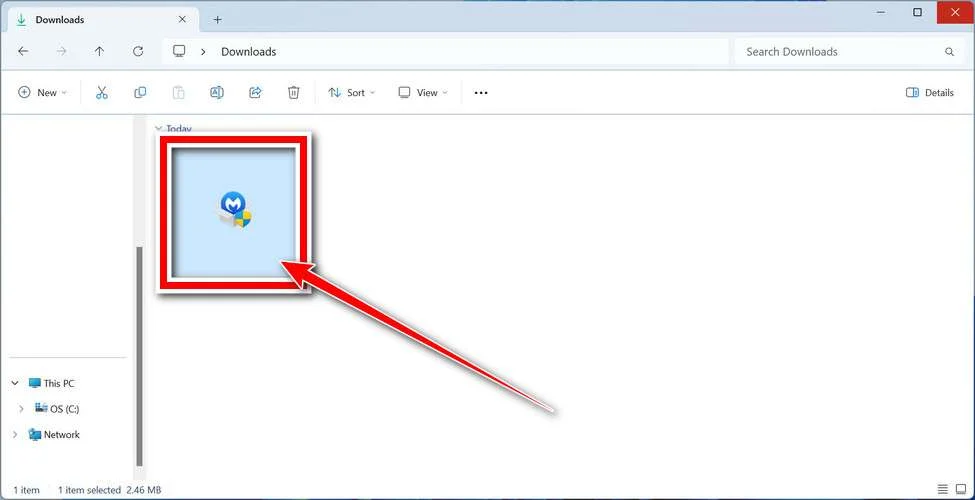
Follow the On-Screen Prompts to Install Malwarebytes
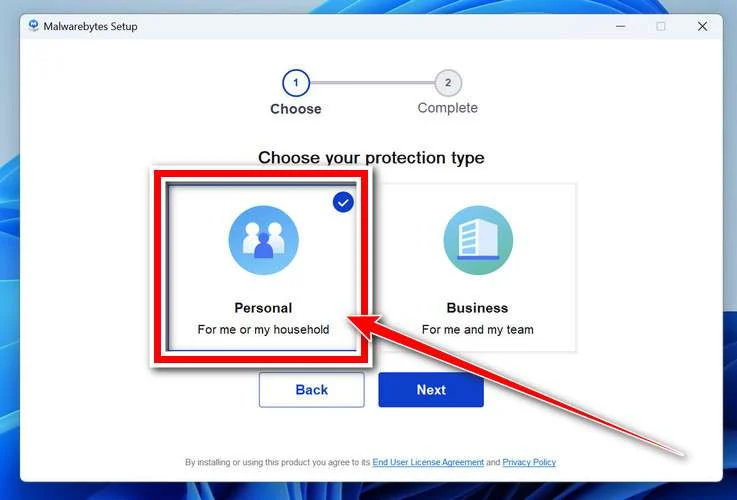
The setup wizard will walk you through a few quick screens:
-
Choose where you’re installing the program — “Personal Computer” or “Work Computer” — then click Next.
-
Malwarebytes will now install on your device. This usually takes under a minute.

-
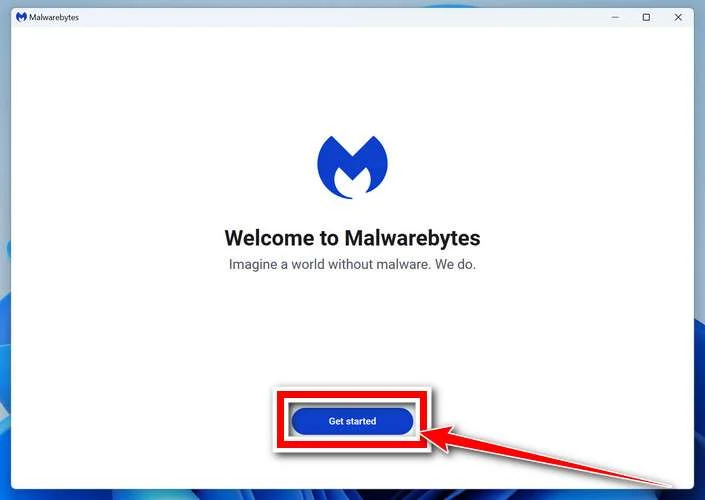
When installation is complete, the “Welcome to Malwarebytes” screen will open automatically.
-
On the final screen, click Open Malwarebytes to launch the program.

-
Enable “Scan for Rootkits”
Before scanning, turn on rootkit detection so Malwarebytes can find even the most hidden threats. Click the Settings gear icon on the left side of the screen.
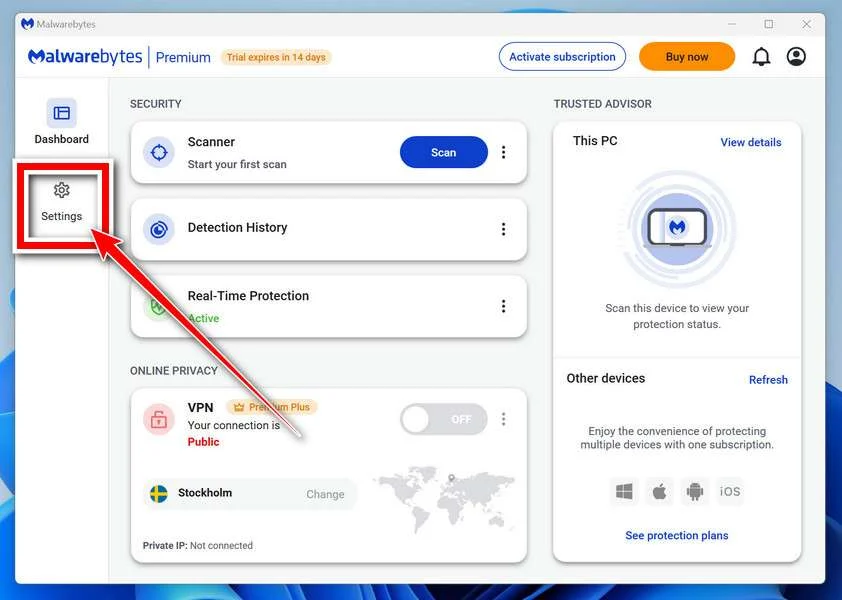
In the settings menu, find “Scan for rootkits” and click the toggle so it turns blue.

Done? Click “Dashboard” in the left pane to return to the main screen.
Start the Scan
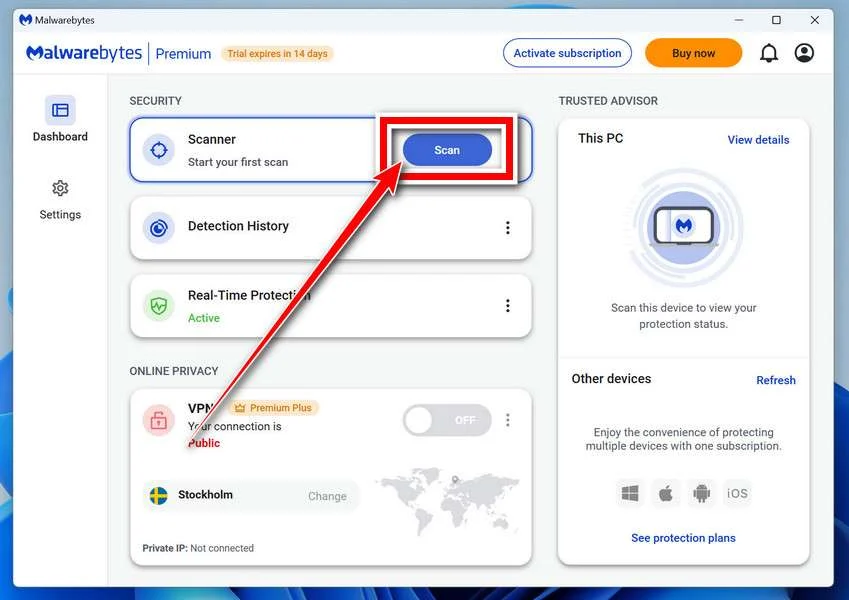
Click the blue Scan button. Malwarebytes will automatically update its virus database and start checking your computer for malware.
-
Wait for the Scan to Finish
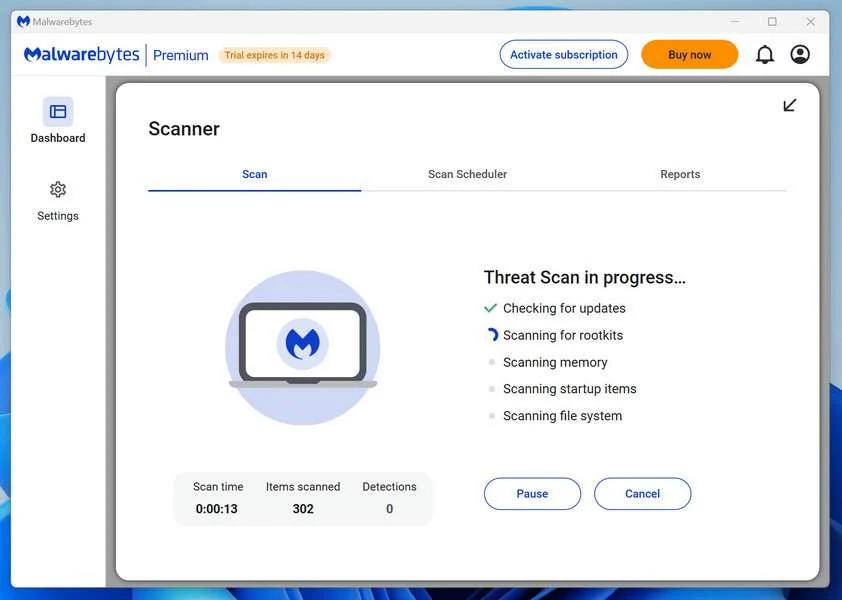
The scan checks your entire system for browser hijackers and other malicious programs, so it can take 5 to 20 minutes depending on your computer. Feel free to do something else — just check back occasionally to see the progress.
-
Quarantine the Detected Threats
When the scan is done, you’ll see a list of everything Malwarebytes found — malware, adware, and potentially unwanted programs. Click the “Quarantine” button to remove all of them at once.
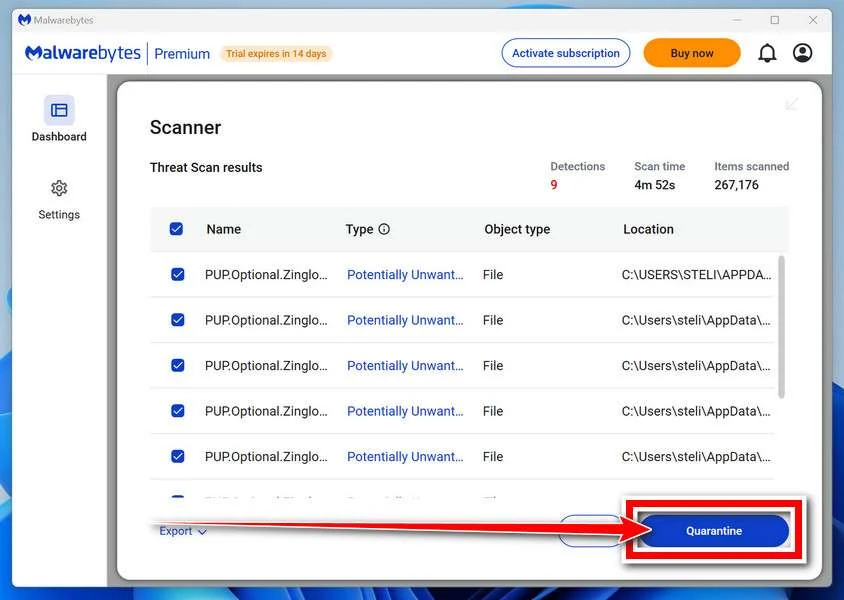
Malwarebytes will now remove the malicious files and registry entries and move them safely into quarantine.
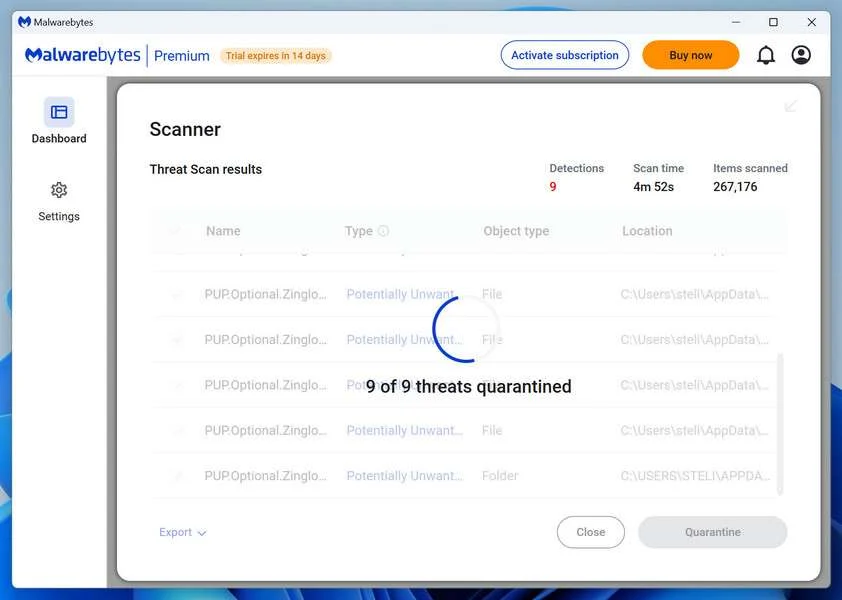
-
Restart Your Computer
Some threats can only be fully removed after a reboot. If Malwarebytes asks you to restart, click Yes. Once you’re logged back in, Malwarebytes has finished removing the threats it found.
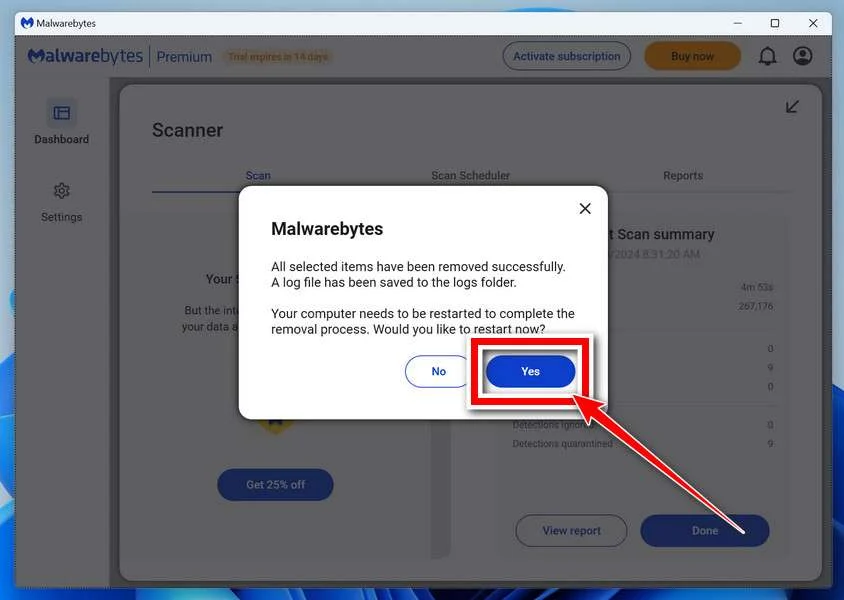
That’s it — your Windows PC is now clean of trojans, adware, and other malware, and should be back to running smoothly.
If you are still having problems with your computer after completing these instructions, then please follow one of the steps:
- Run a computer scan with ESET Online Scanner
- Ask for help in our Windows Malware Removal Help & Support forum.
Run a Malware Scan with Malwarebytes for Mac
Malwarebytes for Mac is a free on-demand scanner that removes the malware other security software tends to miss — adware, browser hijackers, and unwanted programs included. Cleaning an infected Mac with Malwarebytes has always been completely free, and it’s our go-to recommendation. Follow the steps below to scan and clean your Mac in just a few minutes.
-
Download Malwarebytes for Mac
Click the button below to download the latest version of Malwarebytes for Mac.
Download MalwarebytesOfficial installer for macOS. Your download starts right away.Want real-time protection? See Malwarebytes PremiumMalwarebytes Free for MacScans and removes malware at no cost -
Open the Malwarebytes setup file
When the download finishes, open your Downloads folder and double-click the setup file to begin the installation.
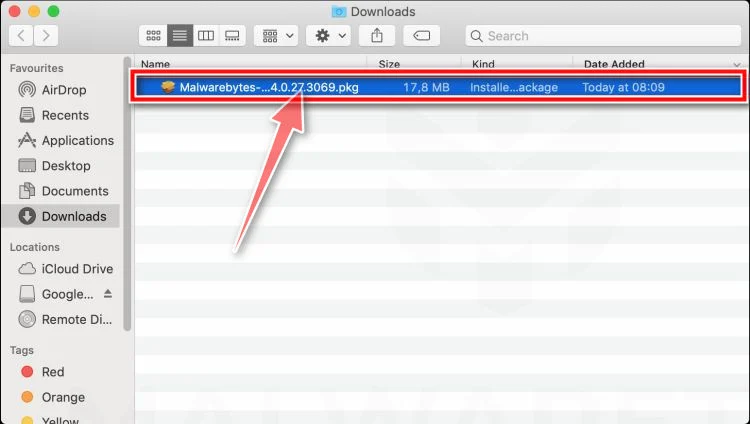
-
Follow the On-Screen Prompts to Install Malwarebytes
The Malwarebytes for Mac Installer will guide you through a few quick screens. Click “Continue” and keep following the prompts until the installation completes.
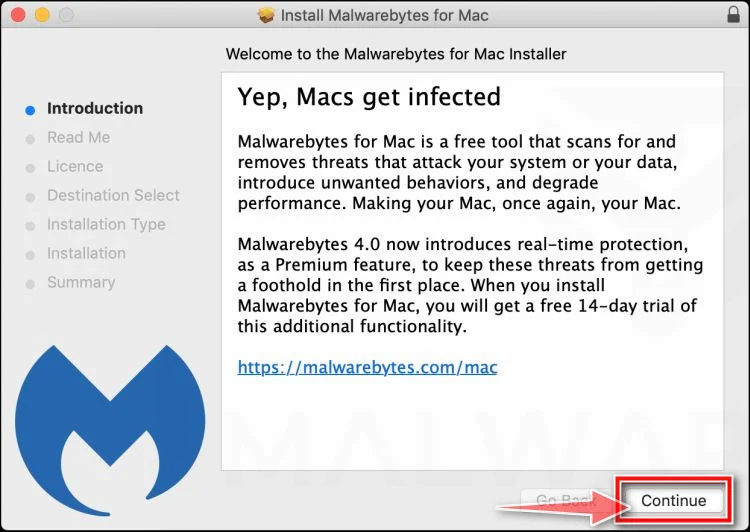
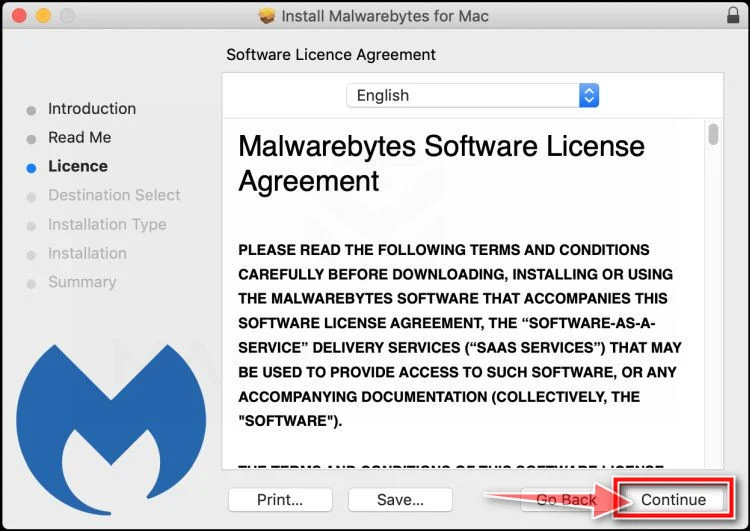
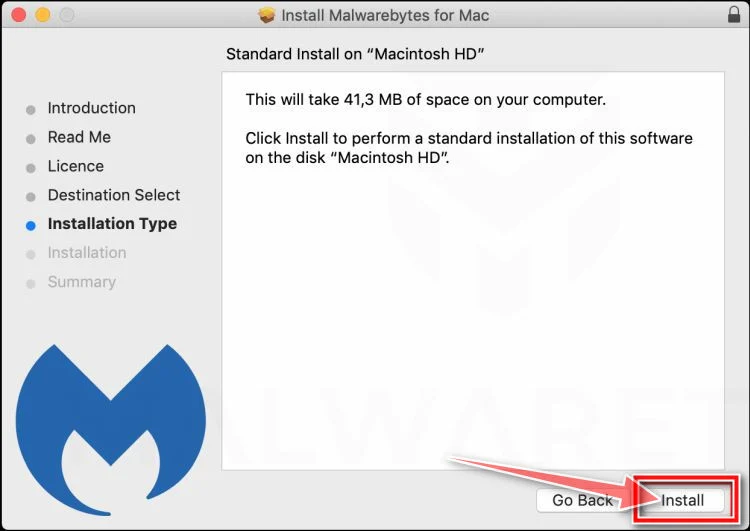
When the installation is complete, Malwarebytes opens to the Welcome to Malwarebytes screen. Click “Get started“.
-
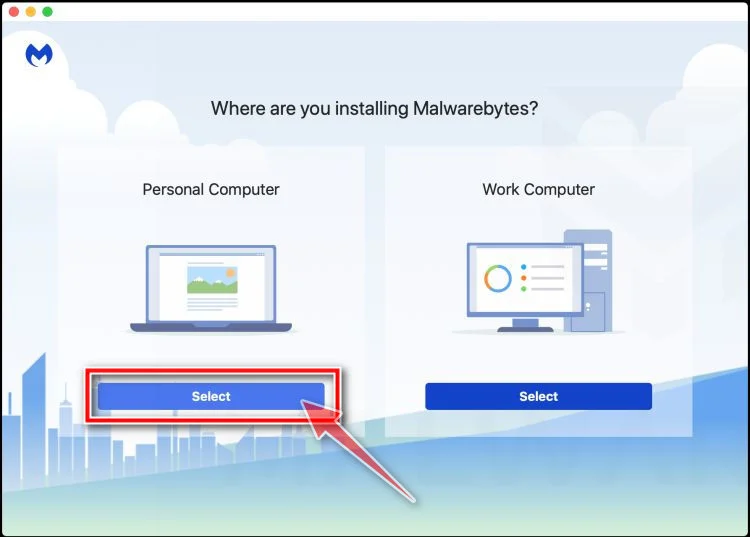
Select “Personal Computer” or “Work Computer”
Malwarebytes will ask what type of computer you’re installing it on. Click either Personal Computer or Work Computer, whichever applies.
-
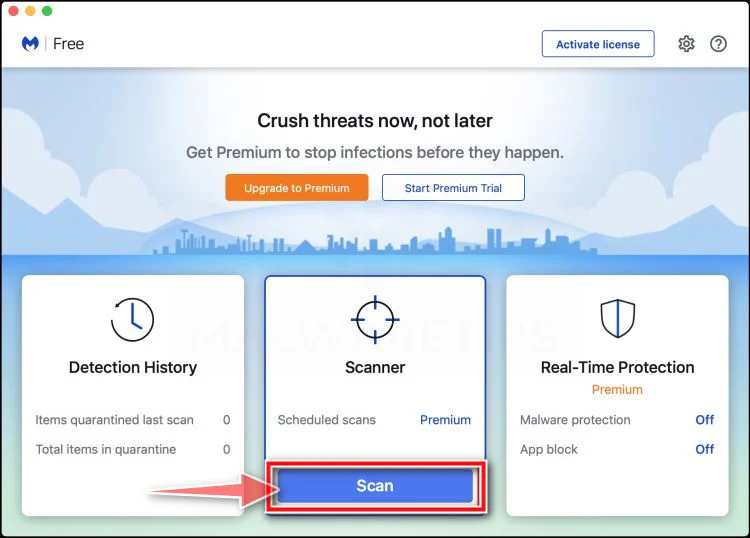
Start the Scan
Click the “Scan” button. Malwarebytes will automatically update its detection database and begin checking your Mac for malware.
-
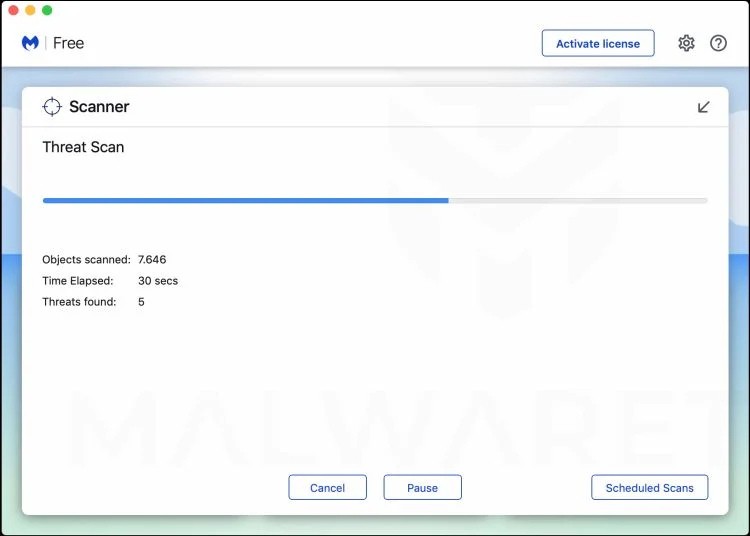
Wait for the Scan to Finish
Malwarebytes will scan your Mac for adware, browser hijackers, and other malicious programs. This can take a few minutes, so feel free to do something else — just check back occasionally to see the progress.
-
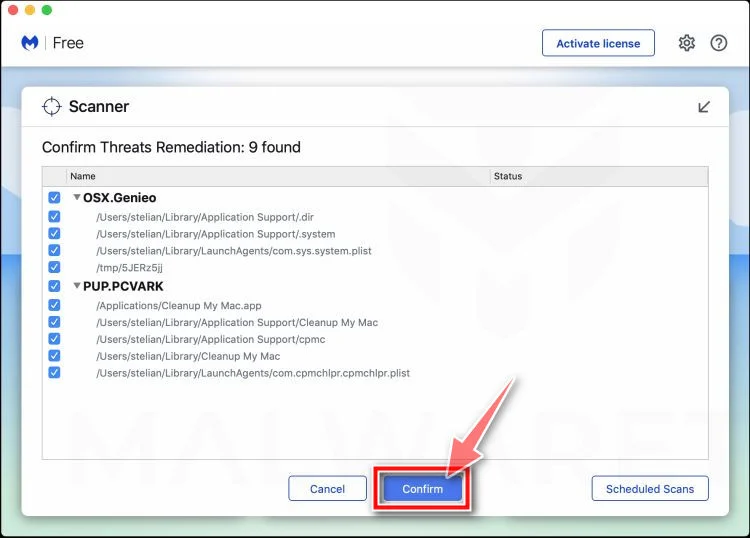
Quarantine the Detected Threats
When the scan is done, you’ll see a list of everything Malwarebytes found. Click the “Quarantine” button to remove all the threats at once.
-
Restart Your Mac
Malwarebytes will now remove all the malicious files it found. Some threats can only be fully removed after a reboot — if Malwarebytes asks you to restart, allow it. Once you’re logged back in, your Mac is clean.
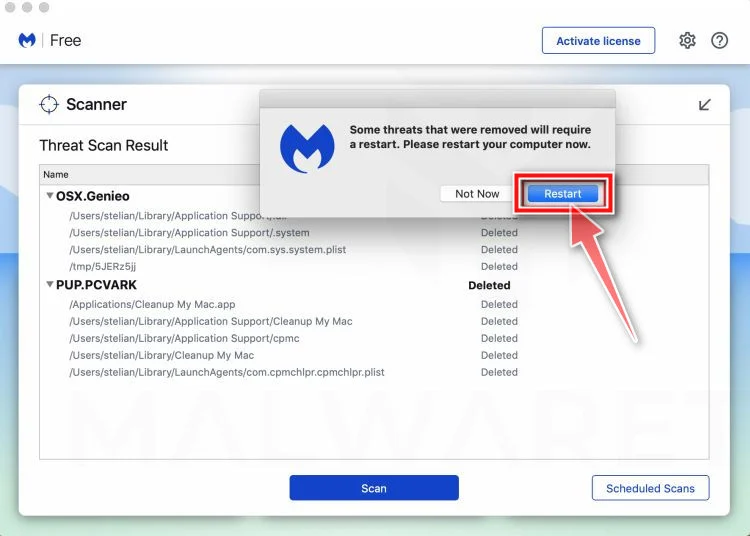
That’s it — your Mac is now free of adware, rogue browser extensions, and other potentially harmful software.
If you are still experiencing problems while trying to remove a malicious program from your computer, please ask for help in our Mac Malware Removal Help & Support forum.
Run a Malware Scan with Malwarebytes for Android
Malwarebytes for Android automatically detects and removes dangerous threats like malware and ransomware so you don’t have to worry about your most-used device being compromised. Aggressive detection of adware and potentially unwanted programs keeps your Android phone or tablet running smooth.
-
Download Malwarebytes for Android.
You can download Malwarebytes for Android by clicking the link below.
Get Malwarebytes for AndroidOpens Google Play in a new tab.Want real-time protection? See Malwarebytes Premium for AndroidMalwarebytes for AndroidScans your phone and removes malware at no cost -
Install Malwarebytes for Android on your phone.
In the Google Play Store, tap “Install” to install Malwarebytes for Android on your device.

When the installation process has finished, tap “Open” to begin using Malwarebytes for Android. You can also open Malwarebytes by tapping on its icon in your phone menu or home screen.

-
Follow the on-screen prompts to complete the setup process
When Malwarebytes will open, you will see the Malwarebytes Setup Wizard which will guide you through a series of permissions and other setup options.
This is the first of two screens that explain the difference between the Premium and Free versions. Swipe this screen to continue.
Tap on “Got it” to proceed to the next step.
Malwarebytes for Android will now ask for a set of permissions that are required to scan your device and protect it from malware. Tap on “Give permission” to continue.
Tap on “Allow” to permit Malwarebytes to access the files on your phone.
-
Update database and run a scan with Malwarebytes for Android
You will now be prompted to update the Malwarebytes database and run a full system scan.

Click on “Update database” to update the Malwarebytes for Android definitions to the latest version, then click on “Run full scan” to perform a system scan.

-
Wait for the Malwarebytes scan to complete.
Malwarebytes will now start scanning your phone for adware and other malicious apps. This process can take a few minutes, so we suggest you do something else and periodically check on the status of the scan to see when it is finished.

-
Click on “Remove Selected”.
When the scan has been completed, you will be presented with a screen showing the malware infections that Malwarebytes for Android has detected. To remove the malicious apps that Malwarebytes has found, tap on the “Remove Selected” button.

-
Restart your phone.
Malwarebytes for Android will now remove all the malicious apps that it has found. To complete the malware removal process, Malwarebytes may ask you to restart your device.
That’s it — your Android phone is now clean — no more malicious apps, adware, or browser redirects.
If you are still having problems with your phone after completing these instructions, then please follow one of the steps:
- Restore your phone to factory settings by going to Settings > General management > Reset > Factory data reset.
- Ask for help in our Mobile Malware Removal Help & Support forum.
Stay Protected: Block Ads and Malicious Sites
Now that your device is clean, keep it that way. Most infections start with a malicious ad or a fake download button — so blocking them at the source is your best defense.
We recommend AdGuard, which blocks malicious ads, phishing pages, and dangerous redirects before they can reach you.
👉 Download AdGuard and browse safely
Frequently Asked Questions
Was Showtaggers.com an official Netflix hiring site?
No. The domain was unrelated to Netflix’s official careers site and sent applicants toward surveys and other commercial pages instead of verified recruitment.
Does Netflix employ people who tag content?
Content classification work exists, but genuine roles involve professional responsibilities and competitive hiring. They are not automatic side hustles offered to every viewer.
Where should I search for real Netflix jobs?
Use jobs.netflix.com directly. Confirm the exact opening and recruiter through official channels before sharing identity, tax, or banking information.
Why does the fake application ask for my phone number?
A phone number makes the lead valuable for marketing and follow-up impersonation. It can trigger texts, calls, and convincing fake recruiter messages.
Should I pay for equipment or a background check?
Do not pay an unknown recruiter. Verify any legitimate screening arrangement independently, and never return money from a check sent for equipment.
What if I only shared my email and telephone number?
Expect targeted phishing and marketing. Secure email, enable strong verification, block suspicious contacts, and avoid links that reference the application.
The Bottom Line
The Showtaggers promise converts a rare professional function into an effortless dream job. The fake application collects attention and personal data without delivering verified employment.
Search Netflix’s official careers site, verify the recruiter independently, and never pay to be hired. If the route becomes surveys, purchases, or chat-only onboarding, leave.

Join the discussion
0 commentsShare your experience or ask a question about this article.
Discussion
Start the conversation
Have a question or something useful to share? Add the first comment.