

A memory supplement can look reassuring when the website names a real company, displays a full ingredient panel, and connects the formula to a recognized doctor. NeuroQ has all three, which makes it very different from the anonymous miracle-cure funnels that vanish as quickly as they appear.
Still, a polished brand does not answer the questions that matter most. Does the finished formula have strong clinical evidence, what exactly happens when the subscription option is selected, and how easy is it to stop future shipments?
We examined the current NeuroQ offer, its recurring-purchase disclosure, the ingredient amounts, the company details, and the difference between plausible “support” claims and proven medical results.
Overview
NeuroQ is an identifiable supplement brand, not an anonymous bottle
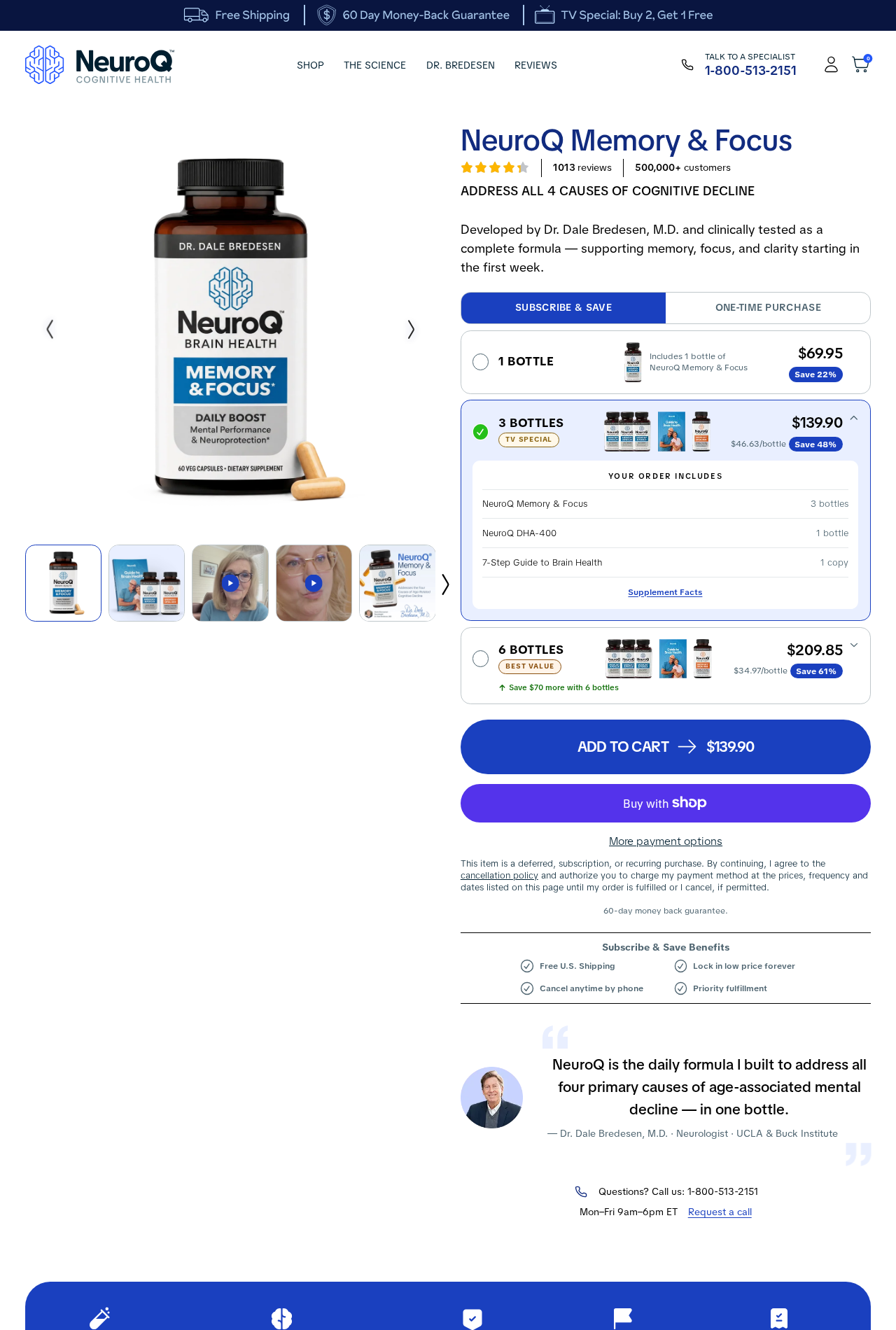
NeuroQ Memory & Focus is sold by LifeSeasons, Inc. The website lists a Utah address, customer-service numbers, an email address, Supplement Facts, and subscription terms. Those details give a buyer more to verify than a one-page funnel with no clear operator.
That does not prove the supplement works as advertised. It simply means this investigation should distinguish the real commercial offer from exaggerated expectations or impersonation ads that an affiliate may place around it.
The offer includes a clearly disclosed recurring option
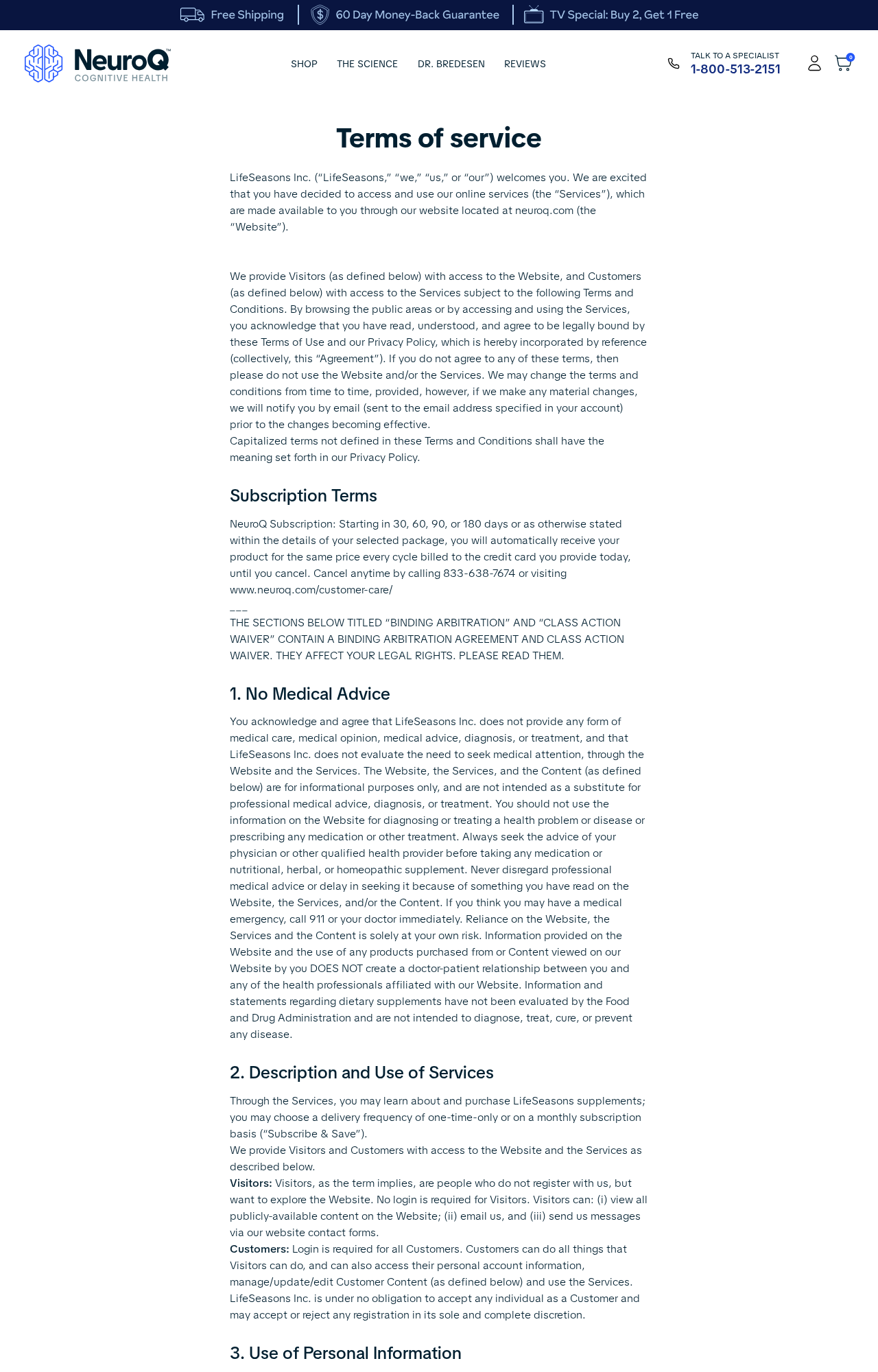
The product page offers both a one-time purchase and “Subscribe & Save.” The recurring-purchase disclosure says future charges continue at the selected frequency until the customer cancels, and the separate subscription terms describe cycles of 30, 60, 90, or 180 days.
This is not evidence of an undisclosed subscription trap. It is, however, a reason to slow down at checkout. The difference between clicking the one-time button and the subscription button can become another full charge and shipment later.
The biggest question is evidence, not whether a bottle exists
The page says the formula supports memory, focus, mental clarity, and healthy brain function. It also promotes a company-sponsored 90-day study and says 97% of participants experienced improvement in at least one area.
A statistic from a brand-sponsored study is not the same as independent proof that the finished product prevents dementia, reverses cognitive decline, or treats a diagnosed neurological condition. Buyers should judge the exact design and results, not the size of the percentage in the advertisement.
- NeuroQ is sold by the identifiable company LifeSeasons, Inc.
- The current page presents one-time and recurring purchase choices.
- The subscription can renew on different delivery cycles until canceled.
- The label lists gotu kola, turmeric, ginkgo, phosphatidylserine, coffee fruit extract, and propolis.
- The company promotes a 90-day study but that does not establish disease treatment.
- The formula should not replace medical evaluation for memory changes.
- Buyers taking medication should check the ingredients with a clinician or pharmacist.
What NeuroQ Claims to Do
The sales message is aimed at a worry almost everyone understands. A name disappears during a conversation, concentration slips in the afternoon, or ordinary mental fatigue begins to feel like evidence that something is wrong.
NeuroQ presents its formula as daily support for memory, focus, mental clarity, and overall brain health. The site also connects the product to Dr. Dale Bredesen and describes a combination of six ingredients selected to support several pathways rather than relying on one compound.
There is an important language boundary here. “Supports memory” is a broad supplement claim. “Prevents Alzheimer’s disease,” “reverses dementia,” or “treats cognitive impairment” would be medical claims requiring far stronger evidence. A customer should not allow advertising imagery to blur that distinction.
The page highlights a company-sponsored, 90-day study. According to the seller, 97% of participants improved in at least one tested category. That headline leaves practical questions: how many people participated, was there a placebo group, was the study blinded, what were the actual changes, and were the results published with enough detail for independent review?
A person can improve on one cognitive measure because of practice, sleep, mood, medication changes, normal variation, or the expectation that a product will help. Controlled study design exists to separate those effects from a true treatment effect.
What Is Actually in the NeuroQ Formula?
The label is more informative than the vague proprietary blends used by many online supplements. A two-capsule serving lists 250 mg of gotu kola extract, 250 mg of turmeric extract, 120 mg of ginkgo extract, 100 mg of phosphatidylserine, 100 mg of coffee fruit extract, and 75 mg of propolis extract.
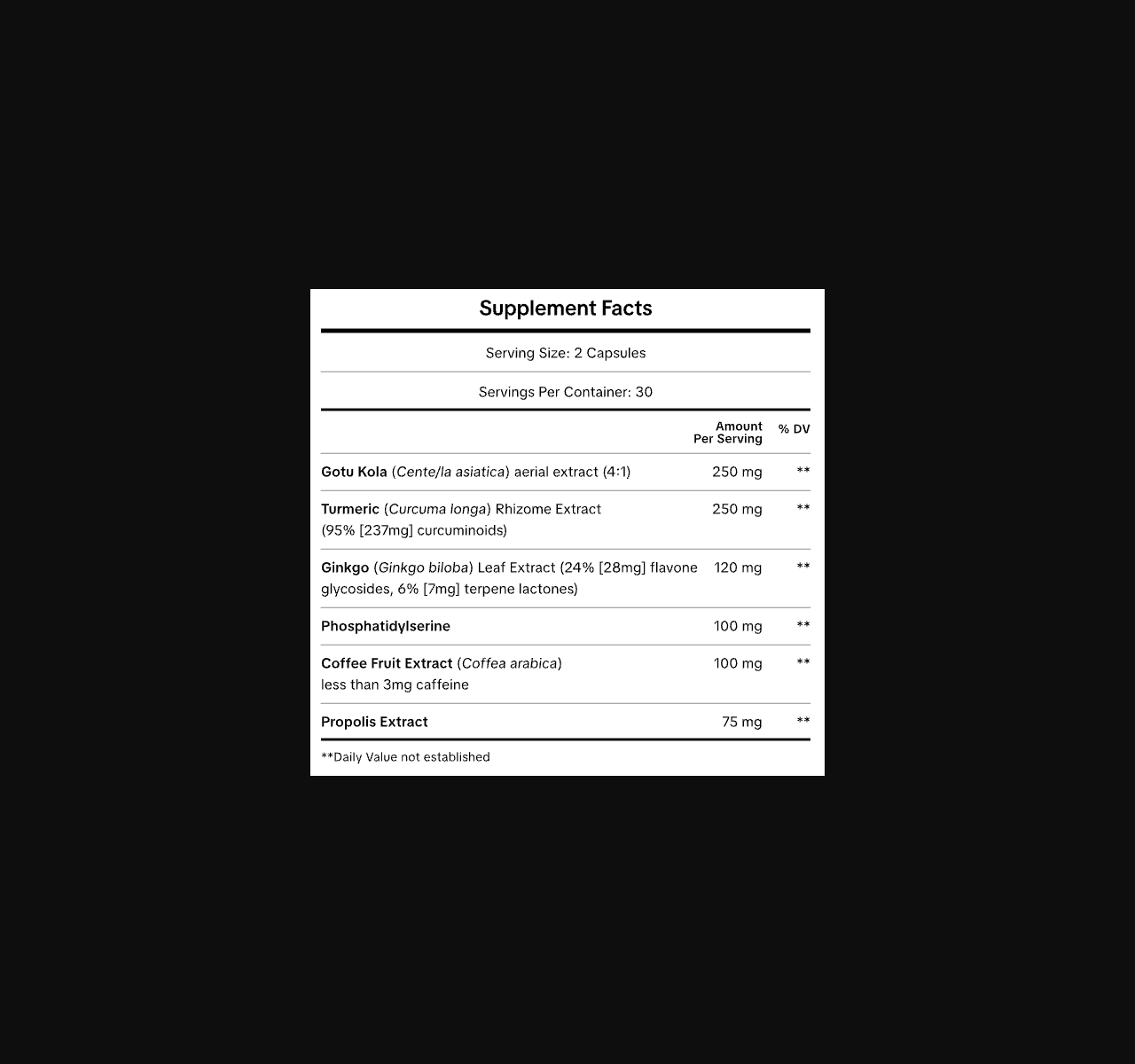
Each ingredient has a different evidence base. Some have been studied in laboratory, nutritional, or cognitive settings, but an ingredient appearing in a research paper does not prove that every blend containing it will produce the same result.
Form, dose, population, treatment length, outcome measure, and study quality all matter. Research involving a standardized extract in a controlled population cannot automatically be transferred to a commercial blend with several ingredients.
Safety also deserves attention. Ginkgo and turmeric may be relevant to people taking blood thinners or medicines that affect bleeding. Propolis can be a concern for people with bee-product allergies. Coffee fruit extract is described as containing less than 3 mg of caffeine per serving, but sensitive users may still want to discuss it.
Memory changes can also be caused by sleep disorders, thyroid problems, depression, medication effects, vitamin deficiencies, infection, hearing loss, stroke, or other medical conditions. Buying a supplement before investigating the cause can delay care that is both more appropriate and more effective.
NeuroQ Subscription, Pricing, and Cancellation Terms
The live offer makes recurring billing visible. A shopper can choose a one-time purchase or a Subscribe & Save option. The displayed bundle prices vary with the number of bottles, while the recurring choice is promoted as a convenient way to save.
The disclosure beside the order controls says the customer authorizes recurring charges at the frequency shown until the subscription is canceled. Separate terms say shipments may recur after 30, 60, 90, or 180 days depending on the plan.
This structure is common in direct-to-consumer commerce. The risk comes from selecting the recurring option without noticing it, forgetting the renewal date, or assuming that one bottle means one payment.
Before ordering, take a screenshot of the selected purchase type, quantity, delivery interval, total, and cancellation instructions. Confirm whether the advertised price applies to every renewal or only the first shipment, and whether shipping or taxes change on later orders.
The terms direct customers to cancel by telephone. A phone-only process can be less convenient than a self-service button, especially when a renewal is close. Call well before the next billing date, write down the representative’s name, and request an email confirming that future shipments and charges are stopped.
How the NeuroQ Offer Works
Step 1: A memory concern creates an emotional opening
The promotion begins with normal but unsettling experiences such as forgetfulness, slower recall, or reduced focus. These concerns are powerful because the viewer may already be worried about aging, independence, or a family history of dementia.
A careful medical message would explain that occasional forgetfulness has many possible causes. A commercial message naturally moves toward a product, so the buyer must keep those two goals separate.
Step 2: Professional authority makes the formula feel settled
The connection to a recognized physician and references to brain research can make the product feel more established than an ordinary supplement. Authority can be useful context, but it does not replace product-specific, independently replicated evidence.
Scammers also impersonate legitimate doctors and brands. If a social media clip makes a dramatic cure claim, verify it on the official website and the professional’s verified channels instead of trusting the face, voice, or subtitles in the ad.
Step 3: A large study percentage becomes the main proof point
The 97% figure is memorable and easy to repeat. Yet “improved in at least one area” is much broader than saying the product produced a large, clinically meaningful improvement across memory and attention.
Look for the full protocol, participant count, control group, statistical analysis, adverse events, and exact outcome changes. Without that context, the percentage is a marketing summary rather than a complete evaluation.
Step 4: Ingredient familiarity lowers skepticism
Turmeric and ginkgo are names many shoppers recognize. Familiar ingredients can make a formula feel natural and low risk, even though natural compounds can interact with medication, cause allergies, or be inappropriate before surgery.
The useful question is not whether an ingredient has ever been studied. It is whether this dose and formulation has shown a meaningful benefit for a person like the buyer.
Step 5: The buyer chooses one-time or Subscribe & Save
The order page places purchase choices close together. Selecting the subscription means authorizing another charge and shipment on the chosen schedule, not merely receiving a discount on a single order.
Read the final cart after every click. If the confirmation says subscription, recurring, membership, delivery every 30 days, or a similar phrase, the order is not one-time.
Step 6: Renewals continue until cancellation is completed
A customer may remember the first bottle but overlook the renewal. When the next package arrives, the charge may appear under the company or payment descriptor rather than the product name the customer remembers.
Cancellation should produce written confirmation. Removing a saved card from a browser or refusing a package does not necessarily cancel the agreement.
Company, Address, and Fulfillment Checks
The company is identifiable, but identity is not clinical proof
The website names LifeSeasons, Inc. and lists 565 North Kays Drive, Kaysville, Utah 84037. It also displays customer-service channels. This is substantially better than a funnel that hides its operator.
Company transparency helps with billing and accountability. It does not mean regulators have approved the memory claims or that independent researchers have verified the finished formula.
The address should match the receipt and return instructions
Compare the Utah address with the business name on the confirmation, card statement, package, and return authorization. A headquarters, warehouse, manufacturer, and returns processor can be different locations.
Never mail a return to an address copied from a general webpage without authorization. The merchant may require a specific return center or number, and an untracked package can leave the buyer without proof.
The phone number should be tested before the renewal date
The subscription terms list 833-638-7674, while the site footer also lists 1-800-513-2151. Call the number connected to the exact order and ask the representative to state the next charge date, amount, plan frequency, and cancellation status.
If no one answers, document each attempt and send an email the same day. Silence from support does not authorize an immediate accusation, but it is important evidence in a later card dispute.
Manufacturing and testing still require product-level records
A legitimate US address does not reveal who extracted the ingredients, filled the capsules, or tested a particular lot. Ask for the manufacturer, country of manufacture, lot number, expiration date, and certificate of analysis linked to the bottle.
Do not assume a supplement is secretly made in China or dangerous without evidence. The sharper point is that traceability must be demonstrated. A marketing page is not a contaminant test, identity test, or potency report.
What to Do if You Have Fallen Victim to This Scam
- Check whether the order is actually recurring. Open the confirmation and look for subscription, recurring delivery, frequency, or next shipment. Save screenshots before changing anything.
- Cancel through the stated channel. Call the customer-service number tied to the order and ask for immediate cancellation of future shipments and charges. Request a confirmation number and an email.
- Send a written notice as well. Include the order number, date, product, and a clear sentence withdrawing authorization for future recurring charges. Keep the sent message and any reply.
- Contact your clinician about symptoms or interactions. Share the full ingredient panel, especially if you take anticoagulants, have allergies to bee products, are preparing for surgery, or noticed unusual bleeding, rash, dizziness, or stomach problems.
- Do not use the supplement to self-treat cognitive decline. New, worsening, or sudden confusion needs medical evaluation. Sudden confusion, weakness, speech difficulty, or a severe headache can be an emergency.
- Monitor the card after cancellation. If another charge appears after confirmed cancellation, dispute it promptly with the issuer and provide the written record.
- Secure the device if the ad was suspicious. Run a Malwarebytes scan if the ad downloaded a file, requested an extension, or sent you through questionable redirects. AdGuard can reduce malicious ads and tracking, but it cannot verify health claims.
- Report any impersonation or unauthorized billing. Report fabricated doctor endorsements or deceptive recurring terms to the platform displaying the ad and to the FTC at ReportFraud.ftc.gov.
Frequently Asked Questions
Is NeuroQ a scam?
NeuroQ is a real product sold by an identifiable company, and the current website discloses its recurring option. That does not prove every marketing claim or guarantee that every buyer will be satisfied. The evidence and subscription terms still deserve scrutiny.
Does NeuroQ automatically enroll every buyer?
No. The page presents a one-time option and a Subscribe & Save option. Recurring billing applies when the subscription choice is selected. Always verify the final cart and confirmation.
Can NeuroQ prevent or reverse dementia?
There is no adequate basis to treat NeuroQ as a proven prevention or cure for dementia. Its supplement claims should not be confused with an approved treatment or a medical diagnosis.
What does the 97% study claim mean?
The company says 97% of participants improved in at least one measured area during a 90-day study. That summary does not by itself reveal the size, controls, magnitude of benefit, or independent replication needed to judge the result.
How do I cancel a NeuroQ subscription?
The current terms direct customers to cancel by phone. Use the number connected to your order, cancel before the next renewal, and obtain written confirmation that future shipments and charges are stopped.
Is NeuroQ safe with prescription medication?
That depends on the person and medication. Ginkgo, turmeric, propolis, and other ingredients may create interaction or allergy concerns. Ask a clinician or pharmacist who can review your complete medication list.
The Bottom Line
NeuroQ is not an anonymous miracle bottle, and its subscription is disclosed. The more important buyer questions are whether the evidence supports the result you expect, whether the ingredients are appropriate for you, and whether you understand the recurring option before paying.
Treat memory changes as a health question first and a shopping decision second. Verify the final order, preserve the terms, and never let a supplement delay a proper medical evaluation.








