

A new wave of NovaLend scam reports is spreading fast.
Victims are now receiving calls from a man identifying himself as “Brian” at NovaLend, using the phone number 585-767-6107. The caller claims you were pre-approved for a loan, gives you a reference number, and directs you to a website at novalend.org.
There is only one problem.
You never applied for a loan.
This article exposes the NovaLend scam, explains how the fake novalend.org website fits into the scheme, and shows you exactly what to do if you received one of these calls.
Scam Overview
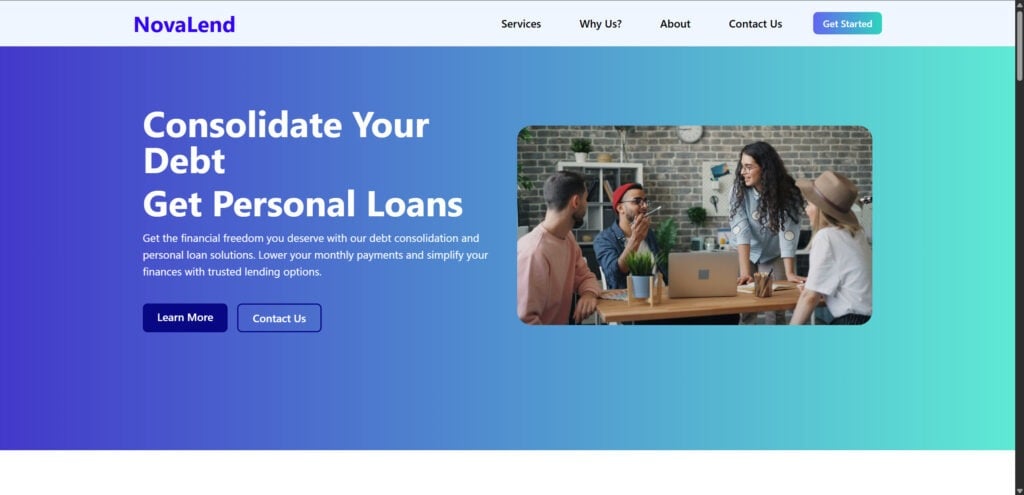
The NovaLend scam is a coordinated loan pre-approval fraud campaign built around robocalls, fake approval numbers, and a deceptive website at novalend.org.
At first glance, the operation looks professional.
The website features modern design elements, clean layouts, stock photography, and polished marketing copy. It promotes debt consolidation and personal loans. It includes navigation menus such as Services, Why Us, About, and Contact Us. There are claims about licensed lenders, fast approval, personalized solutions, secure and private processing, and 24/7 support.
Everything appears structured to mimic a legitimate lending platform.
But beneath that polished surface, the core structure matches a classic phantom loan approval scam.
The robocall component
The scam typically begins with a voicemail.
The caller identifies himself as Brian from NovaLend and claims that your loan has already been pre-approved. He may provide a reference or approval number and ask you to call back at 585-767-6107.
Some victims previously reported similar calls from 585-767-6102. The new number suggests the operation is rotating phone lines to avoid detection.
The message is calm and friendly.
It does not sound aggressive. It does not demand money immediately. It simply says everything is pre-approved and they need a few documents to finalize.
That wording is not accidental.
The phrase “pre-approved” creates a sense of legitimacy and urgency at the same time. It implies that the process is already underway and that you only need to complete a small step.
Most people react differently to “you are approved” than to “would you like a loan.”
The psychological effect is powerful.
The website component
The website novalend.org adds another layer of credibility.
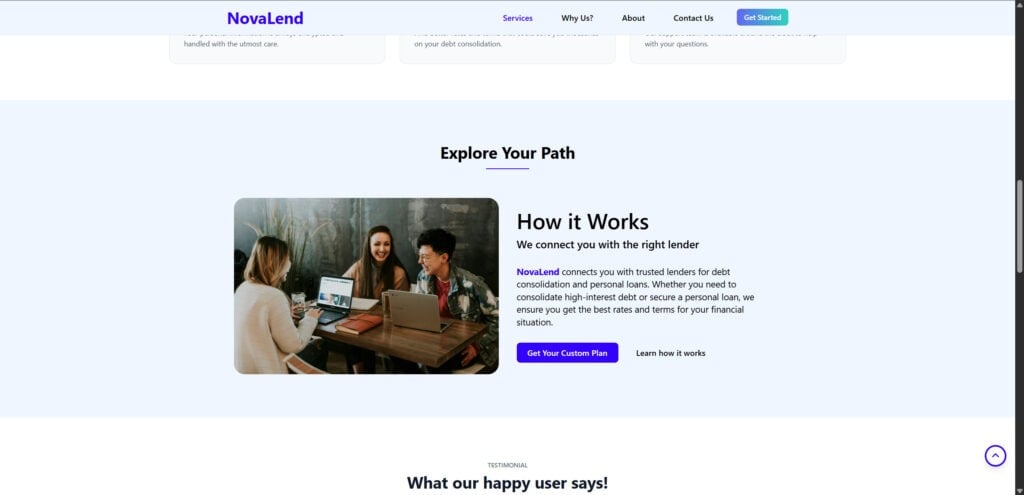
Unlike crude scam pages filled with spelling errors, this site presents itself as a professional debt consolidation and personal loan service. It uses attractive imagery of people discussing finances and working at laptops. It highlights benefits such as:
- Licensed lenders
- Quick approval
- Personalized solutions
- Secure and private handling
- Lower interest rates
- 24/7 support
These are standard marketing claims in the lending industry.
However, legitimate financial institutions are transparent about their corporate registration, regulatory licensing, privacy policies, lending partners, and legal disclosures. Scam sites often mimic the surface design but lack verifiable regulatory credentials.
When you look closely, red flags begin to appear:
- No clear corporate registration details
- No verifiable state lending licenses
- No transparent legal disclosures
- No clear physical office address tied to a regulated entity
- No detailed loan terms, APR ranges, or compliance documentation
Real lenders are legally required to disclose APR ranges, terms, fees, and compliance information. Scam sites focus on emotional benefits and vague promises.
The goal is not to issue loans.
The goal is to collect information.
Why the NovaLend scam feels convincing
This scam works because it combines three elements:
- A pre-approved loan claim
- A professional sounding caller
- A clean, modern website
Most scam calls rely on urgency and fear. This one relies on structure and credibility.
When a victim calls back, the scammer can direct them to novalend.org to “verify” legitimacy. Seeing a website often lowers defenses. People assume that if a site looks polished, it must be real.
That assumption is dangerous.
Modern scam operations frequently invest in professional templates and design frameworks. A well-designed site no longer guarantees legitimacy.
The debt consolidation angle
The site heavily promotes debt consolidation.
That is not random.
Debt consolidation targets people who may already be financially stressed. If someone is juggling credit card balances, personal loans, or medical bills, a pre-approved consolidation loan sounds attractive.
Scammers know that financial stress increases vulnerability.
When someone is worried about high interest rates, minimum payments, or collections, a message promising lower monthly payments and better terms can override skepticism.
The NovaLend scam appears to exploit that exact pressure point.
The rotating phone numbers
The shift from 585-767-6102 to 585-767-6107 strongly suggests an organized campaign rather than a one-time incident.
Scam networks often rotate numbers to:
- Avoid spam detection filters
- Replace numbers that get blocked
- Evade public complaint databases
- Continue operations after exposure
If one number receives too many complaints, they move to another.
That pattern is consistent with robocall fraud operations.
The identity theft risk
The most serious threat in this scam is identity theft.
When scammers request “documents to finalize approval,” they typically ask for:
- Driver’s license photos
- Social Security numbers
- Bank statements
- Pay stubs
- Proof of address
- Date of birth
- Employer details
That package of data is highly valuable.
With enough personal information, criminals can:
- Open new credit accounts
- Apply for loans in your name
- Take over existing financial accounts
- Change mailing addresses
- Create synthetic identities
- Pass identity verification checks
The danger is not always immediate.
Victims may not notice the impact until weeks or months later, when new accounts appear on their credit report.
The advance fee angle
In some versions of the NovaLend scam, after collecting documents and information, the scammer may introduce a fee.
They may claim that your loan is approved but requires:
- A processing fee
- An insurance payment
- A verification deposit
- A transfer charge
- A first installment upfront
They may request payment via:
- Wire transfer
- Debit card
- Payment apps
- Cryptocurrency
- Gift cards
Once you pay, the loan never materializes.
If you hesitate, they may claim the approval will expire.
Legitimate lenders do not require upfront payments before issuing a loan.
That is one of the clearest red flags.
Why this scam spreads quickly
Loan scams scale well.
A robocall system can send thousands of voicemail drops per hour. Only a small percentage of recipients need to respond for the operation to become profitable.
Because the scam blends into the financial services category, it is harder for some victims to immediately recognize.
The website, the friendly tone, and the structured pitch give it an appearance of normal business activity.
That combination makes NovaLend particularly dangerous.
How The Scam Works
Understanding the step by step structure of the NovaLend scam makes it easier to identify and shut down.
Below is a breakdown of the typical flow.
Step 1: The voicemail drop
You receive a voicemail from 585-767-6107.
The message is brief and professional. The caller says something like:
“Hi, this is Brian at NovaLend. It looks like we were able to get everything pre-approved. I just need a few documents back from you. Your approval number is [reference number]. Please call me at 585-767-6107.”
It sounds calm.
There is no yelling, no threats, no obvious fraud language.
That is intentional.
The voicemail is designed to create curiosity and confusion.
If you never applied, you may wonder whether someone applied in your name.
That fear drives callbacks.
Step 2: The callback verification script
When you call back, the scammer shifts into a structured script.
They may say:
- “We just need to verify your identity.”
- “This is for your protection.”
- “We need to complete your underwriting file.”
- “Everything is already approved.”
They begin with basic questions:
- Full name
- Date of birth
- Address
Then they escalate:
- Social Security number
- Employer details
- Monthly income
- Bank account information
The progression is gradual.
By the time they ask for highly sensitive details, you may already feel invested in the process.
Step 3: The website reinforcement
If you question legitimacy, the scammer may direct you to novalend.org.
Seeing a website often reassures victims.
The site shows debt consolidation messaging, attractive visuals, and structured content. It reinforces the narrative that this is a real company.
However, the website serves as a prop.
Its primary function is to create trust, not to issue actual loans.
Scammers understand that people are less likely to question a phone call if it connects to a website.
Step 4: Document collection
Once trust is established, the scammer requests documents.
They may ask you to:
- Upload through a portal
- Email attachments
- Text photos
- Complete an online form
The documents requested are typically enough to build a complete identity profile.
At this point, you are no longer a prospective borrower.
You are a data source.
Step 5: Fee introduction or silent data theft
After collecting information, the scam splits into two possible outcomes.
Path A: Immediate fee demand
The scammer claims your loan requires a final payment before release.
They may say:
- “The insurance needs to be activated.”
- “There is a transfer fee.”
- “We need to secure the funds.”
- “This is refundable.”
You pay $200, $500, or even $1000.
Then communication stops.
Or they ask for another fee.
Path B: Silent identity theft
In other cases, the scammer disappears after receiving documents.
Weeks later, you discover:
- A credit card opened in your name
- A personal loan applied for elsewhere
- Hard inquiries on your credit report
- Collection notices
Because the loan never existed, there is no paper trail to dispute easily.
Step 6: Follow up targeting
If you engage but do not send money, your number may still be marked as responsive.
That can lead to:
- Additional loan scam calls
- Fake bank fraud alerts
- Debt collection scams
- Recovery scams offering to retrieve lost funds
Scam networks often share data internally.
Responding once can increase future exposure.
Step 7: The illusion of professionalism
Everything in the NovaLend scam is structured to appear legitimate:
- Professional tone
- Reference numbers
- Modern website
- Business language
- Customer service style scripts
The illusion of organization lowers skepticism.
People expect scams to be sloppy.
When a scam appears polished, it bypasses that expectation.
That is what makes this campaign effective.
What To Do If You Have Fallen Victim to This Scam
If you interacted with NovaLend, act quickly.
Even if you are unsure whether you shared too much, it is better to take precautionary steps.
1. Stop all communication
Do not call back.
Do not reply to emails.
Block 585-767-6107 and any related numbers.
2. Contact your bank immediately
If you shared banking details or paid a fee:
- Notify your bank of possible fraud
- Request account monitoring
- Ask about freezing or replacing cards
- Review recent transactions
Early action increases the chance of stopping unauthorized activity.
3. Place a fraud alert or credit freeze
If you shared identity information such as your Social Security number:
- Contact the major credit bureaus
- Place a fraud alert
- Consider a credit freeze
A freeze prevents new accounts from being opened in your name without verification.
4. Monitor your credit reports
Check for:
- New accounts
- Hard inquiries
- Address changes
- Name variations
Early detection is critical.
5. File an identity theft report
Use official reporting channels to document the incident.
Having documentation strengthens disputes if fraudulent accounts appear later.
6. Change passwords
If you clicked links or uploaded documents:
- Change your email password
- Change financial account passwords
- Enable two factor authentication
Email access can be used to reset other accounts.
7. Report the scam
Report the number and website to:
- Federal Trade Commission
- Federal Communications Commission
- FBI Internet Crime Complaint Center
Reporting helps track patterns and shut down operations.
8. Warn others
Tell family members.
Especially warn older relatives or anyone dealing with financial stress.
The script may target them next.
The Bottom Line
The NovaLend scam involving 585-767-6107 and the website novalend.org is not a legitimate lending operation.
It is a structured phantom loan approval scheme designed to harvest personal information, identity documents, and sometimes upfront fees.
The voicemail sounds professional.
The website looks polished.
The approval number feels official.
But none of that makes it real.
If you did not apply for a loan, you were not pre-approved.
Real lenders do not cold call strangers and ask for documents without a documented application process. They do not demand upfront fees before issuing funds. They provide transparent licensing, clear legal disclosures, and verifiable corporate identities.
If you receive a call from “Brian at NovaLend,” do not call back.
Block the number, report it, and protect your personal information.
A few minutes of caution can prevent months of identity theft damage.
FAQ
Is NovaLend (novalend.org) a legitimate loan company?
Based on current scam reports tied to unsolicited “pre-approval” voicemails and document requests, novalend.org is being used as part of a loan scam operation. A professional-looking website does not prove legitimacy, especially when the outreach starts with a robocall and you never applied.
What is the NovaLend “Brian pre-approval” voicemail scam?
It is a robocall campaign where a caller claiming to be “Brian” says you were pre-approved for a loan and asks you to call back and send documents. The message is designed to push you into sharing sensitive personal information.
What phone numbers are being used in the NovaLend scam?
Victims have reported callbacks to 585-767-6107. Earlier reports also referenced other 585 area code numbers, including 585-767-6102. These campaigns often rotate numbers, so additional lines may be used.
Why would they call me if I never applied for a loan?
That is the hook. The scam relies on confusion and urgency. Many people call back to figure out what is going on or to confirm no one applied in their name.
What is the purpose of the fake approval or reference number?
It is a credibility trick. Scammers use reference numbers to make the call sound like it came from a real loan file. In real lending, approvals are tied to your application and credit review, not a generic code repeated across victims.
What documents do NovaLend scammers usually ask for?
Common requests include:
- Driver’s license or state ID
- Social Security number or Social Security card photo
- Pay stubs
- Bank statements
- Proof of address (utility bill or lease)
- Employer details and income verification
These are often used for identity theft.
Can this lead to identity theft even if I did not pay anything?
Yes. If you sent documents or shared sensitive information, scammers may use it to open accounts, apply for loans, or attempt account takeovers. Identity theft can surface weeks or months later.
Do they ever ask for money upfront?
Some victims report “processing,” “insurance,” “verification deposit,” or “transfer” fees. Any demand for upfront payment before a loan is issued is a major red flag. Legitimate lenders do not require you to pay to receive a loan you never applied for.
What should I do if I already called them back?
If you only called and shared no personal information, block the number and watch for increased scam calls. If you shared any personal details, take protective steps such as monitoring credit and placing a fraud alert or credit freeze.
What should I do if I sent documents to NovaLend?
Act fast:
- Stop all contact and block the number
- Place a fraud alert or credit freeze with the credit bureaus
- Monitor your credit reports for new accounts or inquiries
- Contact your bank if any financial data was shared
- Change passwords, especially email and banking, and enable 2FA
What if I paid a fee to “release” the loan?
Contact your bank or card issuer immediately and ask about dispute or recall options. Save all receipts, call logs, emails, and screenshots. Also report the incident to the appropriate fraud reporting portals.
Can scammers spoof numbers so it looks local?
Yes. Caller ID can be faked. Even if the number appears local or matches a known area code, treat unsolicited loan “pre-approvals” as suspicious.
How do I report the NovaLend scam?
Report the phone number and the website to official consumer fraud channels in your country. In the US, common reporting options include the FTC, FCC, and IC3. Reporting helps track patterns and can contribute to enforcement actions.
How can I tell a real lender from a fake one?
A legitimate lender will typically:
- Require a real application you initiated
- Run credit checks before approval
- Provide written disclosures (APR, fees, terms)
- Have verifiable licensing and a traceable corporate identity
- Communicate through documented channels, not vague voicemails asking for documents
If the process starts with “you are already approved” and you never applied, treat it as a scam.








