

WhispersHackerRecovery.com is being promoted as a cryptocurrency recovery service that claims it can trace and recover stolen digital assets. The way it is marketed, through emotional testimonials, forum spam, and urgent WhatsApp contact requests, strongly indicates that it is not a legitimate recovery firm but a recovery scam targeting people who have already lost money.
If you are considering contacting this service, stop. This type of operation typically results in further financial loss.

Scam Overview
What Whispers Hacker Recovery claims to be
WhispersHackerRecovery.com presents itself as a cryptocurrency and “hacker recovery” firm offering services like crypto asset recovery, wallet access recovery, blockchain forensic analysis, cyber intelligence, and even “litigation support.” It lists a UK address (28 Gloddaeth St, Llandudno, UK), a WhatsApp phone number (+44 7352219125), and an email address (info@whispershackerrecovery.com).
On the surface, that might sound like a specialized incident-response provider.
But the way this brand is being pushed online, plus the common structure of the messages promoting it, points to something far more concerning: a classic crypto recovery scam pattern, where the “recovery service” is the next step in the fraud chain.
The spam
To promote their scam services the scammers use spam with:
- A first-person “confession” about losing a large amount of crypto
- A believable-sounding scam story (“liquidity mining”) with emotional weight (embarrassment, sleepless nights, regret).
- A dramatic turning point: “I’ve at last got relief because of WHISPERER HACKER RECOVERY.”
- A direct call to action to contact them quickly via WhatsApp and email.
That “victim story” is not written to inform readers. It is written to recruit more victims.
Even more telling: extremely similar promotions for Whispers Hacker Recovery appear across unrelated communities and forums that have nothing to do with crypto recovery.
The promotion pattern is a major red flag: copy-paste posts across random forums
A legitimate security firm does not need to advertise by spamming gaming forums, niche community boards, and technical threads with copy-pasted “testimonials” and WhatsApp numbers.
But that is exactly the pattern visible online:
- Posts promoting “WHISPERER HACKER RECOVERY” appear injected into unrelated discussions.
- The posts often use odd formatting like “HomePage > whispershackerrecovery . c o m” and spaced-out phone numbers, which is a common trick used to evade automated moderation filters.
- The message style repeats: emotional story, “recovered my funds,” contact via WhatsApp, and the same domain and email.
This is not how reputable incident-response, digital forensics, or legal-support providers build credibility. It is how affiliate-style scam networks spread “recovery” brands at scale.
The website itself shows signs of being a template, not a verifiable firm
On WhispersHackerRecovery.com, there are claims that read like marketing filler, including “Proven Track Record” style metrics that do not look professionally maintained. In the site text, the “numbers” section displays strange placeholder-style values such as “1+ satisfied clients,” “1% case success rate,” and “0+ global projects.”
That kind of sloppy or nonsensical presentation is common on quick-turn scam sites that are assembled from templates and then filled with buzzwords like:
- “OSINT”
- “forensics”
- “legal coordination”
- “compliance-driven process”
- “confidential handling”
None of those words prove legitimacy. They are there to calm panic and justify the next step: getting you into a private chat where pressure tactics can begin.
Why recovery scams are so effective after crypto fraud
Recovery scams target people who have already lost money. Regulators and law enforcement warn about this repeatedly because it is so common and so damaging.
The FTC describes refund and recovery scams as a second wave of fraud: someone promises to help you get money back, but you must pay them first, and you lose even more.
The FBI has also warned about recovery scams in the crypto space, including schemes where scammers claim they can recover funds or offer “assistance,” but the real goal is to revictimize people.
Crypto victims are especially vulnerable because:
- Crypto transfers are typically not reversible once sent.
- Victims feel urgency and shame, so they may act quickly and privately.
- Many victims are told (accurately) that recovery is difficult, which makes any “specialist” offering hope feel rare.
Recovery scammers exploit that emotional gap.
How “liquidity mining” losses connect to recovery-scam targeting
The story in your spam sample references a “liquidity mining” program that looked polished, had steady gains, and then vanished with the funds.
That description fits a broader category of crypto investment fraud, where scammers use professional-looking platforms and dashboards to convince victims to deposit more and more. The FBI describes this general pattern: fake “investments” that are actually controlled by criminal actors, leading to total loss.
Once a victim has been drained, the same ecosystem often hits them again:
- The original scammers pivot into “recovery” roles under a new name, or
- A separate scam group scrapes victim lists from forums, Telegram groups, complaint boards, and blockchain trails, then pitches “recovery.”
That is why you see recovery brands pushed so aggressively in comment sections and random forums.
Bottom line on legitimacy
Based on the visible promotion pattern and how this brand is being spread, Whispers Hacker Recovery should be treated as high-risk and fraudulent.
Even if a site looks professional, a real recovery pathway generally involves reporting, evidence preservation, and exchange or law-enforcement coordination. It does not start with random forum testimonials and a WhatsApp number.
How The Scam Works
What follows is a step-by-step breakdown of how scams like this commonly operate, and how WhispersHackerRecovery.com promotions fit that funnel.
Step 1: The victim loses crypto in a “realistic” investment trap
Most modern crypto fraud is not “send me $500 and I’ll double it.”
It is structured.
Victims are walked into:
- fake exchanges
- fake DeFi dashboards
- “liquidity mining” pools
- staking portals
- OTC broker chats
- investment groups on Telegram or WhatsApp
The experience is designed to feel mature and technical:
- steady gains instead of outrageous returns
- clean UI
- charts and transaction history
- “support agents” who answer questions quickly
- the sense that you are participating in something real
This is why the spam story you shared feels believable. It is describing the exact emotional arc many victims go through.
Step 2: The platform collapses, withdrawals fail, and support disappears
Then something changes:
- withdrawals get “stuck”
- you are asked to pay a “verification fee” or “tax” to withdraw
- the site begins to lag or show errors
- the Telegram group gets deleted
- your “account manager” stops replying
- the domain vanishes
This is the moment victims panic and start searching for help.
Step 3: The victim searches online and encounters planted “testimonials”
This is where recovery scammers do their best work.
They place “success stories” in places victims might stumble into:
- random forum threads
- comment sections
- community boards
- “reviews” pages
- Q&A sites
The WhispersHackerRecovery promotions show up in exactly this way, including on unrelated forums where the posts read like injected spam.
The content is almost always:
- first-person story
- big loss number
- big emotion
- “they helped me recover”
- WhatsApp contact details
Your sample message is that script, almost line-for-line.
Step 4: Contact moves immediately to WhatsApp
Recovery scammers prefer WhatsApp (and sometimes Telegram) because:
- it is private
- it is fast
- it is harder for platforms to moderate
- it allows voice calls, screenshots, and pressure tactics
WhispersHackerRecovery.com prominently advertises WhatsApp contact, and the spam posts push people to WhatsApp as the primary route.
Once you are in WhatsApp, the conversation usually follows a playbook.
Step 5: They “qualify” you and extract data
They will ask for:
- the wallet address you sent from
- the destination address
- TXIDs (transaction hashes)
- screenshots of the fake platform
- emails you received
- your exchange name
- your country
- sometimes your ID documents “for compliance”
This feels reasonable at first.
But it serves two purposes:
- It helps them tailor the scam story so it sounds technical.
- It gives them valuable data they can use for further fraud.
In the worst cases, victims hand over sensitive documents that can later be used for identity theft or account takeovers.
Step 6: The “recovery assessment” becomes a paid step
A common turning point is the introduction of a fee.
It may be framed as:
- “case opening deposit”
- “forensic analysis fee”
- “blockchain tracing tool cost”
- “legal filing fee”
- “compliance fee”
- “smart contract extraction cost”
Recovery scammers often promise they can recover funds, but only after you pay something up front.
The FBI explicitly warns that recovery schemes commonly involve charging an up-front fee, then disappearing or continuing the scam.
The FTC warns about the same structure: pay first, lose more.
Step 7: They show “proof” that feels convincing but is not verifiable
If you hesitate, they may provide “evidence”:
- screenshots of tracing graphs
- a PDF “forensic report”
- a dashboard showing your funds “located”
- a message claiming your funds are “frozen”
- a claim they contacted an exchange
- a claim they have “legal partners”
This is designed to create commitment.
Once you believe recovery is in progress, you are more likely to pay the next fee.
Step 8: The fee ladder begins (and it rarely ends)
After the first payment, the scam usually escalates into a ladder of additional charges, such as:
- “gas fee” to move the recovered crypto
- “tax clearance” before release
- “anti-money laundering certificate”
- “KYC re-verification”
- “escrow activation”
- “smart contract unbonding fee”
- “wallet synchronization fee”
- “court affidavit cost”
- “international transfer clearance”
Each fee comes with urgency:
- “You must pay within 30 minutes or the funds will be released to the scammer.”
- “The exchange compliance window is closing today.”
- “We have a one-time chance to intercept the transfer.”
Victims often keep paying because psychologically they are chasing the loss. The scam turns into a sunk-cost trap.
Step 9: Extortion, threats, or the silent exit
If victims stop paying, outcomes often include:
- being ghosted
- being told the case is “closed”
- being threatened with “legal action” for “wasting resources”
- being shown fake invoices
- being pressured to borrow money
- being told to sell assets to pay the final fee
Some victims are also targeted again by other “recovery” brands, because scammers trade lists of people who already paid once.
What these messages often look like in real life
Below are common examples of how recovery scammers phrase things. Even when the exact wording varies, the structure repeats:
- “Good news. Our tracing tool shows your funds are currently sitting in a cluster linked to an exchange.”
- “We can initiate the recovery, but compliance requires a $350 investigation deposit.”
- “We have secured the withdrawal, but blockchain release requires a $500 gas fee.”
- “Because it is USDT, there is a smart-contract authorization step. We can guide you.”
- “You must act now. If you wait, the scammer will move it through a mixer.”
- “We recovered $18,400 of the $23,000. You will receive it after the clearance charge.”
Notice the pattern:
- “good news”
- technical language
- urgency
- fee
- promise of release
The reality: legitimate recovery is not a WhatsApp miracle
Real crypto recovery, when it happens, usually involves some combination of:
- tracing the movement of funds on-chain
- identifying a point where funds hit a regulated exchange or service
- filing reports and providing evidence quickly
- working with exchange compliance teams and law enforcement
And even then, outcomes vary.
No legitimate firm can promise that your funds will be recovered, and no ethical provider will pressure you into a fast WhatsApp payment cycle.
That is exactly why recovery scams exist: they sell certainty where none exists.
What To Do If You Have Fallen Victim to This Scam
If you contacted Whispers Hacker Recovery, paid them, or shared information, the goal now is damage control. Move quickly, but stay calm.
1) Stop sending money and stop communicating
Do not pay “one last fee.”
Do not argue. Do not negotiate.
Cut contact and block the numbers and accounts involved.
2) Preserve every piece of evidence
Save and back up:
- WhatsApp chats (export them)
- emails and headers
- the website URL(s) you were sent
- wallet addresses and TXIDs
- screenshots of the fake platform and any “recovery” dashboards
- payment receipts, invoices, and crypto transfer details
Make a clean folder with dates and notes. You may need it for reports.
3) Secure your accounts immediately
Do this even if you think “they only had my wallet address.”
- Change passwords for your email, exchange accounts, and any financial services tied to your identity.
- Enable 2FA (use an authenticator app, not SMS if possible).
- If you installed any software, browser extensions, or mobile apps during the process, assume compromise.
If you believe your device was exposed, back up critical files and do a full malware scan, or reset the device.
4) If you connected a wallet to anything, revoke permissions
If you interacted with a DeFi site or signed approvals:
- Revoke token allowances for suspicious contracts.
- Move remaining assets to a fresh wallet created on a clean device.
- Do not reuse seed phrases.
This step matters because many victims lose a second wave of funds due to lingering approvals.
5) Contact the exchange or platform you used to send the crypto
If you sent crypto from a centralized exchange:
- contact their support immediately
- provide TXIDs and the destination address
- ask them to flag the address and investigate whether the funds hit an exchange they can identify
The FTC notes that crypto payments are typically not reversible, but you should still contact the company you used to send the crypto and report the transaction as fraudulent.
6) File official reports (even if you feel embarrassed)
Reporting helps build cases and can sometimes assist with freezing funds if they land somewhere regulated.
If you are in the US, file with:
- FBI IC3 (Internet Crime Complaint Center) for cryptocurrency-related complaints
- FTC scam reporting and guidance
If you are outside the US, file with:
- your national cybercrime unit
- local police (yes, still file it)
- your financial regulator’s fraud reporting channel, if available
7) If you shared ID documents, treat it as an identity-risk event
Assume your documents may be reused.
Protect yourself by:
- placing fraud alerts or credit freezes where available
- monitoring bank and card statements closely
- watching for new-account fraud
- tightening security on email and phone accounts (SIM swap risk)
8) Watch for “follow-up” scams pretending to be authorities
This is important.
The FBI has warned about scammers impersonating IC3 and claiming they recovered funds or will help recover funds, as a ruse to revictimize people.
If anyone contacts you claiming:
- they are from IC3
- they are from “Interpol crypto recovery”
- they are from “exchange investigations”
- they already recovered your money
Treat it as suspicious and verify through official channels only.
9) Warn others where you found the promotion
If you found the pitch on a forum thread or community page:
- report the post to moderators
- leave a factual warning comment
- include the domain, email, and WhatsApp number so others can recognize it
You are not being dramatic by doing this. Recovery scams spread because silence lets them.
Is Your Device Infected? Run a Free Malware Scan
Slow performance, constant pop-ups, or strange behavior? These are classic signs of a malware infection. The fastest way to find out is to scan your device with Malwarebytes Free — one of the most trusted malware removal tools available.
The free version detects and removes the most common threats, including:
- Adware — the cause of those annoying pop-ups
- Browser hijackers — unwanted redirects and changed homepages
- Trojans and spyware — hidden programs stealing your data
- Potentially unwanted programs (PUPs) — software you never asked for
👉 Select your device below — Windows, Mac, or Android — then follow the simple steps to download Malwarebytes, scan your system, and remove any threats it finds. The scan usually takes 5 to 20 minutes.
Run a Malware Scan with Malwarebytes for Windows
Malwarebytes is one of the most popular and trusted anti-malware tools for Windows — and it’s completely free for removing infections. It catches threats that many antivirus programs miss, including adware, browser hijackers, and trojans. Follow the steps below to scan and clean your PC in just a few minutes.
Download Malwarebytes
Click the button below to download the latest version of Malwarebytes for Windows from the official source. The free version is all you need — it will scan your computer and remove adware, browser hijackers, and other malicious software at no cost.
Download MalwarebytesOfficial installer for Windows 11 and 10. Your download starts right away.Want real-time protection? See Malwarebytes Premium Malwarebytes Free for WindowsScans and removes malware at no cost
-
Install Malwarebytes
When the download finishes, open your Downloads folder and double-click the MBSetup file. If Windows shows a User Account Control pop-up, click “Yes” to allow the installation.
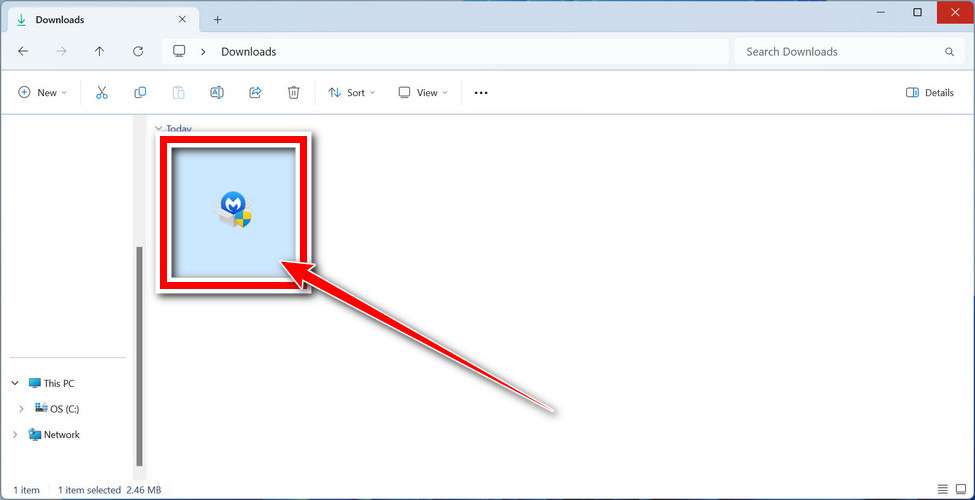
Follow the On-Screen Prompts to Install Malwarebytes
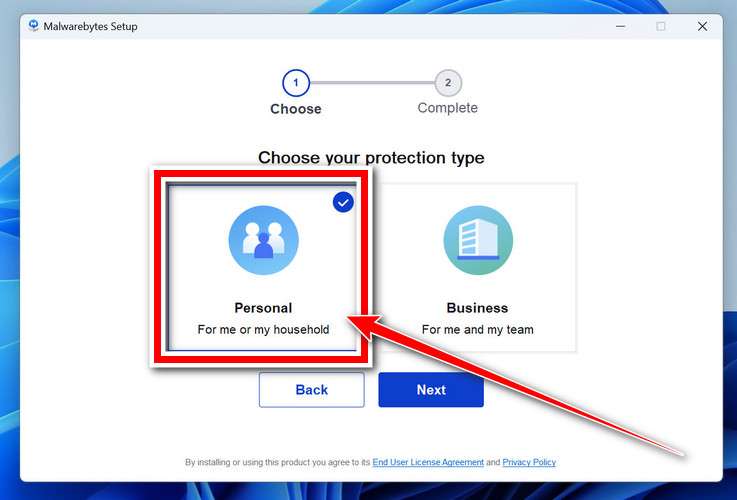
The setup wizard will walk you through a few quick screens:
-
Choose where you’re installing the program — “Personal Computer” or “Work Computer” — then click Next.
-
Malwarebytes will now install on your device. This usually takes under a minute.

-
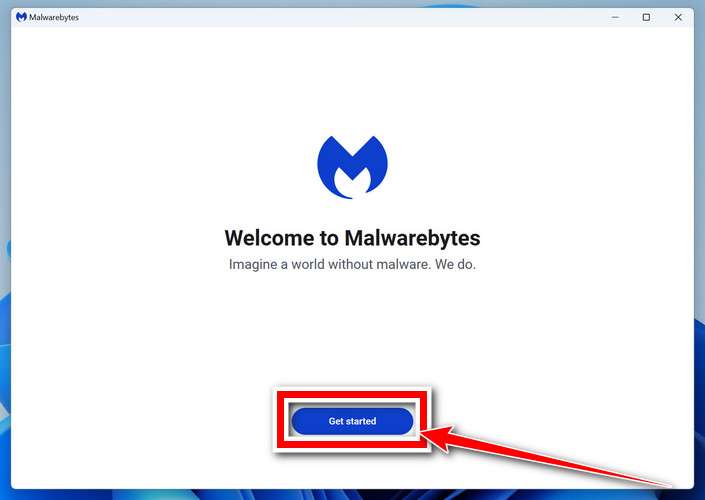
When installation is complete, the “Welcome to Malwarebytes” screen will open automatically.
-
On the final screen, click Open Malwarebytes to launch the program.

-
Enable “Scan for Rootkits”
Before scanning, turn on rootkit detection so Malwarebytes can find even the most hidden threats. Click the Settings gear icon on the left side of the screen.
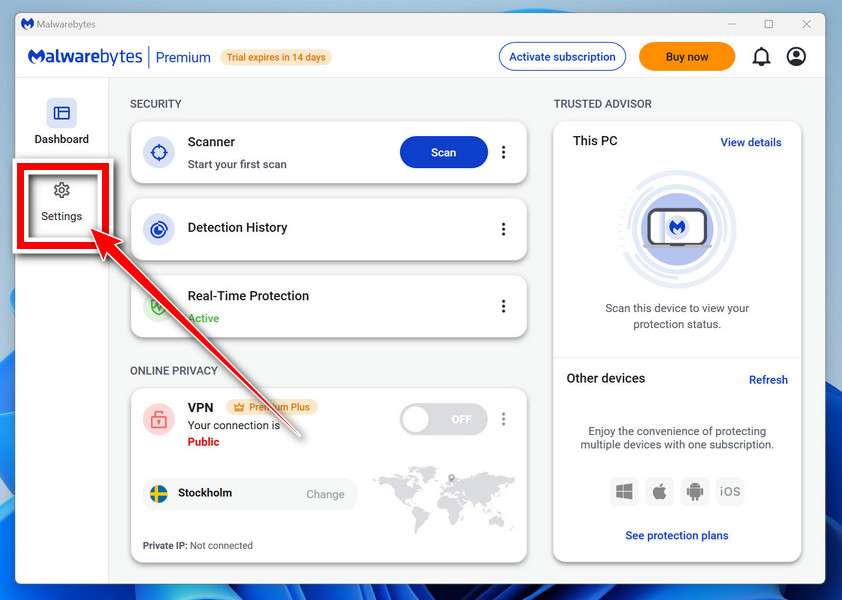
In the settings menu, find “Scan for rootkits” and click the toggle so it turns blue.

Done? Click “Dashboard” in the left pane to return to the main screen.
Start the Scan
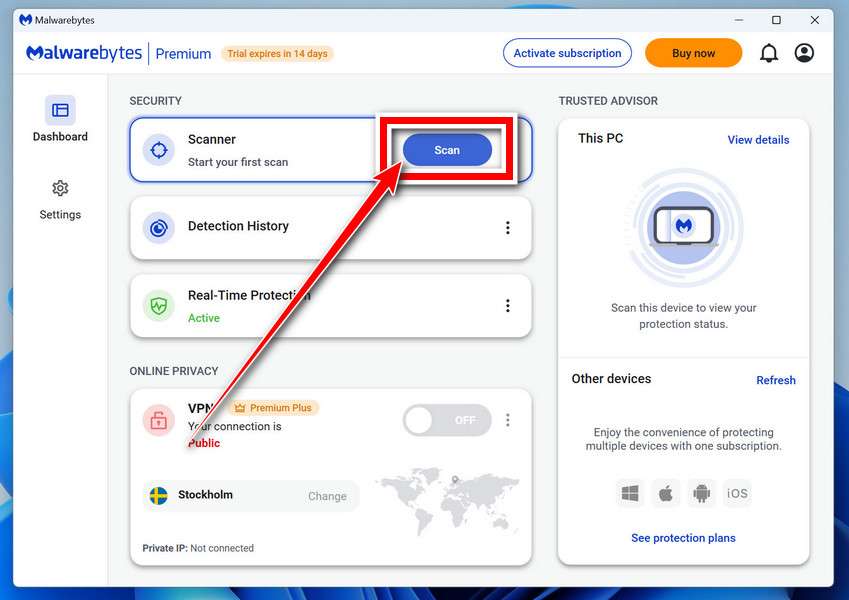
Click the blue Scan button. Malwarebytes will automatically update its virus database and start checking your computer for malware.
-
Wait for the Scan to Finish
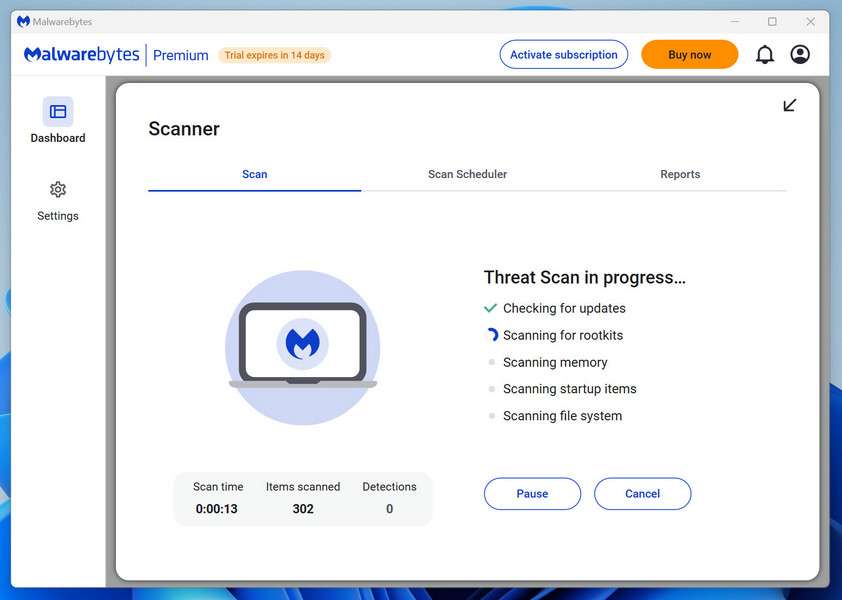
The scan checks your entire system for browser hijackers and other malicious programs, so it can take 5 to 20 minutes depending on your computer. Feel free to do something else — just check back occasionally to see the progress.
-
Quarantine the Detected Threats
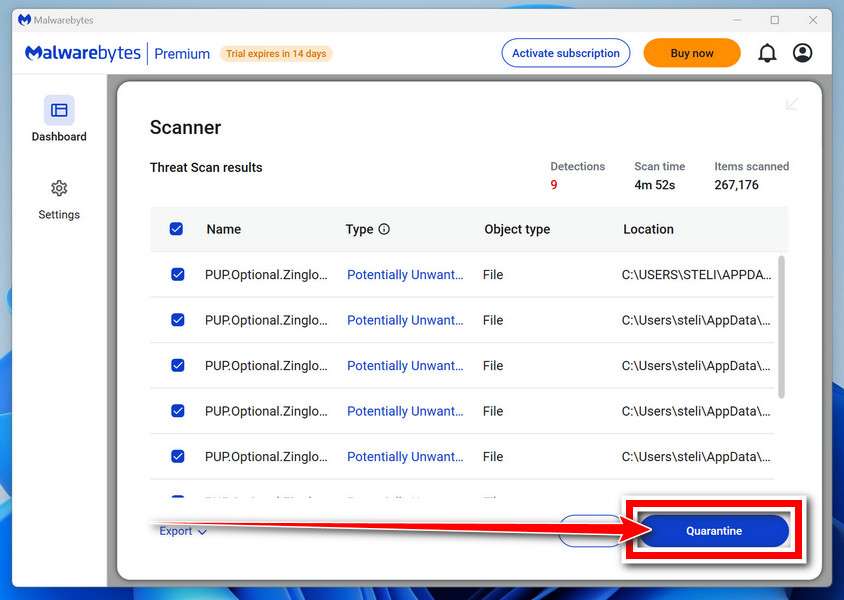
When the scan is done, you’ll see a list of everything Malwarebytes found — malware, adware, and potentially unwanted programs. Click the “Quarantine” button to remove all of them at once.
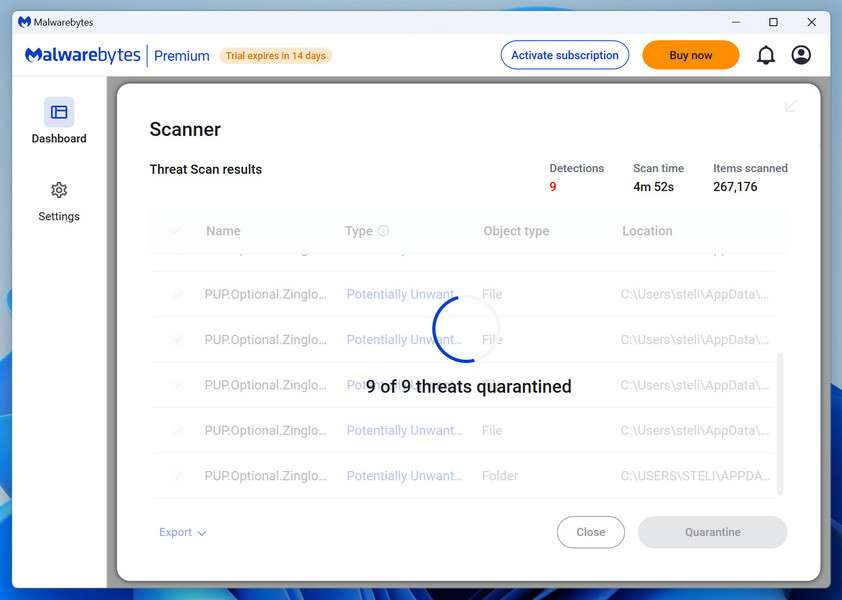
Malwarebytes will now remove the malicious files and registry entries and move them safely into quarantine.
-
Restart Your Computer
Some threats can only be fully removed after a reboot. If Malwarebytes asks you to restart, click Yes. Once you’re logged back in, Malwarebytes has finished removing the threats it found.
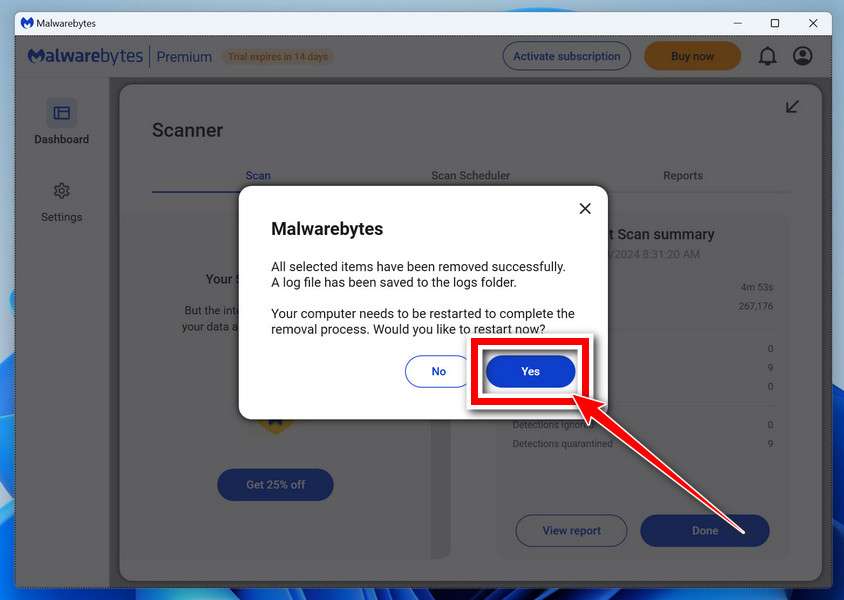
That’s it — your Windows PC is now clean of trojans, adware, and other malware, and should be back to running smoothly.
If you are still having problems with your computer after completing these instructions, then please follow one of the steps:
- Run a computer scan with ESET Online Scanner
- Ask for help in our Windows Malware Removal Help & Support forum.
Run a Malware Scan with Malwarebytes for Mac
Malwarebytes for Mac is a free on-demand scanner that removes the malware other security software tends to miss — adware, browser hijackers, and unwanted programs included. Cleaning an infected Mac with Malwarebytes has always been completely free, and it’s our go-to recommendation. Follow the steps below to scan and clean your Mac in just a few minutes.
-
Download Malwarebytes for Mac
Click the button below to download the latest version of Malwarebytes for Mac.
Download MalwarebytesOfficial installer for macOS. Your download starts right away.Want real-time protection? See Malwarebytes PremiumMalwarebytes Free for MacScans and removes malware at no cost -
Open the Malwarebytes setup file
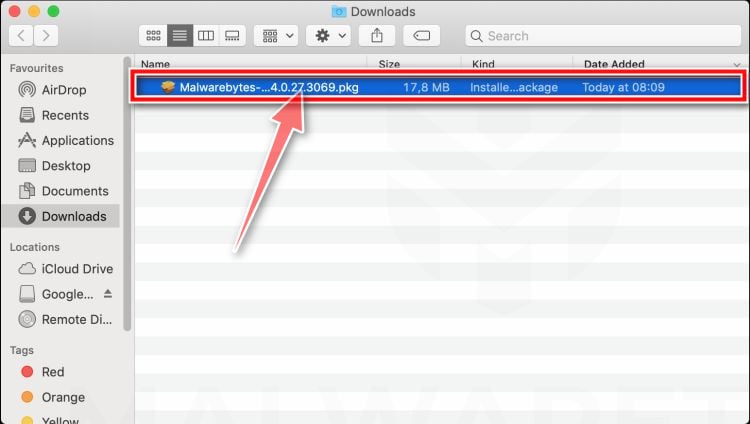
When the download finishes, open your Downloads folder and double-click the setup file to begin the installation.
-
Follow the On-Screen Prompts to Install Malwarebytes
The Malwarebytes for Mac Installer will guide you through a few quick screens. Click “Continue” and keep following the prompts until the installation completes.
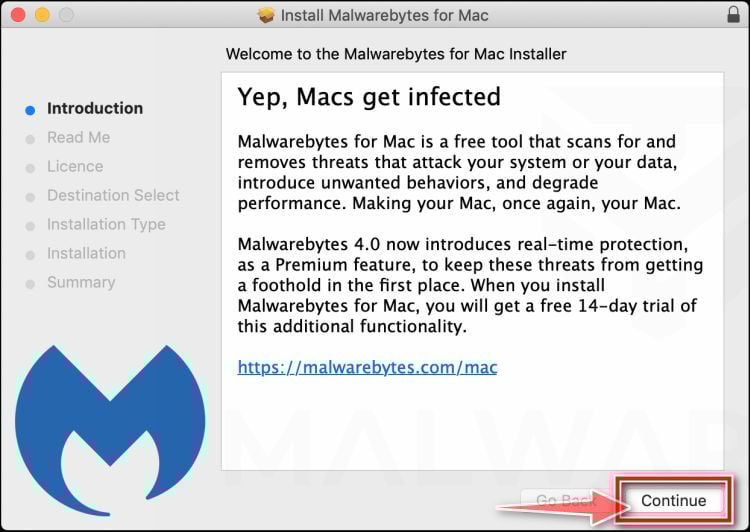
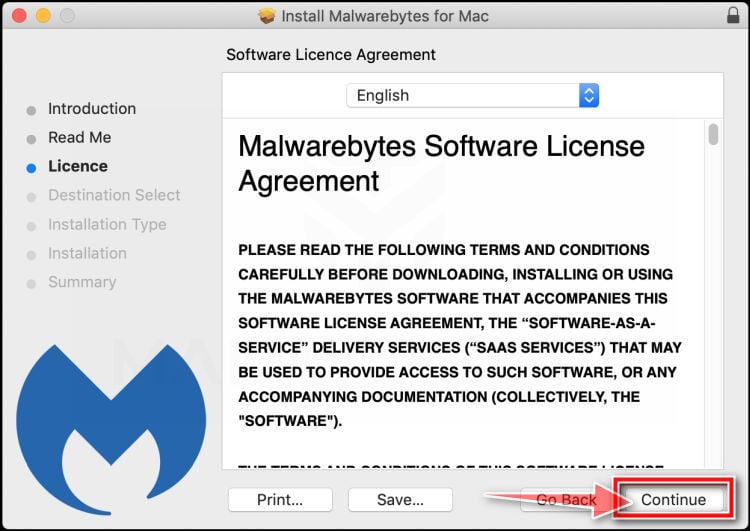
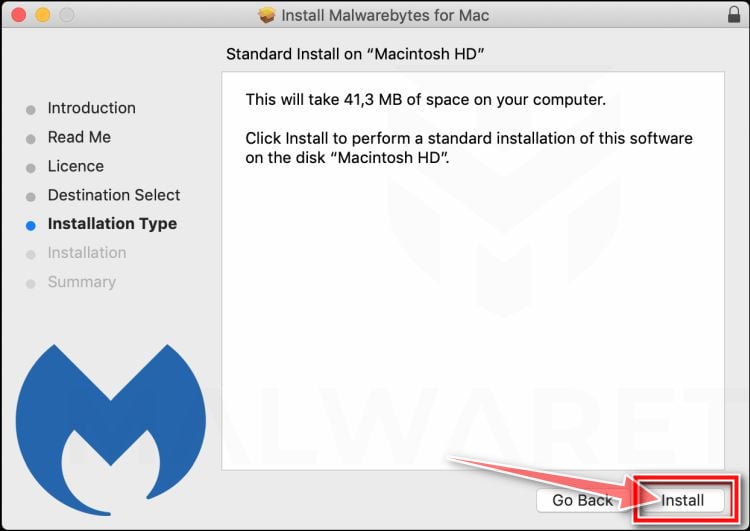
When the installation is complete, Malwarebytes opens to the Welcome to Malwarebytes screen. Click “Get started“.
-
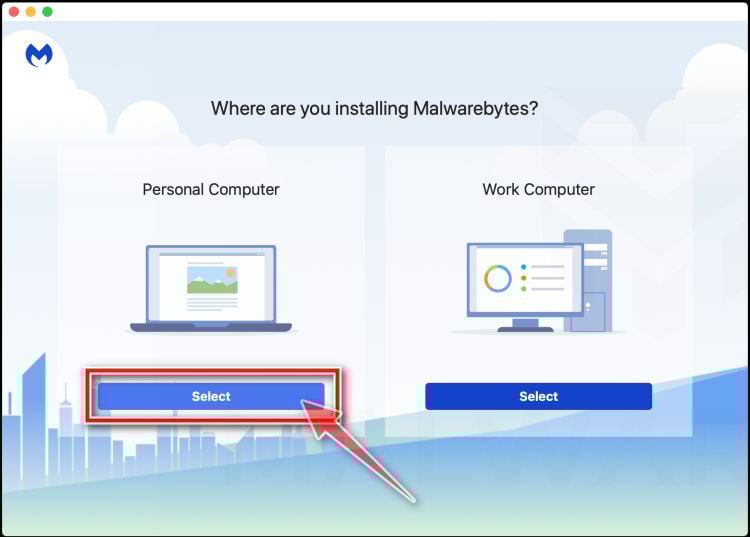
Select “Personal Computer” or “Work Computer”
Malwarebytes will ask what type of computer you’re installing it on. Click either Personal Computer or Work Computer, whichever applies.
-
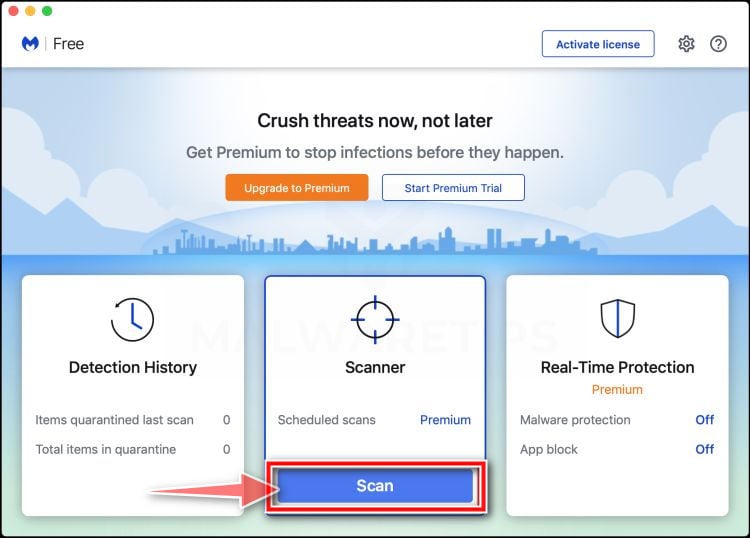
Start the Scan
Click the “Scan” button. Malwarebytes will automatically update its detection database and begin checking your Mac for malware.
-
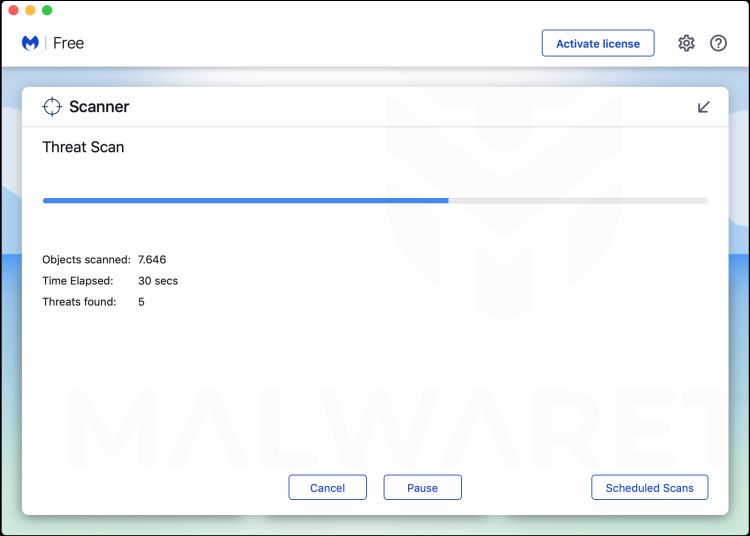
Wait for the Scan to Finish
Malwarebytes will scan your Mac for adware, browser hijackers, and other malicious programs. This can take a few minutes, so feel free to do something else — just check back occasionally to see the progress.
-
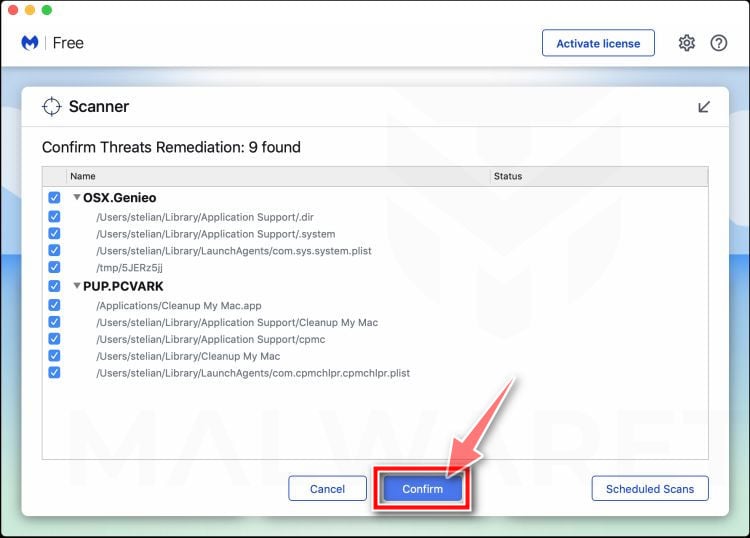
Quarantine the Detected Threats
When the scan is done, you’ll see a list of everything Malwarebytes found. Click the “Quarantine” button to remove all the threats at once.
-
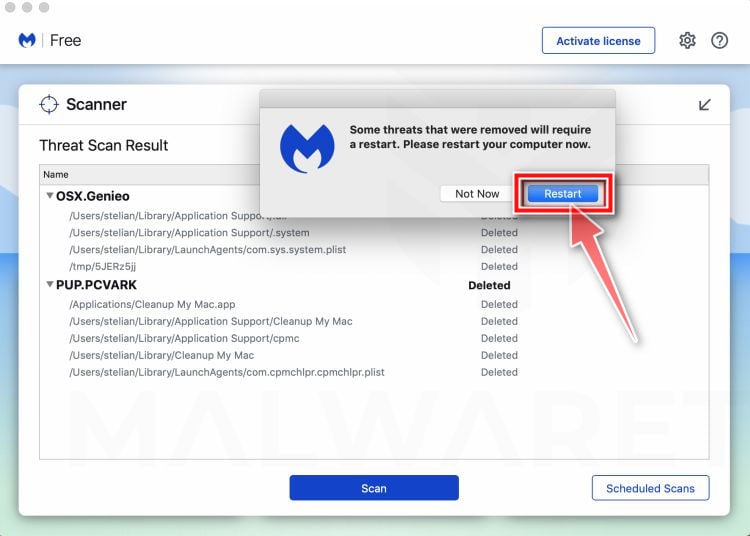
Restart Your Mac
Malwarebytes will now remove all the malicious files it found. Some threats can only be fully removed after a reboot — if Malwarebytes asks you to restart, allow it. Once you’re logged back in, your Mac is clean.
That’s it — your Mac is now free of adware, rogue browser extensions, and other potentially harmful software.
If you are still experiencing problems while trying to remove a malicious program from your computer, please ask for help in our Mac Malware Removal Help & Support forum.
Run a Malware Scan with Malwarebytes for Android
Malwarebytes for Android automatically detects and removes dangerous threats like malware and ransomware so you don’t have to worry about your most-used device being compromised. Aggressive detection of adware and potentially unwanted programs keeps your Android phone or tablet running smooth.
-
Download Malwarebytes for Android.
You can download Malwarebytes for Android by clicking the link below.
Get Malwarebytes for AndroidOpens Google Play in a new tab.Want real-time protection? See Malwarebytes Premium for AndroidMalwarebytes for AndroidScans your phone and removes malware at no cost -
Install Malwarebytes for Android on your phone.
In the Google Play Store, tap “Install” to install Malwarebytes for Android on your device.

When the installation process has finished, tap “Open” to begin using Malwarebytes for Android. You can also open Malwarebytes by tapping on its icon in your phone menu or home screen.

-
Follow the on-screen prompts to complete the setup process
When Malwarebytes will open, you will see the Malwarebytes Setup Wizard which will guide you through a series of permissions and other setup options.
This is the first of two screens that explain the difference between the Premium and Free versions. Swipe this screen to continue.
Tap on “Got it” to proceed to the next step.
Malwarebytes for Android will now ask for a set of permissions that are required to scan your device and protect it from malware. Tap on “Give permission” to continue.
Tap on “Allow” to permit Malwarebytes to access the files on your phone.
-
Update database and run a scan with Malwarebytes for Android
You will now be prompted to update the Malwarebytes database and run a full system scan.

Click on “Update database” to update the Malwarebytes for Android definitions to the latest version, then click on “Run full scan” to perform a system scan.

-
Wait for the Malwarebytes scan to complete.
Malwarebytes will now start scanning your phone for adware and other malicious apps. This process can take a few minutes, so we suggest you do something else and periodically check on the status of the scan to see when it is finished.

-
Click on “Remove Selected”.
When the scan has been completed, you will be presented with a screen showing the malware infections that Malwarebytes for Android has detected. To remove the malicious apps that Malwarebytes has found, tap on the “Remove Selected” button.

-
Restart your phone.
Malwarebytes for Android will now remove all the malicious apps that it has found. To complete the malware removal process, Malwarebytes may ask you to restart your device.
That’s it — your Android phone is now clean — no more malicious apps, adware, or browser redirects.
If you are still having problems with your phone after completing these instructions, then please follow one of the steps:
- Restore your phone to factory settings by going to Settings > General management > Reset > Factory data reset.
- Ask for help in our Mobile Malware Removal Help & Support forum.
Stay Protected: Block Ads and Malicious Sites
Now that your device is clean, keep it that way. Most infections start with a malicious ad or a fake download button — so blocking them at the source is your best defense.
We recommend AdGuard, which blocks malicious ads, phishing pages, and dangerous redirects before they can reach you.
👉 Download AdGuard and browse safely
The Bottom Line
WhispersHackerRecovery.com is being promoted using a pattern that strongly matches crypto recovery scam marketing: emotional victim stories, copy-pasted “testimonials” across unrelated forums, and a push to move targets into WhatsApp fast.
That is not what legitimate incident-response or forensic firms look like in the real world.
If you have already been scammed once, the most dangerous thing you can do is chase the loss through a stranger promising certainty. The FTC and FBI both warn that recovery scammers specifically target people who already lost money, and the result is usually more loss.
Treat WhispersHackerRecovery.com as a SCAM. Do not pay them. Do not share documents. Focus on securing your accounts, preserving evidence, and reporting through official channels.
Is WhispersHackerRecovery.com a scam?
Yes. The promotional pattern, spam-style testimonials, and direct push to WhatsApp are consistent with known crypto recovery scams. These operations exploit victims who have already lost funds and attempt to extract additional payments under the promise of recovery.
Can they really recover my stolen cryptocurrency?
No credible company can guarantee recovery of cryptocurrency. Blockchain transactions are generally irreversible. Any service promising certain or guaranteed recovery is misleading you.
Why do they ask to move the conversation to WhatsApp?
Scammers prefer WhatsApp because it allows private, unmonitored communication. It enables them to apply pressure, send fabricated “proof,” and request payments without public scrutiny.
What happens after you contact them?
Typically, the process looks like this:
- They ask for transaction details, wallet addresses, and screenshots.
- They claim to “trace” or “locate” your funds.
- They request an upfront fee for investigation, compliance, legal action, or blockchain processing.
- After payment, additional fees appear.
- If you stop paying, communication ends or they apply pressure.
This cycle is designed to extract as much money as possible.
What are the main red flags?
Watch for:
- Guaranteed recovery claims
- Upfront fees before any verifiable action
- Requests for seed phrases or private keys
- Urgent deadlines
- Claims that funds are “frozen” but require payment to release
- Testimonials posted across unrelated forums
These are classic recovery scam tactics.
I already paid them. What should I do?
Take immediate action:
- Stop all communication.
- Do not send any additional payments.
- Save all chat logs, emails, wallet addresses, and transaction IDs.
- Secure your accounts by changing passwords and enabling strong two-factor authentication.
- Report the incident to your local cybercrime authority.
If you paid by card or bank transfer, contact your financial institution immediately and ask about fraud procedures.
Can a legitimate investigator ask for my seed phrase?
No. Anyone asking for your seed phrase or private key is attempting to steal your remaining funds.
Why do recovery scams target crypto victims?
Crypto losses are often irreversible. Victims feel urgency and regret. Scammers exploit that emotional state by offering hope and a supposed solution. The promise of recovery becomes the second scam.
Could the same scammers be behind both the original fraud and the recovery offer?
Yes. In many cases, victim information is reused or shared between scam groups. Some recovery pitches come directly from the same network that committed the original fraud.
What is the safest path forward after a crypto scam?
Focus on:
- Securing your accounts and devices
- Preserving evidence
- Reporting through official government and law enforcement channels
- Avoiding anyone who asks for money to “get your funds back”
Recovery scams thrive on desperation. The safest decision is not to engage with them at all.








