


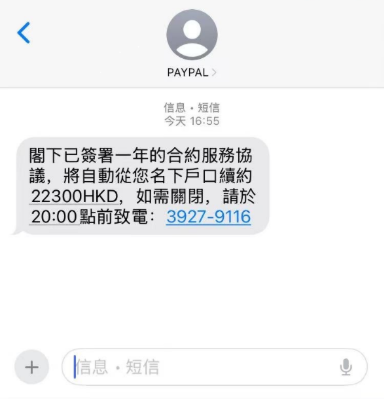
A PayPal text says you have already signed a yearly service agreement. A large debit is coming, and there is a number to call before tonight.
You may be tempted to ask how this happened before checking anything else. That is exactly why the message makes cancellation sound so urgent.
Overview
An invented agreement creates a reason to call
The PayPal contract text scam claims a one-year service agreement will trigger an automatic HK$22,300 debit. It offers a telephone route to stop it.
The amount is part of the threat, not confirmation that PayPal took your money. A message cannot establish a contract simply by saying you signed one.
The trap starts when the supposed cancellation route becomes your source of information about the problem. The sender then controls both the accusation and the proposed fix.
PayPal has identified the circulating messages as fraudulent
PayPal Hong Kong’s warning includes the original SMS shown above and confirms that the company is not associated with these messages.
The example asks recipients to call 3927-9116 before 20:00. Do not call that number to check, dispute, or cancel the alleged agreement.
The Hong Kong Monetary Authority also relayed the alert. This is confirmed PayPal impersonation, not a dispute about a genuine PayPal subscription.
The safe check starts outside the text
- Open PayPal through your usual app or independently entered website.
- Check actual account activity instead of assuming the threatened debit occurred.
- Reach customer service through an independently verified PayPal channel.
- Don’t provide passwords, verification codes, or financial information to someone reached through the message.
- If you already responded, record what you disclosed and protect the affected account or payment method.
Why the Cancellation Offer Is More Persuasive Than a Payment Demand
The text doesn’t begin by asking you to buy a service. It tells you the decision has already been made and gives you a narrow opportunity to object.
That can make calling feel defensive rather than risky. You aren’t trying to obtain a prize; you are trying to prevent a loss.
A large, specific amount makes the claim memorable. Yet precision is easy to invent, and it doesn’t connect the message to your real account.
The deadline adds another distraction. Instead of checking whether the debit exists, you may start calculating how many minutes remain before the stated cutoff.
Neither detail should decide your response. An actual transaction record and independently reached support are more useful than arguing with the person making the claim.
The lead image is an authentic message example released by PayPal. Its presence documents the fraudulent text, not the existence of the contract described inside it.
How the PayPal Contract Text Scam Works
Step 1: The sender borrows the name of a familiar payment service
A payment-service name gives an otherwise unexplained SMS an immediate subject. You may recognize the brand even if you rarely use the account.
The sender doesn’t have to know your balance or recent purchases for the threat to sound possible. Many recipients can imagine an overlooked subscription.
If you don’t use PayPal, that is another reason to avoid the cancellation number. You don’t need to create an account or identify yourself to the sender.
Step 2: A supposed yearly agreement makes inaction sound expensive
The message presents an obligation as settled. That encourages you to search for your mistake rather than ask whether the sender has any authority.
You might wonder whether an old purchase, family member, or saved payment arrangement caused it. Those possibilities are questions for your actual account records.
Don’t supply recent purchases or personal details to help the caller identify the supposed agreement. You could give them information that makes the next explanation more convincing.
A real recurring payment should be investigated through the genuine service and relevant merchant. The text’s declaration is not a substitute for those records.
Step 3: A same-day cutoff directs you toward the supplied number
The deadline turns a vague concern into an immediate task. Calling the prominent number looks quicker than finding the legitimate support route.
That shortcut is the dangerous handoff. A telephone number printed in a fraudulent message is part of the message, not independent verification.
Let the claimed cutoff pass rather than rush into an unverified call. The sender’s deadline cannot make its identity or contract claim authentic.
Step 4: The conversation can create a new disclosure or payment risk
PayPal’s public alert confirms the text and callback lure. It does not establish the script every person would hear after dialing.
Respond to actual requests if you already called. A password disclosure, shared code, payment, or remote-access installation each creates a different problem to address.
Don’t accept another caller-supplied number as a safer department. A transfer within the same unverified conversation leaves the original trust problem unresolved.
If someone asks you to approve a transaction to cancel another one, stop and check with your real payment provider. Their explanation cannot authorize that action.
What the Sender Name Can Tell Hong Kong Customers
PayPal says its official registered SMS sender ID in Hong Kong is #PayPal under the local SMS Sender Registration Scheme.
That is useful regional guidance. It should not be turned into a worldwide claim that every legitimate PayPal communication uses one identical sender format.
Check the full message and its requested action as well. A company name on your screen is not permission to disclose security information or move money.
Don’t spend time trying to prove the origin through a phone-number lookup alone. The decisive confirmation is the company’s own denial of the circulating SMS.
A familiar conversation label may also distract from a new request. Treat an unexpected financial instruction as something to verify, regardless of how the messaging app groups it.
Checking for a Real Charge Without Calling the Scammer
Use the account you normally use
Open the installed PayPal app or reach PayPal independently. Avoid links, search advertisements, and support numbers offered by the disputed message.
Look for the alleged transaction in your actual activity. Also review relevant payment arrangements through the genuine service if you are concerned about recurring billing.
If the account shows something unfamiliar, report that specific item through PayPal’s established process. A separate real problem doesn’t make the SMS cancellation line genuine.
Compare the funding source too
Your bank or card records can help establish whether money actually moved. Use those institutions’ own apps or trusted contact details.
Distinguish a pending item, a completed charge, and a statement that merely appears in a text. The organization handling your report needs the actual record.
Don’t move money to an alleged protected account while checking. Verification should establish what happened, not create another transaction at a stranger’s direction.
Keep genuine billing questions separate
You may have legitimate subscriptions that deserve review. Cancel those through the real merchant or verified payment arrangement, following the relevant terms.
Deleting a fraudulent SMS doesn’t cancel a genuine subscription. Likewise, canceling an unrelated subscription doesn’t close any account exposure caused by speaking with an impostor.
Keeping those tasks separate prevents a convincing story from taking over an ordinary account review. You can resolve real billing without returning to the sender.
What to Do if You Have Fallen Victim to This Scam
-
End contact through the message’s number. Don’t call again for a cancellation reference, refund confirmation, or explanation of a follow-up threat.
Keep the SMS and relevant call history. Note when you called, how long you spoke, and what the person asked you to do.
If you only read the message, don’t assume a payment occurred. Check your real account and report the text without continuing its process.
-
Contact genuine PayPal support. Use the app or independently reached official website to find current assistance.
PayPal’s Hong Kong statement lists +852 3550 8574 and +852 3002 1220 for affected customers. Confirm those details on its official statement before calling.
Explain that the contact began with an alleged yearly contract and cancellation deadline. Supply actual account activity separately from the text’s threatened amount.
-
Secure credentials or codes you disclosed. Change an exposed password through PayPal itself, using a device you trust.
Review unfamiliar activity and available security settings. If the same password protected another account, replace it there with a different, unique password.
If a verification code was shared, tell support what message delivered it and when. Don’t send another code to anyone claiming it will undo the first disclosure.
-
Call your bank or card issuer if financial information or money was involved. Use the provider’s own trusted contact route.
Describe whether you disclosed card details, approved a payment under deception, or found a transaction you didn’t authorize. Those circumstances may require different responses.
Ask about blocking exposed payment methods, disputing activity, and attempting recovery. Keep the case reference; no caller can promise that every payment will be returned.
-
Account for any device access separately. If the person persuaded you to install software or share a screen, tell trusted technical support exactly what happened.
Stop using the affected device for sensitive account changes until that access is assessed. Use another trusted device to communicate with your actual financial providers.
The SMS itself doesn’t establish a malware infection. Avoid a factory reset simply because you received a frightening text; identify the action that actually created exposure.
-
Preserve evidence for the appropriate report. Keep the sender label, callback number, time, message, and transaction records together.
PayPal’s statement directs suspicious-message reports to phishing@paypal.com. Share only what is needed, keeping passwords, full card details, and verification codes out of the report.
In Hong Kong, the police Anti-Deception Coordination Centre’s anti-scam helpline is 18222. Contact police promptly when financial loss or identity misuse is suspected.
-
Warn anyone who helped you respond. A family member may have called the number, supplied information, or made a payment while trying to assist.
Work through each person’s actual exposure. A payment from their card needs attention from their issuer even if the original SMS arrived on your phone.
Use a safe description of the scam when warning others. Forwarding an active callback invitation without context can send another person into the same conversation.
-
Watch for a second approach about recovering the money. Someone who knows the original amount or incident details still needs independent verification.
Refuse an advance recovery fee or another transfer to release a refund. Return to the provider handling your existing case through its established channel.
Keep reviewing genuine account alerts and follow the provider’s instructions. You can respond promptly without letting an unknown caller set the pace again.
A Useful Rule for the Next Cancellation Warning
When a stranger announces a charge and supplies the only way to stop it, separate the two claims. Verify the charge without using their cancellation route.
You do not need to solve how they found your number before checking your account. Start with your own payment records, then report the false warning.
A legitimate provider can help investigate account activity through its normal service. You don’t have to preserve an unverified phone conversation to protect your money.
For someone who is anxious, checking together can help. Open the actual account, establish whether a transaction exists, and then decide the response from those records.
If a genuine transaction appears, record its date and merchant separately. Do not assume it matches the SMS simply because the timing feels related.
PayPal support can investigate an actual transaction reference. The stranger’s claimed contract number, if one is supplied, should not replace that independent account record.
For an older relative, write down the genuine support route before deleting the message. That leaves a practical next step if another cancellation warning arrives.
Keep any response calm and specific. The goal is to check real activity and close any exposure, rather than persuade the sender to admit the text is false.
A missed deadline in a fraudulent message does not make its claim true. Continue using the genuine provider even after the stated cutoff passes.
Frequently Asked Questions
Did I really sign the yearly contract described in the SMS?
The fraudulent text doesn’t establish any agreement. Check your genuine PayPal account and contact the company independently about actual billing concerns.
Is HK$22,300 a confirmed debit?
No. It is the amount claimed in the example message. Only your actual payment records can establish whether a transaction occurred.
Should I call 3927-9116 to cancel?
No. That is the number printed in the fraudulent example. Use independently verified PayPal support instead.
Why does the text mention 20:00?
The cutoff pressures you to call before checking the allegation. It does not authenticate the sender or establish an account deadline.
What official sender ID did PayPal identify in Hong Kong?
PayPal’s regional statement identifies #PayPal. This is Hong Kong-specific guidance, not a universal format for every country and communication channel.
Does receiving this text mean my phone is infected?
No. Base device checks on any software, permissions, or access you actually granted. Receiving the SMS alone doesn’t establish compromise.
The Bottom Line
Don’t call the cancellation number in the PayPal contract text. PayPal has identified the messages as fraudulent, and the threatened debit isn’t an account record.
Check through the genuine service. If you disclosed information, approved a payment, or granted access, contact the relevant provider promptly and preserve the evidence.

Join the discussion
0 commentsShare your experience or ask a question about this article.
Discussion
Start the conversation
Have a question or something useful to share? Add the first comment.