


A security alert names Penumbra Stealer, but your documents still open and the browser looks normal. It is hard to judge what needs attention first.
Before signing back into everything, pause. The most important part of the response may be outside the computer showing the alert.
Overview
Penumbra targets information rather than locking your files
Penumbra Stealer is reported Windows malware that collects account information and sensitive local data. Its purpose is theft, not presenting a legitimate account-management service.
Reported targets include browser passwords and cookies, messaging and gaming sessions, wallet files, SSH keys, and Windows credential information. The exact exposure depends on the affected computer.
A machine can remain usable while information leaves it. That is why an absence of crashes, pop-ups, or renamed documents does not settle a stealer incident.
A detection name is the beginning of an investigation
Keep the security product’s complete alert, file location, detection time, and action taken. A blocked download is different from a program that already ran.
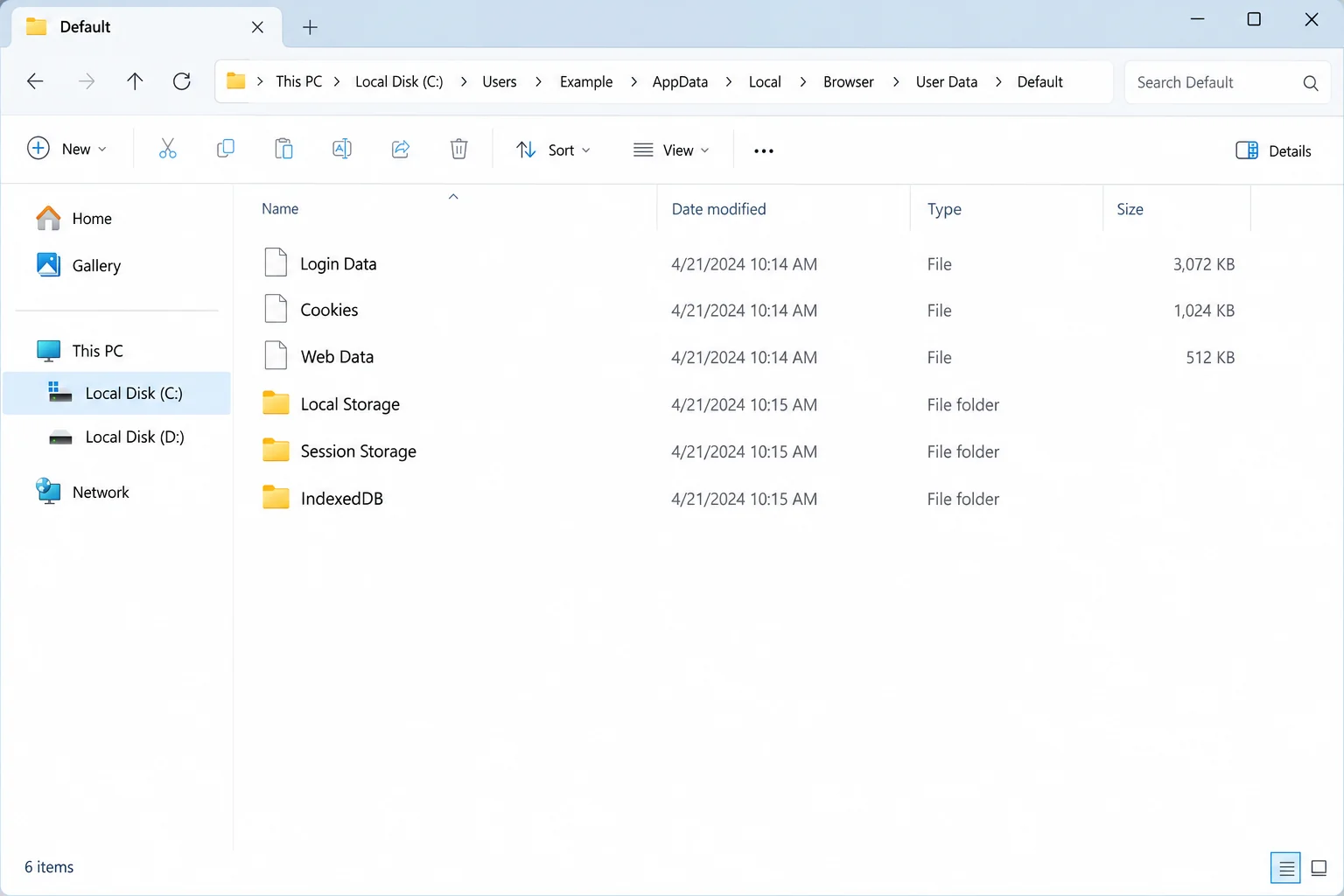
The illustration above shows example browser-profile files. It is not a Penumbra detection, a recovered victim directory, or proof that those ordinary files are malicious.
No sample was executed for this guide. A particular delivery campaign, successful theft, and the affected accounts must be established from the actual incident.
Cleanup and account protection need separate attention
- Isolate a computer when a stealer may have executed, especially before using more sensitive accounts.
- Use another trusted device to protect exposed logins and terminate suspicious sessions.
- Preserve the detection details before making changes that remove useful evidence.
- Review developer keys and workplace access when those secrets were available locally.
- Do not treat a completed scan as proof that previously copied information has disappeared.
Why Your Browser Can Look Fine After Information Theft
Browsers keep information that makes everyday life easier. Saved passwords avoid repeated typing, and session data lets a service recognize a previously authenticated user.
Those conveniences become relevant after malicious code runs under your Windows account. The incident is not limited to whatever website happened to be open.
A saved password and a session cookie are different objects. Replacing one does not necessarily invalidate every other route through which an account can be accessed.
For example, a service may offer controls for signing out other devices, removing connected applications, and reviewing recovery settings. Use the controls appropriate to that service.
Two-factor authentication remains valuable. However, protecting a fresh sign-in is not the same as investigating an already authenticated session or an exposed authenticator backup.
Reports also describe Penumbra attempting to reach protected browser data. That is not a reason to assume every current browser protection has failed on every computer.
Keep the browser and operating system updated. Security improvements still reduce risk, even when a malware report describes a technique aimed at working around them.
Do not search for unfamiliar profile files and delete them as a home-made removal method. Legitimate browsing creates files with ordinary names such as Cookies and Login Data.
The question is which program accessed the information and what it did with it. A familiar filename alone cannot provide that answer.
How Penumbra Stealer Works
Step 1: A program obtains an opportunity to run
A stealer needs an execution opportunity before it can collect local information. An alert about a saved file does not automatically establish that execution occurred.
Review the event that preceded the warning. Was there an installer, a downloaded archive, a fake update, or a request to disable protection?
Those are investigation questions, not a verified universal Penumbra delivery route. Avoid filling a gap in the timeline with whichever scam happens to sound familiar.
Someone who downloaded a file but never opened it may face a different situation from someone who approved administrator access and used online banking afterward.
Write down what happened while it is fresh. Include failed installation attempts and any warnings you dismissed, without reopening the suspect program to refresh your memory.
At work, give that account to the security team. Honest detail helps them contain the incident; concealing an embarrassing download makes the investigation harder.
Step 2: Available local account material becomes a target
Penumbra’s reported collection scope reaches beyond one browser. That makes the computer’s role important when deciding what information may need protection.
A family computer, a developer workstation, and a business laptop hold different secrets. Start with the applications and accounts actually used on the affected system.
Do not assume an account is safe because you never typed its password during the suspicious session. Previously stored credentials can matter too.
Conversely, an account that was never used or stored there is not automatically exposed merely because you own it. Prioritize a realistic inventory.
Check whether sensitive documents or configuration files were accessible. An account password can be replaced; a copied document may create a separate confidentiality problem.
Step 3: Collected information can support account access elsewhere
Stolen information becomes useful when someone attempts to reuse it. That could involve a password, an existing session, a copied key, or details supporting impersonation.
An unauthorized sign-in might occur from another computer after the original infection has been removed. Device cleanup cannot reach across the internet and erase an attacker’s copies.
This explains why a new warning after cleanup is not automatically a failed antivirus removal. Investigate the account event as well as the endpoint.
Tell the provider which activity you did not authorize. Preserve its time, device description, and any relevant transaction reference before removing unfamiliar access.
Do not approve a surprise authentication prompt to see what happens. An unsolicited approval request should be declined and investigated through the real account.
Step 4: Different stolen secrets require different repairs
A browser password, an SSH private key, and a cryptocurrency recovery phrase cannot all be repaired with the same password-reset button.
Passwords need replacement where exposed or reused. Sessions may need termination, while access keys require revocation or rotation at the service accepting them.
A wallet with exposed signing secrets needs a different assessment from a wallet that merely connected to a website. Do not confuse those incidents.
Workplace access may involve administrators, service accounts, or several systems. Coordinate that response instead of deleting keys that other people depend on without a replacement plan.
The aim is to close usable access, not simply collect reassuring green checks. Each protected service should have a clear owner and a documented next action.
Build an Exposure List Without Copying More Secrets
Start with accounts that control other accounts
Email often receives recovery messages for other services. Protecting it early helps prevent a series of password resets from undoing the rest of your work.
Also consider the password manager, cloud storage, financial services, and workplace identity system. The right order depends on what the device held and what activity is occurring.
Make your checklist with account names and status, not passwords or recovery codes. An incident notebook should not become another portable collection of secrets.
Mark each item as checked, changed, escalated, or still unknown. Those labels are more useful than assuming everything was fixed because one password reset succeeded.
Give development credentials their own review
People who build websites or software may store keys for repositories, hosting accounts, deployment services, or cloud platforms. A personal laptop can therefore expose business systems.
GitHub’s SSH-key review guidance explains why potentially compromised credentials need attention at the account, not just removal from a local folder.
Ask the administrator to review where an exposed key was authorized and what actions it permitted. Replacing the file on your laptop does not revoke the old copy.
Keep the response proportional. A stolen development key is a reason to examine its reach, not proof that every repository or server has been altered.
Separate payment exposure from an actual transaction
Saved payment information deserves review, but it does not establish that money was taken. Check real statements and provider activity rather than a warning inside a suspicious page.
If a charge or transfer is unauthorized, contact the relevant provider promptly. Give concrete references and ask which protective steps and dispute options apply.
Do not pay a stranger who promises to delete leaked information. They may have no control over the data and can use the payment as another opening.
What to Do if Penumbra Stealer Is Detected
-
Stop sensitive use of the affected computer. Disconnect its network access if the program may have run. Keep external backups separate and notify your workplace administrator where relevant.
Do not keep signing into accounts while deciding whether the warning matters. Use another trusted device for urgent recovery, and avoid transferring unknown programs to it.
-
Retain the alert and timeline. Record the exact detection, file path, time, and whether the security tool blocked, quarantined, or merely reported the file.
Save relevant receipts or download-page details without reopening the executable. A business responder may need more evidence before scans, reboots, or reinstallations change the system.
-
Address the software infection. Malwarebytes can help find and quarantine malicious software. Use its genuine distribution route and the illustrated Windows procedure below.
Microsoft’s Windows Security scan guidance describes additional scan options. An offline scan restarts the computer, so preserve needed evidence and save work first.
Do not disable protection or add exclusions because the suspect installer says a detection is normal. A tool claiming to remove stealers should not require trusting the original payload.
-
Secure the most important accounts independently. Replace exposed or reused passwords from a known-clean device. Inspect recovery methods, sign-in history, connected applications, and session controls.
Follow each provider’s recovery process when access is lost. Do not hand verification codes to someone who offers to bypass that process for a fee.
-
Escalate keys, wallets, and business access. List affected services for the authorized administrator. Revoke usable exposed credentials through their providers and plan replacements carefully.
If private wallet material may have been copied, obtain trusted wallet-specific guidance. A browser disconnect or token-approval change does not replace an exposed recovery phrase.
-
Review financial and identity consequences. Report unauthorized activity immediately and retain case numbers. If documents were exposed, ask the appropriate provider or authority about protective steps.
Separate what is confirmed from what remains possible. That helps an institution respond to an actual transaction or identity concern without relying on vague claims.
-
Reduce the chance of repeating the exposure. After cleanup, update software and review the download source. AdGuard can reduce some malicious advertising and unwanted redirects.
It cannot remove Penumbra or retrieve stolen credentials. Keep monitoring protected accounts and investigate any new unauthorized activity instead of assuming a scanner handled the entire incident.
Remove Penumbra From the Affected Windows Computer
Scanning and account recovery are separate jobs. Preserve the original alert and obtain incident guidance before changing a business device or development workstation.
Step 1: Prepare a trusted cleanup route without exposing more credentials
Stop using the affected browser for sign-ins. Arrange legitimate tools through an unaffected device and keep source archives away from clean backup media.
Tell support if the computer held SSH keys, deployment credentials, wallet data, or business access. That changes the response beyond removing the local executable.
Step 2: Run Malwarebytes and review its quarantine results
Use this procedure on a personal Windows PC after preserving the incident details. For a managed computer, let your security team decide when scanning should begin.
Malwarebytes can find and quarantine threats. Its free Custom Scan is separate from paid real-time protection and Threat Scan. Neither edition supplies ransomware decryption keys.
-
Download the Windows installer.
Open the official download page using the button below. Select Free Download there and save the Windows installer.
If the affected PC cannot browse safely, use a trusted computer and arrange an appropriate transfer without exposing clean backup media.
Malwarebytes for WindowsManual scanning and quarantine, with optional paid protection.
Opens the official free-scanner page. Choose its Windows download; paid protection is optional.
-
Open the setup file.
Open Downloads and double-click the MBSetup file. If Windows requests permission, check that the prompt identifies Malwarebytes before allowing the installation.

-
Complete setup without accepting unwanted extras.
Select Install, choose the appropriate Personal or Business device option, and continue. Business-managed computers should be handled through their administrator’s process.

Review any browser extension, trial, or subscription offers. Skip optional features you do not want, then select Open Malwarebytes when setup finishes.

-
Choose a supported scan.
Find the Scanner tile on the dashboard. For a free Custom Scan, open its three-dot menu, select Advanced Scan, and choose Custom Scan.
Expand the file-location selector and select the system drive and relevant locations. Review potentially unwanted program settings, then select Start Custom Scan.
A paid or eligible trial edition may also offer Threat Scan. Use the controls available in your edition; do not disable Windows protections to unlock another option.

-
Let the scan complete and inspect its findings.
Keep the computer powered on while scanning and wait for the results. A large Custom Scan can take longer than a scan limited to common locations.
Review each detection and its location. Leave confirmed threats selected and choose Quarantine. Save the report if a detection is unclear rather than adding it to exclusions.
The results illustration uses sample detections to show the Quarantine control. Those names are not identifiers for the malware discussed in this article.

-
Finish removal and handle a requested restart.
Follow the quarantine prompts. If a restart is requested, save your work and coordinate it with anyone preserving evidence before restarting.

Reopen the application afterward and review the result. Repeated detections, blocked removal, or signs of continuing access need further investigation, not an automatic clean-device conclusion.
The screen design can vary by installed release. Follow the named controls and the vendor’s current scan instructions if your version looks different.
Step 3: Investigate remaining concerns with an optional second opinion
HitmanPro provides an optional second opinion when a Windows infection or unresolved finding warrants another check. Run scanners sequentially, not at the same time.
Scanning is free. Removal needs an eligible one-time 30-day trial or a paid license. A computer that already used its trial may not qualify again.
-
Obtain HitmanPro from the established download route.
HitmanProOptional second-opinion Windows scanner.
Free scan. Removal requires an eligible trial or paid license.
-
Launch the downloaded program.
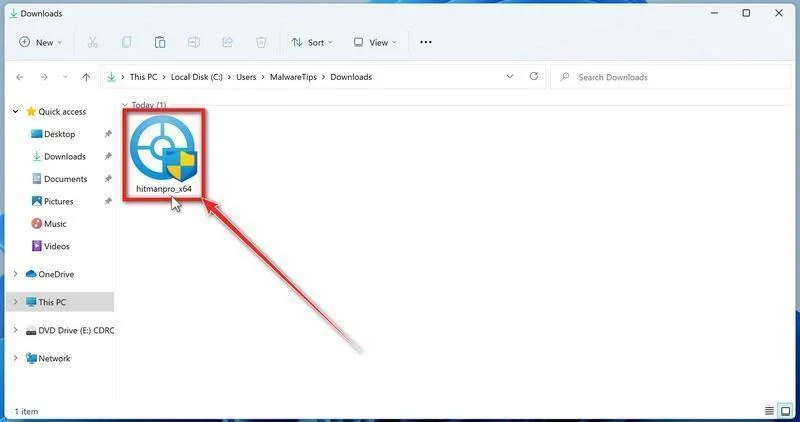
Open Downloads and run the appropriate HitmanPro file for your system. Check the publisher in any Windows permission prompt before allowing it.
-
Start the scan.
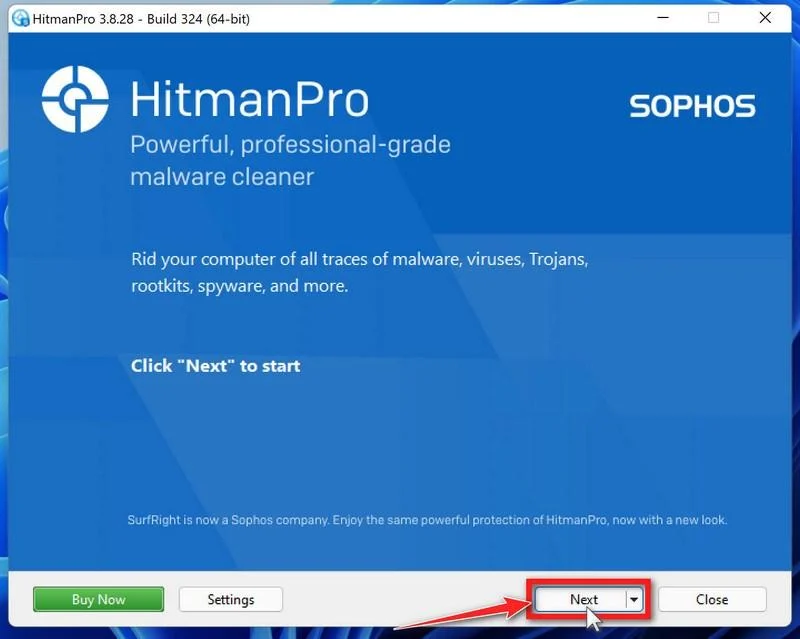
Open HitmanPro, select Next, and follow its license and setup prompts. Its cloud checks require an internet connection; arrange controlled access if the PC was isolated.
-
Review the results before removal.
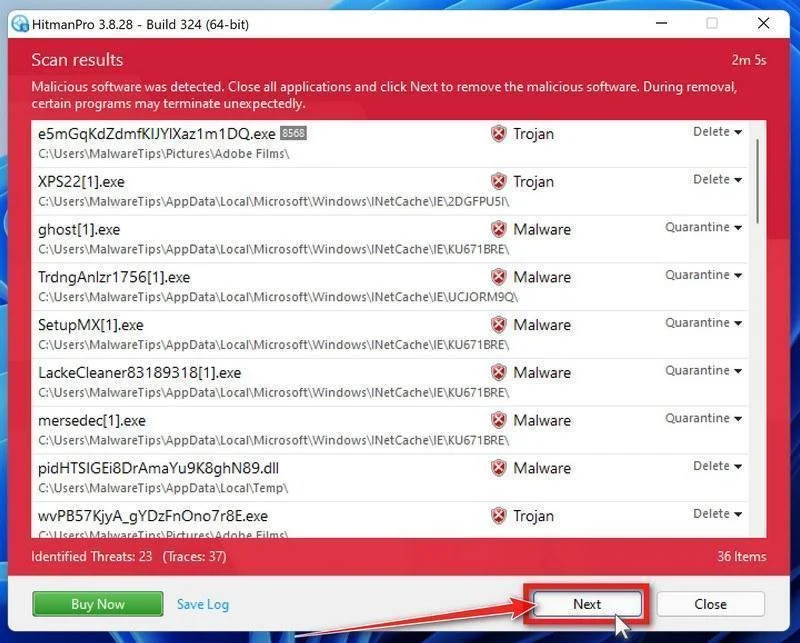
Allow scanning to finish. Inspect the listed objects and proposed actions, then select Next for confirmed unwanted items. Save uncertain findings for qualified assistance.
-
Use an eligible license and complete cleanup.
If available, select Activate free license and follow the trial prompts. Otherwise, use an existing license or retain the report; do not assume purchase is mandatory.
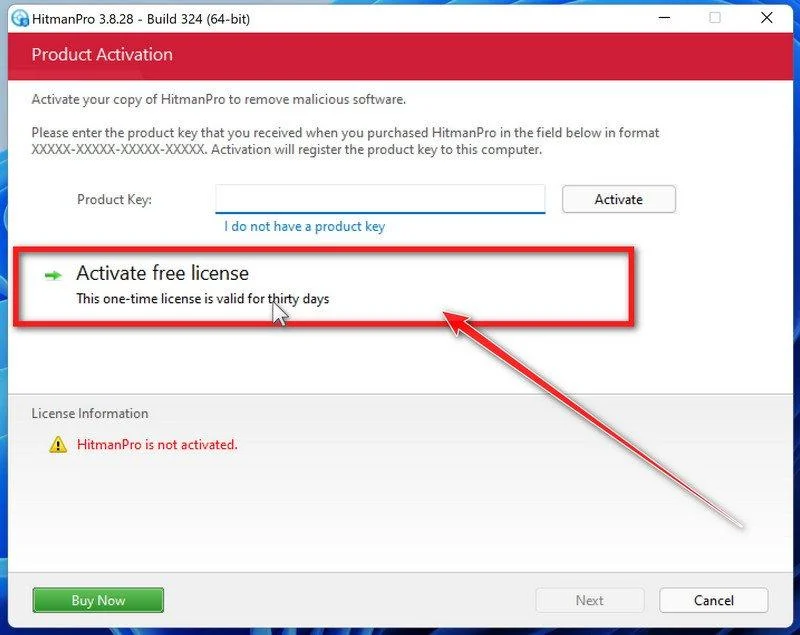
Finish the proposed cleanup and restart if requested. If problems persist, keep both scanners’ reports and seek help rather than repeatedly activating unfamiliar repair tools.
Step 4: Check the restored system and close account access separately
Review findings after a requested restart. If malicious access remains unexplained, discuss a properly prepared reinstall rather than repeatedly deleting browser data files.
Do not restore the suspect program or unknown extensions. From a clean device, continue the password, session, key, and recovery-setting checks described above.
Before You Trust the Computer Again
A useful cleanup record states which threat was found, what was quarantined, and whether a reboot or follow-up scan is still required. Keep that record.
If detections return, protection will not stay enabled, or unexplained remote access remains, stop using the device for sensitive tasks and seek qualified help.
A trusted reinstall can be appropriate when integrity remains uncertain. Back up necessary personal data carefully, then reinstall applications from authentic sources rather than copying the old program collection.
Do not restore the suspect installer, an unknown browser extension, or a whole browser profile simply because it was convenient before the incident.
Rebuilding the device and recovering accounts can proceed as coordinated tasks. Neither should be treated as evidence that the other has already been completed.
For shared computers, explain the incident to other users. Their saved accounts may need attention even if they were not present when the download ran.
Keep the conversation factual and calm. Knowing which profiles were used is more useful than assigning blame or asking everyone to perform unrelated resets.
Different antivirus engines may give the same file different detection names. Preserve the original alert rather than searching for one perfectly matching label before taking action.
If support asks for a sample, clarify its secure submission process. A malware file should not be attached casually to a family or workplace conversation.
Frequently Asked Questions
Is Penumbra Stealer ransomware?
It is reported as information-stealing malware. Its central risk is exposed account material and data, not a ransom note that must appear before you act.
Does finding a Cookies file mean I am infected?
No. Browsers create legitimate profile files. Investigate the security alert and suspicious program rather than treating ordinary data-store names as malware evidence.
Will changing my Windows password fix every account?
No. Online accounts, active sessions, authorized keys, and wallet secrets have separate controls. Address the access that was actually available on the affected device.
Can two-factor authentication still help?
Yes. Keep it enabled, but also examine existing sessions and recovery settings. A stolen session or authenticator secret needs attention beyond enabling a new sign-in check.
What if antivirus blocked the file before it ran?
Preserve that result and verify what was blocked. A prevented attempt is not the same as confirmed execution or proof that every saved account was stolen.
Should I delete suspicious system files manually?
Do not guess. Use reputable scanning and qualified assistance. Removing legitimate Windows components or browser databases can cause damage without closing the attacker’s access.
The Bottom Line
Treat a credible Penumbra Stealer alert as both a device problem and a potential account incident. Stop sensitive use, preserve the facts, and arrange trustworthy cleanup.
If it ran, protect the accounts and secrets it could reach. A clean scan matters, but it cannot revoke information that was already copied.

Join the discussion
0 commentsShare your experience or ask a question about this article.
Your progress
Did these steps help?
Let us know how the guide worked for you.
Describe what you see and the step you reached. Keep passwords and other private information out.
Discussion
Start the conversation
Have a question or something useful to share? Add the first comment.