


A work dashboard says you just earned a bigger commission. Then the number you were waiting to withdraw moves behind a new requirement.
A bonus should make a job more rewarding. In the Pirawna Data pitch, it changes who has to pay before the work can continue.
Overview
A pay-per-click job with two commission rates
A participant described what they thought was a pay-per-click, or PPC, job. They expected a 1% commission at their level and reported encountering bundles marked at 11%.
When the screen showed a “super bonus,” the participant said the platform treated the entire balance as locked. To continue the task and regain access, they were told to pay.
The report identified a login at work.pirawnadata[.]com. It did not establish the size of any payment or whether the participant recovered anything.
The request to pay for access is the detail that identifies the scam.
A real advertising business gives the pitch familiar language
The actual Pirawna marketing agency offers Amazon advertising and other services to ecommerce businesses. PPC describes a real form of advertising, which helps the job offer sound plausible.
The agency publishes job information from its own domain. A similar name on a separate work portal provides no independent authorization.
The offer discussed here concerns the reported dashboard and payment demand.
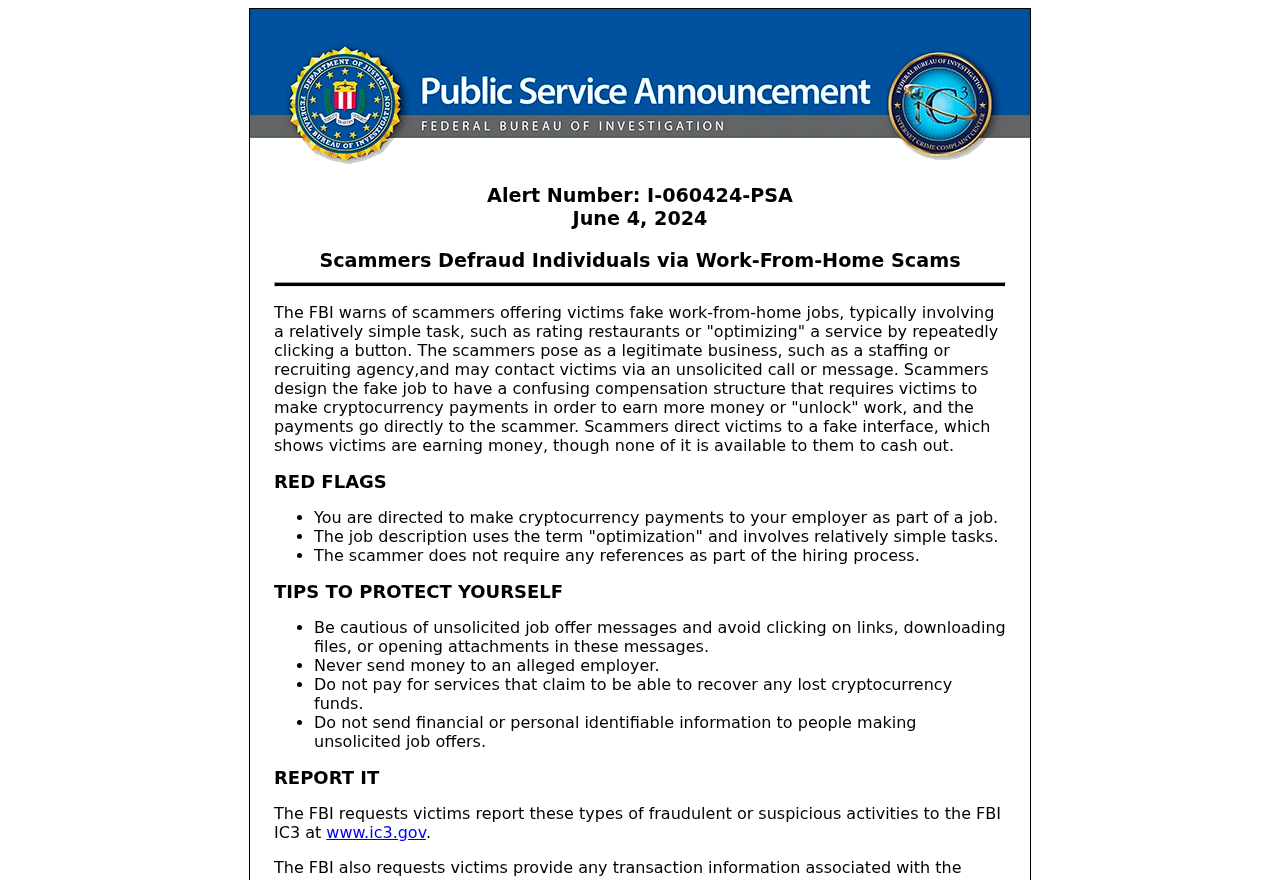
The image above shows the FBI alert about work-from-home scams. It describes fake earnings screens and job offers that require personal payments to unlock work.
The FTC warning about task scams explains how a new deposit can become a condition for withdrawing the earnings the platform claims you have made.
The balance is a claim the website makes
Before paying, ask how much money you can actually access without doing what the person in the chat says. The dashboard is controlled by whoever runs the site.
That is especially important when the platform puts several amounts together.
A number can include supposed commissions, rewards, and your earlier deposits even when the site will release none of them.
Keep these details separate if you are looking at a similar offer or preparing a fraud report.
- The advertised job involves online advertising tasks or clicks.
- The platform shows a commission and may present a higher-paying bundle.
- The supposed bonus can make earlier funds inaccessible until you pay.
- Only payments you can confirm independently belong in a calculation of what you sent or received.
- The real agency’s hiring contact is a better place to verify a vacancy than the person controlling the task account.
How the Scam Works
Step 1: Advertising terms make the task sound like work
The job title borrows from an industry where people really do manage advertising budgets and commissions. Someone new to advertising may assume the unfamiliar terms describe ordinary agency work.
Look for a practical explanation of the employment relationship. Who is the employer, what are the deliverables, and how are you compensated? The verified company should be able to answer.
The important distinction is whose budget is at risk. A worker managing a company’s advertising account should not have to deposit personal money to unlock their own pay.
The report identifies the claimed work and the dashboard. It gives no verified employer agreement or details about how the participant first encountered the offer.
Step 2: A dashboard records supposed commissions
A percentage beside a task looks more precise than a vague promise to earn money. It can make the result feel calculated and therefore real.
At first, you may be watching the number rise while doing the work. The person guiding you can point to the screen as supposed evidence that every click has value.
A record of pay issued by an employer and a figure inside a website are different forms of evidence.
Check who issues the statement and how the money can be withdrawn.
The FTC says some task schemes allow a small payout early on. That can make the rest of the dashboard more credible, even when the later earnings are invented.
Step 3: A higher commission becomes a problem you must pay to fix
In the reported pitch, a regular commission was followed by higher-paying bundles and a “super bonus.” The higher percentage arrived alongside a new requirement, instead of increasing accessible earnings.
A task can be described as a rare opportunity or a random assignment.
The label can make the deposit feel like a consequence of your good luck, rather than a new cost.
The FBI’s task scam warning describes offers that display negative balances and promise unusually high commissions once a worker pays. It also describes bonuses assigned during the process.
Compare what the site promised with what it actually requires. If you have to put in real money to keep a commission, stop at that point.
Step 4: The site locks the entire balance behind a new deposit
The participant thought they had limited their exposure by keeping the amount in the platform low compared with the money in their bank. The bonus changed the amount demanded.
The pressure comes from seeing your own money beside an even larger promised payout.
A person may feel they have to pay more to avoid losing what is already on screen.
That choice only makes sense if the screen reflects money you can claim. A demand for more funds cannot establish whether the displayed balance exists.
Separate what you have already sent from what you are considering sending.
A past payment can be reported today. A new payment creates another loss to pursue if the platform disappears.
Step 5: Paying fails to give you control of the withdrawal
The FTC and FBI describe versions of this scheme that ask for larger deposits after the first ones.
An operator can introduce another task, a higher balance requirement, or a withdrawal charge.
The original report ends with the balance locked and a demand for payment. There is no basis for claiming which excuse followed or that any further transfer took place.
You may also hear that someone in a group chat paid and successfully withdrew.
The other participants may be unverifiable. Their claims do not change the instructions on your own account.
Stop negotiating about which payment will clear the lock.
If any of your own money went in, preserve the records from the bank, payment app, or exchange that actually processed it.
What to Keep When the Dashboard Shows a Big Balance
Start with the deposit history outside the work site. Bank statements and exchange receipts give you dates, amounts, and destinations that can still be checked if the dashboard vanishes.
Make two totals. Record the money you actually sent and the money you actually received. Keep any balance, “super bonus,” and pending commission figures separately as screenshots.
Include the part of the conversation where the platform or contact said a payment was required. That connects the transfer to the job pitch and explains why you made it.
If you paid in cryptocurrency, save the transaction ID as text as well as in a screenshot. The ID helps the exchange and investigators locate the correct transaction.
Include the asset and network where you know them.
Two transfers for a similar amount can be difficult to distinguish without their individual references, especially if you made several in one day.
If the payment originated at your bank and went through an exchange, keep records for both legs.
The bank’s statement may end at the exchange while the crypto record shows where funds went next.
Save what you can see without paying, clicking new links, or logging in again through a message. Old receipts and the original chat are already useful.
Keep backup copies in a place you can access without the task account. Avoid posting them publicly if they show your name, payment identifiers, contact information, or account details.
How the Bonus Changes the Deal
Suppose a site says you have a commission pending and puts a higher rate beside the next bundle. Before paying, look for an independently verifiable source of the commission.
A real commission statement should identify the employer and what earned the payment. In this pitch, the amount you could supposedly collect depended on obeying the dashboard’s next demand.
If you are given a withdrawal date, ask what record identifies an actual payment on that date. A date posted by the site is still a promise from its operator.
An expired withdrawal deadline may be used to start the same conversation again. Take a screenshot if you already have access, then direct any payment questions to your provider.
If you are helping a family member, start by comparing these records together. An inflated dashboard balance can make the person feel that one more payment will solve everything.
A record of earlier withdrawals can be useful too. The point is to establish what was received outside the dashboard before deciding how to describe the incident to investigators.
What to Do if You Have Fallen Victim to This Scam
Pause all payments first. A demand for an extra deposit can arrive while you are reporting the earlier transfers. There is no need to answer it before contacting your provider.
-
Stop at the deposit request. Decline to fund the bonus, finish a bundle, clear a negative balance, or pay an amount described as a withdrawal charge.
-
Contact the provider that sent the money. Use your bank or exchange’s own app. Describe the payment destination and ask what options are available now.
-
Build a timeline using outside records. Save the first contact, job name, site address, payment demand, dates, amounts, and the receipts for money sent or received.
-
For U.S. online fraud, file a report with FBI IC3. Include transaction IDs and recipient wallet addresses where applicable. You can also report to the FTC.
-
Secure any real account you exposed. Contact your provider if you shared banking details. Change reused passwords through each genuine service and review unfamiliar sign-ins.
-
Ignore paid recovery offers. A stranger who references your task account and asks for a fee or wallet access is another risk. Use your existing case numbers.
If you only signed up, think about what you supplied at registration. An email and unique password have different consequences from a reused password, payment details, or an identity document.
If you shared a wallet recovery phrase, contact the wallet provider through its official help channels. Anyone with that phrase may be able to control assets in that wallet.
Do not post wallet recovery phrases or passwords in fraud reports. Providers can usually identify the transactions from public transaction references and the records you already have.
Tell the verified business that its name appeared in the pitch. Send it the site address and claimed job details through a genuine contact channel, without passing along financial records.
Frequently Asked Questions
Is the real Pirawna agency responsible for the task offer?
The reported offer used a similar name and advertising terminology. The official agency site identifies the real business, but the public report supplies no verified connection to that business.
Use the agency’s official website to check any advertised vacancy. The unsafe instruction is the demand to pay personal funds into the task platform to unlock supposed earnings.
What does PPC mean in the pitch?
It means pay per click, a pricing term used in online advertising. It describes how some ad campaigns incur charges when a person clicks an ad.
Here the term was used to describe a supposed job and commission. The appearance of a familiar advertising term tells you little about who runs the task platform.
Is the 11% bundle a better-paying assignment?
The participant reported a higher commission figure alongside restrictions on their balance. Those figures came from the site. They do not independently verify that any income was earned.
Consider what the company actually asked you to do with your own money. If an assignment requires a personal deposit, leave it unfinished.
What if I already withdrew a small amount?
Record the money you actually received and the service that delivered it. A small initial payout is consistent with the FTC’s account of how task scams gain trust.
Compare that amount with any money you sent. Avoid sending it back to a new recipient if the person who recruited you claims it was a mistake.
Should I pay the smallest amount they will accept?
Stop at the demand. A smaller transfer still goes to the same scheme and gives you no control over the website or its next withdrawal condition.
If someone says the offer expires soon, contact your actual financial provider before the deadline. The sooner you report earlier payments, the sooner the provider can assess them.
Can I still report it if I lost access to the site?
Yes. Start with the records you already have, including any emails, chat messages, bank entries, and exchange receipts. A report can be useful without a current login.
Keep any screen captures showing the commission and payment request separate from the amounts you can independently verify. Make clear which figures came from the dashboard.
The Bottom Line
Walk away from the Pirawna Data PPC task scam if a “super bonus” puts your balance behind a deposit. There is no commission worth another payment to that site.
If you already paid, use your bank or exchange records to calculate what went out. Report those transfers and the contact that asked you to make them.

Join the discussion
0 commentsShare your experience or ask a question about this article.
Discussion
Start the conversation
Have a question or something useful to share? Add the first comment.