

The email arrives at the most expensive moment of the transaction. Settlement is close, everyone is busy, and a familiar contact appears to provide the bank details needed to finish the property purchase.
The message may be polished, personal, and part of a real conversation. It can mention the property address, the parties, the deadline, and details that only someone following the sale should know.
One changed account number is enough to send a six-figure payment somewhere the buyer, seller, agent, and conveyancer never intended.
Overview
What property settlement scammers change
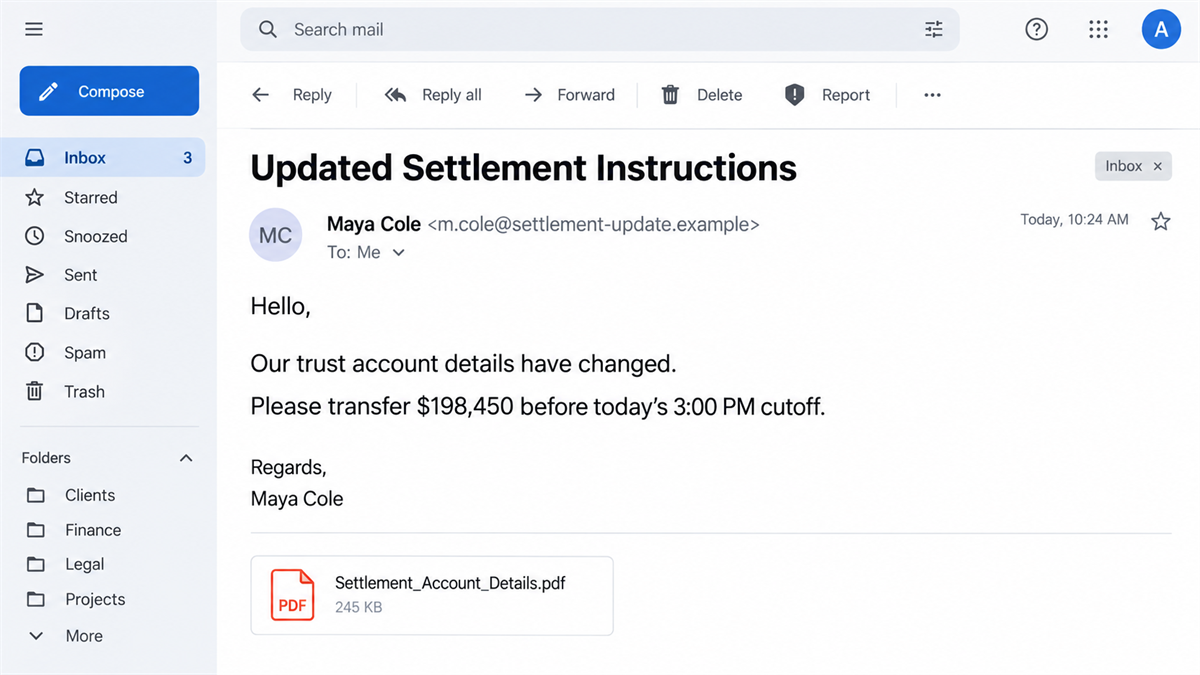
The scam does not need to invent a property transaction. It inserts itself into a real one. A criminal impersonates a buyer, seller, real estate agent, solicitor, or conveyancer and supplies bank details controlled by the scam network.
The message may come from a compromised mailbox, a lookalike address, or another channel using stolen information. The request often arrives just before a deposit or final settlement payment is due.
Why the losses are so large
Property payments are unusually valuable and time-sensitive. Commonwealth Bank reported that one intercepted attempt almost diverted $200,000. The bank also cited $166.8 million in Australian payment-redirection scam losses during 2025.
A victim can follow what appears to be the correct process and still send money to the wrong account. If the email account itself is compromised, replies may go back to the criminal.
The verification that stops the scam
Bank details must be confirmed through a trusted channel established before the payment request. Call the known conveyancer, solicitor, or agent using a number already saved or independently found.
- Never accept changed settlement instructions through email alone.
- Do not use the phone number in the message you are trying to verify.
- Read the account details back during an independently placed call.
- Treat last-minute urgency as a reason to pause.
- If money was sent, contact the bank immediately and request a recall.
Why a Perfectly Written Email Can Still Be Fake
Spelling mistakes are no longer a dependable warning. Criminals can copy previous messages, use artificial intelligence to draft professional replies, and collect personal details from social media.
A compromised mailbox is more dangerous than a simple imitation. The criminal can see the real transaction, learn how the parties write, wait for the payment stage, and reply inside an existing thread.
The CommBank account describes a scammer who already knew the parties, property address, nearby landmarks, and even a favorite local cafe. A phone conversation with agency staff made the impersonation sound more credible.
The attempted $200,000 diversion was stopped because the genuine seller said they had not provided the bank details. That ordinary question exposed the entire substitution.
The official CommBank property settlement warning says fraudsters are using social media, AI, and increasingly convincing communications. The practical defense remains simple: verify payment details by phone through a number you trust.
How the Property Settlement Scam Works
Step 1: The criminal learns a real transaction exists
The information may come from a compromised email account, phishing, stolen documents, social media, a breached business, or public property details. The scammer identifies who is buying, selling, or handling the settlement.
They do not need every document. A property address, expected date, names of the firms, and one authentic email chain can be enough to build a convincing request.
Step 2: The scammer watches the conversation
When a mailbox is compromised, the criminal may quietly monitor messages for days or weeks. They learn the language used by the parties and wait until a large payment is expected.
Rules can be added to hide replies or forward messages. A victim may not see warnings sent by the genuine firm because the criminal controls what remains in the inbox.
Step 3: Replacement bank details arrive at the right moment
The fraudulent email may say the trust account has changed, a previous account is being audited, the payment must be split, or updated instructions replace an earlier document.
The message can use copied letterhead, signatures, invoice formats, and reference numbers. It may arrive in the original thread, which makes the account change feel like a routine update.
Step 4: Urgency prevents an independent phone call
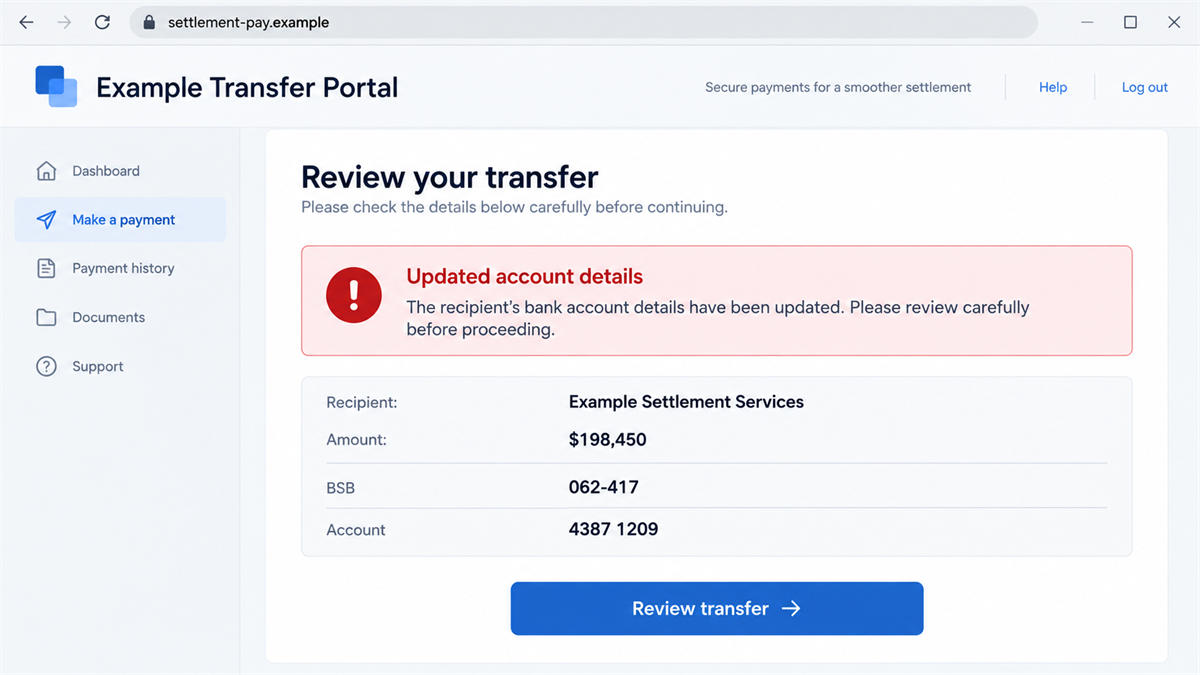
The payment is framed as the final action before settlement. The buyer may be told that delay will breach the contract, create a penalty, or postpone possession.
A criminal controlling the email can answer questions instantly. That response is not independent confirmation. It is the same person defending their own bank details.
Step 5: The payment reaches a mule account
The victim transfers money believing it is going to a solicitor, conveyancer, agent, buyer, or seller. The recipient account is actually controlled by the scam network or a money mule.
Funds may be moved quickly through additional accounts or converted into cryptocurrency. Every delay after discovery can reduce the chance of a successful freeze or recall.
Step 6: Both real parties think the other has the money
The sender may receive a fake confirmation, while the genuine recipient waits for funds that never arrive. The fraud can remain hidden until someone phones about the missing settlement payment.
By then, the scammer may have deleted messages, changed forwarding rules, and emptied the receiving account. The dispute can also damage trust between the real parties at the worst possible time.
The Email Thread Is Not a Verification Channel
When the risk is that email has been compromised, sending another email cannot resolve the risk. A reply can go directly to the attacker.
Call a number established earlier in the transaction. If you must find a number, use the firm’s official website, professional registry, or documents obtained before the suspicious instruction appeared.
During the call, read back the account name, BSB, account number, amount, and reference. Ask the other person to confirm each item from their own system.
For a very large payment, consider a second verification step and a small test transfer if the professional and bank agree. A test only helps when the recipient confirms receipt through an independent channel.
MalwareTips has covered a related vendor invoice scam exposed by one extra letter. Property settlement attacks may use the same business email compromise techniques, but the scheduled six-figure payment makes the timing especially dangerous.
Property transactions involve many legitimate messages, several professionals, and deadlines that can affect moving plans. A criminal does not have to invent that pressure. The real settlement calendar supplies it.
The fraudulent instruction may arrive when the buyer expects final figures or when the seller expects proceeds. A message sent at the right hour can look like the last routine adjustment in a long process.
Large payments also receive fewer practice runs. Most people do not regularly transfer a house deposit or settlement balance, so an unfamiliar portal, limit, or bank procedure may not feel unusual.
Criminals exploit that uncertainty with confident language. They may say the trust account changed, the previous account reached a limit, or a corrected statement must be paid before a cutoff.
A copied signature and an intact email history can make the request appear settled before the recipient has considered it. The safest response is to pause precisely when the message says there is no time.
Call the known professional and read the account details aloud. Ask them to confirm the account name, bank, branch information, and final digits. A vague yes is not enough.
For a large payment, ask whether a small test transfer is appropriate and how receipt will be confirmed. The professional and bank should agree on the process before the settlement deadline, not while an urgent email is waiting.
Keep the verified details outside the email thread. A printed engagement letter or saved contact from the beginning of the matter provides a separate reference if the mailbox is later compromised.
One deliberate verification phone call can feel inconvenient during a busy settlement. It is far less disruptive than trying to recall a six-figure transfer after the money has been split across other accounts.
Red Flags in Settlement Payment Instructions
Some attacks contain no obvious spelling error. Process changes and payment behavior are often more useful than visual clues.
- Bank details change shortly before settlement.
- The email says the previous trust account is unavailable.
- The payment must be split among unexpected accounts.
- The sender discourages a phone call or claims staff cannot be reached.
- A new mobile number appears only in the changed instruction.
- The account name does not match the verified firm or party.
- The sender creates unusual urgency or threatens immediate penalties.
- A reply confirms the change but no independent channel does.
- The email address contains a small spelling or domain variation.
- The professional cannot see messages that appear in your thread.
Company and Checkout Checks
Verify the professional and firm
Confirm the solicitor, conveyancer, and real estate agency through official registries and websites. Record trusted phone numbers early in the transaction, before payment instructions arrive.
Establish bank details before settlement day
Ask how instructions will be delivered and whether the firm ever changes them by email. Agree on a verbal verification process for any account details or last-minute changes.
Match the recipient during payment
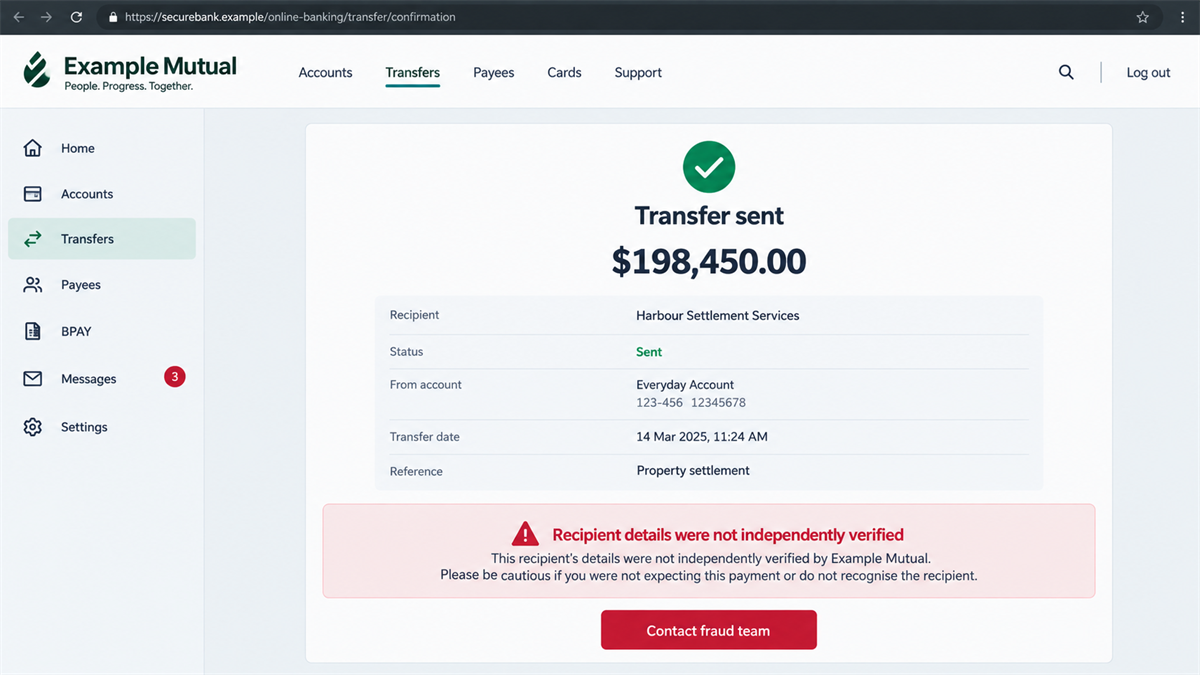
Use available confirmation-of-payee or account-name checks, but do not rely on them alone. Stop if the displayed recipient differs from the verified party or firm.
Confirm receipt through a separate channel
After payment, call the known contact and ask them to confirm receipt. Do not accept an email receipt as the only evidence when email compromise is the suspected method.
What to Do if You Have Fallen Victim to This Scam
- Call your bank immediately. State that a property settlement payment was redirected by fraud. Ask for an urgent freeze, recall, and contact with the receiving institution.
- Call the genuine solicitor or conveyancer. Use a trusted number, not the email thread. Tell every legitimate party that the instructions may have been compromised.
- Preserve the mailbox. Do not delete messages. Save full email headers, attachments, account details, timestamps, and screenshots. Export the thread if possible.
- Secure email accounts. Change passwords from a clean device, enable multi-factor authentication, sign out unknown sessions, and remove unfamiliar forwarding or deletion rules.
- Check connected accounts. Review cloud storage, document portals, phones, and other mailboxes used during the transaction for unauthorized access.
- Scan affected devices. If attachments were opened or remote access was allowed, Malwarebytes can help check for credential stealers, malicious extensions, and remote-control software.
- Report the crime. File reports with the relevant police or cybercrime service, national scam authority, and any professional regulator involved.
- Beware recovery contacts. A person promising to retrieve the settlement money for an upfront fee may be attempting a second scam.
AdGuard can help reduce exposure to phishing ads, malicious redirect pages, and tracking links. It cannot protect a compromised email conversation, so independent verbal confirmation remains the critical control.
A Safer Settlement Payment Routine
Discuss payment security at the beginning, not on settlement day. Ask each professional which channels they use, which account will receive money, and how changes are confirmed.
Create a written call-back procedure. If any account detail changes, stop the transaction and speak with a known person at a known number. For high-value transfers, require two people to review the instruction.
Keep email accounts protected with unique passwords and multi-factor authentication. A property transaction should not share a password with shopping, social media, or old services.
Avoid posting settlement dates, moving plans, firm names, and property details publicly while the transaction is active. Those facts can help a criminal make an impersonation sound personal.
After sending money, confirm receipt promptly. The goal is to discover a problem while the receiving bank still has a chance to freeze the funds.
Frequently Asked Questions
Can a scam email come from the real address?
Yes. If a mailbox is compromised, the attacker can send from the genuine account or reply inside an existing conversation.
Should bank details ever be verified by email?
Email alone is not enough for a settlement payment. Confirm the complete details through a trusted phone number or another agreed independent channel.
What if the message has no spelling mistakes?
Professional writing does not prove authenticity. Criminals can copy earlier emails and use AI to produce convincing messages.
Does the account name check guarantee safety?
No single check is perfect. Treat it as one signal and still verify the details directly with the known professional or recipient.
How fast should I contact the bank?
Immediately. Payment-redirection funds can move through several accounts quickly. Minutes and hours may matter.
Who may be impersonated in this scam?
The criminal may impersonate a buyer, seller, agent, solicitor, conveyancer, lender, or another professional involved in the transaction.
The Bottom Line
Property settlement scams do not need a fake property. They redirect a real payment by inserting fraudulent bank details into a genuine transaction.
Never trust settlement account details because they arrived in the right thread at the right time. Verify them through a channel the sender does not control, and call the bank immediately if a transfer has already gone to the wrong account.

Join the discussion
0 commentsShare your experience or ask a question about this article.
Discussion
Start the conversation
Have a question or something useful to share? Add the first comment.