


A free training video promises a route into self-publishing. AI handles much of the writing, successful students supply the inspiration, and a refund guarantee lowers your guard.
If you paid Publishing.com, the important questions now go beyond book sales: which promises covered your purchase, what remains accessible, and where can you seek help?
Overview
The FTC case concerns the income opportunity being sold
Publishing.com sold self-publishing education, coaching, and associated software. The FTC challenged the earnings, refund, and testimonial claims used to sell those services.
The agency alleged that consumers were led to expect substantial passive income while facing additional expenses and refund conditions that the promotions did not adequately explain.
A final FTC order announced in July 2026 requires $1.5 million and restrictions on future earnings claims, refund practices, and endorsements.
The company no longer presents a normal enrollment offer
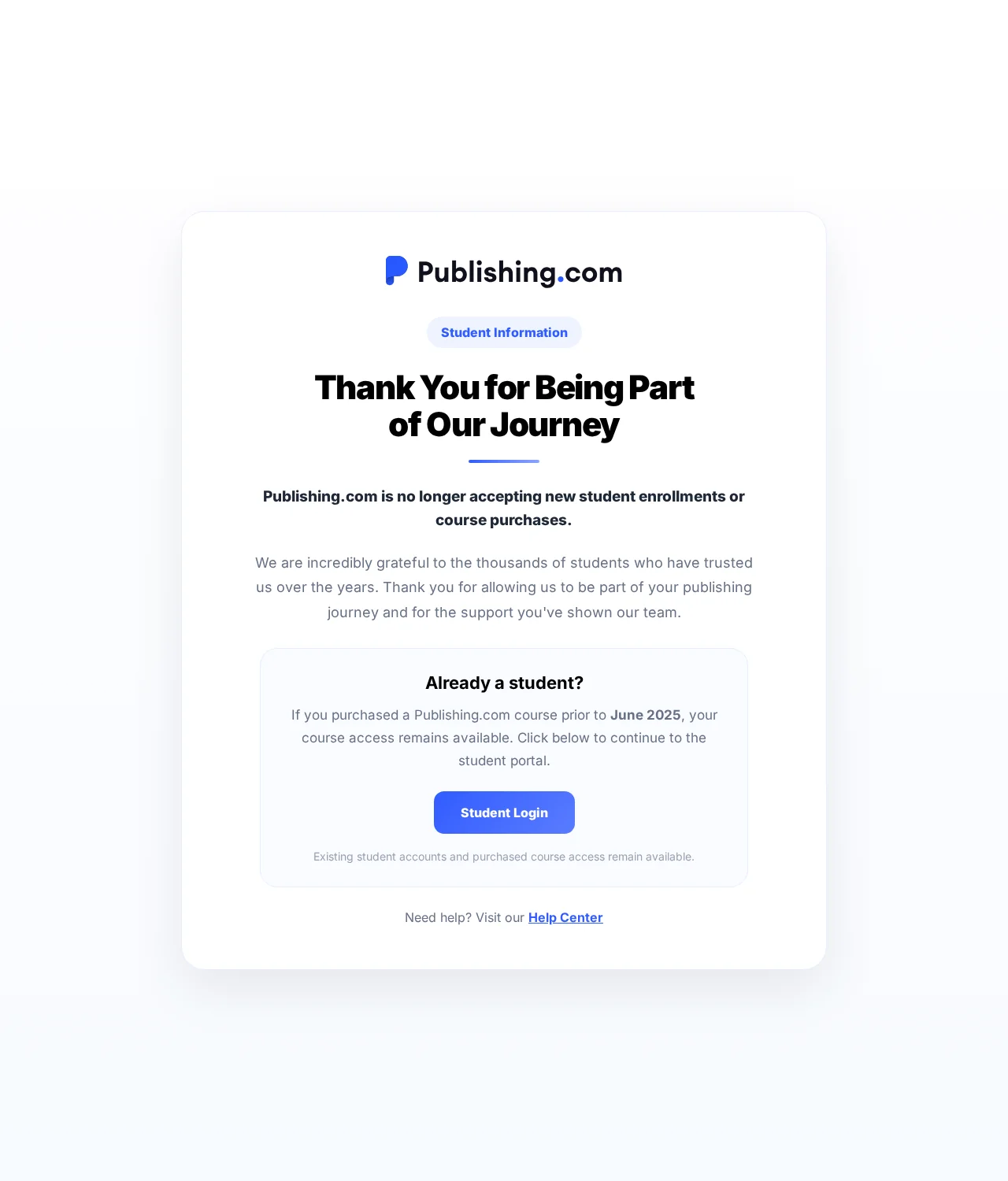
Publishing.com’s homepage now says it is not accepting new course purchases or enrollments. Its help center says the business has concluded operations.
That changes the immediate task for former students. Preserve your purchase evidence, distinguish course access from software access, and address unresolved charges directly.
- AI Publishing Academy is the course, not the Publishing.ai writing platform.
- Publishing Accelerator was a separate, higher-priced coaching offer.
- An FTC settlement is not an automatic full refund for every purchaser.
- Replacement software credits are not the same as reimbursement of course fees.
There are three separate problems to resolve
An earnings complaint concerns what persuaded you to buy. A refund dispute concerns the promise and conditions attached to that purchase.
Lost software access concerns a different service. Keep those issues separate so a replacement credit offer doesn’t become an accidental answer to an unresolved money claim.
The Program Names Behind the Publishing.com Offer
The FTC’s final complaint traces several names used for the course: Audio Income Academy, Audiobook Impact Academy, and later AI Publishing Academy.
That history helps explain why an old receipt, promotional email, or review might not use the name currently visible in a student account.
It does not mean every similarly named publishing course belongs to this business. Match the seller, receipt, and program rather than relying on the initials AIA.
The complaint describes Publishing Accelerator as an additional coaching program offered after course enrollment, with access to Publishing.ai among its associated services.
It identifies historical typical prices of $1,995 for AIA and $9,800 for Publishing Accelerator. Those are allegations about the investigated offers, not current checkout prices.
If you purchased more than one service, keep the separate invoices. A response about your course does not necessarily resolve coaching payments or software credits.
How the Publishing.com Income Pitch Developed
Step 1: Free training introduces a supposedly simple publishing business
According to the FTC, social-media advertising brought people to free training videos. The videos then promoted the paid program as the route to the complete system.
The complaint describes claims that AI and the company’s methods could help purchasers earn substantial royalties with little or no startup expense.
It cites May 2024 emails promoting monthly income of $1,000 to $3,000 and a small daily workload. These are historical claims, not today’s verified results.
A convincing demonstration of generating text does not demonstrate demand for the finished book. Writing software and a profitable publishing business are different things.
Step 2: Success stories make the opportunity feel repeatable
The FTC alleged that the company prominently used student testimonials and the founders’ claimed success to reinforce the income pitch.
The complaint also describes undisclosed employee or personal connections and incentives for positive reviews. Those issues affect how independently the endorsements should be weighed.
A testimonial can describe a real person’s experience and still be misleadingly presented. A financial or employment relationship is information a buyer needs before relying on it.
What matters is not the most impressive account shown on screen. It’s what comparable purchasers typically earned after the expenses needed to achieve those results.
Step 3: The initial course can lead to a larger spending decision
After enrollment, customers were encouraged to buy the additional Accelerator program, according to the complaint. Book production and marketing could also require further spending.
The FTC cited purchasers who complained of losses and unexpected costs. It did not establish that every student lost money or that every self-published book fails.
Before expanding a project, separate money already spent from money still under your control. A previous course purchase is not a reason to keep buying.
A coach suggesting another service should explain its price, necessity, and cancellation terms. Encouragement is not evidence that the next expense will make the business profitable.
Step 4: A refund request meets conditions missing from the pitch
The FTC challenged promotional assurances of a year-long, no-questions refund while additional requirements appeared in lengthy terms.
Between October 2024 and March 2025, the complaint describes refund requirements including a 25,000-word book or a two-hour audiobook.
Accelerator refund eligibility allegedly required a six-month membership, six coaching calls, ten workshops, and an AI-created outline. Those conditions differ sharply from an unconditional promise.
A buyer evaluating risk cannot fairly compare those offers if the advertising supplies reassurance while a different document supplies the practical obstacles.
For an existing dispute, identify the specific promise you received. Don’t let a newer help page silently replace the terms attached to your original purchase.
What the Final FTC Order Actually Requires
The final order in docket C-4836 is not merely the proposed settlement announced in April. It was issued July 1, 2026.
The respondents neither admitted nor denied the complaint’s allegations, apart from specified matters. Nevertheless, the final order imposes binding requirements.
Future earnings representations must be nonmisleading and supported by written evidence, including support for typical results among similarly situated consumers.
That is more meaningful than a gallery of standout earners. The relevant comparison includes people in circumstances like the audience being asked to buy.
The order also addresses disclosure of refund conditions before payment and honoring qualifying requests under policies in effect when the customer purchased.
It prohibits misleading endorsements and requires disclosure of unexpected material connections or incentives. The remedy does not certify every review or erase every historical complaint.
The payment requirement is $1.5 million. It is not $15 million, an individual damages award, or a promise that each former student will recover their full expenditure.
For any refund administration or later development, use the official FTC case record. Don’t infer a claim deadline or payment schedule from the settlement amount.
The Company, Course Access, and Support Trail
The legal respondents are identified
The final order identifies Publishing.com LLC and founders Christian and Rasmus Mikkelsen. It also identifies the company’s former PublishingLife.com name.
Christian is identified as CEO and Rasmus as chief product officer. The order applies to the named respondents, not every publishing coach.
A business address is not a refund process
The order identifies an Austin, Texas business address for the company. A mailing address alone does not tell you how an individual refund request will be handled.
Use the seller details on your own agreement and payment records. Keep that identification separate from whatever email address currently handles course-access questions.
The current support channel is limited
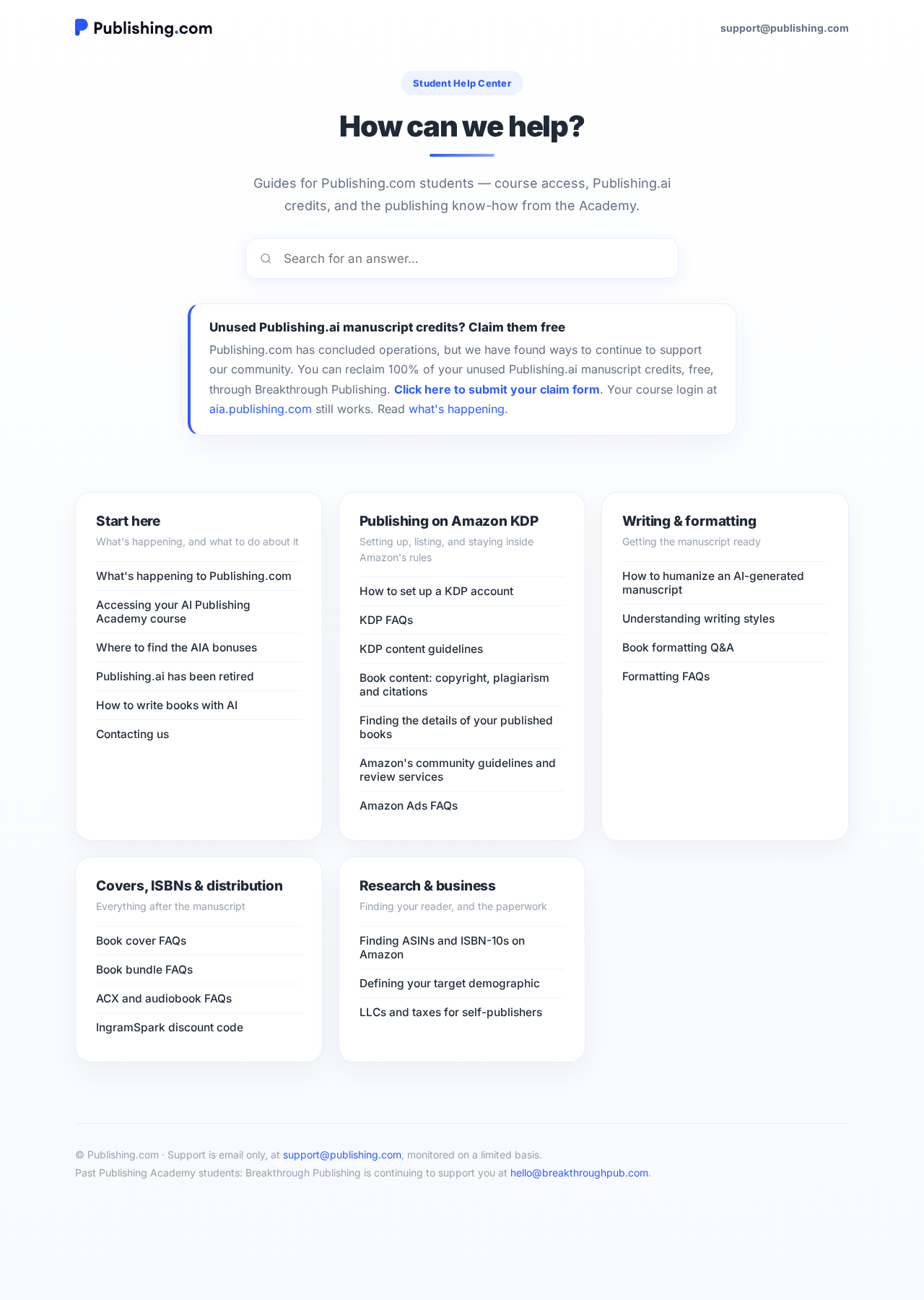
The help center now identifies support@publishing.com as the email support channel and says it is monitored on a limited basis.
Its current contact guidance says phone and live-chat support have been retired. Old instructions telling you to use a dashboard chat may no longer reflect the service.
Send one clear, documented request identifying your issue and purchase. Preserve the message and any reply; a displayed support address is not proof of a successful resolution.
The course and the writing software have different access notices
The homepage directs existing students to aia.publishing.com. The help center says the course remains available through existing accounts.
Separately, its retirement notice says Publishing.ai ended on April 20, 2026. It says manuscripts left inside that platform cannot be retrieved.
Those are company statements, not a test of your account. Check your own access and local backups without assuming a working course login restores software drafts.
Replacement Credits Do Not Settle Every Complaint
The current help center points former users toward Breakthrough Publishing for replacement unused manuscript credits, describing the arrangement as free.
A credit arrangement concerns access to a writing service. It does not by itself repay a course fee, compensate advertising losses, or recover a missing manuscript.
Before submitting information, verify the route from the original help center and read the actual conditions. Keep a copy of your unused-credit balance evidence.
Do not pay someone claiming that a fee is required to unlock FTC settlement money. A company referral and a government refund process are different things.
Keep any credit claim separate from refund correspondence. Save the replacement terms and note what you accepted, rather than assuming a software credit resolves the original purchase.
AI Can Produce a Draft, Not Guaranteed Royalties
The flaw in a passive-income pitch is treating production as proof of profitability. A manuscript can exist without enough readers willing to buy it.
Calculate income after expenses, not before them. Course fees, editing, covers, narration, software, and advertising can all affect the actual result.
As a simple illustration, $300 in royalties minus $400 in advertising is a $100 loss before any course cost. Sales activity alone doesn’t show success.
Nor does uploading a book settle its compliance. Amazon’s KDP content guidelines distinguish AI-generated content from AI-assisted work and require disclosure of the former.
The publisher remains responsible for intellectual-property compliance and content quality. Paying for a course or using software does not transfer those responsibilities to the provider.
You don’t need to conclude that AI publishing is impossible to reject an unsupported easy-income promise. The promise needs evidence, not your willingness to spend more.
What to Do If You Bought a Publishing.com Program
- Build a purchase timeline.
List each course, coaching purchase, software payment, and installment arrangement separately. Record what you paid and which seller name appears on each receipt.
Keep promotional emails, guarantee language, and the terms supplied when you purchased. An undated screenshot from an unrelated course version is weaker evidence.
- Preserve what you can still access.
Use the student portal identified by the company’s own homepage, not an unsolicited login link. Save your personal records and any authorized exports available to you.
Check your own drives, backups, and downloaded files for manuscripts. The company’s retirement notice does not promise that support can recover drafts left in Publishing.ai.
- Request the specific remedy you need.
For a refund dispute, identify the purchase, guarantee, requested amount, and reason. Ask which policy provision the company says applies.
For an access or credit problem, describe that separately. Don’t let a reply about replacement credits stand in for an unanswered request about money.
- Check any continuing charges.
Compare current statements with your payment plan or subscription agreement. If charges continue for an unwanted or unavailable service, request an explanation and cancellation in writing.
Ask your payment provider about the applicable dispute process and deadlines. Explain the facts accurately; a charge dispute does not automatically erase a contractual balance.
- Escalate documented misleading practices.
Report an unresolved earnings, endorsement, or refund issue to the FTC and your state consumer-protection office. Include dates and the actual promotional promise.
If substantial money or a collection demand is involved, seek qualified legal advice. A report supplies evidence but does not guarantee individual reimbursement.
- Pause new spending tied to the old promise.
Don’t buy another publishing package simply to rescue money already spent. Require a realistic budget and evidence of typical net outcomes before committing more.
Verify anyone offering special recovery help independently. Never share a portal password or banking credentials to obtain a purported refund.
Frequently Asked Questions
What did the FTC challenge about the Mikkelsen programs?
The case concerns alleged misleading earnings claims, refund promises, and endorsements used to sell Publishing.com’s programs. The final order imposes payment and conduct requirements.
Can I still enroll in AI Publishing Academy?
Publishing.com’s current homepage says it is not accepting new enrollments or course purchases. Don’t rely on an old sales listing as proof of a current offer.
Can former students still use their course accounts?
The company says existing course accounts remain available through its student portal. That statement is separate from the retirement of Publishing.ai software.
Did the FTC order Publishing.ai to shut down?
The final order addresses advertising, refunds, endorsements, and monetary relief. It does not establish that the FTC caused the software retirement described by the company.
Does the settlement guarantee my refund?
No. Preserve your original guarantee and payment evidence, pursue the appropriate request, and check official updates. The settlement amount is not a universal personal refund entitlement.
Are replacement manuscript credits the same as cash?
No. Credits provide access to a service under its conditions. They do not automatically reimburse course fees, recover publishing expenses, or restore lost drafts.
The Bottom Line
Don’t treat Publishing.com’s old income promises or testimonials as a reason to spend more. The FTC case challenges precisely the reassurance that made those purchases attractive.
Former students should preserve access and purchase records now, separate money disputes from software-credit issues, and request a specific remedy through verified channels.
The final order is real, but a guaranteed personal payout is not. Protect the evidence you have rather than paying again to chase the original promise.

Reviews & discussion
0 commentsShare a firsthand experience, or ask a question.
Community reviews
publishing.com
Moderated reader experiences, not an editorial verdict.
Start the conversation
Have a question or something useful to share? Add the first comment.