

In an age where people rely on the internet for virtually everything, from banking to buying pets, scammers have discovered a lucrative opportunity: fake pet adoption websites. The promise of adorable, purebred puppies delivered to your doorstep for a seemingly unbeatable price can be incredibly appealing, especially for families or individuals longing for companionship. However, hidden behind the cute puppy photos and professional-looking websites is a massive, well-orchestrated scam operation that is targeting pet lovers around the world.
This article aims to uncover the intricate web of fraudulent puppy websites, explain the step-by-step process these scammers use to deceive buyers, and provide detailed guidance for those who have fallen victim. If you or someone you know is considering purchasing a puppy online, this guide could prevent financial loss and emotional heartbreak.
Scam Overview
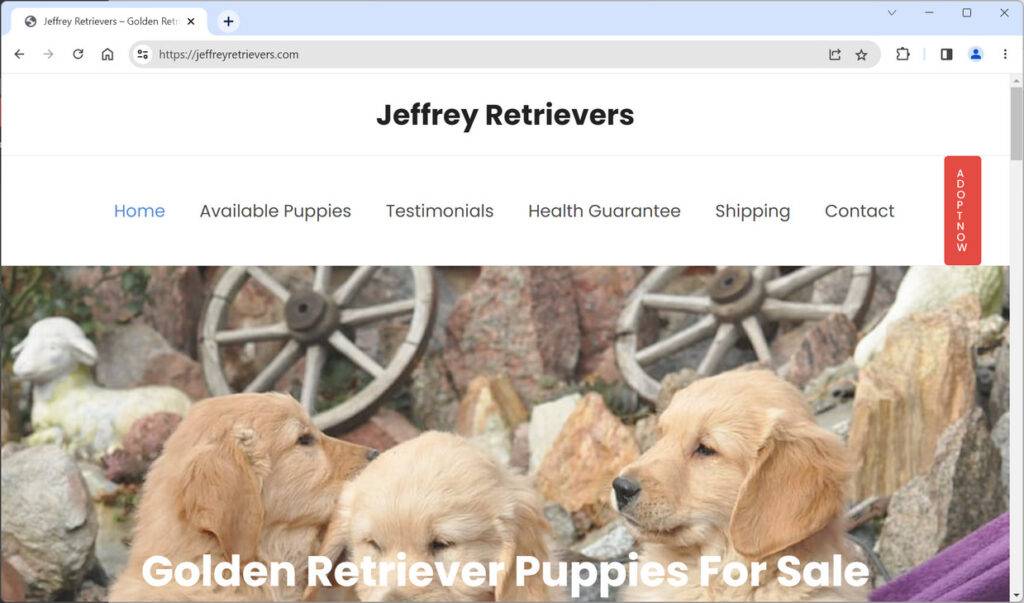
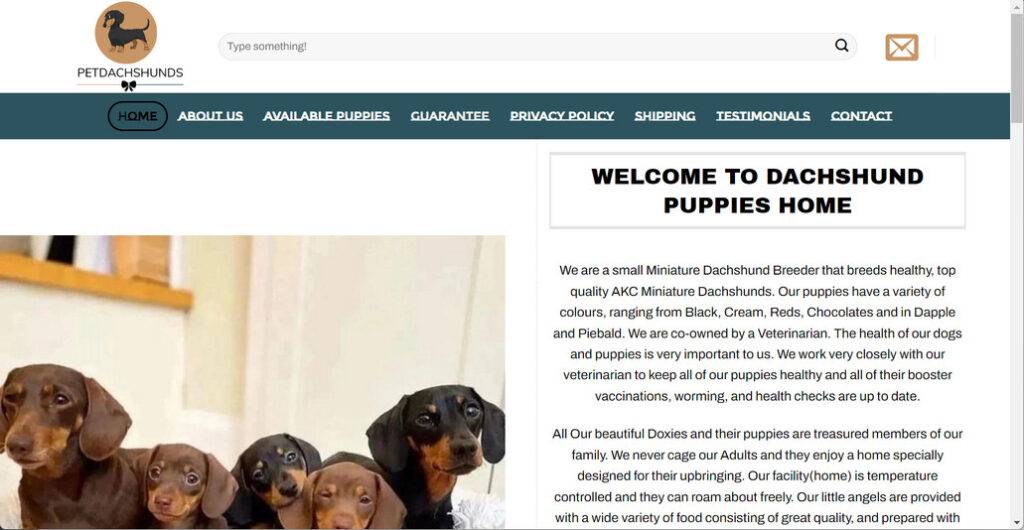
Online puppy scams have seen a dramatic rise in recent years, particularly in the wake of the COVID-19 pandemic, which fueled demand for pets. Scammers have seized this opportunity to create hundreds of fake breeder websites, often with convincing names like “stephaniehomeofminidachshund.com” or “colleengoldenretrieverfamilypuppies.com.” These sites are typically filled with stock photos, fabricated testimonials, and professional layouts that make them difficult to distinguish from legitimate breeders.
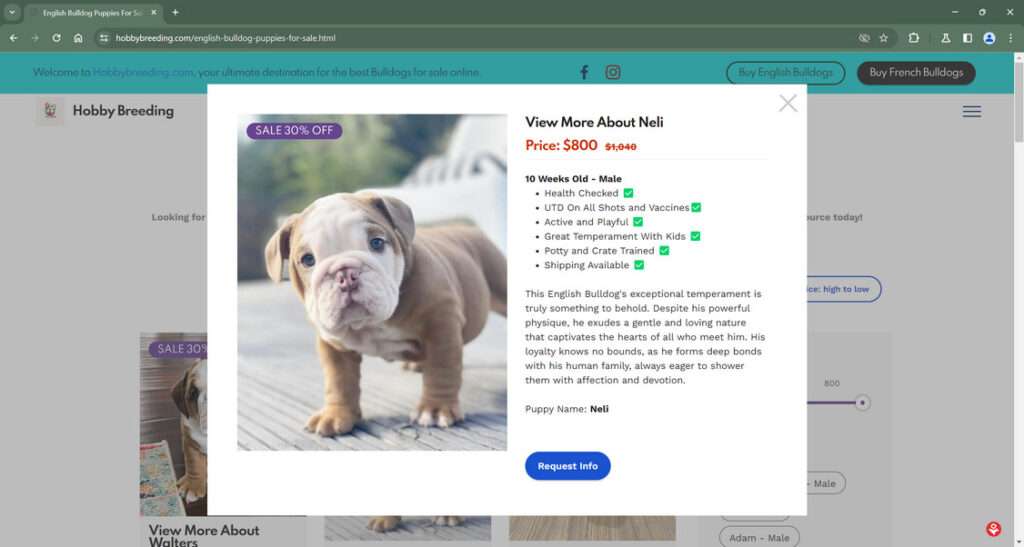
These scam sites aren’t just built haphazardly, they follow a clear formula designed to manipulate emotions and push buyers into fast decisions. They exploit the joy and urgency of getting a new puppy to push unsuspecting victims into sending money for a dog that doesn’t exist.
Common Traits of Scam Sites
- Recently Registered Domains: Most of these sites are only weeks or months old and are frequently taken down and replaced with new domains once they’re exposed.
- Breed-Specific URLs: The domain names often include specific dog breeds to appear in search engine results—such as Golden Retrievers, Labradors, Dachshunds, Boxers, or Shih Tzus.
- Emotionally Charged Content: Language like “family-raised,” “home-trained,” and “loving forever home” is used to evoke trust and compassion.
- Fabricated Testimonials: The reviews are usually paired with stock photos or AI-generated images to appear authentic.
- Minimal Contact Options: Scammers only offer email or a generic contact form. If a phone number is listed, it’s often inactive or linked to a burner phone.
- Urgency and Scarcity Tactics: Phrases like “only one puppy left” or “puppy reserved for 24 hours only” are designed to pressure the buyer.
- No Video or In-Person Meetings: When asked for a video of the puppy or a video call, the scammer will avoid the request or provide a generic pre-recorded video.
Examples of Known Scam Domains
- stephaniehomeofminidachshund.com
- liamdachshundpuppies.com
- colleengoldenretrieverfamilypuppies.com
- dariusdachshundhomes.com
- audreygoldenretrievershome.com
- ruthminidachshundpuppies.com
- familyorientatedlabradorshome.com
- janetgreatdanepuppieshome.com
- lilygoldenretrievershome.com
- cleanparklabradorretrievershome.com
This is just a small sample of a continually growing list. Many of these websites have been reported by consumers and are tracked by watchdog platforms like Petscams.com. In most cases, these domains are linked to the same group of scammers using different names and breed variations to evade detection.
How the Scam Works
Step 1: Setting the Trap with a Professional Website
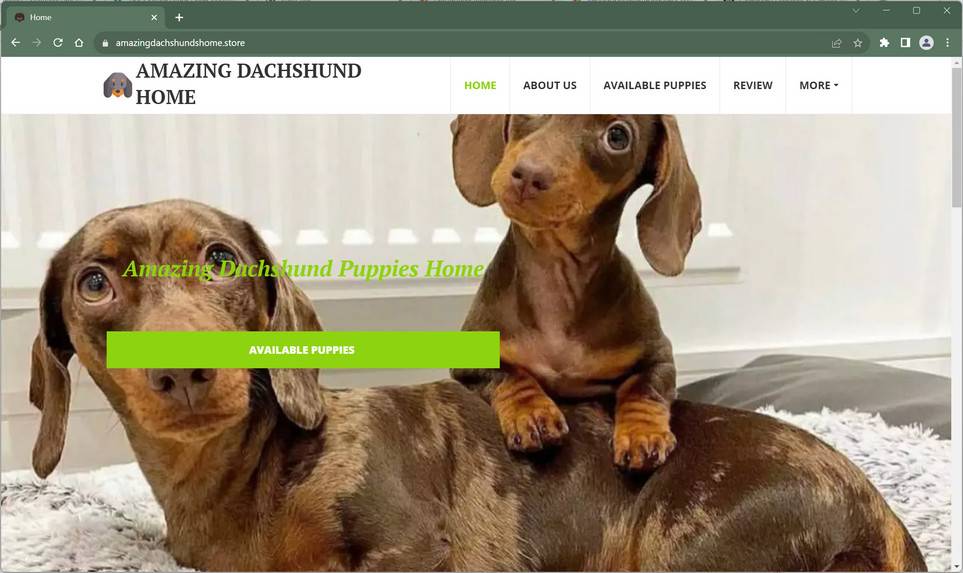
Scammers begin by registering new domain names that resemble real breeder sites. They build the sites using generic website builders and include high-quality images of puppies (often stolen from legitimate breeders or stock image sites), along with detailed “About Us” pages, FAQs, and pricing information to appear credible.
Step 2: Driving Traffic to the Fake Site
The scammer then posts listings on platforms like Craigslist, Facebook Marketplace, and even Google ads. These listings contain emotionally driven text and irresistible pricing—promoting puppies as “discounted,” “re-homed,” or “available due to a family emergency.”
Step 3: Creating an Emotional Connection
Once a potential buyer makes contact, the scammer responds promptly, using emotional language to establish trust. They may say the puppy is their child’s favorite or that they’re heartbroken to part with it. They’ll emphasize that they are looking for a “loving, responsible home” and may even ask basic screening questions to feign legitimacy.
Step 4: Demanding Payment Upfront
The next step is payment. The scammer pushes for non-refundable, difficult-to-reverse payment methods like Zelle, Cash App, Venmo, PayPal Friends & Family, wire transfer, or cryptocurrency. They may also offer a “deal” or discount for immediate payment to add pressure.
Step 5: Faking the Shipping Process
Once the payment is made, the buyer is told the puppy is being prepared for shipment. The scammer sends fake tracking info or connects the buyer with a fraudulent pet shipping company (also operated by them). They may then request additional fees for vaccination, insurance, climate-controlled crates, or even boarding.
Step 6: Disappearing
Eventually, the communication stops. The emails bounce. The phone number is inactive. The website vanishes. Victims are left with no puppy and no way to recover their money.
Step 7: Repeating the Process
Using automation tools and domain registrars that offer privacy, scammers can spin up new sites in hours. Once one site is flagged or blacklisted, they simply shift to the next and continue their scheme.
How to Spot a Puppy Scam Website
Recognizing a scam website early can save you from emotional distress and financial loss. Here are the most effective ways to identify a fraudulent puppy seller online:
- Check the Domain Registration Date: Most scam sites are registered within the past few months. You can use tools like Whois.com to verify the domain’s age.
- Look for Reverse Image Matches: Run the puppy photos through Google Reverse Image Search. If the same photo appears on multiple unrelated websites, it’s likely stolen.
- Test Communication: Ask for a live video call with the puppy. If they refuse or give excuses, that’s a major red flag.
- Avoid Payment via Zelle, Venmo, Cash App, or Crypto: These are the preferred methods for scammers because they’re hard to trace and reverse.
- Read the Website Carefully: Many scam sites copy and paste content. Look for awkward grammar, broken English, or repeated text across different breeder sites.
- Search for Reviews: Check Trustpilot, Reddit, or scam alert websites. Use keywords like “[website name] scam” to see if others have been affected.
Most Commonly Used Breeds in Puppy Scams
Scammers often target popular and high-demand dog breeds to increase the likelihood of someone falling for the scam. The breeds most frequently used include:
- Dachshund: Especially miniature or long-haired variants
- Golden Retriever: A top family dog in demand year-round
- Labrador Retriever: Widely sought-after and highly trusted breed
- Boxer: Known for loyalty and energy, often falsely marketed as “home-raised”
- Shih Tzu: Popular among apartment dwellers and elderly buyers
- French Bulldog: Often used in high-price scams because of real-world cost
- Cane Corso: Targeted for their guardian reputation
- Great Dane: Marketed to buyers looking for giant breeds
- Jack Russell Terrier: Used for buyers wanting active small breeds
- Cocker Spaniel: Featured in emotional scam narratives aimed at families
When a website features these breeds, especially with emotional language and low pricing, it’s essential to double-check all details and request verification before proceeding.
What to Do if You Have Fallen Victim to this Scam
- Cut Off All Contact
- Don’t respond further. Block email addresses and phone numbers immediately.
- Document Everything
- Save all email and text communication, payment confirmations, website links, and screenshots. This documentation will be essential for filing reports and disputes.
- File a Report
- Notify the appropriate agencies:
- FTC Complaint Assistant
- IC3.gov (FBI Internet Crime Complaint Center)
- Petscams.com – Scam Reporting Tool
- Your local police department and consumer protection agency
- Notify the appropriate agencies:
- Contact Your Bank or Payment Service
- If you used a debit/credit card or money app, contact your provider immediately to request a reversal or dispute the charge. Some platforms offer limited fraud protection.
- Warn the Public
- Post your experience on Reddit, Trustpilot, Google Reviews, Facebook scam groups, and pet adoption forums. Your post may prevent another family from being defrauded.
- Protect Your Identity
- If you shared sensitive personal info (like ID, address, or banking details), consider placing a fraud alert on your credit report and enrolling in identity monitoring services.
Frequently Asked Questions About Puppy Scam Websites
What is a puppy scam website?
A puppy scam website is a fraudulent site that pretends to sell or rehome puppies—typically purebred or designer breeds—when in reality, the dogs do not exist. These sites use stolen images, fake testimonials, and emotionally manipulative language to trick buyers into sending money for pets they’ll never receive.
How can I tell if a puppy website is a scam?
Several red flags can indicate a scam website:
- The domain was recently registered (check on whois.com)
- The breeder refuses in-person visits or live video calls
- They request payment via Zelle, Cash App, Venmo, or crypto
- Puppy photos appear on multiple breeder websites
- The website has grammatical errors, generic content, or AI-generated reviews
- Prices are unusually low for purebred dogs
- There’s pressure to act quickly due to “limited availability”
Are sites like stephaniehomeofminidachshund.com or liamdachshundpuppies.com scams?
Yes. These domains, along with hundreds of others like colleengoldenretrieverfamilypuppies.com or dariusdachshundhomes.com, have been reported repeatedly for fraudulent activity. They are part of a known scam network impersonating breeders of popular dog breeds. Victims report sending money and never receiving a puppy.
Why do scammers keep making new puppy websites?
Scammers constantly create new domains to stay ahead of takedowns and blacklists. They use automated tools and cheap hosting services to launch new fake websites in minutes. Once a domain is flagged or exposed, they abandon it and move on to a new one with a slightly different name.
What should I do if I already paid a fake puppy site?
If you’ve sent money:
- Stop all communication with the scammers.
- Save all evidence—emails, payment confirmations, messages.
- File a report with the FTC, IC3, and Petscams.com.
- Contact your bank or payment service immediately to request a chargeback or dispute.
- Monitor your identity if you shared personal details.
Can I get my money back from a puppy scam?
It depends on the payment method. Credit card payments and some debit cards may allow chargebacks. Services like PayPal (Goods & Services only) may offer buyer protection. Unfortunately, methods like Zelle, Cash App, Venmo, or crypto are usually non-reversible and offer no recourse.
Are all online puppy breeders fake?
No, not all online breeders are scammers—but many real breeders do not sell puppies through anonymous websites or classified ads. A legitimate breeder will:
- Offer a video call with the puppy and the litter
- Provide references and health certifications
- Allow in-person pickup or use trusted transport
- Be verifiable through breed clubs or kennel registries
How can I verify a breeder is legitimate?
Follow these steps:
- Search their name, phone, and email on Google and scam forums
- Look up the domain’s age and ownership via whois.com
- Ask for a live video showing the puppy with its litter and mother
- Search images with Google Reverse Image to check for stock photos
- Look for reviews on trusted platforms (AKC, BBB, Trustpilot)
Why are Dachshunds, Labradors, and Golden Retrievers common in scams?
These are among the most popular and in-demand dog breeds, making them prime targets for scammers. Buyers are more likely to search for these breeds and are more emotionally driven, which scammers exploit. Scam sites often include keywords like “mini,” “healthy,” or “purebred” to attract search traffic.
Where can I report a fake puppy website?
You can report fraudulent pet websites to:
- FTC – ReportFraud.ftc.gov
- FBI’s IC3
- Petscams.com
- Better Business Bureau
- Local law enforcement or consumer protection agency
Can I prevent others from falling for the same scam?
Yes. Share your story online using trusted platforms like Reddit, Facebook scam awareness groups, and pet adoption forums. Add reviews to Google and scam databases like petscams.com. The more visibility the scam has, the fewer people will be tricked by it.
What breeds are most commonly used in scam websites?
Scammers tend to use popular family and designer breeds such as:
- Dachshunds (especially miniature)
- Golden Retrievers
- Labrador Retrievers
- Boxers
- Shih Tzus
- French Bulldogs
- Great Danes
- Jack Russells
- Cane Corsos
They often create multiple fake websites for each breed, changing domain names slightly to stay ahead of detection.
Is it safe to buy puppies online?
Buying a puppy online can be safe if done correctly:
- Only purchase from breeders with verifiable reputations
- Insist on a live video call and proper paperwork
- Avoid sketchy classified ads or social media promotions
- Never send money without confirming the breeder’s identity and legitimacy
If possible, adopt locally or through reputable rescue organizations.
The Bottom Line
The rise of puppy scam websites has led to a surge in financial losses and emotional devastation for hopeful pet owners. These scams prey on the emotional vulnerability of people who want to provide a loving home for a pet. What might appear to be a reputable breeder could easily be part of an organized, multi-site scam operation.
To protect yourself:
- Insist on a live video call to see the puppy.
- Research the breeder’s name, phone number, and email address online.
- Use reverse image search to check if puppy photos are stolen.
- Only buy from breeders you can visit in person or who are referred by trusted sources.
If it seems too good to be true, it usually is. Share this article to raise awareness and help others avoid falling victim.
Examples of Known Scam Domains
- stephaniehomeofminidachshund.com
- liamdachshundpuppies.com
- cooglerdachshund.com
- ryleedachshundpuppies.com
- marieminidachshundpuppies.com
- jennifergoldenretrievershome.com
- janetgreatdanepuppieshome.com
- familyorientatedlabradorshome.com
- royalminidachshundpuppies.com
- racheljackrussellhome.com
- marthagreatdanepuppieshome.com
- lydiagoldenretrievershome.com
- lolitahealthycavalierspaniels.com
- hannahbasarpupshome.com
- familyraisedboxers.com
- dianaminidachshund.com
- dariusdachshundhomes.com
- colleengoldenretrieverfamilypuppies.com
- yardsbyjackrussellterriershome.com
- ruthminidachshundpuppies.com
- oliviagreatdanepuppieshome.com
- cleanparklabradorretrievershome.com
- bonniedachshundpuppies.com
- petraminidachshundpuppies.com
- troyhometrainedshitzu.com
- terrancehometraineddachshunds.com
- perezdachshundpuppy.com
- alysiadachshundpuppies.com
- freshsmileslabradorretrieverpuppies.com
- castillodachshund.com
- audreygoldenretrievershome.com
- faithminidachshundhealthypuppies.com
- blissfuljoylabradorretrievers.com
- lovemylabrador.com
- leahgoldenretrievers.com
- lagherboxershome.com
- farmountsgoldenretrievers.com
- arthurjingledachsunds.com
- wooddachshunds.com
- christinahealthygoldenretrieverpuppies.com
- nataliepurebreedgoldelretrieverpuppies.com
- mccainbestlabradorpuppies.com
- havengoldenretrievershome.com
- fluffyminidachshundpuppies.com
- nikkihealthyminidachshund.com
- royalboxerpups.com
- raphaustindachshunds.com
- mcberthspurebredlabradorshome.com
- luckysmilesboxershome.com
- joyandhappycanecorsopuppies.com
- goodfitgoldenretrieverpuppies.com
- winnieminidachshundhome.com
- nasrodriguezdachshundpuppies.com
- ermontdachsundpuppy.com
- bellagoldenretrievershome.com
- arnoldfritzdachsunds.com
- faustslabradorretrieverpuppies.com
- belladachshundshome.com
- sophiehealthygoldenretrieverpuppies.com
- nalapurebredlabradorpuppies.com
- friendlycockerspaniels.com
- dylanhometrianeddachshund.com
- beckyminidachshundhealthypuppies.com
- neesondachshundpuppies.com
- sarahminidachshundpuppies.com
- joveldachshunds.com
- happymoonslabradorretrievers.com
- yournextbestfriendlabradorshome.com
- jenniepurebredgoldenretriever.com
- evandachshunds.com
- blessedgoldenretrieverhome.com
- crisshomeminidachshundpuppies.com
- topelitelabradorretrieverpuppies.com
- michellegoldenretrievershome.com
- kristdachshundpuppieshome.com
- fairskylabradorretrieverpuppies.com
- denzeldachshunds.com
- themadachshunds.com
- lindaminidachshundpuppies.com
- deppdachshundpuppy.com
This is just a small sample of a continually growing list. Many of these websites have been reported by consumers and are tracked by watchdog platforms like Petscams.com. In most cases, these domains are linked to the same group of scammers using different names and breed variations to evade detection.








