

A new type of scam email has been making the rounds that threatens recipients with dire consequences if they don’t pay a ransom. These emails usually start with an ominous message telling you to read the email or “something terrible will happen.”
This type of email scam is specifically designed to scare and pressure victims into immediately paying the ransom demand. The messages are carefully crafted to maximize fear and urgency.
In this comprehensive guide, we will break down exactly how the “read this email or something terrible will happen” scam works, provide tips on how to detect these types of malicious emails, and give recommendations on what to do if you receive one or already paid the ransom.
Overview of the Scam
The “read this email or something terrible will happen” scam starts with an email containing threatening language intended to scare the recipient.
Here are some examples of common opening lines seen in these scam emails:
- “Read this email or you will regret it”
- “Don’t ignore this message or you’ll be sorry”
- “This is your last warning – read this now or face the consequences”
The goal is to immediately trigger a fearful reaction that pressures the victim to continue reading. These criminal scammers know that it’s much easier to manipulate someone who is already scared or anxious.
The email will go on to make false claims about having compromising information on the recipient, such as:
- Proof of “illegal” or embarassing online activities
- Webcam footage of the victim doing intimate acts
- Access to the recipient’s online accounts, contacts, or personal data
The scammers will threaten to send this supposed compromising evidence to the victim’s friends, family, coworkers, or the public if payment is not received quickly, usually within 48 hours.
The ransom demand instructions tell the victim to pay the scammers in untraceable cryptocurrency, such as Bitcoin. The dollar amounts range from several hundred to over a thousand dollars.
These emails are carefully designed to bypass spam filters and appear legitimate on the surface. The criminals use disposable email addresses and technical tricks to try to remain anonymous.
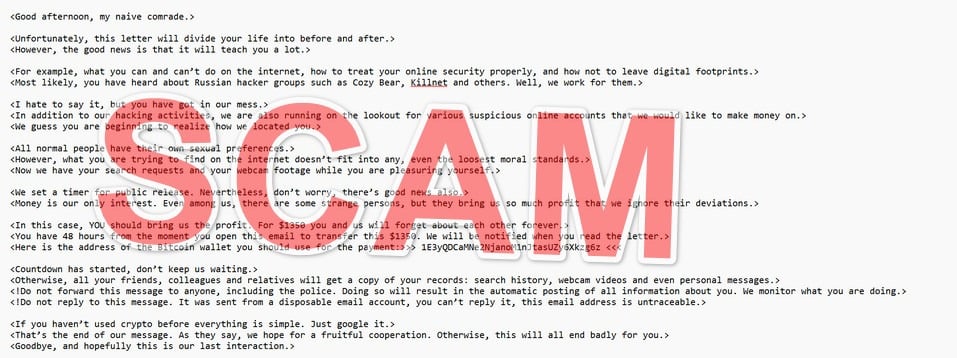
Here is what the “read this email or something terrible will happen” email scam usually says:
Good afternoon, my naive comrade.
Unfortunately, this letter will divide your life into before and after.
However, the good news is that it will teach you a lot.For example, what you can and can’t do on the internet, how to treat your online security properly, and how not to leave digital footprints.
Most likely, you have heard about Russian hacker groups such as Cozy Bear, Killnet and others. Well, we work for them.I hate to say it, but you have got in our mess.
In addition to our hacking activities, we are also running on the lookout for various suspicious online accounts that we would like to make money on.
We guess you are beginning to realize how we located you.All normal people have their own sexual preferences.
However, what you are trying to find on the internet doesn’t fit into any, even the loosest moral standards.
Now we have your search requests and your webcam footage while you are pleasuring yourself.We set a timer for public release. Nevertheless, don’t worry, there’s good news also.
Money is our only interest. Even among us, there are some strange persons, but they bring us so much profit that we ignore their deviations.In this case, YOU should bring us the profit. For $1350 you and us will forget about each other forever.
You have 48 hours from the moment you open this email to transfer this $1350. We will be notified when you read the letter.
Here is the address of the Bitcoin wallet you should use for the payment: 1E3yQDCaMNe2NjanoM1nJtasUZy6Xkzg6zCountdown has started, don’t keep us waiting.
Otherwise, all your friends, colleagues and relatives will get a copy of your records: search history, webcam videos and even personal messages.
!Do not forward this message to anyone, including the police. Doing so will result in the automatic posting of all information about you. We monitor what you are doing.
!Do not reply to this message. It was sent from a disposable email account, you can’t reply it, this email address is untraceable.If you haven’t used crypto before everything is simple. Just google it.
That’s the end of our message. As they say, we hope for a fruitful cooperation. Otherwise, this will all end badly for you.
Goodbye, and hopefully this is our last interaction.P. S. Remember for the future, the Internet is not some kind of a Wild West where you can do anything you want.
There is a wholesome shiver of hungry sharks searching for irresponsible persons like you.
Now that you understand the general scam overview, let’s explore step-by-step exactly how they operate.
How the Scam Works
The “read this email or something terrible will happen” scam is intricately designed to manipulate vulnerable victims. Here is the step-by-step process these criminal scammers use:
1. Obtain Victim’s Email Address
The scammers first need to acquire a large list of potential victim email addresses. There are several ways they obtain these:
- Data breaches – Personal data like emails are frequently stolen in corporate or website data breaches. The scammers buy these hacked email lists.
- Malware – Malicious software installed on an infected computer can stealthily harvest email addresses and other information.
- Phishing sites – Fake websites designed to steal personal information and emails.
- Online forums – Email addresses are often listed publicly on forums, social media, and other sites.
So while you may receive one of these emails out of the blue, the scammers have likely had your email address saved and ready to target for a while.
2. Carefully Craft the Email
These criminals spend time designing the emails to bypass spam filters and scare the reader. Here are some of the tactics they use:
- Sender name – The “From” name on the email will appear friendly and innocent like “Support Team” or your own name.
- Subject line – Urgent subjects like “Read now – Your safety depends on it” are common.
- Email body – This is designed to immediately trigger fear and anxiety with threats of leaking damaging material.
- Ransom deadline – Giving a short deadline of 24-48 hours adds to the pressure and urgency to pay quickly.
- Untraceable payment – Demanding payment in Bitcoin or other cryptocurrencies covers the criminal’s tracks.
- Disposable email address – The scammer’s email address is created just for this scam then discarded so it can’t be traced.
3. Send to Targeted Victims
After perfecting the scam email, the scammers will send it out in mass numbers to the email list they compiled. The targets are essentially random strangers that the scammers don’t know personally.
Some victims will inevitably fall for the threats and urgency of the scam messages.
4. Receive and Track Payments
Once a victim decides to pay the ransom, they will follow the instructions to transfer the funds to the scammer’s cryptocurrency wallet address.
The scammers can check their wallet to see any payments received. For Bitcoin they can track what’s called the public key of the transaction to see who sent it and the amount.
5. Threaten Victims Who Don’t Pay
If the deadline passes without payment, the scammers will sometimes send another threatening email saying they will now release the damaging material because the deadline was missed. This is done to scare any victims who didn’t initially pay into giving in and sending the money.
However, these are always empty threats with no intention of following through. The scammers are just trying to frighten as many victims as possible to maximize their profits from this type of extortion scam.
What to Do If You Receive This Scam Email
If you receive an email with any threatening language urging you to read it or face consequences, remain calm. Here are the smart action steps to take:
- Do not respond – Do not reply to the email, contact the sender, or acknowledge it in any way. The scammers may threaten to release information if you contact authorities, but this is always a bluff.
- Report the email – Forward the scam email to spam@uce.gov and your email provider as phishing content. This helps crack down on the criminals.
- Never pay – You should never pay any ransom demand, even if you feel embarrassed or scared. This only encourages more scam attempts and the criminals will likely come back demanding more money.
- Secure accounts – Change passwords and enable two-factor authentication on any online accounts as a precaution.
- Watch for more scams – The criminals may target you again in the future with additional scams. Be wary of any unsolicited emails demanding urgent action.
With the right vigilance, these malicious scam emails can be safely avoided without giving into the demands.
What to Do If You Already Paid the Scam Ransom
Unfortunately, many victims are tricked into paying the ransom in these “read this email” scams through fear and pressure. If you already sent crypto to the criminals, here are the steps to take:
- Contact the crypto platform – If you paid with Bitcoin or another mainstream cryptocurrency, you may be able to report the transaction to the platform as fraudulent, especially if done very recently.
- Talk to your bank – Your bank may be able to recall the transaction if you purchased and transferred the cryptocurrency through them. Act quickly for the best chance.
- Report to authorities – File a report about the scam with the FBI Internet Crime Complaint Center (www.ic3.gov) and your local police department. Provide all the details of the scam email.
- Monitor accounts – Watch for any potential misuse of your personal information tied to the scam and continue using best security practices on your accounts.
- Learn from it – Use this as a learning experience to be more vigilant for online extortion scams that use pressure and threats to demand immediate payment.
- Warn others – Consider sharing your experience anonymously to spread awareness about these scams and help others avoid falling victim.
The most important step is taking quick action if you paid any money to these scammers. This gives you the best chance of recovering your funds and protecting your identity.
Is Your Device Infected? Run a Free Malware Scan
Slow performance, constant pop-ups, or strange behavior? These are classic signs of a malware infection. The fastest way to find out is to scan your device with Malwarebytes Free — one of the most trusted malware removal tools available.
The free version detects and removes the most common threats, including:
- Adware — the cause of those annoying pop-ups
- Browser hijackers — unwanted redirects and changed homepages
- Trojans and spyware — hidden programs stealing your data
- Potentially unwanted programs (PUPs) — software you never asked for
👉 Select your device below — Windows, Mac, or Android — then follow the simple steps to download Malwarebytes, scan your system, and remove any threats it finds. The scan usually takes 5 to 20 minutes.
Run a Malware Scan with Malwarebytes for Windows
Malwarebytes is one of the most popular and trusted anti-malware tools for Windows — and it’s completely free for removing infections. It catches threats that many antivirus programs miss, including adware, browser hijackers, and trojans. Follow the steps below to scan and clean your PC in just a few minutes.
Download Malwarebytes
Click the button below to download the latest version of Malwarebytes for Windows from the official source. The free version is all you need — it will scan your computer and remove adware, browser hijackers, and other malicious software at no cost.
Download MalwarebytesOfficial installer for Windows 11 and 10. Your download starts right away.Want real-time protection? See Malwarebytes Premium Malwarebytes Free for WindowsScans and removes malware at no cost
-
Install Malwarebytes
When the download finishes, open your Downloads folder and double-click the MBSetup file. If Windows shows a User Account Control pop-up, click “Yes” to allow the installation.
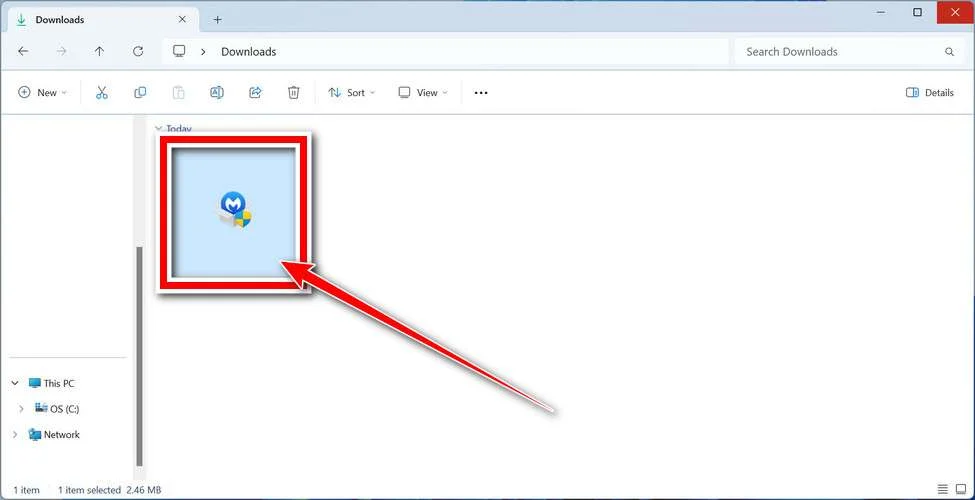
Follow the On-Screen Prompts to Install Malwarebytes
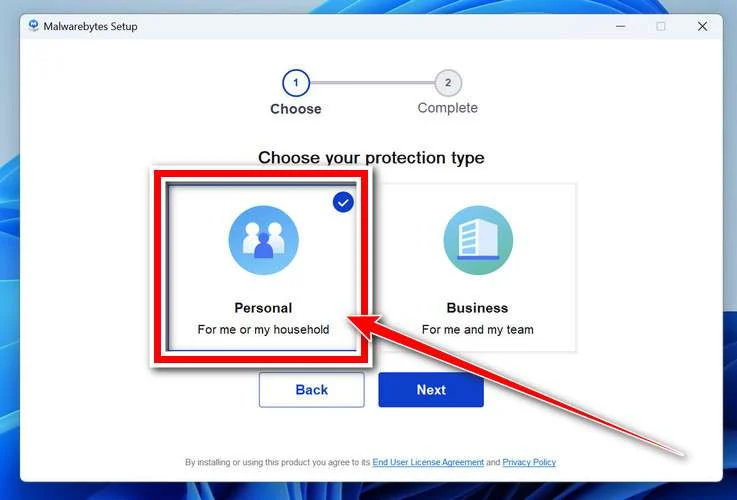
The setup wizard will walk you through a few quick screens:
-
Choose where you’re installing the program — “Personal Computer” or “Work Computer” — then click Next.
-
Malwarebytes will now install on your device. This usually takes under a minute.

-
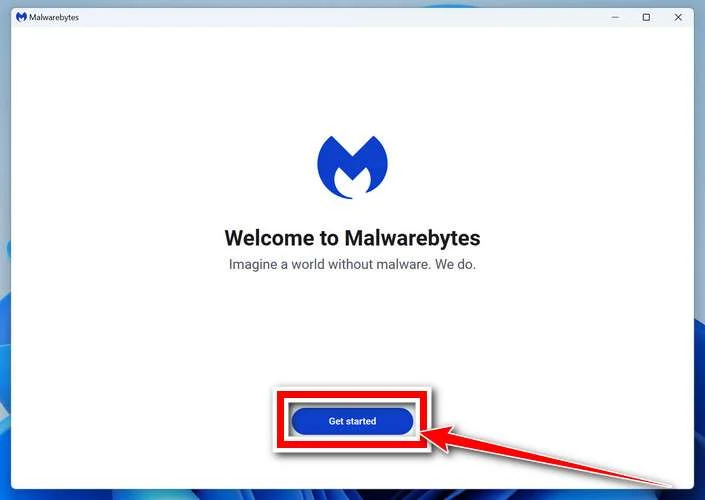
When installation is complete, the “Welcome to Malwarebytes” screen will open automatically.
-
On the final screen, click Open Malwarebytes to launch the program.

-
Enable “Scan for Rootkits”
Before scanning, turn on rootkit detection so Malwarebytes can find even the most hidden threats. Click the Settings gear icon on the left side of the screen.
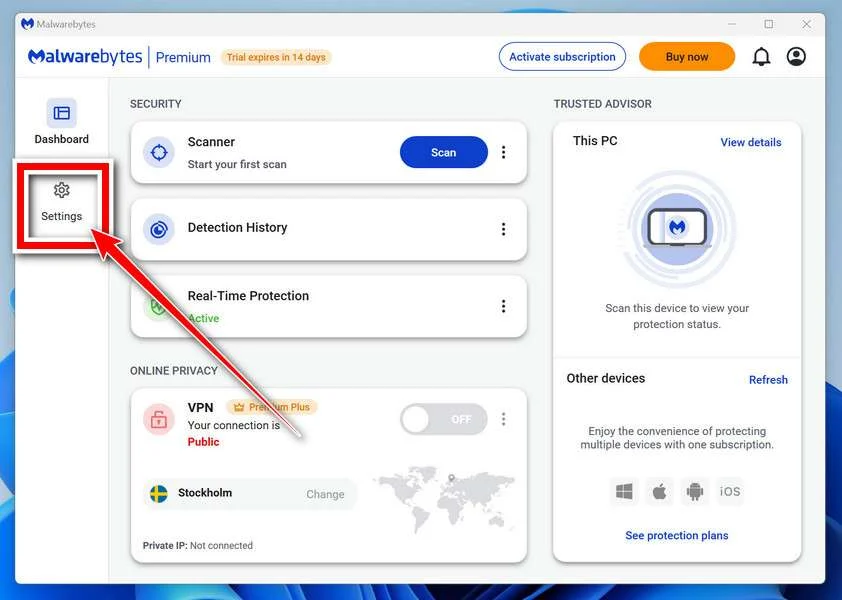
In the settings menu, find “Scan for rootkits” and click the toggle so it turns blue.

Done? Click “Dashboard” in the left pane to return to the main screen.
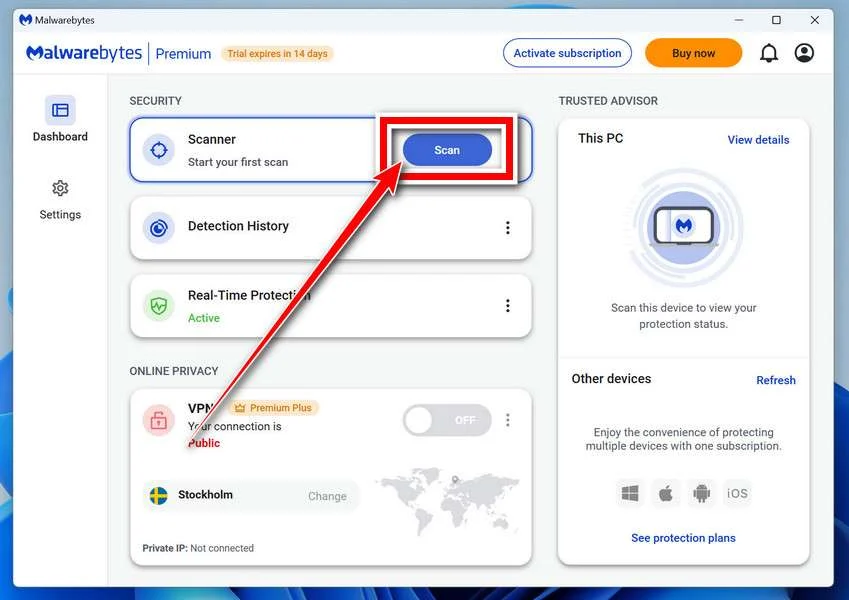
Start the Scan
Click the blue Scan button. Malwarebytes will automatically update its virus database and start checking your computer for malware.
-
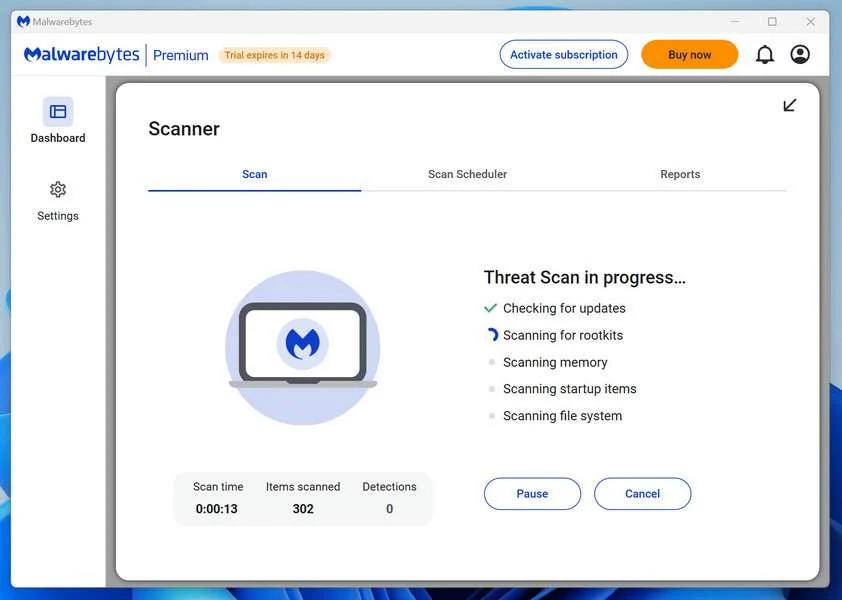
Wait for the Scan to Finish
The scan checks your entire system for browser hijackers and other malicious programs, so it can take 5 to 20 minutes depending on your computer. Feel free to do something else — just check back occasionally to see the progress.
-
Quarantine the Detected Threats
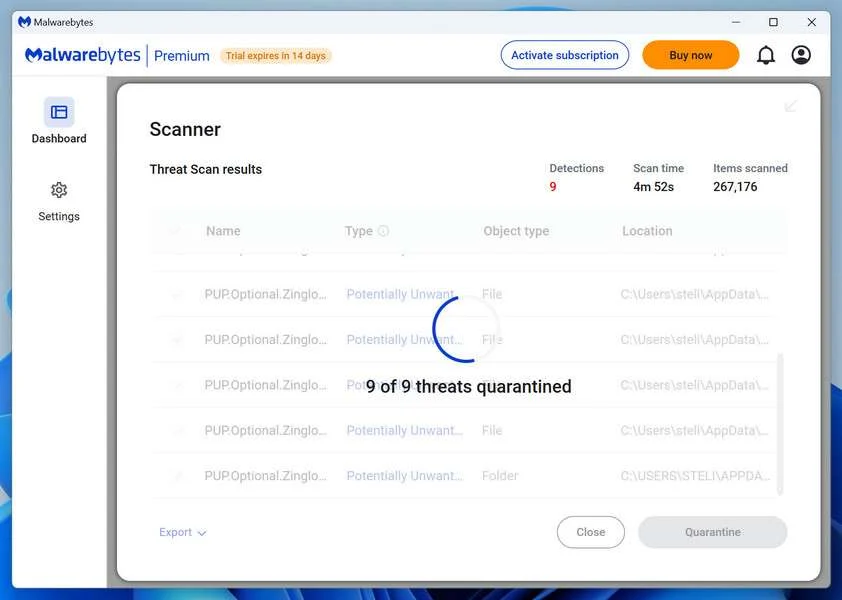
When the scan is done, you’ll see a list of everything Malwarebytes found — malware, adware, and potentially unwanted programs. Click the “Quarantine” button to remove all of them at once.
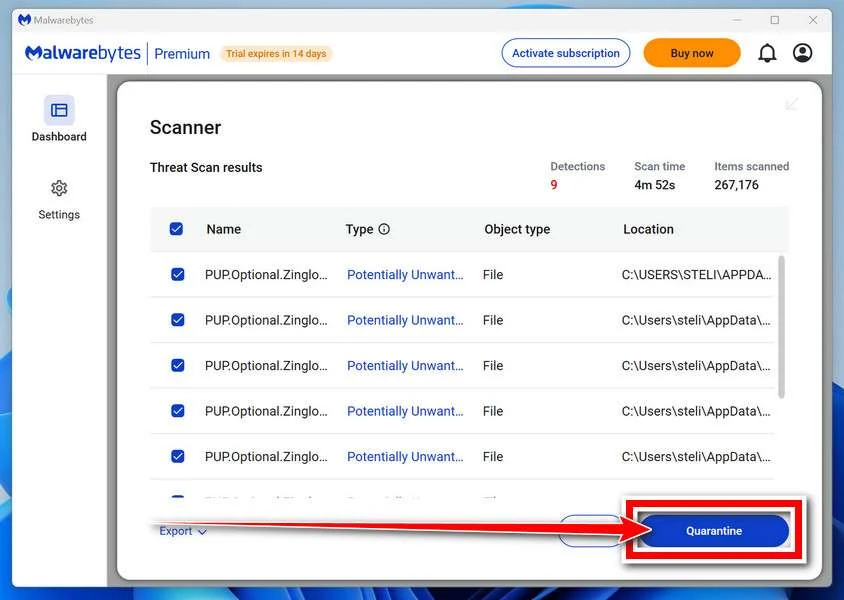
Malwarebytes will now remove the malicious files and registry entries and move them safely into quarantine.
-
Restart Your Computer
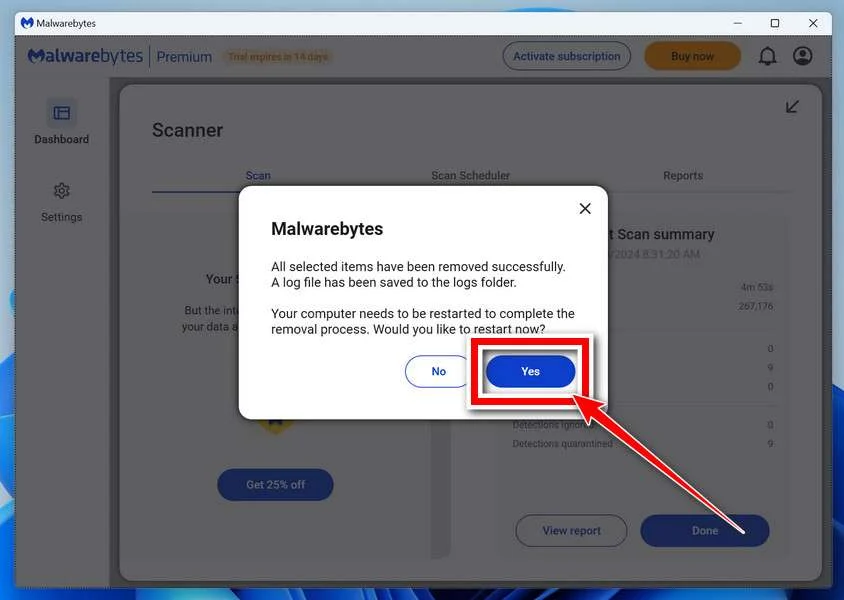
Some threats can only be fully removed after a reboot. If Malwarebytes asks you to restart, click Yes. Once you’re logged back in, Malwarebytes has finished removing the threats it found.
That’s it — your Windows PC is now clean of trojans, adware, and other malware, and should be back to running smoothly.
If you are still having problems with your computer after completing these instructions, then please follow one of the steps:
- Run a computer scan with ESET Online Scanner
- Ask for help in our Windows Malware Removal Help & Support forum.
Run a Malware Scan with Malwarebytes for Mac
Malwarebytes for Mac is a free on-demand scanner that removes the malware other security software tends to miss — adware, browser hijackers, and unwanted programs included. Cleaning an infected Mac with Malwarebytes has always been completely free, and it’s our go-to recommendation. Follow the steps below to scan and clean your Mac in just a few minutes.
-
Download Malwarebytes for Mac
Click the button below to download the latest version of Malwarebytes for Mac.
Download MalwarebytesOfficial installer for macOS. Your download starts right away.Want real-time protection? See Malwarebytes PremiumMalwarebytes Free for MacScans and removes malware at no cost -
Open the Malwarebytes setup file
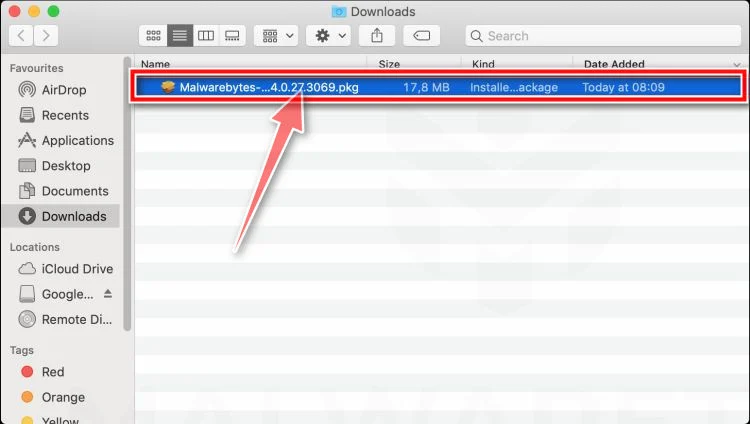
When the download finishes, open your Downloads folder and double-click the setup file to begin the installation.
-
Follow the On-Screen Prompts to Install Malwarebytes
The Malwarebytes for Mac Installer will guide you through a few quick screens. Click “Continue” and keep following the prompts until the installation completes.
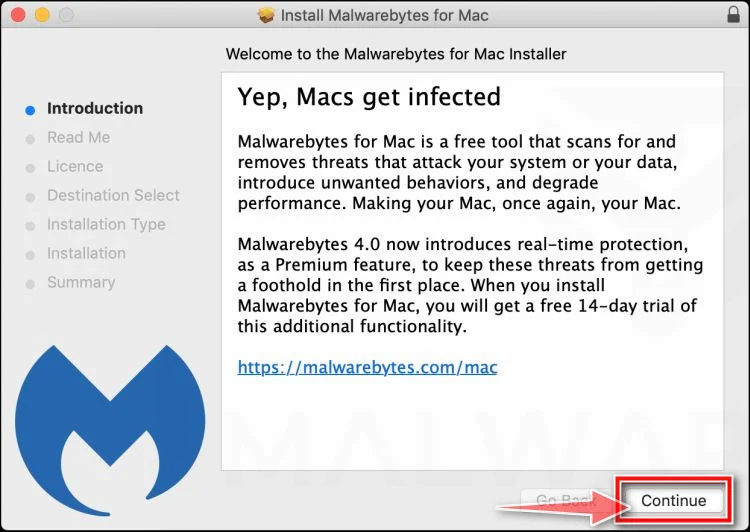
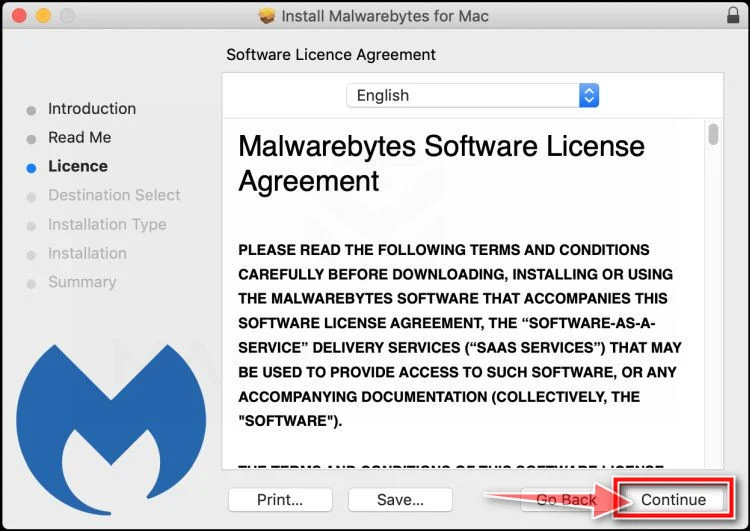
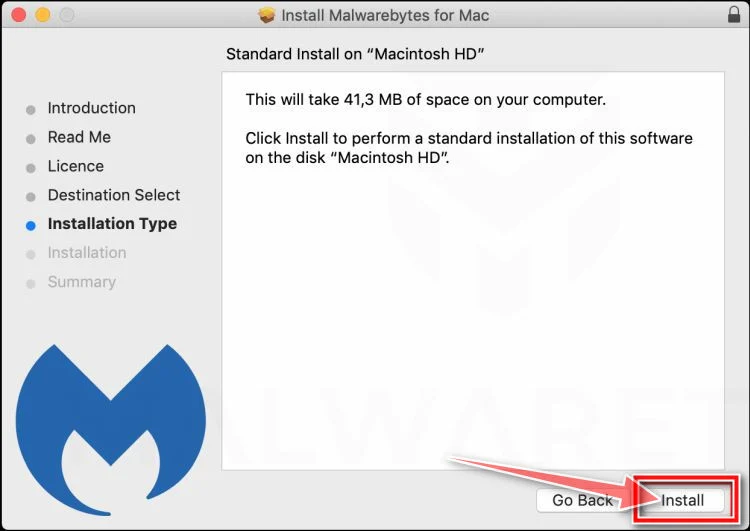
When the installation is complete, Malwarebytes opens to the Welcome to Malwarebytes screen. Click “Get started“.
-
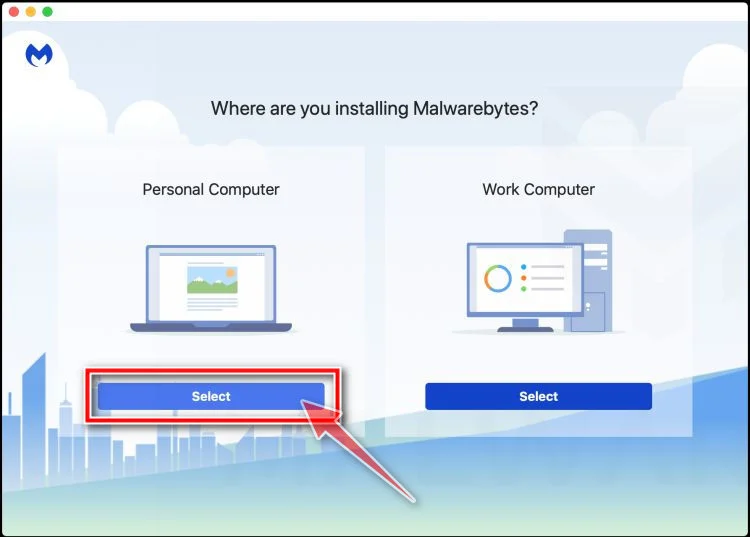
Select “Personal Computer” or “Work Computer”
Malwarebytes will ask what type of computer you’re installing it on. Click either Personal Computer or Work Computer, whichever applies.
-
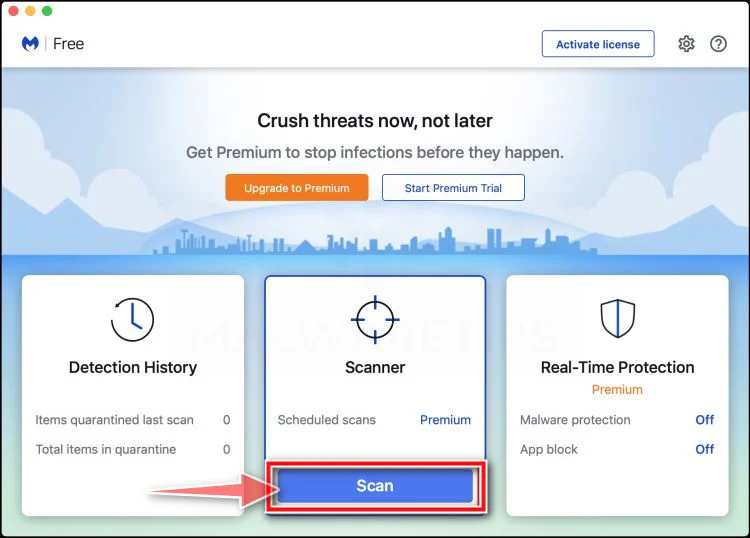
Start the Scan
Click the “Scan” button. Malwarebytes will automatically update its detection database and begin checking your Mac for malware.
-
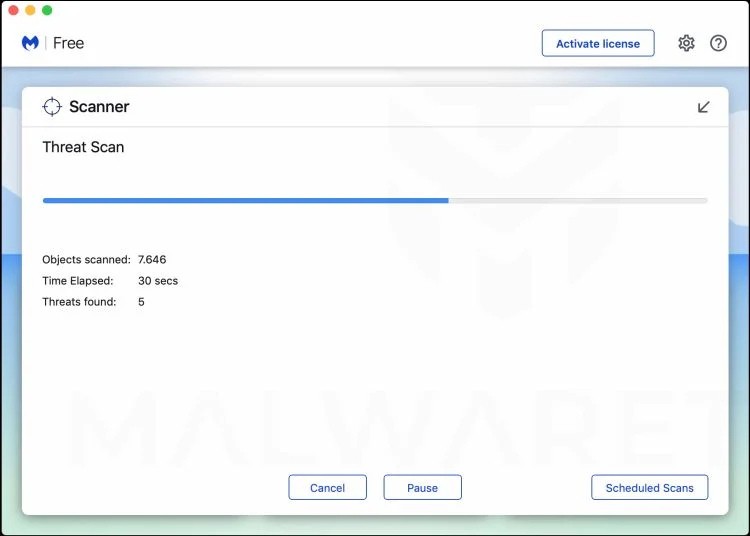
Wait for the Scan to Finish
Malwarebytes will scan your Mac for adware, browser hijackers, and other malicious programs. This can take a few minutes, so feel free to do something else — just check back occasionally to see the progress.
-
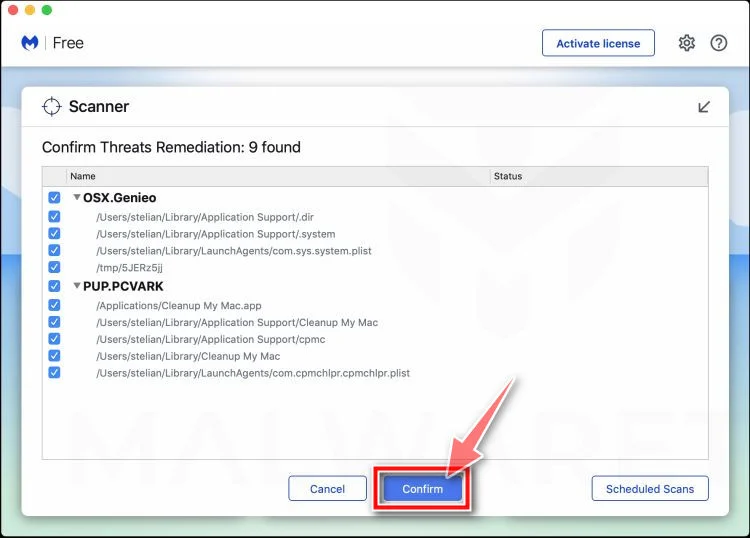
Quarantine the Detected Threats
When the scan is done, you’ll see a list of everything Malwarebytes found. Click the “Quarantine” button to remove all the threats at once.
-
Restart Your Mac
Malwarebytes will now remove all the malicious files it found. Some threats can only be fully removed after a reboot — if Malwarebytes asks you to restart, allow it. Once you’re logged back in, your Mac is clean.
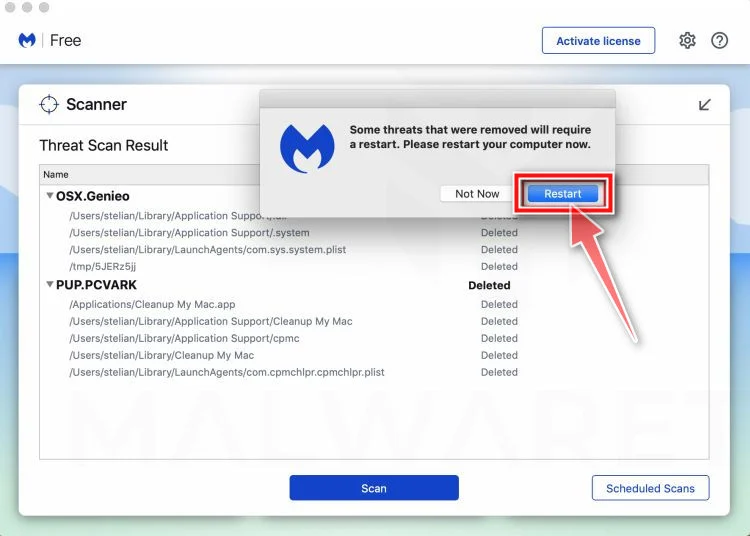
That’s it — your Mac is now free of adware, rogue browser extensions, and other potentially harmful software.
If you are still experiencing problems while trying to remove a malicious program from your computer, please ask for help in our Mac Malware Removal Help & Support forum.
Run a Malware Scan with Malwarebytes for Android
Malwarebytes for Android automatically detects and removes dangerous threats like malware and ransomware so you don’t have to worry about your most-used device being compromised. Aggressive detection of adware and potentially unwanted programs keeps your Android phone or tablet running smooth.
-
Download Malwarebytes for Android.
You can download Malwarebytes for Android by clicking the link below.
Get Malwarebytes for AndroidOpens Google Play in a new tab.Want real-time protection? See Malwarebytes Premium for AndroidMalwarebytes for AndroidScans your phone and removes malware at no cost -
Install Malwarebytes for Android on your phone.
In the Google Play Store, tap “Install” to install Malwarebytes for Android on your device.

When the installation process has finished, tap “Open” to begin using Malwarebytes for Android. You can also open Malwarebytes by tapping on its icon in your phone menu or home screen.

-
Follow the on-screen prompts to complete the setup process
When Malwarebytes will open, you will see the Malwarebytes Setup Wizard which will guide you through a series of permissions and other setup options.
This is the first of two screens that explain the difference between the Premium and Free versions. Swipe this screen to continue.
Tap on “Got it” to proceed to the next step.
Malwarebytes for Android will now ask for a set of permissions that are required to scan your device and protect it from malware. Tap on “Give permission” to continue.
Tap on “Allow” to permit Malwarebytes to access the files on your phone.
-
Update database and run a scan with Malwarebytes for Android
You will now be prompted to update the Malwarebytes database and run a full system scan.

Click on “Update database” to update the Malwarebytes for Android definitions to the latest version, then click on “Run full scan” to perform a system scan.

-
Wait for the Malwarebytes scan to complete.
Malwarebytes will now start scanning your phone for adware and other malicious apps. This process can take a few minutes, so we suggest you do something else and periodically check on the status of the scan to see when it is finished.

-
Click on “Remove Selected”.
When the scan has been completed, you will be presented with a screen showing the malware infections that Malwarebytes for Android has detected. To remove the malicious apps that Malwarebytes has found, tap on the “Remove Selected” button.

-
Restart your phone.
Malwarebytes for Android will now remove all the malicious apps that it has found. To complete the malware removal process, Malwarebytes may ask you to restart your device.
That’s it — your Android phone is now clean — no more malicious apps, adware, or browser redirects.
If you are still having problems with your phone after completing these instructions, then please follow one of the steps:
- Restore your phone to factory settings by going to Settings > General management > Reset > Factory data reset.
- Ask for help in our Mobile Malware Removal Help & Support forum.
Stay Protected: Block Ads and Malicious Sites
Now that your device is clean, keep it that way. Most infections start with a malicious ad or a fake download button — so blocking them at the source is your best defense.
We recommend AdGuard, which blocks malicious ads, phishing pages, and dangerous redirects before they can reach you.
👉 Download AdGuard and browse safely
Frequently Asked Questions (FAQs) About the “Read This Email or Something Terrible Will Happen” Email Scam
Q: What is the “Read this email or something terrible will happen” email scam?
A: The “Read this email or something terrible will happen” email scam is a type of extortion scam where cybercriminals send threatening emails claiming to have access to your personal information, search history, and compromising webcam footage. They demand a ransom payment, usually in cryptocurrency, to prevent the public release of this information.
Q: How do the scammers claim to have obtained my personal information?
A: Scammers often claim to have accessed your information through hacking activities or by monitoring your online activities. They may reference well-known hacker groups to lend credibility to their threats. However, in most cases, these claims are false, and the scammers do not actually have access to your personal information.
Q: What should I do if I receive an email threatening to expose my personal information?
A: If you receive a “Read this email or something terrible will happen” email, do not panic or give in to the scammer’s demands. Do not pay the ransom, as this only encourages the scammers to continue their criminal activities. Instead, report the scam to your local law enforcement agency and the FBI’s Internet Crime Complaint Center (IC3) at www.ic3.gov.
Q: How can I protect myself from falling victim to this scam?
A: To protect yourself from the “Read this email or something terrible will happen” scam, be cautious when opening emails from unknown senders. Do not click on any links or download attachments from suspicious emails. Keep your computer and mobile devices updated with the latest security patches and antivirus software. Use strong, unique passwords for your online accounts and enable two-factor authentication where possible.
Q: What should I do if I have already paid the ransom?
A: If you have already paid the ransom, contact your local law enforcement agency and report the incident. Provide them with any relevant information, such as the Bitcoin wallet address you sent the payment to and copies of the threatening emails. You should also contact your bank or credit card company to report the fraudulent transaction and discuss potential options for recovering your funds.
Q: Can the scammers really access my webcam and record me?
A: In most cases, the scammers do not have the ability to access your webcam or record your activities. They rely on fear and intimidation to pressure victims into paying the ransom. However, it is essential to ensure that your devices are free from malware or spyware that could potentially be used to monitor your activities. Run regular virus scans and keep your software up to date to minimize the risk of unauthorized access.
Q: What should I do if the scammers have released my personal information?
A: If you believe that the scammers have actually released your personal information, take immediate steps to secure your accounts and minimize the potential damage. Change your passwords, monitor your credit reports for suspicious activity, and consider placing a fraud alert or credit freeze on your accounts. Seek support from friends, family, or mental health professionals to help you cope with the stress and anxiety caused by the situation.
Q: How can I report this scam to the authorities?
A: To report the “Read this email or something terrible will happen” email scam, contact your local law enforcement agency and file a report. You can also report the scam to the FBI’s Internet Crime Complaint Center (IC3) at www.ic3.gov. Provide as much information as possible, including copies of the threatening emails and any relevant financial transactions.
Q: Are there any support resources available for victims of this scam?
A: Yes, there are several support resources available for victims of the “Read this email or something terrible will happen” email scam. In addition to seeking help from friends, family, or mental health professionals, you can contact organizations such as the Identity Theft Resource Center (www.idtheftcenter.org) or the National Organization for Victim Assistance (www.trynova.org) for guidance and support.
Q: How can I stay informed about new cybercrime threats and scams?
A: To stay informed about new cybercrime threats and scams, follow reputable cybersecurity news sources and organizations, such as the FBI’s Internet Crime Complaint Center (IC3), the Federal Trade Commission (FTC), and the National Cyber Security Centre (NCSC). Regularly update your knowledge of online security best practices and share this information with friends and family to help protect them from falling victim to similar scams.
The Bottom Line
The “read this email or something terrible will happen” scam is an insidious form of online extortion that manipulates innocent victims through fear and urgency into paying ransoms.
Always be wary of any email demanding you take immediate action under threats of leaking damaging material. Report these malicious scams, never pay anything, and secure your online accounts. If you fell victim, act swiftly to have the best chance of reclaiming lost money.
Spreading public awareness and skepticism of these criminal extortion tactics is crucial to eventually stopping them. By looking out for each other, we can create a more scam-free internet for everyone.

Join the discussion
0 commentsShare your experience or ask a question about this article.
Discussion
Start the conversation
Have a question or something useful to share? Add the first comment.