

An encrypted-message alert sounds more important than ordinary mail. It suggests someone deliberately protected a conversation and expects only you to read it.
The seven-day archive warning adds just enough pressure to make waiting feel risky. A closer look reveals why the promised privacy requires unusual caution.
Overview
A Secure Webmail Notification With an Expiring Inbox
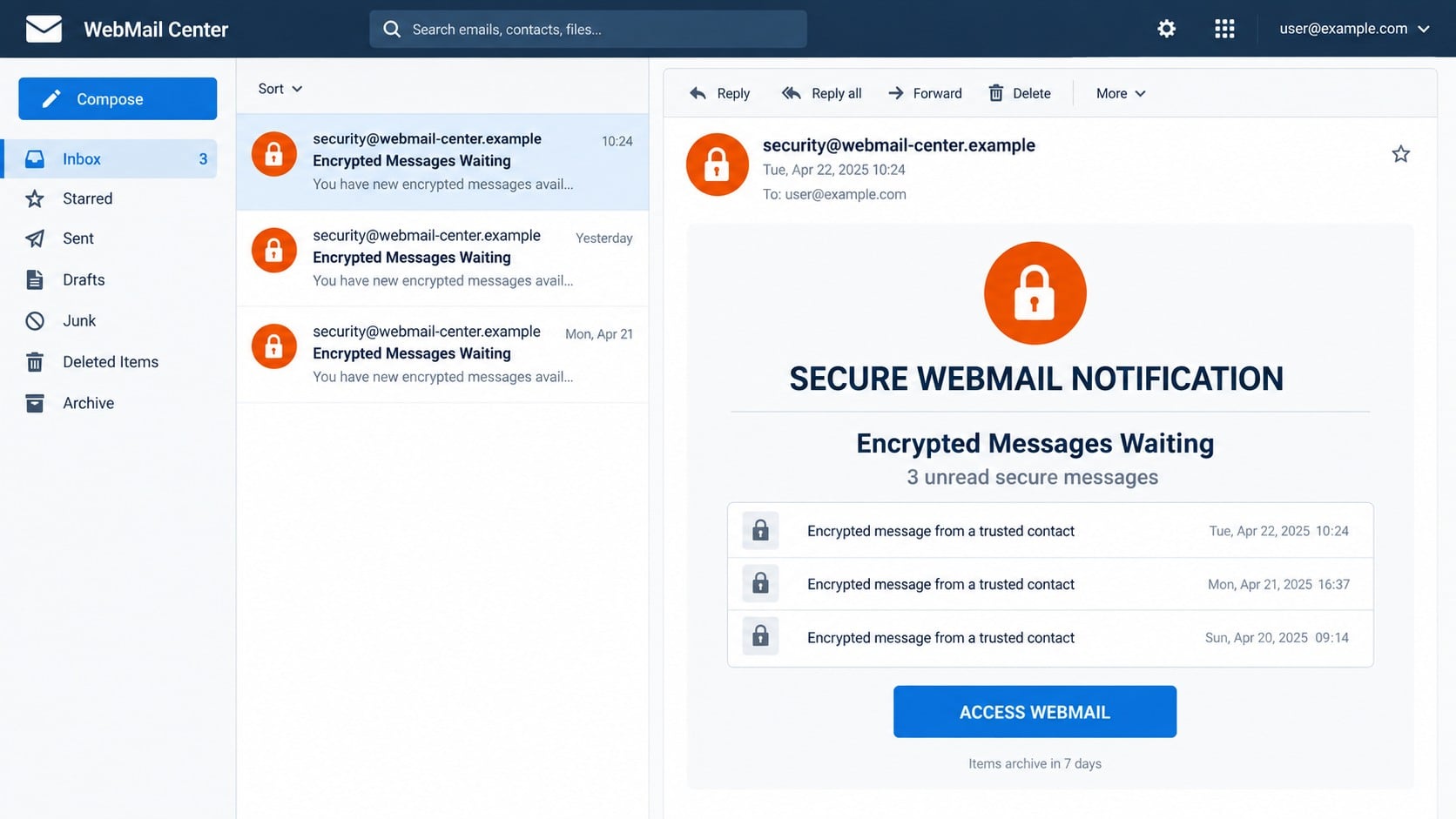
The Roundcube Webmail Encrypted Messages email claims new protected messages are waiting for the recipient.
It may say unread items will be archived within seven days and encourage the reader to update preferences or review quarantined mail.
An “ACCESS WEBMAIL” button appears beneath reassuring statements about active sessions, filters, forwarders, and around-the-clock support.
Those technical details make the notification resemble an internal hosting message. They also imply that the sender already knows how the mailbox is configured.
Nothing in the email proves that real encrypted mail exists. A message count, deadline, and account language can be inserted into any bulk template.
The Link Opens a Counterfeit Webmail Gateway
The button leads to an external page that imitates a webmail or hosting login instead of the recipient’s known account address.
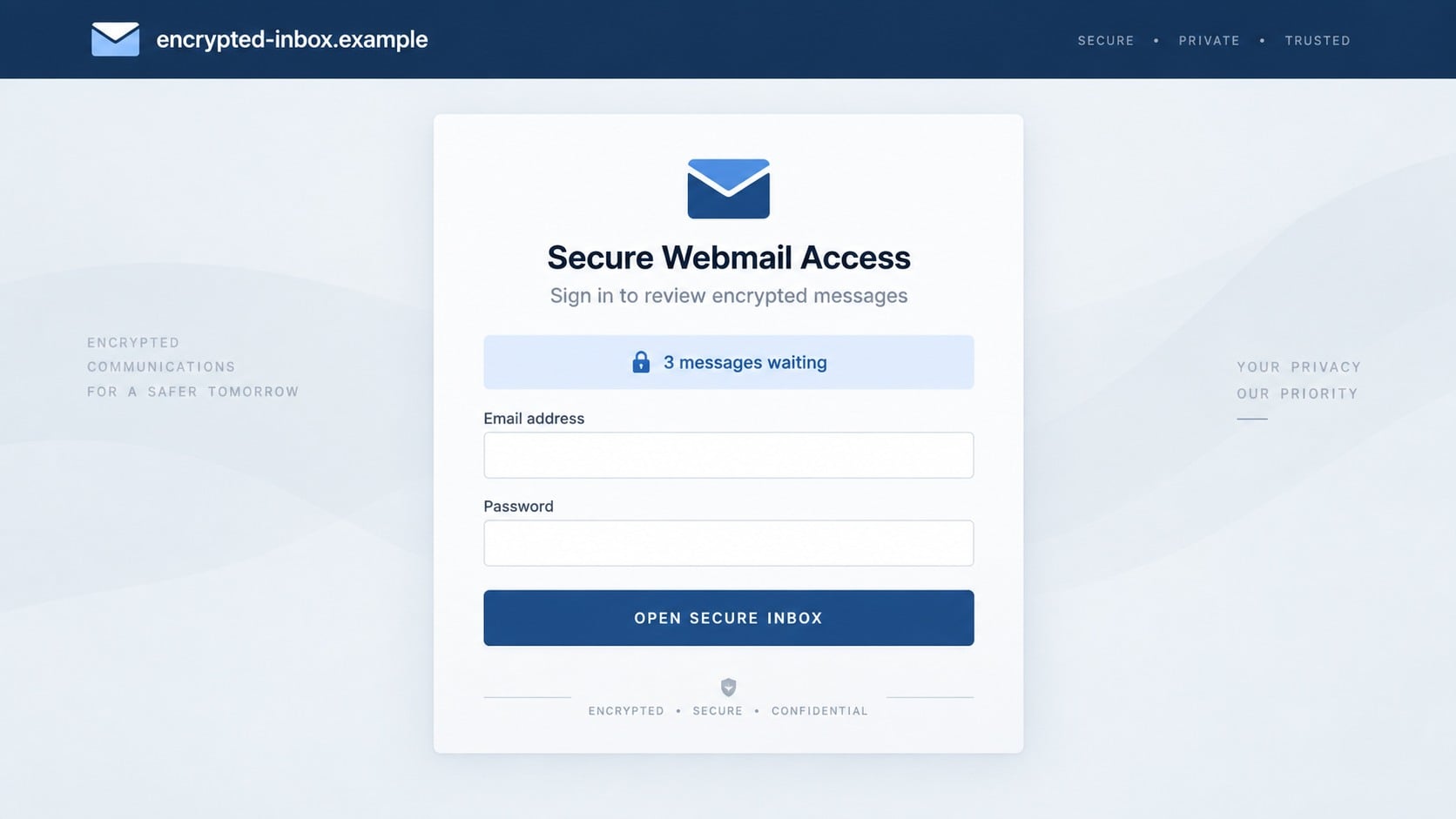
The page requests an email address and password to open the secure inbox. Submitted credentials go to the phishing operator.
The observed destination borrowed cPanel-style language even though the email invoked Roundcube. Both are real technologies, but neither participates in the campaign.
Roundcube is webmail software used by many hosting providers. Its distributed use makes generic branding believable across numerous custom domains.
A victim may not know the official login address because a workplace, school, or small business supplied the mailbox. Attackers exploit that uncertainty.
The Attack Targets a Valuable Recovery Hub
Mailbox credentials can reveal confidential conversations, attachments, account-reset links, financial correspondence, and personal data.
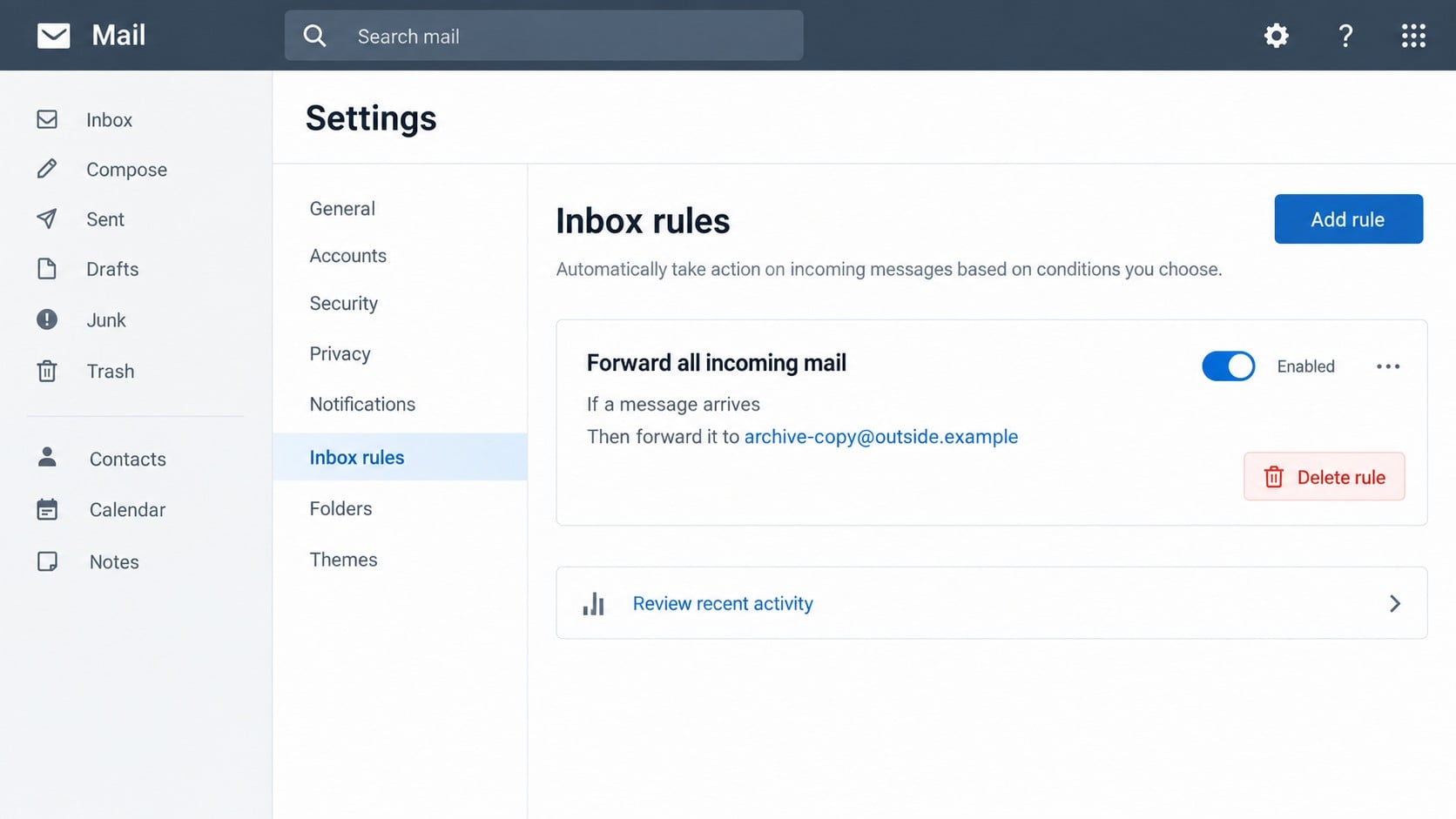
Criminals may register forwarding rules that continue copying messages after the victim believes the incident ended.
- The notification promises encrypted messages without naming a sender.
- A seven-day archive claim creates an artificial deadline.
- Technical language mimics a hosting administration notice.
- The button opens an unrelated webmail login page.
- The fake gateway requests reusable mailbox credentials.
- Stolen access supports resets, surveillance, and impersonation.
- Hidden rules can quietly forward future correspondence.
Opening or reading the email does not normally compromise the computer. Entering credentials on the linked form creates the immediate takeover risk.
If the page also offers files, extensions, or applications, those actions introduce a separate malware concern and require a device scan.
A genuine encrypted message is possible in other contexts. The safe route is confirming it within the established mail service, not trusting this button.
How the Roundcube Encrypted Messages Scam Works
Step 1: Scammers Send a Hosting-Neutral Security Notice
The campaign uses names associated with hosted webmail because they appear behind thousands of business, school, community, and personal domains.
Instead of impersonating one consumer provider, the email can target anyone whose address might be managed through a control panel.
The display name may read “Secure Webmail Notification” or “Roundcube Webmail.” Neither label confirms the sender’s domain or authority.
Automated lists supply the address. The attackers rarely need to know which software actually manages the mailbox.
When the guess is wrong, recipients delete the email. When it happens to fit, the story feels unusually specific.
Step 2: Encryption and Archiving Create Curiosity
The email claims that protected correspondence is waiting but does not reveal who sent it or why.
Encryption suggests sensitivity. Recipients may imagine legal, financial, medical, or workplace information hidden behind the notification.
The seven-day archive deadline turns curiosity into urgency. It implies that delay could permanently hide an important message.
Some versions mention quarantined mail, which adds another concern. Users may fear that legitimate correspondence was incorrectly blocked.
Real systems can quarantine messages, but they provide review inside the authenticated account or through documented administrative tools.
Step 3: Technical Reassurance Replaces Verifiable Details
Statements about active sessions, filters, forwarders, and support make the email look operational.
Yet the message often omits the hosting provider, server name, ticket number, mailbox quota, administrator, and sender of the encrypted mail.
This is security theater. Recognizable terms create confidence without providing information that the recipient can independently test.
A footer can be copied from a legitimate template. Authentication depends on infrastructure and domain ownership, not typography.
The absence of account-specific facts matters more than grammar. Modern phishing mail can be polished and professionally spaced.
Step 4: The Access Button Moves to an External Login
The visible button conceals a destination unrelated to the mailbox provider or organization.
The page may display a lock, envelope, “secure access” heading, and message count. These elements repeat the promise made by the email.
A fictional privacy slogan or HTTPS padlock can create comfort. Neither demonstrates that the page communicates with the genuine mail server.
Credentials typed there are sent to the attacker-controlled collection system. The page cannot retrieve the promised messages.
Step 5: False Errors Can Harvest More Than One Password
The counterfeit gateway may reject the first submission and ask the user to try again.
Victims sometimes assume they mistyped the password. A second attempt gives criminals confirmation or another credential.
If several accounts share similar passwords, the attacker can test those variations elsewhere.
The page may eventually redirect to a normal website or display a generic error. That ending hides the fact that submission already succeeded for the attacker.
No encrypted message is delivered. The unseen content was a lure used to make authentication feel necessary.
Step 6: Mailbox Control Becomes a Long-Term Foothold
Attackers can read current mail, search historical attachments, and monitor new correspondence.
They may create a forwarding rule to an outside address, then delete or archive security notifications.
Connected services can be reset through the compromised inbox. Hosting panels and domain accounts are especially sensitive because they control additional systems.
Business accounts can support supplier impersonation, payroll redirection, fake invoices, and internal phishing.
A criminal may send the same encrypted-message notice from the victim’s real account. Familiar contacts are more likely to follow it.
Password changes alone may not remove established sessions, delegates, application passwords, or OAuth permissions.
How to Verify an Encrypted Webmail Alert
Use the Webmail Address You Already Know
Open the mailbox through an existing bookmark, hosting dashboard, approved application, or organization portal.
Look for encrypted messages, quarantine notices, alerts, and storage warnings inside that authenticated environment.
Do not copy the suspicious destination into another browser. Independent navigation is what separates verification from following the attacker’s route.
If you cannot identify the correct login address, ask the hosting provider or administrator using known contact information.
Determine Which Service Actually Hosts the Account
Roundcube is software, not necessarily the company billing or supporting the mailbox. Your host or organization controls the installation.
Check account documents, earlier support tickets, DNS records when appropriate, or the administrator’s published instructions.
A message that names Roundcube while linking to a generic cPanel imitation may be blending familiar technologies to reach more targets.
Do not assume a provider relationship from logos or product names displayed inside the email.
Compare the Sender and Destination Domains
Expand the entire From address and inspect the Reply-To field. Then preview the access button without opening it.
The domains should align with the organization or documented hosting provider. Look-alike spellings and unrelated hosting invalidate that connection.
SPF, DKIM, and DMARC results can expose spoofing, but passing checks for an attacker domain still does not create authorization.
Ask an administrator to inspect complete headers when the mailbox is used for sensitive work.
Ask the Administrator About Quarantine and Encryption
Contact support through the official hosting dashboard, contract, or known service desk. Avoid contact details contained only in the questionable notice.
Ask whether encrypted-message notifications are enabled and what their genuine format looks like.
Confirm whether quarantined items really expire after seven days. Legitimate administrators can check the server without requesting your password by email.
For a company account, report the message before colleagues click it. The same campaign may target the entire domain.
Encrypted Email Does Not Normally Work This Way
Secure-message systems vary. Some use a known portal, while others rely on S/MIME, PGP, enterprise encryption, or protected-message services.
They establish trust through a documented provider, recognized portal, previously arranged method, or certificate.
A surprise page on an unrelated domain cannot inherit trust merely by displaying a lock icon.
Legitimate encrypted mail may require authentication, but the sign-in occurs within the real service and follows an expected relationship.
The sender of a genuine protected message should be identifiable. A notification that hides every meaningful detail until login deserves scrutiny.
When uncertainty remains, contact the purported sender separately. Ask them to identify the subject without revealing sensitive content.
What to Do If You Fell Victim to This Scam
Move quickly if a password was submitted. A mailbox can be tested within minutes, and hidden settings may outlast a simple reset.
- Leave the fake gateway and preserve its details.
Close the tab, save the email, record the destination, and note exactly what you entered. Keep complete message headers.
Report the message through the provider’s phishing function or your organization’s security channel.
- Change the password at the genuine webmail service.
Navigate independently and create a strong, unique replacement. Do not use another variation of the compromised password.
Change reused passwords elsewhere, especially hosting, domain, cloud, and financial accounts.
- Invalidate every suspicious access path.
Sign out all sessions, remove unknown devices, revoke application passwords, and inspect connected apps or delegated access.
Enable multifactor authentication. Prefer passkeys or hardware security keys when the provider supports them.
- Audit forwarding, filtering, and recovery controls.
Delete unfamiliar forwarding addresses, inbox rules, filters, automatic replies, and blocked senders.
Restore recovery email addresses, phone numbers, and authentication factors. Check whether security alerts were redirected or erased.
- Review the hosting and domain environment.
If the mailbox shares credentials with a control panel, reset that access and inspect domains, DNS, users, and file changes.
Ask the host to review login records. A compromised administrator mailbox can expose multiple accounts.
- Scan devices involved in downloads.
Submitting a web form does not always install malware. Run Malwarebytes if the page downloaded a file, added an extension, or requested software.
AdGuard can block many recognized phishing pages and malicious ad routes. It complements safer navigation but cannot revoke stolen sessions.
- Warn contacts and monitor downstream accounts.
Notify recipients if the account sent suspicious messages. Use another verified channel so the attacker cannot intercept the warning.
Watch password resets, invoices, account changes, and financial activity. Report loss to the bank and appropriate fraud authority.
Is Your Device Infected? Run a Free Malware Scan
Slow performance, constant pop-ups, or strange behavior? These are classic signs of a malware infection. The fastest way to find out is to scan your device with Malwarebytes Free — one of the most trusted malware removal tools available.
The free version detects and removes the most common threats, including:
- Adware — the cause of those annoying pop-ups
- Browser hijackers — unwanted redirects and changed homepages
- Trojans and spyware — hidden programs stealing your data
- Potentially unwanted programs (PUPs) — software you never asked for
👉 Select your device below — Windows, Mac, or Android — then follow the simple steps to download Malwarebytes, scan your system, and remove any threats it finds. The scan usually takes 5 to 20 minutes.
Run a Malware Scan with Malwarebytes for Windows
Malwarebytes is one of the most popular and trusted anti-malware tools for Windows — and it’s completely free for removing infections. It catches threats that many antivirus programs miss, including adware, browser hijackers, and trojans. Follow the steps below to scan and clean your PC in just a few minutes.
Download Malwarebytes
Click the button below to download the latest version of Malwarebytes for Windows from the official source. The free version is all you need — it will scan your computer and remove adware, browser hijackers, and other malicious software at no cost.
Download MalwarebytesOfficial installer for Windows 11 and 10. Your download starts right away.Want real-time protection? See Malwarebytes Premium Malwarebytes Free for WindowsScans and removes malware at no cost
-
Install Malwarebytes
When the download finishes, open your Downloads folder and double-click the MBSetup file. If Windows shows a User Account Control pop-up, click “Yes” to allow the installation.

Follow the On-Screen Prompts to Install Malwarebytes
The setup wizard will walk you through a few quick screens:
-
Choose where you’re installing the program — “Personal Computer” or “Work Computer” — then click Next.

-
Malwarebytes will now install on your device. This usually takes under a minute.

-
When installation is complete, the “Welcome to Malwarebytes” screen will open automatically.

-
On the final screen, click Open Malwarebytes to launch the program.

-
Enable “Scan for Rootkits”
Before scanning, turn on rootkit detection so Malwarebytes can find even the most hidden threats. Click the Settings gear icon on the left side of the screen.

In the settings menu, find “Scan for rootkits” and click the toggle so it turns blue.

Done? Click “Dashboard” in the left pane to return to the main screen.
Start the Scan
Click the blue Scan button. Malwarebytes will automatically update its virus database and start checking your computer for malware.

-
Wait for the Scan to Finish
The scan checks your entire system for browser hijackers and other malicious programs, so it can take 5 to 20 minutes depending on your computer. Feel free to do something else — just check back occasionally to see the progress.

-
Quarantine the Detected Threats
When the scan is done, you’ll see a list of everything Malwarebytes found — malware, adware, and potentially unwanted programs. Click the “Quarantine” button to remove all of them at once.

Malwarebytes will now remove the malicious files and registry entries and move them safely into quarantine.

-
Restart Your Computer
Some threats can only be fully removed after a reboot. If Malwarebytes asks you to restart, click Yes. Once you’re logged back in, Malwarebytes has finished removing the threats it found.

That’s it — your Windows PC is now clean of trojans, adware, and other malware, and should be back to running smoothly.
If you are still having problems with your computer after completing these instructions, then please follow one of the steps:
- Run a computer scan with ESET Online Scanner
- Ask for help in our Windows Malware Removal Help & Support forum.
Run a Malware Scan with Malwarebytes for Mac
Malwarebytes for Mac is a free on-demand scanner that removes the malware other security software tends to miss — adware, browser hijackers, and unwanted programs included. Cleaning an infected Mac with Malwarebytes has always been completely free, and it’s our go-to recommendation. Follow the steps below to scan and clean your Mac in just a few minutes.
-
Download Malwarebytes for Mac
Click the button below to download the latest version of Malwarebytes for Mac.
Download MalwarebytesOfficial installer for macOS. Your download starts right away.Want real-time protection? See Malwarebytes PremiumMalwarebytes Free for MacScans and removes malware at no cost -
Open the Malwarebytes setup file
When the download finishes, open your Downloads folder and double-click the setup file to begin the installation.

-
Follow the On-Screen Prompts to Install Malwarebytes
The Malwarebytes for Mac Installer will guide you through a few quick screens. Click “Continue” and keep following the prompts until the installation completes.



When the installation is complete, Malwarebytes opens to the Welcome to Malwarebytes screen. Click “Get started“.
-
Select “Personal Computer” or “Work Computer”
Malwarebytes will ask what type of computer you’re installing it on. Click either Personal Computer or Work Computer, whichever applies.

-
Start the Scan
Click the “Scan” button. Malwarebytes will automatically update its detection database and begin checking your Mac for malware.

-
Wait for the Scan to Finish
Malwarebytes will scan your Mac for adware, browser hijackers, and other malicious programs. This can take a few minutes, so feel free to do something else — just check back occasionally to see the progress.

-
Quarantine the Detected Threats
When the scan is done, you’ll see a list of everything Malwarebytes found. Click the “Quarantine” button to remove all the threats at once.

-
Restart Your Mac
Malwarebytes will now remove all the malicious files it found. Some threats can only be fully removed after a reboot — if Malwarebytes asks you to restart, allow it. Once you’re logged back in, your Mac is clean.

That’s it — your Mac is now free of adware, rogue browser extensions, and other potentially harmful software.
If you are still experiencing problems while trying to remove a malicious program from your computer, please ask for help in our Mac Malware Removal Help & Support forum.
Run a Malware Scan with Malwarebytes for Android
Malwarebytes for Android automatically detects and removes dangerous threats like malware and ransomware so you don’t have to worry about your most-used device being compromised. Aggressive detection of adware and potentially unwanted programs keeps your Android phone or tablet running smooth.
-
Download Malwarebytes for Android.
You can download Malwarebytes for Android by clicking the link below.
Get Malwarebytes for AndroidOpens Google Play in a new tab.Want real-time protection? See Malwarebytes Premium for AndroidMalwarebytes for AndroidScans your phone and removes malware at no cost -
Install Malwarebytes for Android on your phone.
In the Google Play Store, tap “Install” to install Malwarebytes for Android on your device.

When the installation process has finished, tap “Open” to begin using Malwarebytes for Android. You can also open Malwarebytes by tapping on its icon in your phone menu or home screen.

-
Follow the on-screen prompts to complete the setup process
When Malwarebytes will open, you will see the Malwarebytes Setup Wizard which will guide you through a series of permissions and other setup options.
This is the first of two screens that explain the difference between the Premium and Free versions. Swipe this screen to continue.
Tap on “Got it” to proceed to the next step.
Malwarebytes for Android will now ask for a set of permissions that are required to scan your device and protect it from malware. Tap on “Give permission” to continue.
Tap on “Allow” to permit Malwarebytes to access the files on your phone.
-
Update database and run a scan with Malwarebytes for Android
You will now be prompted to update the Malwarebytes database and run a full system scan.

Click on “Update database” to update the Malwarebytes for Android definitions to the latest version, then click on “Run full scan” to perform a system scan.

-
Wait for the Malwarebytes scan to complete.
Malwarebytes will now start scanning your phone for adware and other malicious apps. This process can take a few minutes, so we suggest you do something else and periodically check on the status of the scan to see when it is finished.

-
Click on “Remove Selected”.
When the scan has been completed, you will be presented with a screen showing the malware infections that Malwarebytes for Android has detected. To remove the malicious apps that Malwarebytes has found, tap on the “Remove Selected” button.

-
Restart your phone.
Malwarebytes for Android will now remove all the malicious apps that it has found. To complete the malware removal process, Malwarebytes may ask you to restart your device.
That’s it — your Android phone is now clean — no more malicious apps, adware, or browser redirects.
If you are still having problems with your phone after completing these instructions, then please follow one of the steps:
- Restore your phone to factory settings by going to Settings > General management > Reset > Factory data reset.
- Ask for help in our Mobile Malware Removal Help & Support forum.
Stay Protected: Block Ads and Malicious Sites
Now that your device is clean, keep it that way. Most infections start with a malicious ad or a fake download button — so blocking them at the source is your best defense.
We recommend AdGuard, which blocks malicious ads, phishing pages, and dangerous redirects before they can reach you.
👉 Download AdGuard and browse safely
Red Flags in the Encrypted Messages Notification
No sender of the supposed encrypted correspondence is identified. The message sells mystery instead of providing verifiable context.
The archive deadline may not match the hosting provider’s documented retention policy.
The email combines Roundcube and cPanel concepts without naming the company that actually operates the mailbox.
The access button links outside the known organizational or hosting domain.
The login page uses generic privacy claims but offers no verifiable service identity, support record, or certificate relationship.
The form requests a reusable mailbox password. That credential should only be entered at the established provider address.
Technical phrases about filters and forwarders create authority while revealing nothing about the alleged messages.
The strongest warning is the broken path from an unknown sender to unrelated hosting and then a password request.
How Administrators Can Reduce Hosted-Webmail Phishing
Publish one canonical webmail address and teach users to reach it from bookmarks or the organization’s main portal.
Use prominent external-sender markings and remove look-alike messages across all mailboxes after the first report.
Require phishing-resistant multifactor authentication for webmail and hosting panels. Disable legacy authentication that bypasses stronger controls.
Alert on forwarding rules to external domains, unusual login locations, unfamiliar user agents, and sudden bulk sending.
Separate hosting administration credentials from everyday mailbox passwords. One phished account should not control websites or DNS.
Document the real quarantine and encrypted-message workflow. Users are less vulnerable when they know exactly where genuine alerts appear.
Restrict OAuth application consent and review delegates regularly. Silent access can persist after a password reset.
Retain logs for webmail sessions, control-panel changes, and message routing. Those records support containment and notification decisions.
Frequently Asked Questions
Are the encrypted messages actually waiting?
No evidence in the scam email proves they exist. Check the real mailbox or ask the administrator through a known channel.
Is Roundcube unsafe?
No. Roundcube is legitimate webmail software. Criminals are impersonating its appearance and name on unrelated infrastructure.
Why does the message mention cPanel features?
Attackers mix familiar hosting terms to sound credible across many providers. The combination does not prove access to your server.
What if I clicked but entered no password?
Close the site, check downloads and browser permissions, report the email, and monitor the account. Credential risk is much higher after submission.
Can attackers read future mail after a password reset?
Yes, if forwarding rules, delegates, apps, or active sessions remain. Review each access mechanism during recovery.
Should I contact the sender of the encrypted message?
The scam does not identify one reliably. If you suspect a real contact, reach them independently and ask whether they sent protected mail.
The Bottom Line
The Roundcube Encrypted Messages email invents protected correspondence and an archive deadline, then directs recipients to an unrelated credential-harvesting gateway.
Use the webmail address you already trust. If credentials were submitted, reset them and inspect sessions, forwarding rules, recovery details, and connected applications.








