

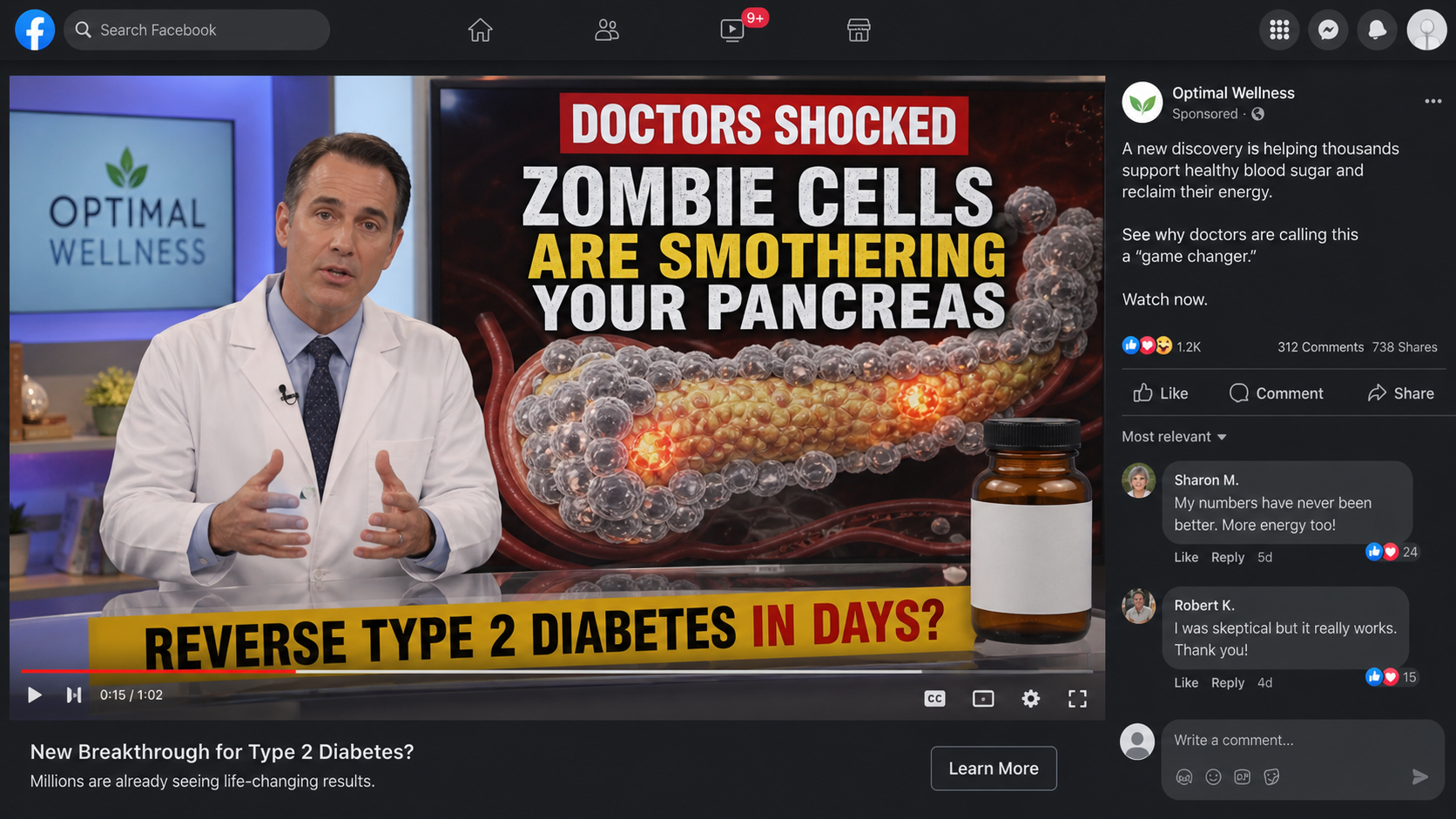
A white-coated researcher named Tom Green says doctors have missed the real cause of type 2 diabetes. According to the video, “zombie cells” smother the pancreas, and one special enzyme can reverse the damage in days.
The name sounds ordinary enough to be real. That is part of the trap. The Tom Green diabetes cure scam builds an expert from unverifiable credentials, then uses his story to sell GlucoTonic or another rotating blood-sugar supplement.
Overview
Who the Advertisement Says Tom Green Is
The presentation describes Tom Green as a doctor or diabetes researcher who uncovered a hidden pancreatic mechanism. A supposed television host interviews him on a program called the “Optimal Wellness Show.”
Viewers are told that a “toxic blanket” of zombie cells prevents the pancreas from working normally. The story promises a natural enzyme blend that can reverse type 2 diabetes rapidly and may even work better than established medication.
Why the Identity and Claims Do Not Hold Up
The campaign does not provide a verifiable medical license, institutional profile, publication history, or credible clinical research connecting this Tom Green to the product. The show and its host also lack the traceable record expected from a genuine medical program.
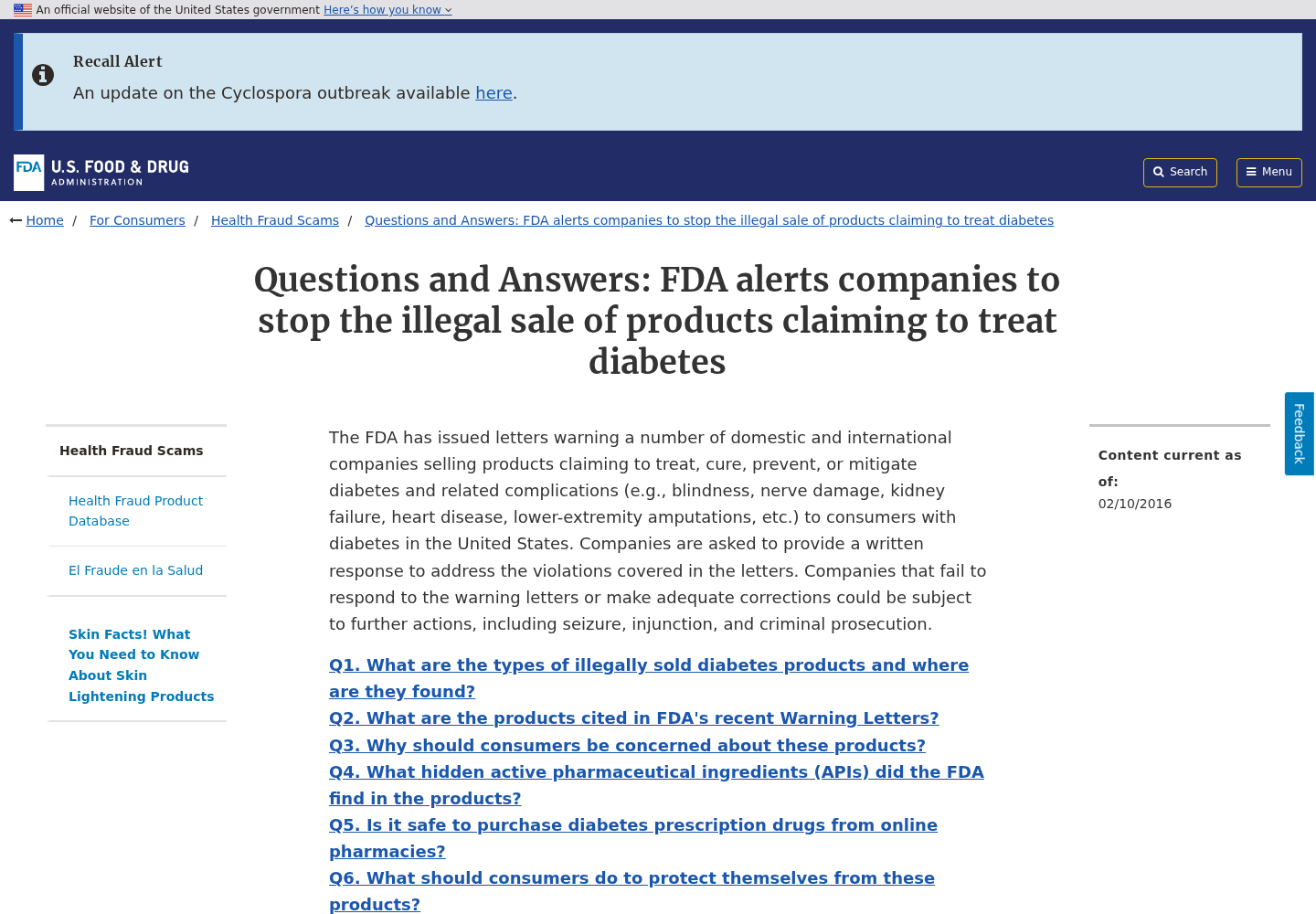
The FDA has warned about illegally sold diabetes products. Claims that an online supplement can treat or cure diabetes should never be accepted on the strength of one sales video.
- The expert’s credentials cannot be independently verified.
- The television show appears to exist only inside the promotion.
- A real area of aging research is distorted into a universal diabetes explanation.
- The ad attacks ordinary treatment while selling an unproven alternative.
- Testimonials and dramatic percentages are not connected to accessible patient data.
- The final offer can include bundles, upsells, or recurring refills.
GlucoTonic Is the Current Bottle, Not the Whole Scheme
GlucoTonic appeared at the end of the investigated presentation. Yet the fabricated researcher and “zombie cells” theory can be reused to sell another formula with a new name, label, price, and checkout.
MalwareTips has a separate GlucoTonic investigation focused on the product. This article follows the fictional expert story that persuades a viewer to want the bottle in the first place.
This Tom Green Is an Unverifiable Sales Character
The ad does not establish that its Tom Green is the Canadian actor and comedian. It presents a person with the same common name as a medical researcher, which can create confusion while giving the character a memorable identity.
A legitimate physician should be traceable through a licensing board, medical practice, hospital, university, research institution, or published work. A researcher making a major discovery should have identifiable studies and collaborators.
The sales page substitutes biography for verification. It may describe years of research, personal tragedy, laboratory breakthroughs, and opposition from powerful companies, but those details are supplied by the marketer.
The “Optimal Wellness Show” adds another layer of borrowed credibility. A studio set, host, microphone, and professional clothing make the conversation look independently produced, although the segment exists to sell the product being praised.
Before trusting any online doctor, search the exact name plus the claimed institution, specialty, license, and study title. If every result traces back to affiliate reviews and the product website, the identity has not been established.
The “Zombie Cells” Explanation Twists Real Science
Cellular senescence is a genuine field of research. Some cells stop dividing and can influence surrounding tissue. Calling them “zombie cells” is an informal way of describing a complicated process.
The scam takes that real term and leaps far beyond the evidence. It claims one toxic layer explains diabetes for almost everyone and that a proprietary blend quickly removes the problem.
A biological concept does not prove that a finished supplement treats disease. Researchers would need to test the actual formulation, dose, safety, and meaningful outcomes in appropriately designed human trials.
The presentation instead relies on animation. A pancreas is shown covered by dark material, then becoming clean and active after the product is introduced. The image illustrates the advertiser’s claim; it does not demonstrate what happens inside a buyer.
This simplified villain-and-rescue story is emotionally satisfying. It also distracts from the many factors involved in type 2 diabetes and from the individualized care needed to manage it safely.
Why “Better Than Metformin” Is a Dangerous Sales Claim
Some versions imply that the supplement is recommended over metformin or can eliminate the need for medication. That comparison is a major warning sign.
Prescription treatment is chosen with knowledge of a person’s blood glucose, other conditions, kidney function, medication history, and risk of complications. An anonymous video has none of that information.
Stopping diabetes medication without medical guidance can allow blood sugar to rise and increase the risk of serious harm. A supplement marketer does not assume responsibility for monitoring or treating those consequences.
The conspiracy narrative makes the danger worse. By portraying clinicians and pharmaceutical companies as enemies, the ad encourages viewers to distrust the professionals who can actually review test results and adjust treatment.
A person can ask hard questions about medicine and still demand strong evidence from a supplement seller. Skepticism should apply to the party asking for the credit card, too.
What Reliable Diabetes Guidance Looks Like
Type 2 diabetes can often be managed through a combination of nutrition, physical activity, weight management, monitoring, medication, and medical follow-up. The plan depends on the individual.
The FDA says products marketed illegally as diabetes treatments may contain harmful ingredients or may delay effective care. Some products promoted as “all natural” have been found to contain undeclared drug ingredients.
A Supplement Facts label does not prove a disease claim. Even when individual ingredients have been studied, the seller must support what the complete product is claimed to do.
If a buyer wants to try any supplement, a physician or pharmacist can review the label for possible interactions. That conversation is especially important for people taking glucose-lowering medicine because unexpected changes can be dangerous.
How the Tom Green Diabetes Cure Scam Works
Step 1: A Fictional Doctor Appears in a Social Ad
A video on Facebook, Instagram, YouTube, or another platform introduces Dr. Tom Green as a respected diabetes researcher. The studio, lab coat, and confident host make the segment look like a health broadcast.
The opening promises a reversal in days and warns that people with blood sugar over a certain number must act quickly.
Step 2: The Click Leads to an Advertorial
The destination may imitate a health magazine, television program, or news publisher. It uses a headline, byline, comments, and trust badges to create distance between the “report” and the seller.
In reality, prominent links point to the same sales presentation. The page is advertising dressed as independent content.
Step 3: The Video Invents the Pancreas Villain
The narrator describes zombie cells as a toxic blanket smothering the pancreas. A complex chronic condition is reduced to one visual problem that the advertised formula can supposedly remove.
Medical terms, university references, animations, and percentages make the explanation sound researched without providing a study that validates the product.
Step 4: Ordinary Care Is Cast as the Enemy
The script suggests doctors only manage symptoms and drug companies do not want a cure. Medication may be described as expensive, harmful, or inferior to the hidden natural method.
This creates an us-versus-them mindset. Once the viewer distrusts outside advice, the seller controls the story.
Step 5: GlucoTonic Is Revealed as the Solution
The promised breakthrough becomes GlucoTonic drops or capsules. The product is presented as the precise blend Tom Green developed after years of research.
No independently verifiable clinical trial is supplied to support the promised diabetes reversal. Testimonials fill the evidence gap.
Step 6: The Order Page Pushes Bundles and Upsells
The checkout emphasizes a low price per bottle and labels a multi-bottle package as the best value. Buyers may feel they need several months of supply to follow the claimed protocol.
Stock warnings, countdown timers, and extra products appear before the buyer has time to compare the seller, total cost, or return policy.
Step 7: Billing or Refund Problems Surface
Some funnels use continuity plans or recurring refills, while others rely on a large initial bundle and post-purchase upsells. The exact terms must be checked at the live checkout.
Buyers may later find that support is outsourced, return rules are restrictive, or the statement uses an unfamiliar merchant name. Meanwhile, the same video can move to a new product.
Red Flags in the Tom Green Presentation
- No verifiable license, institution, or publication record for the supposed expert.
- A health show that cannot be found outside the product campaign.
- A promise to reverse type 2 diabetes in days.
- A sweeping claim that one mechanism explains every viewer’s condition.
- Language suggesting a supplement is better than prescribed medication.
- Medical graphics used without links to product-specific clinical evidence.
- Affiliate “reviews” that repeat the same sales claims.
- Urgent bundle pricing before the legal seller is clearly identified.
Do not test a medical promise with your health or card. Verify the expert, study, company, and terms before treating the pitch as anything more than advertising.
Company, Address, and Fulfillment Checks
The Product Name Can Hide the Real Seller
GlucoTonic is a label, not proof of an accountable company. Compare the legal entity in the terms, privacy policy, checkout, receipt, bottle, and card statement.
If the names conflict or the company is missing, you may have no clear party to hold responsible for the medical claims, refund, or refill billing.
The Address May Only Process Packages
Search the listed address. A fulfillment warehouse, virtual mailbox, residence, or unrelated office can appear where buyers expect a manufacturer or headquarters.
A returns facility can serve hundreds of brands. Its presence does not prove the formula was developed, tested, or made there.
Support May Not Know the Product
Call the number before ordering. Ask whether the agent supports GlucoTonic specifically, whether shipments renew, what the total charge will be, and how returns work.
Unanswered email, disconnected lines, and agents who only read a script show that the seller may be structured to collect orders, not resolve problems.
Ingredients Need a Traceable Source
Demand complete ingredient amounts, warnings, lot information, and an identifiable responsible company. “Natural” and “made in an FDA registered facility” do not establish approval or effectiveness.
Some private-label formulas are mass produced overseas, including in China, and given new labels for different campaigns. Origin alone is not proof of danger, but missing traceability makes contamination, potency, and adverse-reaction accountability impossible to evaluate.
What to Do if You Have Fallen Victim to This Scam
- Cancel the transaction and refills in writing. Ask for a dated confirmation, refund amount, return authorization, and statement that no further shipment or charge is authorized.
- Contact the card issuer quickly. Explain any misleading total, undisclosed subscription, or unauthorized follow-up charge. Ask about a dispute and merchant block.
- Save every piece of evidence. Capture the ad, Tom Green video, domain, checkout, terms, receipt, support messages, package, bottle, and bank descriptor.
- Do not change diabetes treatment on the video’s advice. Contact the clinician managing your care. Bring the supplement label and report any doses already taken.
- Watch for symptoms. Seek urgent care for severe weakness, confusion, breathing difficulty, fainting, or signs of dangerously high or low blood sugar.
- Secure your device. If the funnel downloaded a file or requested an extension, run a full scan with Malwarebytes.
- Reduce repeat exposure. AdGuard can block many malicious ads and tracking domains. Still verify all health claims independently.
- Report the seller. Report the ad to the platform and file at ReportFraud.ftc.gov. The FDA’s Health Fraud Product Database and MedWatch are also relevant for suspect products or adverse events.
- Monitor statements. Watch for unfamiliar merchant names, small test charges, and recurring attempts. Keep monitoring even after a cancellation confirmation.
- Watch for recovery scams. Do not pay a stranger who says they can recover the loss, remove your name from a victim list, or secure a refund. Contact your bank and authorities through independently verified channels.
Frequently Asked Questions
Is Dr. Tom Green a Real Diabetes Researcher?
The campaign does not provide verifiable credentials connecting this Tom Green to a medical license, research institution, or relevant published work. Treat the character as unverified.
Is the Advertisement About the Comedian Tom Green?
The sales presentation describes a doctor or researcher, not a verified endorsement from the Canadian comedian. The common name may create confusion, but it does not prove either identity.
Can Zombie Cells Be Removed With a Supplement?
No credible evidence supplied by the campaign shows that GlucoTonic removes senescent cells and reverses diabetes. The ad turns a research concept into an unsupported product claim.
Can GlucoTonic Reverse Type 2 Diabetes?
There is no reliable product-specific clinical evidence supporting the rapid reversal claim. Do not replace prescribed care with the supplement.
Does the FDA Approve Diabetes Supplements?
Dietary supplements are not approved by the FDA as treatments for diabetes before sale. A registration claim or facility badge does not mean the product is approved to treat disease.
How Can I Stop Possible GlucoTonic Refills?
Cancel in writing, retain proof, and contact the card issuer if charges continue or the recurring terms were not clear. Ask about blocking future merchant attempts.
The Bottom Line
The Tom Green diabetes cure scam uses an unverifiable researcher, a fake wellness program, and a distorted “zombie cells” theory to sell GlucoTonic or another rotating supplement.
Do not let a lab coat and medical animation replace credentials and evidence. Verify the seller, read every billing term, and manage diabetes with qualified medical care.

Join the discussion
0 commentsShare your experience or ask a question about this article.
Discussion
Start the conversation
Have a question or something useful to share? Add the first comment.