

Track718 often shows up at the exact moment shoppers start to worry something is wrong. You place an order with an unfamiliar online store, get a tracking link, watch the parcel updates move along, and then the package either never arrives or is marked delivered when nothing showed up.
That is why so many people search for the same question: is Track718 itself a scam, or is it just connected to scam stores? The answer is more nuanced than most people expect.
Overview
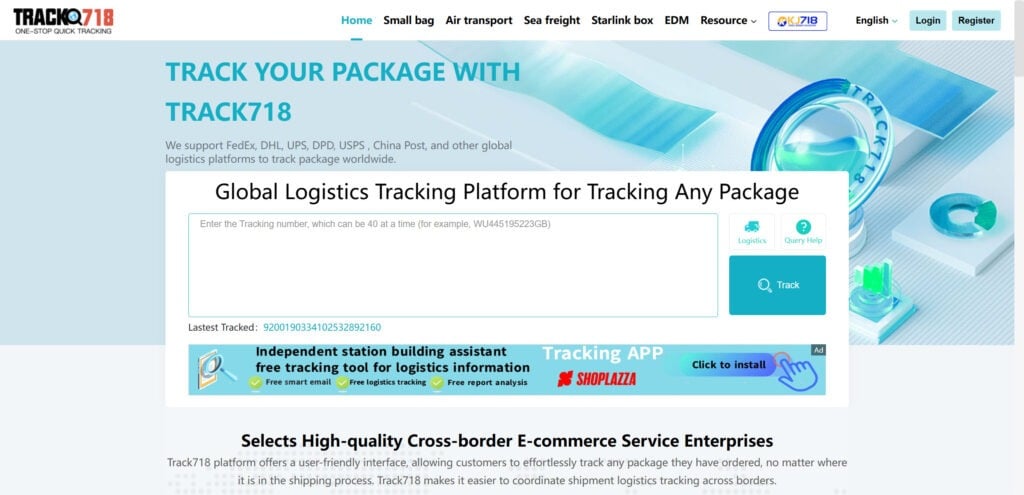
Track718 presents itself as a package-tracking platform, not an online store and not a delivery company. On its official site, it describes itself as a global logistics tracking platform and says it supports tracking for more than 3,100 logistics providers. Its contact page also says its role is limited to tracking queries and that it does not handle transportation or the sale of goods.
That matters because many frustrated buyers assume Track718 is the seller or the courier. Based on its own website, that is not how the service is positioned. It looks more like a third-party tracking tool that merchants can plug into their stores. Shopify’s app listing for Track718 describes it as an order-tracking and email-notification app for merchants, and Shoplazza documents it as a logistics tracking platform for store owners.
Why people think Track718 is a scam
The reason is simple. A lot of scam or highly unreliable stores appear to use it.
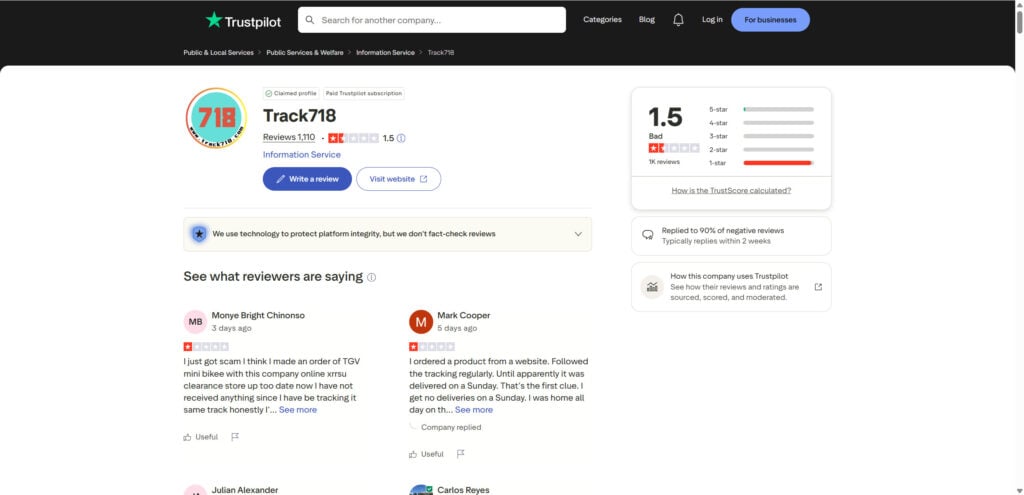
Trustpilot reviews for Track718 are full of complaints from shoppers who say they bought from an online store, were sent to Track718 to follow the parcel, and then never received the item. A repeated pattern appears in those reviews: the tracking page shows progress, the package is later marked delivered, and the customer still has nothing. Track718’s own replies on Trustpilot repeatedly state that it is only a third-party tracking platform and not the seller or shipper.
So when people say “Track718 is a scam,” what they often mean is this: a scam store used Track718 as part of the illusion that the order was real.
The key distinction
This is the most important point in the whole investigation:
- Track718 appears to be a real tracking platform
- A Track718 tracking page does not prove the seller is legitimate
- Scam stores can still use a real tracking platform to make a fake transaction look credible
That distinction explains almost everything.
A dishonest seller does not need to build its own fake tracking website if it can use an existing tracking service to keep buyers calm. The tracking page gives the order a more official look. It makes the buyer think the issue is probably just a delay. That buys the seller time.
So, is Track718 scam or legit?
The most accurate answer is:
Track718 appears to be a legit tracking platform, but it is heavily associated with scam and unreliable online stores.
That means Track718 itself does not look like a simple fake website created only to steal card details. But if a shady store is telling you to trust a Track718 page, that alone is not enough reason to feel safe. The real risk usually comes from the merchant behind the order, not from the existence of the tracking page itself.
Why Track718 Raises Red Flags
1. It often appears in scam complaints
A large number of consumer complaints mention the same sequence:
- a purchase from an unfamiliar website
- a Track718 tracking link
- parcel updates that seem active
- a final “delivered” status
- no package in real life
That repeated pattern is why the name keeps showing up in scam discussions. (Trustpilot)
2. Buyers often cannot verify the real local carrier
Many reviewers complain that they cannot identify the last-mile delivery company or get meaningful delivery proof. When that happens, the tracking page becomes the only “evidence” the seller points to. That is a problem, because a tracking page is not the same thing as proof that the right item was actually delivered to the right address.
3. Scam stores benefit from delay
Scam stores need time. They want customers to wait, keep checking, and miss the moment when they should file a dispute.
A moving tracking timeline is perfect for that. Even if the buyer feels uneasy, each new scan creates the impression that the package is still on the way. That makes people wait longer than they should.
Signs the Real Problem Is the Store, Not Just Track718
If Track718 appears in your order, do not focus only on the tracking page. Look at the seller.
Warning signs to watch for
- The store has huge discounts that do not make business sense
- The domain is unfamiliar and has little real reputation
- The contact information is vague or generic
- Product descriptions look copied from other sites
- The seller avoids giving the name of the actual delivery company
- Refund requests are ignored or delayed
- Support replies feel scripted and repetitive
- The package shows “delivered,” but there is no signature, photo, or local carrier confirmation
If several of these are true, the store is the bigger red flag.
How Scam Sites Using Track718 Work
Step 1: They build a store that looks believable
Most scam shopping sites do not look obviously fake at first glance.
They often have:
- polished product photos
- limited-time sale banners
- neat checkout pages
- shipping promises
- fake trust badges
- copied reviews
The goal is not to look perfect. The goal is to look believable enough for a quick purchase.
Many buyers only realize something is wrong after payment has already gone through. By then, the scammer has what they wanted.
Step 2: They take payment and send a fast confirmation
After checkout, the buyer usually gets an order confirmation quickly.
That email is important because it lowers suspicion. It makes the purchase feel routine. For a short time, the seller may even seem responsive.
Then communication starts to change.
Replies become slower. Support messages become vague. Questions about refunds get redirected toward shipping updates instead of real answers.
Step 3: They provide a Track718 link to create confidence
This is where Track718 enters the story.
A tracking number feels official. A detailed timeline feels even more official. Once buyers see scans and status updates, many stop asking whether the store itself is trustworthy.
That is exactly why scam stores benefit from using a service like this.
The buyer starts thinking:
- “It must be real because there is tracking”
- “It is probably just delayed”
- “I should wait a few more days”
That shift helps the scammer. The conversation moves away from fraud and toward logistics.
Track718 itself says it is a tracking platform that connects with thousands of logistics providers, and merchant integrations on Shopify and Shoplazza reinforce that business model. In a normal store, that can be useful. In a scam context, it can also make a bad transaction look more real than it really is.
Step 4: The tracking history keeps updating
This is often the most effective part of the scheme.
The shipment may appear to:
- leave the origin country
- clear customs
- arrive in the destination country
- move through local delivery stages
Each update encourages the buyer to keep waiting.
Even if the parcel exists, the tracking history still does not answer the most important question: what was actually shipped?
A parcel record can exist even if:
- the wrong item was sent
- a low-value substitute was sent
- the parcel went to the wrong area
- the item you ordered was never truly dispatched as promised
That is why tracking progress should never be treated as final proof that the transaction is legitimate.
Step 5: The item is marked “delivered”
For many victims, this is the moment everything falls apart.
The status changes to delivered, but:
- nothing arrived
- neighbors did not receive it
- there is no delivery photo
- there is no signature
- the seller still gives no real explanation
At that point, the merchant often acts like the case is closed.
This is one of the biggest problems with scam stores that rely on third-party tracking pages. Once “delivered” appears, they try to shift the burden onto the buyer.
Now the buyer has to prove that nothing was received, instead of the seller proving that the order was properly fulfilled.
Trustpilot complaints about Track718 repeatedly describe this exact situation. (Trustpilot)
Step 6: Support stalls or offers a partial refund
After a fake or questionable delivery result, scam stores often move into cleanup mode.
Common tactics include:
- asking you to wait longer
- repeating the same scripted message
- telling you to check with neighbors again
- offering a small partial refund instead of a full one
- ignoring you entirely
The goal is to wear you down.
A partial refund offer can be especially effective because it makes the seller sound cooperative while still avoiding full responsibility.
Step 7: The store disappears or rebrands
By the time enough buyers complain, the website may already be gone.
That is why many scam stores are hard to chase after the fact. The seller may:
- shut down the domain
- switch to a new name
- reopen with a similar design
- continue advertising under a different storefront
The tracking page remains part of the story, but the real scam operation is the disposable store behind it.
What a Track718 Page Does Not Prove
A Track718 page may show movement, but it does not prove any of the following:
- that the store is honest
- that the product in the package matches what you bought
- that the parcel was delivered to your exact address
- that the seller will honor a refund
- that the tracking number was tied to a legitimate order from the start
That is the practical lesson most buyers need to understand.
What To Do If You Have Fallen Victim to A Scam
If you suspect the order was fraudulent, act quickly. Do not wait for endless new scans or repeated support promises.
1. Save all evidence
Take screenshots of:
- the product page
- the checkout page
- your receipt
- the tracking history
- the final delivery status
- all emails and support messages
If the website disappears later, this will matter.
2. Check the real carrier, if one is shown
Try to identify the actual last-mile carrier.
Do not rely only on the Track718 page. If a real carrier is involved, check that carrier’s official site directly. If there is no identifiable local carrier, that is a red flag.
3. Contact the seller once, clearly
Send a simple written message that includes:
- your order number
- what you ordered
- that the item was not received
- that you want a full refund or proper proof of delivery
Keep it short and factual.
4. Dispute the charge quickly
If you paid by credit card, contact your card issuer right away. The Consumer Financial Protection Bureau advises consumers to dispute charges promptly with their credit card company.
If your online order never arrives, the FTC also recommends taking action rather than just waiting indefinitely.
5. Use PayPal buyer protection if applicable
If you paid through PayPal, open an “Item Not Received” dispute as soon as possible. Include:
- screenshots of the order
- screenshots of the Track718 updates
- copies of your messages with the seller
- a clear statement that the item never arrived
6. Watch your accounts
If the store seemed suspicious, review your:
- card statements
- PayPal activity
- email account security
- saved payment methods
If you entered extra personal information, change important passwords.
7. Report the scam
You should also report the store to the relevant consumer protection or fraud-reporting authority in your country. Even if that does not solve your case immediately, it helps document the pattern.
Quick Answer for Readers
If you want the short version, it is this:
Track718 is probably not the real scammer in most cases
It appears to be a real third-party package tracking platform used by merchants.
But it is often part of scam stories
Many scam or unreliable stores appear to use it, and many consumers report the same pattern of false reassurance followed by missing goods.
That means you should stay cautious
A Track718 link is not proof that your order is safe.
The Bottom Line
Track718 appears to be a legitimate package-tracking platform, not an online store and not a shipping carrier. Its own website, Shopify app listing, and merchant documentation all support that conclusion.
But that does not make a Track718-linked order trustworthy. The real danger is that scam stores can use a real tracking platform to make a fake or deceptive transaction look legitimate. That is why so many complaints tied to Track718 sound the same: suspicious store, tracking updates, “delivered” status, no package.
Frequently Asked Questions
Is Track718 a scam?
Not necessarily. Track718 appears to be a package-tracking platform, not an online store. The bigger issue is that many scam or unreliable shopping websites seem to use Track718 links to make orders look legitimate. So while Track718 itself may be a real tracking service, that does not mean the seller behind your order is trustworthy.
Is Track718 a real shipping company?
No. Track718 does not appear to be the company that actually delivers packages. It functions more like a third-party tracking platform that displays shipment updates from different logistics providers.
Why is Track718 linked to so many scam complaints?
Because many buyers only discover Track718 after ordering from a suspicious online store. They are given a Track718 tracking link, see updates that look real, and then the item never arrives or is marked delivered when nothing showed up. That creates the impression that Track718 is part of the scam.
Does a Track718 tracking page prove my order is real?
No. A tracking page only shows that a shipment record exists. It does not prove that:
- the seller is legitimate
- the right item was shipped
- the package was sent to the correct address
- the parcel was actually delivered to you
You should never treat a Track718 page as proof that the whole transaction is safe.
Can a package show as delivered on Track718 even if I got nothing?
Yes, that is one of the most common complaints. Some buyers say the tracking page eventually shows “delivered” even though no package arrived. That is why you should also check the actual local carrier, your mailbox, neighbors, building office, and any official delivery proof.
Is Track718 the same as the online store I bought from?
No. In most cases, Track718 is not the seller. It is just the tracking platform being used. If your order is a scam, the real problem is usually the merchant or shopping website, not Track718 itself.
Can scammers use a real tracking service?
Yes. That is what makes these cases so confusing. A scam store does not need a fake tracking website if it can use a real tracking platform to make the transaction look more believable. That is why a real tracking link does not automatically mean the order is genuine.
How can I tell if the store behind a Track718 link is suspicious?
Watch for red flags like these:
- very low prices that seem too good to be true
- no real company details
- generic or copied product descriptions
- poor customer support
- refund requests being ignored
- no clear local carrier information
- a “delivered” status with no real proof of delivery
If several of these signs are present, the store is likely the main problem.
What should I do if my Track718 order never arrives?
Act quickly. You should:
- Save screenshots of the order, tracking page, and all emails.
- Contact the seller once in writing.
- Check the real carrier if one is listed.
- Dispute the charge with your card issuer or payment provider.
- Report the store if it appears fraudulent.
Do not keep waiting indefinitely just because the tracking page still shows movement.
Can I get my money back?
Possibly. Your chances are better if you act fast and use the proper dispute process. If you paid by credit card, contact your card issuer. If you paid with PayPal, open an Item Not Received dispute. The more evidence you have, the stronger your case will be.
Should I keep waiting if the tracking status is still updating?
Not for too long. Scam stores often rely on ongoing tracking updates to keep buyers calm. If the seller is evasive, the store looks suspicious, or the timeline stops making sense, it is smarter to start gathering evidence and prepare a dispute rather than waiting week after week.

Join the discussion
0 commentsShare your experience or ask a question about this article.
Discussion
Start the conversation
Have a question or something useful to share? Add the first comment.