

A new email claiming that a Tradeify reward is ready to claim is being sent to users with the promise of a large payout. The message looks polished, uses financial wording, and encourages recipients to click a claim link.
Before interacting with it, there are several important details users need to understand.
Scam Overview
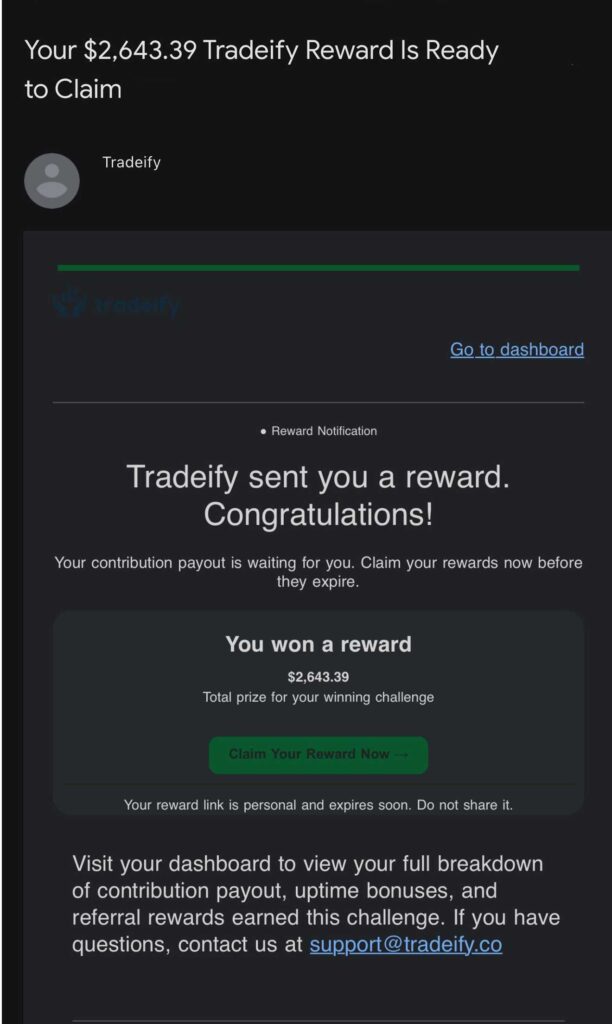
The “Tradeify Reward Is Ready to Claim” email is a suspicious message that claims the recipient has earned a cash reward from Tradeify. In the example reviewed, the email says:
“Your $2,643.39 Tradeify Reward Is Ready to Claim”
Inside the message, the recipient is told that “Tradeify sent you a reward” and that a payout is waiting. The email includes a large reward amount, a congratulatory message, and buttons such as “Go to dashboard” and “Claim Your Reward Now.”
At first glance, the message may appear legitimate. It uses a clean layout, Tradeify-style branding, and wording commonly seen in payout or reward notifications. The email also refers to a “contribution payout,” “uptime bonuses,” “referral rewards,” and a “winning challenge,” which makes it sound connected to a trading or rewards platform.
However, the sender information raises serious concerns. The email appears to come from mail.acculynx.com, which does not match Tradeify’s official domain. That is a major red flag because legitimate account, payout, or reward emails should come from an official company-controlled email address.
The domain AccuLynx is associated with roofing business software used by contractors, not crypto trading or Tradeify reward payouts. This mismatch suggests the message may be using unrelated email infrastructure, a compromised sending service, or deceptive branding to make the email look trustworthy.
There is also potential name confusion. Tradeify and Tradify are different brands. Tradeify is associated with crypto or trading-related services, while Tradify, without the “e,” is a job management platform for tradespeople such as electricians, plumbers, HVAC technicians, builders, and contractors. The use of a contractor-related sender domain makes the email even more suspicious.
The main purpose of the message appears to be getting recipients to click the reward link. Once clicked, the link could lead to a fake dashboard, a phishing login page, a crypto wallet connection page, or a fake payout claim form. These pages may attempt to steal account credentials, collect personal information, request payment details, or trick users into paying a bogus fee before receiving the supposed reward.
Because of these warning signs, the “Tradeify Reward Is Ready to Claim” email should not be trusted. Users should avoid clicking the buttons, avoid entering login details, and verify any real Tradeify account activity only by visiting the official website directly.
Is the Tradeify Reward Email Legit?
No. The “Tradeify Reward Is Ready to Claim” email should be treated as a scam.
It does not appear to be a normal payout notification. It uses an unrelated sender domain, creates urgency around a reward, and encourages the recipient to click a claim link. That is classic phishing behavior.
The existence of a real Tradeify website does not make this email legitimate. Tradeify describes its service as a trading challenge and funded trader model where users may generate payouts through a structured process. Tradeify’s help center says payouts are processed through specific payout providers such as Riseworks and Plane, with payout options including bank transfer and cryptocurrency.
A real payout should be checked by going directly to the official Tradeify website or dashboard, not by clicking a link in a suspicious email.
Why This Email Looks Suspicious
1. The sender domain does not match Tradeify
The sender shown to the recipient may say “Tradeify,” but the actual sending domain is reportedly mail.acculynx.com or reply@mail.acculynx.com. That is not the same as tradeify.co.
Scammers often abuse display names. Your inbox may show a familiar company name, while the actual email address reveals something completely different.
2. AccuLynx is unrelated to trading rewards
AccuLynx is connected to roofing business software, not crypto trading, prop trading, or payout rewards. A Tradeify payout notice coming from an AccuLynx-related domain is a major warning sign.
This suggests the message may have been sent through abused email infrastructure, a compromised account, or a spoofed/unauthorized sender setup.
3. The email uses a high-value reward to trigger fast action
The amount $2,643.39 is specific enough to feel real. Scammers often use exact numbers because they appear more believable than round figures like $2,500.
The goal is simple: make the recipient think, “This looks real, and I don’t want to lose the money.”
4. The message says the reward expires soon
The line saying the reward “expires soon” is another manipulation tactic. Phishing emails often create urgency so people click before they inspect the sender, links, or account status.
5. The wording is vague
The email mentions a “contribution payout,” “uptime bonuses,” “referral rewards,” and a “winning challenge,” but it does not give enough account-specific detail to prove that it is tied to a real Tradeify payout.
Legitimate financial platforms usually provide clearer account context, and users can verify payouts by logging in directly through the official site.
6. The support address may be used as decoration
The email includes support@tradeify.co, which is associated with Tradeify’s official contact information. But scammers often insert real support addresses into fake emails to make the message look legitimate.
The visible support email does not prove the message is real. The sending domain and claim link matter more.
Tradeify vs. Tradify vs. AccuLynx
This scam is especially confusing because three similar-looking names may be involved.
Tradeify is the trading-related brand being impersonated in the email. Its official site describes a funded trader-style process involving trading challenges, simulated funded accounts, and possible payouts.
Tradify is a completely different company. It is a job management platform for tradespeople and contractors, including electricians, plumbers, builders, and HVAC businesses.
AccuLynx is also different. It is a roofing CRM and business management platform.
A payout email claiming to be from Tradeify but sent from an AccuLynx-related domain does not make sense. That mismatch is one of the strongest indicators that the message is fraudulent.
How the Scam Likely Works
This type of phishing email usually follows a predictable pattern. The goal is to make the victim believe a real reward is waiting, then pressure them into clicking a fake claim link.
1. The Scammer Sends a Fake Reward Email
The email is designed to look professional and legitimate. It claims that a Tradeify reward is ready to claim and displays a specific payout amount, such as $2,643.39.
That amount is large enough to create excitement, but not so large that it instantly feels impossible.
2. The Victim Is Pushed to Click a Button
The message usually includes buttons or links such as:
- Claim Your Reward Now
- Go to dashboard
- View your payout
- Confirm your reward
These buttons are meant to make the recipient act quickly without checking the sender, the link, or the real Tradeify account dashboard.
3. The Link Leads to a Fake Login or Claim Page
After clicking, the victim may be taken to a fake Tradeify page that looks similar to a real login or payout portal.
The page may ask for:
- Email address
- Tradeify password
- Two-factor authentication code
- Payment details
- Crypto wallet connection
- Identity verification documents
- Personal information
4. The Scam Can Lead to Several Risks
Once the victim enters information, the scam may branch in different directions.
The fake website may:
- Steal Tradeify login credentials
- Steal email login details if the same password is reused
- Ask the user to connect a crypto wallet
- Attempt to drain crypto assets
- Demand a fake processing fee, tax fee, unlock fee, or gas fee
- Collect personal information for identity theft
- Install malware through a fake download, file, or browser extension
5. The Biggest Crypto Red Flag
In crypto-related scams, one of the most dangerous requests is for a seed phrase or recovery phrase.
No legitimate company needs your wallet seed phrase to send you a payout. If any website, email, or “support agent” asks for it, it is a scam.
What Happens If You Click the Link?
Clicking the link does not always mean your account or device is compromised, but it does increase the risk. What you should do depends on what happened after you clicked.
If You Only Opened the Page
If you clicked the link but did not enter any information:
- Close the page immediately
- Do not download anything
- Do not connect a crypto wallet
- Do not approve browser notifications
- Do not enter login details
- Run a security scan if the page triggered a download or pop-up
If You Entered Your Tradeify Password
If you typed your Tradeify login details into the page:
- Go directly to the official Tradeify website
- Change your password immediately
- Do not use any link from the suspicious email
- Log out of all active sessions if that option is available
- Check your account for unauthorized changes
If You Reused the Same Password Elsewhere
If the same password is used on your email, banking, crypto, or other accounts:
- Change the password on every affected account
- Use a unique password for each account
- Enable two-factor authentication where possible
If You Entered a Two-Factor Authentication Code
If you entered a 2FA code, assume the attacker may have tried to access your account immediately.
You should:
- Change your password
- Review active sessions
- Log out of unknown devices
- Check recent account activity
- Contact Tradeify support through the official website
If You Connected a Crypto Wallet
If you connected a wallet to the fake site:
- Disconnect the wallet from the suspicious site
- Revoke suspicious token approvals
- Move funds to a new wallet if there is any sign of compromise
- Never share your seed phrase or recovery phrase
If You Paid a Fee
If you paid a fake reward release fee, tax fee, gas fee, or verification fee:
- Contact your bank or card provider immediately if you paid by card
- Save all emails, screenshots, receipts, and transaction details
- If you paid by crypto, record the transaction hash and wallet address
- Report the wallet address to the relevant platform or exchange
Crypto payments are usually difficult to reverse, so fast action is important.
What To Do If You Received the Email
If you received the “Tradeify Reward Is Ready to Claim” email, treat it as suspicious and avoid interacting with it.
Do Not Interact With the Email
Do not:
- Click any links or buttons
- Reply to the message
- Enter your Tradeify login details
- Connect a crypto wallet
- Download attachments
- Pay any reward release, verification, or processing fee
Verify Your Account Safely
To check whether there is any real payout:
- Open a new browser tab
- Manually type the official Tradeify website address
- Log in directly through the official site
- Check your actual dashboard from there
Do not use the email’s Claim Reward or Go to dashboard buttons.
Report and Delete the Email
After checking safely, you should:
- Report the message as phishing in your email provider
- Forward it to Tradeify support only if you are a Tradeify customer and want to alert them
- Delete the email after reporting it
What To Do If You Entered Your Information
If you entered your login details, personal data, payment information, or wallet details, act quickly.
Secure Your Accounts
Start by locking down the most important accounts:
- Change your Tradeify password immediately
- Change your email password if it was reused or similar
- Enable two-factor authentication
- Log out of all active sessions
- Remove unknown devices or sessions
Check for Unauthorized Changes
Review your Tradeify account for:
- Changed payout details
- New withdrawal addresses
- Email address changes
- Password reset attempts
- API keys
- Unknown payment methods
- Suspicious login activity
Contact Official Support
Contact Tradeify support only through the official website. Do not reply to the suspicious email and do not use phone numbers, links, or support addresses from the message unless you have verified them independently.
Monitor Your Financial and Crypto Accounts
Keep watching for suspicious activity on:
- Bank accounts
- Credit cards
- Crypto wallets
- Exchanges
- Email accounts
- Any account that reused the same password
Scan Your Device
If you downloaded anything from the fake page, scan your device with reputable security software. Remove suspicious browser extensions, files, or apps you do not recognize.
Watch for Follow-Up Scams
Victims of phishing emails are often targeted again. Be especially careful with anyone claiming they can:
- Recover stolen crypto
- Unlock your reward
- Reverse the transaction
- Investigate the scam for a fee
- Represent Tradeify, a law firm, or a government agency
These are often recovery scams designed to steal more money from people who were already targeted.
Is Your Device Infected? Run a Free Malware Scan
Slow performance, constant pop-ups, or strange behavior? These are classic signs of a malware infection. The fastest way to find out is to scan your device with Malwarebytes Free — one of the most trusted malware removal tools available.
The free version detects and removes the most common threats, including:
- Adware — the cause of those annoying pop-ups
- Browser hijackers — unwanted redirects and changed homepages
- Trojans and spyware — hidden programs stealing your data
- Potentially unwanted programs (PUPs) — software you never asked for
👉 Select your device below — Windows, Mac, or Android — then follow the simple steps to download Malwarebytes, scan your system, and remove any threats it finds. The scan usually takes 5 to 20 minutes.
Run a Malware Scan with Malwarebytes for Windows
Malwarebytes is one of the most popular and trusted anti-malware tools for Windows — and it’s completely free for removing infections. It catches threats that many antivirus programs miss, including adware, browser hijackers, and trojans. Follow the steps below to scan and clean your PC in just a few minutes.
Download Malwarebytes
Click the button below to download the latest version of Malwarebytes for Windows from the official source. The free version is all you need — it will scan your computer and remove adware, browser hijackers, and other malicious software at no cost.
Download MalwarebytesOfficial installer for Windows 11 and 10. Your download starts right away.Want real-time protection? See Malwarebytes Premium Malwarebytes Free for WindowsScans and removes malware at no cost
-
Install Malwarebytes
When the download finishes, open your Downloads folder and double-click the MBSetup file. If Windows shows a User Account Control pop-up, click “Yes” to allow the installation.

Follow the On-Screen Prompts to Install Malwarebytes
The setup wizard will walk you through a few quick screens:
-
Choose where you’re installing the program — “Personal Computer” or “Work Computer” — then click Next.

-
Malwarebytes will now install on your device. This usually takes under a minute.

-
When installation is complete, the “Welcome to Malwarebytes” screen will open automatically.

-
On the final screen, click Open Malwarebytes to launch the program.

-
Enable “Scan for Rootkits”
Before scanning, turn on rootkit detection so Malwarebytes can find even the most hidden threats. Click the Settings gear icon on the left side of the screen.

In the settings menu, find “Scan for rootkits” and click the toggle so it turns blue.

Done? Click “Dashboard” in the left pane to return to the main screen.
Start the Scan
Click the blue Scan button. Malwarebytes will automatically update its virus database and start checking your computer for malware.

-
Wait for the Scan to Finish
The scan checks your entire system for browser hijackers and other malicious programs, so it can take 5 to 20 minutes depending on your computer. Feel free to do something else — just check back occasionally to see the progress.

-
Quarantine the Detected Threats
When the scan is done, you’ll see a list of everything Malwarebytes found — malware, adware, and potentially unwanted programs. Click the “Quarantine” button to remove all of them at once.

Malwarebytes will now remove the malicious files and registry entries and move them safely into quarantine.

-
Restart Your Computer
Some threats can only be fully removed after a reboot. If Malwarebytes asks you to restart, click Yes. Once you’re logged back in, Malwarebytes has finished removing the threats it found.

That’s it — your Windows PC is now clean of trojans, adware, and other malware, and should be back to running smoothly.
If you are still having problems with your computer after completing these instructions, then please follow one of the steps:
- Run a computer scan with ESET Online Scanner
- Ask for help in our Windows Malware Removal Help & Support forum.
Run a Malware Scan with Malwarebytes for Mac
Malwarebytes for Mac is a free on-demand scanner that removes the malware other security software tends to miss — adware, browser hijackers, and unwanted programs included. Cleaning an infected Mac with Malwarebytes has always been completely free, and it’s our go-to recommendation. Follow the steps below to scan and clean your Mac in just a few minutes.
-
Download Malwarebytes for Mac
Click the button below to download the latest version of Malwarebytes for Mac.
Download MalwarebytesOfficial installer for macOS. Your download starts right away.Want real-time protection? See Malwarebytes PremiumMalwarebytes Free for MacScans and removes malware at no cost -
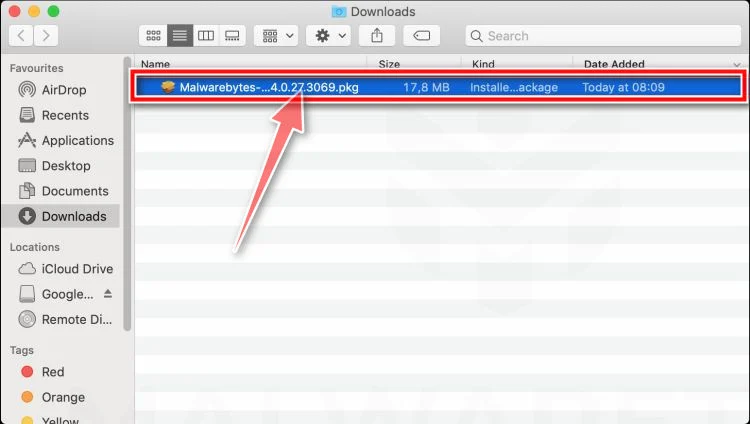
Open the Malwarebytes setup file
When the download finishes, open your Downloads folder and double-click the setup file to begin the installation.
-
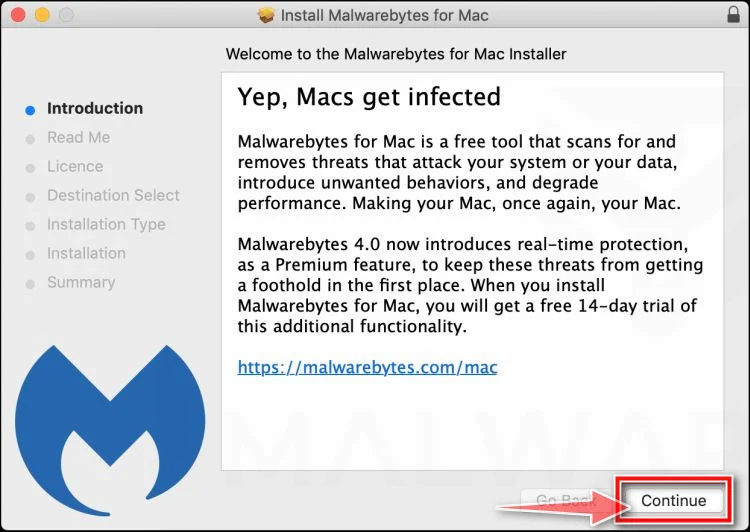
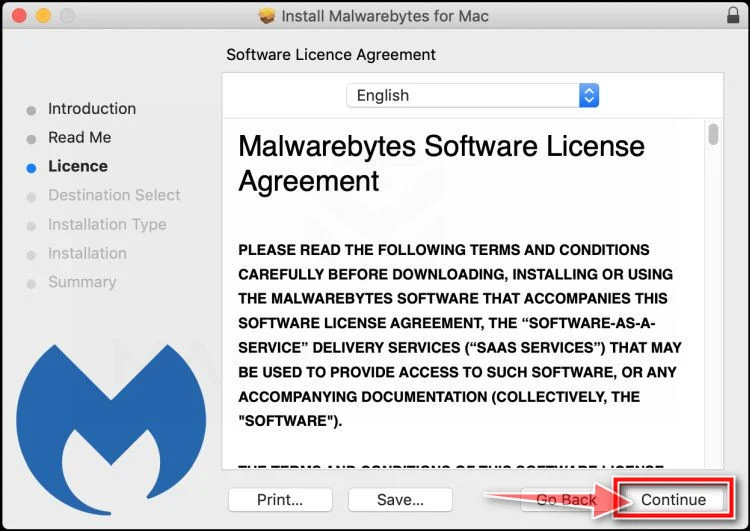
Follow the On-Screen Prompts to Install Malwarebytes
The Malwarebytes for Mac Installer will guide you through a few quick screens. Click “Continue” and keep following the prompts until the installation completes.
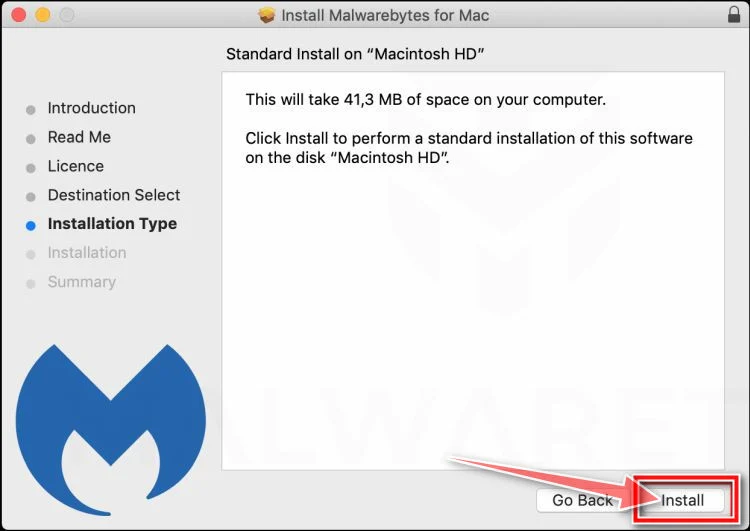
When the installation is complete, Malwarebytes opens to the Welcome to Malwarebytes screen. Click “Get started“.
-
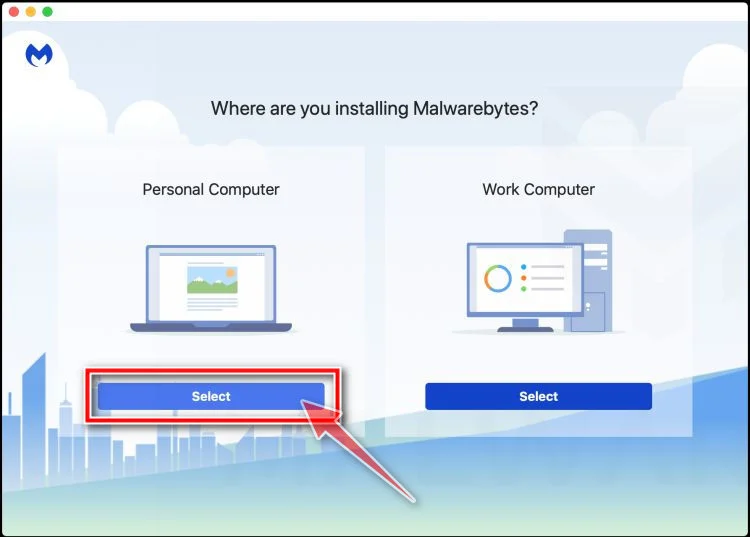
Select “Personal Computer” or “Work Computer”
Malwarebytes will ask what type of computer you’re installing it on. Click either Personal Computer or Work Computer, whichever applies.
-
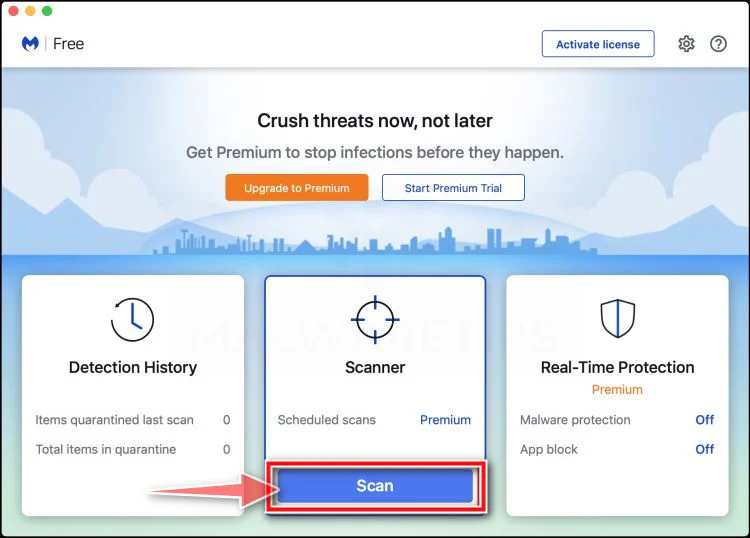
Start the Scan
Click the “Scan” button. Malwarebytes will automatically update its detection database and begin checking your Mac for malware.
-
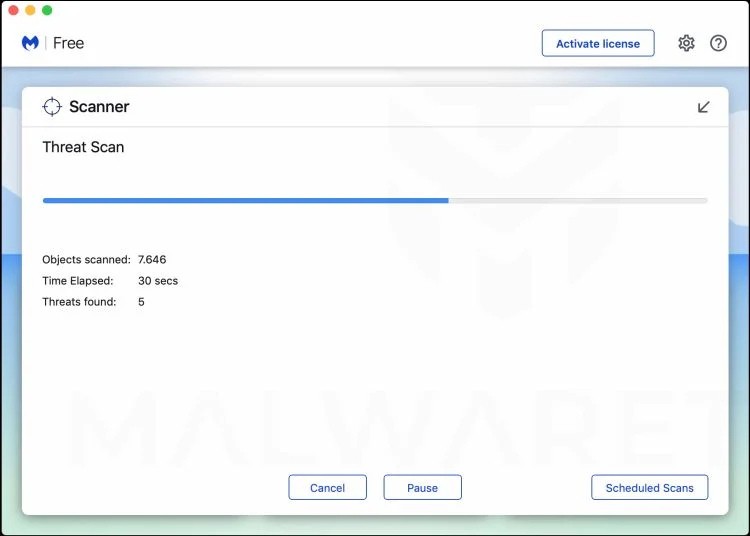
Wait for the Scan to Finish
Malwarebytes will scan your Mac for adware, browser hijackers, and other malicious programs. This can take a few minutes, so feel free to do something else — just check back occasionally to see the progress.
-
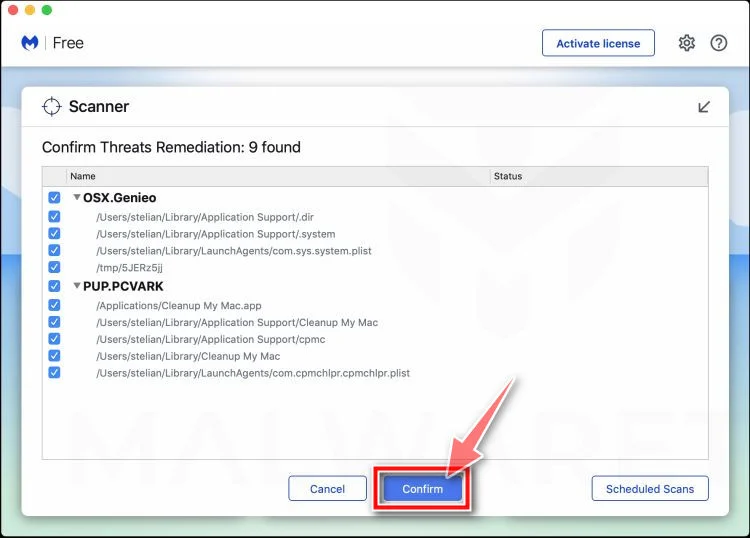
Quarantine the Detected Threats
When the scan is done, you’ll see a list of everything Malwarebytes found. Click the “Quarantine” button to remove all the threats at once.
-
Restart Your Mac
Malwarebytes will now remove all the malicious files it found. Some threats can only be fully removed after a reboot — if Malwarebytes asks you to restart, allow it. Once you’re logged back in, your Mac is clean.
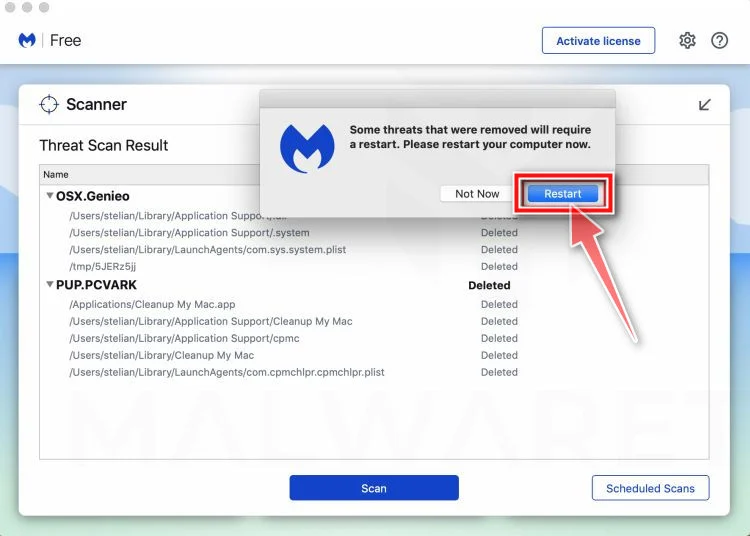
That’s it — your Mac is now free of adware, rogue browser extensions, and other potentially harmful software.
If you are still experiencing problems while trying to remove a malicious program from your computer, please ask for help in our Mac Malware Removal Help & Support forum.
Run a Malware Scan with Malwarebytes for Android
Malwarebytes for Android automatically detects and removes dangerous threats like malware and ransomware so you don’t have to worry about your most-used device being compromised. Aggressive detection of adware and potentially unwanted programs keeps your Android phone or tablet running smooth.
-
Download Malwarebytes for Android.
You can download Malwarebytes for Android by clicking the link below.
Get Malwarebytes for AndroidOpens Google Play in a new tab.Want real-time protection? See Malwarebytes Premium for AndroidMalwarebytes for AndroidScans your phone and removes malware at no cost -
Install Malwarebytes for Android on your phone.
In the Google Play Store, tap “Install” to install Malwarebytes for Android on your device.

When the installation process has finished, tap “Open” to begin using Malwarebytes for Android. You can also open Malwarebytes by tapping on its icon in your phone menu or home screen.

-
Follow the on-screen prompts to complete the setup process
When Malwarebytes will open, you will see the Malwarebytes Setup Wizard which will guide you through a series of permissions and other setup options.
This is the first of two screens that explain the difference between the Premium and Free versions. Swipe this screen to continue.
Tap on “Got it” to proceed to the next step.
Malwarebytes for Android will now ask for a set of permissions that are required to scan your device and protect it from malware. Tap on “Give permission” to continue.
Tap on “Allow” to permit Malwarebytes to access the files on your phone.
-
Update database and run a scan with Malwarebytes for Android
You will now be prompted to update the Malwarebytes database and run a full system scan.

Click on “Update database” to update the Malwarebytes for Android definitions to the latest version, then click on “Run full scan” to perform a system scan.

-
Wait for the Malwarebytes scan to complete.
Malwarebytes will now start scanning your phone for adware and other malicious apps. This process can take a few minutes, so we suggest you do something else and periodically check on the status of the scan to see when it is finished.

-
Click on “Remove Selected”.
When the scan has been completed, you will be presented with a screen showing the malware infections that Malwarebytes for Android has detected. To remove the malicious apps that Malwarebytes has found, tap on the “Remove Selected” button.

-
Restart your phone.
Malwarebytes for Android will now remove all the malicious apps that it has found. To complete the malware removal process, Malwarebytes may ask you to restart your device.
That’s it — your Android phone is now clean — no more malicious apps, adware, or browser redirects.
If you are still having problems with your phone after completing these instructions, then please follow one of the steps:
- Restore your phone to factory settings by going to Settings > General management > Reset > Factory data reset.
- Ask for help in our Mobile Malware Removal Help & Support forum.
Stay Protected: Block Ads and Malicious Sites
Now that your device is clean, keep it that way. Most infections start with a malicious ad or a fake download button — so blocking them at the source is your best defense.
We recommend AdGuard, which blocks malicious ads, phishing pages, and dangerous redirects before they can reach you.
👉 Download AdGuard and browse safely
Final Verdict
The “Tradeify Reward Is Ready to Claim” email is not legit. It is best treated as a phishing scam impersonating Tradeify.
The sender domain does not match Tradeify, the email uses urgency and a high-value reward, and the message appears to come from infrastructure connected to an unrelated roofing software company. A real Tradeify payout should be verified only by logging in directly through the official Tradeify website, not by clicking a reward link from an email.
Do not click the claim button. Do not enter login details. Do not connect a wallet. Delete and report the message.

Join the discussion
0 commentsShare your experience or ask a question about this article.
Discussion
Start the conversation
Have a question or something useful to share? Add the first comment.