

Private health concerns make ordinary shopping unusually emotional. A discreet bottle promising firmer performance can feel easier than an uncomfortable medical conversation.
TryCure Max Out Oil is built for that moment. Its dark packaging, confident reviews, limited batches, and direct-application story invite a fast decision.
Overview
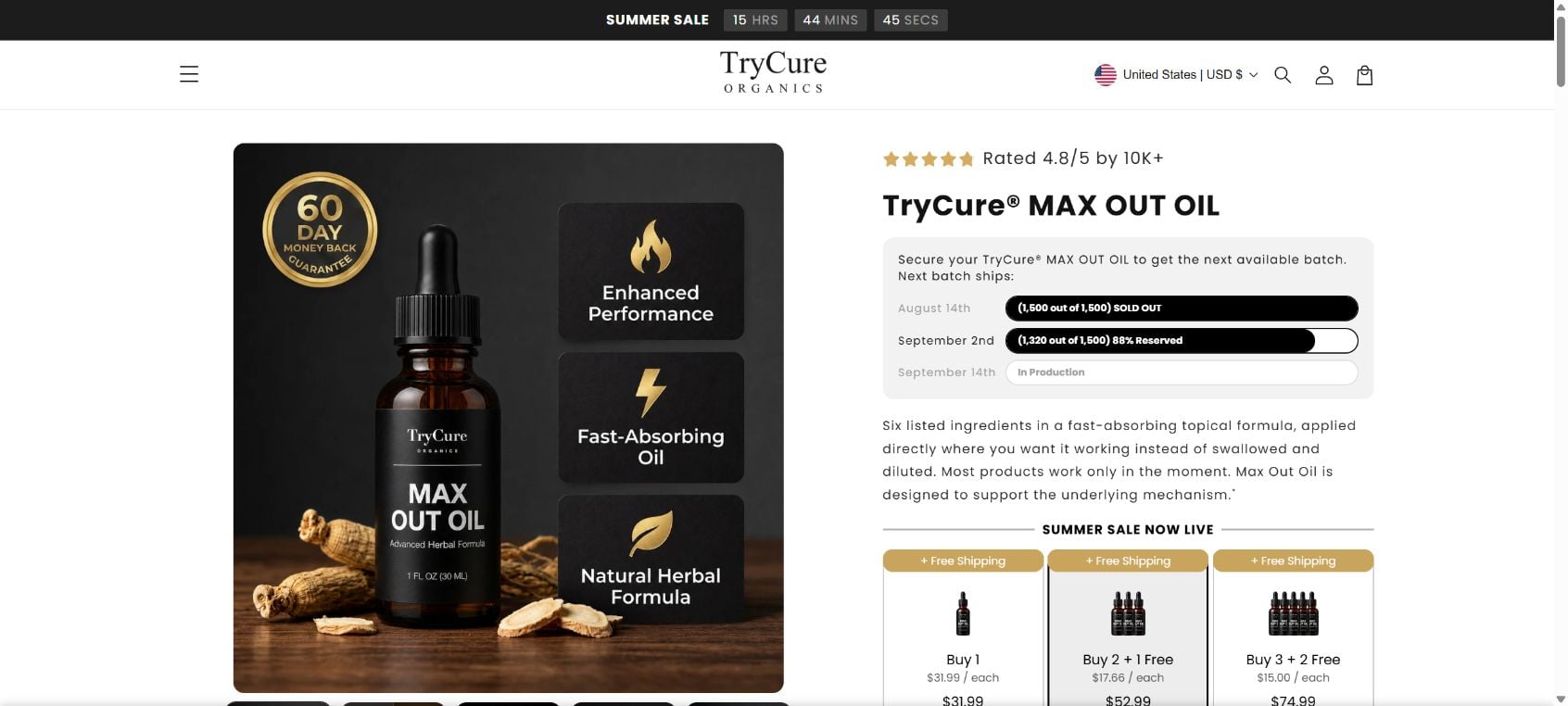
Max Out Oil is marketed as a male performance product
TryCure sells Max Out Oil as a topical formula applied directly to intimate skin. The current page lists one bottle for $31.99 during a sale.
The advertising says consistent use supports circulation, firmness, fullness, stamina, and confidence. Testimonials describe more reliable erections and subtle visual changes.
The page contrasts the oil with pills, claiming direct application targets the desired area without digestion. That explanation sounds intuitive, but it is not clinical proof.
The ingredient list does not support the larger promises
The current formula lists water, glycerin, hydrogenated castor oil, ethylhexylglycerin, vitamin E, and ginger root extract.
Those ingredients commonly serve as a base, moisturizer, skin conditioner, stabilizer, antioxidant, or botanical extract. None establishes permanent enlargement or treatment of erectile dysfunction.
The page provides no Max Out clinical trial, named investigator, measured outcome, or peer-reviewed evidence showing the advertised performance changes.
- The marketing implies sexual-performance benefits far beyond ordinary skin conditioning.
- The current six-ingredient formula differs from some earlier promotional descriptions.
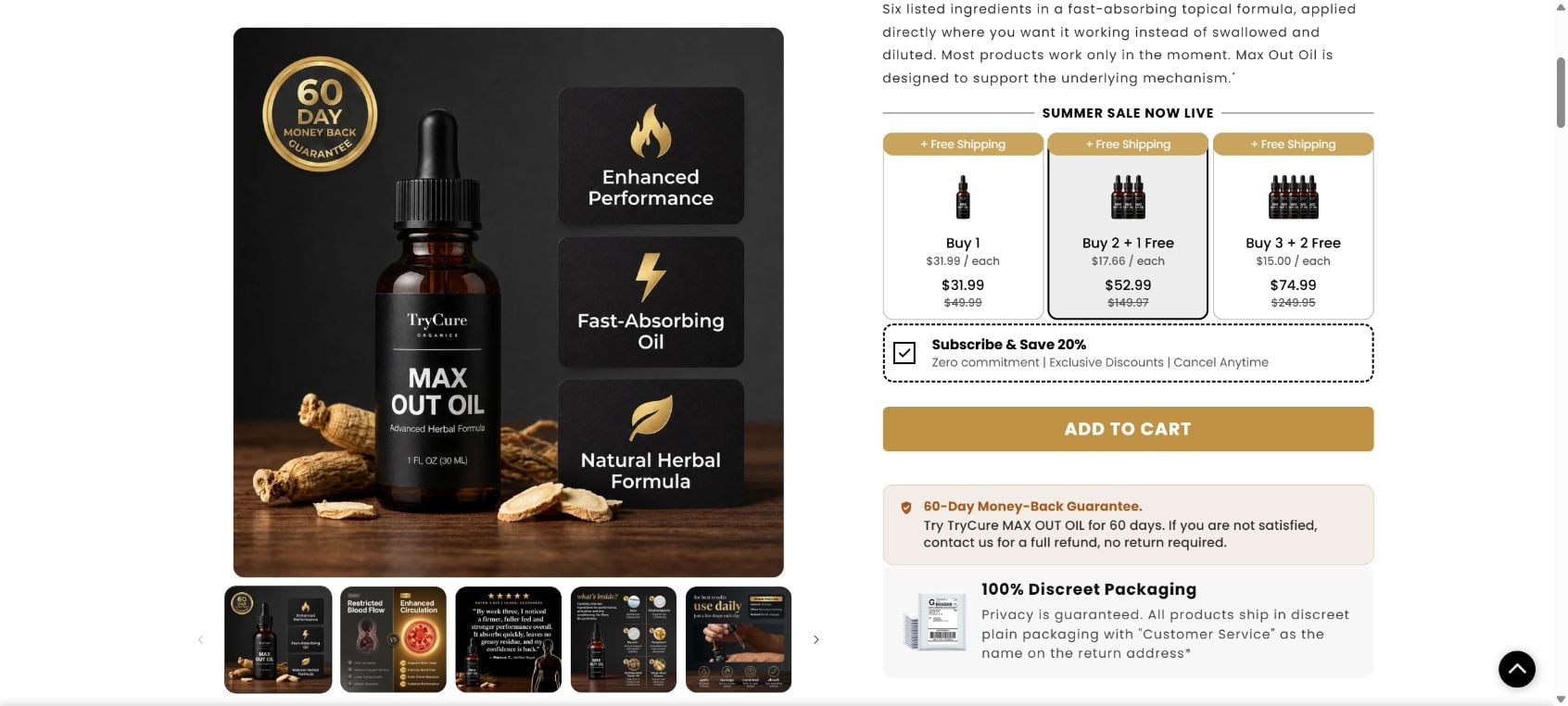
- “Subscribe & Save 20%” is checked on the product page.
- Subscription terms authorize repeated charges until cancellation.
- The legal policy names another website, cureorganics.store.
- The listed address appears residential rather than a visible laboratory.
Our verdict is that the offer carries serious red flags
We cannot prove that every Max Out bottle is counterfeit or that every customer is charged against their wishes.
We can confirm a preselected recurring-purchase option, unsupported benefit claims, urgency devices, a mismatched legal domain, and an unclear manufacturer.
The product may moisturize skin or make massage feel temporarily stimulating. That does not validate claims about circulation, lasting size, dependable erections, or sexual stamina.
Consumers researching a TryCure Max Out Oil scam should focus on those confirmed facts. The sales story is stronger than the disclosed evidence.
What the Max Out Oil Page Promises
The page says six ingredients form a fast-absorbing topical oil. Shoppers are told it works where applied instead of being swallowed and diluted.
That message creates a false-sounding comparison. Digestion is not automatically a weakness, and topical placement does not prove an ingredient reaches deeper blood vessels.
Skin is a barrier. Whether a substance crosses it depends on molecular size, formulation, concentration, exposure time, and other pharmacological factors.
The seller provides no absorption study for the finished product. It does not show how much ginger extract is present or what tissue concentration is achieved.
The product copy says the formula supports the “underlying mechanism.” Elsewhere, it describes healthier circulation, firmer response, greater stamina, and more confidence.
Testimonials reinforce those claims with personal stories. Several describe changes after three weeks or one month, but testimonials cannot establish cause and effect.
Erectile performance varies with stress, sleep, alcohol, medication, relationship factors, cardiovascular health, hormones, and natural day-to-day differences.
A seller-controlled review does not isolate those variables. It also does not tell readers how negative, neutral, or incentivized feedback is handled.
What the Six Ingredients Actually Suggest
Most of the formula looks like a topical base
Water and glycerin are common cosmetic ingredients. Glycerin attracts moisture and can make skin feel smoother, softer, or temporarily plumper.
Hydrogenated castor oil helps condition skin and stabilize formulations. Ethylhexylglycerin often supports preservation and skin feel.
Tocopherol is vitamin E, frequently added as an antioxidant. Ginger root extract is the only named botanical in the current list.
Temporary sensation is not permanent anatomical change
Massage increases local warmth and attention. A moisturizer may change surface texture, shine, and appearance immediately after application.
Those effects can feel meaningful during use, especially when expectations are high. They do not prove tissue growth or lasting enlargement.
Major medical guidance consistently finds little support for nonsurgical enlargement pills, lotions, and exercises. Some approaches can injure skin or deeper tissue.
Medical symptoms deserve medical evaluation
Persistent erectile difficulty can be related to cardiovascular disease, diabetes, medication effects, hormonal conditions, nerve problems, anxiety, or other treatable causes.
An oil cannot diagnose those issues. Delaying proper care because a sales page promises gradual improvement may leave an important health problem unaddressed.
Anyone with pain, curvature, sores, discharge, sudden erectile changes, or medication concerns should speak with a qualified clinician.
The Subscription Is Not a Minor Detail
On the live product page, the “Subscribe & Save 20%” checkbox was already selected. It appeared beneath the bundle choices and above the payment action.
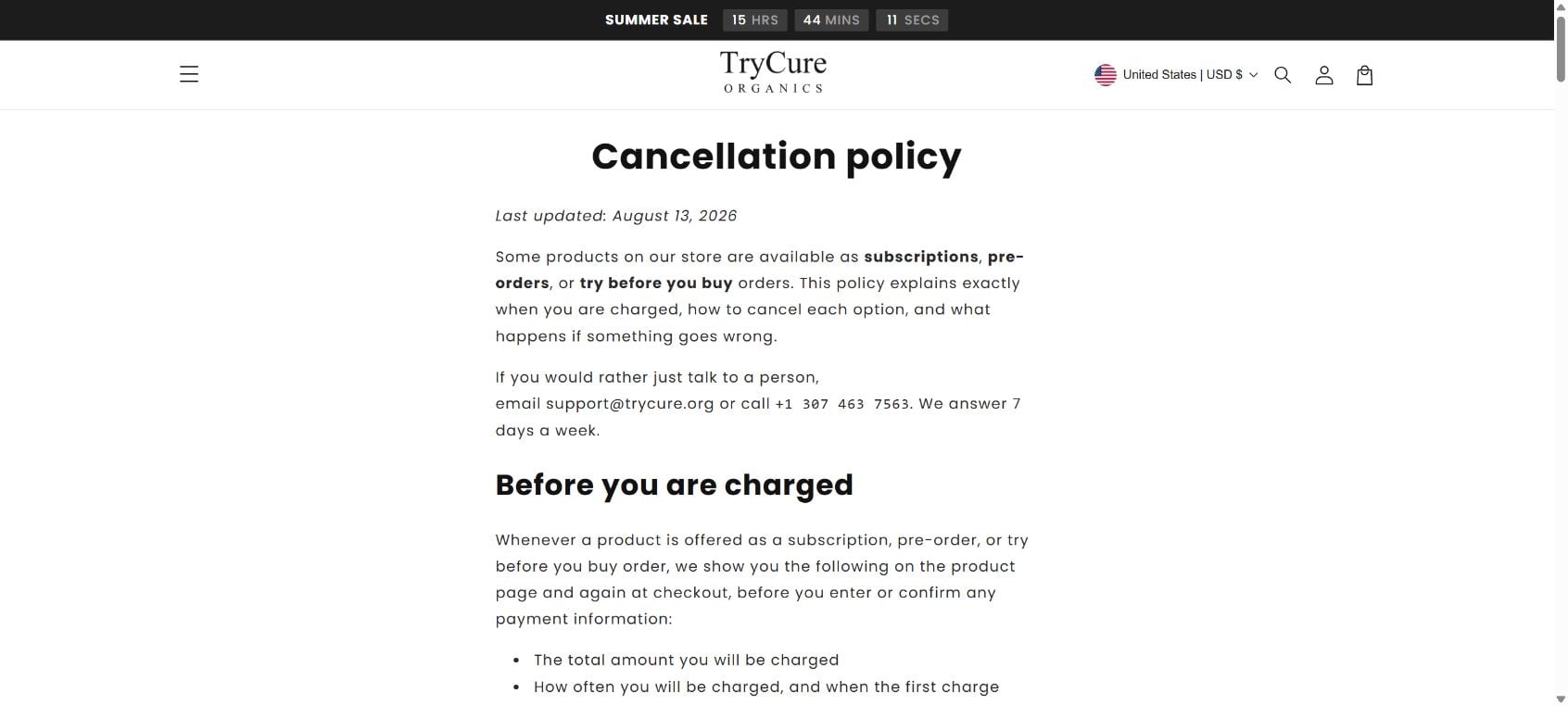
The store’s cancellation policy says some products are available as subscriptions. It states recurring orders renew automatically and the stored payment method is charged.
A recurring option can be legitimate when the shopper deliberately chooses it. The risk rises when the recurring choice is preselected inside an emotional health offer.
The customer may believe the primary decision concerns one bottle or a bundle. In reality, the more important decision concerns future shipments and charges.
Before payment, take a screenshot of the entire order panel. Confirm the frequency, renewal amount, next charge date, cancellation process, and card-statement descriptor.
Do not rely only on “cancel anytime.” That phrase does not explain how quickly cancellation takes effect or whether an order already processing can be stopped.
How the TryCure Max Out Oil Scam Works
Step 1: The advertisement identifies a private insecurity
The funnel begins with worries about firmness, stamina, size, age, or partner satisfaction. The message suggests these concerns are common and easily corrected.
Because the subject is sensitive, viewers may avoid asking a doctor, pharmacist, partner, or friend for a second opinion.
Discretion becomes part of the pitch. Plain packaging and private delivery lower the emotional barrier to an immediate order.
Step 2: A direct-application story sounds scientific
The page says pills are weakened by digestion, while the oil is placed exactly where it should work.
That explanation uses ordinary language to imply superior delivery. It does not provide penetration data, active doses, or a finished-product trial.
The phrase “works on the cause” then turns an untested delivery story into a claim about underlying sexual function.
Step 3: Testimonials create a believable timeline
Reviews rarely promise an impossible overnight transformation. Instead, they describe gradual changes after several weeks, which makes the stories sound more credible.
Some mention spouses noticing first. Others describe restored morning erections, dependable firmness, or subtle fullness rather than dramatic enlargement.
That moderation is persuasive marketing. Without independent verification, it remains anecdotal material hosted and selected by the seller.
Step 4: Scarcity and batch counters push the decision
The page shows sold-out and reserved production batches. A countdown-style sale bar adds another reason to act before researching.
These displays may update automatically. The page does not provide inventory records that allow a shopper to verify the reservation numbers.
A health purchase should not depend on a ten-minute timer, an expiring discount, or the fear that the next batch will disappear.
Step 5: Bundles make a larger commitment feel cheaper
The page offers one bottle, three bottles, and five bottles. Larger choices display a lower price per bottle and free-shipping language.
Per-unit savings draw attention away from total cost. They also encourage a longer trial before the buyer knows whether the oil irritates skin.
A bundled subscription can produce several bottles each renewal. The quantity, frequency, and total recurring charge must be checked together.
Step 6: The recurring option is already selected
The 20% subscription checkbox is not merely available. During our review, it was checked by default on the ordering panel.
A buyer concentrating on a private problem may press “Add to cart” without realizing the order can repeat.
The seller’s policy confirms recurring charges. Therefore, this risk comes from the store’s own interface and terms, not an unrelated complaint.
Step 7: Cancellation depends on the seller’s process
The cancellation page instructs customers to use support channels and describes timing rules for subscriptions, preorders, and trial-style purchases.
If a customer notices late, another shipment may already be processing. A promise of easy cancellation does not guarantee immediate reversal.
That is the subscription-trap concern: the initial sale receives attention, while the cost of leaving depends on rules most buyers never studied.
Company, Address, and Fulfillment Checks
The legal seller is not clearly named
The storefront uses the name TryCure Organics. Its terms do not clearly identify the corporation or LLC accepting payment for Max Out Oil.
Customers should not need trademark databases or property records to discover the entity responsible for their order.
A brand name is not enough during a dispute. The receipt, card descriptor, terms, refund policy, and support response should identify the same legal business.
The listed Wyoming address appears residential
The terms list 3140 West Main Street in Riverton, Wyoming. Public property records describe a small single-family property at that address.
A residence can lawfully receive business mail. It does not establish a supplement laboratory, cosmetic manufacturer, warehouse, or customer-service center.
The site gives no separate factory or fulfillment address. Buyers cannot verify where the oil is blended, bottled, tested, or shipped.
The policies point to another domain
TryCure’s terms say the services are offered through cureorganics.store, while the purchase occurs on trycure.org.
That mismatch suggests copied or recycled legal language. It also creates uncertainty about which website’s disclosures governed the transaction.
Policies can contain clerical errors. A seller handling recurring health-product orders should correct such an important identity error promptly.
The manufacturer and testing trail are absent
The reviewed page does not name the facility producing Max Out Oil. It offers no batch certificate, contaminant results, stability testing, or manufacturing documentation.
We found no reliable evidence proving the product is mass-produced in China. The country of origin remains unverified.
That uncertainty is itself a warning. A topical product used on sensitive skin should have clear manufacturing, ingredient, and safety accountability.
The formula also appears to have changed from earlier marketing that described a larger botanical blend. Consumers should preserve the label they actually receive.
Health and Safety Concerns
“Natural” does not mean irritation-free. Ginger extracts, preservatives, fragrances, or undisclosed contaminants can cause burning, redness, swelling, or allergic reactions.
Do not apply the oil to broken skin, the urinary opening, sores, or irritated areas. Avoid contact with a partner unless the ingredients are known and compatible.
Oil-based products can weaken latex condoms. The current page does not provide enough compatibility guidance to assume safe use with barrier protection.
Performing a small patch test may reveal surface irritation, but it cannot establish safety for genital use or interactions with medical conditions.
Stop immediately if pain, numbness, rash, swelling, or urinary symptoms occur. Seek urgent care for severe swelling, breathing difficulty, or prolonged painful erection.
Sexual-enhancement products are a category with repeated FDA warnings about hidden drug ingredients. We found no product-specific alert naming Max Out Oil.
That distinction matters. Category risk supports caution and testing transparency, but it does not justify claiming this exact bottle contains an undeclared medicine.
Warning Signs Before Buying Max Out Oil
- The product promises performance effects without a finished-product clinical trial.
- Common cosmetic ingredients are framed as a deeper physiological solution.
- Testimonials carry more weight than measurable evidence.
- Batch reservations and sale timers manufacture urgency.
- Large bundles are emphasized before tolerance is known.
- Subscribe and Save is checked by default.
- The policies use a different store domain.
- The legal payment entity is not plainly disclosed.
- The listed address does not identify a manufacturer.
- No batch-specific testing report is available.
Embarrassment helps this funnel. It makes buyers less likely to compare notes, report problems, or challenge an unwanted renewal.
There is nothing embarrassing about requesting clear evidence. A seller making intimate health claims should expect careful questions.
If those questions produce vague answers, the safest choice is to keep your payment information out of the checkout.
What to Do if You Have Fallen Victim to This Scam
- Stop using the oil after a reaction. Wash gently, preserve the bottle, and seek medical advice for persistent or severe symptoms.
- Save the complete sales record. Capture the claims, ingredient list, subscription checkbox, bundle, guarantee, receipt, and every support message.
- Cancel recurring delivery in writing. State that you revoke authorization for all future Max Out charges and request written confirmation.
- Use every official cancellation channel. Submit the account form, email support, and record any telephone confirmation number.
- Ask for the promised refund. Quote the guarantee displayed when you ordered and attach a screenshot showing its exact terms.
- Contact the payment provider quickly. Report charges that continued after cancellation or a subscription you did not knowingly authorize.
- Block the recurring authorization. Ask the issuer to stop the merchant token, because replacing a physical card may not end updates.
- Discuss ongoing symptoms with a clinician. Persistent erectile changes can signal a medical issue that an online oil cannot diagnose.
- Check the device used to order. Run Malwarebytes if the ad caused suspicious redirects, downloads, pop-ups, or browser changes.
- Reduce exposure to malicious ads. AdGuard can block many aggressive promotions, although it cannot cancel billing already authorized.
- Report deceptive practices. File evidence with the FTC, your state attorney general, and the FDA for serious product reactions.
Frequently Asked Questions
Is TryCure Max Out Oil a scam?
The confirmed subscription design, unsupported claims, unclear manufacturer, and policy inconsistencies create significant risk. We cannot prove every sale is fraudulent.
Can Max Out Oil permanently increase size?
No reliable evidence on the page proves permanent enlargement. Moisture, massage, warmth, and expectation can create temporary changes in appearance or sensation.
Does the oil treat erectile dysfunction?
The product is not proven to diagnose or treat erectile dysfunction. Persistent symptoms should be evaluated by a qualified medical professional.
Does TryCure use automatic refills?
The product page shows a preselected subscription option, and the cancellation policy confirms recurring charges until the plan is canceled.
Where is Max Out Oil made?
The reviewed materials did not identify a verified manufacturer or country of origin. We found no reliable basis for naming a specific country.
What should I do about an unwanted renewal?
Cancel in writing, save confirmation, contact the payment provider, and ask specifically to block the merchant’s recurring authorization.
The Bottom Line
Max Out Oil sells confidence through intimate promises, restrained testimonials, and a simple direct-application story. The clinical evidence never catches up.
The preselected subscription, unclear business identity, missing manufacturer, and recycled policy domain make the checkout risk larger than one $31.99 bottle.
Do not let privacy concerns rush the decision. A trustworthy health product should withstand direct questions about evidence, ingredients, manufacturing, billing, and cancellation.

Join the discussion
0 commentsShare your experience or ask a question about this article.
Discussion
Start the conversation
Have a question or something useful to share? Add the first comment.