

If you’ve seen the ads for the Qinux WaterBlitz pressure washer attachment, you’ve probably wondered if it’s the miracle tool it claims to be—or just another online gimmick. Marketed as a revolutionary accessory that turns any standard garden hose into a high-pressure cleaning jet using “Hydro-Power Technology,” it promises to wash away grime, mud, and mildew with zero electricity and zero effort.
Sounds impressive. But is the WaterBlitz really worth your money, or is it just a cleverly packaged, overpriced product you can find for under $3 on Chinese wholesale sites?
Let’s dig into the red flags, false claims, and shady marketing practices behind this trending gadget—and show you exactly how the Qinux WaterBlitz scam works.
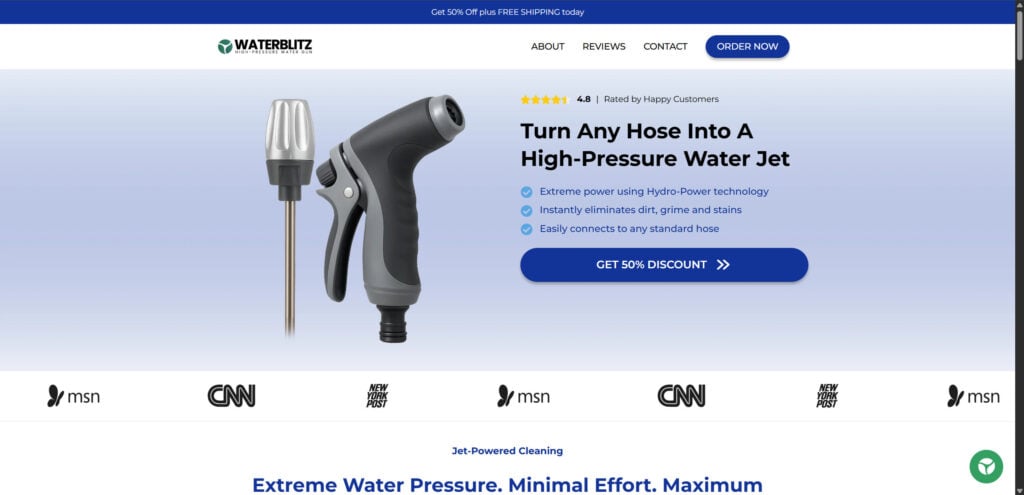
Why the Qinux WaterBlitz Pressure Washer Is Raising Eyebrows
The product claims to:
- Boost your hose pressure up to 15X
- Save water, energy, and effort
- Deliver professional-grade cleaning with zero electricity
But upon closer inspection, here’s why experts and consumers alike are calling foul:
1. Physics-Defying Claims
Claiming to increase water pressure 15 times without a powered pump is simply impossible. Water pressure from your hose is determined by your municipal supply or well system, not the nozzle. While a nozzle can focus flow to make the stream more narrow or sharp, it cannot physically amplify pressure.
This makes the “15X power boost” not just exaggerated, but fundamentally false.
2. False Efficiency Messaging
The website suggests the nozzle “saves water and energy” while delivering higher pressure. In reality, higher pressure often means more water usage, not less. The gadget is neither “smart” nor efficient—it’s a hollow tube with no regulatory mechanisms, let alone conservation features.
3. Misleading Before/After Images
Do a reverse image search on their dramatic before-and-after cleaning photos and you’ll find them plastered across stock image websites and unrelated product listings. These visuals are not original and certainly not from real Qinux customers.
4. Fake Scarcity & Timed Offers
The website constantly flashes fake urgency tactics:
- “Only 247 left!”
- “Sale ends in 3 hours, 21 minutes!”
Refresh the page and these timers reset. This is classic dropshipping bait, designed to pressure you into making a quick, uninformed purchase.
5. Excessive Markups on a Generic Product
The same product—identical in design and function—is available on Alibaba and AliExpress for $0.90 to $2.00 per unit. Qinux sells it for $49 or more, exploiting unaware consumers with extreme price inflation and pseudo-technology branding.
6. Shady Checkout Practices
At checkout, you’re prompted to add expensive upsells like:
- Extended warranties
- Package protection
- Hose extensions and car wash sponges
All of these are high-margin add-ons for a low-cost item. Worse, some users report difficulty cancelling orders or receiving refunds.
7. No Legitimate Brand Presence
There’s no traceable company behind Qinux. No registered business address, no verified contact info, and the “as seen on” media claims are completely unverifiable.
How the Qinux WaterBlitz Dropshing Operation Works
Step 1: Catchy Ads on Social Media
It starts with a flashy ad on Facebook, YouTube, or Instagram showing someone cleaning a filthy patio or car in seconds. The footage is usually overly polished, and often borrowed from pressure washer demos rather than this actual product.
Step 2: Redirect to a Conversion-Focused Website
Clicking the ad takes you to a site designed for one thing: making you buy immediately. It features:
- Fake reviews
- Countdown timers
- Bold discounts
- Massive product promises with little to no evidence
Step 3: Inflated Product Descriptions
They list fake specs like:
- “15x water pressure”
- “Hydro-Power jet technology”
- “Works on all surfaces”
There’s no detailed explanation of how any of this works. Because it doesn’t. The design is a hollow metal or plastic tube with a twist nozzle.
Step 4: High Price, Fake Discount
You’re told the original price is $98.00, now down to $49.00. This is designed to trigger a fear of missing out (FOMO) and make the deal feel too good to pass up.
Step 5: Dropshipping Fulfillment
Once you place the order, the seller simply forwards your info to a supplier in China. The product ships from there, taking 2–4 weeks to arrive, with no guarantees or quality control.
Step 6: Underwhelming Product Delivery
When it arrives, it’s:
- Smaller and lighter than expected
- Often doesn’t fit all hose types
- Performs like a basic $2 nozzle—because that’s what it is
Many users report it leaks, breaks easily, or just doesn’t perform as advertised.
Step 7: No Customer Support
Trying to return the product or get a refund? Good luck. Most users find:
- No response to emails
- Broken contact forms
- Refunds denied unless you ship it back at your own expense
What to Do If You Bought the WaterBlitz Nozzle
Here’s what you can do to protect yourself and try to recover your money:
1. Request a Chargeback
Contact your credit card provider or PayPal and initiate a dispute. Most providers will offer protection if you act quickly.
2. Report the Scam
File reports with:
- FTC: reportfraud.ftc.gov
- Better Business Bureau: bbb.org
- IC3 (Internet Crime Complaint Center): ic3.gov
3. Leave Reviews to Warn Others
Post your experience on:
- Trustpilot
- SiteJabber
- Reddit (e.g., r/scams)
4. Check for Identity Theft
If you entered a lot of personal info, monitor your accounts for suspicious activity and consider changing your passwords.
5. Spread the Word
Share articles and videos like this with friends and family to help stop the spread of these scammy product schemes.
The Bottom Line: Qinux WaterBlitz Is Just a Rebranded Hose Nozzle
You’re not getting revolutionary technology. You’re getting a basic hose nozzle with a dramatic price tag and a layer of marketing fluff.
The WaterBlitz is not a professional cleaning solution, and it won’t save you money in the long run. Instead of boosting water pressure, it boosts buyer regret.
Always research before you buy. And remember: if it sounds too good to be true, it probably is.

Join the discussion
0 commentsShare your experience or ask a question about this article.
Discussion
Start the conversation
Have a question or something useful to share? Add the first comment.