

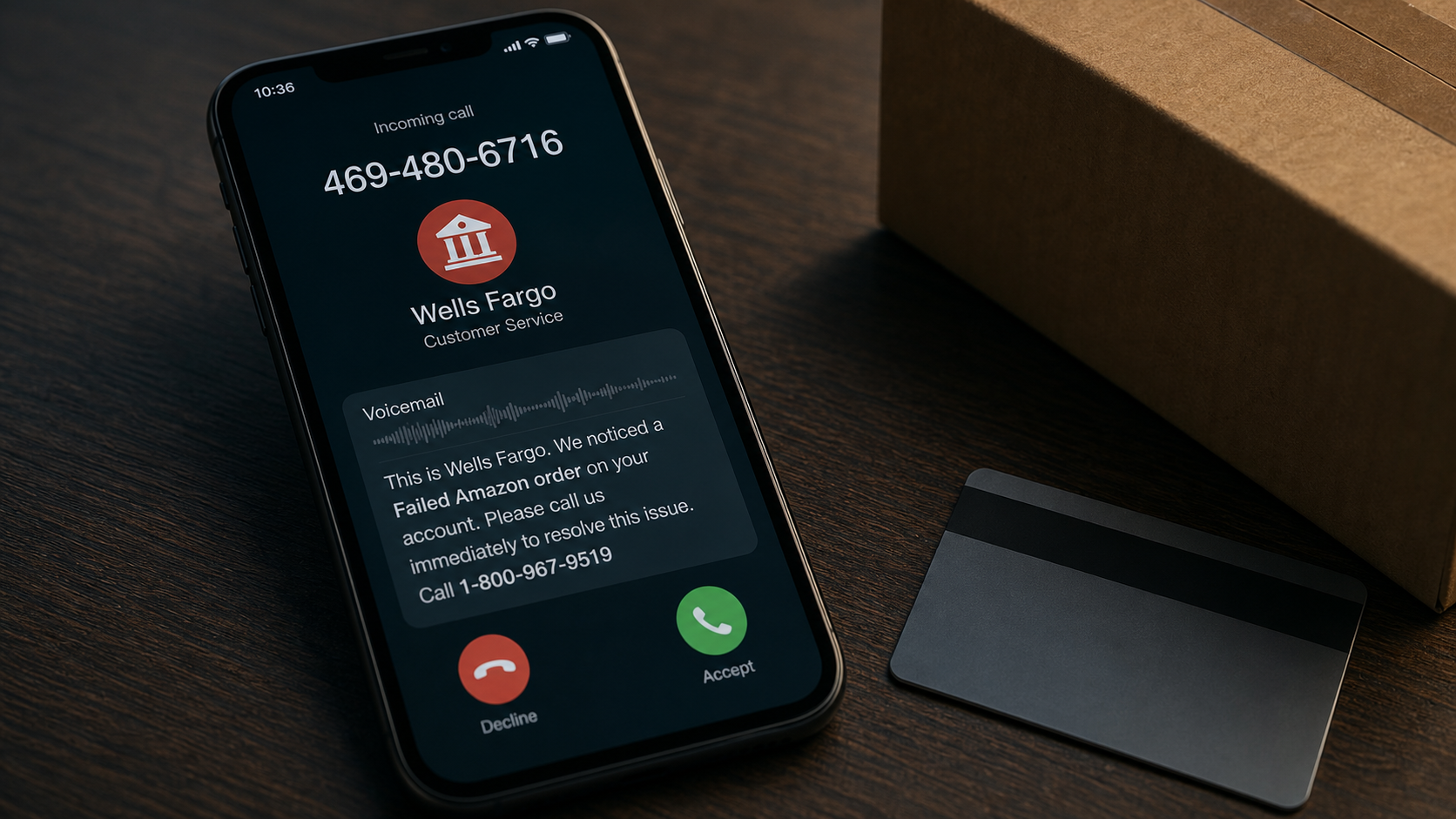
Your phone rings from 469-480-6716. A recording says Wells Fargo declined an Amazon order and tells you to call 1-800-967-9519 if you did not authorize it.
The message combines a bank, a retailer, and a supposed fraud alert in one breath. It sounds urgent because it is meant to make you react before checking either account.
Overview
The robocall invents a failed Amazon purchase
The Wells Fargo and Amazon scam call is a business and bank impersonation scheme. Reports describe calls from 469-480-6716 that claim an Amazon order failed or was declined and direct recipients to 1-800-967-9519.
The story is deliberately confusing. A failed order should not normally require an urgent call to an unfamiliar number, yet mentioning a bank card and a well-known retailer makes the event feel personally relevant.
The call may ask the recipient to press 1, say “yes,” or call the toll-free number. Any of those actions confirms that a person answered and moves the target toward a live operator.
The numbers do not authenticate the caller
Caller ID can be spoofed, so 469-480-6716 may be displayed even when the call originated elsewhere. A toll-free number can also be rented, forwarded, reassigned, or operated by an unverified call center.
Warning signs include:
- An unexpected automated call about a purchase
- A bank allegedly discussing an Amazon order in vague terms
- A request to press a key or call a different number
- No merchant, amount, date, or card ending stated clearly
- A caller who asks for a security code or remote access
- Instructions to move money, buy gift cards, or keep the call secret
A local area code and a familiar 1-800 prefix can feel reassuring, but neither establishes ownership. The safest verification route is the number on the bank card and the Amazon app or website opened independently.
The live operator can escalate the story
If someone calls back, the operator may claim the card is compromised, an identity thief placed the order, or additional accounts are at risk. The solution changes from canceling a purchase to “protecting” money or devices.
The caller may request card details, online-banking credentials, a one-time passcode, remote computer access, or a transfer to a so-called safe account. Each request creates a path to theft.
Some victims are transferred between fake Amazon, bank, fraud, and government departments. Multiple voices make the operation feel organized, but every person may belong to the same scam team.
Why the Wells Fargo and Amazon Story Works
Many households use Amazon and at least one major bank. A mass robocall does not need accurate account data when the two names are likely to be familiar to a large share of recipients.
The word “declined” is useful to scammers because it creates concern without requiring a real posted charge. If the victim sees nothing in the account, the caller can claim the bank stopped it just in time.
If a small authorization appears, the operator can use that as proof. If nothing appears, the operator can say the fraud system hid the attempt. The story is designed so almost any observation can be folded back into the scam.
The Federal Trade Commission has documented Amazon impersonation calls that begin with a suspicious purchase and escalate into demands to move money, buy gift cards, or allow remote access. The familiar purchase is only the opening hook.
How the Wells Fargo Amazon Scam Calls Work
Step 1: Automated dialing finds active numbers
The campaign uses robocalling technology to dial many telephone numbers cheaply. Lists may come from marketing databases, breaches, public records, prior scam responses, or simple number generation.
Answering, pressing a key, or returning the call can mark the number as active. That information may increase future unwanted calls even if the person does not share financial details.
Step 2: The recording names a declined Amazon order
The message claims Wells Fargo detected or declined an Amazon transaction. It may omit the amount and item, or use a generic high-value purchase such as a phone, laptop, or subscription.
Vagueness allows the same recording to work against many recipients. The listener supplies the missing concern by wondering whether a card or shopping account was compromised.
Step 3: The target is routed to 1-800-967-9519
The recording instructs the listener to call 1-800-967-9519 or press a key. The toll-free format is meant to resemble a national support line, but the message provides no independent way to verify it.
The victim is now calling a number chosen by the person who made the alarming claim. That circular verification keeps the scammer in control of both the warning and the supposed solution.
Step 4: A fake agent requests account confirmation
The operator asks for a name, card number, date of birth, address, account login, or recent transaction details. Questions may be framed as identity checks required to cancel the order.
A scammer may already know some personal details from a breach. Repeating accurate information builds trust and encourages the victim to fill in what is missing.
Step 5: A genuine one-time code is weaponized
The operator may attempt a login or card action that triggers a real code from the bank. The victim is told to read the code aloud to prove ownership or reverse the Amazon purchase.
That code can authorize the attacker. No unexpected caller should receive a bank, email, Amazon, or payment-service verification code.
Step 6: The operator creates a larger financial emergency
After claiming that the purchase is canceled, the caller may say the entire bank account is compromised. The victim is instructed to transfer money to a “secure” account or withdraw cash for safekeeping.
Other versions request gift cards, cryptocurrency, a wire, or remote access to online banking. A legitimate bank does not need a customer to move money to protect it from the bank’s own fraud system.
Step 7: Follow-up scammers target the same victim
Details gathered during the call can be reused. A second caller may pose as Wells Fargo, Amazon, law enforcement, the FTC, or a recovery company and refer to the earlier incident.
The new contact may promise reimbursement or claim the first payment was recovered. An advance fee, verification code, or another transfer then creates a second loss.
How to Check the Claimed Transaction Safely
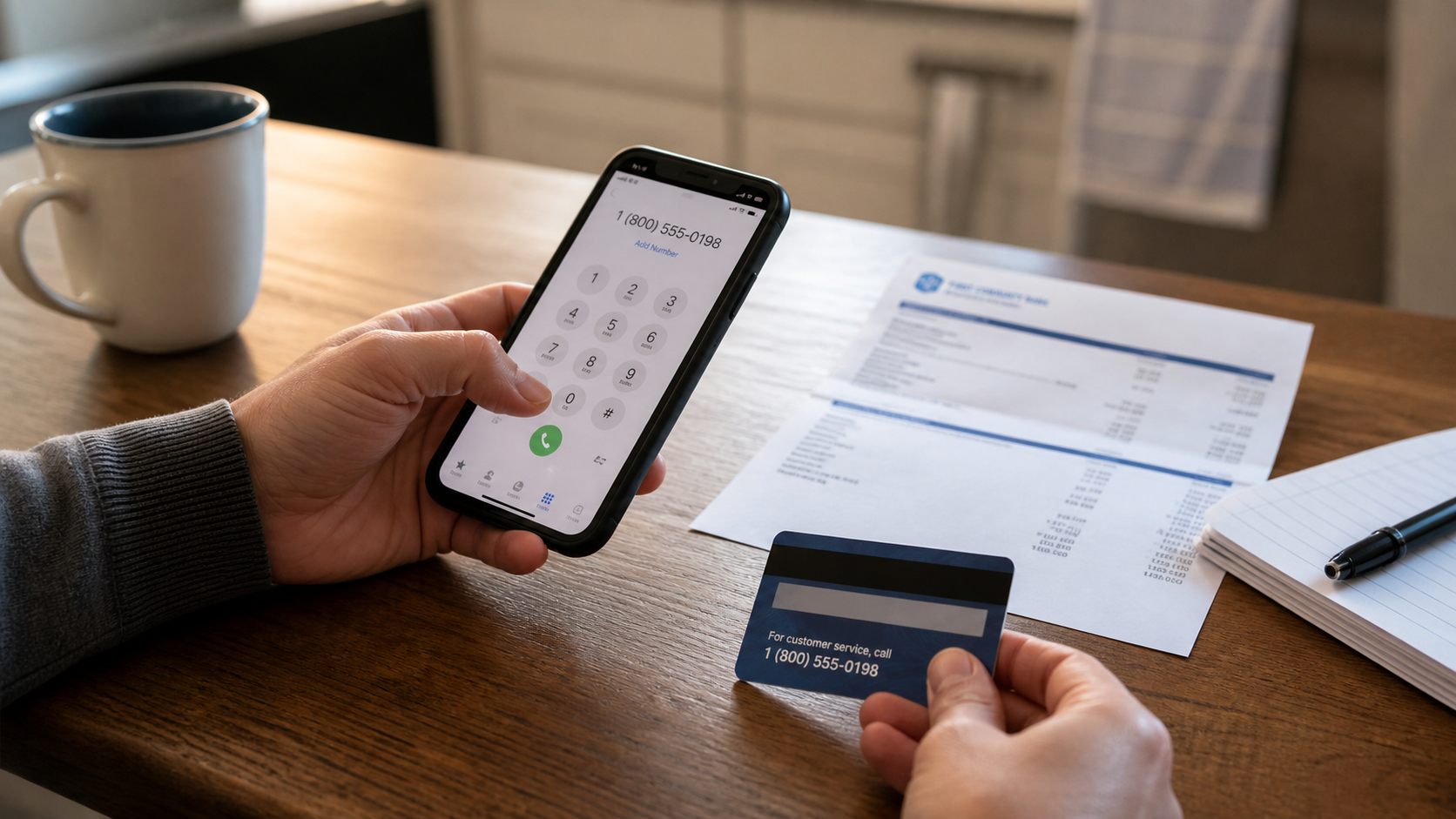
Hang up. Do not press a key and do not call 1-800-967-9519. Open the Wells Fargo app from your device or use the telephone number printed on the back of the card.
Review pending and posted transactions. Ask the real fraud department whether any authorization attempt exists and whether the card should be locked or replaced.
Open the Amazon app or type amazon.com yourself. Check Your Orders, archived orders, digital orders, subscriptions, gift-card activity, and account messages.
If neither account shows the event, the robocall did not prove a purchase occurred. If an unfamiliar charge does exist, report it through the real bank and retailer channels, not through the caller.
Company, Address, and Fulfillment Checks
The named brands are not the caller’s identity
Saying Wells Fargo and Amazon in a recording costs nothing. Authentication comes from independently opened account records and verified contact channels, not from the names spoken by a robocall.
The telephone route has no physical-address proof
A local number and toll-free callback line do not reveal the call center’s location, employer, or legal identity. Calls can be spoofed and forwarded across multiple services.
Real support does not resist independent verification
A legitimate representative will not object if you hang up and call the number on your card. Pressure to remain connected, avoid bank employees, or keep the matter secret signals fraud.
A genuine purchase leaves records in both systems
An order should have merchant details, an amount, a date, and account activity. The absence of those records cannot be replaced by an urgent voice recording.
Why Pressing 1 Can Still Be a Mistake
Pressing a key may route the call to an operator, confirm that the number belongs to a responsive person, or place the recipient into a higher-value callback queue.
Saying “yes” does not magically authorize every financial transaction, but continuing the interaction gives the scammer more opportunities to record details, create trust, and request information.
The safest action is simple: hang up without interacting. If the alert worries you, verify it through the card, statement, app, or website you already trust.
What Remote Access Lets the Fake Agent Do
The operator may say a cancellation form, refund tool, or fraud scan can run only on a computer. Instructions to install AnyDesk, TeamViewer, ScreenConnect, or another remote utility turn a telephone scam into direct device access.
Once connected, the scammer can watch the victim enter passwords, inspect email, read statements, open saved documents, and manipulate what appears in the browser. The program itself may be legitimate software used for an illegitimate purpose.
A common refund trick moves money between the victim’s own checking and savings accounts, then presents the increased balance as an accidental payment. Edited HTML or a darkened screen can hide what the operator is doing.
The caller then claims that the refund was too large and must be returned before an audit discovers it. Because the displayed balance changed, the victim may believe the operator sent money when no outside funds arrived.
During remote access, never log into banking, email, Amazon, PayPal, or cryptocurrency accounts. Do not type a password into a page chosen by the caller, and do not leave the device connected while going to a bank or store.
If access was granted, assume anything visible may have been copied. Disconnect the device, photograph the software name and session information if safe, then begin recovery from a separate trusted phone or computer.
Payment Methods That Signal the Story Has Become Fraud
A supposed bank or retailer may begin with professional language and later demand a payment method that offers little recourse. The change can happen gradually, after a long call has created fear and obedience.
- Gift cards with the code read aloud
- Cryptocurrency sent to a wallet address
- Cash placed in a box or deposited at a kiosk
- A wire or instant payment to a “safe” account
- A payment app transfer labeled as friends or family
None of these methods reverses an Amazon purchase or secures a bank account. End the call and tell the real financial institution exactly what the operator requested.
What to Do if You Have Fallen Victim to This Scam
- End the call. Stop answering questions and do not accept transfers to another department. A genuine bank can be reached again through a verified number.
- Contact Wells Fargo or your actual bank. Use the number on the card or statement. Report exposed information, unknown transactions, security codes, and transfers, then follow the fraud team’s instructions.
- Secure the Amazon account. Change the password if credentials were shared, review orders and gift cards, remove unknown payment methods, and sign out unfamiliar sessions.
- Protect email and telephone access. Change reused email passwords, review recovery settings, and ask the mobile carrier about account protections if a verification code or SIM information was exposed.
- Disconnect remote access. If an operator controlled a device, disconnect it from the network, remove the remote tool, and change financial passwords from another trusted device.
- Run a full Malwarebytes scan. Check for remote-access software, credential stealers, browser extensions, and other unwanted programs that may have been installed during the call.
- Use AdGuard as an extra barrier. It can block many malicious domains, deceptive ads, and redirects if follow-up texts or emails arrive. Do not rely on blocking alone for account recovery.
- Save evidence. Keep call logs, voicemail, numbers, names used, transfer details, receipts, remote-software information, and screenshots of account changes.
- Report the fraud. Submit the call at ReportFraud.ftc.gov and notify the bank. Contact local police when a substantial transfer or identity theft occurred.
- Ignore recovery callers. No stranger can guarantee a refund for an advance payment. Ask the bank directly about recalls, disputes, and recovery options.
Frequently Asked Questions
Is 469-480-6716 really a Wells Fargo number?
Do not treat caller ID as proof. Numbers can be spoofed. Hang up and call the number printed on your card or published through the bank’s official channels.
Is 1-800-967-9519 an Amazon or Wells Fargo support line?
Do not rely on a number supplied by the robocall. Reach Amazon through your account and your bank through the card, statement, or official app.
What if there really is an Amazon charge?
Report it through the actual bank and Amazon accounts. A real unauthorized charge does not make the unexpected caller or callback number legitimate.
Can the scammer steal money because I answered?
Answering alone does not provide account access. The danger grows if you share credentials or codes, install software, approve prompts, or transfer funds.
Should I block both telephone numbers?
Yes, blocking can reduce repeat calls from those displayed numbers. Spoofing allows scammers to rotate numbers, so continue screening unexpected financial alerts.
Can my bank recover a transfer I authorized?
Recovery is not guaranteed, but speed matters. Contact the fraud department immediately and request any available hold, recall, dispute, or receiving-bank notification.
The Bottom Line
The Wells Fargo and Amazon scam call uses 469-480-6716 and 1-800-967-9519 to turn a vague failed order into a live financial con. Neither displayed number authenticates the story.
Hang up, check both accounts independently, and never share a security code or move money to “protect” it. The trusted number is the one you obtain from your own card, statement, app, or official website.

Join the discussion
0 commentsShare your experience or ask a question about this article.
Discussion
Start the conversation
Have a question or something useful to share? Add the first comment.