

When I first came across Wellvia Para-Cleanse, it was wrapped in the kind of bold promises that immediately grab your attention: a “complete parasite cleanse” for the gut, powered by a blend of black walnut hull, wormwood, clove, ginger, and other botanicals. The marketing copy painted a vivid picture of hidden parasites secretly draining energy, clogging digestion, and wrecking overall wellness.
The story is designed to make anyone who has ever felt sluggish, bloated, or fatigued pause and wonder — could parasites really be the cause of my problems? The implication is clear: unless you “detox” with Wellvia Para-Cleanse, you might be harboring invaders that modern medicine has overlooked.
It’s a dramatic idea. Tiny parasites lurking inside you, disrupting digestion and stealing nutrients. But is it real, and does everyone actually need a parasite cleanse? Or is Wellvia Para-Cleanse another example of wellness marketing that overstates problems and oversells solutions?
This article takes a deep dive into Wellvia Para-Cleanse, exploring what it claims, what science says about parasite cleanses, how the marketing works, and most importantly, whether you should buy it.
Overview of Wellvia Para-Cleanse
Wellvia Para-Cleanse is marketed as a dietary supplement designed to:
- Kill parasites and their eggs
- Cleanse the gut and improve digestion
- Reduce bloating, fatigue, and skin issues
- Boost immunity naturally
- Restore balance with traditional herbal ingredients
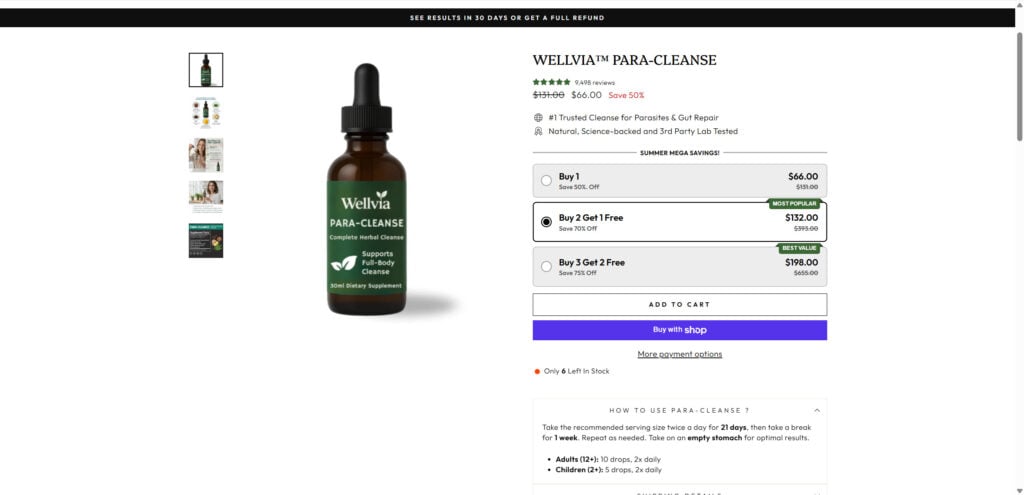
The supplement comes in liquid drop form, with instructions to take it twice daily for 21 days, followed by a short break, then repeated if needed. The bottle itself is small — only 30 ml — yet the pricing is steep:
- 1 bottle: $66 (claimed “50% off”)
- Buy 2, get 1 free: $132
- Buy 3, get 2 free: $198
Like many supplement websites, Wellvia emphasizes urgency: “Only 6 left in stock,” “Limited-time discount,” and “See results in 30 days or get a full refund.”
Key Ingredients
The formula highlights a few well-known herbs:
- Black Walnut Hull – Traditionally used for intestinal issues. Marketed here as a parasite killer.
- Wormwood – A bitter herb often included in herbal parasite formulas.
- Clove – Claimed to “target parasite eggs.”
- Ginger – Promoted for digestion and bloating relief.
- Yuzu Essential Oil – Added mostly for taste and marketing appeal.
At first glance, these ingredients sound powerful. After all, “parasite-killing herbs” seem logical if you believe parasites are widespread.
But here’s the critical problem: parasite infections are rare in developed countries. According to medical professionals, most cases occur after consuming contaminated food or water abroad, and when they happen, they require prescription antiparasitic medications — not herbal drops.
The Bold Promises
The Wellvia Para-Cleanse website and ads make several bold claims:
- “Kills parasites at all stages.”
- “Boosts immunity naturally.”
- “Supports full-body detox.”
- “Clinically proven results.”
Yet when you look closer, there are no references to published clinical trials, no third-party lab certifications, and no transparent testing of the product. The claims rely entirely on tradition, anecdotal testimonials, and carefully staged before-and-after marketing.
The Science Behind Parasite Cleanses
To fairly assess Wellvia, we need to ask: do parasite cleanses actually work?
Parasites and Reality
- In countries like the U.S., U.K., Canada, and most of Europe, parasitic infections are rare.
- When they do occur, it’s usually after eating raw or undercooked meat, contaminated produce, or drinking unclean water during international travel.
- Symptoms of true parasite infections are significant: chronic diarrhea, weight loss, anemia, abdominal pain. These require medical diagnosis and prescription antiparasitic drugs like albendazole or ivermectin.
Herbal Remedies
Black walnut, wormwood, and clove have all been used in folk medicine as antiparasitic herbs. Some small studies show they may affect worms in test tubes or animal models. But clinical evidence in humans is very limited.
- Black Walnut: Contains juglone, which may have antiparasitic activity, but also risks toxicity at high doses.
- Wormwood: Known for compounds like thujone, which in large amounts can be harmful.
- Clove Oil: May have antimicrobial properties but is not proven to eradicate intestinal parasites in people.
- Ginger: Good for digestion, but not a parasite killer.
The Problem with “Cleanses”
Mainstream health experts warn that “parasite cleanses” can:
- Disrupt the gut microbiome.
- Cause digestive irritation (especially with strong herbs).
- Give a false sense of treating a condition that doesn’t exist.
- Delay proper medical care if someone does have a real infection.
The consensus: routine parasite cleanses are unnecessary for most healthy individuals.
How the Operation Works
Wellvia Para-Cleanse follows a very familiar wellness marketing formula. Let’s break it down.
Step 1: Create Fear
The first step is to convince consumers that parasites are a hidden epidemic. Ads highlight vague symptoms almost everyone has experienced:
- Fatigue
- Bloating
- Digestive discomfort
- Skin breakouts
These are presented as signs of “hidden parasites,” even though they’re far more likely caused by diet, stress, or other medical conditions.
Step 2: Present a Miracle Solution
Wellvia positions itself as the easy, natural solution: a few drops twice daily, and you’ll be “cleansed.” They emphasize:
- 100% natural
- Safe for the whole family
- “Clinically backed” without real evidence
This builds trust while sidestepping scientific scrutiny.
Step 3: Apply Urgency
The website uses all the classic pressure tactics:
- Limited stock warnings.
- Countdown-style urgency.
- “50–75% off” discounts compared to inflated “original prices.”
- Free bottles with bundle orders.
The goal is to get you to buy quickly, without researching.
Step 4: Lock Into Recurring Purchases
Fine print often reveals auto-renewal subscriptions, meaning customers may be charged monthly even if they thought they made a one-time purchase.
This is a common tactic in the supplement world, creating recurring revenue for the company while frustrating buyers who try to cancel.
Step 5: Deliver a Generic Product
If delivered, the bottle is often a simple herbal tincture, likely sourced cheaply from overseas manufacturers. The packaging looks polished, but there is no FDA approval or independent lab verification.
Step 6: Make Refunds Difficult
The site advertises a “30-day money-back guarantee,” but:
- Customer service is often slow or unresponsive.
- Refunds require returns at the customer’s expense.
- Some users report never receiving their money back.
The process is designed to discourage returns, ensuring the company keeps most of the revenue.
What to Do if You Have Fallen Victim
If you already purchased Wellvia Para-Cleanse and suspect you’ve been misled, here are the steps you should take:
1. Stop Recurring Charges
- Contact your bank or credit card provider.
- Cancel any subscriptions or auto-renewals.
- Ask about a chargeback if you feel the product was falsely advertised.
2. Document Everything
- Save receipts, emails, and screenshots of claims.
- Keep the packaging if you received the product.
3. Request a Refund
- Contact Wellvia’s customer support immediately.
- If they don’t respond, escalate with your payment provider.
4. Report the Company
- In the U.S., file with the FTC (Federal Trade Commission).
- In the U.K., contact Action Fraud.
- In Canada or the EU, contact your consumer protection agency.
5. See a Doctor If Concerned
- If you genuinely suspect a parasite infection, do not rely on supplements.
- Get medical testing and proper prescription treatment if needed.
6. Warn Others
- Leave reviews online to help others avoid the same trap.
- Share your story on consumer forums or social media.
The Bottom Line
Wellvia Para-Cleanse markets itself as a must-have herbal detox that kills parasites and restores health. The reality is far less convincing.
- Parasite infections are rare in developed countries.
- The herbs used may have traditional uses but lack solid scientific evidence for routine parasite removal in humans.
- The marketing relies on fear, urgency, and exaggerated claims.
- Customers risk being locked into subscriptions, receiving a generic product, and struggling to get refunds.
So, should you buy Wellvia Para-Cleanse?
The evidence suggests: No.
If you feel unwell, see a medical professional for proper diagnosis and treatment. For general wellness, a balanced diet, hydration, regular exercise, and medical checkups are far more effective than costly “parasite cleanses.”
Stay skeptical, protect your wallet, and don’t let fear-based marketing convince you that you need a cleanse you don’t.









Excellent and spot on analysis. Thanks!
Thank you, I appreciate that.
I’m glad the article was helpful. These products are often marketed in a very convincing way, so independent research before buying is always a smart move.