

Many shoppers have recently reported seeing ads on social media for Willow Tree figurines and ornaments on blowout closeout sale for up to 90% off. However, these are actually scams designed to rip off customers. This comprehensive guide will uncover how this scam works, red flags to spot scam websites, and most importantly, how to avoid getting cheated.
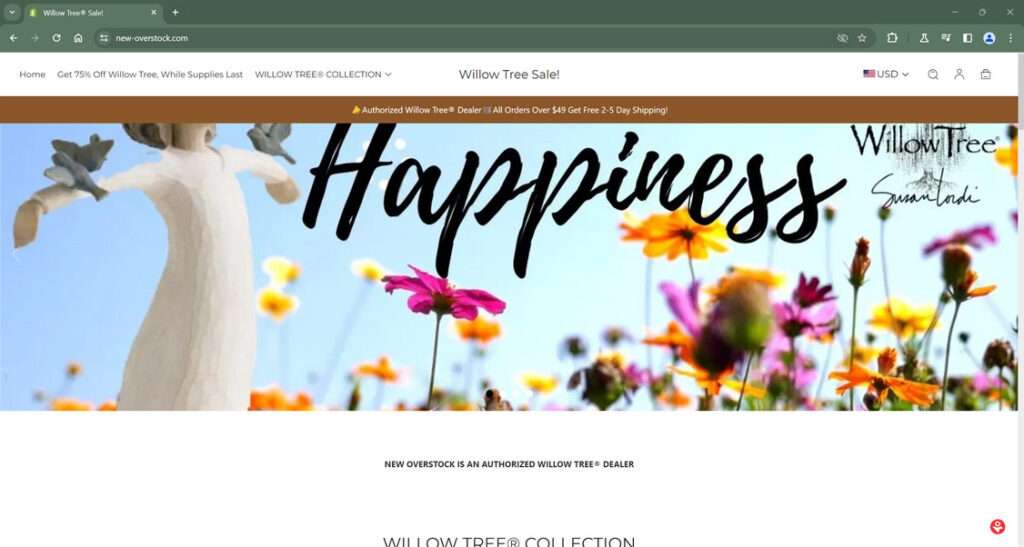
Overview of the Willow Tree Closeout Sale Scam
A dangerous scam has emerged involving fake websites that impersonate the official Willow Tree store. These fraudulent sites advertise huge closeout sales with up to 90% off all figurines, ornaments, nativity sets, and more. Various misleading slogans are used such as:
- “Going out of business”
- “Store closing sale”
- “Everything must go!”
- “Massive closeout event”
These websites are designed to lure in shoppers with promises of incredibly low prices on rare and expensive Willow Tree collectibles. However, customers who place orders at these scam websites wind up either:
- Receiving nothing at all – This is the most common outcome. Orders and payments simply vanish after being submitted.
- Getting cheap knockoffs – Low quality bootleg figurines made from inferior materials that in no way match the advertised products. These items often have sloppy paint jobs, fragile limbs, and inaccurate face sculpts. They tend to lack original Willow Tree branding and packaging.
- Receiving used or damaged goods – Some orders arrive with products that are very apparently not brand new. They may be pre-owned items acquired from liquidations or auctions. These figures often show paint chipping, scuffs, yellowing, and other signs of use inconsistent with a new, unused product.
- Getting completely wrong items – Victims sometimes receive products that are totally random and unrelated to what they ordered. This demonstrates the scam sites have no real order fulfillment occurring whatsoever.
On top of never receiving the actual collectibles ordered, victims also have their personal and financial data stolen during checkout on these phony websites. Full names, addresses, phone numbers, and credit card details are all collected by the scammers.
According to extensive research, these fraudulent shopping websites are part of an interconnected network of thousands of scam sites being run out of China. This massive criminal network manages an array of fake retail stores with the sole purpose of stealing victims’ money and information.
By recognizing these deceptive sales as outright scams, consumers can avoid being manipulated into handing over their credit card details and personal data. Below we will analyze exactly how the scam works from start to finish, and most importantly, how to prevent falling victim.
How the Willow Tree Closeout Sale Scam Works
This scam employs an organized methodology to mislead and take advantage of customers at every step:
Step 1: Building Elaborate Fake Sites
Sophisticated sham websites are constructed to pass as the real Willow Tree store:
- The logo, images, branding and product photos are stolen from the legitimate site.
- Similar domain names are created using misspellings or extra words.
- Fake promotions like “Up to 90% off figurines!” are posted.
- The Terms of Service and Privacy Policy are copied from other scam sites.
- A bogus phone number and address are listed. Customer service options are removed.
Step 2: Promoting the Fake Sales
The scam stores are heavily marketed through paid ads and social media posts:
- Facebook ads use enticing images of deeply discounted Willow Tree products. Headlines urge users to click through to the fraudulent site.
- Targeted posts in collectibles groups expose the sham deals to potential victims.
- Individual accounts are paid to promote the fake sales on Instagram, TikTok and Twitter using affiliate links.
- Search and shopping ads optimized for terms like “Willow Tree liquidation” also direct traffic to the impersonator sites.
Step 3: Swindling Shoppers into Buying
Highly manipulative tactics are used to convert visitors into making purchases:
- Prices like “Angel figurines $10!” create perceived exclusivity and urgency. In reality, the scammers will never fulfill these prices.
- Countdown timers, limited quantity alerts and other psychological ploys pressure hasty impulse buys.
- At checkout, users’ credit card and personal information is quietly collected and likely sold.
- Fake security seals are displayed to feign legitimacy, when in fact no real protections exist.
Step 4: Taking Money Without Fulfilling Orders
Once victims place orders, a few things may happen:
- Most often, no shipment goes out and the order disappears. This maximizes the scammers’ profits.
- In some cases, cheap imitation products are sent out to satisfy credit card chargeback requirements. But these knockoffs in no way match what was ordered.
- Rarely, an entirely random product is shipped instead of the order. This makes it appear something was fulfilled, however deceitfully.
- Either way, the scammers have still stolen users’ payment and personal data for identity theft purposes.
Step 5: Repeating the Scam Endlessly
Since the fake sites are disposable to the scammers, common tactics include:
- Quickly shutting down the site after enough payments come through, before customers can pursue refunds.
- Ditching merchant accounts once excessive chargebacks accrue, while keeping the scam site active.
- Reappearing under new domain names once blacklisted, to rerun the same con.
- Never providing any real customer service, only collecting more payments.
This demonstrates how the scam’s entire business model is structured around deceit, theft, and exploiting victims. Next, we will uncover how to detect their fraudulent sites.
8 Warning Signs of a Fake Willow Tree Website
While the impersonator sites try hard to mimic the real Willow Tree shopping experience, some key red flags can reveal their deception:
1. Lookalike Domain Names
Shady domains will try to imitate the real site using tricks like:
- Misspellings (willowtreefigurine.com)
- Slight variations (willowtreeco.com)
- Subdomains (ornaments.willowtree.com)
- Different domain extensions (.net instead of .com)
None of these lead to the legitimate website.
2. Unbelievable Discounts and Prices
Seeing entire collections for 90% off or $60 figurines for $5 is an obvious indicator of a scam. Real brands can’t offer such outlandish prices.
3. High Pressure Sales Tactics
Phrases like “selling out fast!” and countdown timers are intended to provoke hasty impulse purchases. Legitimate retailers don’t use these forced scarcity tricks.
4. Lack of Contact Information
There should be phone numbers, a real business address, live chat, and contact email. Scam sites will at most have an email.
5. Whois Data is Hidden
A Whois domain lookup reveals who registered the site. Scammers use proxy services to hide their identity with “private registration”.
6. Generic Privacy Policies and Terms
These legal pages are copied from other scam sites instead of being custom drafted. They may be completely irrelevant to a collectibles store.
7. No Social Media Presence
The real brand has active Instagram, Facebook, Twitter accounts and profiles. Fraud sites only exist as the fake store.
8. Grammatical and Spelling Errors
Sloppy writing indicates non-native English speaking scammers rather than a legitimate American business.
Multiple red flags indicate an extremely high chance the website is totally fraudulent. Exercise extreme caution if these warning signs are present. Next, we will cover what steps to take if you already fell victim to one of these closeout sale scams.
How to Identify Willow Tree Scams on Facebook
- Facebook ad promotes “going out of business” sale with 70%+ discounts.
- Video shows expensive, rare figurines on sale for improbably cheap prices.
- Ad account name seems vague, not the official “Willow Tree” page.
- Clicking the ad leads to a sketchy URL, not willowtree.com.
- Ad was only recently posted by a page created this month.
- Comment section may be disabled to hide negative feedback.
- Text uses false scarcity tactics like “Almost gone!”.
How to Catch Willow Tree Scams on Instagram
- Link in bio goes to suspicious domain instead of real willowtree.com site.
- Photo shows high-value figurines on sale for 90%+ off retail prices.
- Caption uses urgency words like “Selling fast!” to pressure buyers.
- Account was created recently this month and has few posts.
- No verification badge on account, unlike real Willow Tree Instagram.
- Commenting may be disabled to prevent negative exposure.
- No customer service info provided.
How to Identify Willow Tree Scams on TikTok
- Video advertises clearance discounts like “50% off all figures!”.
- Caption tells viewers to click shady link in bio to shop sale.
- Link goes to sketchy domain instead of official willowtree.com site.
- Fake scarcity tactics used like countdown timer.
- Account was recently created this month and has zero other posts.
- No verification badge on account unlike real Willow Tree TikTok.
- Comments may be turned off to hide feedback.
Apply extra scrutiny to unbelievable Willow Tree social media sales. Check for multiple red flags indicating a potential scam.
What to Do If You Are a Victim of the Willow Tree Scam
If you ordered from one of these fraudulent websites impersonating Willow Tree and never received your items, immediately take these actions:
Step 1: Contact Your Credit Card Company
Call your credit card provider to report the charges as fraudulent. Request an immediate chargeback to reverse the charges and get your money returned. Provide any emails or order documentation. Act quickly as chargeback rights expire.
Step 2: Monitor Your Accounts Closely
Carefully review credit card and bank account statements for any additional suspicious charges by the scammers. Also watch for new accounts opened fraudulently in your name. Enroll in credit monitoring to detect identity theft.
Step 3: Reset Online Account Passwords
If you used the same or similar password on the scam site, change it everywhere else immediately. Update passwords on shopping, social media and financial accounts. Use unique complex passwords for each account.
Step 4: Place Fraud Alerts on Your Credit
Contact Equifax, Experian and TransUnion to place fraud alerts on your credit reports. Doing this makes it harder for scammers to open new fraudulent accounts in your name. Renew the alerts every 90 days.
Step 5: Report the Fake Website
To protect other potential victims, report the scam website to the FTC at ReportFraud.ftc.gov. File complaints with the state attorney general and FBI IC3. Reporting the site to cybersafety groups can also help get the fraudulent domain blacklisted.
Step 6: Leave Online Reviews Warning Others
Post detailed reviews about being scammed on consumer sites like Trustpilot and SiteJabber. Use a clear title like “Willow Tree closeout sale scam”. This helps prevent the criminal site from victimizing others.
By taking swift action, you can contain the damage and prevent further identity theft or financial fraud. You should also explore legal options depending on the losses suffered.
How to Avoid Willow Tree Closeout Sale Scams
Here are crucial tips to avoid falling victim to these fraudulent collectibles shopping websites:
1. Only Purchase Directly From WillowTree.com
Go directly to willowtree.com for any purchases. Never click questionable links, popups or ads claiming to offer deals. Manually type in the URL every time to ensure you access the real site.
2. Research Before Buying From Unfamiliar Sites
Do a quick Google search for reviews of any website you haven’t shopped at before providing payment or personal information. Look for scam reports and complaints.
3. Beware Unbelievable Discounts
If a deal seems too good to be true, like 90% off all figurines, dismiss it as a scam. Real sales will never offer such outlandish prices.
4. Verify Contact Information and Customer Service
There should be a real phone number, physical address and multiple contact options – lack of this indicates a shady business.
5. Use Credit Cards For Purchases
Always pay by credit card when shopping on new sites. Credit cards have much stronger fraud and chargeback protections. Avoid using gift cards, CashApp, Zelle, cryptocurrency or direct bank transfers.
Following these tips will help you avoid falling into closeout sale scams impersonating trusted brands like Willow Tree.
Frequently Asked Questions about the Willow Tree Closeout Sale Scam
Shoppers need to stay vigilant against closeout sale scams impersonating brands like Willow Tree. Here are answers to the most common questions about these fraudulent sites.
What exactly is the Willow Tree clearance sale scam?
This scam involves fake ecommerce websites that impersonate the real Willow Tree website. They promote massive closeout sales with up to 90% off to lure customers into ordering. However, victims either get nothing, cheap knockoffs, or used items, while their personal and payment data is stolen.
How can I spot a fake Willow Tree website?
Watch for these red flags:
- Spoofed URLs trying to mimic the real Willow Tree site.
- Extreme discounts like 90% off all figurines site-wide.
- High pressure sales tactics and countdown timers.
- Lack of contact information beyond an email address.
- Grammar, spelling, or typos.
If multiple suspicious indicators are present, the site cannot be trusted.
What happens if I order from one of these scam websites?
Most likely your order will never arrive after payment is taken. Or you may receive:
- Cheap counterfeit products, not the real items ordered.
- Used, damaged or tampered merchandise.
- A random product that differs completely from your order.
Either way, your personal and financial data has been compromised.
What should I do if I fall for one of these scams?
Immediately contact your credit card issuer to dispute the charges and get reimbursement. Monitor your statements closely for further fraudulent charges. Place fraud alerts on your credit reports and change account passwords compromised by the scam site. Report the scam to help warn others.
How can I avoid Willow Tree clearance sale scams?
Only order directly from willowtree.com. Research unfamiliar sites before buying. Beware unbelievable discounts that seem too good to be true. Never submit payment info or data to questionable sites. Use credit cards for added protection.
Does Willow Tree offer real clearance sales?
Yes, genuine sales and promotions do occur on the official Willow Tree website and through authorized retailers. But real Willow Tree deals will never claim unrealistic discounts of 70-90% off site-wide or be advertised on scammy websites.
Is it safe to order from the real Willow Tree website?
Absolutely. Willowtree.com is completely legitimate and secure. The brand has been in business since 1979. Only fraudulent sites pretending to be Willow Tree pose any risk. Ensure you only order directly from the real Willow Tree site.
Apply smart online shopping practices to avoid being manipulated by fake discounts and deals. Only use reputable retailers that can be fully verified. Don’t let scammers steal your money or compromise your identity.
The Bottom Line
In summary, sophisticated scam websites impersonating Willow Tree in fake closeout sales prey on deal-seeking shoppers. By mimicking legitimate brands and using social engineering, they convince victims to willingly hand over money and sensitive data.
Outsmarting these online shopping pitfalls requires always thinking critically. Analyze site credibility signals carefully before providing payment or order information. Only make purchases through fully verified retailers. If scammed, promptly take action to dispute charges and prevent identity theft.
Stay alert to warning signs and trust your instincts when offers seem too good to be true. By following savvy online shopping practices, you can avoid closeout sale scams and truly get the lowest prices from brands you know and love. Don’t let tempting deals undermine your better judgment.

Join the discussion
0 commentsShare your experience or ask a question about this article.
Discussion
Start the conversation
Have a question or something useful to share? Add the first comment.