

It lands in your inbox like a fire alarm.
“Your account is being leaked,” the email warns, and then it adds a strange extra threat: “new news will be blocked.” A big button follows, usually something like Review Your Password, pushing you to act before you have time to think.
That is the point.
This “Your Account Is Being Leaked” email is a classic phishing scam dressed up as an urgent security alert. It is designed to trigger panic, get a quick click, and funnel you into a fake sign-in page where scammers can steal your login details and take over your email.
If you have seen this message, or if you clicked it, this guide walks you through what it is, how it works, how to spot it fast, and exactly what to do next.
Scam Overview
The “Your Account Is Being Leaked” email scam is part of a large family of phishing campaigns that impersonate security teams, email providers, and “support departments” to trick people into handing over account credentials.
It is not subtle. It does not need to be.
Scammers send these messages at scale, knowing that even if 1% of recipients panic and click, they win. The email itself is usually short, dramatic, and vague, because vagueness helps it apply to everyone.
What this scam email typically looks like
Most versions share the same structure:
- A generic greeting like “Hello”
- A threat statement: “Your account is being leaked”
- A consequence: your email will be blocked, restricted, or locked
- A call to action: “confirm your account ownership”
- A large button: Review Your Password (or “Verify Now,” “Secure Account,” “Prevent Block”)
- A fake sign-off like “Support Team”
- Odd placeholders, sometimes literally showing text like
{email} - A footer that looks official but is meaningless, sometimes with a random copyright year
The screenshot you shared fits that pattern closely: a generic greeting, a confusing warning (“new news will be blocked”), and a prominent button that tries to push you into a rushed decision.
Why the phrase “account is being leaked” is so effective
Most people understand “leaked” as “already exposed.”
It implies your password is out in public right now, and that strangers are actively reading your messages. Even if you are not sure what a data breach is, the word “leaked” makes the threat feel immediate and personal.
That emotional spike is what scammers want. When people feel urgency, they click first and verify later.
The “new news will be blocked” line is a tell
Legitimate security alerts are usually clear and specific.
They do not say odd things like “new news will be blocked.” That kind of phrasing shows up often in scam emails because:
- The template was machine translated poorly
- The sender used awkward wording to bypass spam filters
- The scammer is not a native English writer
- The message was stitched together from multiple templates
Real providers might warn about “incoming mail delivery issues,” “restricted sending,” or “account sign-in blocked,” but they will do it in language that makes sense and matches the brand’s tone.
Who this scam targets
This phishing template is broad. It targets:
- Gmail and Google Workspace users
- Outlook, Hotmail, and Microsoft 365 users
- Yahoo, AOL, and other consumer email services
- Business email accounts at custom domains
- University and school email accounts
- Anyone whose email address appears in data dumps, marketing lists, or scraped pages
The message does not need to know your provider. It just needs to get you to click a link that leads to a lookalike sign-in page.
What scammers are trying to steal
At first glance, it looks like they only want your password.
In practice, the goal is usually bigger. Depending on the campaign, scammers may try to capture:
- Your email address and password
- Your one-time passcode (2FA or MFA code)
- Your recovery email and phone details (if the fake form asks)
- Security questions and answers
- Payment details, if the scam pivots into a “verification fee”
- Access to your inbox content, which enables more fraud
Email is the master key to your online life. If someone controls your inbox, they can often reset passwords for your bank, shopping accounts, social media, payroll portals, and cloud services.
Why email account takeovers are so damaging
People sometimes think, “It is just email.”
But email is the hub of identity and access. When scammers get into your email, they can:
- Reset passwords for other accounts by clicking “Forgot password”
- Intercept password reset links before you see them
- Read invoices, receipts, and account statements
- Harvest personal data (addresses, phone numbers, IDs sent by email)
- Impersonate you with convincing “from your email” messages
- Send phishing emails to your contacts, coworkers, or customers
- Search for keywords like “bank,” “verification,” “crypto,” “invoice,” “wire,” “login,” “SSN,” or “passport”
- Set up forwarding rules so they keep receiving your messages even after you change a password
For business users, the risk escalates into invoice fraud and “business email compromise,” where scammers trick vendors or clients into paying new bank details.
How these emails bypass spam filters
Many people assume spam filters should catch this.
Filters do catch a lot, but scammers adapt constantly. Common tactics include:
- Sending from newly created domains that have not built a bad reputation yet
- Using compromised email accounts so the message comes from a “real” mailbox
- Using URL shorteners or redirect chains
- Embedding the link behind a button image
- Rotating wording and layout slightly to avoid pattern detection
- Including benign text blocks to make the email look less “spammy”
- Using spoofed display names that imitate your provider
Even when the email lands in Spam, scammers still succeed because some users check Spam folders for “important” messages, especially when the subject line sounds urgent.
The biggest red flags in this specific scam
Here are the most reliable warning signs you can use immediately:
- Generic greeting (“Hello” instead of your full name)
- Vague threat (no details about what leaked, when, or where)
- Pressure and urgency (you must act now to prevent blocking)
- Awkward grammar (“new news will be blocked”)
- A button that asks you to “review” or “confirm” your password
- Placeholder text like
{email}in the signature - No consistent branding (no real provider logos, legal address, or proper help links)
- A link that does not match the sender’s domain
- Requests for credentials through email links, which reputable providers generally avoid
Legitimate providers may notify you about suspicious sign-ins, but they typically push you to open the official app or type the official website address yourself, not click a random “confirm ownership” button.
Why scammers love “confirm your account ownership” wording
It sounds official, but it is also intentionally unclear.
Ownership confirmation could mean anything, and that flexibility lets the scammer route you to different fraud paths:
- A fake login page that steals credentials
- A “security check” that asks for phone number and codes
- A “restore access” flow that requests credit card details
- A fake “IT portal” for businesses that collects corporate credentials
The words are chosen to feel legitimate while staying broad enough to work on any recipient.
The psychological hook: panic first, logic second
This scam works because it exploits a very human moment.
You are busy. You see a warning. You imagine losing access to email, missing important messages, or being hacked. The easiest path is the button right there in the email.
That button is the trap.
Once you click, you stop thinking about whether the email is real and start thinking about fixing the “problem.” Scammers depend on that shift.
Where the link usually leads
The Review Your Password button typically routes to one of these:
- A fake sign-in page styled to resemble Microsoft, Google, or a generic webmail portal
- A cloned “security center” page with a form
- A page that detects your device and shows a mobile-optimized login screen
- A redirect chain that bounces through multiple domains to hide the final destination
Some campaigns also use “man-in-the-middle” phishing kits that try to capture your password and your 2FA code in real time. That allows the attacker to sign in immediately, even if you have 2FA enabled.
Why you cannot trust the sender name
Many of these emails use display-name tricks, for example:
- “Email Support Team”
- “Security Desk”
- “Mailbox Admin”
- “Microsoft 365”
- “Webmail Service”
The display name is easy to fake. What matters is the actual sending address and, even more importantly, where the link goes when you hover over it.
If the sending domain looks unrelated, misspelled, or random, treat it as hostile.
What happens after the scammer gets your login
If your credentials are captured, scammers often move quickly. They may:
- Log in from a new device and approve prompts using your captured code
- Change your password to lock you out
- Add a recovery email or phone number they control
- Create inbox rules that hide security alerts and forward mail to them
- Search your mailbox for financial accounts and password reset emails
- Use your account to send more phishing emails to your contacts
- Attempt to access other services using the same password
This is why speed matters if you clicked or entered any information.
How The Scam Works
This section breaks down the typical flow of the “Your Account Is Being Leaked” phishing operation, step by step. Real campaigns vary, but the mechanics are consistent.
Step 1: The attacker sends a high-volume “security alert” email
The first step is distribution.
Scammers send thousands or millions of emails using:
- Bulk email tools
- Botnets
- Compromised email accounts
- Purchased or leaked email lists
- Scraped addresses from websites and social platforms
The goal is simple: reach enough inboxes that a percentage of people click.
The message is intentionally short to reduce friction. Long explanations give you time to notice inconsistencies. Short threats push you toward the button.
Step 2: The email creates urgency and a false deadline
The scam uses fear-based consequences:
- Your email will be blocked
- Messages will stop arriving
- Your account will be suspended
- You must confirm ownership immediately
This urgency is not an accident. It is a decision shortcut.
When you feel rushed, you are more likely to skip verification steps like checking the sender address, hovering over the link, or opening your provider’s security settings separately.
Step 3: The button hides a malicious link
The big call-to-action button is usually an HTML element that points to a URL controlled by the scammer.
Sometimes the visible link text looks harmless. The actual destination is embedded behind the button.
Common tricks include:
- Using a URL that looks vaguely legitimate at first glance
- Adding familiar words like “secure,” “mail,” “login,” or “support”
- Using subdomains to confuse you, like
mail.security-check.example.com - Using extra-long URLs so the real domain is hard to spot
- Routing through redirects so scanners and users see only the first hop
If you hover over the button on desktop, you can often see the real destination in the status bar. On mobile, that is harder, which is why these scams perform well on phones.
Step 4: The victim lands on a convincing fake login page
The phishing page usually copies a real provider’s design.
It may show:
- A Microsoft-style sign-in form
- A Google-style login prompt
- A generic “Webmail” portal
- A fake “Account Verification” page with branding elements
The page often includes reassuring text like:
- “Confirm your identity”
- “Verify account ownership”
- “Update password to prevent suspension”
- “Security review required”
The design does not need to be perfect. It only needs to feel familiar enough that you type without thinking.
Step 5: Credentials are captured the moment you submit
When you type your email and password, the form sends that data to the scammer’s server.
At this stage, one of two things happens:
- You are redirected to a “success” page, sometimes even to the real provider afterward to reduce suspicion
- You are told the password is incorrect and asked to try again, which helps the attacker confirm the correct password if you mistyped the first time
This “try again” tactic is very common. It increases the chance the attacker gets accurate credentials.
Step 6: The scam escalates to MFA capture (if you have it)
If you have multi-factor authentication enabled, the phishing kit may prompt you for a code.
There are several ways scammers do this:
- A fake “Enter the code we sent you” page
- A prompt asking you to approve a push notification
- A fake “Authenticator verification” screen
- A follow-up message claiming “additional verification required”
In more advanced attacks, the scammer attempts to sign in to the real provider immediately using your stolen password, triggering a real 2FA request. Then the phishing page asks you for the code at the same moment.
If you enter it, they use it right away to complete the login.
This is why MFA is powerful but not invincible. It still blocks many attacks, but real-time phishing can sometimes bypass it.
Step 7: The attacker takes control and sets traps inside your mailbox
Once inside your email account, scammers try to make their access persistent.
Common mailbox takeover actions include:
- Creating forwarding rules to send a copy of incoming mail to an attacker-controlled address
- Creating filters or inbox rules that auto-archive or delete security alerts, password reset messages, and warnings
- Adding a new recovery email or phone number
- Changing account recovery questions
- Creating app passwords (for providers that support them)
- Authorizing third-party apps via OAuth to maintain access even if you change your password
- Adding delegates or “shared mailbox” permissions in business environments
Forwarding rules are especially dangerous because even after you regain access, the attacker may still receive sensitive emails unless you remove the rule.
Step 8: The attacker pivots to your other accounts
With your email compromised, attackers typically move next to higher-value targets.
They may attempt to reset passwords for:
- Banking and payment services
- Shopping accounts with saved cards
- Social media accounts used for ads or messaging
- Crypto exchanges and wallets
- Payroll and tax portals
- Cloud storage accounts with personal documents
- Business tools like invoicing platforms and CRM systems
They often search your inbox for clues about what you use. Receipts, newsletters, and login alerts reveal your account footprint.
Step 9: Monetization, fraud, and impersonation
Once an attacker has leverage, they monetize in several ways:
- Identity and account resale: selling working email logins on underground markets
- Invoice fraud: emailing a vendor or client with “updated payment details”
- Gift card scams: impersonating you to request gift cards from colleagues or family
- Account recovery lockout: changing recovery options to keep you out
- Extortion: threatening to leak emails or claim they have embarrassing content
- Spam and phishing distribution: using your account to target your contact list
If the victim is a business user, attackers may time their fraud around real invoices or ongoing projects. The messages look believable because they are sent from the real mailbox.
Step 10: Covering tracks to delay detection
Attackers want time.
To buy that time, they may:
- Delete “new login” alerts
- Hide messages in archived folders
- Create rules that move provider warnings out of the inbox
- Mark important emails as read
- Delete sent mail copies (depending on the provider)
- Use OAuth tokens so changing the password does not fully kick them out
This is why simply changing a password is sometimes not enough. You also need to check rules, sessions, and connected apps.
What To Do If You Have Fallen Victim to This Scam
If you only received the email and did nothing, you are likely fine. Delete it and move on.
If you clicked, entered information, or approved any prompts, take action. Use the steps below in order. They are written to be calm, practical, and fast.
- Stop interacting with the email immediatelyDo not click anything else in the message. Do not reply. Do not forward it to friends as an attachment.If you need to share it with IT or a provider, forward it using the provider’s official phishing reporting method, or copy the headers if you know how.
- If you entered your password, change it right now from a clean pathOpen a new browser tab and type your email provider’s official website yourself, or use the official app.Do not use the link in the email. Assume it is malicious.Create a strong, unique password that you have never used anywhere else.
- If you reused that password anywhere else, change those accounts tooPassword reuse is one of the biggest reasons email phishing becomes a full identity takeover.Prioritize accounts tied to money and identity first:
- Bank and card portals
- Payment apps
- Online shopping accounts
- Social media accounts
- Apple ID or Google account (if separate from your email)
- Work tools and admin dashboards
- Turn on multi-factor authentication (MFA) if it is not already enabledMFA adds a barrier that blocks many logins even when a password is stolen.If you can choose the method, prioritize:
- Authenticator app codes
- Security keys
- If you entered an MFA code on the phishing page, assume the attacker logged inIn that case, act as if your account is already compromised.Continue with the steps below, especially session sign-out and rule checks.
- Sign out of all devices and revoke active sessionsMost email providers let you view active sessions and “sign out everywhere.”Do that. It forces attackers off many logged-in sessions.If your provider shows a list of devices, remove anything you do not recognize.
- Check your mailbox rules, filters, and forwarding settingsThis is one of the most important steps, and it is often skipped.Look for:
- Forwarding to an unknown address
- Auto-delete rules
- Rules that move security alerts into Archive, Trash, or RSS folders
- Filters that mark messages as read automatically
- Check account recovery options and security settingsReview and update:
- Recovery email addresses
- Recovery phone numbers
- Trusted devices
- Backup codes
- App passwords (if supported)
- Review connected apps and third-party accessMany providers allow third-party apps to access mail, contacts, and calendars.Attackers sometimes authorize an app so they keep access even after you change your password.Revoke any apps, extensions, or integrations you do not trust or do not remember approving.
- Look for signs of account misuseCheck your:
- Sent folder
- Deleted items
- Spam folder
- Outbox or drafts
- “verify”
- “password”
- “wire”
- “gift card”
- “invoice”
- “urgent”
- Warn your contacts if your account sent phishing messagesKeep it simple and direct. Tell them:
- Your email was compromised
- They should ignore recent messages with links or attachments
- They should not share codes or login details
- Run a security scan if you downloaded anythingSome phishing emails include attachments or prompt you to install a “security tool.”If you downloaded or installed anything, run a reputable antivirus or endpoint scan, and remove suspicious browser extensions.If this is a work device, contact IT before taking major steps.
- If you provided payment information, contact your bank or card issuerSome phishing flows pivot into a fake “verification” payment screen.If you entered card details:
- Call the number on the back of your card
- Explain it was entered on a phishing site
- Ask about blocking charges and issuing a replacement card
- Review recent transactions carefully
- Document what happenedWrite down:
- The date and time
- The sender address
- Any links you clicked (if you can view them safely)
- What information you entered
- Report the scamReporting helps platforms improve detection and can protect others.Useful reporting paths include:
- Your email provider’s built-in “Report phishing” option
- Your workplace IT or security team (for business accounts)
- Law enforcement or national reporting portals (where applicable)
- Take one extra step if this is a business accountIf this involved a work mailbox, treat it as a security incident.Ask IT to check:
- Mailbox forwarding at the admin level
- OAuth consent grants
- Sign-in logs and suspicious IPs
- Possible lateral movement to other accounts
Is Your Device Infected? Run a Free Malware Scan
Slow performance, constant pop-ups, or strange behavior? These are classic signs of a malware infection. The fastest way to find out is to scan your device with Malwarebytes Free — one of the most trusted malware removal tools available.
The free version detects and removes the most common threats, including:
- Adware — the cause of those annoying pop-ups
- Browser hijackers — unwanted redirects and changed homepages
- Trojans and spyware — hidden programs stealing your data
- Potentially unwanted programs (PUPs) — software you never asked for
👉 Select your device below — Windows, Mac, or Android — then follow the simple steps to download Malwarebytes, scan your system, and remove any threats it finds. The scan usually takes 5 to 20 minutes.
Run a Malware Scan with Malwarebytes for Windows
Malwarebytes is one of the most popular and trusted anti-malware tools for Windows — and it’s completely free for removing infections. It catches threats that many antivirus programs miss, including adware, browser hijackers, and trojans. Follow the steps below to scan and clean your PC in just a few minutes.
Download Malwarebytes
Click the button below to download the latest version of Malwarebytes for Windows from the official source. The free version is all you need — it will scan your computer and remove adware, browser hijackers, and other malicious software at no cost.
Download MalwarebytesOfficial installer for Windows 11 and 10. Your download starts right away.Want real-time protection? See Malwarebytes Premium Malwarebytes Free for WindowsScans and removes malware at no cost
-
Install Malwarebytes
When the download finishes, open your Downloads folder and double-click the MBSetup file. If Windows shows a User Account Control pop-up, click “Yes” to allow the installation.
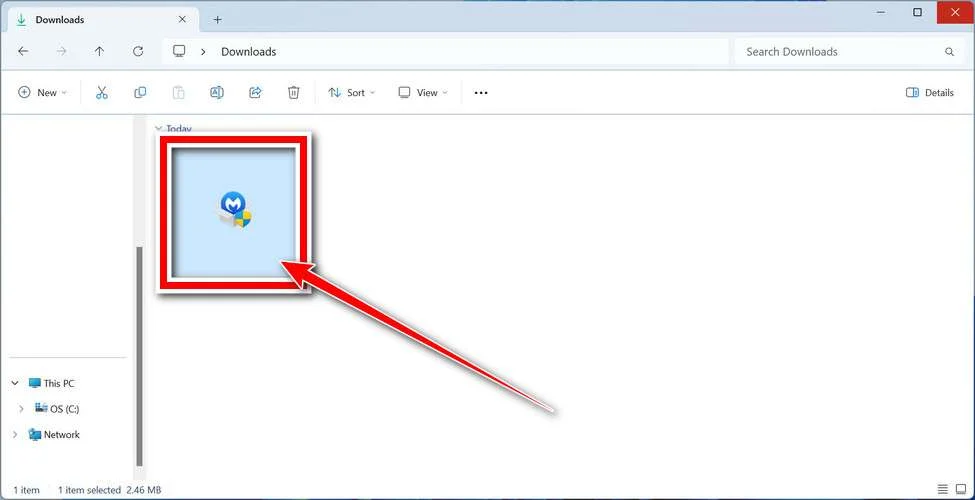
Follow the On-Screen Prompts to Install Malwarebytes
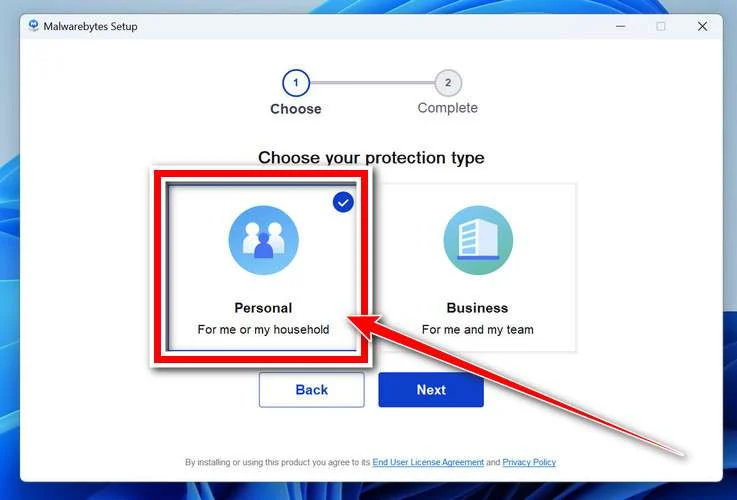
The setup wizard will walk you through a few quick screens:
-
Choose where you’re installing the program — “Personal Computer” or “Work Computer” — then click Next.
-
Malwarebytes will now install on your device. This usually takes under a minute.

-
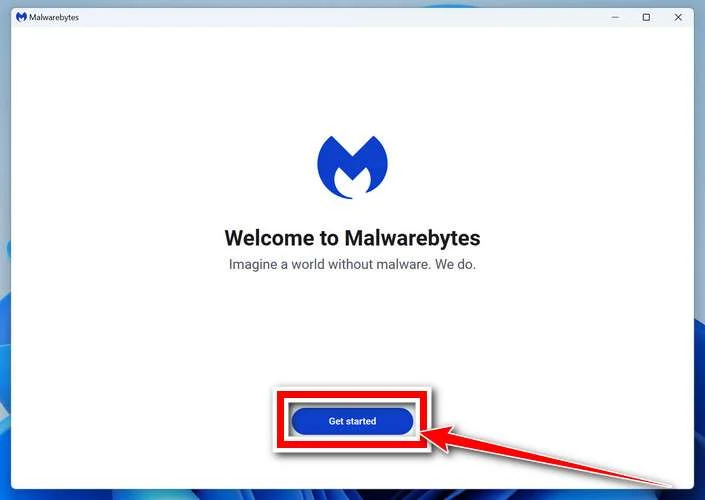
When installation is complete, the “Welcome to Malwarebytes” screen will open automatically.
-
On the final screen, click Open Malwarebytes to launch the program.

-
Enable “Scan for Rootkits”
Before scanning, turn on rootkit detection so Malwarebytes can find even the most hidden threats. Click the Settings gear icon on the left side of the screen.
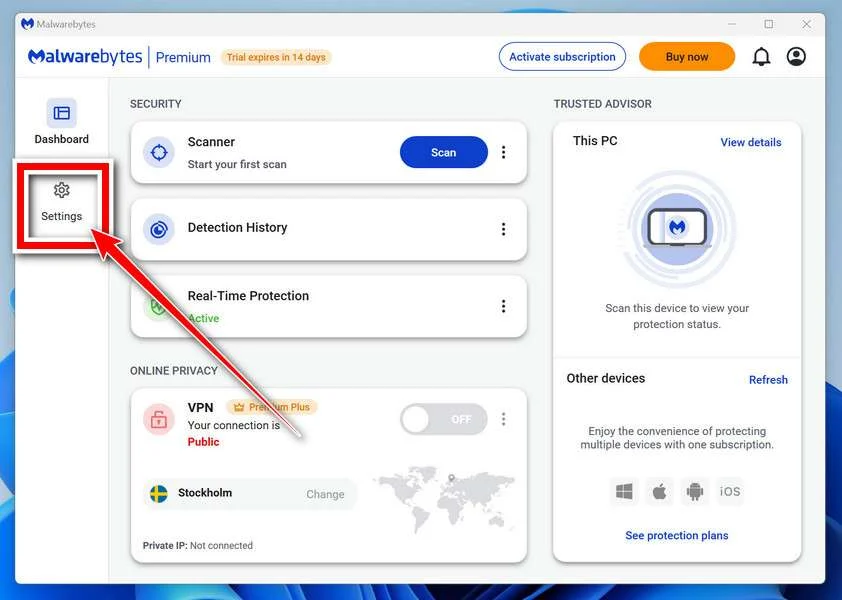
In the settings menu, find “Scan for rootkits” and click the toggle so it turns blue.

Done? Click “Dashboard” in the left pane to return to the main screen.
Start the Scan
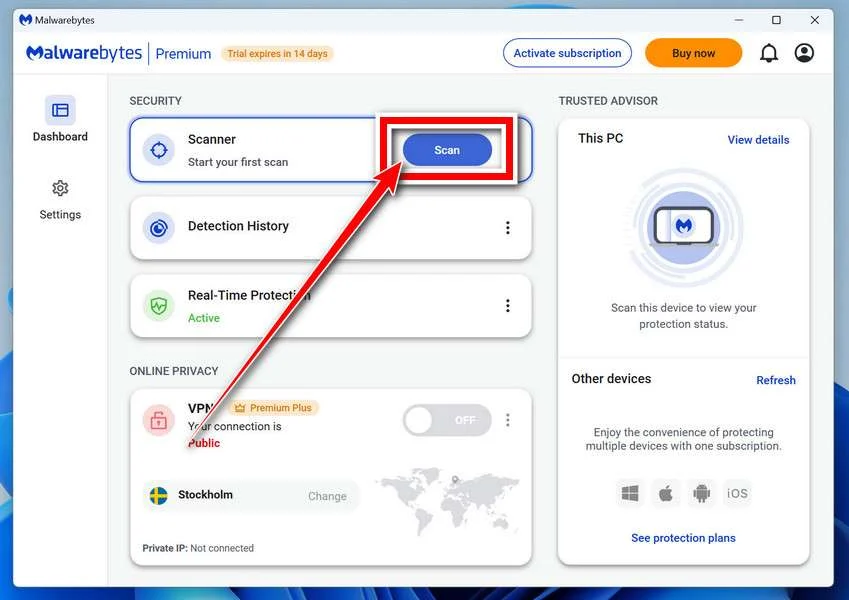
Click the blue Scan button. Malwarebytes will automatically update its virus database and start checking your computer for malware.
-
Wait for the Scan to Finish
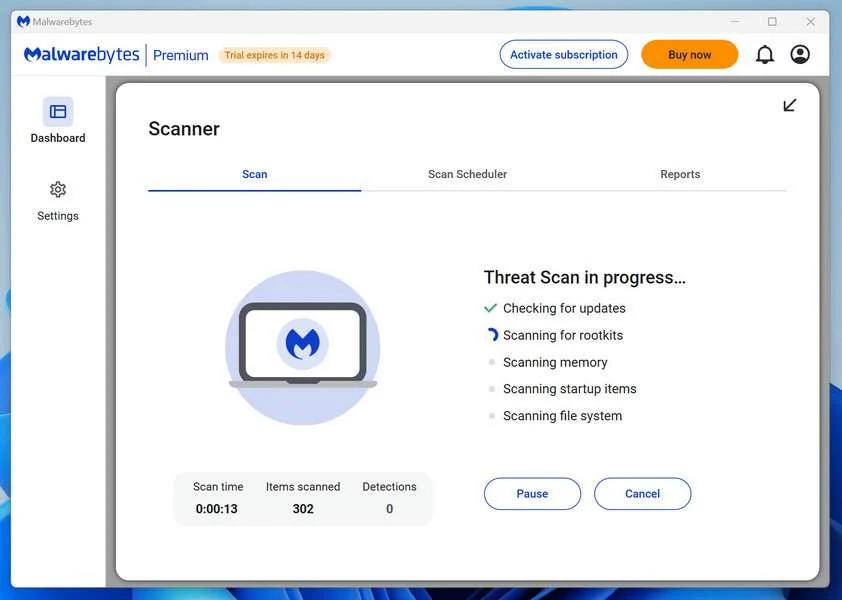
The scan checks your entire system for browser hijackers and other malicious programs, so it can take 5 to 20 minutes depending on your computer. Feel free to do something else — just check back occasionally to see the progress.
-
Quarantine the Detected Threats
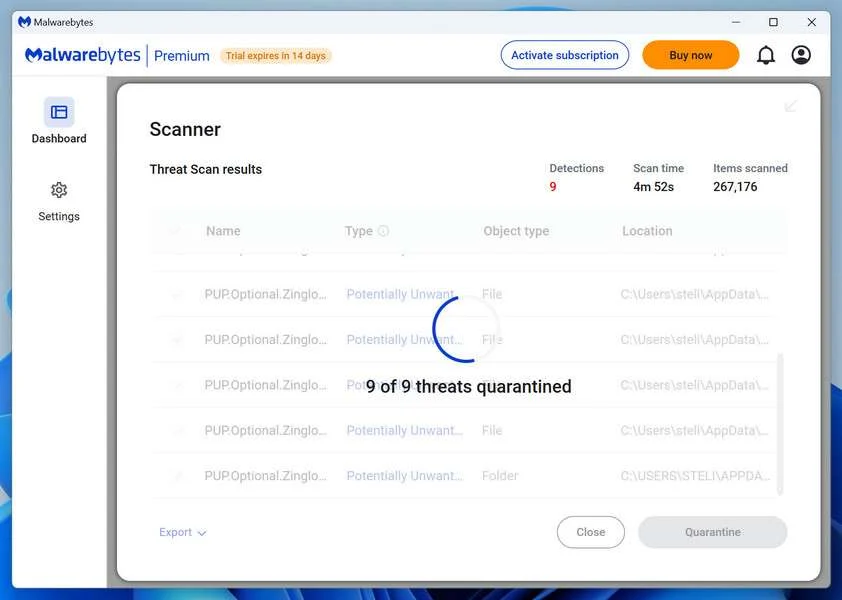
When the scan is done, you’ll see a list of everything Malwarebytes found — malware, adware, and potentially unwanted programs. Click the “Quarantine” button to remove all of them at once.
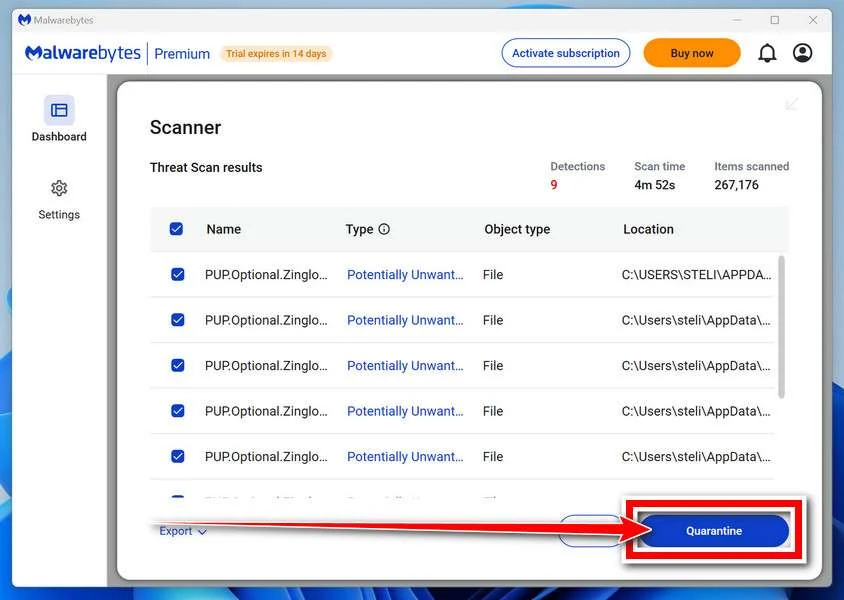
Malwarebytes will now remove the malicious files and registry entries and move them safely into quarantine.
-
Restart Your Computer
Some threats can only be fully removed after a reboot. If Malwarebytes asks you to restart, click Yes. Once you’re logged back in, Malwarebytes has finished removing the threats it found.
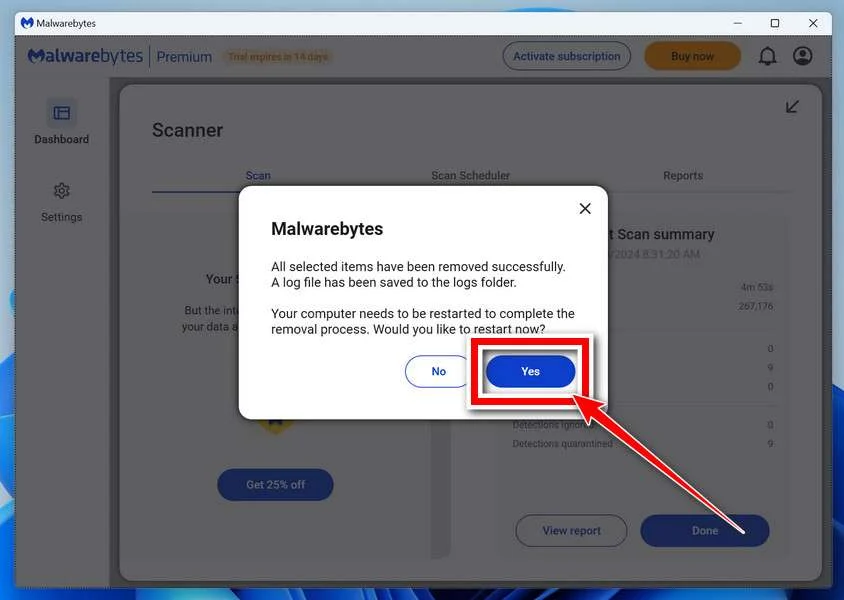
That’s it — your Windows PC is now clean of trojans, adware, and other malware, and should be back to running smoothly.
If you are still having problems with your computer after completing these instructions, then please follow one of the steps:
- Run a computer scan with ESET Online Scanner
- Ask for help in our Windows Malware Removal Help & Support forum.
Run a Malware Scan with Malwarebytes for Mac
Malwarebytes for Mac is a free on-demand scanner that removes the malware other security software tends to miss — adware, browser hijackers, and unwanted programs included. Cleaning an infected Mac with Malwarebytes has always been completely free, and it’s our go-to recommendation. Follow the steps below to scan and clean your Mac in just a few minutes.
-
Download Malwarebytes for Mac
Click the button below to download the latest version of Malwarebytes for Mac.
Download MalwarebytesOfficial installer for macOS. Your download starts right away.Want real-time protection? See Malwarebytes PremiumMalwarebytes Free for MacScans and removes malware at no cost -
Open the Malwarebytes setup file
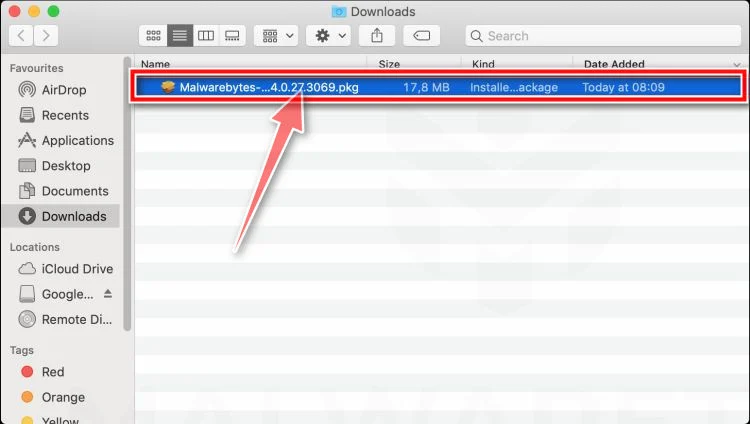
When the download finishes, open your Downloads folder and double-click the setup file to begin the installation.
-
Follow the On-Screen Prompts to Install Malwarebytes
The Malwarebytes for Mac Installer will guide you through a few quick screens. Click “Continue” and keep following the prompts until the installation completes.
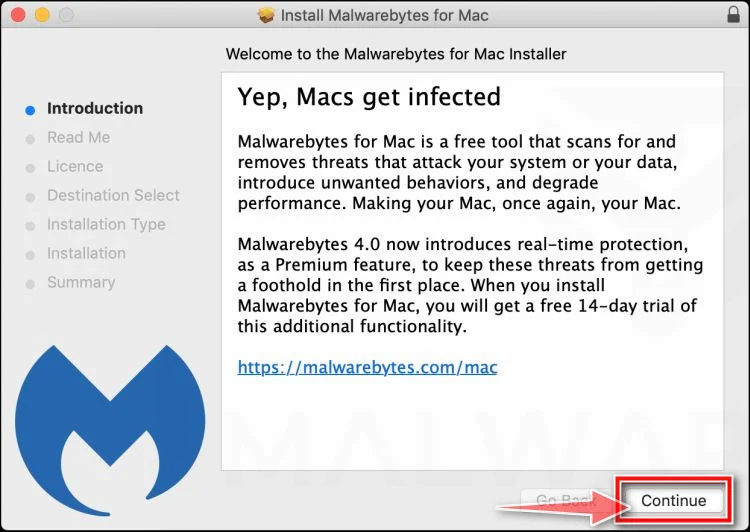
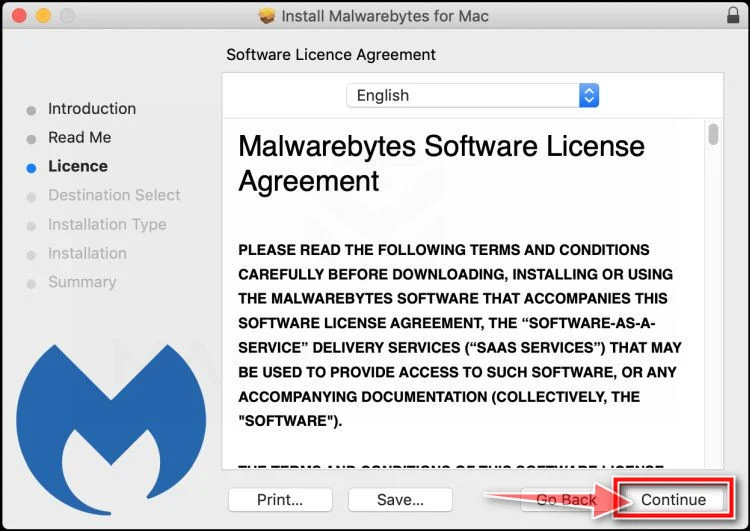
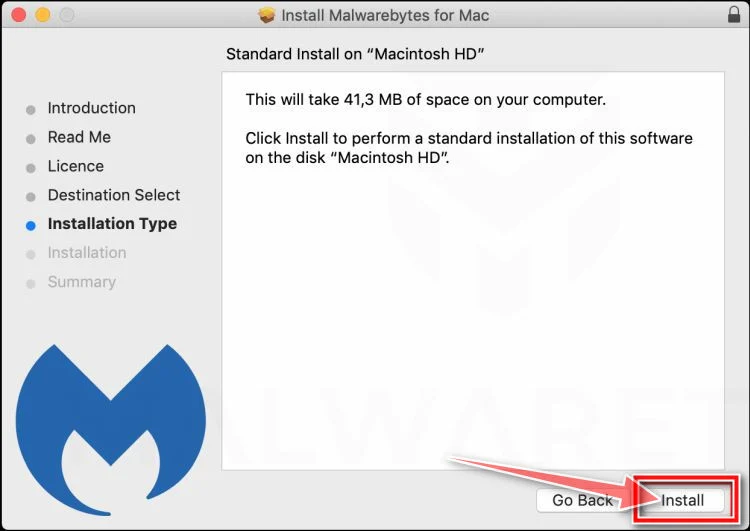
When the installation is complete, Malwarebytes opens to the Welcome to Malwarebytes screen. Click “Get started“.
-
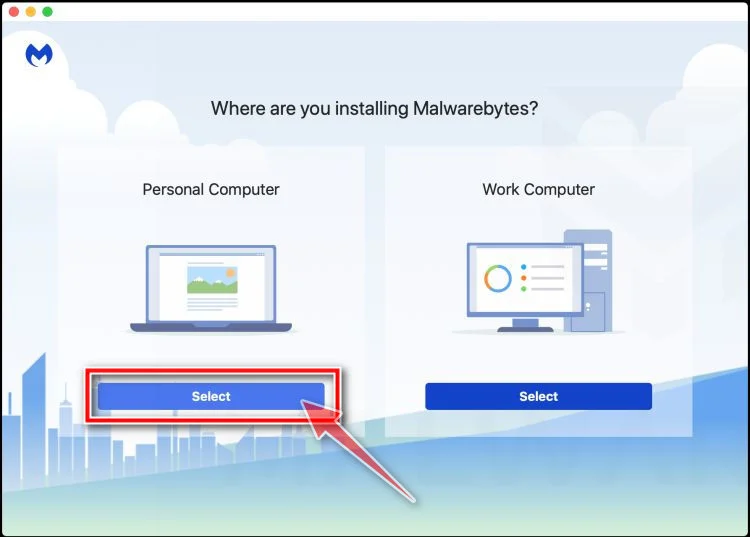
Select “Personal Computer” or “Work Computer”
Malwarebytes will ask what type of computer you’re installing it on. Click either Personal Computer or Work Computer, whichever applies.
-
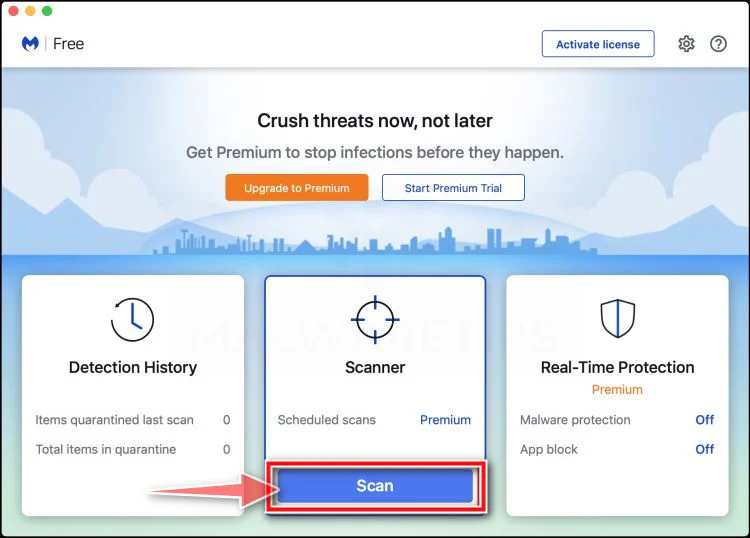
Start the Scan
Click the “Scan” button. Malwarebytes will automatically update its detection database and begin checking your Mac for malware.
-
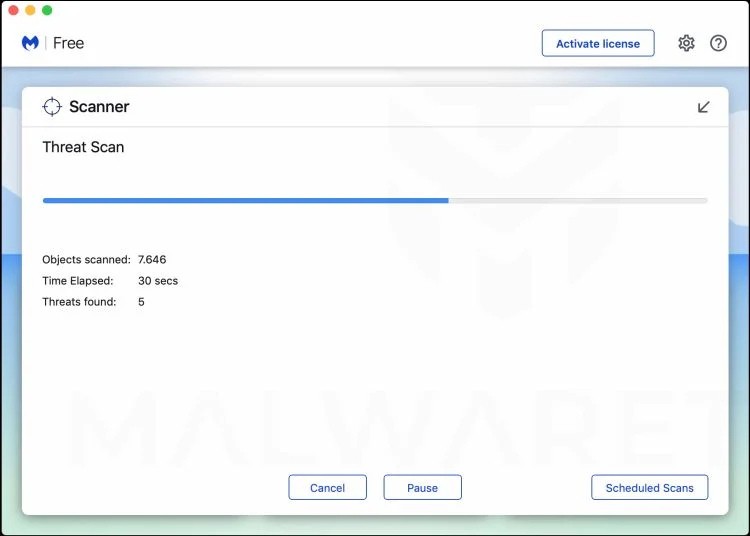
Wait for the Scan to Finish
Malwarebytes will scan your Mac for adware, browser hijackers, and other malicious programs. This can take a few minutes, so feel free to do something else — just check back occasionally to see the progress.
-
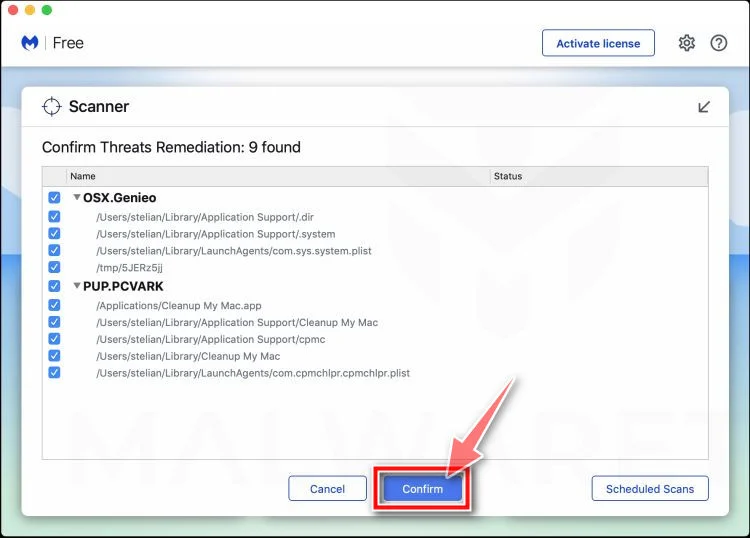
Quarantine the Detected Threats
When the scan is done, you’ll see a list of everything Malwarebytes found. Click the “Quarantine” button to remove all the threats at once.
-
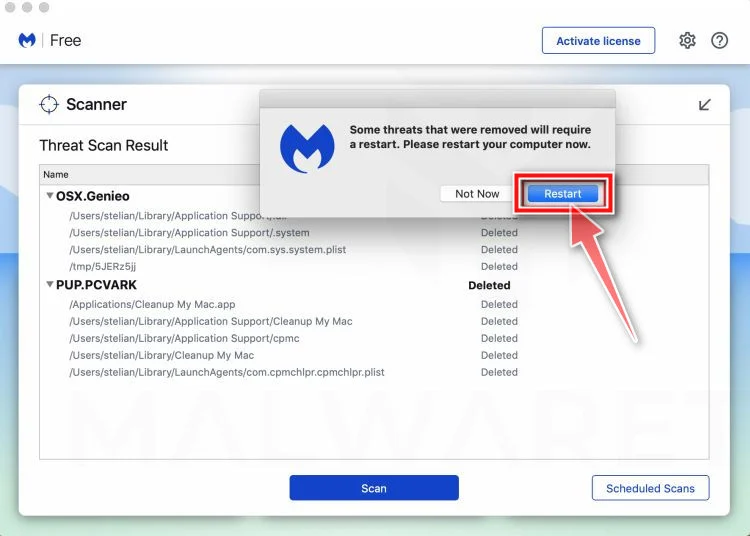
Restart Your Mac
Malwarebytes will now remove all the malicious files it found. Some threats can only be fully removed after a reboot — if Malwarebytes asks you to restart, allow it. Once you’re logged back in, your Mac is clean.
That’s it — your Mac is now free of adware, rogue browser extensions, and other potentially harmful software.
If you are still experiencing problems while trying to remove a malicious program from your computer, please ask for help in our Mac Malware Removal Help & Support forum.
Run a Malware Scan with Malwarebytes for Android
Malwarebytes for Android automatically detects and removes dangerous threats like malware and ransomware so you don’t have to worry about your most-used device being compromised. Aggressive detection of adware and potentially unwanted programs keeps your Android phone or tablet running smooth.
-
Download Malwarebytes for Android.
You can download Malwarebytes for Android by clicking the link below.
Get Malwarebytes for AndroidOpens Google Play in a new tab.Want real-time protection? See Malwarebytes Premium for AndroidMalwarebytes for AndroidScans your phone and removes malware at no cost -
Install Malwarebytes for Android on your phone.
In the Google Play Store, tap “Install” to install Malwarebytes for Android on your device.

When the installation process has finished, tap “Open” to begin using Malwarebytes for Android. You can also open Malwarebytes by tapping on its icon in your phone menu or home screen.

-
Follow the on-screen prompts to complete the setup process
When Malwarebytes will open, you will see the Malwarebytes Setup Wizard which will guide you through a series of permissions and other setup options.
This is the first of two screens that explain the difference between the Premium and Free versions. Swipe this screen to continue.
Tap on “Got it” to proceed to the next step.
Malwarebytes for Android will now ask for a set of permissions that are required to scan your device and protect it from malware. Tap on “Give permission” to continue.
Tap on “Allow” to permit Malwarebytes to access the files on your phone.
-
Update database and run a scan with Malwarebytes for Android
You will now be prompted to update the Malwarebytes database and run a full system scan.

Click on “Update database” to update the Malwarebytes for Android definitions to the latest version, then click on “Run full scan” to perform a system scan.

-
Wait for the Malwarebytes scan to complete.
Malwarebytes will now start scanning your phone for adware and other malicious apps. This process can take a few minutes, so we suggest you do something else and periodically check on the status of the scan to see when it is finished.

-
Click on “Remove Selected”.
When the scan has been completed, you will be presented with a screen showing the malware infections that Malwarebytes for Android has detected. To remove the malicious apps that Malwarebytes has found, tap on the “Remove Selected” button.

-
Restart your phone.
Malwarebytes for Android will now remove all the malicious apps that it has found. To complete the malware removal process, Malwarebytes may ask you to restart your device.
That’s it — your Android phone is now clean — no more malicious apps, adware, or browser redirects.
If you are still having problems with your phone after completing these instructions, then please follow one of the steps:
- Restore your phone to factory settings by going to Settings > General management > Reset > Factory data reset.
- Ask for help in our Mobile Malware Removal Help & Support forum.
Stay Protected: Block Ads and Malicious Sites
Now that your device is clean, keep it that way. Most infections start with a malicious ad or a fake download button — so blocking them at the source is your best defense.
We recommend AdGuard, which blocks malicious ads, phishing pages, and dangerous redirects before they can reach you.
👉 Download AdGuard and browse safely
The Bottom Line
The “Your Account Is Being Leaked” email is not a real security alert. It is a phishing scam built to scare you into clicking a button and handing over your login details.
The best defense is simple: do not use links in unexpected security emails. Instead, open your provider’s website or app directly, check your account security page, and change your password only through official settings.
If you clicked or entered anything, act quickly but calmly. Change your password from a clean path, enable MFA, sign out of all sessions, and check forwarding rules and connected apps. Those steps shut down the most common ways attackers keep access and pivot into more serious fraud.

Join the discussion
0 commentsShare your experience or ask a question about this article.
Discussion
Start the conversation
Have a question or something useful to share? Add the first comment.