AVLab.pl Analysis of system protection against active online malware – July 2025

Status
Not open for further replies.
Disclaimer
  1. This test shows how an antivirus behaves with certain threats, in a specific environment and under certain conditions.
    We encourage you to compare these results with others and take informed decisions on what security products to use.
    Before buying an antivirus you should consider factors such as price, ease of use, compatibility, and support. Installing a free trial version allows an antivirus to be tested in everyday use before purchase.

Did Russia finally said "fck it might as well do what US accused us of"? I mean wtf GB of data? What is this an AV or a BitTorrent client?
Kaspersky has ALWAYS been a large data collector. All the Kaspersky protected endpoints comprised a "Kaspersky Botnet" that even uploaded files to Kaspersky. All that data collection enables Kaspersky to do the data analysis and arrive at mitigations from signatures to removal scripts to behavioral algorithms. It makes sense.

It is part of the reason that Kaspersky was able to detect and mitigate stuff early, but at the same time this type of data and file collection represents security concerns which are legitimate.
 
Last edited by a moderator:
I don't see Fsecure, Avira, AVG, Bitdefender and McAfee.
AVG = Avast. As for Avira and Bitdefender, they are signature based, I think this test was focused at the behavioral detection.
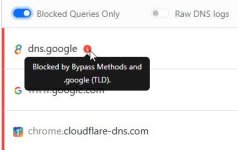
Here, malware queries known DNS providers and lesser-known IP servers in order to use C&C
For the record, NextDNS blocks 3rd party DNS requests as per VPN policy, yet another example, how beneficial DNS protection can be.

capture_08232025_184513.jpg
 
  • Like
Reactions: simmerskool
Kaspersky has ALWAYS been a large data collector. All the Kaspersky protected endpoints comprised a "Kaspersky Botnet" that even uploaded files to Kaspersky. All that data collection enables Kaspersky to do the data analysis and arrive at mitigations from signatures to removal scripts to behavioral algorithms. It makes sense.

It is part of the reason that Kaspersky was able to detect and mitigate stuff early, but at the same time this type of data and file collection represents security concerns which are legitimate.
I know it first hand, I was working on a custom ransomware sample (I am against creating malware for testing AVs but it could be done on some occasions).

The file used boost framework to iterate through files (which could facilitate hyper-fast iteration), some cryptographic apis and so on.

Function names were something like int raNoteWriter and so on.

Kaspersky obtained the file and next day (even though it wasn't even finished) was detected under some generic ransomware name.
 
I know it first hand, I was working on a custom ransomware sample (I am against creating malware for testing AVs but it could be done on some occasions).

The file used boost framework to iterate through files (which could facilitate hyper-fast iteration), some cryptographic apis and so on.

Function names were something like int raNoteWriter and so on.

Kaspersky obtained the file and next day (even though it wasn't even finished) was detected under some generic ransomware name.
I expect K might face hard times with gradual reduction of the use-base (collapsing pool of data); a couple of years later, K could not be the one we used to.
 
  • +Reputation
Reactions: Divine_Barakah
I expect K might face hard times with gradual reduction of the use-base (collapsing pool of data); a couple of years later, K could not be the one we used to.
If they have the revenue and strong position (which they do) they can subscribe to threat intelligence or sign a 2-way partnership deals for threat intelligence exchange. But an AV strength and Kaspersky strength is not about how much they will block when it’s already known, it is in how much of the unknown they can block and how quickly. In this relation, Kaspersky has always done very very well.
 
In this relation, Kaspersky has always done very very well
Not according to the latest comparative test by @Shadowra
The US ban started to leave its marks in this test, and more scars will evolve with losing the pool of free users.
McAfee and to lesser extent Norton are going to step forward instead.
 
Not according to the latest comparative test by @Shadowra
The US ban started to leave its marks in this test, and more scars will evolve with losing the pool of free users.
McAfee and to lesser extent Norton are going to step forward instead.
To a bigger extent Norton cuz you are talking about a behemoth with over 4000 employees, various brands in various sectors (including a digital wallet) and 5 billion USD projected revenue for this year. Norton has the know-how, the talents, the money and everything needed to develop high-quality protection.

If anyone is telling you that Norton is rubbish, ineffective and so on, these people don’t know what they are talking about.

McAfee is second after Norton, committed to rapid innovation, generous investments, operating a large (one of the largest in fact) cyber security networks. McAfee knows a thing or two about malware.

But that doesn’t mean others are not good, Kaspersky has its strength in its IDS and it’s not leaving the leading positions anytime soon, no matter the issues it’s facing.

Kaspersky has generous revenues as well (1.4 bn last year if I’m not wrong) and 1700 patents behind their back.
They will step back on their feet.

As to the test, it depends on configuration.
 
McAfee is second after Norton
I mentioned McAfee first because its reshaping did not have time to make the full effect on sales; Norton already reshaped for a while (by avasting), and the expected growth "rate", not the net growth, is expected to be less than McAfee; after a while, both will stabilize.
They will step back on their feet
Indeed, but might not keep the first rank, may be the second or the third.
 
I mentioned McAfee first because its reshaping did not have time to make the full effect on sales; Norton already reshaped for a while (by avasting), and the expected growth "rate", not the net growth, is expected to be less than McAfee; after a while, both will stabilize.

Indeed, but might not keep the first rank, may be the second or the third.
Norton is also many brands, McAfee operates purely behind one brand (to an extent replicating many of the Norton offerings). McAfee is also in the sectors of security/identity protection only, whilst Norton brands like reputation defender, recent digital wallets and so on are a bit all over the place.
So as a core security provider, McAfee can be considered larger than Gen Digital.

Kaspersky will always be first rank. It’s been for many years and will always be.
 
Norton was no. 1 choice until the new century.
It was mainly in the US and it still is, even in the small local shops, in addition to the detergents, bread, pizza, bubble gum and so on, Norton can also be purchased. They've always had loads of OEM partnerships and partnerships large telcos/ISPs and so on and so on. McAfee, Norton and Webroot (which later on dropped) have always been a very popular choice there.
 
It was mainly in the US and it still is, even in the small local shops, in addition to the detergents, bread, pizza, bubble gum and so on, Norton can also be purchased. They've always had loads of OEM partnerships and partnerships large telcos/ISPs and so on and so on. McAfee, Norton and Webroot (which later on dropped) have always been a very popular choice there.
Not only in USA; in Egypt Norton was no. 1 and McAfee no. 2.
Starting from 2000, Kaspersky began to gain popularity; I tried it, found to have more negative impact on PC performance, returned back to Norton.
 
Not according to the latest comparative test by @Shadowra
The US ban started to leave its marks in this test, and more scars will evolve with losing the pool of free users.
McAfee and to lesser extent Norton are going to step forward instead.

Sure, it failed this test, but that doesn't mean Kaspersky is bad. It's still a great product ;)
 
To a bigger extent Norton cuz you are talking about a behemoth with over 4000 employees, various brands in various sectors (including a digital wallet) and 5 billion USD projected revenue for this year. Norton has the know-how, the talents, the money and everything needed to develop high-quality protection.

If anyone is telling you that Norton is rubbish, ineffective and so on, these people don’t know what they are talking about.

McAfee is second after Norton, committed to rapid innovation, generous investments, operating a large (one of the largest in fact) cyber security networks. McAfee knows a thing or two about malware.
That doesn't mean anything. Large corporations often burn money. With such resources, Norton should have been eating up the competition long ago, but it hasn't been doing so for years. It was almost always weaker than Kaspersky, ESET, and Bitdefender. They, on the other hand, are great at marketing and building a legend. I have the impression you're a big fan of large US corporations. That's why you're so fascinated by them. I don't know where you worked, but a smaller company is usually more efficient, and in many ways more innovative, than a large corporation. This stems from the fact that a smaller company is easier to manage and doesn't burn money. Large corporations usually only win on marketing, because they can afford it.

As an example, in 1989, Toyota created the Lexus brand and introduced the LS model. Out of thin air. Mercedes-Benz had to scrap the entire S-Class project because if they had introduced it to the market, it would have been obsolete. They practically went back to the drawing board and delayed introducing a new model until 1991. Toyota, meanwhile, created a luxury brand out of nothing, giving Mercedes the finger. Of course, Mercedes, and especially German brands, have always been good at advertising, so people bought it.

The same thing happened with Eset, which entered the market practically out of nowhere with an innovative solution for its age and won the market mainly through word-of-mouth marketing.
The same thing happened with Bitdefender, which, almost from the very beginning (after they changed their name to Bitdefender), was the only company that competed with Kaspersky on equal terms in all tests. And it also built a brand very quickly, but not through marketing or forcing itself on computer buyers, as Norton or McAfee have been doing for decades.

Finally, many corporations boast about resources they don't have, etc., because they have the money for all that marketing. And smaller companies usually release better solutions because there's no room for wasting money there. And another thing that's often forgotten. Large corporations also often buy patents or acquire smaller companies primarily to own them, use them for marketing purposes, and above all, to keep the competition out. And it often happens that a patent never even sees the light of day. Often, that doesn't always mean it always does, as some patents go viral.

To conclude: Just because a company has know-how, patents, a huge team, etc., doesn't mean it has a great product or will have one. On paper and in advertising flyers, each one looks like the best in the world. In practice, it's usually different. I'm not diminishing or claiming that Norton or McAfee are bad solutions. They are good products. But they are better than them and will continue to be better than them, because they have always been better than them for years.
They were certainly better at marketing and are still among the champions in this category.

Norton was no. 1 choice until the new century.
I agree. I can't remember the last time I saw Norton on anyone's personal or work computer. McAfee is also more of the stuff from the stories. In my country, Kaspersky, Eset, Avast, and Bitdefender ruled for years. Currently, Kaspersky is being forgotten due to the war with Ukraine and the US ban, but they haven't massively switched to Norton or McAfee. No.
Even in corporate and other companies, I don't see Norton or McAfee on computers. But I see Sentinel One more and more often. However, Eset or Bitdefender very, very often.
 
agree. I can't remember the last time I saw Norton on anyone's personal or work computer. McAfee is also more of the stuff from the stories. In my country, Kaspersky, Eset, Avast, and Bitdefender ruled for years. Currently, Kaspersky is being forgotten due to the war with Ukraine and the US ban, but they haven't massively switched to Norton or McAfee. No.
Are these some sort of fairytales? Where do you think the combined revenue of 7 BN comes from? From the sky? Also, Kaspersky is far from being forgotten, Russia by itself is massive and so are other Russia-supporting countries that have no problem with Kaspersky. All together these 3 generate 10 billion revenue. Not sure how this is “stuff from stories”.
 
Currently, Kaspersky is being forgotten due to the war with Ukraine and the US ban, but they haven't massively switched to Norton or McAfee. No.
Eugene is a Russian billionaire oligarch. If he wanted to, he could move the entire company outside of Russia. However, he's never going to do that because his primary recruitment pool for personnel is ex-KGB and FSB personnel, which makes the Kaspersky companies problematic.

Norton and McAfee rely heavily upon Windows PC OEM agreements, at least for the consumer sector. Both are well represented out there in userland with the one offering the OEM the best deal for derived profit being the most popular.

Norton/Symantec is a still a thing on enterprise and government systems.

AV popularity and market penetration are driven largely by world region "proclivities" and political ideologies. For example, it comes as no surprise that one of the most popular AV in Deutschland is Avira.

The reasons for antivirus popularity by country or global region are complex. Many times cost is the primary determinate. Then after it is political beliefs and other stuff that consumers use as criteria to pick-and-choose the products.

The thing about Norton is that if it does not have good market traction in one region, it is compensated for by the market share of another one of GenDigital's products - such as Avast.
 
The thing about Norton is that if it does not have good market traction in one region, it is compensated for by the market share of another one of GenDigital's products - such as Avast.
Their success extends far beyond the OEM agreements though.
5 BN total revenue for 2025 projected
4 BN from bookings (customers)
80+ million paying customers
Of them 40+ million are direct (the rest come from partnerships and channels, which includes cheap licenses online).
78% direct customer retention (subscriptions renewed directly with Gen).
Symantec is a still a thing on enterprise and government systems.
Despite their Ryanair-style pricing with tens of add-ons and drama with partners/MSPs, Symantec remains one of the top players. Even though a lot of NGAV and so on products like DeepInstinct, SentinelOne and so on made a lot of noise.
 
Status
Not open for further replies.