
Malware News French blood banks hacked in latest cyber-attack on Europe

Brownie2019

Level 23
Verified
Well-known
Forum Veteran
Temperature and defrosting thresholds raised to ‘very high levels’ at three cold stores stocking vital blood products
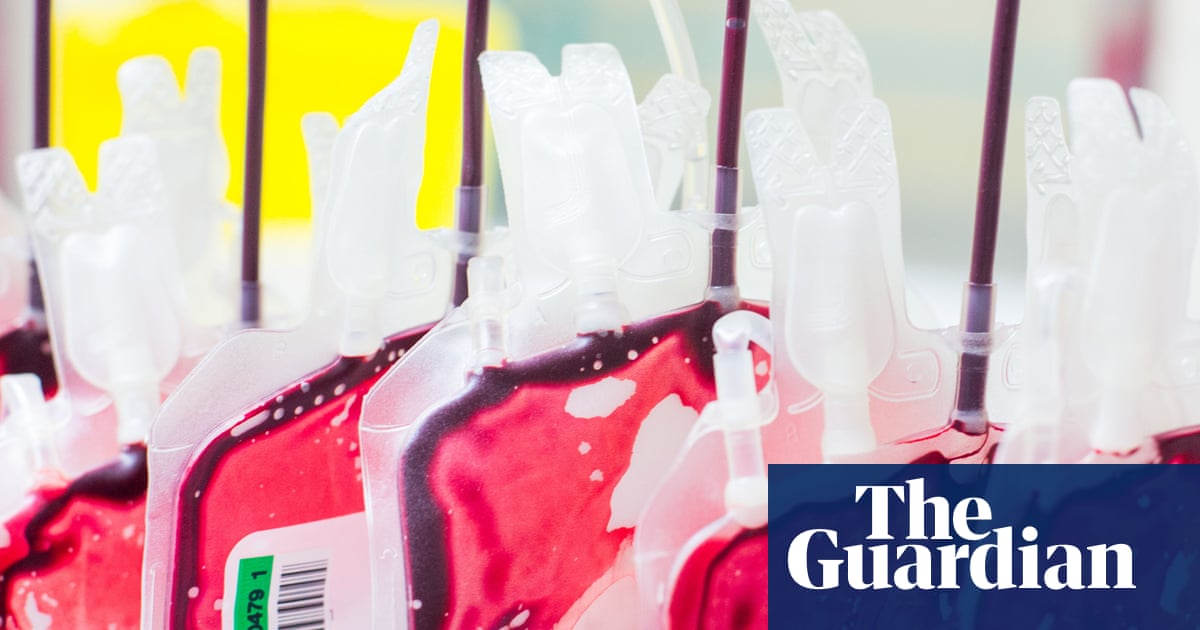
France’s national blood service has said hackers accessed control systems and boosted temperatures at three cold stores stocking vital blood products, in an apparent escalation of recent cyber-attacks on fridges and freezers across Europe.

The French blood service (EFS) said temperature and defrosting thresholds had been raised to “very high levels” in the attack, adding that its alarm systems had allowed technicians to intervene before the products were compromised.

The EFS is France’s public blood transfusion operator, collecting, testing, preparing and distributing products such as blood, plasma and platelets to more than 1,900 hospitals around the country. It supports more than a million patients a year.

The attack, which EFS said had occurred overnight on Monday, came as the temperatures of refrigerators and freezers in supermarkets in almost a dozen European countries soared as high as 50C (122F), causing millions of euros of food damage.

Empty refrigerators in a Delhaize supermarket in Boortmeerbeek some 30 km from Brussels, following an IT incident.
Who is hacking Europe’s supermarket fridges and freezers, and why?
Read more
Retailers in Italy, Germany, Romania and the UK were targeted on Tuesday, after Belgium, Estonia, Ireland, Finland, Luxembourg, the Netherlands and Sweden reported problems with their refrigeration systems the previous day.

In a wave of attacks in France last month, hackers seized control of cooling units in as many as 700 supermarkets. A regional branch of France’s Crédit Mutuel bank said on Wednesday it had been the victim of a cyber-attack.

Something similar may have happened in the US in early August, when a series of mysterious fridge malfunctions hit commissaries in at least six military bases. The Pentagon is investigating a suspected hack.
Full Story:
 
Full Story: (link omitted)


Hi Brownie2019, this is a particularly nasty example of an operational-technology compromise: the attacker did not merely steal data but altered parameters controlling physical equipment.

The headline is slightly broader than the confirmed facts. Public reporting says a refrigeration-equipment provider suffered the incident, affecting supervision and control systems at three EFS sites. There is currently no indication that EFS donor records or its entire corporate network were breached. The affected rooms contained plasma, but EFS says its monitoring detected the abnormal settings, the equipment was controlled or disabled, and products were moved as a precaution. No samples or blood products were damaged and no health impact was identified (Franceinfo).

Also, “thresholds raised to very high levels” should not be read as the blood products themselves reaching those temperatures. The dangerous part was the unauthorized configuration change: manipulated temperature and defrost settings could eventually warm the storage environment or prevent normal responses to a fault.

This looks related in method and timing to the wider refrigeration incidents, but a common perpetrator has not yet been publicly established. ENISA confirms incidents across several EU states since 11 October and another wave on 1–2 November, while investigations continue (ENISA). Similar equipment and similar sabotage are clues, not attribution.

The defensive lesson is fairly blunt: refrigeration controllers should not be sitting directly on the public Internet. CERT-FR’s alert recommends removing public exposure, checking all configuration—including defrost schedules—and restoring remote access only through a secured VPN or protected network. Firmware updates, changed default passwords and strict security settings are also required. For critical cold storage, the alarm and physical temperature-monitoring path should additionally be isolated from the vendor’s control path, with manual fallback procedures tested.

In this case, monitoring and rapid intervention prevented harm. That is good incident response, but needing it because Internet-accessible controllers can be altered remotely is rather less reassuring.

Sources
 
this chaotic mass hatred/devastation goes on by very non-specific segments
it seems to me that a few of these could belong to the work of art of an AI agent
I got my motives to belive this...
obviously there's a middle man in here but it seems to have a non-critical role
i've just read today that some blood things.. i forgot their names, they use them to IV, oh blood bags!! yes, so these things got raised from minus thirty degrees all way to one hundred ten.
yeah... these scenarios are manifestation of our own impact on the environment perhaps not many people ever read Sophos blogs..
 

Join the discussion

Write your reply below. You'll create a free account or log in before it's posted.

Recently browsing

Members who viewed this thread in the last 5 minutes

Back
Top