

F
ForgottenSeer 116559
Many consider Ladybird the most significant development in the web browser space in over a decade. It's an ambitious, open-source browser aiming to disrupt the internet monoculture that undeniably solidified: approximately 80% of the browser market is dominated by Chromium. The other two competitors, WebKit and Gecko, are similarly tied up with corporations.
As their website succinctly reads:
Initially started as an HTML viewer for SerenityOS, its creator greatly broadened the scope and established the Ladybird Browser Initiative in July 2024 as a 501(c)(3) non-profit organization. The project entered into yet another phase in February 2026 with the decision to adopt Rust as a modern, memory-safe language for critical components of the browser otherwise written in C++. The JavaScript engine was the first subject of their efforts with assistance from Claude Code and Codex:
Building a modern browser from scratch is a monumental task, which is why you're most likely just to encounter Yet Another Chromium Fork™. Seeing a small, non-profit team pass nearly 2 million Web Platform Tests (WPT) is thought of as an incredible "David vs. Goliath" story. The roadmap indicates plans to ship the true alpha this summer, the beta in 2027, and the stable release in 2028.
I built the latest Ladybird pre-alpha on my Fedora Linux desktop in "release" mode (vs. debug) with the Qt6 GUI framework and Wayland explicitly enabled. A pre-alpha version like this is only intended for experimental use by developers. It is not for any serious browsing. The codebase is moving so fast that static build scripts fail, so you have no choice but to build the most recent code yourself.
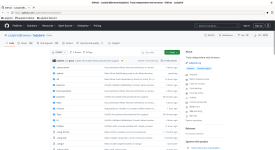
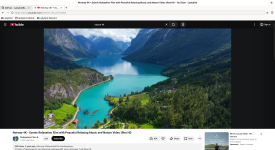
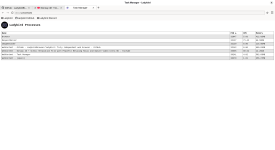
It has a long way to go, but as I discovered for myself, it already works on complex websites like GitHub and YouTube!
As their website succinctly reads:
The web is the most important platform in computing, yet only a small number of browser engines power the entire thing, each controlled by a company with its own agenda.
Ladybird is building something new: an independent engine, driven by web standards, and free from conflicts of interest.
Initially started as an HTML viewer for SerenityOS, its creator greatly broadened the scope and established the Ladybird Browser Initiative in July 2024 as a 501(c)(3) non-profit organization. The project entered into yet another phase in February 2026 with the decision to adopt Rust as a modern, memory-safe language for critical components of the browser otherwise written in C++. The JavaScript engine was the first subject of their efforts with assistance from Claude Code and Codex:
The regex engine and image decoders are currently being ported as well. In the long term, they also plan to migrate networking and the layout engine over to Rust.The requirement from the start was byte-for-byte identical output from both pipelines. The result was about 25,000 lines of Rust, and the entire port took about two weeks. The same work would have taken me multiple months to do by hand. We’ve verified that every AST produced by the Rust parser is identical to the C++ one, and all bytecode generated by the Rust compiler is identical to the C++ compiler’s output. Zero regressions across the board.
[..]
This is not becoming the main focus of the project. We will continue developing the engine in C++, and porting subsystems to Rust will be a sidetrack that runs for a long time. New Rust code will coexist with existing C++ through well-defined interop boundaries.
Building a modern browser from scratch is a monumental task, which is why you're most likely just to encounter Yet Another Chromium Fork™. Seeing a small, non-profit team pass nearly 2 million Web Platform Tests (WPT) is thought of as an incredible "David vs. Goliath" story. The roadmap indicates plans to ship the true alpha this summer, the beta in 2027, and the stable release in 2028.
I built the latest Ladybird pre-alpha on my Fedora Linux desktop in "release" mode (vs. debug) with the Qt6 GUI framework and Wayland explicitly enabled. A pre-alpha version like this is only intended for experimental use by developers. It is not for any serious browsing. The codebase is moving so fast that static build scripts fail, so you have no choice but to build the most recent code yourself.
It has a long way to go, but as I discovered for myself, it already works on complex websites like GitHub and YouTube!


